How To Get New Clients Regularly by Cody McLain with Avi Arya
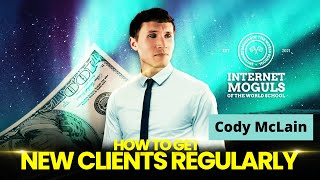
Cody McLain, who founded Support Ninja, talks about building an outsourcing company and getting clients consistently. He covers niche selection, pricing strategy, and what actually works for scaling a service business.
I was partly in foster care while actually running my business. I lost both my parents before I turned 18 and I naturally determined that I wanted to be an entrepreneur. That was the only path that I saw to go forward. And I was able to start a handful of businesses. A lot of them failed. A lot of them I got screwed over by various business partners. But I kept trying and trying again and eventually now I'm in the position where I'm the founder of a company called Support Ninja, which we were recently ranked the fastest growing outsourcing company in North America. Number 86 on Inc. For last year. We have over 700 employees and two locations in Austin, Texas, as well as in the Philippines and have some pretty high paying clients. And I never would have been able to conceive myself being in this position, having such a successful company many, many years ago because I always doubted myself. But the only reason why I'm here today is just because I kept on pushing.
Hi Cody, how are you doing? Good.
How are you?
I'm very well. Where are you logging in from right now?
Austin, Texas.
Austin. Awesome. I think we were speaking to Anya from Restream. She's also from Austin.
Nice.
Yeah, excellent. Thank you for taking the time out for us. We've been following you for a while, seeing some of the awesome work that you've done. Cody. So, Cody, let's start this interview with a short story about who you are, where you're from, why you're doing what you're doing.
Sure. So I started my first business when I was 15. I was partly in foster care. Well, let me move this mic up. I was partly in foster care while actually running my business. I lost both my parents before I turned 18 and I naturally determined that I wanted to be an entrepreneur. That was the only path that I saw to go forward. And I was able to start a handful of businesses. A lot of them failed. A lot of them I got screwed over by various business partners. But I kept trying and trying again and eventually now I'm. I'm in the position where I'm the founder of a company called Support Ninja, which we were recently ranked the fastest growing outsourcing company in North America. Number 86 on Inc. For last year. We have over 700 employees and two locations in Austin, Texas as well as in the Philippines and have some pretty high paying clients. And I never would have been able to conceive myself being in this position, having such a successful company many, many years ago because I always doubted myself. But the only reason why I'm Here today is just because I kept on pushing.
That is such an incredible story. Cody, tell us how did, how did. There's so many things to do. How did you stumble upon outsourcing?
So if I look at all my previous businesses, they were all existing business models. They were web hosting companies. And then I had a support company which led to this outsourcing company. But they were business models that were validated by other companies. And what I ended up doing is just finding a niche within that market. So when it came to web hosting, I ended up creating. YouTube was getting big. And so I ended up realizing a lot of people needed to have their own video sharing because they want to have their own YouTube websites. And so I owned that particular market with web hosting and that's how I was able to grow my web hosting business. And when I sold my web hosting company, I didn't really have any tangible, I'm not a coder or developer, nothing that I really knew, okay, what are my skills and my assets that I could use? I was just going to create another web hosting company. But I realized in all my years of supporting these, these customers is that I had a lot of experience dealing with customer support. And what does every company need? They need support. And so I did some, I did a little bit of digging and there's a lot of outsourcing companies, you know, started the fad back in the 80s. And all of them are either going after, they're really going after very large companies, very huge enterprise companies. And there weren't, there wasn't really any companies that were outsourcing focused, but specifically tailored for startups and young tech companies. And so I saw an opportunity in the market of, you know, I found one company that validated the idea and I thought, you know, what, if they can do it, I can do it. And I even, you know, I did the typical entrepreneur fashion. I would call up, I pretend to be a customer. I was trying to get as much information about how they ran their business so I could basically copy it and then improve upon it on my own.
So that started your outsourcing business. You came across that, you know, that niche in the market, that space in the market. You, you research that space and then you said, this space is large. Let me find a micro niche. And then you found a micro niche and then you stuck to that. How did, so the idea was there, great. And you found, did a couple of calls and you got some idea what was next. I mean, how do you build from, I mean, how 700 people, how did that happen? What were the first few steps in your journey?
It was certainly really scary. I didn't have a whole lot of money and I wasn't really sure exactly where to start with. The idea of having to create an outsourcing company, register a corporation in a third world country that I've never even been to before is like how am I going to even start? So I was immediately faced with all these obstacles, with all these roadblocks and I wasn't really even sure where to begin. But I decided I'm going to build the website first. So I built the brand. I decided on Support Ninja, on the name, I got the domain name, spent a lot of time putting the website together and thinking about what would the service actually look like. And then I just started doing Google Ads. And eventually we were able to come upon our first client and they were determining between us and a well more established outsourcing company. But they ended up going with us because they knew that we were smaller so we would give them more personalized attention versus being a small fish in a bigger pond. And at that point though I had no established operations in the Philippines. And so once they signed this contract they sent over maybe 15, 20 grand as part of a deposit. I immediately flew over to the Philippines and I started looking at various outsourcing operations and I toured a whole bunch of BPOs are called business process outsourcing centers which are just basically call centers. And I just toured a bunch and I eventually was able to find a partner that was in this area called Clark Freeport Zone, which it's a kind of a tax duty zone specific in the Philippines. And he was willing to help me white label his employees. So his employees like they were my employees. And so I was able to start that as a very small operation over there don't grow or they don't grow nearly as successful as if you pretend like you already have a large corporation because people don't want to join something where it's leveraged just basically on one person. And so even when it came to Support Ninja, that was basically how we presented it. Even on our first client we pretended that we already had clients that were already an established operation because if they knew that they were a first client, they never would have signed up with us in the first place. So at least that is certainly the case when it comes comes to service based business. But if you're building a SaaS company, it's a little bit easier to get clients on that front. But certainly with service based kind of always Pretend at the front, you know, don't cross a certain line. But it's certainly helpful to do that.
So now you got your first client and you set up your operations. You came back to the US and started serving this client. And very soon the overheads must have caught up and then you needed to scale. So how was that journey?
It's always been a balancing process between having the employees managing the operational, the revenue costs, and what the clients are paying. For us, I think one of the most difficult aspects was actually raising our prices. Because we're always afraid when we're raising our prices is our prices have always been comparatively more expensive than our most immediate competition. And we would have customers that will be having 60 to 100, $150,000 a year contracts. And this is just at the beginning. We have much even larger customers with larger contracts now. But you know, they would threaten to go with another company. And at the first, we kind of bent in and we're like, okay, we don't want to lose your business. But when you look at the margins, we weren't really making profit. And so we ended up having customers that would, that we were actually losing money from. And then you have this increased overhead and you have all these additional expectations. And so we actually found out that the customers that were willing to go to another provide because they would save a couple thousand dollars a year, they were not worth the effort in keeping because they were much more of kind of like these micromanagers of every expectation, everything that went wrong, they would blame it on us and they would try and get some sort of a credit and it just would not end up working the long run. And so by willing to put those customers aside and stick to your values, and when we know that it's a good service and we're delivering a good value, we don't let the customers dictate the price. So we were able to raise the prices to help keep our margins in. And there were a few periods, especially when building an office. You know, right now we had to build like a $1.2 million office in the Philippines last year. And then we had an earthquake and now we have the pandemic. So there are so many different things that we, that the business has been able to survive in very thin margins because it's, it's. We're managing all this huge work workforce of people that is much more unpredictable than if you're running an app or a software company. But in the end, I also accredit it to good people. We're Able to find people who have, who are way older than me that have been able to manage the finances and the operations and that take control of all of that. And you have to sort of trust them as well, that they know what they're doing. And based on their advice and feedback, we've been able to revise the service offering and just improve the overall service itself.
That's fantastic. So it's been a scary journey all throughout. So what do you do? Tell us about your social media and your marketing. How do you get new clients now?
So one of my strategies initially, very early on was to rely on online marketing because at least when it came with outsourcing, it's a decades old industry that was really relying on this cold calling, relationship building. And I'm basically an introvert. I don't like going to conferences and I don't like dealing with people and you having to build up these sort of fake relationships just to get these huge contracts with these various companies. And so none of these other companies, even the larger, more established companies, put any effort or focus on online marketing. And so I quickly would use various SEO tools to determine what are the long tail keywords, what are the niches within the outsourcing industry. And so I ended up creating a bunch of landing pages and I would very kind of secretly link to them. And knowing how the, how Google assigns page rank, you know, just learning all about SEO and how it applies value on a disseminating level throughout your website and sort of, it's kind of hard to explain, but I ended up creating these landing pages and I would optimize the copy over time. I went on upwork, I would hire a copywriter who would just write the basic copy and I would look at the organic search volume to these websites and I would either delete it if it wasn't performing well, or try and optimize it as well as then creating Google. Ads. So we would have specific campaigns that would go to these specific landing pages. And again it just goes back to metrics and looking at how much money are we spending, making sure that we have link tracking so that we're able to record a sale. We ended up moving to HubSpot. That was a big. It would have been easier to start with HubSpot. So it's always easier to start with something than to transition to it. Because changing software especially was very hard. But utilizing the analytics from HubSpot, connecting to Google AdWords, having the analytics, we ended up using a software called webflow for managing the website, which is Very cheap. And it also still allows even the marketing department to edit pages on the fly without having to know HTML or any kind of code or any of that. So we really kind of grew partly from relationships. It's half relationships from the initial customers because we would get a customer like hotel tonight. And HotelTonight was referred by another customer that was actually a startup that lived inside the same building in San Francisco. And they were just talking and, you know, random conversation and said, hey, we need customer support. And then they recommended us. And so there is an aspect of these referral relationships that we were just kind of growing exponentially. And then there's also this online marketing focus of looking at what are these niche topics, these landing pages that we can create that all of the other outsourcing companies aren't even thinking about. And so then that's how we're able to get a slow, steady stream of customers in the long term. And granted, a lot of them were small accounts and some of them would fizzle out, but there is a few key ones that would just grow because they had a very successful business model, like Happy Socks, for example. They've grown their team exponentially in the past two, three years of growing with us. So it's kind of sustaining the business model. And you find a few key bread winners and they've been able to grow the workforce to a very rapid degree.
Lovely. So you're saying, so what is your suggestion to startups and entrepreneurs looking at this? When they start their Google and Facebook advertising, however relevant the ad copy, however relevant the creative, however targeted the landing page, they still get a lot of fluff and they have to filter all the fluff from the real, you know, the meat of the matter, the real good clients who will pay you and pay you on time. So do you have any process to filter out those clients to be able to say that these are the good clients we're going to work with? Or you still have to have somebody on the call go through all the leads that you get and then find those. Is there a better way out of that? Have you discovered?
Well, one of the things I've learned from my, for my first few businesses at least, is really don't compromise on prices. I would really compromise early on my younger businesses with, if they wanted a discount, I would give them that discount. And the customers that would be very adamant about having a lower price, they ended up not being worth it in the long run. And there's a, there's a financial model where you're looking at what Is your revenue cost compared to all of the. And I'm not good with finances specifically, but I know that we will track what is our average revenue per head and then compare it to what the clients are paying us. And through that, we're able to determine that we're losing money on this bottom half of clients. And so we would end raising that, raising the price in terms of who to qualify. There is an issue that we had early on where we had this brilliant saleswoman. She was able to convert all of these companies over to us, but she was kind of fluffing them up like they were basically sold on her as a person and they had unrealistic expectations about what we were actually able to deliver. So we ended up having to get rid of her, despite her being so great, and make sure that our sales and our customer and our operations were in sync. Because you don't want to have sales selling something that you actually can't deliver, even if you're getting more customers through their lead generation or marketing or sales tactics. And then it's just I'm not really sure where else to go with that. I mean, the biggest issue we have, honestly is with contracts where they will agree on a price and a specific number of agents. We send out a contract and then they either don't look at it, or we just have these huge extended contract negotiations. And typically it takes about 90 days between reaching out to a customer responding and them actually even converting. So it's a fairly long sales cycle, but certainly not as long as some other companies. But don't really have any specific advice on that.
Got it, got it. No problem. So this has been really interesting on how you started and how, you know, you actually let us in on behind the scenes, on how you are feeling scared, how you flew down to the Philippines for the first time and you. And so that's. This been a very, very candid chat. So tell us, Cody, what are. You know, tell us a little bit. You have a presentation to tell us about support Ninja?
Yeah, I put a little bit of a presentation together very quickly and I can certainly go through it. It's not. Not a whole bunch, but I think there's some good value out of it.
I'll make you co host because we would love for our audiences to learn about this service because I'm sure many people could. Do you take on single couple? What's the smallest client you take on? Do you take on one or two agents as well? Or does it have to be a large company that comes to you we.
Used to take on one or two agents and we recently raised our minimum up to three agents, so.
Sure. Because there's a training involved and then getting to know the client and all of that.
Yeah, there. There is a huge upfront cost whenever we're onboarding a customer and it typically wasn't worth it at the beginning. So. Hold on, I need to go back to the very beginning of the slide.
I like your mic. It's nice and loud and prominent.
Yeah, thanks. It's a problem though is it's a condenser mic and so I have to really make sure everything else is very silent or else you hear these little sounds. Okay, we are ready to go. So I like to start out with this idea of, you know, I've always been successful. Everything was handed to me on a silver platter. You know, I never failed. I was a popular kid. I was. I was smarter than Einstein. And a lot of people look at successful people up on this pedestal and in reality, that just wasn't the case. When I was going to school, I failed so many times, especially with all my previous businesses. I grew up poor and actually I went to a rich school. And so actually seeing the success around me is really what motivated me that I had to prove to these other kids that I could be successful too. And I didn't need my parents money and I doubted myself so long I was constantly doubting myself and thinking I'm stupid and I'm incapable. And yet the very fact that I couldn't go and live with my mom's or my parents basement is really what kept me going, is just having this grit that I have to be successful. I have to make this work. I know I was bullied in school. I lowest math classes and I didn't do very well in school. But it was this determination of I have to be successful. And so I ended up actually writing my own story in this book called From Foster Care to Millionaire that really sort of details this. This period of going through my. My parents are alcoholics, they died. I've been screwed over by various business partners, learning about mental health and all these issues that you go through, especially in a very turbulent childhood. So I just wanted to reiterate that I've been through a lot of stuff, you know, and I'm sure a lot of other people have been through that too. And I really want to get the message out there that you are everything that you think you are. And so by believing that you can be successful is really what creates the groundwork behind your Willingness to be successful. You know, there's never been a CEO who. I've never heard of a CEO who became rich being depressed or just feeling sad for himself. You really have to get out there and stay true to this internal. You have to find out what are your values, what do you believe in, what are you passionate about? And there's a great book by Simon Sinek called why. And I read that book and it really helped me hone in on what's important to me. And having that allowed me to kind of be successful. And I talk a lot more about that on my own podcast and in the book and whatnot. So I've already talked a little, mentioned a little bit about Support Ninja, which is my current most successful company. And I like to look at Support Ninja as if you look back in the gold rush you had, all these people were traveling to try and find, you know, paying gold out of the rivers. And the people who really got rich were the guys supplying the pickaxes to all the miners. Right? Those were the guys that got rich. And so I like to sort of see Support Ninja as a way of we're providing the pickaxes to every business out there. And the reason why I say that is because if you're creating a SaaS company or any kind of business where you're going into a market that's not validated by some other company, if you're trying to create something entirely new, you're kind of a gold miner. You know, you might strike it rich, but the odds are honestly against you. But if you're thinking of how can you supply that existing market, then that's, you're. You're much more likely to succeed because again, you're not having to go out there and validate this entirely new business model because it's been shown time after time. If you go through all the theories of how to start a business, you know, you might ask, you might survey people, would they pay you money for this business? And actually it ends up, you know, what they tell you is a lot different than if they actually give you. So it's really hard to validate a business up front. And that's just. So these are some of the customers that we required. We have a lot even bigger customers, much bigger, like car rental, ride sharing companies that I can't even name because we're under NDA contract. But I've been so amazed by the kind of huge clients that we've been able to attract and that we've been able to grow with and it's really because I honed down on this idea of outsourcing for startups. That was my initial term. There was no other company. And I think even still today we own that title on Google. Outsourcing for startups. You know, maybe we're not number one anymore, but I'm really the one who created that. And even in my hosting business, I'm the one who really took this idea of video sharing, hosting for your own website. And I really allowed that to expand to everybody so anybody could have their video sharing website. And that was my focus with that. These are just some of the initial, very first customers or experiences that we're able to have. This white guy here is his name is Connor. I ended up being a single founder, so I founded the company on my own. But I realized I'm not really good with managing people, you know, and that you would think I'd be good at managing people, but I'm not. And so I was able to find this brilliant other guy who was working with another startup over in Dallas and he was able to, I promoted him to CEO and for the most part he's been able to do a really good job at helping to run the operation while I kind of sit in the back end and on the upper right is some of our very first ninjas. So instead of calling them agents, I really wanted to hone down on this brand. This image of everybody is a ninja. And when you're hired it creates a certain level of pride between working for us and working for another company where you're just an agent, you know, versus having this pride. If you can say I'm a ninja. And here are some. This is the most recent. You know, we spent well over a million dollars to create this brand new office space over in the Philippines. And now we have this hugely professional environment, which is something I dreamed of when I started the company back in 2015. But in my wildest dreams, I never could have imagined that I would have been able to have this class A huge building, fiber wire, all these amazing people and computers. It's still, every time I go over to the Philippines, it's still just amazing to see what we've been able to build. And if I had thought that I had to do everything myself, then I never, I would have been too stressed and anxiety ridden to even get off the ground. And so there's some aspect of even if you don't know what the future holds, or even if you feel like you're unqualified, you just have to keep going on that path, you have to follow your intuition and your gut. And so I want to get into a few key concepts that really help me determine how to grow the business in a more effective manner. Number one is this idea of an hourly rate. Sometimes you can work on these tasks and unless you really quantify what is the hourly rate associated with this task that I'm working on, then you can be busy all you want, but you end up accomplishing absolutely nothing. And so the idea of like doing a 10 hour, 10 hour work task, you know, this is idea of like if you're using Notion or Evernote and you're over organizing that or you're checking email, are you really generating value with that? And I get the litmus test for that is asking yourself is this something you could do when you're hungover? And if it is, then you really want to minimize that kind of work. The second kind of work is this idea of $100 an hour work. And that's something like working in Notion or creating like zapier automations between various software or say setting, setting up a text expander so that I can easily type in an address or a phone number or even like a response to clients and kind of a canned autoresp that can be helpful, but that's not as efficient as even the next thing, which is this idea of $1,000 an hour work. And that's where you're utilizing your specific skill set to create these one on one engagements. You're doing a cold calling, you're having a sales meeting with the client, you're building these one on one relationships and that's great and you're generating value, but you're only generating value in that specific kind of work. And really where you want to be is this idea of $10,000 an hour work where you're looking at these long term key strategies, you're thinking about how to create these systems that are going to run your business five years from now, what's your exit strategy? How are you going to get media influenced and marketing influence? How are you going to create these standard operating procedures or procedures that other people you hire are going to follow? And so you're building revenue by creating this sort of equity that's going to grow over time without you having to do anything. And that's ultimately where you want to try and think and be most of the time. So it's a good idea to again quantify what kind of work are you doing and to break that down and that'll help you be more efficient and grow in the long run. So at the end of every day, you can tell yourself that you were successful, that you accomplished something that day. This next idea is this. This thing I learned really early on by Ryan Holiday, a fantastic author who mostly writes about stoicism, but one of his first few books was about this idea of growth hacking. And in this book called Trust Me, I'm Lying, he really explored this concept of how easy it is to manipulate the meaning media, how you can get so easily on YEC and Forbes and Entrepreneur. And I thought for the longest time, man, I wish I was. I was successful. I wish I could get my name on Forbes and Entrepreneur, because then I'd be successful. And it turns out it wasn't that difficult to get on there in the first place. And in this. In his very short book on growth Hacker Marketing, he really details this process of how you can explore these various concepts to find these. These little snippets to expand your influence or to grow your brand in a huge level. And so you have to really read the book to understand these various concepts. But I just wanted to throw that in there because I found that very helpful and understanding and trying to figure out where, like, what are some ideas that I can help grow my business? And I get into. Here's. Here's an example is my Quora profile. So Quora can be a great way, a great way to get customers to your own website. But nobody really wants to spend hours, you know, figuring out what are the questions to respond to and then responding to them. So I ended up hiring somebody in Upwork who would do this for me. She would respond under my own name. And I ended up becoming a top writer in 2016 as well, even 2017, and be able to have millions of people viewing my responses. And I'm able to get. We're able to get customers, we're able to get. I was able to get people to follow me on Twitter and subscribe to my newsletter, all because I'm hiring somebody and I'm just managing that process. And I've also used a tool called Better Questions, which is around $150 a month. And they actually look at what are the core questions that are most likely to get the most views and then helping you find those questions so you can answer them. So there's also some marketing software around that. And then at the very bottom, we see some of these logos. And so there's this company called yec, which is this group of entrepreneurs. And I thought, man, I wish I could be on there because it costs $1,000 a month. But I always thought, you know, I'm not enough to be on there. And I ended up signing up, getting approved, and then they end up having these, these Q and A questions every single week where they give out a bunch of questions. And if you simply respond to some of these questions, you're bound to get your name on Forbes and Entrepreneur and Inc. And so I was able to utilize this and utilize their platform, which, you know, at the very beginning, yeah, it's a thousand dollars a year, but ended up generating a lot more revenue because you're able to get referrals and we're able to get our business on all, all of these big name magazine websites that I never would have been able to get onto before. So there are some various hacks that you can use to help get yourself some notoriety. And this is just another example of a short marketing technique. There is a software called Just Reach out. And it's kind of expensive now, but back in the day it was really cheap. And so you can use it to send out these outreach emails. We all know about cold emails, right? You're trying to sell a specific service, but there's even a more inventive way where you're actually doing indirect marketing, where you're actually creating these emails to send out to, say, websites that have blog posts relevant to your category. So say if you have a To do list app, you may, you may use the software or even create your own list of various blogging websites that talk about productivity. And then you reach out to them and you can say, hey, I want to write an article for your website. Will you let me? And if they, some of them will respond and say, sure. And then you're able to get your name and your business mentioned on all these other different websites that are relevant to your category. And so if you just spend a little bit of time doing this, if you perfect this process, then you can end up hiring somebody to do this process for you. And that's the beauty of it. As an entrepreneur, you're constantly doing experiments. And I think that's the key to growth is you have to figure out what's a growth strategy that's going to work for my business. And then once you perfect that, you create it as a process and then you delegate it to somebody else where you're just simply having a weekly meeting to check on what they're doing, doing. And then it can be super easy to grow from there. And this, there's this other idea oh, sorry.
This is super, super supremely interesting.
Welcome. And so Pacific Host, this is one of my earlier web hosting companies I ended up selling to a very large corporation. And so what I ended up doing with this is initially it was just web hosting and back in the day web hosting was just web hosting. It was something that was very standard and you would try and differentiate yourself but it's very hard to. And so this is around the time that YouTube was getting big and I found that people wanted to have their own version of YouTube but you couldn't do it with this $5 or $10 a month hosting. You had to spend hundreds of dollars a month to have your own web server. And I thought, wait, you know, maybe I can bring this to a share to bring the cost down so that anybody could have ability to create these kinds of websites. You know, initially we ended up having server crashes. My server administrator said, no, you shouldn't do it because it'll crash. And yeah, at the beginning we had a lot of problems, but I was the first one to really bring this concept of having your own video sharing into these smaller 10, 20, $30 a month website hosting. And I ended up really creating the category. And so this is a category that I created. And then we were able to grow simply by being the first one in the market because we found sort of this new niche. And then one of the things that we did later on is you ended up having all these companies. These are just some of the logos of all these companies that created the. So that was trying to target people who want to have These video sharing, YouTube website type of websites. And so then I ended up creating landing pages for all of these software so that if somebody typed in say PHP Motion hosting, it would show our website. And then I even went a step further is I contacted these companies and a lot of them didn't even think about affiliate relationships. And I ended up creating and just like the example, like PHP Motion, they have this little partners link. And so they were able to generate a commission because they were referring their customers to a web hosting provider. And I had to create these specific agreements with them where I was, I'm giving them money. And I ended up generating a lot of revenue and a lot of new customers because I ended up not only creating the landing page, but then even going a step further and reaching out and creating these relationships with these different various companies. And I think that was how, how I was able to grow my web hosting company to be, well, far and exceed the growth of your standard typical company. And this is another thing that I did is so these are all links, but all of these are landing pages. And today you might, you might instead you might create blog content, you might create these as new blog posts, but I created all of these as separate landing pages and I changed the language. And so all of these, not, not, not for everyone, but these are effectively search terms where you would type in different types of hosting. And then the goal was to get that page up on the first, you know, maybe the top five on Google for that search term. And it didn't work for everything. But this is also how I was able to get a lot of organic traffic. Because the SEO over time, it's completely free. You do the initial investment, it's going to take six months before you really start to see that traction versus being able to use Google AdWords. But the growth from that is just exponential. And so looking at what are the ways, what are the various niches and the, in the segments within my market I can target and then go after that, whether it's creating content or landing pages or what have you. And just here are some links to my own website where in the first one I talk about hire how to hire a virtual assistant. And one of the very first mistakes I made is I would end up hiring an assistant and delegated all of my work to them. And you really can't do that. You have to figure out what are those $10 an hour tasks that I can delegate to my assistant. How could they create a process and then just, just have them repeat that process. And here I talk about my workflow where I disseminate how I process tasks in my to do list software. And this other one I talk about business automation where I talk about these, these, these SOP software. So you're creating processes. It's kind of hard to explain. I just say read the article, but I want to go and just go here to business concepts. And so if I had known about these about the beginning, it would have helped me even grow my business and be even more successful, not make some of the mistakes that I made early on. One of those is this great book called Traction Get a grip on your business where they talk about this eos, this entrepreneurial operating system and they really talk about the importance of establishing values and a tagline and understanding what is your business for and then being able to instill those values on new employees. And I think when you're creating a business, it's super easy to, to just ignore this aspect of values because who needs Values. I've seen entrepreneurs just literally copy the values of Apple and Google and pretend like it's their values. But if your employees, if you can't say what your values are of your company, you're doing it wrong. And I love the other idea of okrs which are setting these goals for your company and making sure that you're tracking it. And that's how everybody knows that you're making progress towards something. And then as well as I love this book called Creating a Kaizen Culture which it talks a little bit about how the Toyota production method, how they were able to create this culture where you're having employees helping to improve the company itself. You're incentivizing people speaking up about problems that they're seeing and incentivizing them to solve the problem on their own. And the problem I would have often is you would hire an employee, but they would only do their job. And when they're only doing their job, they're not spotting for problems. If a problem comes up, they don't know what to do. They're kind of constantly going to refer to you. But if you can instill in them this idea of how can I improve the business on my own, how can I be an entrepreneur, so to speak, then you're having everybody looking out on how to create a successful business that's going to create these huge results and these huge gains. And then we have Scrum, which is just more of a concept when it comes to development and about how to create things. These two week sprints where everybody's working really hard towards one goal but that's really only specific. More so to SaaS companies. I want to emphasize this idea of SOPs. You have these two great books, the E Myth and the Checklist Manifesto and they really emphasize around this idea of not building the business around you because I see so many entrepreneurs that will build the business around themselves and that creates the scenario where they can't take a vacation. And Tim Ferriss really popularized that, this concept. I wish I had read his book before. I was building my businesses because I was constantly stressed out and constantly burned out because I didn't know I could outsource all of these other different types of things. The only thing I was outsourcing was my customer support. But if I was able to think about how can I create this process where I would post on forums or every week I would look at the Google Ads. But if I could think when I'm looking at Google Ads and I'm looking at those analytics If I just document what are the things I'm looking for, and you actually create a process for that that can hire a $10 an hour person who has some familiarity with say, Google AdWords, and then just all they do is just follow your process. And that allows you to circumvent this idea of hiring these huge contractors or these agencies. Because when you hire an agency, whether it's a design or a marketing agency, what you're paying for is primarily their expertise and their knowledge and their thinking capacity where they're analyzing your business, taking their experience, and then they're applying concepts and they're paying these interns or even third world countries, it could be in the Philippines or wherever, and they're paying them to simply do the same thing that you could do. And so when it comes to running a business, you really need to think about building the business around processes and making sure that you're then able to delegate those smaller hundred dollar or $10 an hour tasks to those smaller individuals. And that allows you to create this even further success. And when I say about delegating, you should really do it slowly. So if you're starting a business, you should do everything yourself. You need to build the foundations on your own. And what that means is that when you're building the business up, you're familiar with all of the pillars that create the foundations for your business. Because if you just start outsourcing everything, then things are going to get ugly very quick, quickly. The very first thing that I actually recommend delegating is actually going to be your customer support. That's the easiest thing to monitor and the ability to actually look at. What are they saying? How can I build a process? How can I build canned responses and knowledge based articles around all of these support issues that your clients may be dealing with? And then I'd go from support to billing to sales, because sales should be the last thing that you start outsourcing because that's the thing that allows you to connect with your revenue generation, which is really one of the very first issues that you're going to have is how am I going to convince customers, customers and find customers that come to me. And one of the other key decisions that I ended up making is learning how to, how and when to hire an operations person. Because at some point you can just be swamped and overloaded and you can burn out because you're handling. Imagine if you're building the business, you're managing the customer support, you're doing all the billing and the sales, you're Taking the phone calls and live chats and you're sending out the product or you're managing the service, that can get very overwhelming. And you don't know, especially if you're a single founder, you can just don't know what to do. And I learned that really the next step is to hire an operations person, somebody who can manage the core operations of your business. That allows you to take a step back and then look at what is that $10,000 an hour task I can work on, which is often going to be something around growth and strategy and marketing your business to build even further. And again, don't outsource your strengths if you're good at something. I made the mistake of outsourcing something and then I didn't realize that at first it was a source of joy for me. And when you outsource something that previously gave you a sense of satisfaction that you were good at, then you lose the passion for your business and you just burn out. And you can go weeks where you don't even feel like working. That's a horrible place to be. And this last concept is this idea of learn as you go. So this goes back to 2008, and Aptos was one of my other web hosting companies. This is when I was 18, but I actually learned this when I was even 15 or 16. I'm still in high school, right? And so I looked at what are other companies doing? Other companies were writing press releases. Now, press releases today, I grant you, they're not really relevant. I don't even recommend writing press releases really for anything. But I looked at what is, what is a press release made of? And this is because other companies were writing press releases. You know, I didn't take a course on how to write a press release. I didn't go to school on how to write a press release. I didn't get an MBA on any of this. On marketing, I just looked at another company and I saw like the general format and I saw generally what companies were doing is they would summarize the service and who they were at the first paragraph. They would explain what they're talking about, and then they would have a quote from somebody that was actually within the company. And so I generally just honestly, I didn't copy the text, but I copied the format. And I look at all the things I've learned. I've taken lots of courses on Udemy and LinkedIn learning and even YouTube where you're taking a course and it's like marketing. Maybe you're even taking notes on that course. But generally you're going to forget 100% of that knowledge. And the only way that you're going to retain that knowledge is if you're building your business along that, that same path. And if I had started my business realizing all this knowledge that I didn't know, I never would have started. I had to have this faith and this trust within myself that I'm going to learn as I go through that process. And that's, that's really what I business is. You're going to fail a lot, but it's through that process that is what, what, what the core essence of learning is. And if I had thought like, oh, I don't know how to write a press release, I can't do this, then that's honestly where a lot of people stopped is you stop because you don't think you can do something. And if you stopped, that's a bad place to be. So realize that the majority of your learning should take place while you're building a business. It's like if you're building something and you realize, I need to, I need to do ads in Google AdWords. But you don't even know Google Ads. AdWords. Go on YouTube and type in how to learn Google AdWords. Take a course on one. You know, on one side of the screen have your AdWords and on the other side of the screen have the video and literally follow along, follow the steps, because that's how you're going to learn and learn the knowledge that you need to build, build a successful business. And this is just the last slide where I talk about my podcast and follow me on Twitter and all of that. Go to codymclaine.com and you can subscribe to my newsletter where I talk. A lot of the, a lot of the concepts that I just mentioned, I go into even greater length. And I also talk about productivity, which is what I love talking about. And on my, my own podcast, the mindhack podcast, I interview success, successful people in their field, and I found out what makes them tick, what are the habits, what are the experiences that they've had that allowed them to become successful. So I'm going to stop sharing, go back to my video there. And so I hope that was okay and they were able to follow along there.
Wow, that was fantastic. That was lovely. I learned so many new things. So you've read all of these books and you remember them and you know how to apply these principles in your business because you have, you've, you take what you learn very seriously. You believe that it comes, you believe that knowledge comes to a person at the right time, at the right phase in their lives. And if it's not implemented, then it's not worth it. And how old are you, cody?
Today I'm 30 now. I started around, was 15.
Awesome. And how old is this, this latest company of yours?
It's five years old. So I went from 2015, I invested around $150,000 into the company, which is money I made from my previous sale, which in all honesty, it wasn't much. And now we're at a point where we're going to generate over $12 million in revenue by the end of this year. And we still totally 100% bootstrapped.
Wow, that is fantastic. You saved the best for last by telling us that you're still bootstrapped. That is fantastic. So I'm sure you have a, you have a great night's sleep when everybody else is awake, you know, worried because they borrowed too much money or they have too many investors to answer to tomorrow morning. And five people who have no idea about how to run a company and putting you in different directions because you know you've just been bootstrapped. We are bootstrapped. I mean, you know, we've been in the business for 10 years and we've been bootstrapped. So good or bad, whatever happens, it's all, it's all on me. And you know, I can have a good night's sleep because you know, I don't need to answer to any. You do miss getting advice from other people, but you don't miss, you don't miss the headache that comes with it.
So any, honestly, I've never, I've never even had a mentor or an advisor. My mentors and advisors have always been books. And really the point at which I got to this level where I'm able to have this 12 million dollar a year plan plus business that's growing 1000% at least last year is by investing in myself. And that's one thing I didn't do before, because when you're running a business, you're focused 100% of your attention on that business. But at the end of the day, your investment should be a lot more even than yourself. And so I learned this concept of my mind, my body, my soul, where I have this routine every day that I really stick to, no matter how stressed out or how busy things get. Well, I will meditate for 10 to 20 minutes a day. I will read a book for 30 minutes a day. And I'll exercise for 45 to 60 minutes a day. I don't do it all the time, but I generally try and stick to that. And when you're reading, even just 30 minutes a day, that interest compounds. And so I've learned so many new concepts and ideas and you get so much smarter that you're then able to apply it to all these other areas of your life. And if I didn't start reading say five years ago, I don't think I would have been able to be in a position where I've been able to launch the company that I have now. So I can't iterate enough. The importance of constantly having this focus on self improvement and reading and bettering.
Yourself, that is fantastic. You know you're a fantastic speaker, don't you?
Yeah. Thank you. Yeah, that's just so I'm told.
Yeah, it's just amazing because it comes straight from the heart and it's one after the other. You have so many things coming. You're like, you know, sometimes you feel, oh, that impact came and went. But then you have four or five things coming together and every slide gets. And you're like, yeah, yeah, this is, this is random in. So Cody, tell us what you do now because $12 million is a huge achievement. That too when you bootstrapped. But now to be able to constantly. So there are tools like you said, just reach out. There is snow IO, There is get prospect for other people who are getting inspired by your journey just now as we speak and all the other people who are watching, I know I'm getting inspired. So many other people who are getting inspired right now and they're saying, fine, I want to build a team of people who will go out into the market on phone calls, emails and get me more client appointments. I am the $1,000 guy. I can close clients on the phone, but I don't want to do the business development and reaching out to people and sending emails or whatever. So can this process be outsourced to give a list of prospects through SNOV IO or get prospects or just reach out? So these are the decision makers in my industry. These are 200 people. I hire somebody for $20 a month in Philippines. And I explained to them this is the draft format, this is the email number 1, 2, 3 send out to people. All I want is to be busy every day. I need three serious appointments from 10 to 1 o' clock every day. Just get me in front of the right customers and then I take over the thousand dollar. Our closing is that kind of stuff possible.
So my response is going to be controversial on that. And it goes back to this idea of the foundational pillars of your business is that I think you really need to understand what they are. And you can only do that by doing that yourself at the very beginning. And what I mean by that is that if you're using Snob IO or outreach or any of those outreach tools, I think you need to be the one that first does that. Even if it's a painful process, even if you don't like doing it. Because we've been through so many different of these, like LinkedIn and then there's Crunchbase, you know, all of these various databases and tools that you can pay money for to get apps, access these to these contacts that you then export and import and you can send out a cold email. But unless you're the person managing it, you have to do these constant AB testing. And very early on we spent a lot of time sending out all these cold emails and very rarely did we get any source of response. And it was only after maybe six months or even a year of looking at this that we determined that our effort will be better spent on doing online marketing where we're creating landing pages, we're investing in Google AdWords, we're building online content that's going to be ranked. And actually even then content blog posts and other relevant media websites that were willing to put our content or mention us on their website. And so we found that was a better strategy that worked for us. But if I had told myself, you know what, I'm gonna just hire somebody and put it on autopilot, they might, might have been just been able to do the same thing over and over again. And then you also have the problem of if you hire a Filipino that's gonna do, that's gonna do marketing. The experience can be different when you're hiring somebody in a third world country where they're just repeating the same process that you've built and say this process early on, say you have like a 2% conversion rate. It's possible that the amount of money you're paying that person is going to net you a favorable outcome in the long run. But you're also having to manage this person if they're sick or if they don't do their work and you're relying on this person versus if you hire somebody United States, that's like 60K. And maybe they're, they're sales that they love sales and it's all they think, breathe and eat sales, they're going to be thinking about, okay, that the email that I wrote, the cold email that I wrote, it Maybe gets a 2% conversion rate, but they're going to also think, how can I get a better one? They're going to go and Google how to write a cold email or a sales pitch. They're going to read PDF articles, they're going to read a book on how to write better copy, and then they're going to do their own experiments. And that's what you want. That is a key player. You want to find these people that are willing to build upon what you build. And that can be a tricky part position when you're going from something where you're bootstrapped to where you don't have the money. And so that was a tricky process. But, but I think it's important to start, you develop the process itself and then you can hire somebody. And so alternatively, you can hire somebody in the Philippines, 600 bucks a month that you have a process of cold outreach and email. But the alternative from hiring somebody that's 60, 100k plus a year is that you're working with that person to constantly improve that process. Maybe they're the one that's doing the cold emails and being on the phone, but at least once a week you have to have a meeting with them. You have to look at the metrics. You have to perhaps spend time creating your own cold email template and ask them to use that, because you can't always rely on these other people to do that to do the thinking for you. Right? And that's the difference between being your own entrepreneur that's bootstrapped. You're having to do your own thinking and use the knowledge that you learn online from other marketers or books that you've read versus hiring an agency or consulting agency, because then you're paying that company a huge amount of money that you probably don't have, and they're just outsourcing to the same kind of person you're hiring. And they're just charging this 600% fee because of the knowledge that they have. And they're just simply applying the thinking power to your business. And it's all within you to have that thinking power and just apply it yourself, if that makes any sense. I know sometimes I go and I talk about tangents and I just kind of ramble on, but no, no, no.
No, I totally, I totally understand that. So, so assuming I've already done that, I've done that for a year and I understand where my leads are coming from. It just takes a couple of hours every day and I'd rather outsource it it to somebody so that that person and I understand the thinking has to be yours because at that level, a junior person in your office or outsourced may not be able to put in the thinking power to be able to become a business development manager to that extent. But if you can streamline the system to 75, 80% and be able to get leads, because that's the biggest problem I see entrepreneurs having saying that you put me in front of the right person, I will talk and the person will, will be impressed with my knowledge. But you know, the everyday work of reaching out to 20 clients to find those two, I wish somebody could do that for me. So, so, yeah, so what you know, so far, before we, before we end this interview, I want a message from you to all of the entrepreneurs over here who are impressed with your story and want to work with your company. How can they reach out to you and you know, and how can, what's the minimum requirement and all of that? So that's almost like, you know, you talking to your potential, your customers know.
Well, I'm going to even go against my business and say that if you want to hire somebody in the Philippines, you can find somebody for 600 bucks a month and you can, you can go to a website called Online Jobs Ph. They charge like an annual fee and you can post a job and you'll get tons of applications from Filipinos who work all the, all from home. And you can find some golden nuggets in that of people who can be really dedicated. But it can also be hard because I've had entrepreneur friends who use that or even other services where you're finding contractors and freelancers in other countries and you end up having to manage them. And that can be a painful process of, you know, if somebody said if somebody doesn't show up for work and then you're relying on them for a vital part of your operation. And that's the difference with what we do at Support Ninja is that we actually will be responsible for them showing up and doing their job. And you giving us certain KPIs or metrics that we then have, have to meet in order to fulfill our contract with you. And so our minimum right now is like three agents, but we're also charging like $1,800, maybe $1,700 per agent. And so again, that's going to be a lot more expensive than I think if you're starting out in bootstrapped. And I'd recommend using, using something like online jobs. But I would give a fair warning that you're going to have a hard time managing. And that could be hard within itself. But we come in at the that point where you have a process, say you figured out your cold email process, right? And you've got these people that are doing a decent job, but you're spending say 40, 50% of your day managing them. And you know that you could be spending that time from going from $100 an hour task to a $10,000 an hour task, that at that point it's going to be worth paying us $6,000 a month to have these agents that you don't then don't have to worry about. You can go to sleep every day knowing that they're going to do their job and that they're going to show up and they're going to meet your expect expectations. And also in the back end, we take what you teach us, right? So if you're the entrepreneur, you figure out that process, you, you train us to have that process. We have our own knowledge management system and we'll actually look at, okay, how can we improve this process? So not only are they doing the job and you don't have to worry about them showing up, but we're also actively improving the process that you've created to make sure that you're getting a better outcome for your customers. And again, it's not cheap. I think average, we have customers that have maybe around 10 to 15 agents and they're, they're spending well over 10 to $20,000 a month with us. And that's just the case that they've had an established process. They're at this phase where they have to scale, right? And so that's where we come in.
Got it. Perfect. You know, as for my story, like I say, I always say, Cody, the shortest distance between two human hearts is a story. You tell somebody a story and you connect with them forever. My story is, my name is Avi Arya, Father of two girls, six dogs, husband to a superwoman, a streetcar racer turned hotelier, now social media marketer and founder of a digital marketing agency called Internet moguls. Where we bootstrapped. Started with a team of four people and grew it to 225 people in 10 years. At the age of 18, I used to, I was extremely overweight and I used to stammer. I could not put two lines, two sentences together. I used to go for speech therapy classes with my mom and that was the best time because I, she, I used to get all her attention away from my other siblings. And so she said, I want you to speak on stage. And I was petrified of speaking in front of four people, let alone 400 people. She put me on every stage opportunity in school. And exactly what I was worried about happened. The entire school laughed every time I went because I could not talk. Anyways, fast forward to so many years. Today, I'm one of, you know, in my industry, I'm one of the highest paid social media speakers and I do online, offline, all of those trainings. And so life does come a long way. And then I had my two daughters, my six dogs, my lovely wife, and I wanted to spend more time with them. And so therefore, I realized while growing Internet moguls, which was my baby from day one, without wanting to borrow any money or take any investors, I was spending a lot of time away from my kids and my wife and my dogs. So I said, let's do something which builds in the business with the kids. So we're doing a new venture called the Internet Moguls of the World, where me and my two daughters, who are 14 and 11, are. We are all equal partners and we are going around the world till we could. And now online, we're interviewing. We are building an online school for. It's called the Internet Moguls of the World, a digital marketing school, a family digital marketing school, where we're going to have a subscription model with every subscription gets you four tickets. That means that the parents, the kids, the parents and the grandparents living in any part of the world can all join in with that one single subscription. So that every time there's a digital marketing class on how to grow your business, on entrepreneurship, on how to learn a new tool, the entire family can be connected during those hours. The grandparents would love to learn with their grandchildren. Eventual aim is one person becomes a YouTuber, the other becomes a blogger, the third person becomes a Upwork artist, or the fourth person becomes a podcaster. Somebody learns some skill or the other from all of our experts and says, hang on, with this skill, I can actually replace my job or maybe not go to the job three days a week. So the time saved is the time that they spend with their families. So that is our mission behind this building this new school. And the school has three components. We have 52 interviews that we're doing with entrepreneurs like yourself. Then there are 52 courses. There are. There are entrepreneurs who've contributed 52 courses to the program. And the final one is 52 tools. We are interviewing founders of tools companies, you know that softwares and so up 52, 52, 52. Once all of these are done hopefully by January then we will launch this school and my daughter, elder one is 14, younger one is 11 so I've got about five years with them. Hopefully five years will be co founder and after that we'll find they will find their own path and I'll stick to running the school from you know, Vancouver, Canada and making it popular all over the world. So we are on that mission and on that mission we find amazing people. A lot of people say no because they're busy and I understand there are a lot of amazing people who say yes like you know your team and you, you came in and you came in so well prepared with that presentation and everything it gives. I wanted to share my story with you at the end to say what you have contributed to is a part of a daddy daughter very heartfelt venture. Thank you very much Ghori for your time.
More from Avi

The strongest mindset doesn't begin with meditation. It begins at home. Before you conquer the wor

The strongest mindset doesn't begin with meditation. It begins at home. Before you conquer the wor

Your mindset isn't something you fix once. It's something you train every single day. Just like yo

Don't build a company just because your friends are. Build one because you're ready. A startup is

Everyone dreams of becoming the boss. Very few understand what that really means. The moment you b

Most entrepreneurs say, "I don't have time for coaching." The truth? You don't make time for what

Over hiring doesn't always solve problems. Sometimes, it creates them. Having a small buffer in you

"The highest-paid" isn't the goal. The highest-value is. People often ask why premium mentorship co

The founder will always be a bottleneck... at some stage. The goal isn't to pretend you're never th

People ask me how I stay consistent with my morning routine while traveling across countries and tim

People ask me how I stay consistent with my morning routine while traveling across countries and tim