How to Grow a Digital Marketing Agency Globally and Make a Profitable Business? ft.Manish Dhudhrejia
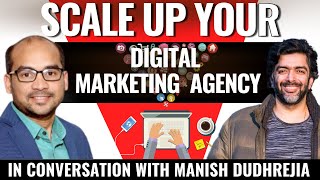
Manish Dhudhrejia built a digital marketing agency with offices in India and the US. He walks through how he scaled the business globally and what it takes to stay profitable while expanding across countries.
What quality means? What is, what is the meaning of commitment? Right? What is the importance of showing up on time? What is the meaning of true professionalism? Right? Hey guys.
This is Avi Arya, father of two girls, six dogs, husband to a superwoman, a streetcar racer turned hotelier, now social media marketer and founder of Internet moguls. Welcome to my channel. Thank you.
Sounds good.
Thank you. And you know the first thing we always say is the shortest distance between two human hearts is always a story. You tell a perfect stranger a good story and you win a heart for life. So before we get started, I know you have a presentation for us and we're going to give you the stage. But before that if you can share your story with all of us.
Yeah, sure thing. So my story is a kind of a part of a presentation. But yeah, I'll be happy to explain. So.
Okay, perfect.
Yeah. My. So my name is Manish and I'm currently in Ahmedabad, Gujarat. So I, I born and brought up in a very small town, you know, of Gujarat and where like, you know the population is like 100,000. Where exactly I born and brought up. And then I moved to Ahmedabad like 20 years back for my further studies and yeah, I did my master's in computer science. And then you know, in 2006 I passed out and 2007 I got into digital marketing industry. I worked for two different companies as a digital marketing analyst. And then 2012 I started E2M. 2012 we just started with two people and today we have close to 100 people. We have office in over here in Ahmedabad. That's our headquarter and we also have an office in San Diego, California. So we are full service digital marketing agency. Like we don't sell any clients in India. All of our clients in North America, in the United States and Canada. So that's kind of like you know, in a nutshell about my story. But I'll talk more about in my presentation. Thank you. Thank you. Can everyone see my screen? Just say yes. You see. Okay, that looks like everyone can see my screen. So yeah, without further ado I can, I'll get started. Great. I guess everyone can see me. So yeah, I think you know, the topic is very unique. Like you know, I'll share my journey, how I built like 100 plus people agency in eight years. So it's not a rocket science. Like you know, the number doesn't play a huge role but it's more about the secret tools which I use which are very rare which is more about the pull approach and the mental model. So I talk more about it later in my presentation. But specifically, you know, I wanted to talk about a pull approach. I don't know how much, how many of you know the pull approach? So just a quick question like does anyone of you have ever heard about a pull approach? Just say yes or no in the chat. Let's see. No. Yes. No. No, no, no, no, no, no.
Never.
Okay. Yes. Yes. No. Okay, so it looks like no. You know, a few people know that. Few people don't know that. So yeah, don't worry, I'll be talking about that. So I think you know this kind of the steam we have, it was this is an old photo like you know, because we haven't been gathered since last two years because of all this craziness going in the world. But this is the photo back in 2018 where we just 50, 60 people. So now we have much, much bigger as a size of team. So quick thing about me like I'm an entrepreneur, a growth hacker, marketer. I do practice a lot of mindfulness practices, mental models and personally I'm a very curious guy about almost everything in the world. So this is about me. Like, you know, I'm born and brought up in a very small town called like Jaidpur which is in Gujarat. And a lot of people, you might be surprised, I never went to English medium school because there was only one English medium school in our town where I born and brought up. And my family could not afford that because I'm coming from a very, very small like you know, I grew up with very limited resources so I studied in Gujarati medium school which is a native language we have. I'm sure all of you must be knowing this language. 19. When I turned 19 after my 12th, I moved to Ahmedabad which is the biggest city in Gujarat in 2001. 20 years back then I did like, you know, my master of science because computer science and information technology was kind of like, you know, a very new. Back in like 2000s I actually came to Ahmedabad for pursuing my chartered accountants because I was very much interested into doing a chartered accountant. But yeah, I think my brother told me that you know, it's really hard to pass that game and I wasn't sure what I wanted to do and he was like, you know, why don't you pursue computer science? Because it's more like latest and you know, it's very trending right now. And then the technology, it was the very early era of technology and yeah, I did it and I'm not regretting that's Great. So the interesting thing is like I never learned anything about digital marketing during my academics. So I'm talking about 2001-2006 where even like mobile fans, mobile phones were not there. They were there, but they were like, you know, there were incoming calls, you were like charged even to get like incoming calls on your mobile phone. And the computers were very expensive. I still remember like I did not have a computer for first three years. One of my friends had and they had bought like you know, 60, 70,000 rupees. So it was very expensive back then. So yeah, I mean after I completed my master of science I realized, you know, I was not interested into coding at all. And I knew that, you know, marketing is something I love it. And so fortunately like you know, I heard about digital marketing for the very first time in 2006. So now this thing is very different now every other MBA colleges now have like digital marketing as a course, as a. So now if you talk to anyone, they at least know what is digital marketing. Right? And you can imagine the era which I'm talking about 14, 15 years back where the digital marketing terminology, it was not there back then. It used to go online marketing or Internet marketing. Digital marketing like became a mainstream in last decade specifically. So I started learning SEO by myself because there was no classes. Just started learning on the Internet and worked for five years in SEO industries in the for two different companies. And then I realized no, I really, I kind of understood how the ecosystem work and I realized yeah, I want to really start my entrepreneurship journey. So yeah, I mean since then, you know, I've been doing this, I've been into this digital marketing industry. 13 plus years of experience. Started three ventures in last eight years including E2M which is I'm running successfully. Have shut down two ventures, almost lost like you know, 10 million rupees, one crore more than that but learned a lot. So I don't have a regret of losing all this money. Currently I'm running only E2M which is successfully 100% bootstrapped, 100% debt free and I mean it's really highly profitable as we speak right Now I'm a gas contributor on industries like 50 plus leading publications. Here are few of them like Entrepreneur, the next web Search Engine Land, Search Engine Journal which are the most two most popular platforms in SEO industry Content Marketing Institute and specific magazine e2m a little bit about e2mr. Agency. So we like, you know, established in 2012, we have a team size of 101 people here in India. And four people in California and San Diego. We have an office and we are serving clients across 10 plus countries. But like I said, you know, United States, North America is our primary targeted market. Our primary services are organic SEO, content marketing, copywriting and content strategy and websites design and development. Some of the biggest brands we have worked with like Shopify from India. So we stopped working with Indian clients since last two years because a lot of things change in our company in terms of strategy, targeted marketing like that. But earlier we used to work with Bluestone, Myntra specifically learn international level Shopify, trustpilot. So I know you are in like Toronto. So yeah, I was in Toronto, I met Shopify. They have a headquarter in Toronto as well. Trustpilot which is again big name sales. Howard, Walkme. These are all the big names we have worked with. So let me start my journey. 2012. I only had like maybe like 100,000 rupees is 1 lakh rupees back then. So. And I did not have any contact. Only thing I had is like, you know, aspiration to do something, a lot of energy and knowledge in terms of like, you know, SEO and content marketing. So we started like 500 square feet office because I was very particular from the very beginning that I did not want to start my, you know, company from home. So I was like okay, I was, I was ready to invest. So, so we got an office like find it square feet, just two people. We did not have a website back then, new website, no sales team, no funding, no clients references. And I knew that I wanted to work in the US market so because I knew there is a huge demand in the US market for what specifically I was having knowledge of. I did not have any contacts in the US back then. And it was like, you know, very unique time because I don't know how much you guys know about SEO, but 2012 like it was a revolution year in terms of SEO industry because Google rolled out two major algorithm updates. One was Panda and another was Penguin. Panda was rolled out in 2011 and Penguin was rolled out in 2012. And these two updates literally changed like you know, industry forever. Because back then like you know, I'm talking about like if I talk about 2000 before 2011 then you could literally copy content from any website and still rank your website. Panda changed everything. Google started penalizing like you know, websites having duplicate content. And in Penguin like you know, before 2012 you can build like thousands of backlinks overnight and rank on Google on the first page by directory articles and stuff. Like that. But all the all stall activities stopped working from 2012. And because, you know, Google started penalizing the websites which were having like, you know, low quality and spammy backlinks. So literally like, you know, these two algorithms affected 2.3% of total Google search query back then. And businesses were going like, you know, out of business because there were a huge number of businesses, they were totally relying on SEO. They were getting like 80%, 90% of traffic through Google organic channel and they were not like, you know, ready for any other channel. All these algorithms were like, you know, rolled out overnight and literally like, you know, clients were fighting their SEO agencies. SEO agencies were shutting down. Clients were firing their agencies. And in that time, you know, we launched our agency. So it was like literally like that 2012, you know, the world was about to end. And I was like, okay, you know, now this, now is the time, was not the right time to start the agency, specifically SU agency. And I had like no choice to make. I had literally choice to make whether should I continue or not, right? Or should I go back and start doing my job? And then I was like, no, I was quite sure that I wanted to make it happen. And then, you know, the next choice I had to make was, so if you start an agency, specifically service business, right? So either you have a push approach or pull approach. So what is the push approach and pull approach in the marketing? So push approach is something like, you know, when you push content, when you push yourself towards your targeted audience, right? So TV advertisement, again, it's a push approach because you are getting noticed in front of like, you know, you are reaching out to them. Right? Right. Google PPC ad again is a push approach. No cold calling, cold emailing, which is you are reaching out to your audience rather than they find you, you are finding them rather than instead they find you. While the pull approach is more of like organic approach where they find you. So you put your content in the channels where your targeted customers are and then they find you. And you know, that way they reach out to you. Right. So basically what Avi does, you know, micro video strategy and like that, that exactly part of a pull approach, right? Where you create a content, create a video, and then you video get, you know, people find it on YouTube and then they, you know, identify. They find you. Right? That's exactly the pull approach I was doing. So I think, you know, I had a choice to make. Should I go with the push approach or pull approach? So push approach was very, you know, it was a mediocre Approach. It was a very common approach which every agency I would say would follow at the beginning. Like, you know, you go on hiring a business development team, you bid on freelancing sites like Upwork, Elance. So Elance later got like, you know, acquired by Upwork. Now it's no more, it's called Upwork. But back then it was Elance, freelance.com, guru, cold calling. These were very popular. Like, you know, a sales team would find the data from Google of agencies in the US Then they reach out to them by email, cold calling and running paid advertising campaigns, which was not an option for me at all because I did not have funds back then and I did not want to raise funds. In fact, like raising funds was not a popular terminology back then, right? It just very popular in like five, six years. So. And I did not want to like borrow money from like banks and like, you know, because I come from a very middle class family like where taking loan was very like, you know, it was not a good thing to do because you always were told that, you know, you have to make it happen by yourself. So this was the one option I had. And the second option I had, like, so all the SEO's agencies were shutting down and then I was like, option I was having is like, okay, how about if I think of, you know, introducing a service as a primary, which is the need of an hour, right? And rather than selling SEO services as a general, how about if I introduce a service which is the most needed right now and how can I get noticed, you know, by showcasing my knowledge, right? So I think, you know, when you are starting a new business, one of the most important challenges you have is your clients are asking for your references, right? Which kind of clients you are working with? I would like to speak with them. Then I would like to see testimonial, I would like to see case studies, I would like to see portfolio. And I did not have back then anything, right? So then I was like trying to figure out how can I, you know, break the conventional way and you know, like adopt the pull approach. And then just so you know, I did not know this was called a pull approach back then. I just wanted to do something different than, you know, other agencies were doing, right? So I decided to go with a pull approach because I was like, I did not want to rely on someone, right? So generally like, you know, agencies, people start business, they say, okay, I need funding, I need salespeople, and I need this, that, that to grow my business. But I was like, you don't want to rely on like neither funding nor people when you are beginning of your like you know, beginning of your business, right? Because it's kind of like you know that you are still relying on someone to grow your business, right? That's not the right way to start your business. So it's always, always you should have everything within you which at least you can start the, you know, engine, right? And it's kind of like that, you know, you have a self start engine and you have an option to you know, find five people on the road and ask them to you know, kind of push your car, right? So obviously self start is the best way because you have the total control on your hand. So we decided to go with pull approach, right? Which is like you know, attracting customers. So and pull approach what everyone was looking back then, everyone got majority of sites, businesses got like website, you know, they're penalized by Google which means they lost their rankings. What I did, I spent extensive time on understand Google algorithm and understanding like why Google penalized website. We knew that and how to recover sites. So we launched a service called Google Penalty Recovery Services. Now that terminology was new, right? So I built a page on the website Google Panel recovery services and I started ranking on that keyword within like you know, one, one or two weeks or within a month I would say because there was no competition. Everyone was selling SEO services as a general and I was like, I wanted to you know, kind of like, you know, go narrow down and offer a very particular services. So we started offering like Google vanity recovery services. And back then, I'm talking about eight, nine years back, content marketing was not a popular terminology, right? It was now it's, it's extremely popular. But back then it was not popular. So I was like, how about I start doing content marketing my by myself where you know, I don't have to rely on. And I had an experience, I had a knowledge and then what I started doing, I started putting my knowledge and experience in form of content. And then I what I did, I identified what are the most popular blogs where you know, I can showcase my knowledge, I can put my content right. And back then and what exactly people are looking for and back then gas blogging was very new. So what I started doing, I started revealing my strategies for free. Absolutely. People. What people? You know, the one of the most important mistakes people make that this is my strategy. See guys, Internet is the open world we are living in right now. There is nothing like a secret strategy, right? The more you share, the more you help People though, you know, I really like, you know, the quote by Zig Zagler. Like, if you help people what you what they want, you will get everything what you want, right? So back then, like, people were like, you know, looking for this kind of strategies and I was like, you know, I started offering content for free. This was a 4,000, 5,000 words guide we launched in 2012. Ultimate Guide to advanced guest Blogging. We did. We like wrote everything, you know, which was we were doing by ourselves in the form of 4,000 words guide. And this picked up like, you know, I approached moz.com and we approached moz.com and that was the most still like, you know, Moz is the most popular website in SEO industry and it was the most one of the most popular SEO softwares on the Internet right now as we speak. So we approached them that we wanted to do this, you know, guest post and they liked the idea we did it. And then we started doing other platforms. So Search Engine Journal, which was another one of the most popular blogs. So we started, you know, launching the content around what was the need of an hour. So people were looking for a strategy, right, that now post like, you know, Panda and Penguin era. What are the link building strategies we can, you know, implement, right? And then what I started doing, I started posting content on our blog. I started making things Content marketing is not a rocket science and ultimate guide to Content Marketing for agencies. This was like another four or five thousand words wrote on my blog and it started picking up. So everything what I did, 100% based on my caliber and my, you know, capability where I started writing the content, obviously I hired a, I hired a copywriters to know editing and stuff like that. But I reached out to, you know, this blog editors and I become a contributor. And they already had a traffic, right? They already had like, you know, thousands of visitors. So this block picked up. We started getting like tons and tons of attention through this blog post. People saw that we have a knowledge, right? So then, you know, I started, you know, once I went one step up where we kind of tried to become a thought leader, right? So we started, you know, observing Google updates and we were early adopters. We were able to identify that what kind of Google Update is going to launch. And as soon as we analyze the Internet search query data and we realized that Google rolled out a link devolution update and nobody knew this terminology back then. It was us who identified that Google has started devaluing your links if you have spammy backlinks. So this got Attention a lot for our brand because people started noticing us that these people know the game they are into. And what then what we did like infographic was it was not completely new. It was a little bit new back then. Nobody was doing it because it was time consuming. It required a lot of efforts. We did this algorithm where we compiled all the most important Google search algorithm updates in 2012 and we put an infographic and this infographic was picked up by Search Engine Land though one of the most popular news in SEO industry. You think like, you know, right now TechCrunch or Mashable, which is the most popular news sites in technology industry right now on the Internet. So Search Engine Land is still like one of the most important, like you know, SEO news websites. And they picked up this infographic. We got again like, you know, great attention. And then what I did, you know, this is the one of the most interesting strategies which I did, you know, on my personal back. Quora was, you know, I'm sure now everyone knows that. But back then it was not as so much popular platform. I joined in 2012. I figured out, you know, people have a lot of questions and I was like, how about if I answer this question and showcase my knowledge? I posted like all the answers which you see 157 Answers I posted in like just matter of few months. I, I used to sit like five, six hours a day on Quora to write 2,000 word answers. Because one of the most common mistakes people were doing back then, they were posting like very small answers. And what I did, you know, I found the most important questions and then I identified which of the questions do not have a detailed answer. And I started putting more and more time on that. And this is how like, you know, I started getting noticed as well. I started building my personal brand where, you know, now the, the most important benefit of all this, you know, pull approach is that when I started getting leads, right, I started getting leaks. People did not ask for my work because they, I already showcased my knowledge. People did not ask for the reference, people did not ask for the case studies. So I still remember I got like, you know, I guess 10 clients from Quora different answers where business owners would have reached out to me and said that hey, I saw this answer and we have this problem. I want you to do a technical SEO audit. So I still remember we got a one lead that was a very. One of the most popular blog and big think bigthing.com and big thing is the site where Peter Thiel, the founder of PayPal invested in the early stage. And the founder of Big Thing reached out to me through Quora that I saw your answer and I wanted you to do an audit SEO for my blog and that the blog has like, you know, like literally hundred thousand or millions visitors per month. So that was the first project I got from Quora. And then, you know, lead started loading. So they never asked me. So one of the most advantages of pull approach is like, you know, they never ask you for the references. They never. Because that was my problem back then because I did not have a reference, I did not have a testimonials, I did not have a case studies, I did not have a portfolio. So this pull approach helped me to solve that problem and I had to solve this in my unique way. So and then yeah, you know, lead started loading and we started getting leads through pull approach and, and I'm talking about like, you know, two years still. We did not have any salesperson at all. No ppc. No salesperson. Right. Our site was also not getting ranked, you know, really well because it was relatively very new. Right. And it takes time to rank site. But we were, you know, I was trying to hack something where I did not want to rely on anything and I was still wanted to get the leads. So yeah, conversion ratio was obviously high because that was the need of an our service. And once, you know, businesses started reaching out to us that when we recovered them, when we helped them recovering their sites from Google penalty, then the next time they were looking for like, you know, hiring us for an ongoing SEO because we started then offering that, okay, now we offer SEO services where we do not do any kind of old school activities. We perform like high quality and all the most important content marketing activities. Now I did that for my brand. So I told them, this is something I did for my brand. I can do it for you as well. It was very easy to prove for me. So there was no need of reference. Right. Growth was there. 500 square feet. We moved to 4,000 square feet office in just two years. Our team size grew from two to 50 people and we turned into like, you know, full service agency started offering other services as well because we started getting clients. So people were looking for like, you know, clients were looking for websites, they were looking for mobile applications and stuff like that. And then, you know, we built a machine, we started generating leads through referrals. So we focused a lot. I'll talk about customer service later in my presentation and branding and like that. So yeah, and then, you know, 2015, so I wanted to talk about the mistakes I made. Right. So when you get like, you know, a lot of success in your early days, you get tons of confidence, right? And then you start, you want to try everything new out. So 2013, 14 was here, like, you know, where India, where every entrepreneur was like raising the funds, they were starting the startup and. Exactly, that's what I did. You know, I started diluting money, I started diluting profit of E2M into starting all these new ventures. So I started E commerce venture. So one of my friends is a, is into textile business in Surat. And he reached out to me, why don't we start an E commerce venture? And it went well. We were making like 100,000 rupees sales from the next, from the first month itself. But yeah, it did not work out because my focus, you know, completely diversified E2M E commerce venture. I had one, my client and it was a good friend of mine from the U.S. he said, why don't we start a mobile app product? We started like, you know, one mobile app product for a pet industry for dogs. It was an amazing, amazing product and it was completely new product. But yeah, it's just like focus and everything like that. So 15, 16, a year of a mistake where I started diluting my focus. And then 16, you know, I decided that, okay, we would like to open in the office in the US And I'm talking about like, you know, time when I did not have any family and I have like few friends. I just moved to the US Just looking at the map, I did not know what to do. First time I went to the US August 2016, 30 days trip. It was 29 days. I visited 12 cities, 15 states in 29 days. That was the first I had in the US because I really wanted to explore and understand. I. I just met my all of clients in person because I felt like, you know, that helped me to understand how they think. Because one of the things which I still work on right now, understanding the human psychology, right? Because no matter whatever industry you work with, you have to understand how people think. And I really, really wanted to understand how this world works, how the other part of the world works, which I never have been to. So we opened an office there, I visited there. Then I applied for my L1 visa. And then I moved, you know, in the US 2017, early 2017. So I lived in 2017, 2018, I lived there. So then we started, you know, sponsoring the conference, right. We identified what are the, you know, most popular conferences where we can possibly like, you Know, meet our clients because now we were in the game where we had funds. So we started doing marketing and like that. So this is our us team back then and we started doing conference sponsorship. This was the, one of the most stunning part of my life because I lived in the US for one and a half year and yeah, I, I acquired tons and tons of knowledge. I literally visited like, you know, almost all the popular states in the US I went to meet my clients. One of the most important things which I did, you know, which generally people don't do it. So people when usually do travel, they try to set up an appointment with a new clients. I never do it. It's been like five years since last two years. I have not been traveling because of COVID but 16, 17, 18, 19, consistently four years. I make one month trip every year and I visit as many clients as I have possible because I always believe like, you know, retention ship is the most important thing, right? So the referral. Not a single marketing channel can beat referral, right? So I always spent time and my efforts and money, I spent literally like, you know, thousands of dollars every year in this travel and all these meetings. But I don't meet new clients. I only meet my existing clients to like, you know, relationship, to build a strong relation, understand like how can we do business? Because it's very easy to sell to your existing client rather than finding the and sell to them. I'll speak with about, about that later in the presentation. So yeah, 17 was, you know, a great, great time where I learned a lot. I acquired almost like 50 new clients in just one year on an average four to five new clients because of my local presence there. Because I, you know, I was afraid to get on the client calls before I moved to the U.S. then I learned I literally started going out random at the place, started talking with the people. Just, just I wanted to improve my communication. Just I wanted to understand their accent, right? I was having a problem to understand how they speak and I started, you know, watching the content and I started talking. But there was a real experience I got where I exactly understood, you know, how businesses operate in the United States, what quality means. What is, what is the meaning of commitment, right? What is the importance of showing up on time? What is the meaning of true professionalism, right? So as we know like, you know, in India, we don't value the time. If you say someone like, you know, let's meet at 10am People will show up at like 10, 5, 10, 10, 10, 15. Right now I still have a record I never ever missed my single meeting in last eight years. I always, always showed up specifically after 2017. It changed my perception. I always show up 10 minutes before my meeting. I always prep myself before I have meeting. If I don't, if I am not unable to show up, I always communicate, right? Because that is the truly professionalism. It does not look good in me. Right? And it was like, you know, I'm. I'm kind of an explorer guy, I'm a curious guy. So I had that kind of an curiosity to learn new things, to explore new things. And that helped me to acquire new clients. I love to still, I love to meet new people. I still love to talk to people and like that because I always feel like, you know, when I meet new people, I will always get to know something new and which will help me to, you know, enhance my knowledge. And based on my experience, I can tell you the only and only way to become smarter is like, you know, you meet more and more people. Be it like, you know, now it's difficult, you know, so you meet virtually, talk to as many people as you can, right? That's the only way to become smarter because that's how you know, you can learn more things. So yeah, 17 was great. Year 18 was like kind of like, you know, you know, Trump, right. So my visa did not get renewed. I had to move back. Okay. And just so you know, when I moved to the U.S. i sold everything over here. I sold my car, I sold my house and everything and moved back because I was, I went there thinking like, I'll settle there. But yeah, you don't know. Life has plans for you, right. And Covid has learned, I mean, Covid has taught us a lot of like, you know, you should not plan anything long term. Right. So it's about like, you know, I had to move back, which I wasn't planned. We had change in the management. I had a business partner who decided to leave and we had a bank launch because, you know, we were growing. So we were like raising money, taking money from bank because we're paying loans. We had like close to 1 crore loan back then because you know, moving to the US was a costly affair. I had to spend a lot of money on that, opening office there, hiring people there, spending on a marketing efforts and like that. So it was the most difficult year in the company's history because we had like debt of 1 crore loans. My business partner decided to move on. I obviously we parted away on a hand, you know, on a happy note and then, you know, I had to take control of the company. I was like personally settling in India because I lived in there one and a half year, I saw a different part of the world. It was hard for me to accept this change and like that. But then, you know, I had an option, right? Whether should I pity the situation or I accept and move on and, and just work around that, right? Just like Covid, right? We have right now two options. Should we pity the situation, oh, everything is crazy around us, or should we like, you know, think about what's next? Okay, let's take a vaccination, right? Let's just be cautious. Let's just work from home. Let's just try not to get infected until we get vaccinated, right? So I think my approach always, always have been like, solution approach. Rather than sticking to the problem, let's stick to the solution we have, right? Because things we don't have in our control, let's focus on the things we have on our control, right? So it was most difficult here. So I had to change within myself. See, one of the most important things, being an entrepreneur, right, It's a solo journey, right? So you can't be emotional. You have to control your emotions. You, you know, you have to think about others before you know yourself, right? So there was no option that I could, you know, I could collapse. There was no option at all. I had to be strong. So I started developing, you know, mental models framework. So when you, all the bad things happen to you, you started thinking why these things are happening. Genuinely, you start getting, you know, this kind of question. And I really wanted to understand from a fundamental level and I don't know how many of you know the, what is the mental models? Have you guys heard about this, yes or no in the, in the chat? What is the mental model? No. Okay, so it's, it just got popular since last few years. So. Yeah, okay, okay. No, no, it looks like most of people don't know. So mental models is a framework how you make the decisions. Okay? So see, there are two, three ways to make the decision. Like so one is you use your intuition. The second way is you use your memory, you recall you make the decision. And the third is, you know, you use, you know, frameworks, mental models, frameworks. So you decide some frameworks and you make decision based on that rather than you just, you know, make decisions based on your bias decision, right? Which is based on your memory, which is based on your, you know, intuition or you based main, main, main. Your experience, right? So generally what we do is that if we go to the restaurant, if you order a dish, and if you don't have an experience next time, you are building a memory, you know, I will never ever go to this restaurant, right? Because you are making decision based on your, you know, memory, right? Based on your experience. But how about if you think, you know, build a framework that, okay, I will go next time and try something different out, right? So mental models are like, you know, it's a very, very deep topic, right? You guys, can I have some resources to share in this presentation so you guys can learn more about that? It's a very deep topic, so I'll not go much into that. Mental models are how we understand the real world. Mental models are how we simplify the complexity, right? Whenever you are in a complex, complex situation, how to make it simplified. So mental model frameworks help. Mental model is simply, you know, representation of how something works, okay? How money works. If I ask like, you know, 100 people, 99 out of them don't know how money flows, how money works in the real world, right? So smartest people in the world. So what I do, you know, I follow a lot of successful entrepreneurs and Elon Musk is my like, kind of an idol, the person I look upon. Smartest people in the world, you know, use the mental models to make intelligent decisions. They avoid stupidity, they know what not to do, right? And they just figure out a ways how to increase the productivity, right? So one of the things is like, you know, you don't need to know, you don't need to decide what to do. If you just decide what not to do, that will make your life much, much easier. Whether it's business or whether it's life, whether you are planning any business, you're planning any strategy, you know what not to do, right? If we take an example of COVID then we know what not to do, right? We just don't need to go out, right? We just need to be very cautious. We just need to wear masks. We just need to be, you know, sanitize. We just need to follow like fit if you know. And what to do is a huge list, right? But what not to do is a very small list which will help you to prioritize your, you know, stuff. So my recommended blog for Farnham street, you know, it's very popular for mental model learning. Mental models, my favorite, I'm just giving you one reference, not, you know, overwhelming with your thoughts, too many information. My favorite Twitter handle is Naval Ravikant is one of the most popular, like, you know, philosopher Invest, I mean vc venture capitalized is. He lives in San Francisco Bay area. My recommended book is how rich people Think. See, being rich is not bad, but you don't read this book to become rich. But I really have a curiosity how rich people think. At least you can, you know, adopt their thinking and you know, upgrade your thinking, right? So one of the irony of our education system, one of the irony of our society, people always tell you what to think, right? People will never tell you how to think. And how to think is the most important thing. Because now when you say how to think, you are building like you know, you are building a practice, you are building like framework, you are clearing, clearing your mental framework that, okay, this is the way to think, right? So this book helped me a lot. Like it's by Steve Seybold, how to think, how rich people think and how to adopt that thinking process, right? See, being a rich is altogether different thing, but at least you can have that thinking, right? Building an entre related mindset Sahil is a founder of Gumroad, which is one of the most popular community where entrepreneurs can sell without having an e commerce store. He's one of my favorite entrepreneurs on Twitter. My recommended podcast is How I build this where you know, the podcast host, they ask, they ask like, you know, founders and then they like, you know, interview them like how they build this and that's how you know you can learn a lot from that. So these are like, you know, where to learn all these things. I'll talk more about, you know, how I built a referral machine, right? So I told you, right? I did not want to have, have a huge sales team. Even now as we speak, we have a 105 people. We have 100 plus customer. We only have like, you know, one or two salespeople. As we are growing now, we are hiring more people, right? So we have like three, four salespeople and most of them are in customer service. So business development, actual business development people are just two. So I really wanted to build a referral machine. So still as we speak now we get like, you know, most of our leads through referrals. So, so this is the most important thing. People always take it for granted, right? Customer service. Customer service is a competitive advantage, right? So you just have to be top notch whether you are serving product or you are like, you know, into like, you know, services. Our customer service is top notch. Most of our clients are in the United States. We make it very clear that our clients, account managers and project managers will be available till this time, okay. And we never take more than six to eight hours to respond to any emails right now also I respond. I have like, you know, a practice where I respond to emails as quickly as I can. And that's what the habit I have built in my team as well. That's how I train my account managers and project managers, you know, so customer service is the most important thing, that you respond to your clients on time, do not delay, communicate very clearly, keep the transparent process. Right. And deliver exactly what you commit. Okay. So one of the most important things, you know, so you guys know, right? Outsourcing is like kind of corrupted what in the United States. So whenever, you know, clients come to us, they say we have burned our hands with agencies in India. And we tell them like, you know, I hear you, I hear you, what you say, but that's not. We are right and we always prove ourselves by, you know, telling them, okay, how about we engage first, right? Usually we don't get into this problem because we always get clients through referrals. So they always, you know, they come with a trust, they come with a, you know, with kind of that confidence that these guys can deliver, right? So we have now brand like that. So focus on customer service. Customer service is not an expense. Customer service is an investment. Just I want to repeat this because people think like, you know, people think twice and people think like, you know, I can have like someone who is just knowing English and I'll hire them and you know, they'll be in customer service. No, customer service should be the person who should be your highest paying, you know, employee, right? Or highest paying person. At least a good paying person, right? Because you don't want to put your customer in someone's hand who don't know what game you are into, otherwise they will mess up with your brand. Specifically when you are serious about brand building and specifically where you'd like to build a referral machine. So I have a framework, we invest a lot and I personally work with customer service team to make sure we have a top notch customer service. And I can tell you this is not common. It's a common word. But I hear from all of our clients that when they reach out to agency, they don't hear from hours and hours, nobody is paying attention like that. So I have a philosophy, right? I always told like, it's always, always easy to sell to your existing client rather than you find the new one and sell it to new ones. See, you think like that, right? When you are working with a client, they are already Convinced they are already working with you, they already have a trust. Now you tell them you get on one call, okay. And you type. You can just like, you know, get on the world call and you sell your sell. The probability of making that sell will be extremely high. And you don't have to put a lot of efforts, right. But you find a new client and then you want to sell. It's going to take definitely time. Right? So I have this framework that always invest more on customer service and existing clients, try to retain them, try to upsell, cross sell them rather than finding the new one. Right? Yeah. You continue how to find new one to grow your business. But in that process, make sure you don't lose your existing ones. Otherwise you can grow. So now one of the most important things you know about scaling business is, you know, consistent scaling, right? So you don't want to go like scale like this and then fall like this. That's what mistake I did in 2016. We had a 120 employees and then I made mistake because my diverse, my focus was diversified, right. And then we went like this and then we became focused and like that. And then, you know, again, we are 100 people company. But I learned a lot by losing all that money, which I would not have learned without, you know, making those mistakes. So those were like, you know, I simply consider as the tuition, tuition fees I paid to learn all those lessons. So always focus on that. Now we have a 90% retention when it comes to clients and employees both. So generally what we do is, you know, when we run a business, we give importance to clients more and less to employees, right? So once you need to understand, if you are in the digital industry, people are the most valuable assets you have, right? You always. So we have a 90% retention ratio when it comes to, you know, people, people hardly leave us either we don't want to work with them or something is not, we don't, we are not on the same page. So we always like, you know, that's the reason people leave us. Otherwise we have people working with us like seven years, eight years, six years minimum, three, four years, people work with us. So I have a philosophy that if you want to build a successful team, you always, always want to work with, you know, convinced people rather than hiring them and convince them so you know what kind of people you are looking for. So it is much, much, much, much easy to work with convinced people rather than, you know, convincing people, guys, life is too short. Right? You don't want to waste your time on hiring people and convincing your, your reason, your thought process, your values, right? What exactly your company is trying to do Instead of why don't you do a reverse engineering. Why don't you speak with the people during interview and try to understand how they think? And that's how you hire, right? So this is exactly like, you know, you should think you should hire people when you grow. And this is my favorite quote by Naval. If you can't see, this is how I, you know, when I interview person I think like this can, can I work with this person for a lifetime? The answer is no, I will not hire that person. If answer is yes, then only I'll hire that person. Because you want people who would like to be in a long term with your, you know, in your game, right? You don't want people to join you and then find another opportunity. Because the life and everything in life and business comes with a compound interest, right? So we grew like literally 30, 40% in last one year. It's not just because last one year, we have been doing since last eight years. So it's a compound interest, right? So you want people to work with you for long because that's how they will start paying initially. You will be spending a lot of time in training them. So make sure you know people have a vision to work with you. So if you, you can literally follow this framework while hiring the people, can you see? Can I see working with someone for a lifetime? Yes. I mean I understand things change over the time, but at least as long as you can focus, oversee, you should make such decision, right? And I have this framework to retain employee, right? If you were an employee, how would you like to get treated? That's how exactly you treat your employees, your people. And I can tell you they will never leave you. I learned five years I worked for two different companies, traditional companies. I work with like 200, 300 people company I was heading digital marketing deals and I worked closely with CEO and I understood that, you know, I learned like what not to do if you want to retain people, right? So this framework helps me to retain people. I treat them how I would like to treat. I don't consider, I don't treat them as an employee, right. I just treat them as like you know, my colleagues. We work as a team. So make sure you know when you have a team members, when you hire team members, you always how you would like to get treated, okay. That's how exactly you would treat them, right? So talking about like, you know, I know we are running short of time, so we Have a QA section as well. So talking about 2021, we grew like 30, 40% in terms of revenue in this last one year. Double down our team in last two years, we were like 50, 60 people. When I moved back from the United States to India and we productize our services in last one and a half year, we changed like how we are doing it again. I wanted to do something different in agency level as well. Right. So currently our like, you know, monthly recurring revenue is $70,000 per month, which is like, you know, we have productized our service and out of our product size, service business and still growing, which was not in 2019, in just last one and a half year. In just like, yeah, one and a half year, this was zero dollars, like recurring. We were having revenue, but recurring revenue was like $0. It's now $70,000 per month. We are hiring like as we speak. We are hiring like 25 to 30 new people and we are planning to move into a bigger space once this pandemic is over. Right now we are into like, you know, 4,000, 5,000 square feet office. But yeah, right now we are 100% working from home again. Like, you know how I want to work? I want to work from home right now. Right then I. It's been like one and a half year. We have been totally 100% working from home. In February, back in February, we have like 10, 10, 15 people coming. But we have enough flexibility where people can work wherever they work. So, yeah, this is kind of like, you know, my journey so far. It's. I have shared very little. It's been like, you know, a lot happened in last eight years. But yeah, because of the time crunch, I just wanted to cover like, you know, the most important things. And this is the best way. If you have any question, if you need any help, I'm not talking about like professional help. Even if you have a question, shoot me, I'll be happy to answer. I always love to help people and always tell them. I always share my story so you can learn from my mistake. What things work for me, what things did not work for me. And yeah, this is. I'm most active on Twitter and LinkedIn. This is my Twitter handle, LinkedIn. And yeah, thank you guys. You guys are awesome.
Manish, that was fantastic.
Back to you.
That was fantastic, guys. How many people loved that story and simple framework? Are you bootstrapped? You are the boss. You tension, but you're the boss. You make your own decision. You call the shots. Okay.
Yes.
What we do is because this is a Moguls master class. These are all entrepreneurs who have gotten into the Internet Moguls of the world school to learn how to run businesses. So these are not college students. So these are business owners.
Okay.
We put them to the test. So guys, business owners, we're going to ask you now what are the top three takeaways? What are the three things that you learned? I know many of you people don't have a digital marketing agency but what Manish said is true and can be applied into any business.
Yes.
What we're going to do is we are going to put a post on Learn Social Media with Avi Arya. All of you people, quick. And we're going to be asking you.
Awesome.
What was your biggest three takeaways from today's Moguls masterclass? So I put a question on the Learn Social media group and I'll ask people to do it in a couple of minutes. But in the meantime what we do is that we, we will take, we'll take about five questions right now and then before Manish goes, we'll take, we'll all put on our videos and take a group selfie with Manish.
Awesome.
Alrighty.
Yeah.
So guys, anybody has any specific questions? We're going to take five. I'm going to pick out five questions. Some people have already sent the questions yesterday.
Yeah, we are, I'll let you ask me the question. You pick the question.
Yes, sure. So questions we like to pick up, how to questions. A specific question that leads to a specific outcome.
Yes.
Okay Manish, still the questions are coming in. I'll ask you on behalf of the. So Omnath Sharma, Sonal Kamal, all, everybody is asking questions. So I'll mix it up. So how does a business owner stay relevant in these times?
Sure thing. I think that's a great question. First is you know, see right now we are in the era where we are moving from a degree based economy to skill based economy. Right?
Yeah.
And right now we are in the era where you don't, you are. See when we, when we were back in the college the Internet was not so much popular. Now you are not limited to just your local geographic, not even like national level. You are like you can showcase your expertise to literally like 7 billion people on the Internet. Right. So across the world. So I think the most important thing you find your genuine interest. Okay. This is something like you know everyone do is like do what you love. Right. But I think you know the one, one of the most important thing is you know you want to break the noise, right? So let's say if you would like to start a product, right, then it doesn't need to be like 100% unique product. So even if you want to start a product or business, which someone else is already doing, right. You can still do it, but just try to add something unique which nobody can add value, right? So one of the things is like, you know, we human beings are naturally very unique, right? Every one of you, every one of you have something unique which I don't have, which Avi doesn't have, right? So I think you need to find that out. And you know it, you know it's, you know it. You just have to realize that you find your genuine, you know, just don't do it because your friend or someone else is doing. Just someone else is successful because you are doing. That doesn't make sense, right? So I think it's a very broad question because no matter industry you are into starting your digital business, you are starting your entrepreneurship journey. Just find what is the need of an hour first and what is the most popular thing right now. You don't want to sell something, you know, outdated thing, right?
Right.
And just try to foresee, right? You know what, see, predicting future is nothing but just to observe, pay attention to what's going on across industry, right? So one of the most important things is right, you know, find there are the best minds on the Internet on Twitter. Just find what you are working on right now. Just find the top influencers on Twitter, YouTube and like, you know, Twitter and YouTube, I would say just see like, you know what they are doing, right? So for example, like if you are doing something in a crypto, right, Just follow like Balaji, Sree Nivasan, which is, you know, he is one of the most popular guys on Twitter. Who knows like, who has a really, really good knowledge about cryptocurrency like that. So you need to do that exercise. So find your interest. Let's say, you know, I'll just give you a very high level example, right? So let's say, you know, you are trying to build a product for athletes or sports, right? Then you try to identify who are the influencers, right? Who are the top influencers in your industry. Just follow those people. What are the latest industry trends? Right, right. So one thing is that blog posts are like kind of like, you know, outdated. Twitter is the most latest and Most Twitter and YouTube where people, you know, and podcast, right. Industry related podcast communities like Avi, what Avi is running, right? Community, join the community, right? Things like that where you can, you know, get to know the real time experiences rather than reading a blog post which someone could have done a ghost writing. Right. So I would say the most important thing is do whatever you know your expertise is, but add your usp, your unique proposition value and I'm sure you know it will work.
Lovely, Lovely. Ricky Khurana has a question. Ricky said, what are the three top marketing assets, three top assets you're going to focus on when the world opens up that could be a digital asset or what are the things you'll focus on would. But are you really waiting for the world to open up? Because the cross borders. There are some worlds, some countries which already opened up so we don't have to do you have to really wait for to do business today? It's already happening because like you said, yeah, like you said correctly, if you're a travel agent and you can't work today and because travel is closed, travel is closed in India, but you can sell an Australian tour to somebody in New Zealand and a New Zealand tour to something in Australia because that part of the world is open. If you're a travel agent, you create a package for New Zealand, sell it in Australia, you can still make money today. So the world, the borders are already open because of the Internet. So I'm not sure, I don't think you're waiting to for things to happen. I'm sure you're making things happen right now, Manish.
Yeah, absolutely. You know, you so see guys like, like I said, you know, I used to Travel Every year 2000, it's been one and a half year. I have not been traveling. But it's not case I'm getting on a zoom call with my clients. Okay. So they also know the reality. So it's not necessary that, you know, you have to wait for world to open specifically when digital world is already open. Right. So I understand there are some of the businesses who were severely affected because of COVID But then this is the time, you know, you do something different. You build a community, right? You build a community. This is the best time. You create a content. This is the best time. If you don't have like, you know, you have a great time to create a content, maybe like, you know, educational content, right? Like things to do like you know, when the world reopens, right. Or like, you know, when the travel reopens, right. Identify the countries where the like Israel. Israel. Like you know, they just removed like mask mandate from yesterday, right. They have now like 50, more than 50% of their population got like vaccinated. Right. So Israel has a beautiful, you know a lot of like you know, beautiful places to. I visited Israel five, six years back. Tel Aviv is beautiful. Yeah, it's Telugu is really beautiful. So now is the time if you are a travel agent you tell them you know Israel is the country to visit and only like not only that, you help them to get them visa. Right? Stuff like that. I know it's a weird time, people won't prefer to travel but at least you know start educating that. So yeah, I think you know, I agree with that. You don't have to wait to world to reopen. You have all the channels open in digital, digital industry, digital media. Yeah.
Awesome, awesome. Guys, can we all switch? Sukanto, can we switch on everybody's cameras? I'd like to have a group selfie with today's moguls so we can have a nice memory of the moguls master class. So all of you people can you please switch on your videos come on the screen. We're going to take a nice selfie and the next step will be that all of us people post the selfie on. I'll tell you what to do with it. So let's first take the picture Agency world actually Kisibi world but especially in the services business there are so many permutations and combinations and so many things that we have to do. The role of collecting payments on time and therefore maybe your decision of working with overseas clients was, you know, you.
Got it, you got it. One of the reasons, you know, one of the reasons we stopped working within incline since last two years because the.
Complete dynamics of the business change if the money comes in advance.
True, true.
Up front foot begins versus follow up career payment.
That is.
So guys, all of you people please put on your video. Sukanto, please help everybody put on their videos quickly. We don't want to waste anyone's time and video options. Please help them put the camera on. Hi Kamal. Hi Yvonne. Hi Anjana. Hi Astha. Hi Priya. Hi. Hi Darundeep. Hi Vicky. Another one minute will take and we'll just get everybody online. And so was it, was it. So when you transitioned to getting clients from the U.S. did you have lots of clients? So you had obviously some lots of Indian clients till you got all the American clients and then slowly, sorry, said no to all the Indian clients.
No, basically we started with, you know from the very beginning we always have had like 90%. I would select 70, 80% clients from the U.S. that was. That has Been always our primary target market. But because of our branding and content marketing, you know, we started getting a lot of popularity in the Indian market as well. So we started getting, you know, leads and through like, you know, Indian clients, I mean, all these brands and we started working with them. We worked with them till 2018. And then I decided, okay, you know, we have had some bad experiences. One of the three problems with working with Indian clients is, you know, they always say, okay, right? And I'm like, okay, why don't you, why don't you share at least some information? And then. Right?
And that's what, that's what gave birth to the micro video mastery system. Because every client used to say, up meeting Piaja. And we started saying, yeah, yeah, yeah.
Guys, everyone, I. I wanted to tell you, you know what Avi is doing exactly the pull approach, right? So I saw that, you know, he is into this training you guys how to create micro videos. I can tell you the video is the next big thing. Okay? All the successful people I follow in the United States, they are not sending their kids to school. The Elon Musk. Their kids are not going to school. They are learning everything from YouTube. Okay? So YouTube is the next big thing. So micro video. Video is the like, you know, literally it is already happening right now. Make sure you pay a lot of attention on that.
Awesome. And also, you know what, what I've seen is that I always talk about and we're all learning. We're all learning. I'm learning from you. Taking notes while I'm listening to you. We are learning. So yesterday I was talking to somebody who's part of the. Who's part of the government in the education space. And they said, why are you charging money to. To teach?
And yeah.
It takes me two seconds to reply. And I always say if you. I feel that if you don't charge, firstly, this is not a government. It's an entrepreneurial venture. Yes, you make money from your venture. You save money, you make profit. And then from that profit, if you want to help people, help people, people who have less, then that is a separate aspect of your business. You can call it csr, you can call it whatever you want. But in your business, if you confuse your business by saying that, you know, this is 1 lakh rupees, but you know what, that person needs it or this person is needy. And if you confuse your business with how you want to help people, your business is not. If your business is not helping people, then you need to revise your business in your business Plan and review it and say, you know, why am I underconfident or insecure about my business? Because every time somebody asks for a discount, it's the insecurity on that other person's part. It's not that insecurity on your part. But most of us, Jesse, quick client that oh my God, I can't afford it. Or all of a sudden we feel, oh, the market is not responding to my product. Product are pricing each other or, or what happens is business. Let's do it. No problem. I'll do it now with that, with that, you have no option but to, you know, but to always be an unhappy situation. So, you know, always, always have. So can I ask you, Manish, one last question before we take the group session?
Yeah, sure.
Do you have a percentage of revenue that you don't touch and keep for a rainy day?
So that's a good question. You know, I have learned that from my past, one of my, the companies I used to work with. So before I started this company, I learned a really good thing. You know, they keep the reserve of 12 months salary. So of, you know, so I am right now at like, you know, closely three months salary. So because I never raised the fund. So we always, you know, use our cash flow. So yeah, I would highly, highly recommend cash flow is the king in business. Okay. So you should always, always have like, you know, rainy days kind of like that. So you don't, you don't have to let your really good people go. Right. So that's one of the most important things. But yeah, at the same time, you know, businesses can't run on emotions. So you have to make decisions. Right. So generally what I do is, you know, I always identify, you know, we are a 100% performance oriented company. So whenever we have an appraisal of all the people, we identify which people are not performing. We give them some time. If they are not performing, we let them go because we don't want to do injustice to people who are performing extremely well. So I think, you know, rainy days, most important thing is like, you know. Yes, you would definitely, you should definitely plan that out. Right. Percentage is more about. Percentage is more about, I would say like, you know, you calculate. I have a different, I don't keep it percentage. I just keep it like, you know, that you keep like, you know, your. What is your total expense? Right. And then you start keeping that fund aside. So as long as you have a 12 months reserved fund, you are in a really, really good shape.
Yes, yes.
So that's And I'm not there yet. Just so you know, I'm not there. I'm just like two to three months because now we grew really fast. So now it's been happening.
Yeah. So you know, I'll also share a little bit of a thing. What happened was that before COVID we are, we were doing a turnover of about 1 and a half, 2 crore rupees a month in the, on the agency side. And so when we were doing our price calculation, we said if we have to store money for one year, that means you have to store 20, 24 crore rupees. Which anyways, in business doesn't make sense. Why would you put 24 crore rupees if you have 24 crores cash? You put it in the, in the market invested, do everything right. And then we did, we did four different models to say what will happen if things go bad. And we decided four models and, and one was worse than the other. What if our top people leave? What if our top clients leave? What if we are not able to. Nobody leaves, but we're not able to get money for 60 days or 90 days. And the final thing was that if a mixture of all of these things happen, so we put ON Excel, all four scenarios and we push them for the next 24 months. And what we realized was that if we have about 15% of our yearly turnover, we'll be able to surpass any situation because we have a 100 day contingency plan and 100 days, most of the things can be sorted out if we are keeping an eye on the market.
So.
A one year plan is the best plan. But I'll come back to how we came to our decision. So we said, okay, 100 days so that if tomorrow something crashes and my senior person comes and tells me we've lost all our senior clients and they start paying or the payments have stopped or something has happened.
Yeah, yeah.
If I'm having dinner at night, at 9 o', clock, at 10 o', clock, I should not have a heart attack. I should get 100 days to be able to think. I'll go to work tomorrow morning, I'll go to the same gym, I'll drive the same car, I'll have the same meal. I will not, I will not bring down my lifestyle. Everything will be fine. Because that will allow me to think at peace. I've got 100 days of time to think. So that, and what, so we did that. Nobody could plan that. You know, you had 80, 90% drop in revenue for the first four, five months. Nobody had planned for that. The best of investors, the banker, everybody. I'd spoken to the bank. You fund hundreds of companies. You tell me what should be my cash flow reserve. So he said, what did you do? We said, we read 91, 92 days. He said, oh, no, 91, 92 days. In fact, you should reduce it. We never reduced it. So we were fine for the first three, four months, but nobody had planned for this kind of a madness. But anyway, to be able to do one year of your salaries and your basic expenses, your rent and all of that is just so, so fantastic because that allows you to think in peace. That's one thing that I learned. The other thing that I learned was that some people start with once one thought and start a business. The other people start with the other thought and start a business. Will adopt Avi's way and say, I was old school, now I'm new school. Avi will learn from Manish and say, pele, I was old school, now I'm new school. But different time. What I learned was that my father and everybody who's my mentor, they used to always say, your work is your worship and focus on working and become the best at it. But at this. But they never allowed me to explore other things. Whereas people like Grant Cardone and all of these other people that I used to meet and I used to see, they always have, say, have five revenue streams. Have five revenue streams. And I used to always say, if I have five revenue streams, then Internet moguls will get neglected. Yes, but for the last two and a half, no, three and a half years, we started working on a hotel project. We started working on mvm. We started working. We have a program where we have an agency in America and Canada. We have an agency program, maybe coach and mentor agencies, to go to $1 million from zero. So I started doing all of this. And I know my father, who's my biggest guru, he was not happy of why I am, you know, focusing on so many things. And he used to always tell me, he said, if you people talk about investors and all of that, he will not be happy with your business. And I was like. And that thing was eating away at me every day because 40% of my time before COVID had gone to other things than just my agency business. But when Covid happened, I realized one thing that was the best decision ever, because we did not crash and burn. In fact, we started doing much better because all the other things that we were doing, the training, coaching, mentoring, and all of that, that went 6, 7x when the agency was struggling. So similar fields, business, Nikalna related fields. So that log is another conversation for another time. But I just wanted to throw that out to all the entrepreneurs out there because the idea of the Moguls Masterclass for entrepreneurs every Thursday is to be able to bring in amazing entrepreneurs like Manish who've done it. See, Internet motivation or Gyan is like vitamins. So motivation. But then when we bring in masters, the moguls on the Moguls master class like Manish, they are people. When I talk to an entrepreneur, when I see that and then to be able to save some money and then save money for three months like you've done and then grow 100% company and have a positive. Because I know you have a positive cash flow because you're working with clients overseas. So you have a 30 day positive cash flow. So do you have a 30 day positive cash flow or.
So we have a 100% advanced system payment system.
So 30 day positive cash flow is the. It can changes the business. You don't need to make millions. But whatever money you're making, if you have a positive cash flow by 30 days, you are, you are. You're a winner at another level. Look at Netflix, they have a positive cash flow by 12 months. So look at the positive cash flow relation to how people run their businesses. So for all of you people who are watching listening, please make notes on what are the changes you can do in your business. If you some people say mera business, these things start coming into play right now from your business at least you put systems in place. You talk to your chartered accountant, you talk to your accountant, talk to your spouse, talk to everybody and say this is what I'm going to do. The one thing, the one thing that drives these decisions, these are disciplines like anything else. I don't want to have sweets or whatever is your discipline. But this discipline according to me comes only with one thing. 10 year horizon. Otherwise what happens is when we give ourselves a discipline or result, forget it. Let me go buy the new iPhone. Life is short. Amazing. You know, let me live for myself and all of that. We start fooling ourselves into doing all of those things and then we land up after five years for a conference with all other people from our industry and we have the latest iPhone and that some somebody in our colleagues, somebody who was our colleague five years ago, you realized when you see the pamphlet, you see that he is the main speaker because the conference organizers have chosen him because the last five years he bootstrapped like Manish did and built a company. And today all of you are listening to him with your expensive iPhone, sitting in the crowd. So that's the difference between people who plan for the long term and versus people who say, I want, I want gratification. And last thing I wanted to share was there was a study, I'm forgetting the name. I think some of you might know it on the YouTube. It's very, very, very popular. There's a study which was done by American and Canadian scientists. What they've done was they divided kids from three to three years onwards into two groups. I think there were 20 kids in one group and 20 in another. And they said to the kids, or both the sets of kids, they gave the same idea, they said, we'll give you a chocolate if you do this task. You have an idea, you can either take the chocolate right now or if you wait for another week, I'll give you two. If you wait for another month, I'll give you three. And delayed gratification. And then they followed these people for the last, for the next 30 years till they got into their 30s and 40s and became entrepreneur scientists, whatever. And they realized people who, the kids at the age, the young age who delayed their gratification, they were all way more successful than others who said so. All those studies prove that we should have a long term focus. So Manish, this was really nice. Thank you very much.
And absolutely.
More from Avi

The strongest mindset doesn't begin with meditation. It begins at home. Before you conquer the wor

The strongest mindset doesn't begin with meditation. It begins at home. Before you conquer the wor

Your mindset isn't something you fix once. It's something you train every single day. Just like yo

Don't build a company just because your friends are. Build one because you're ready. A startup is

Everyone dreams of becoming the boss. Very few understand what that really means. The moment you b

Most entrepreneurs say, "I don't have time for coaching." The truth? You don't make time for what

Over hiring doesn't always solve problems. Sometimes, it creates them. Having a small buffer in you

"The highest-paid" isn't the goal. The highest-value is. People often ask why premium mentorship co

The founder will always be a bottleneck... at some stage. The goal isn't to pretend you're never th

People ask me how I stay consistent with my morning routine while traveling across countries and tim

People ask me how I stay consistent with my morning routine while traveling across countries and tim