How To Keep Your Video Content Fresh & Unique? || Content Creation Ideas || Sean Cannell @ IMOTWS
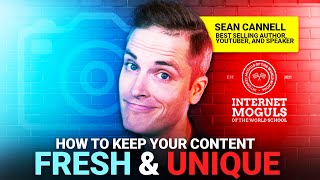
Sean Cannell discusses how to keep YouTube content fresh and unique, covering thumbnail design, competitive advantage, and monetization through affiliate marketing. He shares strategies for building influence and income on the platform while balancing entrepreneurship with family.
My name is Sean Cannell and my passion is helping people build their influence, income, and impact with YouTube. I'm the author of the number one best selling book, YouTube Secrets. I've grown multiple YouTube channels to over 100,000 subscribers. One channel to over a million subscribers. And I didn't start there. I'm a college dropout, small town. K. But I believe in the power of YouTube to share messages that matter, change lives, and build high profit and also high impact businesses that you want to amplify your difference by just being yourself. Be you times two. Don't try to be somebody else. You were born an original, don't die a copy. And so really just lean in on what makes you unique.
Hi, Sean.
Hey, how's it going?
Good, how are you?
I'm doing very well.
Thank you for taking the time out. This is. We met at San Diego.
Yeah, I remember. Nice to see you guys.
Nice to see you as well. How's everything? All safe? Everybody home? Everything okay?
Yeah. We feel blessed because everything is on our teams, healthy. My wife is 21 weeks pregnant. She just got back from a doctor's appointment and she's doing well, so we're super grateful.
Awesome. Knock on wood. That is so nice to hear. Is this your first child?
Yes.
Let me tell you something that you've never. That you've met, because now I can tell you something that you've never experienced. Okay. I'll tell you whatever you've tried in your life, this is the best experience of your Life. Your first YouTube, first hundred thousand people, whatever awards you got or whatever you did in school, college, I'm telling you, your first child, like, my first child right here is the most special thing in the whole world.
Well, that's good to hear. And I can't wait. Little bit nervous, but, you know, excited as well. So.
Great. So we'll jump right into it. So, Sean, thank you very much for taking the time out. As we said that, you know, between me and my two daughters, the younger one is busy with her zoom online classes, but we're building a new company called the Internet Moguls of the World, where we are traveling around the world, meeting people and requesting them for interviews, putting them into a book, podcast, online series, summit, all of that. And so Raya is juggling between 10, 12 hours of school and meeting people. We leave school, we go for appointments and all of that. And we've got all the. All the names that we follow. Not the best and also the ones that we actually resonate with. So it's really, really amazing for us to have you on this, this whole new venture. We call it the Daddy daughter venture, the Internet mobiles of the world. That thank you so much for taking your time out.
Yeah. So fired up to be a part.
Thank you. So you know what, we always say that on the Internet when I teach, I teach people how to, you know, how to do digital marketing, social media, lots of stuff with videos. So I always say that the shortest way to get to somebody is to tell a story. And so we've coined something called the hero introduction, which is when my hero introduction goes like, my name is ABHI Araya, father of two girls, six dogs, husband to a superwoman, a streetcar racer turned hotelier, now social media marketer and founder of, of Internet moguls. Sean, how would you introduce yourself and give us your hero introduction before we get started?
Yeah. My name is Sean Cannell and my passion is helping people build their influence, income and impact with YouTube. I'm the author of the number one best selling book, YouTube Secrets. I've grown multiple YouTube channels to over 100,000 subscribers and one channel to over a million subscribers. And I didn't start there. I'm a college dropout, small town kid, but I believe in the power of YouTube to share messages that change lives and build high profit and also high impact businesses.
Lovely. Love that. I'll let Raya take the first question. Raya, go for it.
So my first question is of YouTube. Hold on, let me just pull it up here. How do you edit your thumbnails to make it in a way that people actually want to click on it? Because that's the most, almost the most crucial part of YouTube, right? Is it the actual editing or the actual photo? How do you edit your thumbnails?
Yeah, YouTube thumbnails are so important. And it's funny because YouTube is a video platform, but before they ever reach your video, they have to click on a thumbnail. And so you want to make sure that your thumbnail gets attention, creates curiosity, gets people to stop the scroll, and really stands out amongst competitors, if you will, or the other noise on the platform. And so for our thumbnails, yes, foundationally I want to have good photography. I think the photo of if you're in the thumbnail, making sure that they can see your eyes or that there is, if you will, good lighting, good color. And then beyond that, you also want to make sure that there's some creativity to it. The thumbnails should have mystery. You don't really necessarily want to reveal what's in the video, you almost want to have it like what's behind door number one in terms of what's coming up in the video. So you're trying to tease the content. They if the thumbnail can be somewhat sensational. And there's of course the term clickbait. And clickbait inherently means that you sort of tease and promise something and you don't deliver on it. But the goal is to bait a click but actually deliver on the promise. Like what? That looks crazy or that looks interesting. But then in the video, people don't feel deceived as the viewer, they actually feel like, oh, and you delivered on that entertainment or that education. And so I believe thumbnails are an art form. And practically, if you're just starting, you can use free software like Canva or low cost online software. But for me, by this point in our business, we're doing a professional photography, we're doing Photoshop lightroom and editing of the photos and a lot of high level marketing strategy and psychology that goes into our title thumbnail combinations.
Got it.
Wow.
So, Sean, when it comes to somebody who's decently successful offline, there are many people now, especially post the pandemic, people who are, who never had time to focus on social media, they're like, you know, I'm decently successful offline. And what we tell them is, is that when you consult with a client, that's when your magic comes out and you are on fire. What if there were a thousand other people watching you consulting just that one client? And that is what YouTube is. You go and you consult with somebody and you shoot it. Either you document it or call somebody for a one on one interview. They interview you. Your brilliance comes out when people are talking to you about Your business and YouTube allows you to see that. What would be your thoughts on various ways that a business person can showcase himself and his products and services online?
Yeah, I think that you're exactly right. I think that one of the pioneers in the social media space, Gary Vaynerchuk. I know for me, I discovered YouTube at the hardest season of my life in 2009 when my wife almost died and she was in the hospital room for six days and I was by her side. And it was during that time that I was wondering, what am I gonna do in the future and how am I gonna make money? How am I gonna provide? And I walked across the street and actually bought a book at Barnes and Noble and it was called Crush It. Why now is the time to cash in on your passion by Gary Vaynerchuk. So he's been a big influence in my Life. And now 10 years later, I've modeled a lot of our social media strategy after him. And during this pandemic, even, he started a Q and A show where he's streaming daily. It's like Tea Time with Gary Vee on YouTube, on Facebook. And he's doing it for one to two hours and bringing multiple people on with software like Zoom or with a software that I like called Streamyard. And so in response to that, and I think it's the model that we can all follow, we started a show called Coffee with Cannell, and I use Streamyard, and I stream it on Facebook and I stream it on YouTube and I go for an hour to two about. I spend anywhere from five to 20 minutes and you send out a link and people can easily jump on. And I basically do free consulting, free coaching. And there's a couple myths that could happen here. Well, what, you know, why would I give away my services free? Is one that would that hurt me. I think another one is if I give away answers, then people won't even need to do coaching with me later or do business with me later. But those are both myths. What I've learned is it adds in a tremendous amount of goodwill, obviously, to that person. It. The audience finds it entertaining. It does get insights. But people, it also though. But what it does is just it platforms, your credibility. People show that you know what you're talking about. And then what they realize, though, is they still want to hire you or work with you in regards to, because they want your brain, your mind on their particular pain point. So I think you're exactly right. I think one of the best things you could do is start kind of kind of a Q and a free coaching show, do it publicly by streaming the content, create massive goodwill, because it's kind of like try before you buy too. And for most of us, our problems are more complex than five to 20 minutes. We can get a lot of unlocks, a lot of clarity during that time, but then it also just reveals the depth of knowledge that you have as a leader, as a business owner, as a consultant. And here's what's happened is our business has just exploded. It's given us a chance to talk about our products and programs just relationally in conversation. And people go, you know what? I do want to go deeper. And then the final point is you're able to cut out a snippet of that show. And so now it gave us an extra upload on our YouTube channel, where we go. Basically, one question, one answer gives us a powerful YouTube title, a powerful thumbnail. And when someone says, how do I grow my freelance business right now? I answer that question. And then that advice becomes platformed. I get more YouTube views off of it. I have YouTube ads on there. We get more interest, more subscribers. So there's also the repurposing content strategy. So I hope that added value. But I think, yes, consultants, business owners, those that maybe can't even do what they do right now, they can talk about how they do it and educate and equip others through consulting and coaching. It not only is something that adds goodwill, builds trust, builds your audience, builds connection, but it will lead to more business. And do not be afraid of giving away free information, because people really don't just pay for information, they pay for application. And that's what coaching and consulting is all about. And that will just get more people interested in you when you do that.
Got it. Perfect. That sounds lovely. You know, we also had this example of one of our students in India, and the lady is selling $5,000 worth of. Of Indian sarees every day by going live on Facebook live and just taking it like a shopping channel. And she's telling people what to do or whatever, and then she puts a link every 20 minutes. She does it for six, seven hours at a stretch. Makes $5,000 a day. You know, it's 10 times the amount of money in India.
That's amazing.
Great, Raya, up to you.
So my next question is, how do you find your competitive advantage, which is like your own, no one else can have it. And how do you sell that in a way that people buy your product?
Really, really good question. Deep question. So I think that the first answer to how to find your competitive advantage is actually to be confident that no one's going to do it like you're going to do it. God made each and every one of us unique and different, you know, and so we. Even if you do the same thing as somebody else, your background, your ethnicity, your age, your style is going to be doing it in a different way. And I want to encourage people that your vibe attracts your tribe. There's a lot of other. You know, I wrote the book YouTube Secrets. There's other YouTube coaches or YouTube experts or gurus, and some are female, some are male, some have different backgrounds, some come from different parts of the world. They have different life experiences. And so just being confident that you want to amplify your difference by just being yourself, be you Times two. Don't try to be somebody else. You were born an original. Don't die a copy. And so really just lean in on what makes you unique, practically. How could you do that? You know, the best practices oftentimes are the same across industries. They're the same across. But what makes you different is maybe your style. I think about the fact that I teach YouTube and affiliate marketing, for example, and a lot of how to monetize with affiliate marketing. I've got a friend, his name's Steve Dotto, and he has a podcast and YouTube show called Gray Matters. He teaches some of the same stuff, but he teaches it to baby boomers because. And he talks slower. He answers questions in a different way because he's teaching the same stuff, but also to a different audience. Think about that. Maybe you teach the same YouTube tips like me, but you teach them to stay at home. Moms who have limited time and have to create their content while the kids are taking naps. That's not my particular message right now. So even who you're talking to could be your point of difference. It also could just be the fact that some people want to learn from somebody that speaks their own language or that's more that looks like them or sounds like them. So that's one way to stand out. And I think you want to amplify your difference in that way, get clear on who your target audience is and your niche could be not the fact of the content that you're teaching. It actually could be the audience that you're teaching it to or that you're trying to reach with your product and your services. I think the other thing to do is to find the combination of your particular strengths and your point of difference. You know, everybody. I think eventually, like, you think about the personal development industry, there's Tony Robbins and you go, okay, well, there's already somebody doing personal development. Well, yeah, and you might think it's crowded, but like, there's plenty of different aspects of personal development. So what people do, I think about authors? How do they stand out? Well, there's already been a book on personal development. Well, there's thousands. Well, some people, they focus on emotional intelligence. And that was a really popular book. It's very important. There are some people who focus on grit, Angela Duckworth and like, you know, tenacity and resilience. So that's another aspect of it. There's some people who focus on mindset, and that's a great book about mindset. There's some people focus on nutrition, and that's a great book. There's the energy bust. Some people focus on energy and synergy among teams. There's. So I think it's. Sally Hogstead put it this way. She said different is better than better.
Nice.
Instead of trying to be better than the competition, you want to just figure out how to be different than the competition. And it could just be a small tweak. We're teaching a lot of the same information to get people to even the same destination, but your pathway to get there is slightly different because you're coming at it from a different angle. Simply, this goes into positioning, marketing, packaging. Those nuances on a product that's very similar could be the game changer. And that is maybe the final thing I would say, I think about health and nutrition and that industry, huge industry, multiple billion dollar industry of people selling neurotropics, selling protein powder, selling vitamins. And really what makes or breaks that industry is a couple things. Packaging, marketing, branding. In the modern world, understanding influencer marketing, you get connected with just a few of the right influencers, a few of the right Instagram accounts, a few of the right people representing your product. And so we ask ourselves, is it the ingredients that are different? Well, sure, they matter. Because some people might say, this is all non gmo, this is all organic. But a lot of times the ingredients are going to be the same in two products. The difference is going to be your unique positioning in the market. Why are you saying you're different? Because you, you brand yourself around a concept, around a particular group of people or a movement. And back to the original point, you might say, these are the best vitamins for women. And so you cut out some of the market by niching down. And so I think a lot of those tips could be part of putting together a strategy and not worrying about the competition, but figuring out how you could be different and then doubling down on your strengths.
Lovely. No, that is so detailed. And it's going to help our audiences so much. Thank you for that answer. Steve Dotto is a friend of ours, lives in the same city as us. We're from Vancouver. So, yeah, great guy. And I will notice next time that he speaks slower. Yeah. Yes, That's a fantastic example. Okay, so you know, a lot of people, you know, we also talk to corporations, small companies, and all of that. Big fear, big fear. Oh, I need a lot of equipment. You know what? I'm not ready. I need to shave, I need to lose some weight. I need to do this and everything. Not ready. My studio is not ready. How do you. What do you suggest? Like, you've got a fantastic studio. I've seen your YouTube videos. You light it up differently. Morning, evening, afternoon. I love your cameras. This is one of my favorite mics. Or maybe not. It just sounds good when you talk on this mic. So we follow you religiously and we love your channel. But if, but for somebody who's getting started. So let's give an example of this. This, this two people, one of them is very, you know, everything has to be proper before I get started. And the other person, it doesn't matter. I need to make money. And so is there somebody it can get. Can somebody get started without a budget? And for somebody who says, I, I need everything to be proper and I have a very little budget. Can you give an answer to both of them, please?
Yeah, absolutely. So if you're just getting started and you realize done is better than perfect and you don't want to wait for Amazon even to ship you a package, your smartphone is all you need. In fact, in both cases, I would recommend start with a smartphone. Now, maybe if your phone is 10 years old and you have the iPhone one, it might not be fast enough right now, you know, but chances are most people listening have a newer Android, Windows or iPhone and that's going to be good enough. The tips I would give you is consider avl. And AVL stands for audio, video, and lighting. And that doesn't mean that you have to get a microphone for audio or buy a lighting kit. But if you just have a smartphone, sit in front of a window and try to shoot during the daylight. Don't shoot in a dark room or don't be backlit. We've probably all seen the backlit person on the zoom meeting or whatever, and they're just a silhouette. You got to turn around and let the window light illuminate you. Consider the lighting, consider the audio. That could be as simple as sitting in a room that maybe has carpet and lower ceilings as opposed to a giant car, concrete, very echoey type of a room. By just changing your room acoustics, where you maybe record a video that could change everything. If you were shooting in one of your office meeting rooms, for example, and it just had some carpet on the floor, the room's not very large, lower ceilings, you turn all the lights on and then start shooting some Facebook ads, start shooting some YouTube videos, start shooting some live streams, just press record. Really, that's all you need. And the last thing, as I would think, is do your best to maybe find some shoeboxes. Or a pile of books. And I can't really describe it here, but if you could imagine you could find a paper cup. This is one of the best hacks. A paper cup cut out, put it upside down and then on the part where the bottom is cut out, a notch. Then you can slide your smartphone into that notch and it becomes a tripod that you can set on top of a pile of books or on top of something. So that way you can hold your phone widescreen, put it in that notch, hit record and go live on Facebook Live. Sit in front of the camera and deliver value. Remember, it is all about the content value. So much more than it is about the production value. For the business owners, the entrepreneurs, the Internet moguls, you know, watching, it's all about what are you teaching, what value are you delivering? Now people need to see and hear you. So consider AVL and just get in front of a window or turning all the lights on and making sure there's not too many echoes. That's great. For level one, I would say level two doesn't require much more. And that is order a smartphone tripod. It's just a little mount that'll hold your phone. Order an actual tripod and a lot of times they come in a combo so you could stand or sit or put it on a table because stabilization matters and getting that right angle. Order a microphone. One of the ones we recommend is called the Boya by M1. It's $20. It'll plug right into your phone jack. If you have an iPhone, make sure you don't lose your little white dongle. Or order a backup one so that you can get that actual jack out of that port. And then order maybe a softbox lighting kit. And those can cost as much as $60. Everything I described you could get for $100. $20 mic, $60 lighting kit and like a $20 tripod. Have Amazon ship that to your home or your office. And now you've got your audio, you've got your lighting, you've got some stabilization, and then you can just press record using your smartphone and people will be able to see you and hear you better. If you ever want to watch a video, go to YouTube and just type in how to make a YouTube video with your phone. And we actually have a 45 minute tutorial of how to shoot, how to shoot the thumbnail and then how to edit and upload using free apps on your smartphone. Every single step to make a YouTube video. And there's also some recommendations in that video of Some very low cost gear, my friends. I think that that's all you need to really create content in the modern era. And in fact, I would recommend starting even if you have a budget and resource to get more. I would still recommend starting with exactly what I just described because I've learned that creativity works best in constraints, that complexity is the enemy of execution. And it takes time to learn a fancier camera. It takes time to learn fancier editing. Start on your phone, keep things simple, and then you can scale as you go. Someday maybe you want to hire a videographer. Someday maybe you want to learn editing. Don't do that yet. Start simple and get your videos on the Internet, get your live streams going. And then as you get more comfortable, five, ten years from now, maybe you eventually build an entire production studio or podcast studio. But too many people, I think, wait until they have everything perfect instead of just creating messy and do both. Create and upgrade as you go, but don't ever stop creating.
Got it. That was fantastic, Raya.
Yeah, that was definitely a reminder to me. Okay, so my next question is our definition of an Internet mogul is someone who can use the Internet to grow their business, you know, like building on YouTube and Facebook, but can also spend time with their family in equal amount as a family person. So what is your definition, what is your personal definition of an Internet mogul?
Yeah, I would agree with that. The way I think about that is kind of being a world class entrepreneur. And so being world class to your definition doesn't just mean that you've been successful financially. I would just agree 100% that I think to be a truly world class entrepreneur, it's going to affect a couple different areas. I think it's going to affect your health, it's going to affect world class levels of energy. And so beyond taking time to exercise, it means kind of just what you eat, how you treat your body. I think your spirituality is a part of that piece. I think you're of course a world class business. I think having a world class team, one of my stipulations is we don't hire anybody on our core think media team that I wouldn't want to go on a road trip with. You know, we have a team of 11 and so I definitely know that if you were going to build a staff of 250 or 500, you're not going to be in relationship with everybody. But the nature of our business is I want people that I want to hang out with that I want to like we're actually building our company as a family, then actually family itself. To your point, I think what good is it to climb to the top of the mountain only to realize you climbed the wrong mountain? I don't want to be at the end of my life and have those closest to me not love or respect me or say they never saw me. So we work really hard and I believe that world class work ethic is putting in the grind and the hustle. That's what we do as entrepreneurs. But in 2019, we probably took four dark weeks off. We take weekends off, get enough sleep. I believe that's part of world class health. There are seasons. Whereas entrepreneurs, we have hackathons, of course, and where we maybe crush some red Bulls, but that's not a lifestyle. Your lifestyle, I think is pacing yourself and being healthy. And then I think kind of the final area is world class impact and legacy, that you're doing something bigger than yourself. And whether that's. I believe that, you know, it's not just that we have to be philanthropists. I believe that it actually is. It honors God to have a business that serves people and provides value in exchange for money. Like, it's not just giving to charity that changes lives, it's business that changes lives. It's doing a good job being a man or woman of your word and delivering value to customers. But on top of that, I think by building a powerful business, it gives you the chance to give back as well. So to truly be an Internet mogul, to truly be a world class entrepreneur for us, we give to our church at crazy levels and we support 25 kids through an organization called Compassion International. We're able to jump on and take care of causes or whatever it is we want to get a part of. If maybe there's a tragedy in the world and there needs to be relief, I think that's the power we have as entrepreneurs. And the impact and legacy is our team itself. I mean, when you're an entrepreneur and employing others, you're feeding, supporting them and hopefully their lives are benefiting from being connected to you. In summary, I think that to really live a life of being a high impact Internet mogul, that means health, energy, legacy, impact, family, team, peace of mind and spirituality. And it's really all the things. And don't get me wrong, I'm definitely not sitting here to say like, I got all of that together. I think it's a journey of working on each of those areas one by one. But I don't want to be out of balance. I don't want it's like the guy who goes to the gym who's got crazy big biceps and two little skinny legs, right? Because he never, he always skips on leg day. I think that to really be a world class Internet mogul is to be aware of the different areas of life and be working on those weaknesses because they all matter. And that's my definition.
Love it. Love it. Most people focus only on the revenue numbers and like you said, the hackathons and the courses they've sold and all our audiences watching, we've been able to build a community of almost close to 200,000 people, everything. So for all the people who are watching, all our Internet moguls who are watching. So use that. Talk about your message, you being original, all of that. You explain that now when it now. I've been doing that for a while. I've got 100 videos. All that now is it. I saw, you know, my daughter and Ariah and I, we met, we met Gary Benacho a couple of times. We went to the office, we had a good time. He's been awesome to the, to every mission that we've been a part of. I met, I saw one video of, of one of his, somebody who was interviewing him and he said that the gentleman who was interviewing him said he had less than 20,000 followers on YouTube and even making $200,000 a year because these people were connected, they were his relevant clients and all of that. There's a popular misconception that unless I get a million people, I'm not getting anywhere. So what are the various ways of monetizing YouTube and can you have a small, tight knit community and still run a business out of that?
Of course, I think the famous article was written by Kevin Kelly called 1,000 true fans. And it was the idea that it wasn't necessarily that you have a thousand YouTube subscribers, but if you have a thousand true fans, these are people who will do business with you. And if those fans were to, let's say just buy a T shirt, if you use the example of merch and they bought a $20,000 T shirt and you release four shirts a year, well, if 1,000 people buy a $20 T shirt, that's $20,000. And if you did that four times a year, that's $80,000. If you monetized in a couple other ways, you could have a six figure income off of only 1,000 true fans. Maybe you have 10,000 YouTube subscribers and a thousand of those people love you. And when you launch something new, they jump in. Now of course, if you had a thousand true fans and you created a digital product or an online training course, that was $100. Again, if they all bought when those 1,000 true fans bought it, then that would be $100,000 income and you could scale that into any way you want. So when I think about the different income streams, that's probably one of the biggest blocks of YouTube minded creators. And our biggest advice in think media is actually that you actually shouldn't ever call yourself a YouTuber, you should call yourself a businessman, a businesswoman, an entrepreneur, a video creator, an entertainer. Because YouTube is just a medium and you need to be, it's a, it's a vehicle to deliver value and to communicate. It's not a mean into itself, it's not the end, it's just, it's a pathway and so you can accomplish anything you want. We have students that are real estate agents and so Steve Panetta is part of our training program called Video Ranking Academy. He Maybe doesn't have 2000 subscribers, he's got 1332 or something. His videos get anywhere from 20 views to a couple thousand potentially. But yet he's one of the top agents in his company because he delivers value in a particular region here in the US and at the top line of his description it says give me a call or shoot me an email. And so he's selling homes, you know, flipping homes, doing his whole thing in real estate. So I think it's about defining the business model that you're in. I don't recommend starting with multiple streams of income necessarily because if you spread yourself too thin too soon, you never actually get one really generating. But now we're five years into this. I'm over 10 years of building on YouTube, five years full time as an entrepreneur scaling to multiple seven figure business. And so our income streams include we've done a million dollars in affiliate marketing, just getting a percentage of recommending other products. We've done multiple millions in our own digital products, coaching, online events, masterminds. We have our own. I don't recommend starting with multiple streams of income necessarily because if you spread yourself too thin too soon, you never actually get one really generating. But now we're five years into this. I'm over 10 years of building on YouTube, five years full time as an entrepreneur scaling to multiple seven figure business. And so our income streams include we've done a million dollars in affiliate marketing, just getting a percentage of recommending other products. We've done multiple millions in our own digital products, coaching online events, masterminds we have our own physical event called in Person called Growth Video Live. We have the number one best selling book, YouTube Secrets. So if you write a book, we have ebook, physical book. The audiobook has been incredibly lucrative, even giving away. Hey, if you sign up for a free trial of Audible, Amazon pays you a certain commission just for that trial. And they give you like 50 bucks if the person becomes a member right up front off of one audiobook that they sign up for. So we've got also other affiliate programs we're a part of. We do have merch now so people can buy hats and shirts and mugs. We have YouTube ads, which has become very lucrative as our numbers have gotten bigger. You have YouTube super chats when you go live. So this is just when I added up. We actually have something like 16 different income streams and arguably over 50, if you thought about individual affiliate programs. Yeah, so. And it's taken a long time to build that. And if you focused on too many things too soon, it could be. I think it could be negative because if you try and chase two rabbits, you end up catching neither. I think the vision is to chase one rabbit, catch it, tame it, train it, get it working for you, delegate responsibility and authority to that rabbit and then move on to catch another one. And that's getting automation, scalability set into your business, eventually getting a team around it to manage these different projects. But I think that's the vision of what's possible with YouTube, because at the end of the day, YouTube is influence, YouTube is authority. YouTube is a legacy. It's a pillar and a place for you to be known, for you to add value to your current community as well as new people that meet you. And that can lead into any kind of business you want to build. It's marketing, It's a billboard, it's a television commercial. It's a place to just get your message in front of people. And whatever your message is and whatever your business model is, it's jet fuel to that business model if you use it right.
Perfect. Love that. You know, so Raya and I and my entire family, we went to Disney Disneyland in January. And Raya came back and said, dad, I didn't like that you paid for everyone. I want to pay you back, so how can I pay you back? So she says, I'll get a job. I said, that's going to take forever. If you want to pay me back and you want to get a job instead. You planned the. She planned, I paid for it, but she planned the entire journey because she hunted around for tickets and all of that. So I said, why don't you launch a video how to find the best deal and which are the four parks to go to. If you have only one week in Disneyland, do that and get a affiliate from the Disney tickets, which are about 30% and that could help you pay your dad back. So we started thinking about that.
That's amazing. And that makes total sense. That's the world we're living in. And I think creativity is the new highest form of currency because when you start knowing about paths like that, you, you start realizing, wow, I can monetize my lifestyle, my passion, I can monetize things I love to do in so many different ways. And it's about learning these skills.
So how did you. Sean, I'm very fascinated by your affiliate business. We know that, you know, you, a lot of people are like, how can I sell? How do you get started into the affiliate world with YouTube videos? Because you sell everything. But I know that you use this stuff, you're, you know, and your words become authority. Now, now I don't, I just go and I see what you say and I buy that same stuff. But how does somebody new in the field of it doesn't have to be cameras and technology, digital marketing, it could be anything. How would a newbie, an Internet mobile, looking at this, start their own affiliate marketing business using YouTube?
Yeah. The exciting thing about affiliate marketing is I believe, number one, anybody can benefit from it. But number two, not everybody can make it even potentially a full time income or a main source. So when, I mean everybody can benefit from it, I think that there's some niches or industries where your pathway to profit would be something maybe more like direct selling, creating your own product. But you always could recommend some other things you use on Amazon or a different program and create an extra income stream. With affiliate marketing. If you wanted to actually make affiliate marketing your main thing, picking the right niche is critical. You want to be in a profitable niche. So you mentioned even on Amazon, for example, it would be very hard for beauty and lifestyle influencers to make significant money on Amazon because it's lower ticket, it's lower ticket items. Whereas for tech, for me, even though I only get 4% commissions because we're an authority recommending $1,000 cameras or $2,000 cameras or even 500, and we sell them at scale, just last month we made just short of $40,000 profit from Amazon.com, almost a million dollars in top line sales for Amazon. There's your 4% 40,000 was our cut of a million in sales for Amazon. Now mind you, that's also in a way kind of bad because if you were selling, you know, on the phone or if you have your own product, 4% is a tiny little piece. But they're doing all the heavy lifting. They got all the customer service, shipping returns and tech margins are not very big anyways. Like when you think about the hard cost. I have a friend that actually owns a company called Dve Store. A lot of times 80% is eaten up by just the product itself, his margins. And then you have shipping overhead, employees, team. So the fact Amazon gives you 4% on a camera is actually still pretty staggering. If people don't feel that way. All that to say is pick the right niche. So if I'm a beauty youtuber or if I'm an influencer that's doing maybe something in health, I may be looking for other affiliate offers that could look something like this. There's some affiliate offers that are cpa, cost per action. Maybe it's teeth whitening. And everybody that signs up for a free trial of this teeth whitening product, you actually get paid $8 just for a free signup or some affiliate commissions that will give you 80% on the front end offer. And maybe for $100 of something that's in skincare or something that's in health or in the health industry, $100 sale, they give you $80. And that's way more than 4%. And so I think it's about thinking through your industry. I think also when it comes to affiliate marketing, the info products are a huge, a highly lucrative industry to be in. This is jvzoo and Commission Junction. Not Commission Junction, but Share sale. Not that one either. ClickBank. So JVZoo and ClickBank sell a lot of, they sell like digital products. There's products that are like how to train for a marathon. And it's maybe a $100 course or a $300 online course, but they'll give you 50% commission on that. Where 80% or some of these offers will give you 100%. I know especially if those people plan to sell something on the back end, they will give insanely generous, you know, 100% affiliate commissions upfront. Because the fact you're going to blog, create content, make YouTube channel podcasts to bring in those leads, that's what it's worth it to them to pay you. So when it comes to affiliate marketing, I think it's about picking a profitable niche. Your questions are, is there High enough commissions in this, Is there high enough profits in this? Is there high enough interest in this? And those things that have high interest are those things of things like beauty, teeth whitening, skin care, anti aging, the things that keep people up at night, people struggling with sleep, CBDs blowing up right now, network marketing, direct selling around topics like that, of course, biz dev or biz op types of things. And I also would say, you know, my ethics and my character and whatnot. I think there are aspects of affiliate marketing to avoid. Of course, you always want to stand behind products. You believe in, products that truly are transformational. But that's when you find the synergy of something that will really help somebody, something you really believe in, something that has high profit margin and high impact and something that you can get behind and maybe you want to tie into your brand. That's, I think, the sweet spot. Let me give you one example on my Sean Cannell channel, I would do more there with high performance. I don't post there a ton because of think Media, but I'm into, of course, high performance, health leadership type stuff. And so I do like to review products in that space. And I also use it as an example of case studies to show our students how to do it and what to do. So I did a video called Best Greens Powder. I love green juice, but when I'm traveling, I can't always get fresh green juice. So I discovered a product from my friend Lewis Howes called Organifi. You get these little vials of or little packets of powder you mix in a water bottle to get kind of some grains, some nutrition on the go. And Organifi is not only a product that I tried and loved. I discovered that their affiliate program was 30% commissions a bottle of Organifi for a month supply, unless you buy multiple bottles, cost near $100. And you could get. So you get $30 per transaction. And these are the kind of questions you want to ask yourself with affiliate marketing. Is there continuity? So if somebody goes, I love this. I want to subscribe every month for life. Organifi will pay you 30% every month when that product ships. So theoretically, if you got 100 customers at $30, that'd be $3,000. And if it was 100 customers love the product for the next 10 years of their life, you would get a $3,000 check every month for the rest of your life. The truth of that video for us leveraging YouTube, the way we teach, when people search for Best Greens Powder, they find that video they See my review and I talk about my experience, how I love it, how I use it, something I still drink today, and then they click that link. That video has generated around $1,000 in YouTube ads. It's a three year old video, but pays me about $300 a month for the last three years. And it's generated around $13,000. One YouTube video through a product that I don't ship, I don't supply, I didn't create. And so affiliate marketing to me is recommending products, you know, that you like, you believe in, you want to pass along and recommend to friends and family. There's other business models you could build with it, but that's the way I see it. And I think finally the biggest, the biggest opportunity is to pick a niche. I just discovered one. I'm really into neurotropics right now, right? Like B vitamins and like these different. I don't even know if they work, man. I'm just obsessed with them. And so I got like Brennan Burchard's, I'm like researching other ones. So people set up like a blog and this is how you could do an affiliate marketing niche blog. They review all the neurotropics they, they have, they rate them, they review them, they make videos about them, podcasts about them, YouTube videos about them, and they compare them. And you get someone like me going into that blog reading and trying to make a decision. Well, I learned that some of these products, one's called like Mindshift or something, their affiliate program is like 30% or 50% on a new customer. And so by really all you need to do is set up like a WordPress blog, build an audience, become the go to expert on neurotropics. Tons of people are searching for them, looking for them. And all of these different supplements have different affiliate structures. And you send people to Amazon to buy them, some people direct to buy them. Build an email list and recommend your top products. Realize you can then recommend similar stuff. Probably not baby supplies, but if you're into neurotropics, you'll probably, probably also be into like turmeric and some other things. So when you build up a niche audience, and I think this neurotropic blog I was following, I think it's actually a big company that probably makes their money predominantly, I mean, probably like 10 people, because they've built up influence around a profitable affiliate vertical and they've just inserted themselves into that conversation and they make money through affiliate marketing.
That is amazing. Yeah, we all, you know what we. What we do sometimes is and would love to get your feedback on this. What we do is we tell we if there's a tool or services or whatever, you know, we work with businesses that they buy those tools and we say here's an online course of ours. Either you buy the course on its own, but if you're buying all these tools and all of that, this course comes at a. So we give them the course to be able to understand how the tools work as well. So, you know, they get support from us to be able to use the tools and the tools keep paying us recurring income as well.
Yeah, that's brilliant. My friend Pat Flynn does that like ConvertKit. I think for. He might have been making like 30,000amonth or something on either ConvertKit or the other one, ConvertKit.
We've had a couple of chats with him.
Ryan, I. Yeah, and then. But just. But delivering massive value because then. And that's so people wonder how do I get paid for giving out free information? Well, show them how to use it. Be the support person, be the person who comes alongside. And because you're also paid in continuity for that software subscription or whatever, then that is an incredible model and it's a win, win, win. It's a win for the software producer who needs customers. It's a win for the person who will not only wants to leverage to get the most out of that software and then it's a win for you because you're able to pay the bills and scale your business all at the same time. That's what I think business should be. It should be a triple or quadruple win for everybody involved. And that's, I think affiliate marketing done right is when it's a win, win, win, win.
Lovely. Love that. Sean, tell us. I see your videos regularly. I see your morning coffee, your blue T shirt in the morning and your everything is so pristine. You always look like you're in top shape and all of that. A lot of people come up with these questions in the intranet moguls community. Avi, I've got issues happening at home. I'm insecure. I get up anxious, I get up scared. I show up in the world, but I'm scared inside. And I said, I know that I'm anxious. I said, I know that we know. How do you put yourself out there on a video every single day? I know I need to build my YouTube channel. I know I need to get this affiliate income. I need to do stuff for my family. But I don't feel very Good inside. What would be your message to people who need to show up every day and say, either they feel judged, you know, I'm too fat, I'm too skinny, I'm too abc, black, brown, whatever, or I'm just scared and anxious or whatever. How do you deal with this to put yourself out there? Sometimes, you know, I like just saying, I say, I tell people, I said, when you do put yourself out there and you get a comment from somebody saying, you know, I was going to. If not for this message, I don't know what I would have done. So sometimes you feel that you're doing it for other people, and so that makes you feel good. But that doesn't really start the fire. So I'm just looking for something to, you know, for. To lift all of these moguls up.
Yeah, that's great. So I think there's a couple levels of it. The first one is you have to start before you're ready. Like, ready is a lie. You got to start messy. You have to truly punch perfectionism in the face, punch fear in the face, and press record and be willing to practice in public, understanding that your first videos are going to be your worst videos. And so just the action of pressing record, scared, pressing record, feeling anxious pressing record and being awkward on camera, pressing record and judging yourself, pressing record and you don't like how your voice sounds. Pressing record. And you said, you know, and so much, and you barely felt like you made sense. It's getting up and doing it messy, and then it's getting up and doing it over and over again. For me, I had the privilege of starting video back in 2003 when YouTube hadn't even started yet. YouTube didn't start till 2005. And what happened was I was volunteering at my youth group at church, and I was in the Wednesday night at youth ministry. I would make weekly video announcements, and they were terrible. Like, these are the worst videos you've ever seen. But I had to make them every Wednesday night because we had youth group every Wednesday night. So I. Little did I know that I was building my muscles for creating content online because I had to make a weekly video before any of us made weekly content or daily content or posted because it was playing, you know, at this youth group. And what I learned was that you just have to start and put out a lot of bad videos to get to your good videos. What I also think is the opportunity is that you want to use your season in obscurity to prepare you for popularity. So what I mean is you also think, I'm gonna get on there and people are gonna judge me. No, you're gonna post a video and no one's gonna see it because you don't have an audience yet. You're gonna post a video and you wish people judged you. If guess that would mean there's actually people there to see it. Whereas the reality is when you first post, like, people go, how could I go live? No one's gonna be on there. And I go, you going live isn't for them, it's for you. You. It's a blessing. No one's on there. You should go live. Here's a challenge every day for the next 30 days. Why? To build your business? No, to practice. Like, to just build the discipline of doing it, of trying it. And then what should you do after? You should watch it back and take notes about how you could do better. Don't be overly critical on yourself or don't be overly even, you know, blind or delusional about your talent. Just watch it back. What is Michael Jordan, Kobe Bryant, what do they do after a game, Rest in peace. Is they would watch their game tape back to think about how they could do better. And so there. It wasn't that they would have ever reached perfection. They're just constantly working on, leveling up their skills, leveling up their talents and their abilities. And so you got to start messy. You got to start before you're ready. And so that's for me, in answer to your question, it was doing it a lot. I've been doing it for years. And then I think more direct, to answer to your question, it's also about doing the inner work of building your confidence. It's about doing. There is something about. I would say this, you know, post your video with. Exactly. I've also learned that people really resonate with relatable. So don't try and be. I think there's something about being both. There's something about putting your makeup on, having the good lighting, having the great outfit, and putting on a video that's gonna be the professional front facing video on your business website. I think the power of Instagram stories, though, is as soon as I get off a run, sweaty, you know, dark circles under my eyes, like, you know, whatever it is. That's how everybody is. Like, nobody gets up with good breath when they get out of bed. You know, we all got to brush our teeth. Like, we all. And people relate to real. So I think it's knowing that I think there's two sides. I know people Want to be professional, you should share that side because you are a professional. You're an entrepreneur, you're an Internet mogul, but you also share your real side, your relatable side. And people connect with vulnerability. Maybe entrepreneurs are trying to build businesses from home with kids screaming in the background. And what do I do if that, you know, that's happening, that's real life. And I've learned that depending on who you're serving, sometimes there's communities of mom entrepreneurs that I know or they influence that. When the kids scream during their zoom call, people are like, oh, man, I can relate to that. You could do this. That could actually be building a bridge and you're waiting till it's perfect and you want the kids to shut up and you, you know, when in reality, you just want to press record and get started. And so I think that's what it is. And it's a lifelong journey. Here's the bottom line. Try and get 1% better. With every upload. Try to just get 1% better. With your next live stream. Try to just get 1% better. I've been trying to get 1% better for over 15 years. And so it might be intimidating to see me on camera these days or to see me. Keep in mind, I've been doing it just like anybody if they were going to the gym, I'll tell you this. The way you get, by the way you get muscles is by going to the gym. Clearly, I have not been going to the gym. I run, but, like, there's no biceps here because I haven't been doing the bicep curls, right? And so I got the skinny arms. The way you get muscles and content creation is by showing up and doing the bicep curls and by doing the push ups. And there, in a way, there's no shortcuts. You don't get to be the ripped, the ripped body without eating right and showing up to the gym. Not for a day, not for a week, but you got to just. It's a lifestyle. So I encourage people start messy and then just embrace the lifestyle of creating content. What will blow your mind is when you just commit to it. You might feel awkward for three months, you might feel awkward for three years, but you have to develop these skills now because even though there's massive opportunity now, the world is going more this direction than ever before. And my God, this pandemic has shined a spotlight on. You got to have an online offer, you got to have an online business, you got to be on YouTube, you got to Be live streaming. So you might as well get through your awkward videos as soon as possible. You might as well practice. If it takes you two years, it doesn't matter how fast you go. Position plant seeds today for the harvest that you want to reap tomorrow. Start positioning yourself now to be at scale, at speed in 2023. And that sounds like a lot of work, but that's the nature of building businesses. And again, I was not great on camera on my first videos, but now I'm great on camera because I just refused to quit. I started before I was ready. I kept showing up and I kept punching fear and perfectionism in the face and pressing record.
Lovely. Love that. We have just about five minutes left. I have two short questions, but before that, can you give a shout out because we're about in. We're about two, two and a half months away from the launch of the entire program. It's an online school. We are launching, we're already building a community. We have about 200,000 people online school, a podcast and a book almost to the quality of tools of titans. And we've got all the, all of the best hearted human beings there. So thank you very much. So can you just give a shout out to. Hey, Internet moguls. My name is Sean Kanal and I'm coming, I'm doing this for the Internet moguls and you know, be ready for the launch or whatever. Just a short clip.
Yeah, yeah, yeah. So hey everybody, I am so fired up for this daddy daughter launch. And so to the whole Internet moguls community, this is going to be a game changer. So get ready, get your mind right, get your grind on and dive in because we're getting started now.
Perfect. Thank you very much. You liked it, right? I love that too. That was awesome. So Raya has been at it, I mean, she's worked hard and I'm, you know, my this thing was somebody told me a couple of years back because, you know, I run an agency with 200 people in the agency, Sean. And God has been kind. I built a hotel business with my dad when I was 18. I'm 43. When I was 18, the Internet is just about coming to India. I was the first ever hotel website in the country. Google did a case study on us. You know, like 25 years ago we just because of the Internet, I built a couple of websites and they started to rank in a week's time. My dad was struggling with loans, his first small hotel. And in the next five years we were able to build four Hotels just because my Internet thing blew up and I became my dad's favorite child and all of that. And so things changed. And then people said, I love your story. What else are you doing? I got overconfident. I got 100 travel websites. All of them bombed. Four of them did well. And I was making about $1,000 a day in 2005 through affiliate marketing to travel. And then finally the world got around. A new company called TripAdvisor came to India. They got me on a stage, they told me to share my story. I shared my story to 4, 500 hoteliers. People said, can you start? Can you do this for us? And so then I started an agency in 2009. We started with a four member team. Today we had 200 people in that company. However, now, because of the pandemic, that 200 people team and because it's hospitality, our 10 years of hard work has sort of just come back to this thing. And so our hundred percent focus is, you know, I said, I'm done running around the world, spending time and always not being very happy that I'm not spending time with my girls. So I said, let's start this venture together. We'll build it together the next few years when you're with us until you go to university. We'll do it together after that. I keep sending you your monthly check on the partnership that we have. So that's our venture. So thank you very much for doing that. My second last question was building slowly. And this is more for me and some of our people in our organization who've been doing this for a longer time. So I get a couple. I get a. I get a. I've started getting a decent chunk from affiliate now is it. But it takes a long time. You keep on building, you keep on building. Can you do Facebook ads or YouTube ads and directly jump the. You know what I'm saying? Because if you not maybe in 4%, but there are tools, maybe 30% maybe just run ads.
So you can. I wouldn't be the person to give advice on that. What I do know is that that's risky. And what you're talking about is simply arbitrage of money in with Facebook ads, money out with an affiliate offer. And people do that in all kinds of ways, whether targeting people with print on demand T shirts. And it's just the Facebook ads, the print on demand and the arbitrage in between what I've done. And so the answer is yes, we've never done that that way. We only do paid Ads with pixel conversion to our own products and offers. So we just know that money in equals money out with what we can control. And not only that, there's I think what you certainly could do with affiliate marketing too. But I think there's the retention of lifetime value and building customer and brand. Whereas affiliate marketing people do that as well. You're smarter to get an opt in first build an actual list of people interested in neurotropics, potentially ROI on the affiliate transaction up front. But then also have an email list where you could find follow up because probably and I'm just learning this, I mean I'm not. I haven't been an entrepreneur for very long. I consider myself so a beginner. And that is lifetime value though that really so many people in the modern world we think about just one transaction like Facebook ads, one transaction as opposed to what lifetime value could really look like and what building a brand and legacy could look like of having a customer. Not even what LTV is for your current funnel, but like what is LTV for the next 10, 20, 30 years. One of my mentors, Chalene Johnson, talks about that she's had what she calls lifers for decades now. People who've gone through fitness with her, personal development with her 1:3:1 diet with her marketing with her, building a business with her. Like just everything year after year after year it continues to stack because of the relationship and the community she's building. The final thing I'd say is what way we've done it is we've put sweat equity into creating content on YouTube that ranks in search, which is our expertise and we're very good at it. So those videos continue to get views 24, 7. But the investment is our sweat equity. So again and then I have used that money because that's how we built the whole thing that was the first income stream was YouTube plus the Amazon affiliate program with tech is the niche. And then I used that income to fund other things. So much so that even if we failed at Facebook ads at times and spent 10,000 and only did like 11,000 and by the time you paid some people you lost money, it always was the Evergreen Generator. YouTube is a search engine by the way. It takes a ton of work. I mean if you're completely to build a library of ranked videos and to build a brand, but once you have it, it's this crazy snowball effect that at least and by the way it also has a lid like we've made crazy more amount of money by having our own products than we have with affiliate, but affiliate is a foundation for us, like I told you, 40,000 in the last month on Amazon. Again, we did way more through like our digital products and programs, but those come and go different seasons customers. Whereas there's this YouTube ranked videos affiliate engine that's nonstop and, and that gives us leverage to take those dollars and invest them in humans, invest them in building something, invest them in an experiment somewhere else. So all that to say is yes, I think you could do arbitrage on affiliate offers. The only thing I've learned from peers who do it is you got to watch it like a hawk. It's like as good as you could have a great week and a great month, but the next month it could disappear or flip and all of a sudden you're negative in terms of ad spend and or conversions. And this is true, by the way. It's true for the YouTube algorithm. It'd be true for Facebook ads as well, I think, or any ads. You know, pre pandemic ads were brutal, hard to get approved, very crowded, getting pretty expensive. And so a business that is maybe sustaining you doing that for a couple months could potentially go away. Whereas the organic YouTube trust we've built and ranking and authority again, it's algorithmically kind of dependent, but it's not dependent on the rising and lowering of ad costs every month. Now flip it. We've learned that during this pandemic it is a flash sale on digital marketing. Right now it is insane. So we're doing like this big challenge and an ad cost is crazy low. It's like 10 years ago. And so all that to say is there's good times, there's bad times. So I think that would be.
It's all understood.
Yeah, yeah, yeah, yeah, yeah. Long term versus short term, can it work? Yes, but I'd probably always be building something else that's maybe more of like a long term brand.
Got it, got it. My last question I was waiting to ask to the Raya, do you have anything?
Okay, I would just ask. I'm going to start on YouTube pretty soon. I've started vlogging on Instagram. But I know that the length of the video matters. But what else? How do you get people to watch the whole video?
Yeah, so I would say when you're starting, start with shorter videos because nobody knows you yet. So even if they see that the video is 9 minutes or 12 minutes or 18 minutes, that's a lot of people's time. If you could be brief, be bright, be fun and be done on Your first couple videos that they go, wow, like Raya's like it was funny, she owe my attention. So even if you're vlogging, make a three minute vlog, make a two minute vlog, like that was fun. I want to subscribe. And once people get to know you, they'll hang out with you longer. You know, I do hour long live streams, but ain't nobody want to watch that if they don't trust me yet. They want to meet me in five minutes and go like, oh wow, let me listen to them for an hour. So start with short content, constantly study your average view duration and your YouTube analytics would be the second tip. You know, it's hard, it's hard to hold viewers attention, by the way. It's hard even if you have the greatest thing of the. Listen to this. Netflix, right, spends 10 million, 100 million, 150 million on an eight episode show, hires a cast, designs graphics and can't get people to watch and maybe just gets impressions. People watch 10 minutes of episode one, don't like it, don't finish the show and they lost $150 million. If Netflix is struggling with $150 million budget on a eight episode series, you really gotta ask yourself how, like how am I gonna hold attention, you know, on YouTube? So my point is that's why starting slow, getting to know people and then just mastering, studying where people drop off and kind of how to hold attention. It's kind of a lifelong journey and that's not meant to discourage you. It's just meant to think about. I would say start, start slow and really get good at studying analytics and then don't be overly critical of yourself at the start. Be willing to create 100 videos that whether people watch or not, whether people come or not, that's not the point of it. Your first a hundred videos are like your bootcamp. They're just your practice session there for you to start understanding analytics, understanding YouTube, meet people along the way. I actually believe you'll be massively successful even during those a hundred videos. But I almost want you to push that success out of your mind and really just focus on the discipline, the work getting better and thinking about what can I learn during this first a hundred videos, almost like this BC and ad that these are like the first a hundred videos are like the BC years and then like year one is video 101 and so that you're not. We just started a podcast called the Think Marketing Podcast. It's uploaded once a week so we will upload at least 52 episodes in the first year. And I told my team, year one is just experimentation. Year one is just beta. They're like, what? We're like, just working. Yeah, I'm not even. We're taking this seriously. We're working as hard as we can, but I'm not judging the results. I'm not expecting this to be profitable. I'm not expecting this in the first year to like. I will consider us just starting after year one, that the beginning of this will be after year one. And we're going to work our faces off during that time. That's your boot camp. That's your practice season. That's your season to learn a lot and almost then think about, okay, now I've done. And so 100 episodes in year one would be two a week. That's two uploads a week, 52 weeks. You'd upload 104 videos, take two weeks off for vacation. 100 videos, two a week, 50 weeks. You'll learn so much. And then I also think that's smart because what you learn out of that is gives you so much better insight to make more educated decisions of what you actually want to build. People say, what should my YouTube channel be about? What should I want to be? What business should I build? And I'm like, post 100 videos and you'll get clarity. Don't try to get clarity by not taking action. Post the videos. You'll learn about yourself, you'll learn about audience, you'll learn about all kinds of things. You'll learn how to speed up, and you'll get. And then also keep studying as you do. Keep being a part of stuff that's going to level you up. That's what I think we will have learned so much about podcasting that will be able to truly develop a podcast strategy after year one. Too many people over optimize at the start, overthink at the start, and even over strategize at the start. You need a game plan, but you want to start messy. And you use that as your research and development season. And then you've got so much data, you'll launch something amazing. And by the way, most people aren't willing to do that because people go, wait a minute, like, I have to post 100 videos before even starting? Yeah, that's R and D. That's like literally, research and development is money you may spend that you don't see a return on. But what did you see a return on? The education, the insight, the one patent they found the One detail they found out of that R and D season, I think that's the pathway to true greatness on YouTube because it's kind of willing to be experimental and to test things out and to be not overly judgmental during that first year.
That was brilliant. Sean, thank you so much. It's been an honor. This is just a book. This is our first venture before Internet moguls of the world. Bedtime stories for tomorrow's entrepreneurs.
I love it.
So thank you so much, Sean. You know, the last section of this is your challenge for the Internet moguls. Give them a challenge. At the end, we ask every guest to give our moguls a challenge, which they will go and then eventually they'll come back to the Facebook group of Internet moguls of the world and post their challenge or whatever you want them to do.
If you've started a YouTube channel already, I want to challenge you to post at least one video a week. No matter what. Come hell or high water, post one video a week. No matter what happens in your life, post one video a week. It doesn't have to be fancy. You have to show up for your audience. Consistency is credibility, and lack of consistency is where we lose credibility. You have to show up. So show up at least once a week. Show up with value. Show up with a quick tip. Show up with something. And if you haven't started a YouTube channel in the next 48 hours, I want you to start a YouTube channel. I want you to grab your smartphone, I want you to put it vertical like this and put it in selfie mode. I want you to hold it up, and I want you to shoot a video that's one to two minutes that looks something like this. Hey, I'm Sean and this is the first video on my YouTube channel. You know, not even really sure what it's going to be about, but right now I've been helping people with vegan friendly meals. So I think I'm going to be doing some cooking tutorials on this channel. And anyways, I hope you subscribe and I don't know, maybe hit the like button, but I feel kind of awkward. But I was in this challenge with Internet moguls and so I'm posting my first video. So anyways, hit subscribe. All right, talk soon. Turn it off. Set the channel up through Google. How do I do that, Sean? Google, how to start a YouTube channel? Start it. Set up your Gmail. Set up the channel. I don't care if you got a little logo. I don't care if you got a cover? Set the channel up and upload that widescreen video from your phone. Look, I know it's awkward, I know it's scary, but you're going to be grateful because you have a chance to look back three years from now, now at that first video. And you can always make it unlisted or private. Never delete it because you always want to save that as an archive in your journey. But don't overthink it. If you haven't posted your first YouTube video yet, post your first video, put it online, start that channel, and make no excuses.
Lovely. Love that, Sean. Thank you so much. We've overshot the time by 10 minutes, but I so appreciate your time. This is going to be. We're working very hard to make it a global launch for the online summit and all of that planned together. And like I said, our lists are growing, especially in India and all of that. So if anytime you have a product or a service or that's what we said to Pat and Billy Jean and all of those people who supported us at any given time, you have a product or a service or online course or you just want to speak to 2,000 people live on a webinar. We have crazy webinars. We have a huge, huge webinar sort of audience. So just make, just tell Jordan and you know, for yourself as well, you know you have a friend in two cities. We're in Vancouver and New Delhi, India. So anything you want to do in any two of those cities, all you need to send us an email and the reply will be, sure, let's do it.
Awesome. Well, I'm so glad we got connected to social media marketing world where we got to do this. And yeah, I think that we definitely could probably do some kind of a JV webinar or something in the future. But I'm just honored to see what you guys are doing. And the daddy daughter combo is amazing. As you know, I'm about to have a son in September this year, and so I'm excited for the journey, but I just love that you're on a path of entrepreneurship and, you know, Raya, you're amazing. It's an honor to be a part of this project with you guys.
Awesome. Thank you so much. This means so much to us. Anything you need, we're just a call away. Any new products, just remember, be a day for you. Thank you so much, Sean.
Thanks. Take care.
More from Avi

The strongest mindset doesn't begin with meditation. It begins at home. Before you conquer the wor

The strongest mindset doesn't begin with meditation. It begins at home. Before you conquer the wor

Your mindset isn't something you fix once. It's something you train every single day. Just like yo

Don't build a company just because your friends are. Build one because you're ready. A startup is

Everyone dreams of becoming the boss. Very few understand what that really means. The moment you b

Most entrepreneurs say, "I don't have time for coaching." The truth? You don't make time for what

Over hiring doesn't always solve problems. Sometimes, it creates them. Having a small buffer in you

"The highest-paid" isn't the goal. The highest-value is. People often ask why premium mentorship co

The founder will always be a bottleneck... at some stage. The goal isn't to pretend you're never th

People ask me how I stay consistent with my morning routine while traveling across countries and tim

People ask me how I stay consistent with my morning routine while traveling across countries and tim