How to Launch A Podcast in 2021?
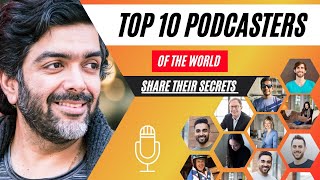
Abhi Arya moderates a panel of podcasters sharing their launch strategies and journeys. They discuss niche selection, staying consistent, and monetization. The core message: passion, focus, and persistence matter more than perfect equipment.
And we've just found when you're so passionate about something, you share your passion, you're going to find other people who love it.
They're so afraid of losing, missing out on opportunities by picking something less tiny.
Suddenly, all the color in the room turned to black and white. So I'm looking at the room and it's black and white and I felt these cold chills and I thought I was having a stroke or a seizure.
I'm just in it for the long haul. Like I just keep showing up and hitting publish and then onto the next one.
Sam, ladies and gentlemen, boys and girls, thank you very much. Deeply appreciate the time taken off for this. My dad, who is a huge influence on my life as an entrepreneur, tells me every single time I speak to him, when we talk about projects, business and everything in between, he said, the most expensive thing that you can ask from people is not a high ticket product, but is their time. So all of you people have given your time for this project. I deeply appreciate that. How we go to start is there's something called the hero introduction that we, you know, we tell all our audiences about. A hero introduction is the shortest way to connect with other people. I always say the shortest distance between two human hearts is a story you tell a perfectly different perfect stranger a story and you connect a heart for life. So I'm going to tell you my hero story and, and then I'll give everybody 30 seconds to tell us your story and then we go to the next section. Does that sound fair? Alrighty. So, ladies and gentlemen, my name is ABHI Arya, father of two girls, six dogs, husband to a superwoman, a streetcar racer turned hotelier, now social media marketer and founder of Internet moguls. That is my hero story. And we go next to Louis. Over to you.
So I'm French, living in Dublin. Started everyone hates marketers 4 years ago to fight marketing BS. I don't know if I can curse, so I'm going to keep it, you know, nice that everyone is not offended.
Lovely. Thank you very much, Lisa.
Hey, I'm Liza Miller. I run the Motorcycles and Misfits podcast where we talk about all things motorcycles. And I'm proud that we have just, just gone past our 400th episode.
Excellent. Well done, Eric and Chris.
What's going on, guys? This is Eric, this is Chris. We are identical twins with humongous eyebrows, as you can see. We're the hosts of the Dynamic Lifestyle podcast and we're close to about 300 episodes. But yeah, we're actually, we have a big just track record in the fitness industry. And the last three years we pivoted to B2B coaching, helping fitness professionals go online and just create more income impact, influence and independence.
Excellent. Thank you gentlemen. Danielle.
Danielle Crittenden. I'm an author and a journalist. I'm a mother and a wife and I'm also the creator and host of the Femsplainers podcast. We're based in Washington D.C. and we like to think that we discuss serious women oriented topics in a refreshing, original and not the usual politics way. And a cocktail is usually involved.
I love that. Love that. Mark, over to you sir.
Hi, my name is Mark Goulston. I'm the host of My Wake Up Call which was selected as the top inspirational podcast by UPS recently. And we speak to people about what's the most important thing to them in life that they think will be the most important thing when they die and all the wake up calls that led them there.
Wow. Absolutely love that. Thank you so much. Kimberly.
Hi, my name is Kimberly. I live in London. I'm a food photographer, Instagram expert and my podcast is called Eat Capture Share. It's a podcast for food bloggers who want to reach their ideal customer through Instagram and beyond.
Eat Capture Share. I love that. Thank you very much. Kunal, over to you.
I've lived a motorsport life all life long and the podcast is just an extension of that life. I used to be a single seater racer so I'm interested in knowing more about Avi's street car racing stories at some point. But I co host and produce The Inside Line F1 podcast. It's a podcast on all things Formula One and we are closely reaching our 400th episode this year.
Fantastic. Love your website. Loved your website. Alrighty Stephanie, over to you.
Hi there. My name is Stephanie Seferian. I am a mother of two girls. I live outside of Boston with my husband, my daughter, my dog and 10,000 bees. I am the host of the Sustainable Minimalist podcast which is a show about living a simpler, more intentional life with your children. It's geared towards parents and my podcast recently morphed into a book by the same name, Sustainable Minimalism.
That is fantastic. Thank you so much, Tim. Over to you sir.
Hey guys, glad to be here. I guess the place to start is with a website I started about 10 years ago called sobernation.com. it's a big media site that helps people that are struggling with drug and alcohol addiction and that turned into a pretty big community and that's how I kind of learned about creating content online and then since then, my 10 year journey has turned me more or less into an investor. And today I'm spending most of my time on copyblogger.com, which is a resource that helps writers build online brands to grow businesses.
Lovely. Fantastic. Thank you everyone for your hero introduction. That takes care of the first section of today's show. The second is, you know, we went through multiple people and there are amazing creators online, podcasters online. The reason that we reached out to you and requested all of you to be here is the one thing that we saw was everybody has a niche and we always say, dig deeper and find the sub niche, find a place for yourself, which may not be a very big market to start off with, but it's something that you love doing and maybe an extension of your personality and your own story. So we saw that in all of you. So in approximately one minute's time, if we can go back through the same routine and you can tell us how you chose your niche or the importance of a niche into just about a minute. So we start with Louis. Louis, everything about a niche or a sub niche and how important it is and how you chose yours.
Yeah, that's an interesting question because in marketing in particular, that's what we tell people to do, right? Pick a niche. But I think it's very vague to say that. And there's a fear usually from people. They are very afraid that the niche you're going to pick is too small to sustain themselves. And I see that and I hear that so many times. They're so afraid of losing, missing out on opportunities by picking something less tiny. Because what if someone contacts me and they're not part of this nation? I can get them as a client that would make more revenue. The one question that I like to ask people who are afraid of niching down further is what are you missing out on by not niching down? You are missing out on expertise because you can't dig that deep into a topic. You are missing out on extra revenue because people see you as an expert and not just a generalist anymore. And so flipping the question and asking yourself what are you actually missing out on by not specializing is probably one of the, the ways that I've helped, you know, people to change that, that feeling. So if you can have something, a small, small niche that can sustain you, that's, that's more than enough. And then, you know, you can grow after that. But first, pick something very small.
Perfect, thank you. Love that. Liza, over to You?
Yeah. So I opened up my garage about 14 years ago to the public and let people come over and I help them fix their motorcycles for free. And from that, community grew, and we would sit around and share advice and stories, and I thought, wouldn't it be great if we could bottle this and share it with the world? And that's when the podcast started. And we've just found when you're so passionate about something, you share your passion. You're gonna find other people who love it because they have that same passion.
Perfect. Fantastic. Thank you, Eric and Chris, just to.
Be clear, is this about like the podcast or business podcast? Okay, so, yeah, the podcast. So, I mean, we go off the four pillars of life, which is health, wealth, love, and happiness. So that's kind of how we decided to come up with our podcast, Dynamic lifestyle. That's what we feel is like living a dynamic lifestyle, taking care of your health, starting with that, then wealth, love and happiness. So that's kind of how we niche down to that.
Perfect, perfect. Thank you very much, Daniel.
The Femsplainers is about two years old. It's a podcast that's an extension of what I've done pretty much all of my life as a writer and journalist. Twenty years ago, I wrote a book called what our mothers didn't tell us. It's about love and marriage and sex, speaking to a younger generation of women. I was then younger, so I was sort of more speaking to my contemporary. And I wanted to explore that in the wake of MeToo, I wanted to kind of. I was thinking of rewriting my book or updating it. And then I realized that especially I learned from my daughters who are young women now that they listen to podcasts. And so I thought the best way to reach a younger generation and talk about these issues was through conversations in a podcast format. And that's what I've done.
Lovely, lovely. Love that. Thank you very much. Mark, over to you, sir.
For 25 years, I was a psychiatrist specializing in suicide prevention. None of my patients killed themselves. I discovered that the approach, which just came out in a book called why cope when you can heal? Is something we call surgical empathy, where you go into the dark night of the soul with people and when they feel they're not alone, they just start to cry. They start to heal in my wake up call. And I get about eight requests a week to guest on it from pretty major people. And we open people up using surgical empathy. And of the 160 episodes, 120 of the people say it was the most vulnerable they've ever been in public. And we always give people the option of not posting. And I tell them, I tell them it's not about selling products. It's about getting my audience to fall in love with you and find out everything about you. And so I'm paying that forward in trying to save a few lives in the world.
Fantastic. I love that. Thank you so much for sharing that, Kimberly. Over to you.
Yes.
So I decided to start Ecapture Share for two reasons. One was because I'm a food photographer, food blogger. Most of what I do is visual. And so most people, most of my competitors were in the blog space, in the visual space. And so I thought, what about reaching them through audio? There's something very intimate about that. You know, there's a deeper connection that happens. And that space was still open because not a lot of people were doing it. And then the other thing is the two or three podcasts for food bloggers that did exist, most of them, they were run by men. But also it was very much about how to improve your SEO and how to grow your mailing list. So it was very clinical stuff. And I wanted to talk more to the heart. So actually I'm really interested into what Mark said. So some of my episodes are eating disorders within the food blogging community or food justice. You know, so things that affect us, impact us, but go a little bit more to the heart. So, yeah, that's kind of what the podcast is about. It's a little deeper.
Lovely. I love that all of you have got a niche. You've been digging down and sort of got a sub niche, like Mark said. Thank you very much. Sorry. Like Louis said. Yes, Kunal. Over to you, sir.
The classic zoom issue, right? I speak when I'm still on mute. So for me, it was, you know, the podcast was an extension of the regular, you know, life I would live as an accredited Formula One journalist. And it came about at a time when, you know, I had a lot to write but didn't have the time to write. And then I said, okay, what if I just sort of convert this into an audio file and host it on my blog? Which is, you know, been around for more than 10 years now. And we actually started the podcast before even the sort of industry got structured. So I was hosting audio files on my own server. And then along the way, we realized that this is getting structured and, you know, now we have a, you know, very good distribution platform and so on. But choosing Formula one was very easy because, you know, it's been a sport, that it's a family sport. It's what we discuss on the dinner table and the breakfast table. And Grand Prix weekends are more like the weekends we look forward to rather than weekends we look at saying, oh, God, we got to work this weekend.
Lovely. I love that. I love that. And I'm going to pick your brain more on that. Stephanie, over to you.
I started my podcast, the Sustainable Minimalists, because nobody was talking about what I wanted to hear. At the end of the day, there are a lot of minimalist podcasts, people, people talking about simplifying, decluttering, but I was really interested in decluttering without throwing all your perfectly good stuff in the trash can. And I was interested in simplifying my life in a way that also simplified and reduced my impact on the planet. And nobody was talking about eco minimalism. And so I just one night thought, well, if nobody else is, why not me? And my podcast originally started as me documenting my successes and failures as I sought to live a simpler, more minimalist, but also more eco friendly existence. And I didn't know it at the time. I didn't know I was niching within a niche. I just was talking about something that really, really mattered to me.
Fantastic. Fantastic. Thank you very much, Tim.
Great.
I think when I started Sober Nation, it was a little out of necessity almost. I was just kind of blogging and I didn't necessarily realize that I was doing, you know, quote, content marketing. But what I discovered is that the healthcare industry as a whole is very online SEO savvy. But what they were missing, and this was all accidental, I kind of stumbled across this. What they were missing was just the stories of commonality. And so I sort of accidentally discovered that if you give people an open platform to just share their stories, then they can more or less grow the brand for you because, like, everybody loves to talk about themselves. Right. And then there was the fellowship of it that grew. And so then from then, I still own that website and I still work on it all the time. But that was also a way for me to understand copywriting and the written word and just how powerful of a medium that is. And I basically learned all of my skills by reading Copyblogger every day. And so then it was a real dream come true for me 10 years later to more or less be able to acquire partnership in that.
Oh, wow.
Yeah. So in a way, that's also like a sub niche because it's not just content marketing, it's like highly, highly specified on the written word. That's been my journey.
That's fantastic. That's fantastic. Love the way that all of you people told us about your niche. You know what, we work with about 800 entrepreneurs every Thursday on a call, and we've been doing this for two years. Even today, the biggest question, if I say, what is the one thing that in the last two years you're still iffy about? Most of the people are like, can we talk about the niche again? And, you know, am I doing the right thing? And is there a sub niche? So thank you very much for clarifying that for all of us. We go to the next section, where again, within a minute, if you can tell us, how do you stay consistent? Some people, for me, I'm not. I'm not. My discipline is every Friday I'll do all my content, video, audio, and everything, send it to the office, the edited, and when I'm all over the place. Some people like to do it every single morning, every afternoon. Some people. So everybody's got their own way of being consistent in the. In the macro, in the long run. So we start with Louis, uh, people who want to start a podcast or starting a podcast, what is your sort of advice to them on how you stay consistent and how people can stay consistent?
Yeah, what, what. What worked for me from the start is, is doing some sort of social contract, you know, with people. When you put something out and you say, hey, I'm going to post something every Tuesday, and it's a weekly podcast, it's not only you then who's in the. In the loop.
Right.
People are starting to expect it. And. And if you don't do it, then. Then what's the point? So you have to do it.
I work like that a lot.
I need this kind of external motivation sometimes, and that's what works from the very start. And I didn't stop because I knew I had to keep going. So even. Even when I'm tired and all of that, I have to ship. And the other thing is people internally, like, I haven't. My brother actually edits my. My audio for me, and so he has to work, he has to earn his living, and so I have to ship something every week.
That's fantastic. So make a public announcement of your commitment, and that allows you to stay on track. Perfect. Love that, Liza.
So consistency is not something I've actually strived for. My podcast, motorcycles and Misfits. The Misfits is myself and a group of friends. And I'm sitting in a studio right now, which has. Is mic'd up for 12 people. We normally sit down with a large group of people, and it becomes a conversation. And I find that the listeners feel like they're in the room with us and are a part of the conversation. That's the only consistency is people feel like they're included and a part of this group and community.
Got it. Lovely. Thank you very much, gentlemen, Eric and Chris.
All right, so I think it takes three things. What we have bought into is three core tenets, which is leadership, just going all in and adding value. So what I like to really just, like, tell, like, my students is I'm all about just the three trifectas of leadership, which is every single day, you know, you want to have a day just full of excellence, you want to have, you know, wisdom, and you want to have some sort of discipline. So in order to have a successful podcast, discipline is a really big one, and you have to go all in. I don't think that, you know, if you're going to start a podcast, you can't just go, like, halfway. It has to be something that you're going all in and just, like, really giving back to, you know, the community and stuff. And once you understand that the podcast is not about you, it's about serving other people and impacting other people, that's when the magic happens, and that's when you get fired up every single day and to just record episodes. And for us, we put out two episodes per week, and just ever since then, that's just been kind of like what keeps us consistent is just adding value, adding value and just bringing other people to serve our audience.
Lovely. Does being brought from the fitness industry and both of you being in top shape help? Because you're already disciplined and sports athletes, and so therefore, whatever you do is discipline or with everything else, it's not the same. Like, you could be very disciplined in your. In your gym routine, but maybe not so much in podcasts. How does that work?
Yeah, definitely. I mean, I think it all carries over because, like, you know, for us, like, our biggest thing was, you know, the whole fitness thing, which we started off in, which that took, like, a lot of discipline and just, like, it's a carryover. It's a carryover to work ethic on, depending on what you're doing, whether it's like coaching somebody, you know, being an entrepreneur, just being a podcast host. So. Absolutely.
So does it help being twins? Like, one of you can do a YouTube, the other person can do the podcast at all times.
So that's exactly what we do. He's the audio guy, I'm the video guy. So I take care of the YouTube side of stuff and he does all, like, the podcast and stuff, so it works out good. And Chris is the twin that's younger by one minute.
Is that right? Awesome. I would have never guessed. Thank you for saying that. Alrighty. Danielle. On consistency.
I'm with Louis. I think deadlines are our friends. That's a saying in our household, that deadlines keep you showing up and get the product out. I think people starting a podcast don't realize how much hard work it's going to be and how much thought goes into making it successful. Like, the fun of it, and certainly for me is the conversations. And you think you can switch on your mic and you can just chat with this really interesting person. But in fact, a good interview takes a lot of work. It involves a lot of listening. And then, as others have said, you're building a community. Like, this is your niche. How are you creating that sense of intimacy? Is the guest interesting? Is the guest on Brand? I mean, you know, there are a lot of people I would like to talk to, but it would not seem a good fit for the program. So. And just turning up every day I spend. This is my job. I'm having to build subscribers on Patreon. I'm having to create. This is as much as I've ever done in my life as a journalist. You're creating not just your podcast content, but content around the podcast. So I turn up every day for at least five, six hours a day, just building and pushing and publicizing the work that I do once a week and better than monthly. So, yeah, keeping to deadlines and keeping consistent and just real hard work.
Lovely, Lovely. I love that. We have an email subscriber base of 226,500 people, and we're going to make sure that this recording goes to everyone to help all of you people in that outreach in whatever way that we can. And we've already made an announcement that something like this is coming up, so they're all fired up. Mark on consistency.
So I post Wednesdays and Sundays, but one of the things I tell, one of the things I focus on is what are my listeners listening for? If you ask yourself, what are they listening for, that can help direct you. And so what I tell my guests is I say my listeners are listening to be nspire. That's enspired. Because if you motivate people and you pump them up, you take the pump away, they deflate. If you inspire people and you lift them up but give them no direction. They are lifted up with no direction. But n spired is you lift. I tell my guests, I say inspired is you lift them up out of wherever they are and you give them a direction. And your role model is Peter Pan when he said to Wendy, second star to the right and straight on till morning.
Wow, love that. Thank you so much.
Timberli, how do you stay consistent in Liza's camp? So I'm very inspired actually by all you for doing it consistently. But I do it in seasons, So I do 10 episodes per season and then I take about six weeks off and then I do 10 episodes again just because my main job is as a photographer and just to get it all in. And also I write a weekly newsletter, so that's my consistency. And the blog is an extra. And part of the reason I did the blog is to really position myself as a teacher. But it's not, it's not my main thing. My main thing is my photography work. So for me, the consistency realize in always speaking to my audience, knowing exactly what they want and delivering on that and then delivering those, those 10 episodes per season.
Lovely. Fantastic, Kunal.
For us, consistency is about also communicating to people when they can expect us. So, you know, anytime there is breaking news that happens in the Formula One paddock, you know, there's a good chance that within 12 hours or 24 hours, you'll hear about it. On our channel, we do pre race and post race episodes. So people know from before that if there are 23 races in the season, there will be, you know, an episode before that. Look forward to the race, an episode, look, you know, back to what happened in the race. So communicating that consistency is, is what we sort of focus on. And then what Mark said, it's about why people want to listen to us and not, you know, three or five other Formula one podcasts that are there. So it's about being yourself, because a lot of your listeners come to listen to you for who you are and what your views are going to be. So that's also what we, you know, make sure we focus on and we keep, keep that in line with our communication as well.
Perfect. Perfect. Lovely, Stephanie.
I think consistency around podcasting is supremely important. And the reason why is because as my, as a podcast listener, myself personally, in my own personal life, the shows I feel most connected to are the ones that consistently show up for me every, let's say, Thursday morning. That means a lot to me as a listener. So as a host, I try and Provide that for my listeners. And I will also say that before becoming a full time podcaster, I was a teacher. And I really view my capacity as a host, as a teacher almost to my listeners. And I would never, as a teacher in front of a class, just not show up one day or not show up one week. So I really take those disciplines as being a full time something and just apply it to the podcasting world.
That is fantastic. I love that A teacher would never not show up. Absolutely. Yes, Kimberly, you had something to say.
Yes, because I agree with all of you. But also, I do think there's burnout. And burnout is real, and sometimes having these really rigid rules, if it works for you, great. But I also find sometimes it stops people from actually starting their podcast. Like, I have to do it, like the same way I have to blog twice a week or else. And so, you know, for those of you who have got children or other things, you know, like that, I find Seasons is a great way just to counter that because there is, you know, burnouts.
Real. Makes sense. Absolutely. Tim.
Yeah, I agree with what everybody said. I'm kind of like a Seth Godin protege where it's just show up and just show up. But I think one thing that I have done which has helped me personally is in everything I do. And this is terrible advice, by the way. When you said that this was going out to all of your users, I was like, well, they shouldn't listen to this at all. But for me, I maintain not being too attached to the outcome. Like, the things that I have done in my life that have succeeded, I've kind of just kept doing without paying attention too much. And anytime I start, like getting obsessed over analytics or like podcast downloads or anything like that, I start waking up in the middle of the night like, oh, shoot, I did this wrong. I should have done it this way. Or if I just keep showing up and hit and publish and then literally not thinking about it anymore, it works a lot better for me. So I'm kind of in between. Like, the consistency and the habits is really helpful for me because I don't have to think about what I'm gonna do next. But at the same time, it's also just. I'm just in it for the long haul, I guess. Just keep showing up and hitting publish and then on to the next one.
Love it. The long. Yes, Louis, please go to your man.
But yeah, I wanted to. That's very important, right? Showing up and process versus results, following on what we can control. Right. Thinking about burning out and what we can control is the only thing like that we can control like our thoughts and our actions and showing up and having not a maximizer mindset, but a standard that we reach and then once it's good enough, we ship. Really helped me in the past from burning else in particular because I could overthink and never ship and that would actually play with my head.
Not having a maximizer mind shift. I like a mindset. I like that. You know, just last night my 14 year old daughter had a conversation with my mother and she's trying to change her school because if she gets into a better school she has a better chance of getting into a better university and she's very stressed about that. So she's having a conversation with my, my mother and my mother told her, I was overhearing it, she said you could get into the university that you want by maybe studying more in the school that you're in. You don't necessarily need to go to a better school and take that step or you could, but just how do you answer that question for yourself? Remember, they're going to be less lesser destinations and more time in your life in the process. So the destination has to be what you want to make you happy, but make the process happy as well. So just see if the process is making you happy. I thought that made a lot of sense as well. So I like what Louis said about, you know, and what Tim said. It's, you know, I'm, I mean in front of the long haul, it's, it's, it should be fun and let's keep going and having fun in the process. So thank you then ladies and gentlemen, we've reached half time. I'm being mindful of Luis, Dr. Mark, Kunal, Daniel, Eric and Chris. They have to leave exactly after 60 minutes. So that's why I'm just, I'm trying to stick as much to the schedule as I can. And now what I'm going to do is I'm going to tell all of you people a little bit about my story and how this whole thing started and all of that. I'll take a couple of minutes after which we do a free reading chat and we start off by giving the mic and to Eric, Dr. Mark, Louise and all those people who want to leave early and then we can sort of have a cross questioning and you know, we sort of make it fun and make it like What Liza said, 12 people just having a conversation and making that fun. Okay, so ladies and gentlemen, on the 29th of October, just about a few months ago I turned 44. But the story that I want to tell you is when I was 18 years old, born and brought up in New Delhi, all I wanted to do in life was to race streetcars. My dad used to go to sleep at night. I used to take out the car keys from under his pillow, go race with people and make some money on the side and then organize races when there were no authorities around. It was a lot of fun. It was decent money on the weekend. And as an 18 year old I knew exactly what I wanted to do in life. I wanted to race cars and someday be able to make it to the UK and learn this professionally. I was one of the only 18 year olds who had a plan. One day everything changed. I remember my dad calling me to his office. His office was the other side of town. It was one of the first time I'd been there. I went in and it seemed like yesterday. There was a red carpet on a wooden floor and there was the smell of incense. He had just finished his prayers and there were these two landline phones off the hook. You know these two phones which are coming out of those with wires coming out of the walls. They were off the hook. My dad's phones were never off the hook. I knew there was a serious conversation happening. He sat me down and he said, son, I'm going to make this as short as possible. I've lost a lot of money in my business. We have to sell the house, we have to sell the cars and we have to move to another neighborhood. You may be in the same school, same university, but I can't send you overseas. And yes, tomorrow morning start working with me. We have to rebuild everything from the ground up. If you choose not to, you're not, you cannot stay in the same house. In five minutes he completely changed my life. I obviously stormed out of the room in true Hindi Bollywood movie style. My mom was waiting outside. I had a nice few hours conversation with her. But now when I think back, I think better sense prevailed. Because the very next morning I found myself behind the reception of my dad's 27 room motel. I learned housekeeping, I learned how to take care of a restaurant. But I also learned that my dad is doing a fantastic job of running the place. Where do I as an 18 year old find my place under the sun? While I'm working every day, unhappy 12, 14 hours a day, there's an international tourist who walks in and pays us in Dutch guilders. Holland, the currency of Holland, pre Euro. I convert the Dutch Gildarth. And it turned out to be double Indian rupees. And I'm thinking to myself, what if I'm able to convert all 27 rooms into, into international tourists, double the revenue, double the income and become a star in my dad's eyes. And maybe then I can go overseas and get back to my dream. Yes, finally I had a path back into thinking what I could do. But late in the 90s, how does a small company in India, a small 27 room hotel, connect with people overseas? During that time ladies and gentlemen, there was a new phenomena called the Internet. This was a service that will allow people to connect with people in different parts of the world. However, the Internet was available only in two places in Delhi, the British School library and the Sheraton Hotel. Both of them were charging $10 for 15 minute access to this thing called the Internet which was obviously prohibitively expensive. I somehow made it for a few sessions, understood that my life can open up. I chatted with my family overseas and understood I can do a lot of. But I still didn't have access to it. After a few months there was an ad in the paper Satyam Computers looking for cyber cafe partners. Contact manager Rohit. Rohit after 20 years is still a friend of mine. Because I was one of the first people who got after him that I need this cyber cafe. After a lot of back and forth I got that cyber cafe. And now ladies and gentlemen, I had 24 hour access to the slowest Internet on the planet. A website would take the whole day to open up. But somehow I made it. And I chatted with people all over the world and they said, you know what abhi, you need a website. Great. I knew what I needed now finally direction in my life. But back then there were only Bangalore companies making websites for American companies. They were expensive. So I got their developers to work with me on the weekend. It took six months for the website to be developed. The day the website was to be launched, I knew I could feel it in my heart that my life is going to change and everything is going to be different from there. On the date came, the website was launched. Nothing moved in my life. My first ever business lesson that life is a series of multiple successful events and not just one. I continued working on the site, going into chats, asking people what to do. Put a landing page, put a toll free number, put this, put that. Slowly we started getting electronic mails from people coming in. I started replying to these people who had never met. 15th of December, the first family of four people came in. I picked them up from the airport. They were real human beings. They came into the hotel, checked them into room 302. They gave me 400 DOL to stay for 14 days in that small motel. I remember coming back to the reception, giving the money to the cashier and I said this Internet thing works. After that there was no looking back. I quadrupled down my efforts. Long story short, we filled up the 27 rooms very fast. We were the first, not amongst the first, the first ever Indian non five seven star hotel, non branded hotel to go online. Completely changed the way that we do our business. We had so much business coming in. We bought the next door small motel which was 20 rooms. Another two years, another one, 25 rooms, another two years, another. So next five years we bought four more small hotels. Completely changed our life, our lifestyle. And now I'm having strategy discussions with the gentleman who wanted to throw me out of the house. So I'm feeling like a star. In the next five to six years, Internet completely changed my life. That was chapter one of my story. Chapter two. I started the travel website. Lots of affiliates did really well by now within 2006, 2007, Expedia, TripAdvisor, Facebook, Google, all these companies come to India and they heard about me, you know, in the paper here and there and they said would you like to. Their aim was to make the Internet for small businesses. So they said, would you like to speak about your journey? As you people can see in the last five minutes, if I get an opportunity to speak, it's difficult for me to stop. I took that opportunity and I started speaking on stages all over. When I told people their story, they said, we need you to work, can you do this for us? And I said, I don't do, I'm not an agency. But after lots of requests, in 2009 I started a company called Internet Moguls. Riding high on the confidence of my past two successes, the only thing I could do was to say, you know, to name it Internet Moguls. I named it Internet Moguls, started working with people and started a company with four people. Completely bootstrapped, no funding, nothing from anywhere. And after 11 years we grew from 4 to 225 people working with 700 clients in 9 country countries. Great thing happened, God was kind, lots of support from everyone. When I started speaking on stage then I got speaking opportunities from people in different parts of the world and I would go and introduce myself, I said this last five minute story that I've told you I can say it in five seconds. People didn't believe me. I said, here it goes. My name is ABHI Arya, father of two girls, six dogs, husband to a superwoman, a streetcar racer turned hotelier, now social media marketer and founder of Internet Moguls. There, I told you my entire five minute story in five seconds. But the difference was in the short story. I have my two girls, my wife and my dogs. I didn't have time for them. I was always running around. So I completely changed the way I work and I started doing more videos, more interviews, everything on Zoom, everything. And that started giving me more time. I've reclaimed three hours a day, 15 hours a week, 60amonth, 720 a year. I travel less and I'm happier. And I'm now running this company with two of my daughters as co founders in the Internet Moguls projects. And then Covid happened. We did 75 webinars in 75 days. It was one of the biggest push for us as personal brands. We reached out to everyone. The girls interviewed, Gary Vee, Grant Cardone, pat Flynn, Stu McLaren, everybody that you know, they wanted to. And so this is now a family project. So I just wanted to introduce my story in the, in the middle and say thank you to all of you people for being part of this journey. It means a lot to us and our family. Now moving on. I know Kunal has to leave. Thank you, sir. Thank you. I know Kunal has to leave. So Kunal, before you leave, for to all the listeners and all your colleagues over here on, as an Internet mogul, you know, as somebody who uses the Internet to talk about your passion and then make money in the process, can you tell us something about monetization?
You know, it's the toughest part, which is monetization. Okay, so if anyone's listening and wants to start a podcast to make money, I would recommend that please realign your goals. You should start a podcast to have fun. You should start a podcast to make sure there is some value you're adding to people. And along the way, if you know there is great quality content and there is a differentiated product that genuinely comes out, then there are very small chances you can still make money. But you know, at the end of the day, there are different models. You can go speak to sponsors directly or like we do, the podcast is used as a primary source of telling people the stories we gather in the Formula one paddock. So find your niche as we've been speaking all along and find your way. But in the end Remember to have fun because this is a very, very fun medium. Just the way it's been fun speaking to all of you guys. And it's, it's unfortunate that I have to leave and attend to my four month old daughter, but it was, it was, it was great to be a part of the show.
Not at all. Kunal, thank you very much. Totally understand that you have to leave and for all of us before, before one of one by one, all of us leave. Can we all share our Instagram handles in the chat? Because I'd really love for all of you people to see everybody else and their podcast. They are fantastic what everybody is doing here.
Yeah, I'm @femsplainers podcast. Sorry, Instagram is @femsplainers podcast.
Lovely. I'm just putting everything in the chat. Yes, we'll go to Daniel. Daniel, I understand you have to leave, so please go ahead. Tell us anything about monetization or the future of podcasts or the future of your podcast or anything in between.
Well, I agree that it's very hard to make money at podcasts when we started two years ago, so 2018, it seems hard to believe, but we were still there wasn't seemingly the glut of podcasts that there seems now that everybody now has a podcast. So we work with a network that brings in sponsored ads and we have a Patreon page we where we have subscribers. So we managed to make a small profit, not a lot, but we do pay once we factor in all our host. I mean these are things you don't think about when you want to start a podcast, even just minimally. You have hosting fees, you need to buy proper equipment. But that's going back to about the daily work that if you want to make money at it, you do have to really push often provide this alternative content. As for your subscribers that we do do a bonus episode for them every month where they get to ask the questions of our guests and people like that. We do a newsletter as well and I'm going to start looking into providing more content. We just started up with Stack Lab, sorry, Stack Lab substack newsletter moving away from mailchimp. So we're going to try that out and see if we can bring in more subscribers that way and provide sort of additional content. But yeah, if you love it and are passionate about it and willing to spend a couple hundred dollars a month just on basic hosting and all the background fees that you don't really think about when you set it up, then it's fine. But if you want to grow it and make any money at it, you really have to push it. And it's, you know, it's not easy, but it's part of the job. And also, abhi, I just want to say thank you for having me. This has been so interesting, and it's been such a delight to meet other podcasters and hear what they're doing. So I look forward to listening to all of you and I really greatly appreciate being part of this. So thank you for convening this.
Not at all. Thank you very much. The pleasures all are. This is so much fun. Thank you, Mark. We'll go over to you. Monetization or any kind of wisdom. I love what you said. Listen. It's for the listener. So thank you very much. Please carry on.
My podcast isn't about monetization. It's about creating influence. So my suggestion is always, always be giving away value. Always. And there's a formula I use with all my guests, and I have some pretty Larry King, a guy named Doug Conan, Chip, con people reaching out to me to be on the podcast. And I have a formula that I try to apply with all my guests, which is I want them to feel heard, understood, valued, and that I add value to what they say. I use that to build that muscle. At the end of every podcast, I'm going to ask myself, did they feel that I heard them, that I understood them, valued them, and added value to what they had to say? And then what I do is I. I fix them up. I say, listen to each other's podcast because I think you're going to connect. And I just make connections between people and virtually anyone I reach out to. Now, these aren't business people. These are like thought leaders in the world. I interviewed a guy, Tom Steyer ran for president. Chip Conley was with Airbnb. And almost anyone I reach out to says, yeah, I want to be on your podcast. So I just introduced them to each other and they'll always return my emails, so it's a way of expanding that. But I want them to leave feeling that they felt heard, understood, valued, and that I added value to what they had to say.
Mark, can I ask you, what you said comes from a place of so much presence and patience, you can make out you're not striving to reach your destination. You say, I'm going to do what I can do. Everything else falls into place and people reach out to you. Obviously, it's about your energy, your presence. Did it always. Were you always like this or were you sometimes in a rush, and then over your. Over the years, you realize that the best things come to you when you're well.
Here's a very quick story about how being a suicide preventionist. So I wrote a book called Just Listen, became the top book on listening in the world, 27 languages. I spoke in Moscow last year with a Nobel Prize winner named Daniel Kahneman, thinking fast and slow. And we headlined. But everything changed when one of my most suicidal patients called. Nancy. She'd made three or four attempts before I started seeing her. And I was moonlighting. I hadn't slept for about 36 hours before I saw her on a Monday. And she never made eye contact. When she comes in on a Monday, as I'm looking at her, suddenly all the color in the room turned to black and white. I'm looking at the room, and it's black and white. And I felt these cold chills. And I thought I was having a stroke or a seizure. So she never looked at me. She's like this. And I'm going like this, like this, like this, to see if I had a stroke or seizure. And I realized I didn't have a stroke or seizure. And I got very cold. And I had this crazy idea that I was looking at the world through her eyes. So because I hadn't slept for 36 hours, I said to her, nancy, I didn't know it was so bad. And I can't help you kill yourself, but if you do, I will still think well of you. I'll miss you. And maybe I'll understood why you had to to get out of the pain.
Oh, my God.
And that was the first time she looked at me. And she looked at me and. Right into my eyes. And I said, what are you thinking? Because I thought I'd given her permission to kill herself. I thought I was in real trouble. And. And she said, if you can really understand why I might have to kill myself to get out of the pain, maybe I won't need to. And then she smiled. And then I said to her. And I kept looking into her eyes like I'm looking into yours. And I said, here's what we're going to do. I'm not going to give you treatments or stuff that you've been given before. Would that be okay? And she looked at me with a look that said, keep talking. I'm intrigued. And then I leaned into her eyes and I said, what I'm going to do is I'm going to find you wherever you are, and I'm going to Keep you company there for as long as it takes because you've been there alone too long. Would that be okay? And she started to tear up and she started to heal from the inside out.
My God, I'm sure everybody's feeling what I'm feeling right now. You're all tearing up at some level.
And I will tell you something, because there's a saying, whoever saves one life, saves the world. Everybody can listen to other people's eyes. And people who are in a tough place, they're always screaming at you. I don't know how much more of this I can take. And I'm running out of time. And something that I learned from one of my mentors who was one of the main pioneers in suicide prevention, what he would say to people, and you can say this to other people. What hurts? Where does it hurt? How much does it hurt? How alone do you feel when it hurts like that? Take me to the last time you felt that. And then when they can take you to the last time they felt that. Here's an interesting thing. When someone can describe something so clearly that you can see it with your eyes, they refill it it. But they're not alone when they refeel it. And so when they're describing walking around 2:30 in the morning wanting to put their head through the wall and didn't know how they were going to make it for the next couple hours and felt like they were at the wit's end. And then the sun rose as they're sharing that with you and they're feeling it and you don't rush in with treatment, you can just feel them begin to heal. So anyway, I don't want to take too much time.
That is fantastic. We need to catch up 100%. Mark, I know you get hundreds of emails, but I'll try again to get your time once again because this was fantastic. Thank you so much.
Yes, Eric, can I tell you a quick story? You're going to like this. I had breakfast with Larry King every morning for two years. He's a little sick now. And one of the things he told me is he said, he said, I've never been nervous on camera or in front of, you know, on a microphone. He said, my secret is I'm always honest with my audience. And he shared this great story. He said, I always wanted to be on radio and it was my first day in Miami and I was going to be a disc jockey. And they said, okay. The manager said, okay, Larry, you're on. What are you going to say? He said, well, I'm going to say this is Larry Zeiger. You know, he said, the manager said, you can't say you're Larry Zeiger. And he looked at an ad that said King's Market Sale. And so he said, hi, this is Larry King. And that's the first time any of us have ever heard that.
Wow. Wow. And you heard it first on the Internet mogul show. That was fantastic. I love that. Two years. That must be so, so amazing. With one of the best.
And I'll tell you, his secret is he never does a gotcha with his guests. Everybody loves to be with him because he always believes that whatever you're doing, you had a reason to do it. So everybody wants to be interviewed by him because he's not going to corner you and shame you. So it's a real lesson to be learned.
Love that, Love that. And I'm sure two years, that could be a book in itself. 365 into 2, 700 and whatever it is. 820 breakfasts with Larry King. Fantastic. Thank you, Eric and Chris.
Yeah. So we really love pushing our audience to take action. So what we'll do is, like throughout the episode, we'll do a commercial ad, like in the very middle of it. And even in the beginning and the end, you know, we're pretty aggressive about it, but we want our audience to take action, you know, for the value that they're getting throughout the entire show. So I believe you can provide value and you can actually monetize it as well, too. I don't think it's mutually exclusive. So what we do, for example, is we'll use like an SMS type of marketing platform. So we'll say, hey, you know, Texas were a Texas phone number and text the word coach. And that takes them through a drip campaign that starts a conversation with them about how we can help them out further in their coaching business. Or you push them to a squeeze page by giving the landing page URL, make it very short, you know, or a Facebook group. So those are all three places that you could push them to. A Facebook group, an email list or an SMS list. And this way you can warm them up and nurture them all throughout, like your campaign. You know what I mean? So this way you're not going to get a transaction right away, but, you know, you can start conversations with them. You can build an email list and SMS list, a Facebook group, and later down the road, 60, 90 days, they can end up, like, hiring you or, you know, for your programs or something like that.
Yeah.
And I think even just to add to it, a good point is, like Tim said about playing the long game, it's. You really have to understand that. That this is a marathon, not a sprint, with a podcast show. And literally, like building your network, it is powerful if you can just have that one concept that you are actually building a huge Rolodex of just like influencers and just people that can just change your lives, which is like one business deal. I mean, that's what it's all about is just bringing on great people that's going to give value. But then at the same time, it's like you have a right to ask for an ask if you want to do that, because you brought people on and then added value to them. And you just have to understand that the power of networking and affiliate marketing as well, too, down the road. So that's something that we preach heavily to just, you know, early on. Podcasters.
Fantastic. Fantastic. So there. So I loved what you said. You said monetization and adding value don't need to be mutually exclusive. They can go hand in hand. You know how much value you're giving. And then you also have a funnel at the back end. So business, at the end of the day, you can you build your net worth while you are building a system that allows you to convert and then ads in between as well. Fantastic. Because a lot of people have this question, if no monetization, I don't want to start a podcast. And for. For. For whatever it's worth, a lot of amazing people don't do a podcast because they're like, you know, this. I don't know how to monetize it. So thank you very much for sharing that. Yeah. You know, I want to say to change the format for the, for the next, you know, the next few minutes that we have. So between Tim and Louis, if you were to ask each other a question, you know, let me just put it back to you. What would you ask each other? Or let me start with Tim. Tim, ask anybody any questions. And then we go to Luis, Louis, ask anybody any question.
Any question. Well, I suppose one thing that I look back to myself is just.
Well.
I almost need to give a little bit of context for this question. Because when you're just starting, you're kind of just doing the next thing that's in front of you, trying to figure it out. And then when you have experience, you would think to yourself, if I would have done this differently and focused on maybe like this channel or this thing, how would I have seen better success in the long run. So I guess the question is, with all the experience, knowing what you know now, if you could do it all over again, how would you focus your audience and your business?
Okay, and your question is directed to.
We'll go with Louis. He said he's got to leave.
Lovely.
Yeah. And we're in roughly the same space as well. I mean, that's excellent question, because I ask myself that question a lot. I created an agency a few years ago and I failed completely at it because I had no credibility in the network and I was expecting to take away from people instead of giving first. Right. And I learned that I had to listen to who I actually was and stop trying to act as the person. I was expecting others, I thought others expected me to act. So I was buying those three piece suits, acting like a marketing consultant and going to this chamber of commerce and getting clients this way. And I was acting, you know, I was this actor playing a marketing consultant role, and it wasn't me whatsoever. So I'd say if I had to start all over again, I would just. It sounds very cliche, but I think when you are not yourself and when you don't do things that feel like you, after a while, it drains on you and you start to recognize it and it's very subtle. So if I had to do it all over again, I would absolutely listen to my gut from the start. Stop asking for too much feedback from people who haven't been there and just ship stuff.
Lovely. And Louis, I had a question for you. I love the title of your show. It's just so amazing. And it's just calling out everybody on that bullshit. And it's important in all of that. Tell me, do you. When you are. When you're going just in reverse of what everybody's doing, everybody's saying do this and do that, you're like, you know, there's a lot of bullshit. I'm going to call you out on that. Does some. There are a lot of youngsters, a lot of kids getting into podcasting and all of that. This, this, the format like this, I'll have to be something that you have to. I mean, what's the fine line between respecting the guest and actually tearing them apart?
Well, I never tear about the guest. That's the secret. The title is very quote unquote aggressive. Everyone hates marketers, but everyone gets that. Everyone hates marketers because we use empty words to describe the unsavory, like monetization, which I hate with a passion. Monetization. Is the worst, one of the worst verb you can use and worst noun because it implies this very passive way of making money out of people. That's not the way it works. So you make money as a byproduct of helping people, solving their problems, their pains, making sure that you get them to the next step. You don't extract it passively. I just hate that. Passive income is another word that is absolutely nonsense. So, no, I actually get a chance to talk to people who I admire and I ask them the question I really want to ask them. I don't have a script. I only have one question at the start and it just, just questions that I ask. I, I, I don't tell them apart whatsoever. It's very respectful. But people coming to the show know that they have to be themselves or else if I start feeling like bullshitty.
You say the word monetization or passive.
Income, I don't have to say it, you know, because that's who I am. And I've learned that take it or leave it. If you don't like it, that's fine. You don't have to listen to what I have to say.
But if you do that, I love that, you know, I love that, love that. Perfect. Perfect. And Louis, in the middle of the, as we go ahead, you need to, if whenever you need to leave, I totally respect that. Thank you very much, guys. Can you all say a big thank you and bye bye to Louis. Alrighty, I'm going to now shift the conversation between Lisa, Stephanie and Kimberly and Tim. So we have five of us now for the bit. Is that a motorcycle jacket you're wearing?
No.
Okay. Because I've got a lot of motorcycle jackets and I've never ridden a motorcycle in my life, so it's just, I like those jackets. But, you know, when it comes down to your passion and a lot of people are like, you know what, there's a time to follow your passion. And after that you get into school, college, university, and get serious. You know, forget your passion and everything. Is it, can your passion and your profession be the same or. It's difficult. You have to always fight to keep it the same.
So for me, I, I'm, I don't do a good job at all of monetizing my podcast. This is not my career. It is my passion. I have found over the years, if I asked for, you know, more emails, I got it. If I asked for Patreon subscribers, I got it. If I asked for access to people and places, I got it. And it's Always kind of surprising to me because I never really tried hard at this because this is my passion. I find if your goal is to be successful and what you measure successful as, how many subscribers you have, how much money you make, that's a lot of pressure, and that would taint what I love doing. So all of those things that come are just the icing on top. If I made no money, I'd still be doing it, because this is about passion.
Simply put, I love that. I totally love that. Thank you very much. And, Stephanie, you know, I loved your website, by the way. It is so clear, crisp. It shows the. It shows who you are. It shows the minimalist everything. So when I saw your website, and for most of you. What? You know, for most of it, I say most of you mean most of the websites that I've checked. But when I saw your website, it's so with what you're seeing in your podcast, and so what you. So you can't. So sometimes as human beings, we're not incongruent with ourselves. You know, sometimes we're in alignment, sometimes we're not. So I see your website, the way you talk, the, you know, the background that you have, everything is in line with who you are. But sometimes in life, we do go off alignment. Do you feel that in a podcast sometime when you're talking to people? Maybe I'm not a minimalist. Maybe I bought three iPhone, you know, I don't know. I don't know, an Apple Watch or maybe two or. And I'm going off track. I'm just trying to ask if. Do you go off track as well and then come back to say, this is who I am.
That's a great question. And I would say yes, especially with have monetizing, having advertisers, having brands want to come on my show and push a product on a minimalist show. You know, I'm constantly juggling, providing the best content, being true to myself, but also trying to make a living off of this. And so what works for me kind of goes off with what Lisa said, which was. And when things start to feel a little, you know, not in line with my original mission three years ago, when I started the show, I just kind of stop and ask myself, you know, would I still be doing this tomorrow even if I was making zero dollars, even if I only had five listeners? And so far, the answer has always been yes. When I ask myself that, And I think that's a good sign. But when I get to a point, if I get to a point, where the answer is no, that's when I'm really going to have to do some soul searching there. I hope that answers your question.
100%. 100%. So, so, so constantly asking yourself, you know, am I, Am I doing what I'm doing? Is. And is this, Is this me who's doing this, or is it the advertiser or. Or everybody else in between? And that, that takes. That takes. That takes guts. And I always say that between ourselves and sometimes our family, we are always shown the mirror. And sometimes it's. Sometimes you don't like to see the mirror because we don't see what we like. And that's when the journey of us doing what we are not about starts. And so thank you for saying that it's important to be in touch with who you are.
Well, just one more thing to add to that is that it's very time consuming, at least for me personally, to create a show every week. And then when advertisers come into play, it's even more time consuming. And it's, in my case, sometimes it's even more stressful because I need to provide not only to my listeners, but also to the people who are paying. And so then that takes me away from my family, which is, hello, minimalism. Intentional living. Do less of the BS and more real living with the people I love. So it really is just a balancing act. And what works for one podcaster, let's say, wouldn't necessarily work for the other person. But I do think at the end of the day that a gut check, constant gut checks, maybe in my case, are really important.
Lovely. And I see that, like, you know, we did a lot of research on all your channels. Everywhere was so in sync. And, you know, I honestly, I wish I would reach that place of alignment sometime in my life. Kimberly. Love the title. Eat, Capture, love. And so it just, when you, when you have a title like that, it shows from the get that you understand your audience and your audience will get the title right. You made it for them and you. They get it and all of that. So how important is it for you to get that audience to get you?
It's the other way around for me. It's important that I get them. And, you know, it's so interesting also listening to Mark, he's left now, but what he was saying was really resonating with me. My theme song of my podcast is I see you. And I really want my audience to feel that I see them. You know, I want them to listen to every episode, to see the title of the episode just go, like I was thinking about that. That's the question I wanted to have answered. You know, I really want them to feel that I see. I see them and I understand their pain point. And I address it. I address it in my way and to kind of link it with what you asked before. I don't have Patreon. I don't have sponsors. I've never. I've been blogging now for seven years. I've never had ads, anything like that, because I don't want to have to speak to somebody who controls something about how I communicate with my audience. I want to serve them 100% in the way that I know they enjoy and that they get the most value. And so I don't want to be clouded by somebody else's need that takes away from what my audience wants. And I think that's why they come back to my blog. That's why they come back to the podcast. And so in terms of monetization is. I said this before. The podcast is about showing me as the expert and the thought leader and me as the teacher and the educator. And then I have my online courses, and there are lots of online courses at food photography. But I'd love people who connect with me and my voice and the way that I communicate to be drawn to me and to choose me as their teacher for their food photography. And so that's how I monetize. So it's really around my audience.
Yeah, I understand. So you're saying that. So keep your podcast to make connections. And there are many other ways of monetizing stuff. I love that. I love that because it answers both my questions. Because I'm like, for most of our audiences, they need to make the money. And they're like, you know what? We. Look, we're watching this show, but we need to make money as well. And this is all great, but you're saying, do what you love doing, Connect from the heart. The revenue or the money or everything can come from other sources as well. So that. That makes me comfortable.
Yeah, sorry. I was gonna say, and now I also have a book and I have online products. So, you know, all those things.
Is the book Capture Love?
No, the book is Creative Food Photography. The book is called Creative Food Photography. But, you know, all those things I always link to that I say, you know, if you want to support me, this is where you can find things to help yourself. And people always purchase. So it pays way more than any advertiser would ever pay me, of course.
Because it's for them, for their community. They need to have it on their table. Right. Like when it comes to. I like your headphones. The orange and the black, is it like the Harley Davidson color?
Not intentionally.
Okay. Not. Okay, great. So, but it's when it comes to, you said you have a 12 people's podcast set up and you know, you people, everybody comes in. So what do you talk about speed, or you talk about gear, or you talk about, you know, everything else in the world that's BS can be left behind. And I'm. When I'm on my motorcycle. What do you talk about when there are 12 of you biking enthusiasts on that show?
The answer is yes, we talk about everything. I mean every. Any everything and anything. Two wheeled. We love all types of two wheeled and that's one of the things that we try and share with everyone. Scooters, dirt biking, Harley, you know, long distance adventure riding. There's a whole world out there. Racing. I mean, there's, there's so much for us to talk about. We talk everything. And that's when somebody is truly passionate. They love everything about it.
That's fantastic. Alrighty. So this brings us to the end of this show. Gentlemen who've left and ladies who are with us so far, thank you very much. This means a lot to me and my family and my team. Alright, so ladies and gentlemen, boys and girls, so the top 10 podcasters on the Internet Mogul show. Thank you all for watching. We're going to segment all of them into different profiles and you're going to see multiple chapters of this show itself. Thank you very much for watching and listening. My name is Aviarya. Father of two girls, six dogs, husband to a superwoman, a streetcar racer, turn hotelier, now social media marketer and founder of Internet Mogul. Thanking all these amazing guests and signing off for now.
More from Avi

The strongest mindset doesn't begin with meditation. It begins at home. Before you conquer the wor

The strongest mindset doesn't begin with meditation. It begins at home. Before you conquer the wor

Your mindset isn't something you fix once. It's something you train every single day. Just like yo

Don't build a company just because your friends are. Build one because you're ready. A startup is

Everyone dreams of becoming the boss. Very few understand what that really means. The moment you b

Most entrepreneurs say, "I don't have time for coaching." The truth? You don't make time for what

Over hiring doesn't always solve problems. Sometimes, it creates them. Having a small buffer in you

"The highest-paid" isn't the goal. The highest-value is. People often ask why premium mentorship co

The founder will always be a bottleneck... at some stage. The goal isn't to pretend you're never th

People ask me how I stay consistent with my morning routine while traveling across countries and tim

People ask me how I stay consistent with my morning routine while traveling across countries and tim