How To Leverage Facebook Ads in Business | Facebook Ads | Avi Arya
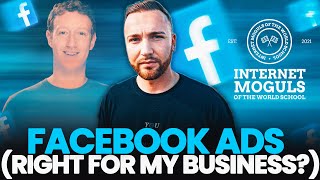
Avi Arya talks with Jordan Platon, a 26-year-old UK digital marketer who went from nightclub promoter to agency owner. They cover Facebook ad targeting, remarketing, video content, and how to acquire clients for an agency.
So I'm 26 years young, I'm from the UK and I am the owner of Affluent Co, which is a multi service digital marketing agency and we launched around three years ago now. So very much we were young in our infancy, turned over our first million dollars in our second year and it wasn't a very, wasn't very straight path to success. For, for myself, I, I went to university and studied architecture because my dad always told me, hey look, architects earn a lot of money and at the time, at the time I was financially motivated. I'm not afraid to say that, I'm certainly not now, but I was initially and so I thought, right, if I work in architecture, I've got a keen eye for design, then one day I'll be able to be paid loads and loads of money and I'll be able to design houses, which would be quite cool as well. You need to lay with, to start with the foundations you need to understand your buyer Persona, your, your customer avatar, who is it you trying to sell to? And the easiest way we can do that is just looking at our existing customers. And I think one of the biggest mistakes people make when they first start any kind of digital advertising is they try and sell all of their products or all of their services straight away and it gets really, really messy and really confusing. Whereas we always teach people to start with the lowest hanging fruit. So sell your best selling your number one statistically best selling product or service to your number one best audience. And so if that means you're excluding 50% of your customers, so be it. You want to focus on the ones or the majority. And once you then get return on investment, you're going to get confidence in your ability to advertise and then you'll be able to replicate whatever strategy you used previously on other products or services and other demographics and audiences.
Hi guys. My name is Avi Arya, father of two girls, six dogs, husband to a superwoman, a streetcar racer turned hotelier, now social media marketer and founder of Internet market. So that is my long and short hero story. And now I'm going to leave it to you, Jordan to tell us your story.
Nice, nice story, man. What a come up. That's amazing. So, yeah, firstly, thank you so much for having me here. Well, how far do you want me to go back? So I'm 26 years young, I'm from the UK and I'm the owner of Affluent Co, which is a multi service digital marketing agency and we launched around three years ago now. So very much we're Young in our infancy, turned over our first million dollars in our second year. And it wasn't a very straight path to success for myself. I went to university and studied architecture because my dad always told me, hey, look, architects earn a lot of money. And at the time I was financially motivated. I'm not afraid to say that, I'm certainly not now, but I was initially. And so I thought, right, if I work in architecture, I've got a keen eye for design, then one day I'll be able to be paid loads and loads of money and I'll be able to design houses, which would be quite cool as well. Thing is, when I got to university, I found out my lecturer said to me, jordan, look, if you're in architecture for the money, that's no longer the industry you want to be in. You have to train for six years and you'll be lucky to get a £25,000 a year salary after those six years. I thought to myself, that doesn't sound like something I really want to do right now. And so I actually lost love with the subject a bit and I launched a company. Alongside being at university, I started running nightclub events. So I would host these elaborate events and three different nightclubs in my local city. And the nightclub would actually take all of the revenue from the bar, I would take all of the revenue from the door, because we built a bit of a network in the local area. Now the thing is, that made me stay up very late and stop attending university in the mornings of my lectures. And I actually managed to get myself removed from my university course, which was a very low point for me. But I don't know what I was expecting to happen at the time. I certainly wasn't expecting that to happen, but I should have been. And so at this time, I kind of had this elevated sense of self importance. I was living this lifestyle. I had a bit of an image because of the nightclub industry. It's a bit of a toxic industry. And I started getting myself into a lot of debt to try and keep up or maintain the image that I had around university and around the city. And I managed to get myself in thousands of thousands of pounds worth of payday loan and credit card debt. And I hit this point where the nightclub industry business started failing and I hit rock bottom and knew I needed to get myself out of it. And so I started looking on paper at what jobs I could get to earn as much as I could in the short term. And so I moved into corporate sales. So I had a telesales job I was absolutely terrified. I used to run to the corner of the room and shake and quiver with my script in hand. And I just forced myself out of this position and actually managed to find out I was pretty good at selling. It just so happened to. And so I worked myself through a number of different sales jobs, but I never really had that. The ultimate fulfillment from it. I had a bit of money, which I was motivated by, but I didn't actually have time to enjoy that. And so I started going back to the drawing board, went back to the business drawing board and looked at business models that were trending at the time and three years ago, and even so, right now, social media marketing, digital marketing is just a booming industry. Businesses now more than ever realize they need to be advertising. And so I decided to launch a social media marketing agency specializing in Facebook ads, to which we managed to scale up pretty quickly using the experience I had in sales, although that certainly wasn't a straight ride. And then we recognized that there are a lot of other people of our age and a similar age demographic that wanted to launch into marketing agencies as well, wanted to be successful, but didn't have necessarily a direction that was going to or a vehicle to get them there. And so I started a YouTube channel and I started documenting my business journey, documenting the agency growth. We've scaled that to around 140,000 subscribers now in about a year and a half.
I see the silver plate at the back.
Yeah, there she is. So I'll be happy when there's a gold one.
I'm sure it's coming.
Yeah, yeah, hopefully. Hopefully. So, yeah, we launched that YouTube channel and I started. I kind of lost time. A bit similar to you with all of your clients. We kind of. I lost track of my own time. I couldn't. I was. I wanted to help as many people as I possibly can. My, my motto has always been I want to give more away for free. And other people will have you pay for, but you're only limited by how many hours you have in the day. And so I actually decided to launch an education business called the Affluent Academy, which was training other marketers how to sell within their marketing agency and acquire new clients. So we launched that business, which again, similar to you, we reclaimed that time back because we now had this product and, and we scaled it up. We've now taught thousands of different marketing agencies how to launch, build and scale their ads, but also deliver results. One of our most important metrics is return on investment for our clients. We don't care about the Vanity stuff such as likes and comments. We teach people how to get cash return on investment or monetary return on investment for their clients. And, yeah, the rest is history. We launched a new business as of last week called Learn Ads. We're now teaching business owners themselves how to advertise online as well. So we've recognized that there's this very big crisis especially, well, definitely in the uk. I'm not sure what it's like where you are at the moment, but this retail revolution where the companies that aren't innovating, that aren't moving online are going into liquidation, are failing and those other smaller companies are looking at that happen and realizing they need to advertise and there's not really a lot of ads education out there. And so our new business is teaching people how to run ads for themselves, and we're doing that for free. We really say Facebook ads. Course to do that. So. Wow, it's been a very busy time. I'm sorry, that's. That's the long, long version of my story.
That's fantastic. That's fantastic. That is fantastic. Jordan and I love the fact that you're 26 and you already went through these experiences of having a credit card debt. And I loved how, how, you know, you chose to be vulnerable and as honest as possible and say that you wanted to keep up to that image as a Nightingale promoter and that keeping up with the Joneses, as they say, you know, sort of got you into debt. And a lot of young people need needed to learn and hear this. So thank you very much for sharing that. So now, now that the story part is, is. Is done, let's move on to the second part. I. I'm in Vancouver, Canada, but we do a lot of work in India as well. Everywhere in the world, people are scared of Facebook ads. You know what? I don't know. I'm going to lose money. I don't know how to do it. So tell us, like, sort of, you know, the basic starter point of, you know, you're talking to an entrepreneur who's otherwise very reasonable and, you know, logical and running a business for the last 10 years. How should one approach Facebook ads? Does he need to understand the demographic, the customer avatar? And, you know, how do you. How do people get into Facebook ads to start with?
Yeah. I mean, firstly, as you just highlighted, you need to lay with and start with the foundations. You need to understand your buyer Persona, your customer avatar, who is it you're actually trying to sell to? And the easiest way we can do that is Just looking at our existing customers. And I think one of the biggest mistakes people make when they first start any kind of digital advertising is they try and sell all of their products or all of their services straight away. And it gets really, really messy and really confusing. Whereas we always teach people to start with the lowest hanging fruit. So sell your best selling your number one, statistically best selling product or service to, to your number one best audience. And so if that means you're excluding 50% of your customers, so be it, you want to focus on the ones or the majority. And once you then get return on investment, you're going to get confidence in your ability to advertise. And then you'll be able to replicate whatever strategy you used previously on other products or services and other demographics and audiences.
Got it. So stick to one product at a time and scale that up. Okay, now my next question is, so when it comes to Facebook ads, should I do text ads, audio ads, video ads, what's the best, or should I do all of them?
So it depends on your product or your service. Nine times out of ten, video always performs best. Facebook favor video because if somebody's watching a video on the platform, they're spending more time on the platform. And so generally, videos will be prioritized on the newsfeed joint with a really nice bit of ad copy. We always like to suggest, if you're selling a product, then you show your product in use with some kind of a video. So whether you're a clothing store, it's showing people using the clothes where they are intended to be used. For example, if it's a gym clothing store, for example, or if you are, we have a client which is a bit of a bizarre product at the moment, which is a UV germ killer for mobile phones. And you put your mobile phone in there and it kills all the germs, of course, because of what's going on at the moment. And so there's a video of somebody putting that into the. Into the germ killer, pressing the button. You see everything in process. So somebody knows exactly what it is they're buying. So generally we say video is king when it comes to Facebook advertising.
Got it. So video. Now, when it comes to actually, how do you go about. So you have a product, and so it's a product like a germ kita mobile phone cover jacket, hat product. That means I'm either manufacturing it or I'm bringing it from a cheaper source and I'm selling it to a more expensive source. And I'm the in between person could be I'm the manufacturer or now I have a decent margin. How do I approach Facebook ads to see if they're going to work for me? Is that a process?
So if you're a manufacturer trying to find people who are going to white label your product, essentially.
So what you mean I could be a manufacturer or I could be a reseller of a product? I've got decent margins and I've never advertised on Facebook. What is the first few things I should do? I make the video of the use case and all of that. But what is it? I mean do I look at my audience avatar and how do I do the tracking and all of that?
Yeah. So the first thing you want to do is set up a Facebook Pixel. You want to Facebook Pixel tracking code on there for anyone that doesn't know it very quickly. It's just a small bit of code you insert on your website which allows us to read the data or read what our customers or potential customers are doing on a website. A lot of people, even if they don't sell e commerce or don't have E commerce functionality, think they don't need a pixel and that's not true. A pixel helps all of your ads optimize. It helps the algorithm that what's working and what isn't working for you. And so every business should have a Facebook Pixel set up even if you're not running ads just to collect data for future proofing. The second thing you should do is look at the statistics. If you're an existing business with existing sales through other mediums, whether that's organic or through Google Ads, just look at statistically what is working for you already, what is selling well and what isn't selling well. And just focus on the things that are statistically doing well. A lot of people think that, okay, when I start advertising I it's a good opportunity for me to start selling a product which I want to start selling because all of our all businesses have the really high profit margin products and the lower profit margins. And as a business owner we naturally want to sell our higher profit margin products. But if those aren't our statistically or factually best selling or easier selling products, we shouldn't start off with that when we are advertising online.
Interesting. What do you think about upsells? I have a product for $9 and then I have an upsell to $29 and then comes to my $500 program. So what do you think about upsells? How should people go about upsells?
Yeah, upsells is dead easy on Facebook. All you need to do is to simply retarget that pixel traffic that you already have onto your website. It's always good to have some kind of, at least at a minimum, tailor your ads for your upsell. So make sure when you're writing your ad copy or even in your creative itself, you're directly calling out to an existing customer base to make it feel personal and make it feel your. You're just running that app to that individual person. It's not a generalized cold sales ad. And also even better than that, if you can offer some kind of discount for existing customers or a promotional offer where you're stacking additional products. Because actually people get used to discounts. They don't get used to stacks or freebies. So if there's something extra you can bundle in with your upsells for existing customers, that also will help you convert those customers.
So can you run us through various formats of remarketing? Remarketing to a customer who never bought from you versus remarketing to a customer who's bought from you in the past. How would you have two different ads? What would you say in them?
What we generally do is we have our warm retargeting audience and we have our hot retargeting. Warm retargeting would be essentially retargeting all of our organic places already. So for example, we would retarget people who have engaged of our Instagram or Facebook page or liked any of our posts or signed up to our email list. And so those are still very warm audiences for us to remarket. And that's what we'd have as one advert. Then secondary to that, we would have our hot retargeting, which would be people who have added our product to cart or viewed an actual product. So there's more commitment to actually purchase the product that we're looking to remarket. So we always separate them two out. Some companies like to separate things even further. If you have an extreme amount of traffic, they like to separate and add to carts from page views. But Generally speaking, with 99% of the businesses that we work with, we will always put page views and add to carts together and then your organic, such as social media traffic and all of that as a warm audience.
Got it. So understood. So these kind of remarketing. Now does that mean as a business owner I need to be comfortable with having my face in front of the video because I need a video ad, then a remarketing ad for my existing audience for my cold Audience. For my warm audience, there's too much video to be done just for one product. I've got 10 products. You know what, forget Facebook advertising.
Yeah, that's a very valid concern and a lot of people have that. First of all, you do not need your face in front of the camera for your business. The new business that we're launching that we launched last week, learn ads. We made a deliberate fact of not putting our face on camera with video because ultimately we want this business to be something we can potentially sell in 10, 20 years time when we build it to a certain level. And so if a business depends on your face and it's not always as sellable and so we're opting for things like illustrations, stock imagery, you can even go down the actor route with your videos. But with remarketing, you don't necessarily need to have videos for remarketing. You can get away with images and that'll be just as effective for you because you don't need to explain who you are and what you are offering to your customers in remarketing because they already know who you are. So generally, if you do have a product or service which requires some kind of face to camera and generally that only stands if you are a service based business. Because if you're selling products, there's no reason that you need to be in front of the camera at all. So if you're selling services and you're personally delivering them services, then you only really need to get face to camera on the cold ads.
Got it. So, and so if I'm, if I want to be, if I deliberately want to become a personal brand, a coach, guru, then my personal face and all of that makes my personality, the way I talk, my quotes, my dogs coming into my and out of my studio, all of that gives that personal appeal.
Definitely. Yeah, 100%. If you are following that kind of a model, when you want to build like a big personal brand around your business, you definitely want to get on front of camera as much as you can.
Got it. Now, when it comes to can you run us through, I know it's a hard ask, but can you run us through a step by step system of from zero to the first 1,000 subscribers?
So it's on YouTube?
Yeah, because I can't not help. I can't help notice the amazing silver award that you got from YouTube. So I'm sure a lot of audience members are watching this right now and they'd love to know what happened with the 0 to 1st. I mean that's the first and then I'd like to go from thousand to 140,000 of course.
Okay. So the first, the most crucial thing when you're, when you want to start building an audience on YouTube and one of the biggest mistakes people make is trying to monetize an audience too soon. You absolutely should never try and monetize an audience when you have, when you have a small audience because you're just going to wind people up, they're going to see straight for you and they won't think that you are genuine. As I said, I always, I've always strived to give more because that just.
Shows an entrepreneurial mindset to be able to invest in pre roll ads because this is your platform where you have your content to leave everything to organic. I have never understood that. I've always said, I mean 20 years back we had to know somebody in TV to say can you get me a spot for me to get known? And today all you need to do is spend some money on YouTube ads to get known. And even then if you're looking at organic to work, then we're setting ourselves up for failure. So I love the investment in your own channel strategy. Now my next question is when it comes to, you know, when it comes to your building a studio, like I love your studio, it's minimalistic, it's amazing. I love your voice. You know, it's, you're a good looking guy, that helps. But you're wearing black and there's white and there's a whole black and white theme. Is that a deliberate, well thought of strategy?
Yeah. So I mean, to be completely honest with you, it's kind of just lucky that things look good right now because this isn't actually a stage studio is just, it's just my office and we've got another desk there as well. But I like to keep, it's the same with all of our companies. Like to keep a very minimalist brand. I've always been inspired by Apple and the way they've done their marketing and their design. And so throughout all of our companies we have a very minimalist black, white and an accent color. So the accent color changes for each of our companies. I've never had a lot of colors but that being said, multiple colors in certain brands work really, really well. But me personally, I like to keep things as minimalist, simplistic as I possibly can.
Okay. So when it, so when it comes to setting up the mic and the camera and everything and you have a nice light on your face and it's coming from two angles maybe so there's no shadow and all of that. So does that matter when you're starting off or to start off with a good looking channel? So everybody wants to stay tuned or doesn't matter.
My first content was recorded on my phone, on my, on my selfie camera and it probably was until I, I hit maybe the 5,000 subscriber mark. And that was only three years ago. And I wouldn't even say things have really changed an awful lot since then. But even still, you can get yourself a relatively inexpensive camera. My camera for my YouTube channel cost £600 and I had that up until three weeks ago when I bought a new camera. And so I don't think, I think as long as you're mindful of making sure you haven't got really low quality content, as long as you're uploading in 1080p HD then you're absolutely fine. Light boxes, for example this one, this is still only a 60 pound. There's a pair of them £60 on Amazon so you don't need a lot of expensive equipment. This mic is £100 on Amazon. So I think some people put a heavy focus in making sure they invest a lot into their setup. But I think ultimately all it boils down to is the quality of your content.
Got it. Quality of the content. Which means answers to relevant contextual questions that people are searching for. YouTube being a search engine, people are asking for answers to immediate problems. And if you're answering those immediate questions in a fun, entertaining, easy, step by step bite size, easy to digest format, that is the definition of value, is that correct?
Absolutely. Couldn't agree more.
Okay, awesome. So Jordan, tell us a little bit about your. I want to know a little bit about all your businesses because if people who are listening to this want to reach out to you, get your help. So we go backwards. We'll start with the latest baby in the house. We'll go with Learn Ads. So how can entrepreneurs listening to this interview get into Learn Ads? Is there a website and tell us about that business?
Yeah. So our website is learnads IO. We strive to be the biggest digital marketing advertising training program training business in the world. We currently teach Facebook adverts. We have a free course and a pro course and we are going to be releasing a series of other platforms throughout this year. Google, YouTube, LinkedIn, Snapchat, TikTok. So we want to be number one go to platform for teaching people how to advertise online because we know how to do this ourselves through our Marketing agency. We literally teach the exact strategies that we use in our marketing agency for our clients. We hold nothing back whatsoever because we recognize that digital marketing is something which is very intimidating for business owners. It's something they're very scared of. And so we want to break it down into, in a very simple way for people to understand and so they can learn completely for free with our free training the A to Z of how to launch their first Facebook ads, find their audience, write ad creative and create good content as well for their, for their, their platform. So yeah, that's, that's learn ads. It's targeted for business owners who want to learn how to advertise online.
Awesome. And tell us about your agency. How does that help?
Yes, and digital marketing agency and the affluent agency. We work with E commerce brands. We do work with a few, a few other different industries as well if we, if it takes a fancy. But we focus on E commerce. We specialize in Facebook adverts again and sales funnels. We do a bit of content creation as well. And yeah, we work with businesses who don't have the time to run ads themselves and who want an expert to do it for them. We're very small team which means we provide a very bespoke service. And yeah, that's, that's pretty much it with the agency and that's affluent co agency if anyone's interested.
Got it. And I'm going to put all the links over in the description. So tell us that when it comes to now let's speak to agency owners now, agency owners. And you help agency owners start and scale their agencies as well. So agency owners always like how do I get my next client? And I have two clients coming in, one leaving. I never, you know, I'm always there. I mean I'm always trying to keep my head above the ground. How would you respond to that?
The most important thing, one of the most important things that one of my sales mentors taught me when I was, when I first jumped into sales, when I had that issue myself, but all my eggs in one basket, a really big potential client and it fell for at last moment and I had nothing left to fall back on. And it felt really, really bad. And he said to me, Jordan, your biggest problem is you haven't kept your, your pipeline full and you always need to keep your pipeline full. And so no matter how many clients you've got, it doesn't matter Whether you're a 100k a month agency, you should always have other clients in the pipeline. Always be have Some kind of sales metric, have some kind of way to keep people interested or keep clients on the back burner? Slow burning clients. So you're just maintaining a relationship. Who said no to you a couple of months ago? Or even just doing a bit of cold outreach. So keep your pipeline. If you keep your pipeline full, you will not have the issue where if you lose a client, you won't have anything to back that up. You always need to keep that sales mechanism in place.
I love what you said. Keep that slow burning relationship with somebody who said no to you in the past. So there's no place for ego in business. Somebody said no to you? Don't take it to heart. They probably don't mean it. Their no was maybe not yet. So tell us, how do you keep clients on the slow burner and they said no to you and you're like, I'm going to ignore your no because it's no for now, it's not yet. And I'm going to come back. How do you approach these and have some of them come back?
Yes. Yeah, absolutely. We've had that before. We've had it many times when a client said no to us on a certain price and when they've reached out again, again, our prices have increased. And so you always get a little bit of self satisfaction from that. But you should never burn a bridge in any kind of business. And so we like to email people. We have people on a specific list on our CRM system and we like to email, send an email out to people individually every month or so just to literally check in and say, hey, look, how's things going in the business? Not even asking for a pitch, not asking for a call. We just say, hey, how are you getting on something relevant to them? We always make sure we put something relevant in any outreach that we do because nobody likes feeling like a number or like they're on the receiving end of an email blast 100%.
And that strategy has helped you get clients back?
Definitely. Yeah. No, it really has.
Okay, so again, for agency owners who are watching this, what else should they do? They just started, they've got their first two, three clients. You said always build a pipeline. So what do I do? I run Facebook ads and always keep three hours a day to be on calls. What would be your strategy to always keep the pipeline full? I've just got three people in my company and I just started and I'm bootstrapped. What should I do?
Yeah, I mean if you've got existing clients, existing testimonials, Facebook ads can be a good option for you, but a lot of agency owners underestimate how much money you'll spend to get leads on Facebook and so they give up very early. I mean, as an agency owner, it's a very high ticket service, especially if you're charging above $1,000 a month, for example. And if you are doing that, you need to be prepared to spend at least 5 or 50 to $100 per lead in some cases, depending on who you're reaching out to. But to be honest, we like to fall back on cold sales and we always follow a multi platform strategy, not personally anymore. So it's a bit hypocritical. As a newstart agency, we would, but now we don't. We get a lot of referrals and we have a lot of organic streams because of the social media and the personal brand. But as a newstart agency, cold sales is at the forefront of everything that we did. Okay, we would cold call, we would dm, we would email, and we always follow a multi platform strategy. We hit people from absolutely all angles. Because if you had five friends and you needed to contact all of those five friends, you wouldn't just WhatsApp all of them because, you know, one of them might be on Instagram, one of them might answer the phone, one of them never answers the phone. And so in sales, the biggest mistake we make is choosing one sales mechanism, choosing just cold calling or choosing emails, and just presuming that every single person you reach out to is going to respond to that platform in the same way. And so when we outreach, we always like to hit people on multiple platforms. So we may cold call them on a Monday, we might send them a DM on the Tuesday, we might send them an email on the Wednesday. We're hitting them from all angles, just dependent on what platform they will respond best to.
So is it a good idea, like for example, if I say this is a lot of hard work, what you just said, it's a lot of hard work, it's a lot of personalization and it cannot be cold. It has to be warm from the heart for you. I need to say, you know what? I loved your interview with Avi and I saw that you got the new $600 camera. I sell the flash that goes on top of the camera. Can I have a five minute conversation and tell you how my flash can help you you with your camera? So it has to be contextual so that that requires time, understanding, empathy, patience, all of that. So does that mean I should have a separate business development person to do all of this or to start off.
With as an agency owner. For me, I was a one man band until I, until we were we had six figures in the agency. I was one man band until we hit around nine, eight or nine clients. And so we outsource a few small jobs but as far as the majority of service delivery and sales was concerned, it was just me. And so I think as an agency owner you can easily get yourself started and scale up to a reasonable level on your own while still maintaining relationships with clients while still delivering service and still doing sales outreach. Absolutely. When you hit that point, when you're feeling that pinch, there is the need for somebody like a sales manager or someone in business development to actually be selling on behalf of you. Like for now, I certainly couldn't be doing direct sales in the agency anymore.
Got it. I'd like to shift gears and go back to, you know, we are all somewhere a byproduct of what our family is. Can you talk to us a little bit about your family? Your parents have. Must be proud. You've got your own channel, your own brand and you thought you saying I have multiple businesses and how has been the, how's that been from a nightclub owner who's coming back at 5am in the morning and raking up credit card debt to now somebody who's teaching other entrepreneurs on how they should run their multi million dollar businesses. How do your parents feel about that?
Yeah, my parents are very proud. I've always. We grew up in a small village in the countryside in the UK in a county called Norfolk. And I've always had everything I've needed, but not everything I wanted. I'm always, I'm very open to, always very sure to admit that I've always had everything I've needed, but not everything I've wanted. I never got pocket money and so my dad left me with this desire for working and so I started my first job when I was like 14 years old as a paper round getting paid 15 pounds a week to literally go around the entire village and spend an hour every single day delivering the local paper. And so my dad always instilled that in me and I think I was always very aware that my dad did relatively well for himself but not enough for him to be perfectly satisfied with where he was at with everything in his life. And so I'm very thankful that he didn't give me everything that I wanted because that really instilled that entrepreneurial mindset within me and say for him when everything started going well, I think at the start there's a little bit of disbelief. It's always, I can imagine, a bit strange when your son starts doing very well and surpasses the level that you're doing. I think that must be a very hard thing to process. And my mum's always been my number one cheerleader, full stop. My mom's like, you go, you take over the world, you do anything you want to do, you can achieve it. But we have a really great relationship, me and both my parents, we get on really, really well and they're incredibly proud of us, of what I've achieved and they also support every move that I make. At the start they were very cautious though, tried to talk me out of quitting the job, tried to talk me out of quitting university. In fact, my dad didn't know I quit or got kicked out of university until he saw it on my YouTube channel. He wasn't best pleased.
He is a subscriber.
He is a subscriber, yeah, absolutely. He comments on every video.
Oh, how sweet that. I love that. I love that. You know, I speak to my parents every day as well. My parents are in their 70s, they're hard working entrepreneurs, they work day in and day out and that's what my dad. My first conversation with my mom is, are you, have you eaten? Well, I'm 44 years old. My first conversation with my dad is, are your customers happy with you? So you know, we, an apple will never fall far from the tree. Whatever we want eventually it's, it's, you know, it's, you know, a family and parents and I always say one thing in my, you know, I wrote a book many years ago and it said stay close to the router. Which means we're all devices and our parents are routers and sometimes we don't get along with them. Sometimes our parents, especially our dads will show us the mirror in the most rude way possible and we're like, how? You can't talk to me like that. You can't tell me I can't do this. I'll do exactly this because you told me not to do it. Now when I say stay close to the router, I'm saying just a device. Staying close to the router gets more Internet bars and it's able to download more information about on itself. So if I stay close to, I mean I don't need to stay in the same house or whatever. I just need to stay connected to the family. So that, and just listen to Everyone, instead of going out there and listening to gurus who have no idea about who I am, my dad tells me, you know what? You are more. You're more sort of geared to succeed at speaking on stage rather than running Facebook ads, because the nitty gritties and the operational thing. And so to that, most young kids would say, you think telling me there's something I can't do, so I'm going to prove you wrong. I don't want to talk to you again, and all of that. And then we go out into the world and look at mentors and we say, you know what? What should I do? And a mentor has no knowledge about who you are and where you're coming from. And so therefore, we get mixed up. So I always say, stay close to the router. Listen to the harsh, maybe sometimes harsh knowledge that's coming from your family because they're telling you, they're telling you what they can and why not use them as mentors? I'm very happy. I love the fact that your dad comments on every video, that.
It'S very. Sometimes I delete them, though. They're embarrassing ones. It's very interesting that you just said that because I don't have many conversations of people who aren't, who aren't huge, huge, huge advocates of always getting a mentor, always following advice on mentor, because I'm actually not one of those people myself. People say to me many times on podcasts, jordan, who have been your mentors? And I can't actually name all big marketing gurus or big Internet sensations that have been my mentors because there haven't been any. My biggest mentors have been my closest friends and my family. I've learned from the people who are very, very close to me. I've got friends who are on a very similar trajectory as me business. And so I followed in their footsteps, learned from mistakes together. And all of my mentorship has been close to the router, as you say.
That is fantastic. That is just because, you know, it's just. It's just how it works. So, Jordan, tell us what, what do the next five years look for you and, like, couple of new books coming out and, you know, you and Richard Branson hanging out together, jamming or skydiving with Gary Vee. What's new on the plate?
So I'd like to. I have a book called the 50 Minute Agency, which does need updating at some point. The beauty of marketing is it's always changing, leaving us updated, outdated, rather. So just continue building the brand, building a Bigger impact. Learn ads. We're really going to. I see learn ads as being a business which will filter through and grow all of the other businesses because we're now catering to all business owners and therefore they're going to be business owners who require marketing services, who will filter down to the agency. They're going to be some business owners who may even be interested in marketing agency, who filter down to our academy. And so I want to continue building an impact, do a little bit more public speaking when we're allowed to again. And yeah, just further build the brand. Further build the team. We're hiring a new sales team member this month as well as a new content creator, which is exciting and just continue on the same path and enjoy the ride along the way.
That's fantastic. You know, Jordan, one thing I, you know, I'm also building a parallel brand on. I'm going to start a parallel brand this Internet moguls. And one suggestion I had for you, which I learned over time, was I'm like, I want to grow fast and everybody wants to grow fast, still be efficient, still be value. So I realized vernacular, if I go, if English is the language that I'm comfortable with, but I can interview or outsource to people who will take the same interview and put it in Spanish or Portuguese or other languages, then put it back on my channel, the reach explodes. And I can now go to multiple countries and I've seen a lot of channels with, with, with no personal brand, but just because they're reaching out to maybe, you know, even in China, there's Cantonese, Mandarin and, you know, all of these. So people are narrowing down on those niches and saying, so I was thinking, okay, like an entrepreneur, why? How can we automate this system? Why not? I do an interview with Jordan and I send it to the editing team and when they're editing it, I send it to another person who can edit with, you know, Spanish subtitles and in between. And then maybe we can do a little bit in Hindi or we can do something in Bengali. And all of this is possible with Fiverr.com and all of that. And, you know, it is a bit of a logistical, but like everything else, but then why not have, you know, appeal to multiple audiences?
Yeah, yeah, no, absolutely. I've had people suggest that multiple times, like the info, products and things like that before. And it's definitely something that, I mean, if you do find a tool which makes that process easier than certainly let.
Me know about that or very soon, in the next two to three weeks, I'LL send you an email and I'll tell you how I've been able to find the right people in the right places. Because I spoke to somebody recently in Brazil and that person is no extra. Sorry, let me rewind that. I heard a very famous marketer say that he converted his video ads into Spanish and ran ads in Brazil because the roas for his product there was much better. And so just he said a lot of people would say, oh my God, it's too much work, forget it. But this guy saw profit and he went to Brazil and he said, since then, yeah, I found my, I found my gold over there.
So that's amazing. What's the English language which is saturated with lots of, with lots of ads and it's other industry. Lots of people always talk to me. Marketing agencies always say to me from other countries. So, Jordan, should I speak my native language or should I be reaching out to English speaking businesses? I would say if you can speak another language, you should reach out to businesses in that language because that's going to be your competitive edge. There's loads of people from the UK and from the US and from other English speaking countries competing over English speaking businesses. But if you can speak your native tongue, then you've got a competitive edge over other people.
Awesome. Now this brings me to my last question, Jordan. You know we say the definition of an Internet mogul, which is the name of our company, our show and everything. An Internet mogul is somebody who is able to run a successful business at the same time have the power to manage their own time and do everything else in life which gives them happiness, you know, because the Internet allows you to do more from any remote location. But at the same time, at the end of this interview, put my laptop off and go back and spend time with my kids. So that, according to me, is the definition of an Internet mogul. What would be your definition of an Internet mogul?
An Internet mogul, it's somebody. An Internet mogul. It's somebody that strives to impact as many people as they can online. Because I think that if your business has built positive impact on other people and you're not using money as your pursuit and it's impacting, positively impacting other people, then the finances will follow you. When I stopped chasing money and started chasing impacts, everything changed.
Lovely. And you're all of 26. I love the way you talk. That is just fantastic. Tell me, Jordan, what's the best channel for people who are watching this right now to follow you at?
So YouTube would be the ones at YouTube. Jordan Platon. Or Instagram as well. Jordan Pattinson.
Perfect. Jordan, it's been a pleasure talking to you. Thank you very much for your time. And once again, this is Avi Arya, father of two girls, six dogs, husband to a superwoman, a streetcar racer, turn hotelier, now social media marketer and founder of Internet moguls. Signing off, Sam.
More from Avi

The strongest mindset doesn't begin with meditation. It begins at home. Before you conquer the wor

The strongest mindset doesn't begin with meditation. It begins at home. Before you conquer the wor

Your mindset isn't something you fix once. It's something you train every single day. Just like yo

Don't build a company just because your friends are. Build one because you're ready. A startup is

Everyone dreams of becoming the boss. Very few understand what that really means. The moment you b

Most entrepreneurs say, "I don't have time for coaching." The truth? You don't make time for what

Over hiring doesn't always solve problems. Sometimes, it creates them. Having a small buffer in you

"The highest-paid" isn't the goal. The highest-value is. People often ask why premium mentorship co

The founder will always be a bottleneck... at some stage. The goal isn't to pretend you're never th

People ask me how I stay consistent with my morning routine while traveling across countries and tim

People ask me how I stay consistent with my morning routine while traveling across countries and tim