How To Leverage The Podcasting Game For Business | DM Agency QnA | AskAviArya | Bijay Gautam |
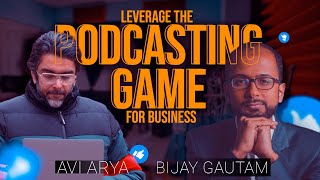
Avi Arya discusses how to use podcasting for business growth, sharing his personal journey and strategies for building relationships through the medium. He covers balancing content creation with paid advertising and explains why branded podcasts deliver long-term value.
Many people use this opportunity through videos. Many people use it through audios.
Creating content is thinking like having a farmer's mindset. And running ads is like having a hunter's mindset. And there needs to be a balance of both of these. Now, blog and videos are competing mediums. Why? There's an ad that's going to pop up, there's a recommended video, which always seem to be more interesting than the video that we are watching right now. And the average time people are spending to listen to podcast is 30 minutes, 3, 0 minutes. Podcast is not at all competing medium.
Minus 20, 30 degrees.
Okay, so this is like completely, you know, different than the podcast and the community.
Hi, my name is Avi Arya. Father of two girls, six dogs, husband to a superwoman, the term hotelier, then marketer and founder of Internet moguls.
What up, Internet moguls?
Shortest distance between two human hearts is always a good story. You tell a perfect stranger a good story and you win a heart for life. How did you get started? What were the struggles and everything?
Yeah, I mean, I studied pharmacy and I was working as a research scientist, you know, back in 2017. And when I was working as a research scientist, you know, this is not something that, you know, I would like to do anymore, and this is not something that I want to do with my life. And when that realization happened, I asked myself, hey, if you don't want to become a research scientist anymore, then what is it that you want to be? And the answer, you know, that I got from within was, I don't know. And when that, you know, answer came in, like, hey, I don't know what I should be doing next in my life. And I'm sure a lot of people here could relate to this, where you don't like what you're doing, and also you don't have any clue of what you want to do next in your life. Right? So when that happened, I, luckily, I was exposed to this whole world of, you know, personal transformation and personal development, right? So I was watching a lot of TED talks, reading a lot of books, going to conferences, meeting people. So I was exposed to these interesting people, like people like you who were doing this interesting stuff in the world, who were, you know, not on the regular path, but trying to create a new path for themselves. And I thought, hey, you know what? It seems that these people know and they. It seems that they have figured out what they wanted to do in their life, right? So let me just go and ask these people. Let me just go and ask these people on, hey, how did you figure out what you wanted to do in your life? You know, what was your journey like? And maybe in those conversations I thought, I'll find a blueprint which I can, you know, use in my own life. So with that intention, you know, I, I started interviewing people and started putting it out there. 2017, I launched my podcast Inspiring Talk. And when I started my podcast, a lot of people started, you know, liking the conversations that I was having and recording. And it turned out that a lot of questions that I was asking people were also the questions people always wanted to learn from the people that I was interviewing. I was, you know, and had the opportunity to interview and learn from some of the really, really interesting people from across the world, some of the people who have built, you know, billion dollar companies, to somebody who has written crazily, you know, popular books, to people who are climbing mountains, to people who have given up everything and become, you know, spiritual leaders and so on and so forth. So when I was getting exposed to these interesting people, the perspective about life started changing for me where I, you know, got a sense that, hey, you know what, each, every single person whom I met have their own journey and they have defined what success means for them and I think I can do that for myself as well. Fifteen months into that, I quit my job to become a full time podcaster. And a lot of people started saying that, hey bj, why don't you help us do our podcast as well? So started teaching, coaching people on how they can get started with the podcasts as well. And one year of, you know, quitting my job and doing sort of a, you know, coaching, mentoring and stuff like that, in 20 end of 2019, we started the podcast production company called Wine Studio where we work with brands, global brands like HP Binance and so on and so forth to help them produce their branded shows. And also for the people who don't know, we also produce Avi's podcast, the show that Avi hosts. So in short, it's been such a great journey of trying to figure out what I wanted to do in my life, to meeting some of the interesting people. And yeah, I think, you know, when I started, and a lot of people think that, hey, it seems that, you know, you've started pretty well and stuff like that. And the way I started was I, I went on OLX to buy the secondhand microphone and, and I remember I was, you know, going to collect that mic and we fixed that. We're going to meet at this metro station in Delhi and you Know, there was this guy who came up, came with this, you know, blue microphone and said like, hey, here's the mic. And I said, hey, but why are you selling this? And you know, the guy told that my sister, she used to sing the song and she got married last year and she's no longer following that dream. So, you know, we just wanted to sell this mic off. And at that moment I realized that, hey, you know what, with this microphone, one dream just died. And while my dream was just getting started, so, you know, and it started from us, you know, with that and then now the show has over a million listens and we have created some of the, you know, amazing shows at Wine Studio, which went on to win some awards. The inspiring talk has more than 125 episodes, more than a million listens. You know, was finalist for ACS based podcast award in 2019, was on the top podcast for Jio7 2020 and top podcast of Ghana 2021. So yeah, I, you know, that's pretty much, you know, been, been my journey in very short, awesome.
Minus 20, 30 degrees.
Okay, so this is like completely, you know, different than the podcast and the conversation that I have. And I love that because it's, you know, you know, my podcast is about personal transformation, right? We talk about the personal transformation ideas and we talk about overcoming fears. We talk about, you know, challenging yourself and becoming better version of yourself, whether that's emotionally, whether that's spiritually, whether that's physically and you know, so on and so forth. Now because, you know, I'm myself the student of personal transformation where I try to, you know, get better at different aspects of my life and I'm constantly on lookout for the events and, and you know, things that can really help me become better version of myself, right? So whether that's attending events, reading books or trying something new. So in 2019, I attended this event. I went to the, it was a three days personal transformation event. And you know, I'm sure a lot of people here would know about Mindvalley. Gautam Katrapal, who used to work with Mindvalley, started a new company and he was doing this event in Shimla which was a three days personal transformation event where you will get to learn from some really, really interesting teachers from across the world. And I attended that event and, and one of one morning, you know, they had this challenge and you know, I went to other events they did in Goa as well where they make, made us do the fire walk. And the idea of that fire walking is to get past the fears that you have on your head, right? So when you see fire in front of you and walking on a hot, you know, like burning coal, it feels like, you know, I'm going to burn myself. But then when you come out on the other side, you feel, you have a sense that, hey, you know what? I've been able to accomplish something where you feel like, hey, you know what? I did something. And it's a way for you to sort of deal with your. With the fear on your head. Now coming back to the, you know, Shimla thing now. So there is a guy, and I think he's a Swedish guy, I'm not sure where he is based, called Wim Hof. So this guy, Wim Hof is someone who climbed Mount Everest just on shot. Like just on short. No, nothing else. Like just on short. And that's crazy, right? So now somebody like Wim Hof who climbed. And now, mind you, the people who climb Mount Everest with the globes and all of that, all of that, they come back with, you know, with their, you know, swollen hands and, you know, and in some cases, people need to like, chop off their fingers because it just gone. Right. Now here's the guy who went without anything but just on shots. And now what Wim Hof says is if you can, you know, channelize your energy using breathe. Breathing patterns, you can, you know, deal with the cold. You can, you know, you know, you can, you can really. And he says that cold, when you expose yourself and give this cold therapy, it sort of shocks you, you know, ans. And also, you know, it relieves the stress and, and also it builds immunity. So I'm sure if, you know, people know, people here know Tony Robbins and I'm sure they also know that every single morning Tony Robbins take a cold bath where he jump in, you know, he goes to hot spine directly jump into a very, very cold water. And the idea is to just activate your, you know, your body. And so, yeah, I mean, that was the whole context to the whole thing. And then we jumped into. And I think they put some 2500 kilo of ice on a swimming pool. And it was Shimla, obviously it was already freezing. And on top of that, we put ice on that and then we just jumped into it. And yeah, I mean, it was numbing. But when we came out of it, I think it was really one of those experiences where when I looked it at back, you know, I really feel that, hey, you know what? Feel good about it. And I would love to do it over and over again. And one lesson that I, you know, sort of came back from that whole event and, you know, looking at what Wim Hof has been able to do is try and, you know, at least get, you know, into cold shower at least once a week, even if it's a winter, obviously, you know, so, so, yeah, I mean, so, so that, that was the whole context to, you know, the, the jumping on ice pool thing that you just brought up.
I want to ask one is podcaster interview downloads, podcasting. The other opportunity is already business podcast. And whose business key amplification, which is a better idea and what should people do?
So, you know, one of the things that I, you know, say, which podcast is a medium, which is such a, you know, I love this medium so much and I know how much you love video, right? And I love podcast just the way you love video as a medium. And the reason for that is, you know, listening podcast is a secondary activity, which means you can listen to podcasts when you are doing anything, right? You could be driving, you could be cooking, you could be cleaning, and so on and so forth. Now that's the beauty of podcast as a medium. And also most of the videos that we consume and now YouTube people are reaching out in the video and stuff like that. But I'm talking about video. Video is a content that we post on social media. Now. 80% of the video that we consume today is the video that is served to us by the AI or the algorithm serves that video us right when we are on Instagram. Like Instagram is telling us like, hey, watch this video. And because of which the engagement, you know, is lesser. But when we have an intent to watch a video that, you know, and the intent right now, like the, the when people watch like 10 videos and this is for audience for you to ask yourself, like, hey, on of the past 10 videos that I've watched, how many of those 10 I had an intent to watch? And it's likely, likely that, you know, it would be two or maybe three videos out of the 10 that you, you actually wanted to watch. Eight, seven, eight of those were just showing on a feed. Now podcast, the intent is way higher as company, if abhi, if somebody subscribed to Avi's podcast, that means the person is very interested in learning about the Internet, you know, the business building business on the Internet, right? So that's why they are subscribed to it. Which means the intent is extremely higher. And when intent is high, the engagement is extremely, extremely high. And that's you know, that's the fundamental, fundamental difference that we need to understand. And now coming back to like, hey, if I have a business, then how, how should I really be thinking about podcast and when should I think about podcast? Is the first question that I would, you know, I'd like to sort of address and share with you all here. Now, if you have a business and if you want to build a deeper connection with people, if you want to build, increase the brand favorability, right, where you want people to really deeply engage with you and trust, build that trust on you is when you want to consider podcast. But if you're looking at, hey, I want, I want to do a podcast episode today and I want result tomorrow, that's not going to happen. And just the way you know, that doesn't happen with any form of content. You write the first blog post, you don't get clients, you create that first video, you don't get clients. It's, it's something that, you know, that's you, that you have to build over the period of time. Right? Now, the same goes with podcasts as well. And, you know, I'm sure people here know Siddharth and he gave this very beautiful analogy, right? Creating content is thinking like having a farmer's mindset and running ads is like having a hunter's mindset. And there need to be a balance of both of these. Now, what he meant was when you are a hunter, then you want to go out hunting and you hunt it and you want, you know, the food right there and then, like at that moment. And that's what Facebook ads and Instagram ads help us do, right? You go out there, put money today, tomorrow you have your ROI right? Now, farmer's mindset, you plant a seed, you nurture it, and it seems that nothing's happening for a first few months, and then starts bearing fruit or food, and then when it does, then you have more than you need, right? So that's the farmer's mindset. Now you need to have a balance of both of that. What's, what do I mean by that is you need to do paid campaigns where you are paying for running ads and stuff like that. But if you do not have a content, organic content that's supporting it, then I think, you know, it's, it's you on the long run. We all are going to lose. Because today, if we are not creating content, I don't care what that is, right? Whether that's audio or video or blog or whatever that is, if we are not creating organic content, and reaching out to people to build a thought leadership on the long run, we all are going to lose. So, so if you want to build your thought leadership, podcast is a great medium because people are tuning in for the longer period of time. And when they engage with you for the longer period of time, the trust they are going to build on you is extremely high. Now, if you are a business, if you run a business, and now let's say if you run a business about food or maybe whatever travel, right? So when you start engaging with the audience, audience bringing the content is striking. The conversation on the topics of your podcast, the people who are interested in food or travel or whatever your industry is, are going to come and listen to the podcast, which means these are the audience that you want to talk to. Now think about this. Even if you have just thousand people who come and listen to your podcast and food every single week and they listen to it for 30 minutes, right? And that's like a, you know, that's, that's the audience. That's, that's the thousand people that you want to talk to right? Now compare that with maybe, you know, 100,000 views on your Instagram reel and on an average, what's the number of second that people would have spent watching your reel? Like that one reel, you know, maybe on an average 10 second or 15 second of 100,000 versus 30 minute of thousand. And this is way bigger because this audience is tuning in and they are paying attention to what you have to say, right? So now, now that we have a context of podcast as a medium and how deeply engaging the medium is. So, you know, if you want to build, you know, branded podcasts always work like anything because the shelf life is extremely higher. You create content. Today, three years later, somebody might be listening to your podcast. You never know. Second, you are able to build the thought leadership and you are constantly sharing the content and engaging with the audience, audience, and, and that's gonna, you know, at the end of the day, is gonna drive the business results for you, whatever that might be, right? And now coming to the other aspect of like, hey, I want to start a podcast, but make money out of podcast, then there are ways to do it, right? So one way to think about monetizing a podcast is, hey, I want to make money from my podcast right now. What do I mean by I want to make more podcast money from. From my podcast is maybe I want to run advertisement on my podcast or maybe I want my listeners to donate, or maybe I want to run affiliate links and stuff like that on my podcast description and then, you know, drive the conversation. Now, the way I look at it is I want to make money because of my podcast. Now, what do I mean by I want to make money because of my podcast? Is because. Is because I have a podcast. I'm going to get access to people whom I would have otherwise not because of podcast. I'm going to build a deeper relationship with people whom I would have otherwise not. And when I built that relationship, and I'm going to convert that into business transaction. Let me take an example. Now, if I want to reach out to Avi and say that, hey, Avi, let's collaborate on something, there are two ways I can go about it. One, I can write him an email and say that, hey, Avi, this is what I do. Let's collaborate on something. And Avi would be like, I have never heard about this guy. Who is this guy? And why would I bother to even check this email and respond to this guy? Right? The other way is like, hey, abhi, I absolutely love what you are doing. I would like to interview you on my podcast and, you know, invite you as a guest on my show. And I want you to share your story with my audience. Now, Avi says, this is like, hey, you know, here's someone who want to add value to my life by giving an opportunity to interview, you know, be as a guest on the show. Now when I bring Avi on the podcast, you know, I'm gonna have that conversation with him. And when I do that, then after that, I'm gonna keep on building on that relationship. I'm gonna say that, hey, abhi, you have been a great guest. Hey, abhi, here's the episode. Hey, Abby, somebody just, you know, listened to our podcast and left. Left this amazing comment. You should say this. Hey, Abby, you know, somebody just said that, you know, they. They love this episode so much that they want us to do another episode and so on. And so I keep on engaging with Avi to the level that where he feel that, hey, you know what? That one hour that I gave to bj that was of so much value that his audience actually found a lot of value and it was worth giving that one hour of time to him, right? It was not a waste. And I'm following that up with a proof of screenshot or of the comments or maybe, you know, whatever people said. Now when I doing that to build the relationship now, Avi is like, hey, you know what? This guy seems to be like, really good guy. Let me try and understand what he does. And when I say, oh, by the way, Avi, I had something in my mind I want to discuss. Now, how many of you think Avi would be likely to say that, oh, yeah, sure, let's get on a zoom call. And, you know, I would definitely love to understand what you have to share and your idea. And boom, I get the time. I get on a conversation and then I would share with him what I have. And maybe, you know, I'll take that time to sort of build that rapport before I pitch him or ask him to do anything. Because I also want to be sure that, you know, let's say the person that I'm talking to is the one that I want to work with, right? So now once there's a vibe, second vibe match, then I'm like, let's do this together right now. This is what I call you make money because of podcast, because you got access by using the power of podcast and then you leveraged that to convert into business transactions. Now let's get into details about this. Let's say you are a trainer or a coach or consultant. Now, who are the people who usually commission the trainer, coach, or consultant? These are HR leaders. These are L and D heads of the organization. What if you started a podcast, you know, around your topic and started interviewing HR heads and the, you know, lnd heads of the different organizations and start building that rapport. And if you interview like 25 in the next six months, I'm sure out of those 25, five of them are going to be clients. And what if out of those five, one of them is from like really, really big organization, Right? You in that sense of win, right? So, and now let's say you are an entrepreneur in a B2B space. Now go and find the entrepreneurs that you'd like to collaborate with or who you think when you build that rapport with, it's going to really help your organization find a way to get in conversion. And, you know, your podcast is a great medium for you to sort of go and have that conversion. So I think, you know, so that's what I say when I say, you know, make money because of your podcast. And I'm a big believer of making money because of your podcast because you can make hundred x more as compared to chasing an advertiser and saying that, hey, please, you know, sponsor my podcast and maybe they will sponsor you few hundred thousand even after that, you know, they are going to be after your life saying that how many people listen to your podcast and so on and so forth. All of that is there, right? So, yeah, I think, you know, this is how you should fundamentally be thinking about it. Now. If you are a business owner and you want to do your podcast, do the podcast for your brand, then it has to align with the theme of your brand. It has to align with the topic of your thing. And let me. Let me take an example, right? So when we were working with Binance, the cryptocurrency app, which is the largest in the world, and they came to us saying that, hey, we are looking at tapping into Indian audience, and we are looking at, you know, reaching out to Indian audience and try and build, you know, the brand awareness and, you know, reach out to this audience and engage with the Indian audience. What should we do? And we said that, hey, why not create a Hindi podcast on cryptocurrency where we are helping people understand what cryptocurrency is. And they like the idea, you know, they did it, right? And now. Now as a result of that, you know, they. They got so many people now listening to that podcast and getting to know what Binance is and what they are doing. Now. The beautiful thing about that is we did 12 episodes. Now those 12 episodes are out there on Internet. Five years, seven years, 10 years down the line. People are gonna, you know, sort of go back and refer to the content, and it's never gonna be irrelevant because the shelf life is extremely high, right? So now even if you create those first 12 episodes for your business and then just put it out there and keep on promoting that, you're gonna constantly, you know, get. Get this. So I think it has. So I, you know, those would be, like, few thoughts and perspectives here for people trying to understand and the whole podcasting game.
More from Avi

The strongest mindset doesn't begin with meditation. It begins at home. Before you conquer the wor

The strongest mindset doesn't begin with meditation. It begins at home. Before you conquer the wor

Your mindset isn't something you fix once. It's something you train every single day. Just like yo

Don't build a company just because your friends are. Build one because you're ready. A startup is

Everyone dreams of becoming the boss. Very few understand what that really means. The moment you b

Most entrepreneurs say, "I don't have time for coaching." The truth? You don't make time for what

Over hiring doesn't always solve problems. Sometimes, it creates them. Having a small buffer in you

"The highest-paid" isn't the goal. The highest-value is. People often ask why premium mentorship co

The founder will always be a bottleneck... at some stage. The goal isn't to pretend you're never th

People ask me how I stay consistent with my morning routine while traveling across countries and tim

People ask me how I stay consistent with my morning routine while traveling across countries and tim