How to Perform SEO for Content in 2021? | Interview With Rafi Chowdhury | The AskAviArya Show
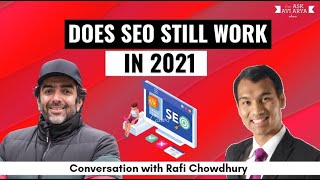
Rafi Chowdhury talks SEO, Facebook ads, and content strategy for 2021. He covers how to optimize content for search, what's changed in digital marketing, and practical tips for entrepreneurs building an audience.
So this comparison at 17, at 24, at 26, at 27 is ruining the happiness of the present.
For most young girls, what it is that motivates them? Is it intolerance of the present that helps them shape their future? Or is it that they feel like they want to be looking up to someone else higher than them simply because they just want to always go to.
The next step, Reach out to export in the subject matter that you want information on. Now, what I was thinking was send a video to them, ask them to come on a zoom call, and all of that. That might be too taxing logistically. Instead, just tell them to reply in less than 10.
So you always want to stay relevant in the industry. And one of the best ways to do it is like what you're doing, you know, is just talking to people that are practicing it every day, that are very involved, talking to the head of marketing. In big companies, those people have their hands on the pulse of the market. And when you do the Facebook ad, really pay attention to the copy that you're creating. The snippet, the image that shows up in social media that you're using, the ad copy that you're using. All those things make a huge difference whether someone clicks it or not.
Hey guys, this is Avi Arya, father of two girls, six dogs, husband to a superwoman, a streetcar racer turned hotelier, now social media marketer and founder of Internet Moguls. Welcome to my channel. I like to always start by telling a story. And I always tell people the shortest distance between two human hearts is always a story. So my story and I've got something called, we call it the hero introduction, which is the shortest format of a story. My hero introduction is. My name is Avi Arya, father of two girls, six dogs, husband to a superwoman, a streetcar racer turned hotelier, now social media marketer and founder of Internet moguls. When I was 18, all I wanted to do in life was to race streetcars. My dad said, nothing doing. I don't have the money for all of this. Join my business from tomorrow. I joined his business. There was a new phenomenon on the market called the Internet. We discovered that the Internet allows you to get in touch with other people. I got in touch with foreigners who came into my dad's small motel in Delhi. We grew the family hotel business and then the travel business. And that changed everything. We were one of the first ever hotels to go live on the Internet in the country of India. Then I launched over 100 websites before the age of 25. And then at 2009 I said, I need to do something on my own. Started a four member digital marketing agency. Grew it from four to 200 people, coached people, spoke to people around the world. And so digital is something I've done since I was 18 and now I'm 44 years old. So that's just a little bit of a background about me. Today I run Micro Video Mastery which is a community of people who want to grow their digital footprint, get known, get leads and get sales using videos. So that is a little 60 second story about me. Now I'm going to put you on the spot, my friend and ask you to give us your story in 60 seconds.
Seconds, sure. I was your neighbor the whole time. I was living in Bangladesh. Yeah, I moved here when I was 10. Now I'm in Memphis, Tennessee in the.
US okay, please go ahead.
Yeah, started Bangladesh, came here when I was 10 years old with my parents, went to high school and college here. Had a love for chess growing up. Played competitive chess my entire life. Pretty much from chess. I got into like other sports like basketball and things like that. So after high school I went to University of Memphis and I fell in love with psychology. Loved understanding the human brain and mind. I actually majored in cognitive science in undergrad and while being in psychology obviously I was very intrigued by people. So at the same time I was in fraternity. So my fraternity brother launched a website and that motivated me to start my own. So I wanted to start one about chess which got me into blogging. And once you start blogging you realize, oh, if you don't have any traffic or visitors to your blog, there's no point in blogging, you're just talking to yourself basically. So I started learning how to try to drive traffic to my website using social media, mainly Facebook. Just started learning marketing from there and didn't have a degree or class, you know, took any classes in marketing. But I, you know, watched successful people probably like yourself, you know, I followed Brian Dean, I followed Neil Patel, Rand Fishkin. These are the top three people that I would follow every day and just see what they're doing and then just try different things like you did. Just try a whole bunch of things and eventually you learn. Eventually that became a digital marketing agency which I grew to some extent in Memphis, but it was kind of coming to a cap so I ended up moving to Los Angeles where I had a much better luck. And I worked with venture backed startups and I did agile marketing for them. Just fast forward from la, I got a chance to work with a very large privately held advertising advertising agency called Townburst Group. That's where I got bulk of my agency experience, mainly doing campaigns for Glambia, Performance, Nutrition, McDonald's, the National Highway Safety Administration, companies like that. Fast forward from that again. Currently, I am a consultant to Facebook. Facebook. I don't know sure if you're familiar with it, but Facebook has a program called Launchpad for Creators, where they bring on certain creators. We have to apply, obviously get into it. But long story short, I basically make certain videos and I promote those videos off of my page and Facebook helps me market those videos. So that's kind of my primary work right now. And outside of that, I have a couple of websites where I do advertising and sell ad revenue as well. But outside of work, I'm very much passionate about science. In fact, I want to go back into sciences, primarily psychology. So right now I'm doing my mba, but I'm thinking about going back into psychology and getting a doctorate in experimental psychology. And I'm very passionate also about things like animal welfare and chess and basketball. Those are my.
That is fantastic. Thank you for sharing that story with us. My next question, Rafi, is for how old are you?
28.
So tell us for all the people who are 28 and below. And today, right now, they're like, I'm depressed. Why are you depressed? Because I'm 17 and I'm not reached anywhere in life. Why are you depressed? Because I'm 22 and my cousin has got a great job at an agency. Why are you depressed? Because at 25, everybody else has got their own digital marketing agency. So this comparison at 17, at 24, at 26, at 27 is ruining the happiness of the present for most youngsters. What is your message to them?
I'll share with you. Actually, a quote from one of my partners. He gave a TEDx talk on this, and he said that he interviewed a bunch of people that were below the age of 25 and over the age of 25. All the people below 25 said that, oh, I can't start my own business or do what I want to do. I'm too young. People that were over 25 said, I can't do that. I'm too old for this. So was the magic number 25. So the point here is that it's never too late to start anything, you know, like life. We don't know when we're going to be here, when we're not going to be here. We have no idea when our expiration date is. So my message to them would be that there's nothing that we can really. No one we can compare ourselves to except us yesterday to the. You know, us the self to today and what we plan on being tomorrow. So I would say just continue hustling and continue trying, because tomorrow is, you know, it's still there. It's not guaranteed, but it's the only thing we can look forward to. And there's no point in looking back at the past and regretting it's never really gotten anywhere anytime.
What about comparison? Is my voice better with the mic.
On, or does it's about the same?
Okay, it's about the same. So I need to get a new mic then. Is it better now, or does it matter?
It's louder, but it's less clear.
Got it. So what about people who have comparison all the time?
Well, people who are comparing themselves. You're asking, what. What about them?
Yeah, I'm like, I'm 25 years old, and I see Rafi is in. You know, he's in America, and he's doing his agency, and he's working with the launchpad for creators, and I'm doing nothing at this point in time. So should I get inspired or should I get demotivated?
Depending on which one pushes you in a positive way? If demotivation pushes you to work harder to get to where I am, you know, then great. But if that makes you feel like, you know, Rafi is nowhere, I'm way better than that. Let that be your motivating factor. But whatever it is, I feel like we can use other people as a reference point, but only if it's motivating us in a positive and forward direction. So I would ask that person, you know, I would identify what it is that motivates them. Is it the, you know, intolerance of the present that helps them shape their future, or is it that, you know, they feel like they. They have. They want to be looking up to someone else higher than them simply because they just want to always go to the next step, you know, the next milestone. But either way, I think they should look to see what makes it a positive.
I love that. I love that. I really love that answer. Rafi, tell us a little bit about Facebook ads and the power of Facebook ads to be able to drive traffic to anything.
I'm not gonna say I'm the expert at Facebook ads, because Facebook ads is what Facebook actually does for my videos. So I did the initial ad setup, and I boost the post, and I get a little bit of A push. And then Facebook kind of takes over the marketing. In fact, the specific thing that I do with them is called in stream videos. So it was a really popular. Exactly. It's actually something that LinkedIn is promoting a lot more now. But if you, you know, rewind back maybe about six months to a year ago, if you went on your newsfeed, you see all these videos that would auto play, right? And you weren't following these pages or you weren't friends with these people that were posting these videos, but they would still show up and play because they were viral. And you always find yourself watching these. Right. Facebook is basically testing out this new feature to see how they would do because, you know, obviously they're trying to make more money from advertising and things like that. So that was kind of the program that I was part of my videos. I initially set it up and Facebook would do the marketing for me mostly. But if I were to give some general, you know, advice on it, just really identifying and understanding who your target audience is is gonna be the key, biggest key, you know, being able to narrow it down, finding, you know, like, hey, my audience must like, in your case, cars. They must also like New Jersey, because that's where I want to target. You know, they must have liked this particular brand of products or something like that, but just using as many parallel keywords as possible to narrow it down and drill down the better. Because the marketing dollars are limited, right? How much ad you can spend is limited. So you want to be as targeted as possible, but you also want to make sure not just your ad, what happens when they click your ad. That process, that funnel needs to be absolutely on point. And you got to be constantly trying and testing because nothing is gonna work forever. Facebook is always changing. The market is always changing. People's brand perceptions are changing. So you always have to be testing and doing a B split test to see what works and what doesn't work.
Excellent. So what is your expertise? You know, when people reach out to you, what do they reach out to you for?
Today, my biggest area of expertise is search engine marketing. So online marketing. Within that, on page and off page optimization, content marketing. I also have experience in pr. As a matter of fact, I used to run a PR company a couple of years ago. So writing for big publications, if they want help, I can help them with that. I don't do it actively as a profession anymore, but I definitely can guide in the right direction. And then, I mean, that's really my biggest focus. Other than that.
Tell us about search Engine optimization today, you know what, how relevant is it? It takes time, it's not guaranteed. Why don't I really go with ads and just push my ads, Find an roi. Forget SEO. What do you have to say about that?
So it's basically like buying milk versus buying the cow. It's the same idea, you know, you could buy the milk every single day. And if you have a great strategy for that, I would say by all means, if you want quick traffic, then yes, pay for the ads. Some things you just can't because SEO takes a long time. But if you are someone that can see yourself thriving on the web and you're ready to establish yourself as the authority in a particular brand, and you see the long term value in search engine organic traffic, then by all means at least start putting some money towards creating content. Now here's where people get confused and lost. I think when they think of creating content, they think that they have to write a blog post every single day, seven days a week. And you know, and then they're like, oh, nothing is happening. So why are we doing this? You have to really study and understand keyword research. I mean, the best example on the web is Brian Dean. He posts no more than maybe one blog post a month, if that. Sometimes it's like one every three months. But you see, he does such a nice job of making that the best piece of content on that given topic. And he does so much work in promoting it and circulating that content over and over that he drives all of his traffic like thousands and thousands of visitors from just one blog post. So it's not so much about the quantity of information you put out there, but it's more so the quality. So if you're gonna write about something, write on a topic that has a lot of demand but not enough people creating content around it that has the possibility of making you money by looking at the cpc, the cost per click on Google and then create the absolute best piece of content that you can, if you think that's a keyword that you can rank for. But if Walmart.com and Amazon.com are ranking articles for that, just give up on that. It's too hard. Try to pick something lower competition.
Two questions here. When you said, you know, why do I need to look at the cpc? Because I'm actually making money on that. On that blog post.
You want to look to see, say for example, let's just use the word VOIP, voice over IP. It has a CPC of roughly $53 a click, right versus a word so I play chess. So for example, chess, English opening, also a keyword, but the CPC on that is something like 13 cents. That tells you that VoIP is a buyer intent keyword. When people are searching for VoIP, they're looking to buy something, maybe a software subscription or something. The way the reason you want to look at that is because you want to know that if you do spend all that money to rank for this keyword and create the content, are you going to be able to buy any people searching that word to buy something from you? Or they just want some information about something. That's why it's important.
Right? Okay. So that gives you perspective on how, what is the intent to purchase and how immediate is the intent to purchase, if at all. Okay. The second was that, you know, create the best piece of content. So say, for example, if I may not be 100% passionate about the blogs that I write, but I'm very passionate about writing and if there is a subject that I find on the Internet, which is very interesting and it fulfills the parameters that you just gave me, can I interview an expert and take those learnings and make my own blog post?
Absolutely. So that's typically referred to as an expert roundup. So that's actually a really powerful technique if you ask me. Because even if you look at it from US marketing or psychology perspective, who doesn't like talking about themselves and sharing their expertise? Right. If you want to get in with someone and do business, that's a great way. So what you want to do in that case is, yeah, reach out to the experts in any given industry and just say, hey, my name is, you know, Abhijit and I run this particular blog or this podcast and I know you're an expert authority in xyz. I have this one quick question for you. I just would love if you can share a little bit of insights on this. I would love to share that with my audience. And getting them to do that, you've gotten them involved in your mission and your project. A and B, you've gotten content from them. So now if you take enough of them, say you've interviewed 25 people, like each give you a paragraph, you've basically got a blog post, right? You just have to optimize that for search for search engines. And then you're also getting these people involved. So when you publish this blog, you're gonna send this out to them and say, hey Rafi, I just, you know, thanks so much for sharing your ideas. Here's the blog post. Would you mind Sharing this with your audience. So now you've got those influencers sharing your content and that's about the best free marketing that you could ever get. So I think it's a great strategy.
Huh. Just needed to validate that. Ask them to share as well.
Exactly. That's the biggest value because these people typically have huge email lists. You know, if they send out to.
Them, what a, what a golden nugget. So Rafi has just said reach out to expert in the subject matter that you want information on. Now what I was thinking was send a video to them, ask them to come on a zoom call and all of that. That might be too taxing logic logistically. Instead, just tell them to reply in less than 10, 15 lines to one question that you have. Somebody from their team or the PR team will get that answer for you. You've got 20 people that you've interviewed, you've got a huge valuable power pack and brand packed, personality packed blog post. And then once you've done it, you reply to them saying I put it online. It seems to be doing well. Why don't you promote it to your audience as well? And because their name features on it, if 10 out of those 20 rock stars promote it, you have yourself quite a bit of traffic coming your way. Excellent.
Exactly. And those traffic, that traffic is very targeted because they're following someone that's in your industry that's an expert.
Lovely. I love that. Tell me one more in today's day and age 20, 21, on page, off page, how do you define that for people who have no idea?
On page optimization is all the different changes that you can make to your website content itself and your website code to make it more relevant to search engines. So if you have a page that's about car racing, you want that page title to say car racing. You want the meta description of your page to say car racing, you want the pictures, the alt tag, image tag to say car racing. You want the URL to have the word car racing in it. Those are things that you're doing to basically let the search engine know this page is about car racing. Now search engines are getting really, really good at that. They're really good at. It's called latent semantic indexing. Lsi. So they can look at relevant words. Even if you didn't use the words car racing, maybe you use the word vehicle racing. They can figure out this is about car racing and still show that page. But you want to give the search engine somehow. So that would be like on page optimization off Page optimization would be more along the lines of building like backlinks to your page. So if you wrote an article about racing cars, you want to reach out to all those car racing companies or car racers and say, hey, I noticed that you blog a lot about car racing. I've created an amazing piece of article about car racing. Would you mind linking to this article from your article and specifically telling them how you want that link to come to your blog? What that does is basically shows to the search engine, it's kind of like a vote. They're giving you a thumbs up, saying, yes, that's a good piece of content for this. And search engines love that. If a good authority in the space is linking to you, that's basically like them giving you a thumbs up. And that will help a lot in your articles, then showing up higher and higher in search engines.
Okay, lovely. Tell me, Rafi, I'm a new brand or I'm an agency who's got a new brand and my client, like most clients, do not have the patience to wait for results. I've got a great piece of content developed. Can I use Facebook or Google Ads to help my brand new blog post a little bit so that it gets some traction and then it helps being featured online or it doesn't matter. Would you say organic and paid is completely different, or can you get some help from paid traffic to sort of grow your organic reach as well?
I think when you're starting out, you almost have to use paid traffic. These days, search engine optimization takes time. That's just the nature of what it is. But it's evergreen. So I would say use a combination of both. You know, if you're just starting out, you should be more lenient and heavy on the paid traffic. And as you continue developing your brand and people have the brand awareness and you've created some, you know, content, then you can start to rely more and more on the, on the search traffic. But initially, yeah, by all means, do the Facebook ad. And when you do the Facebook ad, really pay attention to what you're the copy that you're creating, the snippet that you know, the image that shows up in social media that you're using, the ad copy that you're using, all those things make a huge difference whether someone clicks it or not. So if you're not paying a lot of attention to how you're designing that ad, I think that spending that money may not get you the best return on your investment. But in a lot of industries, in fact, in most industries, probably Facebook Ad is still a great way to get some traffic to your website.
Got it. Now I'm going to ask you a question that all the digital marketing followers of ours would like to ask. That everybody's got an agency, everybody wants to have an agency. Say, Rafi, tell us how can I get my SEO project? Give us a few tips on how to approach a client to say, I will help you with your SEO.
And honestly, the best thing I could say is if they're in your country, just pick up the phone and call them. You know, like, so few people in the marketing industry are like, I don't know why, but they're very shy on the phone, you know, so with sales, you always want to approach it like, do what nobody else is doing. That still works. So I would say that, number one, you have to understand that it takes roughly about seven to nine outreaches before someone actually responds. Typically just the industry. Don't give up on it. Don't just do the whole hi comma, blah, blah, blah, blah. That's. Everybody does that. I get like 30, 40 of those emails every single day. And I hit spam on every single one of them because I know they send this out to like 5, 600 people. And so what's the value in that, really? Take your time to write a handcrafted message, do some sale, you know, do some sales intelligence. Gather some sales intelligence to know a little bit about the company, why you're reaching out. And within the first couple of lines of the email or the phone call, let them know what's in it for them. That's what people want to know. Why do you, why are, you know, who are you? What is it that you're trying to tell me? Why me? What's in it for me? Those are the main questions that people usually want to ask.
Did you like the personalized email we sent you? Father of two girls, six dogs, husband, two superwoman.
That's perfect what you did. You set yourself apart from everybody else that reaches out to me. I read that and I was like, wow, he's already personalizing and letting me know something personal about him. So like you were saying it immediately. It makes a heart to heart connection right away. You definitely want to do that.
Okay, so you're saying that I love what you said. Do what others are not doing and you will. That's one of the basic tenets of sales. Okay, we've got two more questions, Rafi, for you. Where do you see search engine optimization, digital marketing and all of that evolve? So all the people who are listening right now and getting motivated and got all these five amazing ideas from you, what they're going to implement. Should I start an agency? Should I work for somebody before I start an agency? Should I, you know, work for a brand? What. How should people approach their career in the digital marketing space? Everybody's in a rush to say, let me become. Let me start saying CEO in my title. But then when you become a CEO, nobody teaches you anything. So why don't you rather work for somebody, learn something, or work on the brand side? I'm 44 years old. I give all this kind of advice to a lot of people. I've running an agency for the last 11 years and I never worked for the brand. And I still feel that unless I go for conferences, unless I learn, unless I get into online courses, unless I speak to people like Rafi on a regular basis, I'm running out of ideas myself. So what is it? Do you just jump in and then learn your way through or what is your advice?
I don't think there's any right or wrong answer that it really depends on where someone is located and where, what stage of life they're at. So I think that I do believe that location matters a lot. Because if you're in a small city, like I am right now in Memphis, Tennessee, you could be, you know, Mark Zuckerberg or Neil Patel or whoever, it's going to be tough because even though, yes, we're in the Internet space, technically you can choose. You should be able to do it from anywhere. There's still a value to like, physically meeting people and being in the same city as them, to initially get your agency and your business off the ground. And I do think for that, location does matter. So if you want to be in a large city, if you want to go the route of starting your own agency right off the bat. But outside of that, I do think there's a lot of value in working for a large agency. Like when I worked at Tombers, there were campaigns that I got to do that I don't think I would personally be able to do in my own agency. Like, I'm not getting McDonald's, you know, or Moon Pie as a client tomorrow. No matter how hard I try, it's gonna be tough. I could do it, but it's tough. So you get to work and if you work for a really good agency, you get to really see what the higher. What those large, large clients are looking for, what's the value in it for them, you know, working with like that So I think that that's not a bad way at all. The only thing that I think is probably a bad way is if you think that your university is going to be able to teach you marketing, they can teach you some things. But I can bet you by next year it's not going to work anymore. On the Internet, it's tough. So you always want to stay relevant in the industry. And one of the best ways to do it is like what you're doing, you know, is just talking to people that are practicing it every day, that are very involved, talking to the head of marketing. In big companies, those people have their hands on their on the pulse of the business market. So they will always have the latest and greatest ideas for you.
Lovely, lovely. Now, I have my last question for you, which is nothing in my experience goes from one level to the other unless there is a specific set of rituals and routines attached to it. Now, I don't believe people have to be 100% disciplined. Get up at 4 every day in the morning, exercise at 5. Some people do it, it may work for them, but I've seen a lot of people who are scattered and all around the place but still make it work. What is Rafi's mantra and routines to making it work?
That's a tricky one, I would say. Me personally, you know, I'm not that much stickler of exact routines. And that's because every day I'm learning something and that changes what, how I approach everything else. So it's constantly changing for me. But I would say there's a lot of value. What I've learned is waking up and going to bed at the same time seven days a week. Because a lot of people, I think, get into those rhythms where they don't find the discipline. It's because their sleep schedule is off. And it's really hard to have a good sleep schedule if during the weekdays you're getting up at 6 o', clock, going to bed at 9 o', clock, then all of a sudden on a Friday and Saturday, and, you know, especially you're going to bed at like 1am, 2am, waking up next day at 12pm, your body suddenly doesn't adjust and it carries on to the next week. So I am a pretty big believer in going to bed, waking up at the same time seven days a week just to keep your body's natural circadian rhythm in place. But outside of that, really, I mean, personally, I don't really have that sort of a structure. You know, I generally have some things like if I'M working. I'm not going to be laying in bed and doing my work. I'm going to sit up like upright on a table with a computer laptop here. Just gives you a good flow. For some people, standing up and working might be a good idea, putting a little box on top of your counter or something, putting your laptop on top of that. But you just have to kind of play around, ask some people and find out what works best for you.
Perfect. That brings us to the end of all the questions. Rafi, this has been fantastic. Normally when we edit, I'm always thinking from the editor's perspective. What are the nuggets that we got so that we can highlight them here? Because all our videos are edited as tutorials because. And with timestamps, because we want our audience to continue to learn and come back and use these videos as reference points when they get stuck. So this was one of the very few videos where I didn't have to plan anything. You know, everything was done so beautifully. Thank you very much for answering these questions to the point people know exactly what they can learn. So thank you very much. I'm just once again, like I said, my name is Abi Arya, father of two girls, six dogs, husband to a superwoman, a streetcar racer turned hotelier, now social media marketer and founder of Internet Moguls, where we bring in the top entrepreneurs from around the world to talk to you about mindset, body and heart to be able to grow your business and do whatever you want in this world.
Absolutely. Well, I appreciate the mission. I think it's great. Thank you so much for having me. It's been a serious pleasure for me as well.
Sam.
More from Avi

The strongest mindset doesn't begin with meditation. It begins at home. Before you conquer the wor

The strongest mindset doesn't begin with meditation. It begins at home. Before you conquer the wor

Your mindset isn't something you fix once. It's something you train every single day. Just like yo

Don't build a company just because your friends are. Build one because you're ready. A startup is

Everyone dreams of becoming the boss. Very few understand what that really means. The moment you b

Most entrepreneurs say, "I don't have time for coaching." The truth? You don't make time for what

Over hiring doesn't always solve problems. Sometimes, it creates them. Having a small buffer in you

"The highest-paid" isn't the goal. The highest-value is. People often ask why premium mentorship co

The founder will always be a bottleneck... at some stage. The goal isn't to pretend you're never th

People ask me how I stay consistent with my morning routine while traveling across countries and tim

People ask me how I stay consistent with my morning routine while traveling across countries and tim