How to soundtrack your content | Interview with Oscar - Co-founder & CEO of Epidemic Sound
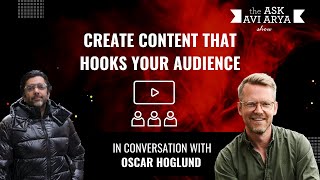
Oscar Her Glund, co-founder of Epidemic Sound, talks about building a music licensing platform and why the right soundtrack matters for your content. He discusses how music shapes storytelling, what he learned starting a family business, and why creators need to think about sound as seriously as visuals.
We are having a lot of fun and you know, that's the key part. So then every day the story was around these two kid entrepreneurs going to Raviana Chocolates and operational sales, other problems happening. And they hired me as a mentor and every Thursday they would have conversations with me. So our business, our everyday story was around what happened in the chocolate factory today. This story went viral within our own extended family. The story that I'm going to tell you is when I was 18, born and brought up in New Delhi, India, all I wanted to do in life was to race streetcars. My dad used to go to sleep, I used to take the car, the keys out from under his bed and race cars. And I thought, one day I'm going to become a streetcar racer. However, I wanted to do things the proper way. So I said, I want to go abroad and study and understand. So that's what I was planning for one day. Everything changed when my dad called me to his office and he said, son, and actually I remember exactly what happened. There was a red carpet on a wooden floor. There were these two, there was a smell of incense. You know, he had just finished his prayer so he'd used those candles. And there were these two landline phones, you know those phones which were stuck to the walls with those wires, they were off the hook. Now my dad's phones were never off the hook. I knew there was a serious conversation coming. And why I remember all of this and is because maybe I come from the generation where you don't look your dad back in the eye. You look everywhere but you know, you don't look at his face. He said, sit down, son, this is going to be a very short conversation. And he said, I've had a business setback and I will not be able to send you for studies and all of that. You, you know, you need to join my business from tomorrow morning. I was about 18, 19 years old. He said, finish your university in the evening. Changed my entire life in one day. I fought, I did whatever I remember all night. But I spoke to my mother, I said, I'm leaving the house, I'll do whatever. But I think at the end of it better sense prevailed because the very next morning I found myself behind the reception of my dad's small 27 room motel where he was doing a great job of running it. And I was like, where do I find my place under the sun? One day an international tourist walked in and he paid us in Dutch gilders. We converted the Dutch gilders and it turned out to be Double the Indian rupees. And I'm thinking to myself, what if I'm able to get all 27 rooms full of, you know, occupied by international tourists, I double the revenue, double the family income and I become a star in my dad's eyes. And then maybe he can allow me to do what I want to do. So now I finally had a mission in life. The only thing was back in the 90s, how do you connect a 27 room hotel to people all over the world? While I'm thinking, I come across this. You know, during those times there was a new phenomena on the market called the Internet. The service which would allow you to connect with people around the world. But there were only two places, the British School Library and the Sheraton Hotel. Both of them had 400 rupees, which was about $10 for half an hour of the Internet, which was prohibitively expensive. So that's another challenge. I didn't know what to do. After six months I see an ad in the paper. Satyam Computers looking for cyber cafe partners. Apply now. And the name of the gentleman was Rohit. Rohit is still a friend of mine. After 25 years, I was one of the first people to apply because I was looking for an opportunity like this. Lot of back and forth paperwork. Finally I got six computers in my, my dad's motel. Now I had 24 hour access to the slowest Internet on the planet. I used to open one page in the morning, afternoon and by the evening I was able to chat with people online. And I asked him what should I do? And they said, oh, you need a website. That was like aha, a website. What do I do? I learned whatever I could try to build something, broke it. A lot of time, a couple of months, a website was ready. Nothing happened. I was like panicking. What should I do? Your website didn't work. After so much work. You need to do a little bit of search engine optimization. You need to write some blogs, you need to put a query form, you need to put a toll free numbers because international tourists will trust you if you have a toll free number that can ring in their country. All of these things I started doing and finally I started getting some queries and I was very, I was not sure because it's for my first experience with an electronic mail. I would not even show if it's a real person on the other side. We're going back and forth about what they can do in India and all of that. Finally on the 15th or 16th of December. So one of those Dates. I went to the airport, skeptical if somebody's going to land up. I went there, those people came in, got them into my car, took them to my dad's place, checked them into room 302 and they gave me the money. That one day changed everything for me because I was like, this bloody Internet thing takes time but it works. After that I quadrupled all my efforts, started working on this next few years. The journey was we were one of the first. Google did a case study on us. We were one of the first ever standalone hotels that went online in the country. So we were first movers by far. And my first book that I wrote was also called the Accidental First Mover. It just started happening and from one then we were able to make four small boutique properties. Nothing, no five star, but some of the most well known boutique properties in India. We were able to, you know, so the business grew. I became a star in my dad's eyes and now I'm having strategy discussion with a gentleman who wanted to throw me out of the house. So great things started happening. That was story number one then because I understood how to do all of this, I started a travel company. I had bought some 3, 400 domains, made hundred websites for travel. All of them flopped. Four of them did very well. One day I got a call from the equivalent of Expedia in India. They said, we love the traffic on your website. We'd love to do an affiliate model with you. I didn't want to sound like a fool on the phone and tell them I don't know what an affiliate meant. I said, can you email me? I'm slightly busy right now. So they emailed me saying we'll give you $10 for the conversion of every ticket. I still didn't understand how that's going to work. They asked me to put a code on the website, I put the code and eventually we were booking 40 to 60 tickets a day, which was not a big number, but that meant I was making thousand to $2,000 every single day as a 25, 26 year old. So that was my second success with the Internet and I started getting more confident. Till now there were no companies in India. Then Google came, then Facebook came, then TripAdvisor came and they heard about, they all had big customers, but they heard about this, this young boy who was working in his father's business. And so they invited me to, you know, travel around different parts of Asia and evangelize digital marketing, Internet marketing. As you can see, I love speaking. So those stages you Know came very naturally to me. And so I started becoming a bit of a brand. That's when people started coming to me and saying, abhi, can you do this for us? And after repeated, you know, requests. 2009, we started a travel digital marketing agency. I was riding so high on confidence, the only name I could give my company was the Internet moguls. And with a four member team, completely bootstrapped, no funding, no support from anywhere, we started working with other brands. And then in 11 years we grew from 4 to 200 plus people working with 700 companies around the world. So this was till about two years ago when I started. Thank you. When I reached that stage, what happened was I started obviously I got represented by a speaker bureau. They're now booking big conferences for me and all of that. And the one thing, the first thing I tell people at a conference is the shortest distance between two human hearts is a story. You tell somebody a story and he's yours for life. So I always say, and the shortest version of a story is what I call the hero introduction. And I tell my students and my team and my colleagues make it less than 30 seconds and make it so impactful that it connects with people. My hero story goes like this. My name is Avi Arya, father of two girls, six dogs, husband to a superwoman, a streetcar racer turned hotelier, now social media marketer and founder of Internet moguls. So I and people love the story. I talk about my family, I talk about everything. But while I'm telling this story and people are like, I love the way you tell your story. I'm like, where is my wife? Where are the kids? Where are the dogs? I'm always on the road, always in my business. Where are these other people that I talk about all the time? So I knew I was becoming the absent father that I never wanted to be. So I started making changes two years back in my life and I said, let me do something which involves my entire family. So me and my wife had a discussion. She said, start telling bedtime stories to your kids. Put them to bed and I'm telling them stories and they go to sleep in five minutes. My wife says, great job done. I said, no, it's not a good job done. My five minutes, my audience is turning off. They're supposed to be live with me as a marketer. I should have realized that I should have told better stories because my story was about me. They were going off to sleep, then I made it about them. So my elder one is called Raya. My younger One is called Aviana. We joined those names together and we said Raviana. Now, their passion was around chocolate, so we said Raviana Chocolates. So then every day the story was around these two kid entrepreneurs going to Raviana Chocolates and operational sales, other problems happening. And they hired me as a mentor, and every Thursday they would have conversations with me. So our business, our everyday story was around what happened in the chocolate factory today. This story went viral within our own extended family. And eventually we wrote a comic book series called Bedtime Stories for Tomorrow's Entrepreneurs. The book became slightly famous. The girls went to different schools to became speakers, invented, spoke about the story to different schools. And we put this on Amazon and made a whooping profit of $550 in our first venture. At the end of this, this was two years ago, and I realized that this is more fulfilling, but I need to do this more often. So about a year back, we said, what should we do? Raya is now 14. Aviana is 11. They were 13 and 10 last year. We said, let's do another venture. We now call this venture the Internet Moguls of the World, where we are traveling around the world. Travel stopped. Now we're doing it online. We are interviewing people who have great success stories and great stories, and we're calling this Internet Moguls of the World a Family digital marketing school. We're making a book, a podcast, an online school where we hope to give this as a. As a family pass. So everybody gets into school, gets a one. It's a family pass for four members, the parents, the kids, the parents and their grandparents, who can log in from different parts of the world and learn one aspect of digital marketing together with one and only one aim. If somebody knows how to become a YouTuber and, you know, sell something, if somebody can become a affiliate marketer, third person does blogging, fourth person becomes a freelancer for somebody. Everybody understands that through one aspect of digital marketing, they can work from anywhere on the planet, save one hour per family member, traveling, you know, back and forth two hours a day for at least 10 hours a week, 40 hours a month, 400 hours a year. And in a lifetime of changing through digital marketing, if they can save one year of their life, which they normally spend in traffic, and invest them back into their spouse and their kids, then this mission would be worth everybody's time. So that's the mission that we are on. And thank you for your patience for listening to my story all the way from Stockholm and back to Vancouver now.
Thank you for sharing. That's it. Great story, compelling mission and vision, and it seems as though you're making great progress on your. On your road down to that final destination.
We are having a lot of fun. And, you know, that's the key part, what everything else. And, you know, I told you all the good part. And you know better than anybody that there's lots of challenges behind any, you know, success. So we'll discuss that some other time. So thank you for allowing me to let the, you know, to sort of lay the context for it, because I do put it in the email, but, you know, having it face to face, although I take away from the interviewers, interviewees time, but thank you for allowing me to do that. Okay, now we'll get, we'll get back to you. So thank you very much for taking the time out. How do I pronounce your full name? Just want to make sure I don't.
Make a mistake so you can say Oscar. Her Glund. Try it.
Okay. Oscar. Oscar.
Yeah.
So, Oscar, how did you tell us your story first? I told you my story. It's your turn now.
Okay, so here's how I would tell my story. I have three children. They are 13, 12, and 9 now. And many, many years ago, I had a. I had a dream. And in my dream, I wasn't talking to my children. I was talking to my grandchildren. So I was very old, and I had very little hair, and I was very gray, and I was very wrinkly, but I was very, very happy. And I'm playing with my grandkids, and they look at me and they say, granddad, your generation, you basically invented the Internet, right? And there's a smile on my face similar to yours, Avi. And I chuckle, and I go, I normally don't think about it that way, but, yes, you're probably right. So Granddad's generation invented the Internet. And my grandkids go, granddad, that's amazing. That's not just your generation's biggest achievement, but it's your biggest contribution to all future generations because we're all about the Internet. Everything starts with the Internet. How does that make you feel? And we smile. And I say, I think I'm proud. I'm a little bit surprised, but more than anything, it makes me feel excited. And we're playing around and we're having a good time, and then suddenly, one of the my grandkids goes quiet. And she looks at me and she goes, but, Granddad, remind us again, how did you contribute to your generation's biggest collective achievement? What was your role in that. And I go quiet for a while, and then a smile pops up on my face, and I lean in and I look at her and I say, you know what? Granddad helped soundtrack the Internet. I played a small part in my generation's biggest achievement, but I bought feelings, I bought creativity to the entire world. I turned the Internet into this beautifully sounding place together with exceptional people. In the process, I got to change the music industry. I got to put creativity front and center. I helped storytellers bring their stories to life, and I helped connect people around the world. It was an amazing journey. Now let me tell you some stories from them. And that's where I would pause. And that's sort of in a nutshell, what we're trying to do at Epidemic is we're trying to soundtrack the Internet. We're trying to contribute to our generation's biggest collective achievement. In the process, we think we can put a huge dent on the universe. We think we can amplify the role of creators in general and music in particular. We think that people are very much connected and very much emotional beings. We think that adding music and solving for the music industry, which has been broken for quite some time, is a huge achievement. And we think that there are a couple of problems that need solving, and that's where we deploy all of our time, all of our love, all of our resources. Trying to do just that.
That's fantastic. I love that story. Did you tell your kids about the grandkids already?
Yep, I've told my kids about the grandkids and they laugh because given their age, they think that's hilarious. And I laugh because I get all emotional and it's. Yeah, it's fun all around.
That is fantastic. That's the story. I'm all. Shortest distance between two human hearts is a story. Thank you so much for sharing that with. It's. It's always going to remain with me because I went back with you to your dream state, so that was fantastic. So. But, you know, the Internet allows you to do so much. Why? How did you stumble upon music and soundtracking the Internet?
So I think that the biggest things that happen in life tend to happen to some extent, by coincidence. So many years ago. We're talking about 15, 20 years ago, I find myself in TV production, and I left the finance world to work with something more fulfilling and in particular, to surround myself with people who inspire me, people who I look up to, and people who I felt that, well, if my life is anything like hers or his life, in 10 years, 15 years from now, that would make me a very, very happy person, right. And so I find myself on TV production and we're working at a production company and we're making TV shows that get sent around the world and we team up with a couple of nowadays colleagues and co founders. But back in the then, back in the day, they were co creators. And so we find ourselves in a position where a couple of us are passionate about storytelling from a TV production perspective. And we're sitting down talking with people who are very passionate about music creating and music production in particular. And there are two big problems that we're both looking to get to grips with. So you have the backdrop, which is the whole concept of wanting to soundtrack the Internet. And we're seeing that from a storytelling perspective. In the TV world, music is crucial in bringing stories to life. There's an analogy to be made to food. So basically, content without music is a bit like food without taste. It's not memorable, doesn't pop. It's something that's quite bland. And that being the case, we find it really frustrating, however, that adding music to your video, to your story, was an incredibly difficult endeavor. It was complicated, it was expensive, there weren't that many tools or products. There was a limited amount of music that you could use and you were terrified that you might get sued, that you might get copyright issues. It was basically fundamentally broken. And something that ought to be very, very, very enjoyable. It ought to be the pinnacle of the creative process was something that you would dread. That was one problem that needed solving. So the problem sort of we articulated was how can we turn soundtracking your content into a joy? How can we turn that into the most fun part of video creation or storytelling? The other half was in relation to the music industry because two of the co founders were music producers. They had been themselves wildly successful in terms of producing music for the likes of Celine Diona, Ceelo Green and the TV show Glee and stuff like that. So there were hundreds of millions of albums, but the music industry was very vinyl in the sense that a few people made it big, but the vast majority couldn't make ends meet. There was no middle ground and it was basically broken. And so music creators weren't being optimized around. It was more an industry which was optimized around middlemen. So there were publishers and record labels and managing organizations and performance rights organization and neighboring rights organization that made the music industry very, very complex. And we took a step back and we said, wouldn't it be amazing if we could play a Small part. And try and soundtrack the Internet and in the same process, solve for two problems. How can we create a music industry where musicians are front and center? We optimize around music and talent as opposed to the middleman, and we try and make sure that musicians get paid and played. The second challenge was how can we create a world where storytellers love adding music to their stories, where adding music is the fun part, where you bring your content to life, where you add taste to your food. And is there a way of combining both of these so we get to soundtrack the Internet together? And the answer was yes. And that's how we came up with Epidemic Sound. It was a very clear vision of two problems that needed solving, but we took a wildly different approach to how the rest of the world was addressing it. And yeah, it's made for some very good storytellings, at least. I feel as though I have a lot of stories in my mind that I want to tell my grandkids in hopefully many, many decades from now.
Lovely. That is fantastic. So that's how you stumble. You didn't really stumble upon it. You actually went with a clear plan. This is what I want. Like, I stumbled upon the Internet. I was like, oh, now I know. Honestly, when I do Internet moguls of the world, a family, digital marketing school, I have a purpose, I have a dream. I know what I want to do. It's very intentional. Everything else that happened in the first 25 years of my life was by accident. So when it. So when this happened, you created this. What was next? You, like, get the best team together, get some funding together. How does an entrepreneur like you, with a great idea, with a great background, get started next?
So I would say that to your point, Abby, just sort of taking a few steps back. I think it's only in hindsight that you can connect the dots. And just to be clear, Epidemic is the seventh company, which I've been fortunate to co found. The vast majority have been together with my co founder, Zach, who is 16 years my senior and who I got to work with many, many years ago. We're still partners in crime and work together, and all of our endeavors tend to focus around storytelling because we're passionate about music, games, TV content, vlogs, pods, anything that packs a punch and can tell a story. So that's something that excites us, but just important to highlight that it's not typically the case that your first endeavor is going to be the ranging success that you hope and dream it will be. It's more a Case of being to some extent very diligent and hard working, to some extent having a long term perspective, because there are going to be a lot of ups, there are going to be way more downs and then there are going to be ups again. And you need to be prepared for that longer journey. So connecting the dots, I can see that the companies that we built previously, they did well to reasonably well, but there were massive learnings involved with all of them. How you build team, how you build vision, how you think around minimal viable products. The importance of having an iterative approach, including your customers early on, not sitting by yourself and over optimizing so that you get to get to the theoretically best product. You need to get a good enough product out there and then start collecting feedback and building off of that. So we started very much in our backyard, as in our home country, Sweden. Very small population, less than 10 million. We speak a weird language, we all sound like the Swedish chef from the Muppet Show. But we started soundtracking in our backyard. So that's where we aren't our stripes. That's where we understood what kind of products people wanted, what kind of music, how find talented artists and the music creators. We started getting more and more storytellers on board, fine tuning on the business models, different legal aspects, the different wants and needs, the user flows, collecting feedback. And I'm going to stick with the Swedish analogy. So I would argue there was a snowball effect and so you pick up momentum and so you get more and more insights, you get more and more data. And if you're fortunate enough to be in a, in an environment where you have a strong macro trend. In our case, it was very clear when we started the company 12 years ago, the Internet back then was all about text. And we felt very, very convinced that over time it was going to transition into pictures. So this was before Instagram popped. But we said that over time it's going to be all about video, because video is the richest medium and that's where the world is heading. And so we used that insight in order to start to optimize for a world where video was going to be the dominant communication tool online. And we started building products and music and a logic which would apply and lend itself very, very well to helping the storytellers of tomorrow to soundtrack the Internet. And so we earned our stripes in the analog world, made sure that we had a product which was second to none. And we were, we found ourselves soundtracking many of the to broadcast TV's biggest and most influential TV shows and then we hit an inflection point where we said, now let's invite all of the content creators across the entire world, across the Internet, as you mentioned previously, to have the option to use our music to soundtrack their stories. So music that was previously only made accessible to the top tier creators of the biggest broadcasting entities. We now decided to unleash that potential across all online creators, specifically the YouTube generation in the early days. But then as more and more platforms started to emerge, more Tiktokers, the Facebookers, the Instagrammers, the Roku's of the world, different channels and platforms, we started to add them as well. Incremental improvements and incremental steps, but always trying to understand where the world is heading and making sure that you're aligned with the overarching macro trends and making sure that you have ample feedback loops. So you're constantly picking up feedback from the people that you're interacting with, both your customers and your suppliers.
Wow, that's fantastic. So a couple of key takeaways was you're saying it. It's always hugely helps a new business when you are somewhere at least attempting to align with the micro trend. The micro trend in this case, you were like you, you knew it was coming. It may not be on the scenes, but you were already building to one day align. So if you're building now and the trend doesn't exist, but it's coming, that means you have to have a lot of faith. When the world doesn't believe in you, you believe in yourself. You have to have the dollars to be able to invest now into what may emerge and align as a trend. And, and a lot of guts.
Yeah, I think some. But also I think you need to have a. I think storytelling plays a huge part in it. I think you need to be able to paint a compelling picture of where the world is heading for many different stakeholders. You obviously need to influence and educate your current customers, your future customers, people who you want to employ, but also the wider landscape. I very much believe that when we made TV shows, a TV show always start as an idea, a concept in somebody's head, and it's up to that person, him or her, to eloquently and emotionally express that story. So people get excited, they go onto the bandwagon, they start investing themselves and emotionally and eventually financially into an idea. And I think it's very similar when you build companies to sort of telling stories. You need to make sure that they're to your point that there's a good hero opening, there's a cliffhanger you get them in there. Okay, then next. Then what happened? Then what happened. There needs to be a narrative around your company building around your story. So I think that there's a lot of wisdom in telling stories and understanding the art of storytelling that can be applied to building companies and getting different stakeholders excited and getting the outcome that you want to see happening over time.
That's fantastic. I love it. When at your age and my age, I always say that we're just boys who've grown up. I still wanted to be a streetcar racer, so I still wear those kind of jackets. And, you know, I'm like, why? We have, as we grow up, life gives us more opportunities which have more responsibilities as well. But I. But if we can still talk like boys, if we can still dream, if we can still storytell. And, and, and like you said, your storytelling can help you in your business. It allows you to still be connected to the child inside of you. So thank you for sharing that. Now let's get to Epidemic Sound. To all the creators who are listening right now, can you tell us how we can use it? What are the features? What are the, you know, talk about your child to all of us. Talk about your fourth child to all of us.
So I would encourage anyone listening to this to head over to epidemicsound.com for a number of different reasons. First one, just to get that out of the way, we have a free trial for everyone who's interested. So there's a 30 day, no strings attached sign up, test, use as much as you like, as little as you like, and then that content is free forever and ever and ever. So there is such a thing as a free lunch in our case. You can test it and try it. Odds are that you're going to fall in love with it, just like millions of other content creators and millions of other storytellers. And there are a number of different reasons for it. First thing, I would argue that we've been fortunate enough to, over the course of a decade, work with some of the most talented music creators on the planet. So we've built this hugely inspiring catalog of music which has one purpose, and the purpose is to help storytellers bring their stories to life. Ultimately, the role of music in storytelling is to amplify a feeling. If I have a picture of a junkyard or a field, sort of the feeling you get as an individual is completely contingent on what music you use. Is it scary music? Is it romantic? Is it sad? Is it hopeful? So music role is to very much amplify it in some cases, influence people's feelings. If you use famous music, you immediately lose that because I might play your Britney Spears song Avi, and you might hate that track because you had a terrible night in Brighton or in Vancouver. And I might love that track because I had an epic night at a concert with my wife. So if you use professional, as in, sorry, if you use music which is sung by somebody that's sort of like really, really famous, you can't control the emotion that people are feeling. That's something that we early on understood, and so we tapped in. And so we now have a catalog that spans hundreds of different genres with thousands of different moods, hundreds of thousands of different stems. So every single track is split into the individual instruments. So what we have is a line directly into people's emotions and where content creators can pick whatever they want in terms of track genres and they bring their stories to life. We have a legal fundament which is globally unique, as in, we're the only music company where we have what we call restriction free music. And so what that means is that you can use this music in your stories across all platforms. So you can publish on YouTube, Facebook, Twitter, Instagram, anywhere, and just everything works. So we've invested.
It's not going to send a message after five minutes saying, your music file has been deleted? No.
And so we've been in this business for well over a decade. We have millions and millions of customers. Our music gets played hundreds of billions of times a year, and we've never issued a copyright strike because we are at heart, we are creators, and we are creator friendly. We're building a world where stories should flourish and really do well. And we believe that music should flow freely and fairly. And so that's the world we're optimizing for. So we help marry these two different groups of creators, the storytellers and the music creators, because when they come together, magical things happen.
That is fantastic. I love the way you answered that. So for all the new storytellers, people who are like, I want to, because this is a family digital marketing school, a lot of kids, their parents and grandparents, everybody's like, oh, you know what? Like, my daughter went to. We went to Disney. My seems like 5 years ago January, we went to Disneyland. And she said, daddy, you paid for the tickets. And like I said, both my girls are almost entrepreneurs. And so they're like, we want to pay you back. So I said, how do you pay back $500 per ticket? So she's like, oh, we're going to Get a job here and there. You don't want to be able to get $500. She said, what should we do? So we said, we looked at a few channels. We said what we can do is because my other daughter spent her time researching the best Disney passes, three day pass, four day, whatever. So I said, other people have this problem as well. What? So she's, she's now making a, she's got a YouTube channel. She wants to talk about how to find the best deals for Disneyland. And when they like it, they say, click on my link and buy from here. And so she gets an affiliate commission from Disney Tickets and all of that. So, so she, she's learning that she can make some money if she does this regularly. Finding a niche and then talking about travel, whatever. So like that, our aim at the Internet moguls of the world is to have everybody say, hang on, Most people make two, $3,000 a month and they're very happy with it. And if for that they have to travel bus and all of that, I can learn something from this school and do it myself and spend that time with my family. So addressing that very audience who wants to do something right now, what would be your message to them? They're already creators. They pick up the sound from Epidemic, give them a few, few ideas on where, how they can make their videos even more interesting.
So I think there are a couple of things that come to mind. One of the first things, which is probably the most obvious one, is that they should obviously apply to our affiliate and our referral program. So we have one at scale and we work with a huge amount of content creators from all around the world. We're constantly looking for new talent, new individuals, new audiences, new ways of conveying of how music can help bring stories to life in more and more ways than we can think of. So that would be one obvious one to sort of Again, go to epidemicsound.com and button down in the ledger so you can apply for our different programs. Second one I think is I would advise people to double down and really understand the audience that A, they're attracting and B, that they are interested in attracting. And by that I mean I think you should have a clear picture of who you're trying to appeal to. There's this great expression which is liked by everyone but loved by no one. And you want to make sure that you're not aiming too widely because then you become MA And I would argue everything starts with finding your core target group and making sure that you really resonate and Connect with them to your point. Tell compelling stories that are relevant for them, that come from a place that you care about deeply yourself. Start building the traction, building the snowball, and identify that what's beautiful with the Internet is that it opens up for even the most niche of audiences. Let me use Netflix as an example. So what's the name of that show? Is it called the Tiger King?
Lion King?
Is it called the Tiger King? Is that the name of the show? So there's a documentary. There's this documentary on Netflix called the Tiger King, and it's about people who are passionate about cat animals. And it's based out of the US I would argue it's a fairly niche show if it weren't for the fact that Netflix has been able to tap into the fact that there are millions of people all around the world who find that kind of content wildly engaging. So the Internet opens up niches all around the world, and they make all of the niches large enough to carry multiple creators, multiple different storytellers. So acknowledge the fact that you need to be able to reach, attract and communicate with much more people than you previously have been able to. And again, I think that music is a great way of doing this because language is going to incorporate the barrier. It's gonna exclude certain people who don't understand what you're saying, so you can rely on caption and such. Music is a great language because it transcends all barriers. It transcends all language. So I think that, I mean, giving you concrete examples, if you're into origami or stop motion, or in your case, going to Disney World or going to Disneyland for that matter, you wouldn't typically need language to explain that. You could edit, cut, show, sort of navigate and use music to bring those stories to life and build storyline around that. So I think very much understanding that your audience is global and you should try and reach them everywhere and anywhere, I think that's also a powerful piece of advice I'd like to give. The third and final one maybe would be lean into your peers, understand what great looks like, and be a ferocious learner. Don't go at things alone and think that you're going to crack everything also. You will, but it's going to take a huge amount of energy and a very long time. There are probably people speaking from experience here who are way smarter than myself. But being curious and open to learn new things and being a ferocious learner, I think that would be my third piece of advice if I'm in the travel segment. If that's my content, who do I look up to? Who do I think is outstanding? We'll double click on that, understand the context, the background, what was their journey like? What can I learn from that? What can I replicate? What can I evolve from that? Also that they'd be super keen to collaborate, talk, learn, because the. I'd say the online creator community is very collaborative and very open. So lean into that, dare to be vulnerable and share your stories and share your passion and people will reciprocate that.
I love what you said. Find out what great looks like. That was very powerful. It's going to stay with me. Perfect. Perfect. And now my last question before we finish this. Maybe 20 years before you actually have that conversation with your grandkids and 10 years from now, where do you see yourself?
So there's this wonderful expression which is, if you're ever the smartest person in the room, you're probably in the wrong room. So 10 years from now, I'd love to see myself surrounded with super talented, very passionate people who I get to learn from every day. I'd love to see myself in a context where I'm playing a small, it may be, at least for me, important part in defining something or building or helping. Helping to make the Internet a more interesting and more beautiful place. Hopefully I've made it clear previously during the chat. So what it is that excites me, sort of how I think that we can play a role in that. But I'd like to very much see myself in that context. I have huge faith in humanity. Eventually I think that Elon Musk and company will start to colonize other planets. For now, I'm very happy with soundtracking the world, but I can't wait until we update and we say that we're trying to soundtrack Mars, but maybe that's where we're at in 10 years from now.
That's fantastic. So to have a bigger and bigger. But sorry I had on this question. I have to ask you one more for everybody watching. A lot of people around the world are pressured to think and act very big. If I don't have a billion dollar company, then I failed in life. What would be your message to people? If I have a small business that keeps me happy, I can maybe just write a blog a day and it serves my needs. Now I'm impacting five people every day who are maybe reading my blog and getting the motivation or the solution they need and I have enough to take care of myself. Am I allowed to do that?
So my short Answer is, absolutely. I think that the definition of success is a very individual question. As far as my take, I define success as to what extent can I. Can I determine my own sort of, how do I translate this to English? To what extent do I control what my days look like? That's how I define success. So success for me is not a number per se. It's not wielding a certain amount of influence. It's having the opportunity to determine your own Monday, Tuesday, Wednesday, Thursday, Friday. It's the opportunity to sort of have that. That level of freedom that's I would define freedom. Degrees of freedom is how I determine success. And I think it's a very inclusive way of seeing it. Because for some people, freedom might be lying in the sofa watching Netflix because they've created an environment so that that's how they want to optimize their time. And for other people. So in my case, it would be. I get huge amounts of energy seeing that. I'd love to be in a situation a couple of decades from now where I get to talk to grandkids and say that I played a small part in our generation's biggest achievement. But it all ties back to the concept of freedom. If you can create a situation where you're free to follow your heart and your own desires, that's success to me. Then if that's a billion dollar company or not, I would argue is totally irrelevant.
I love that. I love that. And if you don't mind, I'd like to courier a few copies of the books that my daughters and I wrote for your grandkids. You can save them and give them to them.
I would love that, Abby. That would be fantastic.
Excellent, Oscar. This was. This was a huge learning for me. You know, the girls were here. They had to. They were here for the first 15 minutes. They had to rush for school. They go to watch the entire interview. They edit and transcribe all of this to go into the book. So, like I said, we're three equal partners. We put in equal work. Sometimes they do the interviews. Most of the times we do the interviews together. But then, like, if I'm here for the interview, they're going to transcribe it, send it to the editor, all of that. So they have to put in the work if they're the co founders and vice versa. So from my daughters and I, like I said, it took me 44 years to understand what is it that I want to do, which even if it doesn't work out, I'm still going to be happy doing. And so this is this building, this online school for families. Raya's 14 by the time she's. She wants. Raya gets up at 5 in the morning. She works out before going to school. She meditates before going to school. She has measured me. So she's. She wants to become a global Hollywood star and impact the world and all of that. So she's like, dad, you cannot not stop. Start right now. So last three years back, she started, she lost about 15 kilos. And after that, her journey started. So she's on track. My younger daughter, Aviana, is like, all I want to do in life is to have fun. And you people keep putting in other things, like school within me. And, you know, so I've got two daughters who got two different things in life. But the best part about that is that the one thing that they're both aligned on is that daddy, this Daddy daughter venture, that we're building this school together. So it means a lot for me when entrepreneurs like yourselves, human beings like yourself, I know we are all very busy, take time out and support us in this venture. From the bottom of my heart, from all of my family, I want to say thank you very much, Oscar, Sam.
More from Avi

The strongest mindset doesn't begin with meditation. It begins at home. Before you conquer the wor

The strongest mindset doesn't begin with meditation. It begins at home. Before you conquer the wor

Your mindset isn't something you fix once. It's something you train every single day. Just like yo

Don't build a company just because your friends are. Build one because you're ready. A startup is

Everyone dreams of becoming the boss. Very few understand what that really means. The moment you b

Most entrepreneurs say, "I don't have time for coaching." The truth? You don't make time for what

Over hiring doesn't always solve problems. Sometimes, it creates them. Having a small buffer in you

"The highest-paid" isn't the goal. The highest-value is. People often ask why premium mentorship co

The founder will always be a bottleneck... at some stage. The goal isn't to pretend you're never th

People ask me how I stay consistent with my morning routine while traveling across countries and tim

People ask me how I stay consistent with my morning routine while traveling across countries and tim