How To Stand Out As An Agency Account Manager | Avi Arya | Taylor McMaster |
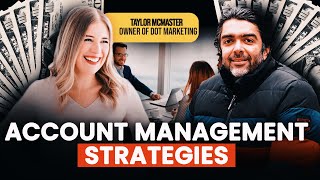
Avi Arya and Taylor McMaster discuss running a remote marketing agency that manages accounts for other agencies. They cover hiring practices, client management, marketing strategies, and systems that help agencies scale without burning out their teams.
People would always say to me, like, I don't know how you work from home, like, I don't know how you stay motivated. And I was like, I don't know how you go into an office every day. So having a podcast, posting on YouTube, TikTok, LinkedIn, all the social channels and really just show that you are a really strong marketing agency because you're marketing yourself. So I think that is just really, really key. You know, you have to keep your standards high, especially for this role.
Hi, my name is ABHI Arya, father of two girls, six dogs, husband to a superwoman, streetcar racer turned hotelier, then marketer and founder of Internet moguls. What up, Internet moguls? You know, the reason that I requested for your time was many people are running digital marketing agencies and from the outside it looks like a very glamorous, you know it. There are influencers, people, lots of followers people. It's cool. And so therefore somewhere, a lot of people confuse digital marketing agency ownership with that whole glamour part of the social media thing. Oh my God, I'm going to get into digital marketing. It's going to be all the cool stuff. I'm going to conferences, taking selfies with people, podcasting, amazing people on my show and everything, that's one small part of it. But the runnings and the mechanics of having a digital marketing agency are all very different. So in today's episode, I'd love to speak to you about how you keep things on track and when they do go off track, how do you bring them back online? And so, you know, we have sort of a signature format on how we start. I'm going to take five minutes to quickly tell you my story in something which we call a hero introduction. And then we request you to copy paste the format and give us your hero introduction.
Sounds good.
Alrighty. So, Taylor, my name is Avi Arya, father of two girls, six dogs, husband to a superwoman, a streetcar racer turned hotelier, now social media marketer and founder of Internet Vogels. Over to you.
My name is Taylor McMaster. I am from the east coast of Canada, so basically the other side from you. And I am a real estate investor. I love decorating and traveling and hence why I run a completely remote marketing agency. And we actually do something a little bit different. So we do client account management for marketing agencies. So our clients are actually marketing agencies, which is quite unique. Yeah. Now we have a team all across the world and I just love what I do every single day.
That is fantastic. You know, before I get into the brick and mortar questions of how things happen. I saw two things I noticed. One was when I, when we started this show, I said I needed two more minutes. And you said, sure, take your time. And then I saw in your calendar also you said, if you need to reschedule, here is the link. A lot of people when we book times with them are very rigid. Oh my God, two minutes delayed or, oh, how can you even cancel? Or whatever. And you had a smile on your face when he said, oh, no problem, two more minutes. And then you have something saying, I understand things go wrong if you want to cancer. Here is the link. Have you always been that positive and happy in life?
Definitely. I mean, I'm very an empathic person, as people would say, so very in tune with people's feelings and how people feel. And I like to take the approach of nothing's really that big of a deal. So, you know, my manager when I first started way, way, way back in marketing, said to me, you know, Taylor, we're not saving babies here. So, like, nothing is. Nothing is that big of a deal. And I kind of take that approach. So it's like, you know, that laid back approach. Of course, the east coast of Canada brings that out in me. But yeah, I just think that if we can just sit back, relax a little bit and have some fun, and then nothing's really that big of a deal.
You know, this is so important for people to hear from you. Thank you for saying that. Because people just make everything in their life so tight. And then, you know, it's. It'll get wound up. It's almost like a wool, you know, a ball of wool. And then they wind it up. It's like ready to explode at any given point in time. Oh, my God, you know what happened? What? My red doesn't match what the client told me. Guess what's going to happen? My life is going to end today. So thank you for giving people the permission to say it's okay to chill out and do things at your own pace. Tell us about your business and how did you get into business for yourself and how did you choose marketing for marketing agencies? I love that micro.
Yeah. So in short, I own Dot and Company and we are client account managers for marketing agencies. So essentially, we love doing all the things that most agency owners don't love. So talking to clients, project management, emailing, sending reports. We love doing all that stuff and allowing agency owners to grow and scale their business while we take care of all of that stuff. But kind of winding it back a number of years, how we landed here. I was working in the corporate world and always knew I wanted to start my own business. I've grown up, my whole family are entrepreneurs. So I knew that was just a path that I could take and that I kind of wanted to take. And after a few years of working in the corporate world, I just kind of decided that it wasn't for me. So I kind of jumped ship, drained my retirement savings and started what I thought was an agency. I had no idea what I was doing and had a couple clients and really didn't know what I wanted to do. I was, I was kind of good at a lot of things. You know, marketing has always been my passion and I really understood marketing to the core and could kind of do a lot of things for my clients. But I didn't really want to, quote, run an agency. And so I decided to go to this mastermind event that was ironically for growing agencies. And I went to this event and there was a number of different agency owners there. And I kind of said to them, I was like, I don't really know why I'm here at this agency because accelerator event. I don't want to run an agency. I just want to talk to clients and talk about marketing and kind of be their best friend and do project management. And all these agency owners were like, Taylor, like, nobody wants to do that. Like, we just, you know, we want to get out of that. We want to find somebody like you to do this work. You're crazy. And I was like, you know, it's just my zone of genius is what I want to do. And so all these agency owners were like, you're crazy, but like, can I hire you? And that's when I realized there was a need and that all these agency owners, big or small, were looking for really strong account managers. And it wasn't that they were just looking for someone to manage their clients. They wanted someone who checked all the boxes, right? So they wanted somebody who understood marketing, who could speak and be bubbly and have that personality and have that laid back approach like you and I were talking about and be really strong written communication skills. And all those things that go into a really good account manage were hard to find. So I realized that there's a need in the market for really good account managers. But I also realized that not all these agency owners needed a full time account manager. They needed someone to come in and work from anywhere, 10, 15, 20 hours a week and could do a really good job and allow them to scale their agency and So I kind of went home from this event and said, okay, I'm either just gonna do this myself and be an account manager and work with a few of these people that I met, or I can grow a team and clearly went the team route. We have around 25 of us now, and we all work across tons of different marketing agencies. And it's been so much fun and really just kind of finding my people of people who also love to do this that are those crazy people. So three and a half years later, that's where we are.
That is a fantastic story. So moral of the story so far would be, keep marching. Sometimes you. You're like, you marched into creating an agency, which you didn't like, but you were like, let me find my route through this. Sometimes you have to go through the forest to find greener pastures and life. So you went through the forest and you found your path and. And then you said, you know, great. So. But if there was no action, you sit back and say, you know what? Let me first find what I need to do. It doesn't happen. It's. The path gets clearer behind the action that you take and not reverse. So thank you for validating that, Taylor.
That's right. I was actually thinking about this this morning, how, you know, we all have all these ideas that pop into our life every day, especially as entrepreneurs. We seek out all of these cool business ideas and opportunities, but it's finding that one thing that gives you. Gets you excited, and that makes you feel like, oh, like, I feel like this puts me into a state of flow, and I feel like I could really get into this. And actually taking action on an idea is the biggest thing, you know, between an idea and actually building a business. And I'm just lucky that, you know, I found this idea when I did and took action. But I think everybody can find those ideas. It's just that action, like you just said, right. It's taking the first step and the second and the third and figuring it out as you go.
Perfect. So you. You created a team, and you have people from all over the world. And Covid has done great. A great service to agency and service businesses like yours, where we don't need to be. Well, it's so easy for if I have a content writer who's amazing, but he wants to move to Paris, you know, so be it. Let him work from there. Or if I have somebody who's great at design and lives, you know, in Australia, awesome. So I'll pick and choose the best people from around the world and create the best agency. And I, there was a time where we, where we fooled ourselves into believing that one office location, however beautiful it could be. My office is a beautiful office in San Francisco, New Delhi or Tokyo. And I want great talent to come to that city and to my office when work every day and find and they should not leave. I mean, I think that's crazy now that the world has changed. Best talent can work from anywhere, be part of an agency. I think it gives an opportunity for every agency to be as talented as the other. So you find in this new post pandemic world better and more free. You know, like when I say free means people who are not bound by saying, I'm doing this just because I need to pay the bills. But you know, people who are free spirited, working, doing what they love, you're finding more of those people, definitely.
And it's, it's becoming very clear. So we were fully remote before the pandemic started.
Oh.
And yeah, so people would always say to me, like, I don't know how you work from home. Like, I don't know how you stay motivated. And I was like, I don't know how you go into an office every day. Every day. You know, like, I love working from home. And nobody really got it until now where the pandemic's almost over and people are going back into the office and they're like realizing, oh, I get it now. Like, and there's a huge difference between working from home and working remotely. And we are very much so on that remote lifestyle. We encourage people to go, go work from Mexico, go work from wherever you want to travel. That's amazing. And I feel like that produces so much creativity. But we're getting so many people coming to us now who are saying the same thing. They're like, okay, I've had to go back to the office. And I realize now I don't want to do that anymore. So now I'm seeking this remote lifestyle where I can work from wherever. And then on the flip side, we're seeing so many agencies come to us who used to be in an office and their talent pool was strictly either in the city that they were in or, you know, strictly to the people who would move there. So now they're finding, oh, I can hire people like us from DOT and company who are remote and are really talented and they don't have to be in Chicago or, you know, any of the cities that they're in because we can be remote. And I think it's just opened up so many amazing doors, not only for the talent pool, but for the agencies that we work with as well.
Lovely. So what is your suggestion to newer agencies when you look for work? LinkedIn, DMs or personalized videos? How do you look for work for new clients?
Yeah, yeah. I would say it really starts with your marketing. And I know it sounds so cheesy because we are marketers, but being able to really nail down what that pain point is and figuring out exactly who you're speaking to and then going out and presenting yourself and marketing yourself in a really niched way so that when people find your business, they understand exactly what you do really quickly and then kind of mapping out an entire marketing strategy. And I don't mean this to overwhelm, but thinking about all the outlets of where your people are at. So if your people are generally on LinkedIn, then that's an amazing strategy and consistently posting on LinkedIn. But where we see the most success is really that omnichannel marketing approach. Showcasing your pain points in a really strategic way and kind of coming up with that omnichannel approach. But then, you know, it's starting small. So we wanted to create a podcast for years, and it took a while to really just figure it out and say we're just doing it. But once you start and commit to it and just take those small little steps and it turns into a machine, a marketing machine that works for you and you don't really have to do a whole lot. So I would say, like, start with kind of the end in mind, like your entire marketing strategy, but pinpoint a couple of the channels that you really want to focus on and just like map out the plan and take action. Like we said from the beginning, that's kind of where we've seen the most success.
Got it. So, Taylor, when it comes to account manager, so, for example, if an agency has 20 clients and we say that we want, we spend one hour per week on one client. So can I outsource five clients to you, 10 to you, 20 to you, or. And that's how it works. So we outsource to you and we tell you, this is for all the agency owners out there who, you know, may want to hire tailored services. Just trying to understand the process, how she helps agency owners, because I think it's definitely unique service. So an account manager has to know exactly the commitments made to the client as well, and then to be able to see. So there's somebody who's working on the design, there's somebody who's working on the search, somebody who's working on the paid marketing. And your service is to collate all the successes and status reports and have a communication channel or do you also do the execution of the project?
Great question. So the way that I look at our role is we're essentially the glue. So we're coming in and we're working with the clients to build those relationships, to make sure that they're taken care of, to be very proactive in communicating with them and sending them reports and. But at the inside of the agency, we're helping to project manage, we're managing those designers and copywriters and we're kind of making sure that everything is running smoothly, nothing's falling through the cracks. So we're gluing it all together. The goal is to remove the agency owner from that day to day operation seat because that is the goal of an account manager. They are managing these accounts and then what we're doing on a day to day basis is a lot of those things that traditional account managers are doing. So we're meeting with clients, we're sending emails to clients, we're project managing, making sure that everything is running smoothly. What I would say when you're thinking about our role is if you're an agency and you're looking to hire an account manager, that is essentially when you come to us, it's not just I want to outsource two clients. We work with the growing agencies who are in that growth mode who need an account manager. And we're the best option because we're the ones who are hiring hundreds and hundreds, almost thousands of applications a month to do all of the hiring, the training, the managing, the retaining, all of that, that goes into the account management. And then we come into an agency, we white label. Since your clients, we're full time team member inside of your agency. It's on the website, it's on our LinkedIn profile that we work with your agency. So it's essentially just like hiring a full time account manager, but we're fractional. So we work anywhere from 10 to 20 hours a week and tier clients. We're just there to take care of them inside of the agency. And it works really, really well.
This sounds like such a blessing. I mean it, you know, I'm like, but tell me so the say if I'm based in Chicago or Montreal or anywhere in the world and my designers are also here or they're in different parts of the world, so your team could be in, in where you are in the east coast of Canada or wherever, and they're dealing with these people there. So they will. They will. So that means they all meet once a week, and they make relationships with the graphic designer and all of that. They explain the work to them and say, hey, this is what needs to be. So the sales team, the sales guy who gets in the contract from my team, gets in touch with the project manager who we've hired in your team, explains the project to you, and then they take it from there.
That's right, yep. So the key thing to understand as well is that we're not actually responsible for the strategy. So what I mean by that is, for example, we're not. We understand marketing, we're all marketers, but we all come from different backgrounds. So. So how it generally works is there's generally a strategist in most of the agencies we work with, whether that's the agency owner coming up with the strategy or maybe that's somebody else. But for example, we work with an email marketing company agency. So the agency owner is the one who's sitting down and saying, okay, we need 50 emails for the sequence, and here's what it needs to look like, and here's the overall strategy. And then we can help execute with the team, project manage, make sure everyone's getting everything done. But the responsibility of that overall strategy still sits with the strategist. Sometimes that's the media buyer, sometimes that's the creative director, whatever that looks like. We're there to basically take their vision and make sure that it gets all completed, done on time. Clients are heard, everything's running smoothly, but kind of that one step above is the strategist.
Got it, Got it. So. So what are the. What are the challenges that you face in. In this business, agency business? I understand, but now what you're doing is you've taken all the pain from 50, 100 agencies. How is that looking for you now?
Yeah, so the biggest problem, and everyone can probably relate, is hiring. You know, we're looking for a very, very, very specific person. And it's always kind of been our biggest challenge is being able to find these people. I mean, we do it, we do find these people. It just takes a lot of work and a lot of time. So I would say that is the biggest challenge. We've really cracked our hiring funnel. So we know how to get people in and make sure that they're a good fit on the other side. But it's just, you know, finding these people, that's probably our biggest challenge. Other than that, we Love working with agencies as their favorite thing. So, you know, when great, amazing agencies come through our door, we really want to work with them. But you know, generally our wait list happens because we are hiring constraints. But yeah, that's, that would be like our biggest challenge.
So, so what have you learned from this? Like when, when you like, you know, I, like you said people who are, you know, I, I would give extra points to people who are always smiling and you know, have a little bit of a laid back attitude or bringing some spunk or some positivity or a joke or something to the conversation. Keep everything light. What are some of the things, Taylor, that you've learned in this whole process of going through thousands of resumes to know, you know, what these few things should be there in Account manager.
Yeah. Oh my gosh. The account manager role is so unique because you're looking for, like you said, that personality. They have to be bubbly. They have, but they also have to be equal parts analytical because we are working with a lot of numbers and things like that. They have to have the marketing experience. Experience and specifically digital marketing. They have to be very, really good at looking for attention to detail. Written communication skills need to be bang on. Video communication skills also need to be really strong. So basically what we've done is built an entire marketing funnel where we're looking at every single one of these things at every stage. So starting from the application process, it's an automated filtering system where it's checking to make sure that they check all of our boxes and that they understand the role. And then it's an assessment with both written communication and video communication. So we have a little tip for anyone listening is using LOOM inside of your application so that people should be used to using Loom or if not, they're probably going to inside of the agency world. So getting them to answer questions on LOOM is really helpful. And then having a couple of interviews and going through, you know, certain situational questions and seeing how they perform. But then the biggest thing that kind of adds an entire layer onto all this is everyone must go through our training program, which is eight modules. And we're looking for all these different things that we're testing them on throughout this process. So before anyone gets hired, they have to pass our entire client account management school. So it's a pretty long process that we've, that we've developed, but we've tested it a million different ways and this way really works the best. And also we want people who are dedicated, so we want people who want this and they want to put in the work. And so by the time somebody does get hired, they are cream of the crop and, you know, have really proven themselves, but kind of. I know that's a long winded answer.
But personality, it's very useful. It is very, very useful because I'm taking notes for the editors, you know, like personality and, you know, the Q and A and the funnel. And so by the time, you know, I did a video which did very well on YouTube, it was called crowd versus competition. A lot of people think that's there's a lot of competition. There's mostly crowd. And when you start asking these questions, ask them to eight week module. You know, the crowd separates itself from the, from the real competition. Most people don't want to reply. Most people don't want to send a video resume. Most people don't want to fill up that form. Eight weeks doesn't matter. I want my job tomorrow. I don't have time. So by the end of it, there are very few people left. And you know that these people are the ones who want to compete for the position. So that, that is fantastic. That is fantastic.
So it's tricky too, especially for probably every agency owner list listening. We all need people tomorrow. And it's so easy to like skip some steps, but don't do it like set your. Set your standards and follow them because, you know, we oftentimes will have people go through all the way to the end and then it's like it's a no. And, you know, you have to keep your standards high, especially for this role.
Wow. So does that also mean that you, you have to make sure that your HR team is getting you, giving you a consistent supply of fresh applications because this gets very thin by the time they reach the top. So you need a lot of more people coming in?
Yes. Yeah. Consistently. Consistently, yeah.
So, Taylor, do you work like five days, six days for yourself on your business and in your business?
Yeah, I generally work four to five days, take the weekends off. It's definitely been a work in progress over the last three and a half years, just like most entrepreneurs. But the biggest thing is getting out of clients and client work. And I know that's what we tell every agency to do, but it is absolutely a game changer. And I can tell you as soon as I did that, our business grew exponentially because once you're in that visionary seat, that's where you need to be. Right? So, yeah, I work around four to five days a week and really I'm Working towards working on those high level things and high level strategy and day by day it's getting better but definitely have an amazing, amazing team who take care of so much, so, so much which I'm very grateful for.
Awesome. So agency owners today, Kedar are, you know there's a lot about, I know this is, you know, you're working as an agency for agencies but you know you work with so many agencies so you know, you know Facebook ads and Google Ads and YouTube ads. So agency owners are like, you know, should I run my own ads funnels? And so what is your you know like ad word ad strategy to be for agencies to get new clients? Just because you're working with so many agencies though you're not technically an agency yourself, I thought maybe I can ask you this.
Yeah. It's funny, a lot of the agencies that we work with don't actually focus on their own marketing which is very interesting. Yeah. So I'm always surprised. But what we're doing that works quite well is running freebies. So finding out what that mean pain point is and running free trainings or free free downloads or things like that and pulling them into your email marketing system and continuously nurturing them. That is kind of what we're doing and it's working really, really well. We also do, you know, like I said a lot of content, we're always pushing content. So kind of people are coming into our ecosystem and we're, we're pushing out content on a weekly basis and then networking. So things like this, you know, this is the key thing, building relationship relationships with other people in, in your world. So whatever niche you work in, definitely building relationships, that's kind of where we spend a lot of time focusing.
And so you know one thing that I've seen with businesses, especially niched down businesses like yourselves, it's, it should be once you've, I, once you've gone through in detail and into the depth of understanding who is my ideal customer application are then it's very easy to say no to everybody else because if you get invited to a business networking event which is what the, the say the Canadian Board of Trade or you know, I don't need to go there because there are people for agency owners I am, I would rather go to an event where they're only agency owners. So it's easy for you to say that no to 90% of the opportunities and know exactly where to go. So tell us a little bit bit about how you, you know, because you are a team of 25 and when new people come in. How do you tell them, you know, that this is what we do and nothing else? So do you have, like, a customer avatar training you? You know, do you revise it for yourself and for your teams to stay relevant and focused?
Yeah. So we, since day one, have only done the exact same thing. We've always done account management. Our scope has always been the same. Our, you know, different things change, like pricing or how we onboard or things like that change. But the core of what we do and the service that we provide has always been the same. So it's been, you know, especially throughout the process of hiring new people, it's very, very, very clear throughout the. The training programs that they go through exactly what we do and what we don't do. But then also, you know, as we're working with agencies, we're people pleasers, you know, the type of people that we are as account managers, we're people pleasers, so we want to do all the things. So scope creep, you know, can sometimes happen. So, you know, managing what that looks like with the team kind of comes up time, time and time again, but always coming back to, you know, sometimes the scope of what we do looks a little bit different in every agency, but at the end of the day, we want to make sure that we're helping the agency to move forward, to get out of that day to day, to grow and scale. So kind of that role looks a little bit differently, but kind of managing the overall scope just kind of happens as we, as we grow relationships in agencies. But, yeah, like I said, we've always done the same thing, which is. Which is great and unique and keeps it pretty clear with our team.
So. Because for agency owners who are listening, I want to ask Taylor, keeping the vision of the company so narrow means that there's no, There are not many learning curves on, hey, if I get a real estate client, what should I do? If I. You have one kind of client, 80% of their problems are the same. You know how to, you know how to take care of them better than they know how to take care of them. So is it easier to grow and expand because you're so targeted?
Definitely. So, so much easier. And I mean, there's always learning curves, but with every. Every mistake, there's a learning or every, you know, around every corner, there's something that you could change. But I think as entrepreneurs, there's so many fun things that we could be working on. And I get distracted every day with, oh, we could do that, we could do this, right? But if, if you can keep laser focused on a vision that you have for your company, then you'll be successful. And it's just, it's really hard to do. But just to stay in your lane, it's a very, very, very narrow lane. And stay focused, keep your head down and not just like look up at what everyone else is doing, like really stay focused because you know best and just stay in your lane. Is that, that's kind of where we, we see the most success in business.
Got it. Taylor, I'm going to switch gears a little bit and ask you about, you know, since you have people in different parts of the world and four to five days and how, how important are SOPs and systems and processes and video manuals and you know, like you have an eight part series which you call the client acquisition school. How important are these? And you know, give us an example of some of the things agencies, agencies should do to be able to have systems that will help them grow without them.
Yeah, systems are so important and I think systems can be a mindset too. It's not even just like I could tell you every SMP that we use, but it's going into every situation trying to systematize it. And it's. I don't want to. If you want to get out of the day to day and you want to get out of the mundane tasks, you need someone else to be able to do the tasks that you're currently doing. And so it's mapping everything out that you're doing. So for example, we started a podcast. Great. Okay, how do you record, edit, produce every single step? The 30 steps that it takes are mapped out. So an SOP for that or if you are onboarding new clients. Every single agency has clients, so having a new client onboarding system is key. Okay, so the client says yes, then what. What are the. All the steps that need to happen and who does what is going to be super, super important? So we have kind of a generic client onboarding system that we give away for free that's on our website, which I can send you the link to.
I would love that.
Yeah, so that's super key. SOPs for reporting or ongoing client management. Client gifting. Asking for feedback from your clients is super important. So we call it happiness surveys, which. How are you doing that? When are you implementing that? Every little thing that goes into the business needs to be systematized and it has to be front and center in your mind to remember to actually do it. And so every role actually should have an SOP. So as the client account manager, we have SOPs for how we do our job in every agency and it's everything from what are you doing day to day, how are you checking your email, how are you organizing the projects, who's on the team, who does what, where to go to, for where and just, you know, make sure, making sure that that's updated on a monthly basis. And I'm happy to share all of our list of all of the sops that we have as well.
That would be, that would be fantastic. I just want the editor to put in a big clapping sound right now here, big applause because you know, these things are so difficult and that's why we started this agency series because there are so many people who are so passionate, they want to get it done but they hear something like this, oh my God, sop. And so, you know, so thank you for making it simple and you know, sharing so freely and it really, really helps. And I believe that every time two people spend time together to create a podcast or anything on a YouTube channel or whatever, it remains there forever. And there are hundreds of people, hundreds of people who take notes and 10% people take action. And you do see 100 agencies change. That's our aim every year. We want 100 agencies to say that I hit the next level could be hundred thousand, a million or whatever. Because I came to your channel and I met amazing people like Taylor and there was a switch that light bulbs that went on and not only, not only a light bulb, but it also was followed by a process and a system that I could pick and make my own. So I wanted to say thank you for, for, for sharing that SOP checklist and I'll we're going to put it in the checklist, in the comments over here and with along with the link to how to get in touch with Taylor. If your agency owners have the budgets, you know, email her if you have the budgets. Remember, everything comes at a price. Good. It's a great service. I, you know, I think DOT and company is needs to be recognized and seen by many more medium and large size agencies who are looking to get rid of their headaches and grow and you know, like the other said, be in the visionary seat rather than the driver's seat of what's happening on a day to day basis. So get in touch with her. We're going to put all the details over there as well. Taylor, when it comes to, you know, I've got a few more questions for you. When you send contracts to clients, are they long Term, are they short term? People are like, hey, I want to try it out. So what has been your strategy? Do you give easy exit clauses or you know, money back guarantees or you know, all these are, they say friction free, you know, sales or whatever. So what are your thoughts on closing a deal from the proposal to, you know, the final. Removing some of the things that a client wants to be able to have an easy sale?
Yeah, so we're actually the opposite. We want long term commitments because our role is so integral in the agency and we're building relationships with not only agency owners, but all their clients. So through our sales process, we're vetting agencies to make sure that we're a good fit because we won't take on any agency that we don't think is a good fit. And so by the time that they hire us, they're essentially hiring, you know, a full time person into their agency. So we do long term contracts, six months plus and we'll do everything we possibly can to make sure that relationship's amazing from the get go. But really what I find the biggest difference is is that sales process of, you know, making sure that they understand exactly what you do and you understand exactly what they do. And is it a fit not only like on paper, but how are the vibes feeling? Do we feel like we could, you know, I always say I need like my job on a sales call is to make sure that the environment inside that agency is a good fit for my team and if it's not, then we won't move forward. So it's really building that relationship from the beginning. And then if they decide to move forward with us and bring in an account manager, that's a long term commitment for your clients. So we personally make it a long term commitment for other agencies. I see it from short term money back guarantees to performance based deals, which is really great, to long term commitments. You know, we, we kind of see it all across the board. But I, I tend to really like from the agency model some performance component. That's kind of where we see like the biggest buy in from both sides of the client and the agency, if that makes sense.
Interesting, interesting, interesting. So your bootstrapped.
We did, we totally bootstrapped it to get to where we are.
Awesome. So what is your take on if you, if you, if you were to go back three and a half years and somebody says take a million dollars, give me 30 of your company, would you do it?
I don't think so. No one's ever asked me that. I like that question.
But thank you for. Thank you for saying, I don't think so. Because that's what makes, you know, that's what makes the whole process, you know, our own.
Exactly. You know, it's so rewarding. And growing a business is hard work, and you learn so many things. And I think looking back, all of my learnings that I've learned from how to manage people or how to fund advertising or what your margins should be or what your P and L needs to look like, I probably wouldn't have learned that if I had a bunch of questions. Cash in my bank account. So I would say no. But if I was going into an entirely new business with all the learnings, it would totally look different.
Perfect. I love that.
I've learned that. Yeah, I've learned that. So.
Right. So talking about P and L and accounting and how much. How much time do you spend on that every week and how important is it for new agency owners who are listening? You know, most of the times it's like, oh, money is coming in, but money coming in versus cash flow versus a profit. They're all different terms. So what's your advice to people and, you know, any process around it?
Yeah, understanding your numbers is very, very important. And I find it's really hard as an entrepreneur to detach the emotion from the numbers because, you know, whether you like it or not, it's an. You have an ego in your business, and you need to separate that when it comes to numbers. Because. Because numbers are facts. Numbers determine the health of your business and what changes you need to make and where there's opportunity or loss. So I've always been very, very clear with my numbers and understanding where we're at month over month, year over year. But recently I've outsourced that, so I have somebody else handling all the finances, which has been such a breath of fresh air for me. But we look at it on a weekly, monthly basis, profit and loss, you know, monthly recurring revenue, if it's up or down, and really looking at all those numbers. But I would highly recommend, you know, building a dashboard for yourself. Populate the numbers, or even better, get someone else to populate your numbers and try and have a meeting with yourself or your team and strip out the emotion just for a minute to look at the hard facts, because that's going to set you up for success in the long run.
Set up a dashboard, remove emotions. Two very, very important points. I'm coming to my last question now. What does Taylor McMaster do to stay happy when she Gets stressed handling all of this.
That's a good one. I'm really working on this lately, but some things I've been really incorporating, which I've always done, but I've realized more. So is really important is journaling in the morning. So like getting your head in, in the right spot of where you're going and what's important to you and what you're grateful for, that's super important. And moving your body. If, if I don't exercise, I am anxious and just baseline. So getting some movement in, whether it's a walk or yoga or whatever, those are really, really important. And if I'm getting stressed while I'm working, if I have a situation or something where I feel the need to jump in and take control, I need to shut my computer off because I will just bury myself into it. So the turning off your computer is, if you've never done it like me for a very long time, it is liberating to literally power down the computer. And also removing things like slack or Gmail from your phone is really, really important.
Yes.
So that when you're on your computer, you're focused and that is your zone. But if you feel yourself going down a hole, just like get up and move. And that has been my saving grace for a little while now.
Lovely ladies and gentlemen, that is Taylor McMaster from Dot and Company. I'm going to put all the details over here and this show will be up in seven days from now with all the edits, all the learnings, and, you know, some of the sops that we get from Taylor. And so feel free to reach out if you're an agency looking for a service like this or do listen to this interview at least twice and take notes because I always say learning has, you know, to three learn in three ways. Learn for yourself, learn for your teams. And then finally when you teach, if you teach, that's the best way for it to go online. So make it into two or three steps and that's when you get the best out of every episode. Because the eventual aim of all these episodes that we're doing is not only just motivation, but also step by step real time practices to be able to take back into your business. So every episode, note three things that you can take back into your business, start implementing them. We hope you have a great, profitable year and your agency grows and you can be in the visionary seat like Dalar says and give the other seat, driver's seat to somebody from Derer's team. So thank you very much all for joining in, and I look forward to seeing you in the next episode.
More from Avi

The strongest mindset doesn't begin with meditation. It begins at home. Before you conquer the wor

The strongest mindset doesn't begin with meditation. It begins at home. Before you conquer the wor

Your mindset isn't something you fix once. It's something you train every single day. Just like yo

Don't build a company just because your friends are. Build one because you're ready. A startup is

Everyone dreams of becoming the boss. Very few understand what that really means. The moment you b

Most entrepreneurs say, "I don't have time for coaching." The truth? You don't make time for what

Over hiring doesn't always solve problems. Sometimes, it creates them. Having a small buffer in you

"The highest-paid" isn't the goal. The highest-value is. People often ask why premium mentorship co

The founder will always be a bottleneck... at some stage. The goal isn't to pretend you're never th

People ask me how I stay consistent with my morning routine while traveling across countries and tim

People ask me how I stay consistent with my morning routine while traveling across countries and tim