How To Turn Your Podcast Into An Asset That Sells by Steve Olsher with Avi Arya
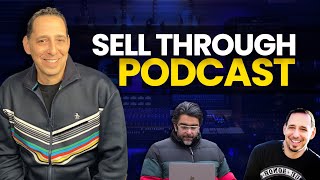
Steve Olsher, a seasoned entrepreneur and podcast magazine founder, talks with Avi Arya about turning a podcast into a sellable asset. They cover how to start, what equipment matters, and how to build a personal brand that makes your show valuable enough to monetize.
Steve Hollister. And I'm a 30 plus year entrepreneur, father of three. And I've been married to my wife Lena since 1997. So we have both digital and print subscriptions and obviously podcast magazine.com is the, is the basic URL there if you had a slash free. So podcast magazine.com free. Yeah, I mean, I would actually say the best way to start is, is just in the way that I'm doing right here, which is to start out by being a guest on other people's shows. Right. Because when you're, when you're a guest on other people's shows and then you have the opportunity to answer questions and go deeper into your expertise, you'll find that, you know what, not only do I have a lot to say on this subject, but here's what I have to say and get really familiar with what your frameworks are. Get really familiar with what your teachings are. Get really familiar with where your expertise lies. Because ultimately the more that you go on to other shows as a guest, the more you really begin to understand what puts fire in your own soul.
My name is Avi Arya, Father of two girls, six dogs, husband to a superwoman, a streetcar racer turned hotelier, now social media marketer and founder of Internet moguls. Over to you, Steve.
Steve Hollister. And I'm a 30 plus year entrepreneur, father of three. And I've been married to my wife Lena since 1997. And occasionally I also like to do some Brazilian Jiu jitsu and get my, get my butt handed to me. So I think that's. Yeah, I think that's about it.
That is fantastic. Brazilian Jiu jitsu, that is fantastic. Awesome. So we'll get right into the meat of the matter. Lots of stuff happening today. Entrepreneurs have finally come to understanding that the middleman is cut out. You don't need a Forbes or a Fortune or a Business Insider. You can launch yourself online and start communicating with the world. And in that process of communicating, building relationships, taking friends, learning in the process, you also get to build a personal brand and do business. One of the most important communication channels today is, is podcasting. I wanted to know, how did you stumble upon this?
Yeah, I mean, it's a great question. And the honest answer is I've been involved in the world of podcasting since 2009, way back in the day when I first came across this medium through some of the really early pioneers in the space. People like Adam Curry and Jason Van Norden and just others who were really, really early on in the space. And so I've just always been, I mean, literally from, from the get go, I've been really enamored with the idea of every person who has an Internet connection having the ability to basically have their own radio station. You know, I mean, it gives you the opportunity to connect with people from across the globe and then of course, reach almost anyone at almost any time, almost anywhere. And so I released my first episode of Reinvention radio back in 2009. So that's when I first became familiar with it and I was hooked pretty much immediately.
Lovely. And now you have a magazine on podcasting. This is the world's first magazine dedicated only to podcasting.
You know, it's interesting, right? So there are magazines and publications that are out there that do a really good job of catering to podcasters. So people who are actually in the industry of podcasters, as far as a publication here in the States, anyway, there really was no consumer facing magazine. A magazine that gave people really the opportunity to go beyond the microphone and deeper into the lives of the podcast that they've been listening to and deeper into the stories that are really popular and people just can't get enough of. And so we thought there was a really good opportunity here to create something that was more consumer facing, you know, B2C, so to speak. And here in the States, we're really the first publication to release this sort of magazine on a consistent basis, monthly basis. Here. There is a publication in the UK that's been around for some time and I think they're doing something similar. But here in the States, we're really the only one right now.
You do know that Richard Branson started off his multi billion dollar empire with a magazine.
Then there's hope for me.
There'S still hope, 100%. So tell our viewers a little bit about the magazine first and then we'll get into the other questions. So is it a subscription? Where can we get it? Online, offline?
Yeah, so we have both digital and print subscriptions and obviously podcast magazine.com is the basic URL there. If you had a slash free. So podcastmagazine.com free, you can grab a free lifetime digital subscription to the magazine. And so, yeah, we've been doing our best to not only, of course, spend time with and get to know and cover podcasters that you've heard of and are very familiar with, but also really focused on leveling the playing field and giving everyday podcasters the opportunity to be found. Because that is one of the ongoing issues with the medium is it's Just dominated by a very small subset of the creator community there. And so there are many, many, many shows that fly under the radar. And we wanted to give an opportunity for those shows, as many of those shows as possible, to have a voice and to be found. And so, yeah, month after month, we definitely do our part of introducing the audience to dozens of shows every single month that they probably haven't heard of, but should be listening to, in addition to, of course, the bigger name folks that we sit down with on a consistent basis.
Lovely. So for our audience who are family people, because this Internet moguls of the world venture is me, my kids, reaching out to different families and giving them opportunities, to giving them hope, saying there are many new possibilities today in the new world to be able to start a business from anywhere in the world. So for a novice, for a newbie, for an entrepreneur, what are the key ingredients of a good show?
Yeah, and I'd say it's number one. It's a great question. And the first really important ingredient and something that you really got to keep in mind is that it has to be something that you're doing. Not because you simply see an opportunity to do something, but it has to be around a subject that you have really deep interest in. In terms of this is something that you would talk about even if you don't, you know, make a dime doing it. You know, because the reality is most podcasters won't ever make a dime with their show. So that is really important to understand. Right. Which is the odds of you making money, really good money with a podcast is not in your favor. It just isn't. And so if you recognize that, okay, I'm not gonna. This isn't a get rich quick type of scheme. There isn't the opportunity here necessarily to. To have the magic bullet, the silver bullet, whatever you want to call it, to solve all of our business issues. You know, once you subscribe to that notion that you're going to do the show because you just genuinely want to do it, and because you have a demonstrated interest in that topic that you focus on, and you create content that you find interesting, you create content that you find fulfilling, then you're going to put yourself in a position where it just comes across as, hey, I'm doing this show because I love doing this show. And ultimately what will end up happening is when it comes across as you really love doing the show and you do it even if you didn't get paid a dime, your audience tends to find you and the monetization opportunities Come on. For some. On the heels of that.
Got it. So find something that you love doing something that you can go on forever. The juice never runs out because you're loving what you're doing and everything else is ancillary.
Yeah, yeah. I mean, I think that's safe to say. And again, you know, don't. Don't get caught up in the numbers. Right? I mean, the numbers are great, but, you know, at the same token, most shows just aren't going to have a huge influx of listeners, and you don't need a huge influx of listeners in order to be able to. To have a decent following and be able to sell relevant products, programs, and services on the heels of the merits of your show. So I would actually say to you is that the more niche your show is today, the higher the likelihood is of success. And I'm not going to say success by typical measures, because, you know, the truth is we all measure success differently. But I would say success in terms of finding that tribe of, as it's been called, a thousand true fans and being able to generate, you know, five or six figures in revenue, even from a smallish following, which is. Which is entirely doable.
That is fantastic. I love you saying that. This is what was going to be my second question. A niche audience or a micro niche audience? Even if it's a thousand people, those people who are continuously served with what you're sharing will bring opportunities of monetization, brand deals, all of that and beyond. Thank you for sharing that. So what are the. So there are entrepreneurs who are listening to this and saying, hey, you know what? I think I want to give it a try. I think I loved what Steve said about finding my passion. I think I want to talk about the game of cricket, or I want to talk about parenting, or I want to. Whatever niches they have. But my next. This leads me to the next question. A lot of people are like they're crippled by the thought of getting started on anything new, just. Just generally in life. So is it a good idea to start with interviewing people rather than going on your own and saying, you know what? My podcast. I don't know what to say. I don't have a topic. Let me just start interviewing some people if that's a good. If that's a good way to start. Who all should be interview. Should we start with family people? Reach out to, you know, celebrities? What's the right way to start?
Yeah, I mean, I would actually say the best way to start is just in the way that I'm Doing right here, which is to start out by being a guest on other people's shows, right? Because when you're a guest on other people's shows and then you have the opportunity to answer questions and go deeper into your expertise, you'll find that, you know what, not only do I have a lot to say on this subject, but here's what I have to say. And get really familiar with what your frameworks are. Get really familiar with what your teachings are. Get really familiar with where your expertise lies. Because ultimately, the more that you go on to other shows as a guest, the more you really begin to understand what puts fire in your own soul and what it is that you really love talking about, you know, and then, and only then will you be in a position to potentially move forward with, with your own show. Because that way you'll have clarity around what it is that you really love talking about, and you'll find where that intersection is between what puts fire on your soul, what you love talking about, and really then where there is the opportunity to be able to generate revenue from that expertise.
Got it. Any tips on getting people on your show?
Yes and no. I mean, first and foremost, I wouldn't worry about having quote, unquote, big name people on your show, right? Because the fact of the matter is we don't need to hear from those big name people over and over and over again. The Gary Vees of the world, and I've known Gary for years. I mean, with all due respect, what do we need to hear from Gary again for? Like, he's been on every show, he has all of his own shows, he has all of his own content, et cetera, which is great, and he does, and he's great at it, you know, but the reality is for me to reach out to somebody like Gary who is visible in the public eye and try to get him, you know, to come onto my show and do, you know, five or 10 minute interview or whatever it is, he's gonna feel like he's doing me a huge favorite by coming onto the show. And what is he really going to be adding other than credibility and authority perhaps for my show by having him on. But there's no challenge in finding people that the world has heard from a million times. That the challenge and where I think the real opportunity is is in finding people that the world hasn't heard from over and over again and featuring their stories. So I don't believe that you want to get caught up in having these big name guests types of people, because there's a much bigger opportunity and a much more appealing set of content and information that you can provide for your audience and more value that you can provide for your audience when you introduce them to people that widely fly under the radar.
I love that. I've never heard anybody say that, but I totally am relating to what you said. There are many big name, amazing value adding entrepreneurs, but they're everywhere. And so you're not adding anything extra by bringing them on when you bringing lesser known stories. That's when people connect with you because they connected with you. They could have gone to Gary's podcast directly, but they connected with you because they know that you'll bring in stories that they otherwise would not have heard of.
Yeah, yeah, exactly. And that's. And that's hard to do.
Got it, Got it. Interesting. Tell us a little bit about the gear. I see you have a nice baritone voice coming out of a nice mic, Nice mic setup. I don't know if there are your pictures, but it's a nice mic, you know, a nice thumbnail over there and a nice mannequin, you know, your director's chair and the podcast mic. So how. Tell us about your setup for people who may just be listening to this. How easy is it to get a podcast setup ready?
Yeah, I mean, look, I've been doing this for a while. The equipment that we have, I've got a Heil PR40 microphone. I've got it running through a little Xenx mixer and on the whiteboard behind me, when we're shooting videos, what we'll do is we'll actually put images and words and those sort of things on the whiteboard during the edit. And so, you know, just don't get caught up in this sort of fancy equipment with the mic flag, you know, and all that fun stuff. But I think it's important to have a sense of branding in your background. I think it is important to have a sense of who you are and what you're up to. For those listening to the audio only version, the mannequin behind me has a New Media Summit T shirt on, which is the live event that we do that matches aspiring podcast guests with podcasters who are looking for guests. And is also wearing a GI with my brown belt from Brazilian Jiu Jitsu.
I thought so. I thought so. Yeah.
Yeah. And so I've got copies of the podcast magazine in the background here, a picture of my grandfather, a painting from my youngest son, and then a couple of mantras that I like to live by. You have to be brave and fortune favors the bold. And so yeah, you want to give people a general sense of, of who you are, but you don't need fancy equipment. There's plenty of good sounding microphones that you can pick up for well under $100.
So a microphone into USB versus a microphone XLR microphone where you might have to put it into a mixer and then set it, send it, send the audio and the video files separately to the editor. Instead of that people who are getting started, is it okay to just get started with the USB mic where the video and the audio gets recorded together and just have your show done?
Oh yeah, yeah, yeah, for sure. I mean, the reality is that most of the USB plug in microphones that you can use are very, very effective. I mean, Audio Technica, their microphone now is the ATR. I want to say it's around $70 or so. Which, you know, I mean, look, it's, it's more than perhaps some are willing to spend or want to spend. But you know, the truth is if you want to sound good, you're going to have to invest a little bit to sound good. But there's definitely ways that you can sound quite nice for well under $100.
So what I have seen is to be in front of the kind of mic that you are in, you really need to be close to the mic. What's your take on headphone mics with a boom and a speaker coming out when you're always in front of the mic?
Yeah, some of those sound okay. And what you're referring to is what I would call a combo set. Right. So it's a combination of the headphones with the microphone. And some of those can sound okay. They sound a little hollow, they sound a little tinny, if you will, in my opinion, but they work. You know, I'm not going to sit here and say that they, that they don't work. It's again, it is something that you can, you can use. For now, I'm a bigger believer in having a separate set of headphones so that your microphone and your headphones are disconnected from one another. And again, you can even just use like right now I'm just using AirPods, right? If you just have basic, like a basic set of plug in headphones that go directly into, you know, the 8th inch jack there, you just plug them directly into your computer, it works fine. I would just suggest that you have a separate microphone from your headphones and it'll sound good.
Got it. And tell us a little bit about the mic flags. I really find Them. Very cool. Is that you? I can't read very clearly.
It is. Yeah, yeah, yeah. So the mic flags, what you're seeing right now is we've got Reinvention Radio, which was one of the shows that I. That I still have. And then beyond eight figures was the second show. We actually just sold beyond eight figures. And we're in the process of selling Reinvention Radio as well. So, yeah, it's just a very simple wraparound mic flag, and they're fairly inexpensive, but it gives you a nice clean look.
So tell us about the opportunities of building a show and then selling it. This sounds interesting.
Yeah. So we recently sold beyond eight figures. And I would just simply say that if you're going to get into the world of podcasting, you have to think about it in terms of developing an asset that has real value. And the podcast itself is an asset, regardless of how many downloads you have and regardless of how many people you've had on your show as a guest or something of that nature, it is an asset. And all assets have value.
I like that. So a digital asset in the form of a podcast with an engaged audience belonging to a micro niche, with stories that you have curated from different parts of the world in short amount of or medium amount of time becomes into a digital asset. Like a couple of years or even sooner sometimes.
Yeah, yeah. I mean, we built and sold beyond eight figures in just about two years. Wasn't always going to be the plan to build it, to sell it. Now I'm actually much more cognizant of what it takes to build and sell that asset. Right. So reality is, as I said when we first started out, there are some things that we didn't think about, like trademarking the name and really building the following in the database and so on. Today I'm much more cognizant of looking at the assets that we can bundle in order to create real value that's then packageable and saleable.
Interesting. So, you know, when it a lot of every entrepreneur today who's starting out, spending tons of money and lots of time to build their Facebook profile, build their Instagram, and not for most people. People don't scroll back and look at your history for maybe beyond a couple of days or a week at best, but when it comes to podcasts, they're evergreen. People get hooked on and they go back in history. So, you know, that mindset of what I'm creating, is it going to be there forever versus, you know, a lot of people our age especially, or in mine. We will say, I don't like the Instagram story part. It goes away too soon. I want to create something that stays there. I now like the IGTV because it stays there, like a YouTube channel. So tell us about the permanent nature of a podcast. And do you feel that people who log into new shows, they have the tendency to go back and binge listen?
Yeah. Yeah. I mean, look, it's a great question. And what I would say is that much like the live streaming channels, in terms of the Netflix and the Hulus and the Disney pluses of the world and so on, when you find a new show, the tendency for most is not to just listen to the most current episode. The tendency is to go back to the beginning, or at least as far back as they can go, to listen to those past episodes and then bring yourself up to whatever is current. So you have to think about. For most people, they have to think about creating content that is evergreen in nature, because nine times out of 10, after somebody finds out about you and they begin listening to your episodes, they're not just going to listen to that most recent episode. So there are times, of course, where you're talking about things that are more timely in nature, and that's okay. You know, obviously, if you're in the middle of a pandemic and you're talking about the pandemic, you know, 10 years from now, people are going to be like, well, there's no longer a pandemic. Why are you still talking about that? So it's a fine line. But at the same token, what I do oftentimes believe to be true, and again, there are exceptions to every rule. But I do believe that you want to create content that can be listened to at almost any time and still have relevant advice and teachings and a conversation that is of value to the current listener.
Got it. Got it. When it comes to podcasting from the phone versus all the gear that we have, what is your take on just using a phone and the Anchor app and going for it? Because Anchor does allow you to bring in a guest through a phone call. And what do you think about that?
Yeah, I mean, look, I give credit where credit is due, and any organization that is looking to get people involved with the medium, hitting record, creating content, and doing so in the most seamless, effortless manner possible is good for the entire industry. So do all phone conversations sound good? No, you know, not. Not every phone conversation is going to sound good. That's just the nature of the beast. But at the same token, not every Internet Conversation sounds great either. You know, you have people who don't always have the best connections. Their wifi isn't working well, you know, they're on. Instead of being on a, on a direct line, they're, they're, they're going through WI fi. Right. And just there's a million different reason why even doing something via the Internet, et cetera, like we're doing right now, doesn't always necessarily translate to phenomenal audio. So I like what Anchor's doing and I think it's a great. I don't want to say it's a permanent solution, but I do think it's a good stepping stone to getting people comfortable with creating content and then bringing people on and asking them questions and then being able to easily distribute that show.
Awesome. When it comes to Spotify or Lip Flint or Anchor, is there a preferred medium and if so, why? To distribute?
Yeah, I mean, we use Blueberry. We've been using Blueberry for a long time. A long time. Years and years and years. And people swear by Libsyn and other people swear by some of the other channels as well. I'm not going to sit here and say that one is necessarily better than the other. We've just known Todd for a long time, Todd Cochran, who runs Blubrry, and we find that hosting experience to be rock solid. No complaints with them. But at the same token, Libsyn is probably one of the other 800 pound gorilla type, you know, entities in the, in the room there that we would recommend.
Got it. And so, but they're all just for the, for our listeners who are getting into the podcast world first time through your experience, Steve. These are just distribution platforms and mostly do the same stuff.
It's just like, it's just like a book publisher. Right. For the most part, book publishers are just printers. I mean, they print books and it's up to you to market that book and actually get people to buy it. You know, occasionally you'll have a publisher that does more than that, but most of them don't. So it's the same thing with podcasts, you know, Libsyn, Bluberry, et cetera. I mean, they all get the job done. Right? I mean, it distributes that podcast, that audio file that you create onto the various distribution platforms. That's all they are designed to do. And they do a really, really good job doing that. Right. But ultimately, in terms of whether or not someone actually listens to your show, that's 100% on you to make happen. And more often than not, you Know, I mean, as harsh as it is to say, you know, it's, It's. It's tough, people are not actively finding shows that, that, that are. That. That don't show up on the charts. I mean, it's, it's tough to be found. That. That is the harsh reality.
So what are your tips on getting found? Social media, email marketing, getting on other people's shows. Crazy. Some crazy ideas for us.
I mean, look, people who listen to podcasts listen to podcasts, right? So if you have the ability to be a guest on other podcasts, that's going to go a long way towards getting people to tune into your show. So, yeah, I mean, you gotta. It's like if you're going to try to mine for gold, you gotta go to where the gold is. You. I mean, you're not going to be trying to find gold in the middle of the ocean unless you're trying to find a sunken pirate ship or something of that nature. And the odds of that are very, very slim. Right, so what do you do, obviously, with podcasts and listenership and getting people to tune in? You got to go where people are. You have to get folks who already like podcasts listening to your show, and you got to do things like networking and, you know, just think about who it is that your podcast can be of most benefit to. Right? So whoever, so whoever that is, whoever that is that your podcast can be of most benefit to, there's probably a common thread that ties those people together. So figure out what is the. What are the threads that tie those people together and where do they gather and how are you then going to be able to tap into that, you know, that faucet, if you will, where all of those most ideal prospects are already congregating.
Got it. So in terms of. So a lot of people reach out. Like, we have a story. I like to talk about my story and reach out, and that's how I reached out to you. But then again, there are a lot of people who reach out to podcast booking agencies. What's a better idea?
I mean, I think both are great ideas, right? Why wouldn't you. Why wouldn't you do both?
Sure.
If you can afford a podcast booking agency, then by all means you should hire them. I mean, we've got a booking agency that consistently books shows. For me, you know, I mean, it's great to have somebody working on your behalf. And of course, I, you know, I walk the talk. I'm a big believer in the medium, and I believe that you should not only have your own podcast. But you should, you should absolutely be a guest on other people's shows. So, yeah, you know, just do do it all. And if you're serious about spreading your mission and your message and reaching those who are literally waiting and praying for you to show up in their lives, you got to do whatever you can do to reach them. And so why wouldn't you do them all?
Awesome. Love that. I've got two more questions before we wrap this up. When it comes to families today, a lot of families are well out of jobs or looking at a different career path, and they might not have had any prior Internet marketing podcasting experience. How about families coming together? Maybe a grandmother in a different part of the world and a grandchild somewhere else, or a mother, father, or a mother, child, or a father, son, any combo coming together. If like you said in the first part of the interview, if both of them share a common passion, is it a good idea to partner up with people, family or non family, and do a joint podcast together? Then that way you don't need any guests, you're talking to each other and you know, you're entertaining people. What do you think about that?
Yeah, I mean, look, I think it's entirely possible to make that work. I mean, you see how Jada Pinkett Smith is making that work with the Red Table Talks and her daughter as a part of that and her mother is a part of that. But that's very few and far between. Right. I'm not saying it's impossible, but the. But the likelihood of cross creating a show that just is with you and your family talking about subjects that people are going to have, let's just say a meaningful interest in and wanting to tune in to that conversation week in and week out. It's tough. Not impossible, but I would say it's pretty tough. And even those shows, even like the Red Table Talk, I mean, they bring on guests who come and they sit at the table and they have conversations. So I think you could do it. I just think you would have to be a mix of different content or you just have to have really, really, really interesting family members where you can carry a conversation that is entertaining and educating and informing and possible. Sure, likely. We'll see.
You got to work on it. Okay. Got it. Perfect. Steve, thank you very much. My last question for this show is if you could have anybody on your show. We spoke about celebrity, non celebrity, whatever, who would be the two people, one living and one from history, that you would like to have in your show?
Yeah. So I would say, you know, first and foremost, if I was still actively producing episodes and content, it would be much easier to answer. And I'll get back to that at some point. But for right now, the shows that we have other people are doing. But if, you know, if you're asking me who I would sit down with right now if I had a show like that, I mean, there's no doubt it'll be Lenny Kravitz living. You know, Lenny's my guy, and I'd love to sit down and pick his brain and talk to him about just life and love and what's new and what's now, what's next for him and everything else, for sure. And then Dad, I would say, I probably have to say my grandfather, who was one of the biggest influences in my life, who passed in 1994. And so, yeah, that would have. That would have been really interesting to have him join me and for us to have an interesting conversation just around all of his life experiences and so on.
That is so fantastic to hear. I wear a bracelet in my hand, which I took off when my grandfather died. He was one of my strongest influences in my life, on my life as well. I still sort of seek his blessings in everything that I do almost every day. I don't know why I thought, you're going to bring in Bruce Lee from. For that second part of the session.
Yeah. Yeah.
Okay. Alrighty. Steve, on behalf of my girls who had to be in school for their project today, and myself, I want to thank you so much for this because there are lots of people in our community. The girls and I, we are on his mission to create a school together. We've done over 100 episodes with almost everybody around the world and interesting people like yourselves. It has been a journey of a year and a half. We've traveled to different parts of the world. And then Covid happened. We started doing this online. So it's a labor of love, because as a digital marketer, I've been traveling around the world and I was somewhat ignoring my family, and I wanted to build a new venture which included my girls, who are now 14 and 11. So they jumped in. We're writing this book called the Internet Moguls of the World. There's going to be an episode, podcast, everything. Like you said, a labor of love. We don't know where it's going to lead. We've got some very fascinating guests, some great stories, and lots of support from influencers from around the world who are helping us launch this new school which is going to be a family digital marketing school for everybody to come and see. What is it that the mother, father and the grandmother or grandfather can all learn from this school? We're going to launch a family membership, one ticket price for everybody in your family. So it's a heartfelt venture and I deeply appreciate your time.
Yeah.
We live in Vancouver, Canada, and we have a base in Asia as well because that's where we are from and we have a decent following online and offline. So if there's any time now or in the future you're launching a product or a service and you feel we can help you push your message, I'd be very happy to make that happen for you.
Yeah. Well, I appreciate that. I appreciate you having me on.
Excellent. Thank you very much. Once again, this is Avi Arya, father of two girls, six dogs, husband to a superwoman, a streetcar racer turned hotelier, now social media marketer and founder of Internet Moguls, signing off for now. Thank you. Steve Sa.
More from Avi

The strongest mindset doesn't begin with meditation. It begins at home. Before you conquer the wor

The strongest mindset doesn't begin with meditation. It begins at home. Before you conquer the wor

Your mindset isn't something you fix once. It's something you train every single day. Just like yo

Don't build a company just because your friends are. Build one because you're ready. A startup is

Everyone dreams of becoming the boss. Very few understand what that really means. The moment you b

Most entrepreneurs say, "I don't have time for coaching." The truth? You don't make time for what

Over hiring doesn't always solve problems. Sometimes, it creates them. Having a small buffer in you

"The highest-paid" isn't the goal. The highest-value is. People often ask why premium mentorship co

The founder will always be a bottleneck... at some stage. The goal isn't to pretend you're never th

People ask me how I stay consistent with my morning routine while traveling across countries and tim

People ask me how I stay consistent with my morning routine while traveling across countries and tim