In Conversation With Eric Termuende
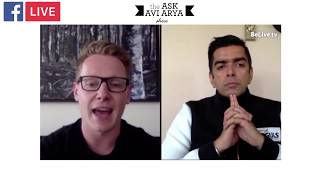
Avi Arya talks with Eric Termuende about his work as a speaker and author, his approach to goal setting, and the Future Proof Summit he's planning. They discuss workplace culture, keeping talent, and personal growth.
Okay, we are live. I just wait for a couple of seconds to double check. Yes, we are. Okay. Eric, welcome back.
Thanks for having me, man. I appreciate it.
Perfect. Perfect. So, Eric, we'll get right into the show. We'll wait for. The audience will build up as we come along, and we will be promoting this to our audiences as well. Distracted a bit. That's only because I'm checking on all screens to make sure that they can all see you. Excellent. So I like to. Yeah, I like to start the show by introducing. By having the guest introduce himself on, based on his values, his principles, his upbringing, you know, what makes him who he is. So who are you, Eric?
Sam, first of all, thank you for having me back. It's good to be have these conversations. I think having these conversations is incredibly important to not understand just what the person does, but who they are too. And so when you ask me who I am, I'm a person who really likes to be a lifelong learner. I think in today's day and age, that is absolutely imperative. So I'm a public speaker, I'm an author, I'm an entrepreneur. I've started an HR consultancy. And really what I'm looking to try and do is remove the negative connotation associated with work. I mean, very typically, if we were to broadly generalize right now, work is something that we have to do where we drag our feet into on Monday and skip out of work on Friday because we're living for that weekend. I think we're seeing that tenure in the workplace is dropping, that workplace satisfaction is dropping, that at the same time that we have the opportunity to. To create a great experience at work. And so through the speaking, through writing, and through the consulting side of things, my focus is really to allow people to enjoy that thing we do more than anything else in the day. And that's work.
So what are the value systems that you brought up under? Tell us about your childhood, your family.
Yeah, I mean, attribute a lot of everything that I've been doing and the successes along the way to my family. I mean, I've got a great younger brother, my two parents, and we were growing up on this system where it was not so much competitive as it was more collaborative. And I think that the way work is moving today, whether it comes to talent or otherwise, that a collaborative environment is one that ultimately thrives. And even when it looks to. When we look to attracting talent, if you're an accountant, you could work at one of a number of places, all of which would be maybe good, but not necessarily right. Despite being accountants. So depending on what those cultural values were for an organization, or even growing up in the friend circles that we're a part of, understanding where we fit based on a value alignment is incredibly important. So my parents were great in giving my brother and I tons of opportunities, being incredibly supportive along the way, and now just letting us know that they're a great support in the backstop should anything happen, but also to share and celebrate successes with as well.
You know why I asked this question is because I, in my interaction with you, I see you as somebody at the age of 25 who's supremely focused on what he wants to do. So I, in my mind, am attributing a part of it to the backbone of love and trust that your family gave to you. Is that correct?
Yeah, I mean, without a doubt. I think a lot of the people that you see doing the things that ultimately they care most about, it's not necessarily financially driven, but those who are most connected to the work that they're doing see a bigger picture than just what it is that we're trying to do. It's how we go about doing it, why we go about doing it, and who we go about doing it with. And to have that support and to have that backstop from my parents and to have that foundation growing up is really something that I will do and will always continue to appreciate. Perfect.
I love that because as you as in our discussion, we've spoken about staying close to the router, which is what I preach about all the time you are to that family unit, the more you learn about yourself.
Yeah, absolutely. I couldn't agree more.
Excellent. So tell me, just to make it fun, which one are you?
Oh, I would probably say Iron Man.
Okay.
Yeah. And the reason for that is I would like to think that there are. There are two sides to Iron Man. Number one is like sort of the business philanthropist mogul, and then the other is like a superhero. Obviously. I think there's a lot of complexities to Iron man that are undervalued. And there are. There's just more layers to Iron Man. And I appreciate that comment that just came up. Thank you.
He most definitely is.
When we look at the Hulk, I would say he's more one dimensional, more brute force, looking to get things done whether anyone likes it or not. And that's not really my style. I've got a really consultative style where I like to bring as many people on board as possible. But to have two layers to a work and a play layer That I think are both equally important.
So tell me something about your rituals. You know, like a man is a man and his success. And you break it down, break down the success into weekly, monthly, quarterly, whatever goals that you have are all made by the rituals that he chooses to be a part of. So what are some of your rituals?
Now, this question is interesting because I don't typically have a ritual. I'm not a meditator, I'm not a yogi, I'm not a journaler. I'm not any of these people. Now, that's not to suggest that I advocate against any of these things. Not at all. Those who have these things work for them is fantastic. I carve a chunk of my day out, believe it or not, just to thinking, to be disconnected and to think about where I'm at, where I'm going, both on a personal and professional level, and also what the market is really looking like and how things are changing. So how is the environment around me changing? And how do I make sure that I fit in with some of the things that are changing so fast? I think that we're long past the day and age where we can project and predict. 6, 12, 18, 24, 36, 72 months out, the world is changing too fast. And so I think one of the most underrated skills right now, whether it's being taught or otherwise, is just critical thinking, the ability to solve problems and make decisions that's best for us. And truthfully, your decision might be best for you and not best for me. And so I think that really, if I'm able to carve out some time to think, not necessarily first thing in the morning, it's not last thing at night, it's just somewhere in the day that feels right and natural at that time that I think we can get a lot out of that. I think there's a component of my day that really involves physical activity as well, whether it be cycling, whether it be going to the gym, whether it be going to play, some sort of sport is really important too. But it's not necessarily at a fixed time of the day. The third thing I'll say is with respect to goal setting. So, sure, I've got my larger goals that are pretty straightforward, but I think most importantly is that I strive to be a person and not necessarily a position or a certain achievement. And the reason for that, because the person that I'm going to be will ultimately enable the opportunities around me as I progress. Age and more experience and understanding. And so what I think a lot of People make the mistake of is setting a goal today and then ignoring or not giving as much credit to the person that we become along our journey as well. And so a goal for me today, yeah, if we were to set a goal today, for example, and said, I want to be a senior partner in my organization in the next 10 years, let's just say if we were going down the more traditional route, what might happen is two years into this goal, we might have a significant life event that's changed or incredible opportunity that has presented itself that we could not have possibly predicted. And then we end up actually going to take that event or to take that position and realize that we didn't accomplish our goal. Right. And I think that actually sets us up for some disappointment along the way. And so instead, the focus that I've really come to hone in on is how do I become the best version of myself and one that the people and the tribes around me can really appreciate and respect. And as a result of becoming a person, certain achievements, goals, and opportunities will come as a result of me being that person. And so again, the shift on goal setting has become from more of a thing to a feeling or a person. So what I'm trying to say is I set my goal on trying to be a person and not a position, but I let the influences of these life events really flow over into that person I'm becoming and the things that I want to accomplish along the way. So really, if I were to summarize this down into one thing, I would have, I would call it like adaptive goal setting. So that I'm setting goals based on the person that I'm becoming. As long as that person that I'm becoming is really getting closer and closer to the values and the things and the people that I appreciate most, there's so much clarity.
And you know what? What I'm liking is because you're throwing me as an interviewer off guard because with respect, due respect to everybody that I meet, including myself, you know, we read all these books and we try to put us fit ourselves somewhere in this whole personal, branding, entrepreneurial journey that, oh, yes, I do meditate, too. Oh, yes, I do this, too. And you know, at a young age, who is saying that I don't conform to all these norms necessarily because I want to be the person that I want to be and the position might change. So that's. That's pretty deep. You know, that's why I'm taking a, you know, a few seconds to repeat what you said while I'M thinking in my mind what I have to ask you next, because you threw me off guard with this.
With that said too, to suggest that, you know, meditation or these things don't work. I mean, that's not. That's not at all where I'm going down. I think the most important thing. Let me just say this, this has become a recent realization. I think the most important thing we can do in life is understand ourselves at the very deepest level. Because if we can understand ourselves, then I think we understand too where we fit in the world. And one of the realizations that I've made too is it might seem very intuitive, but it's not so much about quality so much as it is about quantity. Reverse. It's not so much about quantity as it is about quality. And I've realized that who I am, if I can understand that, what works for me, what doesn't, the people that I like, the people that I don't, the experiences that I like, the experiences that I don't, and then be able to find a small tribe of people that really share those values, goals, desires and dreams that the fulfillment that we can get as our circles shrink actually expands at an exponential level. Wow.
For sure. Because they will shrink. Once you choose to be authentic. Tell me, how is it to. Once you've written a book, once you've given it all you have, or what you think is all you had at that point, and then an editor or somebody comes to you and says, you know what? I think you need to do a redraft. How tough is that?
Not at all. And the reason for that is because Sarah was really great at keeping my message and my tones, but articulating it in a way that would be better appreciated, absorbed, and respected by the people around us. See, the problem is that when you're in this space talking about these things for so long on stages or in person, if somebody doesn't quite understand it, you can just say it again in a different way, or you can justify, or you can recalibrate, or you can just tweak it a little bit so that they understand. Now, the thing is, in a book, you don't have this chance. So you have to get the message through the first time. And I think that's actually one of the benefits of going working with a publisher and not self publishing is that they're able to articulate your ideas in a way that people will actually hear and understand. And I think that if I were to not do it that way, my message might have completely missed so again, credit where credit's due. Having the publisher and having Sarah specifically from Barlow Books was a great resource to have.
Let's shift gears and move towards your speaking. You're obviously in sync with your message. You are your message. So. So how easy was it for you to become a public speaker? Or did you, despite being aligned with your message and being authentic with your message, did you still have to go through, you know, stage training and all of that?
So I've never been to Toastmasters or any sort of speaking or any sort of. I've got zero, I mean zero formal training on. I think you can agree that when we're passionate about something and we put enough time and effort into it that the term is fake it till you make it. And I don't like that. I forget who it was and I want to give credit, but I can't remember who it was. But somebody said consider it as fake it until you become it. Because if you do it enough, you become a subject matter expert. I mean, nobody's going to be an international affairs expert until they've been in the trenches and they actually understand the dynamics of the situation. Nobody's going to be a doctor until you practice and practice and practice and practice and do the surgeries and then become the foremost expert on kidney transplants or something along the lines. Right. Public speaking. I think in the past three years I've done probably 120 keynotes and presentations. Before I got signed, I did 40 again by taking.
Before you got signed by an agent.
Yeah, yeah, 40. So again, carving out that time to really think, to reflect, as you mentioned too, and to understand us, how we fit in the market, how we fit in a situation and who we can look to for tips, tricks, best practices, etc. Is incredibly important. And if you do it enough times, well, maybe you'll get signed.
That means you practiced lot.
Yeah.
Even though it's not formal training, you practice yourself to hone your craft.
Yeah. I mean, if you want to be an incredible guitar player, you can be self taught or you can take guitar lessons and it'll expedite the process, certainly. And so anytime there is an opportunity for someone who's looking to get started to get a little bit of a helping hand. Absolutely. I would suggest it. It's just that I had enough, I think repetitions or practice throughout the various presentations that I was giving to be able to sort of get a little bit more comfortable on stage.
So what are the biggest challenges that companies face? Like people who will be watching this show what are the biggest challenges that they can identify in their company before they want to reach out to you? What is it that. What's going on in companies before they find an expert like yourself?
So typically, organizations are having two problems. Number one is they don't have the ability to attract the right talent. Maybe the brand isn't as present in the community as it should be. Maybe they're not telling the right story. Maybe they're not using their people as an incredible asset when they're looking to articulate what the values of the experience are. There's sheree. And the flip side of that is retaining talent. And so how are organizations retaining talent in that they're reducing that turnover, they're reducing that tumultuous experience within the organization, and ultimately they're looking to extend that period so that they can have a more effective, more efficient, more sustainable workplace and one that's got an optimized culture. So really, it all comes down to how do we optimize the work experience so that people that are in that organization can enjoy the time that they've got there, and the people that aren't perhaps maybe desire an experience like the one that's provided from the organization they're looking to apply to.
Okay, Eric, now let me ask you a question, which maybe some of your clients or prospective clients might think before they call you or meet you. Businesses are fortunately or unfortunately investing in experts like yourselves, hoping to get a roi. How do you measure the roi? Or how would you ask your prospective client to measure an ROI before they hire you?
Yeah, I would say that. First of all, great question. One of the things that we look at in the engagements that we're doing is the happiness scale. It's proven time and time again that happy employees create happy customers. Happy customers create a better bottom line to a degree, depending on the resource you use, 7.5 to 12.5% on average. So, number one, that's significant. Number two, the thing that I would suggest is what we're calling soi, a savings on investment. Right now, human resources, broadly speaking, isn't so much that we actually look at investing in our people. It's more of a cost center. We're spending on our people. And I think that whole language needs to change. Because if people are our most incredible resource and ultimately drive the bottom line, having an optimized workplace is incredibly important. And if we can actually decrease anxiety, increase satisfaction, and increase tenure in the workplace, that on average, for a low skill position, low education, training and recruiting costs are about $25,000. Now, if we're looking for a high skill, high training, high level of intellect, that actually might be between, you know, 75 and $125,000 per person. So if we can save an individual for another year or two, or actually increase the experience and the happiness overall within the organization, the savings on Investment might be 10, 12, 14, 20x the investment that would be cost to work with us.
So Eric, you spoke about family being your backbone. You spoke about health, meditation, all these journaling, all these things being important, but not necessarily in any particular format. You know, you spoke about self awareness being the key to know yourself, to be able to. What I, I absolutely loved what you said, absolutely loved it when you said that you know yourself enough to be able to know how much you want to stay niche. And once you are, you find that niche and your, and you find your own tribe around it, it will automatically expand, you know, where you want to be. That was just, that's what is the most powerful thing I've heard, you know, in a while. So then you spoke about that and you also spoke about how your journey, although you said you loved your journey, you were not impatient. You know, at your age you should have been impatient, but you know, I guess you were loving it so much so you weren't. And you found your way to the right publisher or the publisher found you actually. And you found your way to the, to the top speaking agency. And there was a process behind it. If you followed the process, you kept your mind, you were respectful of the emails that would come back and forth from them to be able to see how much you can push further. Then you got yourself, you have a publisher, you have somebody who takes care of your speaking, have your consulting. What next? Where can we see Eric and his company go in 2017 and 18?
Yeah, great question. I mean, like I said too, this path to getting better and better will never stop. I mean, I want to be a better version of myself tomorrow than I am today and recognize that the sky's the limit. Then after the sky, everything else is too. It's that journey that I like most and realizing that I'll never get to the destination, that makes every day the destination, if that makes sense.
Oh, absolutely.
Yeah. And so certainly another book may or may not be in the works in the next couple years. Certainly speaking on a more global scale will be a focus. But one of the bigger focuses right now is on the consulting side of things and really being able to build up an intentional curated community for people and culture professionals. To be able to crowdsource some of those best practices and then open source them through our platform. Anyone's interested? It's just nowofwork XYZ trying to be a little bit more forward oriented. Check out the Future Proof Summit that we've got coming up in October. We've got companies like Netflix, Microsoft, Amazon, we've got Samsung, we've got Unilever, we've got Proctor Gamble, we've got HubSpot. All speaking. I've done the interviews and they're fantastic. It is free to attend. So there's not even a money grab there or anything else.
Sorry, is it an online event?
It's an online event, yeah. So free to register, free to attend and then.
Sorry, you have a link for that?
Yeah, we do. We can send one out there.
And what can I write for that? Just future proof.
NowOfWork XYZ and then the future. NowOfWork XYZ.
NowOfWork.
Yeah. XYZ. Then the future Proof Summit is what I'm drawing attention to now. And then being able to build a curated and intentional people and culture community is really important.
Future Proof Summit in October, right?
Yep. Let me just check here.
So there we go.
Link should be there and yeah, I mean and being able to work with and transform organizational culture across North America and that's been really exciting.
So tell me, you know, what are you considering? Because the other day I was doing some courses on Udemy and I was thinking about you. I was like, you know, your courses would just fit in so well over there. So are you bringing on any of these?
I mean, I might just need a guy like you to help me out so we can both win in it together. Truthfully, Udemy is a new side of things that, you know, I'm aware of, but by no means an expert or even close to in. So just maybe crafting out a framework and really an action plan to make that happen is certainly of interest and maybe Shree can help out as well.
I'd be more than happy to. What I've seen is it serves as a, for some people it works as a great revenue generator. But what I've seen is for somebody with a very nicely planned out long term vision of what he wants to do, I think lead magnet number one and number two, also an introduction to the world through bite sized lessons, the various things that you're doing. So for the work that you're doing, you might have different messages going out in your speech or in your book. So you can have bite sized lessons over there. And some could be free, some could be $15 all the way to $200. And it's, it's just opened the door to thousands. I launched a course last year and very honestly forgot about it till January when we went back to do another course and we had 4,000 students who had enrolled in.
Wow, that's incredible.
Yeah, so it's, it's, it's crazy the amount of work that you can do. We talk about it offline, you know, when we meet again. But thank you very much, Eric, for you know, being no holds barred journey of exactly what you did and your mindset and you just let us into your mind and into your life. And also one right now, most excited about the future proof summit. I haven't had a chance to look at it. I will look at the link and tomorrow morning when India wakes up and we're going to promote this video to, you know, to Asia. I hope. I'm sure there'll be many more comments on the way you work and the way you look. I'm sure this will be fun. Thanks a lot, Eric, for joining us again.
There's two last things I'll say. Number one is on my personal website is just first name, last name dot com, if anyone wants more information. And the second thing I was going to say, I said this before when we were meeting, but Abby, thank you for the work that you're doing and just taking the time for these conversations. A lot of interviewers will ask about the entrepreneurial journey and just the steps to take and things to be successful in entrepreneurship. I think successful in entrepreneurship, when we ask it in that context simply means how do you be financially rich. I think that that misses actually a lot of the journey and a lot of the individual. And for those who are listening, who are part of that entrepreneurial journey or part of that corporate journey or part of that any sort of journey. They're realizing that a lot of the happiness that they get from the journey is from the people around them and from the accomplishments that are made, not necessarily the paycheck that comes at the end of the month. And so to ask these questions, to be really intentional with more who the person is rather than what they're doing and then segueing that into how that's enabled a life that's ultimately allowed them to be fulfilled in the work they're doing is really important. So thanks for taking the time to have this conversation.
Not at all. Not at all. Thank you. Thank you. And if I can say I'm and I and I. And I eventually end up being good friends with most of the people that I interview. But in this case, I'm a fan. And I'm a fan because hopefully friends first, friend and fan. And I'll tell you, it's always because of the amazing. Of the clarity that you have. It's just. It's just something. Every time I've spoken to you the whole day, I am thinking about, can, you know, how can I have that kind of clarity? Or how can I. That's why I wanted to interview you again on Facebook Live so that I can. This message has to be driven down. That's why I wanted to interview you again on Facebook Live so that I can. This message has to be driven down. The more clear you are, the more happier you are. And if you're a living testimony to.
That, I think I find this. So thanks. Thanks for your time, Avi. I appreciate it.
And I look forward to seeing you soon again.
Sounds great.
All right, good.
More from Avi

The strongest mindset doesn't begin with meditation. It begins at home. Before you conquer the wor

The strongest mindset doesn't begin with meditation. It begins at home. Before you conquer the wor

Your mindset isn't something you fix once. It's something you train every single day. Just like yo

Don't build a company just because your friends are. Build one because you're ready. A startup is

Everyone dreams of becoming the boss. Very few understand what that really means. The moment you b

Most entrepreneurs say, "I don't have time for coaching." The truth? You don't make time for what

Over hiring doesn't always solve problems. Sometimes, it creates them. Having a small buffer in you

"The highest-paid" isn't the goal. The highest-value is. People often ask why premium mentorship co

The founder will always be a bottleneck... at some stage. The goal isn't to pretend you're never th

People ask me how I stay consistent with my morning routine while traveling across countries and tim

People ask me how I stay consistent with my morning routine while traveling across countries and tim