In conversation with Lucas Mattiello
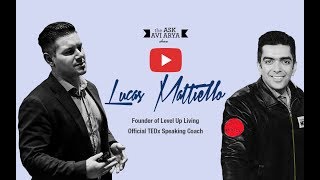
Avi Arya talks with Lucas Mattiello, a confidence coach and public speaking trainer, about his journey overcoming anxiety and building his business. Lucas discusses the challenges he faced, how he developed his approach to teaching confidence and communication, and what he covers in his workshops.
Press record and excellent. Lucas, thank you for being here with us on this show. How are you doing today?
I'm doing great, Avi. Thank you so much for having me on the show. When love comes in.
Not at all. Not at all. So we asked you which after to choose, and you wanted to go with the Hulk. Okay, so it's going to be Hulk all the way the next 40 minutes. Yes. Okay. Lucas said, you know, my biggest thing is a story. For me, everything is about a story. So that's what we like to start with. The first section of this is what's your story? So tell us about yourself. Who are you? Where are you from? How did you get started?
Absolutely. Started in business.
Yeah, started business, started in life. Wherever you want to start.
Well, it was May 14, 1981, and a star was born in Burnaby, B.C. here in the lower mainland? Yeah, I was born in Burnaby. I got my parents and my younger sister, and I grew up in Burnaby. A great life. My parents are both from Italy, so growing up in an immigrant household was good. And the hard work was always reinforced, and, of course, that was that Nice.
So how was growing up? I mean, were there any dreams that you wanted to be, like, a superstar or a sports person or. What were your dreams growing up?
You know, growing up, I was playing hockey. A lot of my life was dedicated to hockey, and my big goal was to make it to the NHL As I was a young child and spent many years focusing on that. I didn't, obviously, because I'm here today not as a former hockey player, but it did. Most of my childhood was playing sports and playing hockey and having friends. And I had a really good upbringing. It was great.
Excellent. So siblings, best friends. Tell us some stories.
Yeah. Well, so I have a younger sister, my sister Stephanie, and we grew up. We're two years apart, and she's awesome. She's a nurse. Growing up, my best friend was the guy across the alley. His name was Bob Lombard. And we would play basketball every day. It's like I had to hoop at my place, he had to hoop at his place. And our entire life was sports. Like, that's all we would do is play basketball, play soccer, play any type of games.
Nice. Nice. And so then what happened? What was your first job like? And how did you get into the business world?
Oh, yeah. Switching to the business world. So we were going through. And it's interesting, my. My first job was at Safeway. It's a grocery store, and I was the bagger. So they have jobs back Then where the guy would sit there and the lady would bag groceries. And I got that job when I was. I'll say I just turned 16 in grade 10. One of the first people in my classmates to work. And they always. People thought it was crazy that I was. I'd go to school and go to work, right? It was. It was. That's what we would do.
Was it hard? Was it hard, or you were enjoying.
It at the time? It's. It was a formative time in my life where, you know, you're 16 years old, you're interacting with adults and working, and looking back, I was. I could just see so many shifts that I would have done differently had I now what I. What I did back then. One quick story actually, was interesting. There's a guy named Daniel, and I remember one time they asked him to do some stuff, and it was. It was like a ridiculous ask. And he's like, no. He's like, I'm quitting. I'm out of here. And I was like, what? Like, he said no. It was his assertiveness, and he ended up quitting. And I thought the guy. I was like, wow, this is. This is possible. Oh, my God. Like, he just said no. And he said to me, he goes, lucas. He goes, I'm in school to be an architect. He's like, I don't need this shit. He's like, I'm done. And I was. That stuck with me was his ability to say, no, this isn't aligned with who I am, and get out. And I was. That always. Yeah, it was a very. A very important lesson.
Nice. Are you in touch with dad?
No. No. Actually, we did connect about two years ago. Two years ago, he was working with a different group, and he just reached out, and we Actually, a group of us went for dinner, and it was. It was amazing to share that story with him.
And he's like, oh, wow, that's amazing. So sometimes when you do what you do, whatever is right for you, it's not only for yourself, it's inspiring others who are watching, maybe silently.
Absolutely. Avi, that's a really great point you raised. People are always watching.
That's what I. You know, I meet a few people at the gym every now and then, and they see us. You know, they see people like you and I on the Internet so often, and they're like, you know, you guys are doing so much. And I turned around and told that guy, I said, you know what? I. I get inspired to come to the gym because every time I look at you, you're there every single day hustling, you know, making a great physique for yourself and, you know, feeling good, inspiring people. So he's like, really? Me? Why would I. So it doesn't. I mean, you don't have to be out, just out there. Whatever you're doing in your everyday life, somebody is getting inspired if you're doing it the correct way.
Absolutely. Absolutely. Great point.
Yeah. Growing up, I used to. I was inspired by people who were racing streetcars, and that was. That was a fun part of my life. But that story is for another time. So how did you get into. You know, I love your logo. I love your T shirt. You know, I love your brand, you know, you know, I'm a fan. I told you, I hope I'm your biggest fan in Vancouver. Size wise, at least.
Size wise.
Tell me, how did you get started into becoming a confidence coach or speaking guru? If I can, yes. How did that come about?
You know, it was a roundabout story where. So I had a great childhood, but even talking to my mom a few years ago, she said, lucas, you were always really nervous. So even when we'd be walking through the mall, she goes, we'd be walking through the mall, and you'd constantly be looking over your shoulder and checking, like, who's around you. And he'd always be like, you know, if someone comes after us, I can run really fast. I can get out of here. Okay. Like, nobody's. I was always nervous. And what happened was even in high school, I remember getting very anxious. I started having panic attacks and a lot of anxiety in high school, but I hid it because I was ashamed and I didn't know what was happening to me. I thought I was having some type of heart attack or heart palpitations.
Wow. And how old were you then?
I would have been 14 years old.
So there was no work stress or something. This was just something that was just there.
Yeah. For me specifically, was happening in wrestling. That was the one area that would come up was when I was in wrestling and being held in a hold, I would just feel really uncomfortable and my mind would just race. I was like, I need to escape. I need to get out of here. This is really uncomfortable. And so that continued for many years until, Yeah, I was 29, I went to university. I worked in nightclubs for years. Went to university, got a degree in business administration. And then 29, I was working in finance. And after the stock market crash, I got job, lay off. And that's when my life fell apart because I identified so much with being the finance guy, having that title, having that label, which was how I would show up into the world as the finance guy. Like when that got taken away from me, my life had no meaning.
Interesting. And so the anxiety came back at.
This stage again, the anxiety got really bad. It was that loss of self. I became depressed. Anxiety and pancreas are horrible. And so what happened was I went to the doctor, he sent me to the Burnaby General Mental Hospital to get checked in and talk to a psychiatrist there. And I went in and spoke with a psychiatrist, which was a really tough part to do that. Right, right.
So, and then from how did life start changing?
Then I started a stress management program. And it was that moment that I started making lifestyle changes. I started getting techniques and to become more confident to reduce stress. And my life got started getting better and I started to blog about it. And as I was blogging about it, people were reading it and they were like, hey, this sounds. I really relate to your story. You mentioned story earlier.
Right?
Relate to your story. It's great to hear a very real perspective of it. Would you work with me? And that's where I started working with people. In the beginning though, it was only about panic attacks and anxiety. And what happened was I was doing a lot of corporate in house training for some big organizations locally and the one thing that kept coming up was the fear of public speaking and the stress and anxiety created. They asked me to create a specialized program and that's where our program is unique because it's communication skills, but also stress and anxiety management, both of those, to become a confident speaker.
Excellent. So from your, from your own trials in life, you know, you gave birth to a program now that today is helping so many others with their anxiety and you know, and helping them level up. So when did this actually become a full business for you?
Full business. I started the blog in late 20, mid 2010. I started the blog. I was in a career exploration program at the end of 2010 and it was there that one of the counselors on the way out, she's like, Lucas, just go for it. See what happens. Worst case scenario, three months later you go back and you get another job in finance. I said, okay, I will. And I started. And then I started into a business startup program. And with that, it was early 2011 that it started to going. And I think the first two years was not knowing where I am now. That wasn't really a business, that was more of a glorified hobby, but it was the beginning.
Sure, sure. And then. So you run us through the steps because a lot of entrepreneurs watch this show. So run us through the steps of what? Did you have a business plan in that? I'm going to have a. I'm going to have a deck, I'm going to reach out to the, you know, I'm going to wear a suit, reach out to 10 companies every day, selling my workshop. I'm going to do networking. How did you get your business off the ground? Having an idea, great. People encouraging you, great. But then actually going out and getting your first check, I'm sure that's a whole different journey.
You are so right with that. So in this business startup program is put on by. Okay, it was Douglas College, Kakulam campus. I was there. And then there's an entrepreneur startup program. So you go and you have to create a business plan, create your financials. And I had very optimistic dreams. Like first year, first year, 40 grand. Second year, 120 grand, 30 or 200 grand. None of those happened. Way less. I got destroyed because it was so overly optimistic. What really happened was I was going out and I wasn't making any money, but I wasn't, like you said, reaching out to people and making that happen. I had to make so many adjustments to the program for it to actually start gaining traction. My financials were completely a disaster. I ended up. I was struggling for money that I left bartending and I ended up going to a restaurant, working for a guy that I trained how to bartend. He was managing at the time, and that was a tough one. And if a lot of, you know, entrepreneurs, they'll probably appreciate the story that you have all these goals. And in my mind, I was like, I'm gonna make this work. And that wasn't the reality.
Right.
It was a failure. I was making about, say, a thousand to fifteen hundred dollars a month. You can't live off that. And I went back, I was at the restaurant for dinner, and my friend Jason's like, hey, if you need a job, I'll hire you right now. And ego kicks in, right? I was thinking, I trained you how to bartend and you're gonna be my boss now, right? All this stuff. But at the end day, I said, if this is something I'm committed to, I should. I just need to take this job and make some cash.
Sure.
Then three days a week, I'd work at the restaurant and then I'd work on my business. And that was a huge improvement for me because one, it took off the financial stress I could survive. I saw My reality, if I don't hustle and get my business out there, that's my life. Bartending in a job that I don't want to do.
Beautiful. Love that. So you were in it. You were tasting the reality that you had in your life and at the same time, you wanted. You were desperate to get out of it. So.
Yeah.
So how long did it take for you to get your first client and how was that? You remember that story?
Yeah, I do remember my first client. It's a funny story I had. It was through LinkedIn, I believe it's probably the only client I've ever got through LinkedIn.
Okay.
Which is a common situation for a lot of people. I had a blog post and this lady from Victoria reached out and she just sent me a message like, lucas, I have public speaking anxiety. I'd love to chat with you and see if you could work with me. I'd never worked with anybody in one on one scenario. I've done, I've done a few groups talks. So we get a Skype call, we're here. I'm like, okay, what's going on? She's telling me her situation, okay? I go, we can do it. And at this time, I'm living in my parents basement, struggling financially. My room was next to the door. Every day I'd hear my mom open the door and talk to her clients, and they'd be talking like, is your son, is he still pursuing this dream? You know, is he gonna get a job? And there's so much concern, right, that I felt terrible every day because I could hear it. But I. Listening to Gary Vaynerchuk and put the message out there, of course, I. That bolstered me through this. So to your point though, first client we got on the call and she goes, okay, so how much do you charge? I had no idea. I never charged anybody, right? I was working, you know, making $20 now. I thought that was amazing, right? And so I go, I flipped it. I go, well, what do you think is a fair rate, right? And she goes, $70 an hour, right? That's exactly my rate, right? I'm like. It was interesting because then she goes, oh my God, I knew this was meant to be perfect, let's do it. So I said, okay, great, let's schedule our first call. And she did that. I hung up. And I remember running upstairs to the kitchen to my parents and. And I'm sitting there going like, mom, this lady, I just had a client, she's going to pay me $70 an hour. And My mom's like, no way. Nobody's going to pay you that much. I'm like, mom. She said she will. I swear to you. It was crazy. That shifted my mindset so much because then I was at the bar and every day that I was there, I'm a big believer in negative motivation. I was there making the whatever, $9 an hour plus probably $3 an hour tips. I'm here making about 12, $13 an hour. I could be out there working one on one and getting $70 an hour.
Right.
So that pushed me to take more action.
Lovely. I love that story. I love that story. So you worked with that client. You got that client through LinkedIn and you've obviously been for. And you know, the common thing theme between yours and mine is we've always surrounded by this man who's inspiring us.
Yes.
So, so all of that happened. And then when, when did you start your workshop format and tell us a little bit about the workshops.
Okay, so workshop formats, the. That started, the first one I was doing was, it was, I was doing one day trainings at obviously it's funny enough, the Grand Lionel Hotel, same room we were in last week.
Nice.
But that then it was, it was 16 people. 16 people, a one day workshop. And, and that's all I would do. I was there, I was like just starting testing the market and I get. There was no other offer. And I was, I was doing that for a while. It would get about maybe a thousand to fifteen hundred dollars each time I did it. And I would do one every two months.
Right.
Because I didn't have traffic.
1500 for all of them. Like a hundred dollars a person.
Yeah, it was like. Yeah. About a hundred bucks a person. Yeah. 100, 100, $250 a person.
Right. You were also testing your craft and honing in your skills and all that market responds.
Absolutely. Avi, the whole concept of it back then was, hey, I'm up here and I'm nervous speaking. And if I can hear, you can too.
And so that's a great story. But Demi, you know, there are a lot of entrepreneurs. What they feel is that I need to first get into the game with a bank and I'm going to make $50,000 a month or half a million a year, all of that. But you said that you had to actually start with whatever was coming your way because you also had to refine your workshop module to see how many people, you know, sort of like it and what they like and, you know, don't like and you can change that. But in that process, also what I've seen happens is that you. Some people get worried that, you know, people will not like my program and they won't come back to me. But that's the risk you have to take. You. Whatever you have, you take it to the market, introduce it to them, and then, you know, shift accordingly. So how was that? How did you do that?
Great question. There's. There's two things that I feel is, and this is a big fear. I believe one of the biggest fears that stop entrepreneurs from putting themselves out there. It's that, you know, what if this isn't good enough? What if I kind of piss off my initial customers? There's two ways that I've used to mitigate that. One, start with a very low price. So that way, even if it's a bad experience, there people aren't that much money and they haven't invested too much, so they can't really be too upset because they know they won't. Not much. Two is the one thing that I constantly do. So even when I launched that other program, I have the confident sales machine. It's like that mentorship program to get people on stage of speaking. I had one, I reached out to my best clients that are the best relationships with. I had four people in there. And two, I said, look, we're co creating this program together. I don't know what I know the result we want. You got to be bear with me. And one of my clients, Jay, he's like, look, the one thing I'm. I'm blown away is how you walked in and you had no plan. And we did every session, it seemed like you were making it. I go, yeah. I'm like, look, we're going to the goal. But here's. He goes, that for me was one of the biggest learnings, was that you had a chart of your hierarchy of confidence and that's it. And I go, yeah, that's what we're working on now, how we get around it. Two things to move forward. One, low price. So you reduce the internal fear of not delivering. Two, the other thing I have is time. The one thing I'm more committed than anything is if people are not getting the results they want, what's getting in your way, and let's work on it. So for me, it makes it easy to put myself out there because I'll do a beta test. Okay. I'm coming from a place of. I'm here to help you. What questions do you have? I have the answers. I just don't know your questions.
Right.
And so when you do that, that's the combination that served me really well to launch and put new products out consistently.
Lovely. And how long has the journey been so far?
2011. So just about seven years now.
Lucas says now that you've been doing this for seven years. How, how. How do you approach the same business, the same clients, the same workshop? How do you approach that now?
So different? It's amazing, Avi. I remember even before I was actually thinking about this, about the workshop that I did last weekend, the night before, I had all my materials ready in the morning. I went to yoga at night. So I was nice and relaxed for the next day.
Nice.
And then I went. In the past, I'd be up to like 2, 3 in the morning, stressing out about the workshop, freaking out, thinking, are people gonna get value, getting everything done, tweaking slides. And that was how I used to be.
Right.
And now the one, the biggest shift is I just show up and I'm like, okay, let's. Let's create a good environment for you to get the results you want.
Lovely. Tell me, you know, a lot of people, you know, I believe. And if, you know, and everybody has their own belief, I believe that one of the things that you need to do to show up well and to show up trained and to show up ready and to show up prepared is because that, you know, your ready energy also rubs off on everybody who's watching you or looking at you, and they're like, you know, this person seems confident, whatever he's saying, and so they take it in even deeper. So does that mean. Does that require a lot of practice?
That's a tough question. I'll tell you why. When a person says, does it require a lot of practice? The default answer for that is people are going to look at duration, as in it's going to take six months or a year or two years.
Right.
It's when I look at where somebody comes from, a true place of inner confidence, not outer confidence. That's a key distinction. Inner confidence is belief in yourself, owning your accomplishment. Outer is, you have a nice car, a nice house, good vacations, you make a lot of money. That's good. But you can lose that.
Right.
When a person's coming from inner confidence, there's two key components. One, it's how much relevant experience do they get? Because I believe everything is about that practice. It's about the repetitions experience. The more exposed you get, the more that you tweak. And look, how. How can I Improve. And what did I do? Well, the faster your progression will go. The second part to that is to be confident. The hardest and the most essential person to really sell on your abilities is yourself.
I like that.
Yeah. The external. When I'm working with speakers to sell from stage, when they struggle, when we sit down and we look at it, the real obstacle is not the offer. There's tweaks to make, of course, but the biggest thing is they haven't fully bought into the program of what they're offering. Because then you're saying the words, but your words don't have conviction.
That is so powerful, man. It just. I'm going to keep that in mind. Okay, that's amazing. So tell me when it's. When you. When you. So you mentioned in the workshop that we did last week that when you go up on stage, it's a 20, 20, 60, 20% people are going to love you. 20% people may not like you at all. And 20 and 60% of them are on, you know, just on the borderline, and they might or might not. They've not made up their mind and they don't really care too much. And so we go ahead with our talk, you know, delivering as much as we can with whatever conviction, passion, practice, and leave the rest. Now, do you think that people who are conducting workshops should also think that 20, 20, 60, 20% people are going to love you or during their workshop? Yeah, because I saw everybody leaving a fan after. At the end of the two days. You know, we all, we all were in awe of the way that you workshop. We got so much from it. So I don't think there was a 20, 20, 60 there. That's why I wanted to ask.
Great, great question. Thank you. I'll probably post that on our Facebook group to clarify, because you're absolutely right. This is for a cold audience.
Right.
Then I would use 20, 26. If people already bought in, the likelihood of them buying tickets to come because they hate you is quite low. I mean, the whole objective of it is to repel. When you're looking at the masses, right, you attract only your ideal clients who resonate with you because that's who you can help really improve their life.
Makes sense. Makes sense. Great. So tell me, you know, you said, you know, you've been into fitness for a long time. You've been a wrestler and all of that. And so how does that play into your everyday rituals?
Well, it's. It's important. I mean, if I go, like, I'm going to gym today and I haven't been in a few days just because I had workshops and talks and I feel it, my mood's different. I firmly believe that business, even when I was working in finance, I was for the city of Burnaby. One thing I noticed, all the department heads and all the higher ups were all in good states of physical fitness.
Exactly. I've noticed that too.
And I remember back there was three of us, myself and Jonathan and this other guy, Jonathan. And we would play soccer together at lunchtime. And it was one of the. Jonathan's brought it up. He's like, you notice that every department head's in good shape. And we were just theorizing. It's like, do you think there's just more energy they're able to take more, they're more productive? What is it? I strongly believe there's a correlation between physical fitness and business success. Because for me it's like the class I have today, it's a meat grinder. I go in, I know it's going to be mentally exhausting. I mean, I pushed my limit. I'm going to hit the wall, I got to break through it. It's all the same stuff as business. You're going to put yourself out there, you got to go through the wall. I believe there's a high correlation between that. So fitness is very important because I believe just from the mood boost to stress relief to health and well being, it's all 100%.
100%. Tell me, you know about your coaching program. So what is your two day workshop where you, you know, you get in, you get people in front of the camera, it's a nice setting and you get, you know, sort of take them through different layers of things. You know, you tell them how to get over anxiety. You actually, what I loved about your workshop was that there's so much public space, actually so much speaking that, and you see your, and you make everyone see that on camera and make those tweaks and go back right then instead of saying, you know, here's the camera, go back and see it yourself so that, you know, that's, that's great. But what about people who want to work with you? A lot of people will be watching this show and want to, you know, say that, you know what I've done my public speaking training or that you know, that people are watching you from different parts of the world who might not be able to access your in person workshops and they still want to hire you as a coach. How does that work?
How that works is I do have that it's my second year program. So the first is that the base, I call it the foundation, which is communicative confidence. You come to today debate because you mentioned video is the most important thing.
Right.
It shows a snapshot, this is where you are, this is what's good, this is what we need to work on. And then you see yourself getting better.
Very important.
The next step, the progression is when people are there and they're more comfortable putting themselves out there, they know they look good. The next step is to be seen as the expert in their industry, a thought leader. And that requires having a one hour talk to do at keynotes or do self hosted events and two, getting videos out there. And that's where I created that program. I really created that when I was coaching Tedx Stanley park, getting people ready to speak to almost 3,000 people in the audience. It was working closely with them and I said it's a lot of fun. I can actually make a bigger impact helping others share their message than me sharing my message.
Right.
So I created this program called the Confident Sales Machine. And it's what we do is we, it's a, it's an eight week intensive where we build your one hour talk. I meet with you one on one, everything's online through zoom and we build your one hour talk each week. You have to do videos, put it out there on YouTube so we get feedback, start building your channel up and then the net result is you market your talk, you get booked for stages. And that's the reason I love it, is it gives you a direct tool to get your message out there and get clients.
Right. Lovely, lovely. So what's next? What's next? What's happening now? We're getting into summer. What's next for 2018? What can people who are watching this show and you know, look forward to?
It's gonna be a big year. I got a good feeling about 2018. The biggest thing I feel right now is launching the podcast and the YouTube show, which I've got some episodes in the can already. I'm ready to go. Probably within a week they'll be out. It's called Confident Communication for Entrepreneurs. And it's gonna be a show with quick clips to help people become more confident communicators. One key distinction is people often think, oh, public speaking. I don't do talks so it's not needed for me.
Good point. Yeah, yeah.
Communication is communication.
Right.
It's key for you to get your message out there with interpersonal, small group, one on one, whatever it Is the more confident you are, the more opportunities open up.
That's awesome. So you're saying even in a boardroom setting or between, if you. Even if you're a manager of a small business and you're managing four people, or you're managing your own family or friends, being a confident. So you're not saying public speaking only. I mean, although you're an expert at that, training people for that, and being a public speaker yourself, you're saying that confidently communicating. I always remember that I have to speak slow. That's what you taught us in our workshops. So confidently communicating your message, even if it's to two people or three people, to help them understand what your message is, what is the eventual outcome that you want, should have after that? Communication. That piece of communication requires some bit of training. Just like everything else in life, when.
You have more confidence, two things happen. The world becomes a friendlier place, more opportunities come up, and you get in control. So that oftentimes how we show up in the world and the experiences we have is directly related to the amount of confidence we have. So lovely.
I love that. You know, what funny thing happened last night when I was, you know, I was actually writing the intro and outro for this, and I like to do it myself. I like to do it, you know, sort of. I like to. It's interesting. I don't want to talk much about it, but it's very interesting on how you've heard of Tom Berio, how he does his intros and outros for the Inside Quest. So I got inspired by that, and I went over the board, over the top for this. So when I was doing that, and I'm talking, I'm thinking about confidence, and I'm thinking about Lucas, and I'm thinking about the workshop and all of that. And I went to sleep last night. I met the rock Dwayne Johnson in my dream.
Okay.
I asked him for a. And I've always wanted to meet this guy. I meet him and this is last night means like a few hours from now, few hours ago. And I. And I asked him for a selfie, and he's like, you know, he pulled me and on the side as if, you know, I'm 6ft 3 and big, but in front of him, he pulled me like I was a little baby. He pulled me on the side and he said, bro, ask with confidence, you know? So I guess I got your message through Dwayne Johnson last night. He's like, you know, there are hundreds of people who ask me for selfies but all you need to do is ask with confidence. Nobody can say no. So, yeah, that's.
That is a really powerful example from the man himself. Yeah. Well, it's interesting. I got that from Tony Robbins. What in was it? November 2013. I was at his event and New Jersey, and I was with my friend. I'm not going to incriminate him, but he's a good dude from California. And we just met. We were talking, and Tony Robbins talks about, walk with certainty, walk with confidence, walk with this. And we were in the cheap seats because I couldn't afford to get any closer. It's 2013. My business was struggling, and so we were in the general seating area at the back, and we're at the break, and he goes. I'm like, hey, Ben. I go, ben, where are you? He goes, dude, I'm about four, And I go, I'm in the front row of the back area. And I go, I don't see you. What are you talking about? He goes, no, I'm at the front. He goes, come with me. And I'm like, what? And there's security the whole way through. And I'm like, oh, no. He goes, just walk with confidence. Time to practice. And I waited for the break comes, and I just. I remember I took my badge, I put it under my shirt, and I just walked with confidence right through all the security. We're at row eight in the front row. Tony Robbins is right next to us.
And.
And I'm looking at it. I'm like, yo, this work. Like, it's amazing. And so then I'm not advocating not sitting in the seat area, but we implemented it, and it was a very 100%.
I'm sure you said when you were, you know, when you were working nightclubs, I'm sure that a lot of people walk in confidently and you let them in because you just feel. You look at that demeanor and say, these people are important and they should be let in.
Oh, yeah, it makes a big difference. Absolutely.
Right. Excellent. So, Lucas, tell us where people. People who want to reach out to you. What's the best way? Your phone number, Skype, email? Can they land up at your house? What can they do?
Buzzer 903. The best way to go is to Levelupliving.com. levelupliving.com. Why? Because we're taking our lives to the next level. It's going up. That's where we do it. There. Or if you want to check out some tips, techniques, definitely go to confident communication for entrepreneurs type that in on YouTube or the podcast I haven't launched yet, so I don't know where it's going to be. But go on a podcasting source and check it out. You'll find it.
That sounds lovely. Thank you very much for your time. And I'm pretty certain that 2018 is going to be a great year for you. I personally, being the kind of customer that I am, I looked around for courses all over the world, and I eventually made time to stay back here in Vancouver to finish your course before I go ahead and start with my own thing. Thank you very much for everything that you do. And I'm sure that this is going to be one of the episodes that is going to be watched. A lot of comments are going to be coming in and. Because what you have created a business out of is an innate human need to be heard. Everybody has a message, everybody wants to be heard. There is a layer outside which somehow separates us from the rest of the world. And we go through life doing that. Like I said, I grew up being an overweight child. And I have so much to say, which I now say every day through my video, through my podcast, through my speaking, but I think lost so many years of my life not being able to share that same message. And I think what you're doing is, you know, people of all ages coming to you, from kids, entrepreneurs, parents, grandparents, all kinds of people coming, and you're removing those layers and helping them now come back and showing up in this world as confident communicators. I love that name, by the way. And so, you know, I genuinely feel that a lot of. There's a lot of talk about, I'm helping people, I'm helping people, I'm helping people, whereas everybody is only helping themselves, which is fine, too. But I think with your comfort with your workshop, after experiencing that, I think the kind of layers that you're pulling off. And I believe that I'm not religious, but I also. But I know that there's somebody up there, a higher power God or whatever. And I feel that once you. Once you become the conduit to help others, then I think, you know, God or whoever's up there says, you know what? Hey, you're doing my work. I'll send you more work. Because it's. You're only helping me. So I can see you go the Tony Robbins way, man. And I want to. When you go there, I'm not going to be in the cheap seats. I'm going to be there right in front, rooting for you. And saying that, you know, you saw him first on the AskAviaria Show.
AMI. That's amazing. And, you know, before we go, I just want two things that you actually just brought up. When I first started my business, I had a. I printed out as a word document. I printed out and I had it next to my laptop on the wall. And it was, why am I starting this? Why I started it was I wanted to try to save myself when I was a 14 year old. That was the driving force. Thinking what would have been helpful when I was 14 and struggling and looking for answers. It would have been to see that I wasn't alone and that there was some hope. And these are some steps to improve. In a way, of course, I do it to give, but then there's also almost like a personal redemption story where it's how can I turn what I went through into. Into a positive experience for others. Yeah. So I feel that too.
100%. No, no, it's. It's. It's lovely. And I. Something tells me that this is you just about getting started.
It feels that way, man. Appreciate it, brother. Thank you so much. Thank you for everyone watching. Put your comments in the. In the questions and tag me in it. I'll be happy to answer any questions they have.
Thank you, Lucas. Thanks a lot. Look forward to seeing you soon. Take care.
Pleasure. Cheers.
Sam.
More from Avi

The strongest mindset doesn't begin with meditation. It begins at home. Before you conquer the wor

The strongest mindset doesn't begin with meditation. It begins at home. Before you conquer the wor

Your mindset isn't something you fix once. It's something you train every single day. Just like yo

Don't build a company just because your friends are. Build one because you're ready. A startup is

Everyone dreams of becoming the boss. Very few understand what that really means. The moment you b

Most entrepreneurs say, "I don't have time for coaching." The truth? You don't make time for what

Over hiring doesn't always solve problems. Sometimes, it creates them. Having a small buffer in you

"The highest-paid" isn't the goal. The highest-value is. People often ask why premium mentorship co

The founder will always be a bottleneck... at some stage. The goal isn't to pretend you're never th

People ask me how I stay consistent with my morning routine while traveling across countries and tim

People ask me how I stay consistent with my morning routine while traveling across countries and tim