In conversation with Mr. Dilip Puri and Mr. Prahlad Puri
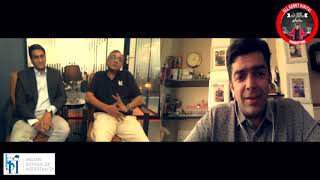
This is a YouTube video titled "In conversation with Mr. Dilip Puri and Mr. Prahlad Puri" recorded in October 2018. It features a conversational interview hosted by Avi Arya with two guests, Dilip Puri and Prahlad Puri, discussing their backgrounds, the founding and vision of the Indian School of Hospitality (ISH), the integration of technology and entrepreneurship in hospitality education, and the opportunities available for students and professionals interested in hospitality and culinary arts. The discussion covers industry partnerships, innovative educational approaches, and calls to action for prospective students.
Hi, Avi, how are you doing?
Very well, very well. How about yourself?
Good, good.
Hi. Can you hear me? Loud and clear.
Yeah. Can you see us?
Absolutely. Absolutely.
Awesome.
Are we, are we a little too far away?
Avi, should we move the laptop closer?
That could, that could be a better idea. I agree. Hi. So we already, we already recording. So we just, we just begin with a casual conversation and lead to lead from one question to the other. Although I have some notes prepared over here.
Okay.
I was in your mind Searching for lips Searching for truth I couldn't let you go Without a request or even a task don't let me never be alone again Alone again Don't let me.
Never be alone so welcome, officially first time to the Askavi Arya show, which is a show which I've been doing almost for two years. Every Tuesday morning at 11:30, 142,000 hoteliers across the world get to see this show. And this is a show where we invite people who have stories in the hospitality industry with two primary aims. A, the budding hoteliers across the region or across the world can learn from the challenges that, you know, all of us, all of our, my guests have faced and be able to reach their success points faster, quicker with, you know, lesser hassles if possible. And the other thing is for people, you know, industry colleagues and peers, all of them together, to understand your story and where you are taking your, you know, the next 10 years of your, where you're investing the next 10 years of your story in. So I start with the first section of the show, which is what's your story? So, you know, in a couple of minutes, if you could tell us and you know, feel free to go as far as far back as possible. People talk about their first crushes or the, you know, the first time they rode a bike or the first time they lied to their parents. Could be anything. It's very informal. It's not about the first time you got into your profession. It's sort of a behind the scenes look at the personalities that we interview. So feel free, you know, any one of you can start a few minutes of you know, who you are and what's your story?
Why don't you start?
Okay, so I'll start my story. From a very young age, I was blessed and privileged enough to be born to a hospitality hotelier father and an artist mother. So I got exposures to two very different industries. Because of dad's work, I had the ability to be exposed to different cultures across the globe. We live between Australia, India, East Africa when I finally did my university higher education in the United Kingdom. Through his travels, I kind of got a very early age insight into the business of hospitality from what I observed him doing and from what he'd tell us because his stories were always kind of centered and revolved around the business of hotels and the hospitality industry that he worked in.
Sure.
So it was a very interesting insight from a young age to kind of get that exposure. And that's when I, you know, kind of when I had to choose what I wanted to do for my higher education, I said, you know, not hospitality. But joking aside, I think the insight, you know, he brings and he's given to me, I kind of thought that, you know, I've been given the ability to speak well, maybe articulate myself well, so I want to do something that would complement that funnily enough. However, I chose to study film for my undergraduate education and quickly learned that it was the business side of things that interested me a little bit more than the creative side of things. How passionate I was towards the creative side of things. And then got a very interesting opportunity early on to work with a very small startup technology company based out of Pune that was doing business solutions and applications and websites and stuff like that. So knowing nothing about technology, not really understanding anything about business development, I said, yeah, why not let me take this leap and figure things out from an entrepreneur perspective. And that's when I realized that, you know, starting up businesses and this entrepreneurship side of things is what really excited me and made my blood boiling. There are a lot of sleepless nights involved, long hours that really, really got my juices flowing. And I found that this is something that I'd love to continue doing. From that I got another interesting opportunity to work with an interior design and architecture online based company and got more learnings through that, understood technology a little more in detail, understood how a different business vertical function. Then dad came to me one day and says, I have this vision, I have this plan to build and reimagine the way in which hospitality education works. So here are 20 points and let's work together on this to create the reimagining of hospitality education. And thus the whole concept and vision of ISH was born, the Indian School of Hospitality. And I think at that note, keeping it short and sweet, I'm going to hand over to Dilit to kind of take over.
Lovely. I like the filmmaking aspect of it. That's one thing you and I have in common. Lovely. Apart from the fact that you're, you know, you and Your dad work together, which I truly believe and you know is a winning combination. Pilip, over to you.
Well, just hearing Prahlad's story, mine might start sounding quite boring. Early days, 4G family okay. Wasn't sure what to do. Hospitality, a bit of an accident in terms of a career, I guess, once I did get into the Oberoi School, you know, never looked back from that business and have had 30 plus very exciting years as a hotelier and now in the second innings, an education entrepreneur. And if I were to make the analogy with a cricket test match, you could score a century or a double century in the first innings, but really the actual knock which matters is in the second innings when you have to win the match of the series. And so for me, I like that is my second innings and hoping to hit a winning knock here as well.
100%. Excellent. Excellent. Thank you for sharing your stories. And so, you know, so you said that, you know, both of you spoke about this vision that you have been obviously seeing for a very long time. I'm sure that you know what you're doing today and we'll get to what is happening today with your new baby. But that vision, how long did that vision sort of ferment in your mind to say that, you know, it's high time that I take a plunge and I make it happen. I make that put that vision to paper and then eventually, you know, give it that material form. How much time did this entrepreneurship journey take?
Well, I think through my hospitality career and particularly once I was in leadership roles, one began to kind of, you know, self assess and see what are your real strengths, which kind of, you know, have brought you what success you had. And I realized that an ability to communicate and touch people was probably one of my more significant strengths in my career. And through that, as I saw the ability to influence, impact people, I began to realize that I could be doing this in a more formal way, which is obviously through education. The idea and the passion for education was always there. Converting it from plan B to plan A was, I guess, a series of things which happened and kind of brought my belief in destiny a little more, you know, clearly to me where having had the opportunity to see a hotel school which is up for sale in India, putting my youngest son into Ecolo Tegadosan, coming and talking to my CEO Fritz Van Paschen, about the excitement in bringing in that quality of education into India, to then speaking to colleagues in the industry who, you know, had a lot of respect for in terms of their understanding of business. All of these things kind of started happening and coming together. And then I guess when the Starwood Marriott merger happened, it kind of gave me the impetus to convert the Plan B into Plan A. So, effectively, I've been thinking about this for many years, but we put things into action about a year and a half back. And what's kind of most exciting is that in a pretty short time we brought the campus to market. And as you know, we're going to open on the 1st of August. So that's pretty much been the chronology of where we are today.
Lovely, lovely. So, you know, for all the hoteliers or, you know, people in the hospitality segment who are one day wanting to become entrepreneurs, so, you know, if I can ask a question on their behalf, how much is it gut feel? And how much is it, you know, minutely planning out the next five, 10 years of your life whenever you want, whenever a hospitality professional chooses to become an entrepreneur?
Yeah, that's. That's a really interesting question because. And I often challenge general managers. For example, last evening I was moderating a roundtable of about 15 general managers of big hotels in Delhi, and it was the same question that, you know, do you see yourselves doing anything different over the next five to 10 years? My sense is, Abhi, that an idea, a passion, a thought, or what you want to do, you have to work towards taking small steps to build that up. You don't have to say, I've got an idea and I want to do it tomorrow. I had the vision or the passion to think of education. It took me many years to think it through and then to put it into action and to convert the vision into reality. So I would advise hoteliers who want to be entrepreneur that if you have the idea of what you want to be an entrepreneur in, don't just leave it as an idea. Neither should you straight away, take the plunge. You should begin to work on it, talk to a lot of people, give yourself the confidence, build up that courage to take that leap of faith. And only when you're really prepared should you actually get into it. Because the better prepared you are, the greater the chances of your being successful as an entrepreneur.
That makes a lot of sense. I'm sure that, you know, analytics from YouTube, when we put this on YouTube, are going to show that this is going to be, I feel so far this is going to be the most watched segment of this show because a lot of people either jump in thinking it's high time everybody's doing it, I should do it or never do it. And you know, so you've given a. You've given a practical answer to how you should plan everything. Because like you said, the more prepared you are, the chances of winning are even greater.
And it's also very practical because if you're a hotelier, a senior hotelier, a general manager leader, while you're ideating and planning how to move forward, you have a lot of resources with you because you're in a role in a job, you can reach out to a lot of people. And that's what I did. I just kind of engaged with so many people to continue to kind of build up on the concept on what are we doing, are we doing it right, are we doing it wrong? So that kind of infrastructure support you have while you're in a working career, and you should make full use of that because once you take the plant into entrepreneurship, it can get very lonely.
I 1000% agree with that, the lonely part, and I think you're absolutely right that there is an infrastructure, there's an ecosystem that you can leverage off of. So, you know, also there is a very common, I think, question. If I, like I said, if I speak on behalf of many hospitality people who are wanting to get into businesses, there is a do something which nobody has done before. You know, be a first mover. And then there's another school of thought which says, understand what others are doing and see the broken systems and sort of come in with a better solution to an existing problem, because an existing problem in most cases has an existing market for your solutions as well. So which would you think is a better idea to go and disrupt the market, do something that's never happened before, or do something in a better way?
You know, I'll use a quote which Fritz Van Passion loves to use, and he says, how do you define insanity today in the corporate world? And it's about businesses who want to do the same things, expecting the same results. In today's changing world, that simply cannot happen.
Right.
The point I'm going to make is that you don't have to be a first mover and think of a new thing to do.
Right.
At least I didn't. I looked at the state of education in our industry today and clearly recognized that this has to be disrupted in order to transform it and to build a better talent platform for our industry. So it wasn't a new business. I mean, education has been there forever. But the opportunity to bring in new technologies, adapt the changing realities of the world into education, giving it a approach where it's not just about academics anymore. You have to prepare young minds with life skills to last them a lifetime, not their first jobs. I think that approach, changing the mindsets of people who educate themselves in our industry and the ability to use and take advantage of technology to enable learning, that's what I believe are the disruptors in a traditional business of education. It wasn't a new idea and I didn't want to be the first mover, but I clearly believe that higher education for hospitality, tourism and all allied service industries, clearly there's a very, very, a big opportunity in disrupting it, transforming it to improve the talent landscape given how massive the industry is growing. I mean, tourism accounts for 8 to 10% of GDP in our country and in our country. So really, to answer your question, it was an existing business with newer ideas to disrupt and transform it. That's the way I approached it.
Lovely what he said.
Another thing that we've kind of been very mindful of in this entire conceptualization stage and execution stages. In spite of taking an existing business model and reshaping it for what the world requires today, it's very important to understand what works and what doesn't work. You can't reinvent the wheel completely because your students or your customers will tell you what they want.
Right?
So typically in the education landscape, reinventing the wheel isn't easy because of all the external factors. What you can reinvent, however, is the way in which the actual philosophy is deployed or facilitated. And I think as much of the product being tangible in terms of infrastructure, technology, stuff like that, there are a lot of intangible parts of education delivery that change up the way in which it has to be received and then taken forward for your first job, your career at large as well. So. Right, two very fine lines that kind of interject, right.
So Pranat, you know, so coming back to you with, so you know, now that you know, your co founders in a business, you know, you're working with your dad and you know, you're building this, you know, reimagining education, you know, for the hospitality industry, you know, and I'm sure there are going to be people from, you know, international. I mean this university will be a university which will be considered very soon by international students also wanting to have higher education in, you know, in from Asia at least where do you think people make a decision? So you know, when, if you were to talk to your eventual audience or your customer, if I can call them that, your students, what would be your message to them? At what stage should they start thinking Speaking to you and coming in, making a visit to your establishment to see what all you have to offer.
So to be very direct, it's never too early or never too late to make a decision. If you find your mind working towards a thought process of what I want to do, what I want to study, you could be as young as 13, 14 years old or as old as 18, and having already finished your higher education, still looking for a college to go to. So it really depends on the individual. What we tend to do is we tend to understand the student from a personality perspective, get a sense of exactly where their thoughts are going, do they fit into this or are they better suited for something else? That being said, however, it's pretty clear to us that there are two segments that we're targeting. One is the student who is still clueless. I was a student like that when I was in high school as well on what it is I want to do.
Sure.
There are students who are in that exploratory mode who are not sure and want to take a dive or take a plunge to see an industry in a different light. Hospitality as an industry, for example, you always see the front of the house. If you've not grown up around that industry, it comes across as a very glamorous business to be in. It is, but you've got to work your way to get to where it becomes that, for one. So a lot of what we do is to demystify the education to a student. To answer your question more pointedly is we don't necessarily go to the student and say, come to us at this point or in your life. For us, it's more a conversation that happens through age groups and through different standards in education. So we start talking to students as young as just gone into their 9th and 10th class. And then we continue to talk to students who've already explored undergraduate programs and are looking for change as well. The sweet spot, of course, is the students who are currently in their 12th standard looking for higher education as soon as they graduate. But that's not always the case because, you know, mindsets change, thought processes change. Very often we find kids who started studying something but have said, you know, maybe this is not for me, maybe I'm starting to think more about a different industry or a different educational system.
Understood.
It's not that you should come and study hospitality, because hospitality is a good industry to work in. Who are you? What do you want to do? And do you see yourself working in any of these service driven businesses or being an entrepreneur, for example?
Right. But you know, Pranat, I'd like to bring the reference point of this conversation we had I think the first time when we met. Two things you said which still play back in my head. One was that this is going to be something like W meets Google. And I think that that was very well said because I feel today's student who has an international exposure, at least family or cousins or somebody staying or if not never been out of India, still has exposure to the fact that these are the kind of universities that are coming up. This is the kind of study experience that is being, you know, created for people their age in different parts of the world. So I think it was high time that Indians, Indian students also got this kind of an experience while a study, study experience, if I can call that, call it that. The other thing that I think what you said was that hospitality is not just hoteliering. Am I correct? You know, so there are multiple industries. So would you like to elaborate on that?
Absolutely. So, so, so, so again, just coming back to the point I made earlier about students still being confused about what they wanted. The thing about generations today is that opportunities have always been open and wide and there is no reason why those opportunities should become very bottlenecked depending on the education you choose.
Sure.
Hospitality as a concept or as an educational field. The reason we say that it's not limited to hotels is because a hospitality profile is sought after by any business with a customer facing on. So today's day and age, when you look at businesses and aviation, private equity, finance, retail, hospitals, sometimes there you go, they all have a customer facing part to them. There are interpersonal skills which are very important which other education streams may not provide you.
Right.
Additional to that, like you mentioned entrepreneurship, it's about understanding yourself as an individual, yourself in the way in which you communicate, the way in which you articulate yourself and most importantly, understanding the way in which you think, the way in which your thought processes work and the way in which you can gather your thought process to achieve a common goal. Working with a team, all independently. So I think these are skill sets that allow a student or an individual to be suited for multiple career paths. I'm not talking about shop floor retail, I'm talking about retail. In the larger scheme of things. The key traits that one would require for a business like that is the ability to communicate effectively, efficiently. Well, it's similar in the whole banking services industry. I mean today most people have a relationship manager that handles their banking or their wealth portfolio. For them people have the understanding or ability to understand service from an angle which only a hospitality trained professional could understood. Statistics which clearly show that the hotel and hospitality industry are feeding grounds for retail, banking, finance.
Got it Dilip, I remember in some couple of our conversations you'd mentioned that the ISH has partnerships with other hospitality institutions across the country, mainly many other hotels who've been your partners and have so would you like to elaborate on that and tell our audience on how that works and how that helps your school and the students eventually of the school.
So two parts to that. One is our partnerships from an academic perspective and we are ecolotelia Lausanne certified schools. So our programs provide the academic accreditation of EHL to both our undergraduate programs in terms of our partnerships with the industry. Yes indeed, almost every brand and hotel company in India, be it Indian or international, their heads in India sit on our advisory board. They are all colleagues, peers of mine from my days as a hotelier and I think they provide significant mentorship opportunities to the institution and our students, provide significant internship opportunities for our students. And finally, they're the ones who will provide significant placement opportunities for our students this time engaging with them. And the institution will allow education and industry to coordinate better so that students can learn the realities of what's happening in the industry. So that when they do go into the industry, it's a fairly seamless transition, completing their education and getting into the workspace. Because otherwise if the students aren't prepared for that, then the people who suffer are both the students as well as the employers themselves. It's pretty strange. In our own industry we hire graduates and put them through management training programs, whether it's ocld, whether it's thaad, whether it's any of the big companies, and we then spend another two years of further training and education. Whereas if the industry partnered with education in a way in which when students go to the industry for their internships, which is during their education, and the employers, which is the industry, provide them inputs, guidance during their internship semesters as if they are educating them, the value to that student of that internship will be so much greater in our industry today we've looked at these interns as free casual labor for the industry and use them for that. Sometimes it just puts students away from the industry, I can imagine hardly get any learning. But if industry and academia work together, provide the internships to match the academics they get in their college, then when these same companies hire these graduates, they won't have to spend those two years, they could reduce that time frame to three months or Six months. Imagine the cost, time and efficiency to the industry, the benefits to the student of kickstarting their careers the year and a half ahead. And obviously the institutes benefit because you can then bring in better quality of students because you're able to provide them better opportunities in their career.
Understood.
I think partnerships with the industry, partnerships with established international institutions, these are very significant factors which will make our education at ISH truly transformational for students and for employers.
So in a sense, the entire industry gains to benefit from and from an alliance like this coming together because essentially you are getting their future managers ready. And the more they invested from the beginning, the easier it is for them to have people who seamlessly, you know, sort of integrate into their businesses.
Indeed. And I think I just want to say that this initiative of creating better internship curriculums while students are in the industry, this is not something we're going to do just for ish, this is something to do for the entire industry. So institutions and hospitality, be it the ihms, be it other private schools, we'd like all the students to benefit from a more structured internship curriculum which prepares them better for the industry, which then allows industry to hire these students and reduce the time frame it requires to further train them.
Got it, got it. So, you know, so now tell us about. So we've understood, you know, how they started. We loved, we love the story. Like I said, I'm a big fan of the father son coming together and making an enterprise happen. Obviously an industry need that you, you know, you sort of worked on for many years, you know, well thought of plan. And now very soon, you said in a year and a half you were able to put, you know, your plan from paper to actual materialization. And, you know, I was lucky enough to witness the place, you know, with many other of your colleagues and mine, and it's come up really nice. The one thing that fascinated me, apart from the fact that it's W meets Google, I wanted to actually, and I said, I did mention that in one video interview that I did with Christina, was that I actually wanted to see, does W actually meet Google? When I came to your campus and when I saw when you had those indoor plants and those trees inside and you could sit outside and put on your laptop with those large screens coming out, I thought you actually pulled it off. And that I thought was a huge achievement. Have a huge dream and make it happen as well. But when W does actually meet Google, that means there's a lot of technology and digital new age stuff that's coming out And I heard in one of your talks Prahlad, where you said that you have a lot of VR in hospitality and how you're going to teach people different aspects of hospitality. Would you like to touch upon what's that new age 20, 20, 22 stuff that you're doing already?
Yeah, absolutely. So in today's day and age we can't escape the fact that technology is no longer around and you have a choice to use it. It's very much a part of everybody's life and in education it's becoming more than just an enabler. Technology in many ways is becoming the center around which things are done. So we from a very early stage in the planning process of what we were going to do when Whistler conceptualizing what we were going to do were very clear that from a tech perspective, yes, everything that goes into an educational institute must be available to our students. But how do we go above and beyond to ensure that their experience around the technology makes them not only embrace the technology, but ready to try new things and disrupt the ways and forms in which other things are done around them? Example we use very often is that a lot of hospitality allied businesses today are technology enabled businesses and the OTAs of the world like Make My Trip, they're all hospitality centric businesses completely on technology platforms.
Right.
What we did was we brought in different stuff to just your typical projector in classroom and projector. So our classrooms for example are all enabled with beaming capabilities. So we could actually be doing this zoom sitting in one of our classrooms because they all have communication capabilities. So professors or facilitators or industry leaders from across the globe can lecture our students sitting anywhere in the world. Directly into ISS classrooms. We have one classroom which has state of the art camera which can map where the movement is happening within the class and professor can direct questions directly to the camera movement basis. This movement on the other side we've got, you know, Samsung have been big supporters in what we do. One of the first institutions in the country to have the Samsung Flip, which is a movable portable smart board that encourages collaborative working where it's connected to a server, it can connect to laptops and kind of be a tool to be a mediator between discussions. We've got a very smart master chef kitchen which you've seen.
Oh I love it.
It's now complete so it's the right time for you to come back. Which has another specialized camera that can beam across different parts of the main chef counter replicating the content in real time to our students. So they can watch the chef as they do all the intricacies that go in there.
Super interesting. I love that. Yeah.
This is just touching upon a little bit of what we're doing. This is from a hardware perspective, from a software perspective. We've got an entire virtual university system which allows students to engage with the faculty both from a curriculum perspective, a grading and marketing perspective, a one on one slot, our perspective to give them counseling. So I mean, if I go into detail on the kind of software and hardware that's coming, we'll go on for quite a while, constantly engaging with new startups and new companies to do a lot more in the technology space. VR being one of the avenues. Even our student accommodation, it's completely managed through an application. So the students single point of contact for anything, be it maintenance, housekeeping, plumbing, whatever it is, it's through an application. But it's interesting in the way it works in the ecosystem of the educational environment vis a vis a publicly available environment. Lovely technology side of things.
And if my memory serves me right, did we have a conversation around an infrastructure where you will also have a sort of an incubator where people can just talk entrepreneurship while they're learning?
Yeah, yeah. So you know a lot of what Pradal's talking about technology and the incubator as well. I think the idea is to make sure that students through their education and learning are comfortable with technology. I think that's more important. We don't expect them to learn to code or develop software.
Sure.
But we must be able to create mindsets in them. Which question that there is a technology today, what are its applications in the future?
Right.
About voice activated technology. The whole world today wants to talk about Alexa, for example. It's about stimulating students to think that if voice activated technology is clearly a technology of the future, how can we think through businesses and kind of how this technology will play our role in our lives in the future? If it's hospitality, then you're already seeing examples of these devices in hotel rooms. So the point is, in an incubator concept, what we try to do is when students learn. So a lot of our education is based on projects and case studies. The idea is that when students work in small groups, they will ideate. So they all have an idea. How do we get them to understand in the learning process to take that idea from the ideation stage into the monetization stage, which means you should be able to provide them with research access, you should be able to provide them with technology access, you should be Able to provide them with the infrastructure space. You need to provide them with mentorship, you need to provide them support to make business plans and you need to provide them support to say, how do you take this to a VC or an investor? So we're telling them that your idea is going to get monetized, but in running through their case and their project, they've learned what is the process of an incubator.
So what have you tried to achieve?
Create an entrepreneurial mindset in us.
Right.
So the purpose of the incubator is that from a student learning perspective, but as a part of our vision, we want to make sure that ISH is also seen as a platform where actually young startup entrepreneurs having ideas, anything to do within the broad ecosystem of hospitality, food and beverage, other industries, if they truly have the right ideas, can I support and help them through the incubator process to take their ideas to market. So that way you're getting kind of real life young people use this process for students learning as well.
Got it, got it. Yeah.
The whole incubation and fostering the spirit of entrepreneurship and that approachability to technology goes hand in hand. Voice activation is one technology he speaks about. We've started to explore and understand a little bit about microdot and autonomy. Autonomous technology is up and coming in the automotive industry. So in the future, as voice activation grows, we know that it'll stop being about your voice, It'll start being about your thought processes.
Yeah, right. Scary stuff. Yeah.
It's about thinking more than just what's already available. Thinking about jobs that don't exist today. It's about taking your mind out of what you know and what you see and understanding what you don't know and what you don't see and what. I think that's kind of the way.
Lovely, lovely. So this brings us to the last part of this interview. We asked for 40 minutes, we're almost there. Thank you for your time. Firstly, you know, by the end I'm a marketer, so I always like to say that at the end of every time that you add value to your audience, which you both you gentlemen did in the last 40 minutes, there has to be a call to action. But in this show we call it a call to invite. So at the end of, you know, we spoke about isi, we spoke about the story, we spoke about how it was built, we spoke about what all value it will provide to students, you know, who come in and become part of this institution. The call to invite in the end is to talk about the essential product or the service that you have, how long it is, the duration, and you can talk about the cost if you want to on the show or not or just. Or. And have maybe you know, yourself or somebody from your team so that we can link up their profile so people can send in inquiries or students or the parents or whoever watches the show can send in emails or inquiries and say that this is the person that, who has invited us to maybe come and visit the university or make a phone call or whatever. So that's called the last. That's called call to invite, which is the last section of the show. And you can take it ahead in whichever format you like.
So we're currently starting from 1st of August with 24 year undergraduate Bachelor programs. Bachelor in hospitality management and a bachelor in Culinary Arts. We have just launched an 18 month intensive culinary program which is a 12 month program on campus and then a 6 month internship. We're starting that on the 1st of October. So that's like this is the right time for people who are thinking of either alternate careers, who are passionate about food and cooking and want to improve their skills, who have ideas about setting up businesses of their own in the area of culinary cuisine, food and beverage. So this program is designed for them. Admissions for that program are currently open over the next two months. And that's not limited to students. That's for anybody.
Okay.
A software engineer who's fed up of being an engineer and wants to be a chef. You could be 50 years old and thinking that, you know, I just want to learn how to cook and do something else besides what I've been doing. So it's a program created for a much wider target group and a target group. Interesting. And anybody who's interested in such a program, come and see the campus, come and meet us, meet our culinary faculty and get a better sense of what we're trying to do. And we'd like to invite anybody who has any interest in hospitality or in the culinary hours to come and visit us at ish.
Perfect, perfect time.
And anybody who's interested in such a program, come and see the campus, come and meet us, meet our culinary faculty and get a better sense of what we're trying to do. And we'd like to invite anybody who has any interest in hospitality or in the culinary hours to come and visit.
Us at Didi Pradh. Thank you very much for your time. This was a lot of fun. Very interesting. Thanks. Same here. Take care. Bye Bye.
More from Avi

The strongest mindset doesn't begin with meditation. It begins at home. Before you conquer the wor

The strongest mindset doesn't begin with meditation. It begins at home. Before you conquer the wor

Your mindset isn't something you fix once. It's something you train every single day. Just like yo

Don't build a company just because your friends are. Build one because you're ready. A startup is

Everyone dreams of becoming the boss. Very few understand what that really means. The moment you b

Most entrepreneurs say, "I don't have time for coaching." The truth? You don't make time for what

Over hiring doesn't always solve problems. Sometimes, it creates them. Having a small buffer in you

"The highest-paid" isn't the goal. The highest-value is. People often ask why premium mentorship co

The founder will always be a bottleneck... at some stage. The goal isn't to pretend you're never th

People ask me how I stay consistent with my morning routine while traveling across countries and tim

People ask me how I stay consistent with my morning routine while traveling across countries and tim