In conversation with Samir Kuckreja
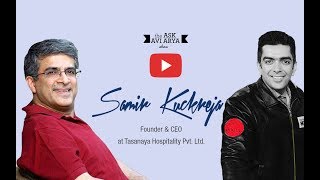
Sameer Kuckreja, founder and CEO of Tasanai Hospitality, talks about his morning rituals, decades in restaurants, and how technology is changing food and beverage businesses in India. He covers tech adoption challenges, marketing strategies, and advice for people starting out in hospitality.
I am Sameer Kupreja. I am founder and CEO of Tasanai Hospitality. First job was two weeks dishwashing. And I think there's a lot of opportunity for people to use tech both to drive their top line.
Coffee cups and cigarettes playing around the room. I don't mind a little mess Just want to stay with you and we'll do anything that we want today Won't be scared of falling down no more so.
Hi Sameer. Welcome to the Askavi Arya show. Thank you for making an early. I think this is one of the, one of the only 8am interviews that I'm doing and it's almost half day for you because you have a morning ritual which allows you to win in life which is that you get up at 5 o'.
Clock.
That's right, yeah. I'm an early bird here. Weekday is up at 5. I use my morning time. I find it very peaceful. The rest of the house is asleep, like listening to both Indian and western classical music.
Right.
For the first, you know, and which then kind of moves into jazz. When I'm doing email, I catch up on the previous day's newspapers which I haven't read fully. I catch up on whatsapping friends kind of across the world, reading online and the like.
Hmm.
It's your time.
Absolutely my time. I also use it to exercise.
Okay.
I run about five km four days to five days a week and I run outdoors. So depending on the weather in Delhi, I either run really early at about 6:30 in the hot summer or about 8:00 clock in the winter. And I also use it for about a 45 minute to an hour kind of email time.
Right.
Which is quiet time. So.
Yeah.
So by the time I leave the house at 9, 9:30, a lot of work is already done for the day.
Oh lovely. So you know, they say mostly, you know, whatever book you read or anybody you meet, they say the ritual steps a man apart from everybody else. So this ritual has been with you.
For a long time and it served you long time? Yeah, I think not. I'd say for the last 20 years. 15, 20 years.
Okay.
Last 15, 20 years. Not my entire working life, but for the last 50.
You're saying when you were growing up as a teenager or somebody in college, you were one of those people who needed to be woken up. You're not a disciplined person who got.
No, no. When I was in college I needed an alarm to wake up. College. It was very different at Cornell hotel school where I went. I remember having to set alarms to Wake up for the classes.
Right.
So this is. No, this is kind of, I think last 20 years back in India, somewhere along the way it happened. So actually my father has the same routine. He's 83 and plays golf early morning, five days a week, even today.
Oh, wow.
So somewhere along the way, I guess it's in the genes. Suddenly. I, I don't. Suddenly happened.
That's amazing. That is amazing. I'm sure your kids will someday also find this trait in their genes.
Not, not as yet, but they're college going and need to be shook out of bed and sent to class.
I, I know that I've got two girls myself. I know what you're saying.
Okay.
So you know what, you've been in the restaurant space and now the restaurant space is not restaurant alone. Is restaurant and food tech and all of that? Yeah, you know, deep dive and first start with, you know, how have you seen in the last, say three to five years the industry changing, you know, with tech coming in.
So the industry. So I have to say yeah, my tech expertise got really developed when I started consulting in August 2012 after I, you know, finished my Stinters CEO of Nerula's.
Okay.
While there was tech in 2000, you know, before that, it was very limited tech in the overall industry till 2012. So I have consulted with six different hospitality tech companies. My, you know, various from table reservation and these are a lot of, these are companies based out of, based internationally out of Singapore and other parts of the world. We're trying to get into India, enter the Indian market. So I've done companies which do table reservations. I've done companies which do kind of CRM, customer, you know, consumer feedback focus. I have helped a startup which was at one stage aggregating feedback on social media, on different platforms for clients and putting it together as a dashboard. I of course did a very intense six month on site consulting stint with Sumato on all areas of their business. And you know, so I've therefore, I guess developed a unique understanding of the tech from the guys trying to provide interesting solutions.
Right.
As a hardcore operator who's operated for 22 years before consulting, I definitely understand the other side, which is that, you know, tech is important. Tech adoption is very low in India even today. Penetration and adoption, especially in restaurants.
And in my view, is it a mindset? Is it a cost issue?
No, not a mindset. I think people are getting around to it. So one thing I often said was that, you know, if I look at the leading restaurant companies in India, the average age of the CEO slash promoters is 45 to 60.
Right. Okay.
Now, unlike someone like me who understands tech and also I've done this short, you know, nine month full time stint at Zomato in 2017. So I think kind of worked in a tech company. A lot of people don't get tech.
I understand.
I mean, I'm shocked at the number of CEOs who I know. We work together on the Restaurant association of India. They're not even still on Twitter. Okay. So they. So if you don't use it. So we don't use Twitter, you don't use Insta and you're not active on Facebook and LinkedIn. How the hell are you gonna understand how to market your brand?
So you're scared of something that you don't scare of the unknown then.
Yeah. So I know guys who are just scared and I know people who have handles which are handled by an agency. And I won't tell you names, but you'd be shocked at the number of followers there. They don't ever tweet themselves.
Right.
So that's one. I don't think there's any. And the other thing is that it's very confusing today. And often I also do consulting on the other side where I advise clients on what tech to use. So if you want to do table reservations in India, there are five platforms offering your stuff.
Right.
If you want to do CRM and loyalty. And then to understand which is the better platform which will really drive ROI on that marketing spot, spend it is confusing.
Right.
So I think part of the reason of the adoption is there's not enough on the mark. And that's a lot of times when I work with the tech companies, I worked on kind of refining like I did with Zomato, I spent weeks with them redefining the way the advertising page worked and the advertising, what do you call, pockets they had on their web and the mobile, what are the banners, how they worked. And we redesigned it and then also we redesigned the ROI calculation for clients and when we did that and went back, it was a huge success because of the first time there was an ROI report, clients saw that, hey, these are clicks. These clicks are landing on this page and you know, then you can start summarizing. Okay. Out of that, how many people visit.
Of course.
Right. So I think there's also an opportunity in India on both sides, on the side of the tech companies positioning their solutions with a very ROI focused approach. And not just saying you need a loyalty solution. This is the loyalty solution. This is what you'll spend and this is how you're going to get more business. Because eventually it has to lead to either new customer acquisition or it has to lead to increased frequency of visits by existing customers. Or lastly, if you can encourage what you call focus consumers on different things, you can increase the way they spend money when they walk in.
I understand.
So if you have the right kind of tech using upselling methods to sell the right bottle of wine, that will help your APC.
And I totally agree with you this 45 to 60. In fact, when my sales team talks about a hot lead and we do a sales review, one of the columns that we have is the age of the decision that shows everything about, you know, how much, how the, how long the sales cycle is going to be.
But yeah, on the other side there are some very tech savvy CEOs. So Rahul Singh of Beer Cafe understands tech inside out.
Sure.
Uses an amazing amount of tech to run his restaurants and to market his restaurants. Very successful.
Which is great.
It's probably one of the most tech savvy. And even these guys from Chayos, Nithin and Raghav.
Right.
So some of the younger entrepreneurs and the brands are really tech savvy.
Right.
So, but so but when it comes to, for the rest of them, which is the largest share of the market, what is, what is what, what should the association do with the fhrii, you know what training or more, you know.
Yeah. So what NRA is going to do is do more training.
Right.
In the sense that we're going to be holding. In fact I, they've asked me to lead this whole, I am in charge of training for NRA over the next year or so.
Right.
So we're looking at doing specific seminars where we get experts and actually just do training.
Sure.
So get that awareness up.
Right, right.
And you know, this is awareness on, you know, not the. Because today I think table reservations and all the choices people have got. But if you're going to do consumer analytics, if you're doing loyalty, you know, what is the composition of a good loyalty program globally? Which there are a few FNB examples which are, you know, really to benchmark international examples of course and say here is Starbucks US has got an amazing loyalty program. This is what it's done.
Right.
So giving best of case examples globally. The idea is to yeah, do some kind of education training and also then give at all the exhibitions and conferences. So this week is this in India Food Forum in Mumbai where there's a three day Thing. And they've actually introduced a whole tech. Separate tech sub segment of the conference.
Sure.
Which is focusing just on technology.
So things are changing.
Yeah. So, you know, the idea is to get it more to the forefront in all industry conferences.
Right.
Yet I have often moderated panel discussions on tech at these conferences. I'm moderating some. Two discussions this time, but not on tech.
I think that's one of the Met when you were moderating and I was talking on a tech similar sub before desk.
That's right. Yeah. Yeah. You know, but you need to do more of that. And you need to do it like NRI is trying to do, which is just getting in a bunch of CEOs, CEOs, GMs, owners into the room and making them spend four hours and covering different topics in a very kind of.
Classroom kind of way that has been. You know, these are like. These are like one of the dreams that I see when somebody sees my. My to do list. And one of the things that I want should happen is what. Exactly what you said. Decision makers captive for at least half a day with no food for their own good. Eventually they come out feeling enlightened.
So I can tell you an example. It was hilarious. So this was 2012, December, and there was a food forum in Mumbai. And there was a Damn early morning, 9 to 11am Social media class.
Okay.
By a lady. She's very good. She used to come in Images used to bring her in every year. So she was from one of the Nordic countries and she had decided 9am and it was fitting into the schedule like a master class. I was shocked. It was a small, about 50, 60. The room was packed.
Oh, was it okay?
The people there? There was CEOs there. I came for it, to attend it. And there were CEOs there. And I was shocked. And one guy said, why? They said, we have no clue what the hell is going on. And she was really good. It was a real good. You know, it was like a ABC here.
Sure.
Five years ago, six years ago.
Right.
But so there is appetite, but, you know, there's not enough content and there are enough quality. That's. That's the gap. It's a big. So NRA is trying to bridge it this year by doing two, three. And like we're doing one in Delhi, one in Bombay, one in Bangalore.
Right.
Which I am kind of putting together over the next few months.
Lovely.
So you know what, when it comes to. So, you know, feel free to name any tool that you work with, your table reservation or whatever. And Tell us which you know. So a standalone restaurant. Talk about put it separately. So a standalone restaurant opens in Goa and amongst hundreds of other restaurants. The food is good and all of that and they've got, you know what is the first tier that you would recommend that they get into in terms of tech.
First year of advertising. When you open a new restaurant in India. I largely recommend Zomato.
Okay.
So people advertise on three things. One is you set up a basic Facebook page. You set up and you look at Facebook, you do some basic Google Analytics and I don't even think as a one restaurant or you need a website. I mean, you know when you reach 3, 4 and there's some scale. But today Zomato and then also making sure that your reputation and whatever TripAdvisor and your content is correct because people do look at TripAdvisor but Zomato is the go to site for new restaurants or what's there. So then also make sure that your food shops, you invest in your food photography, it looks good. Make sure that you control and give Zomato the content literally allow you to change your basic content of your page without any payment. Then looking at, depending on the city you are in, the segment you are taking some advertising with them. That's the kind of most cost effective way to get off the ground.
What about the likes of Easy Diners and all of the other ones?
See, Easy Diner is strong and works only in a few cities. Okay, it does. Easy Diner is good. What's it called? Dine out is also good. I'd say Easy Diner and Dine out are the biggest for table reservations. But they both work in a limited number of cities. You just mentioned example of Goa. Neither of them would work in Goa.
Sure.
So when it comes to, when it comes to like a hotel opens. Whenever a hotel opens, the first thing we do is that we speak to make one trade, you know, all of them and we get them listed, we get the right, you know, pictures, everything like. So the same is done for restaurants with like.
Yeah, but across here, luckily it's only really largely needs to be done across TripAdvisors, Zomato and of course your own social media presence which is your Facebook. You don't have to go to all these, you know, the hotel. But OTA sites don't really focus on restaurants.
Sure. No.
So like we do for restaurants with OTA sites, we do with Dine out and all for restaurants. Now there's an example, you know, it's a couple of restaurants. I don't know the exact name, but I working with some of these restaurants and what we did was that they wanted look. So Facebook now allows you to target like a sniper. You can pretty much do everything.
Yeah, yeah.
Local targeting was done for people in and around. So about 11:30 when people start getting or 12:30 people start getting hunger pangs so they want to eat. And so ads were popping up on their phone saying that, you know, half a kilometer away from you, you're getting this deal for the next 20 minutes but provided you get one more person with you so when they will show their phone. So it worked very well. So that, so that was one. The other thing was like you said, you know, TripAdvisor definitely helps, you know, your rates or your listing and all of that definitely helps your Facebook ads to be able to promote. Especially for hotels which have restaurants inside, they have a huge database. And overseas I've seen a lot of starboard hotels. You know, they've got apps and they've got messages and both work. So this is a personal assistant that comes up on the phone. He says good afternoon, good evening, five o'.
Clock.
Sameer, would you like a beer? And if you order beer once, the next time you come, they're automatically going to make sure that you get your preferred beer that you. So when we've seen, you know, right now we work with about 4, 500, you know, different outlets in different parts and we see a lot of success happening. I'm sure, like, you know, with amazing experience with Zomato and all of that that you've gathered over the years. I'm sure you've seen a lot of things that work. Why is it that once something is working, that formula doesn't go mass and everybody starts doing it?
What happens in the restaurant space in India, there's a lot of it is referral. We are very networked as a community. You know, about 30 of us, there are 30 CEOs involved in the restaurant association. We have a WhatsApp group. So a lot of checking happens on a group informally with each other. They're actually like that city groups in Delhi, Bombay, Bangalore, which have 150, 200 restaurant.
Right.
So it is growing. I mean I would say, I'd say the last five years tech adoption has improved a lot. There's no study or data to quantify it. But if you just look at the advertising on Zomato, it's grown so much.
Okay.
You look at how easy diner and dine out, have work in terms of the number of diners they Seat.
Sure.
Those are all matrices and data points which show that there is a trend of, you know, increasing trend of usage of digital social. And today if you look, except for the big multinational QSR chains, no one advertises on TV and newspaper, of course, is all. Some people still use radio.
Right.
Because it's an effective medium in India. But most of the advertising is social and digital. All the spends have also moved.
Right, great.
So that's obviously your first hand experiencing the numbers growing, I would say.
The numbers, yeah, I've seen, I've seen the numbers in Zomato. I know how it's grown exponentially. I'm also right now doing some consulting work for Dine Out.
Yeah, so. So that's great to know. So if you know, Sameer, if right now this show is being watched by a young entrepreneur who's getting into restaurants or he's gotten into restaurants, do you think he should focus on the tech side of it? Because eventually it has to have expertise coming from the, from tech and then everything has come from.
No. Yeah. You know, you need to first focus on the basics.
Right.
Which means if you've got something already set up, the two basic reasons people come to you, or three reasons globally, is the quality of your food presented, the quality of your service and that service, you know, experience. And whether it's a QSR or a casual or fine, there's always a service experience and the ambience that you're providing along with an overall kind of value for money equation in the consumer. Right. So you have to focus on the basics, but you have to use tech for both. You can use tech today, you know, Absolutely. For driving, like I said, new customer acquisition, increased frequency, increased spending, and very importantly, which I think a lot of people, that's still an opportunity is use tech at the back end for optimizing costs. So to understand your business, your food cost, your menu analysis, your staff productivity, there's a lot of tech tools which can help you optimize your cost structures.
So you say the tech is not a division in the restaurant?
No, no. It's something you live with. You got to use it all the time. It's not a division, it's got to use it one in the front end and be at the back end.
Right.
Okay. So when it comes to. When it comes to. So is there any difference when it, if you, when you are, when you're marketing restaurants and you're consulting with them, is there a different piece of advice that you give to a standalone restaurant versus one with a Hotel. And what kind would they be?
Absolutely. You know I think there are three. There's this kind of standalone, small, you know, someone who runs 1, 2, 3, 4 restaurants and there are the mid sized guys running between 15 to 30 and then you know there are larger chains. So you know, each one is different and the ones in hotels also different. So right now I have a discussion going on for a consulting project with one of the well leading kind of mid market hotel chains in India. And that's because they've kind of finally, you know, realized that their FNB is way under optimized in terms of just top line. They have some hotels in very prime locations where they should be getting business from outside. But 80, 85% of the F and B business is in house guests. They don't get any outside guests.
And the potential is limited. Sometimes you feel, because when you feel you're making a hotel and you're watching 100 rooms, there has to be a cap somewhere. You made an occupancy and you can't charge more than and it's done. But the restaurant sometimes you know, can be.
I know a hotelier and he's again a mid market hotelier the other day having coffee with him and he said I'm focusing on building large banquet spaces in every hotel. He said damn, it is such a good, you know, margin generator. And it's a people in India still want to do these functions in hotels.
Right?
It's the old cultural thing, right. Shaadi Karai to his hotel me karaithi. You know Mundan ceremony was in this hotel or Roka ceremony. So this is a guy who was shocked, is focusing, his team is focusing on all these functions. Shaadi Roka engagement, Mundan's birthdays.
Interesting. Sameer, tell me you mentioned beer cafe, you mentioned chayos and all of that. You see in the coming days all of these guys coming together like Radisson has chayos all over or Star wars or any other Hiltons have the beer cafes coming in because hoteliers are not very good at every aspect of running the hotel. So will they start giving it to experts and you say you know this.
Kind of thing, I'm seeing that trend. So you know Ginger has done it for many years. Taj budget chain, they've given, they outsourced the fnb two different brands across India that's again budget. But they have cafe coffee days and those kind of brands and some of their hotels, I have seen a smattering of it. Beyond that, very little I've had but in recent discussions with hoteliers see first thing is the hoteliers to agree that someone else will do the F and B better than he does. Okay, that's not easy. Right. But I think and restaurant is very happy to do this.
Sure, I'm sure.
Because you're getting you know it's a big advantage being in a hotel. You get a lot of the you know, the capex, you know you're getting a ready space. The capex costs less. There's already some captive business you get from the hotel guests.
Right.
If you and you know the hotel will no hotel So I don't think hotels will give up doing fnb. They'll always keep banquets and you know kind of room service and the basic breakfast operation going because that's where the money is made and there's essential but most hotels have multiple FNB spaces. So I definitely do hope and I do see a trend like this coming not I mean it'll take a while to get where the US is where a lot of FNB is outsourced in Canada. You know but I think we get, I think we're starting to see signs in the I'd say the mid market hotel space. Three four star, not the luxury space.
Right.
So Sameer. So in 2018 and going beyond so you meet so many people and you know, you see so I'm sure you meet a lot of people who are coming up with concepts which they feel are novel and you might be saying it, you know, done and dusted with, you know. So if today somebody would, you know to pick your brain what would what advice would you give to budding restaurants?
One advice. I'm a very atypical consultant. I've lost a lot of potential business by sending potential restauranters back to the whatever the hell they were doing. Because when they come I ask a few questions if they're a first time restaurant or whatever age they are and if they don't answer a few questions correctly I just say forget it. Don't even waste your time. So a lot of them, you know this glamorous perception of it have no idea on the reality B. I want you to enter a segment where there's not enough opportunity or do a concept which doesn't really know gonna rock. So I you know do that. I mean I for me I try and put in those checks for themselves and make them answers or questions.
Sure.
If they meet those boxes and they go ahead and then they are enough like that. So I have a very interesting client. His name is Sumit Gupta, he runs two veg Satwik restaurants. One in Katra and one in Shirdi.
Oh wow.
And he's a. His family has always been in the consumer finance business in Jammu. Okay, okay. Now from now his restaurants are doing so well that he's kind of virtually does very little work on the finance business. And he's now I'm working with him on setting up something interesting in the home delivery space in the big cities.
Right, right.
So, you know, he is the right guy. I mean he's kind of given it four, five years. He's given it time. He's nurtured a brand, built it very passionately. I had a very clear vision of what he wanted to do.
Right.
So I think you have to have a very clear. Some checks. You have to have a very clear vision. You have to be intensely passionate about this business.
It should not be business or side business or whatever.
Yeah, yeah, yeah. It needs to occupy your mind. Soul time.
Right.
And you or your wives or whoever is going to be promoting it doesn't have to be. And you have to give it the required capital and time because initially all these businesses lose money mostly. You know, the first six, eight months is a working capital requirement. There's normally a loss, operating loss in the business and we have to be very. You generally, I think need to be a creative person to be a successful restauranter.
Right.
Because you need to constantly innovate and create around menu, around experience, around variety of things, entertainment events.
Right.
So today's day and age, you know, there are models also like Priyansham Pakarian name Priyansh or Priyanshu.
Priyank. Priyank Sukija.
Priyank Sukhija. You know, I've not met the gentleman, but I've heard there are many models across the country where there's a successful person who says I run it to you. Let me be.
Yeah, absolutely.
So if somebody, if I have a space, if I have a good space and you know, I'm not necessarily wanting to lose, you know, five years of today.
Yeah. There are like Priyank, few operators who will take your space but will also want you to invest the capex.
Right.
But we'll create the concept and run it. Yeah, absolutely. There's two, three of them across India doing this fairly successfully.
Yeah.
So the chances of winning are higher with people who already, you know.
Absolutely. Would. I would. Again, so, you know, so often sums up, you know, should we take a franchise? And I'm like, if you really don't run something Full time. And you want to do this just as an investment. Right. Then take a franchise of a good brand.
Right.
Because then someone else has got the headache of generating the business, etc.
Right.
And if somebody else has been doing it for a while, you know, so if you should really only get creating your own concept if you're really creative, have a passion and really want to do it, otherwise the various ways you can give your space to, you know, one of these larger restaurant operators who take the space and put in a concept, or you could just give it to a brand who would take it.
Yes.
I mean, is there a specific return on money invested that people are looking for?
Yeah.
So the range and what I recommend, always. So it depends. If you're doing a small kind of format cafe kiosk, you should be looking at getting your capital back, a return on capital within one and a half, two years.
Okay.
And if you're doing a, you know, larger casual dining restaurant bar, it ranges from two and a half to three. Three.
Right.
Three years.
There's another investment round needed because it's, you know, because you need to up the experience and the ambience. So it's never ending.
Never ending?
No.
And you have to constantly innovate. The other day I heard about a restaurant with shut and someone said, oh, they'll shut, you know, So I said, no, it wasn't successful because it hadn't innovated and changed itself. And apparently from what I'd heard, his business had declined. Declined, Declined, decline, where they had to shut down.
Right.
So you can't. No one can sit on their laurels.
Right.
Even a restaurant like Bukhara.
Yeah.
Is going through declining sales.
Oh, is that right?
They haven't reinvented themselves. Their business is down. They'll never admit it. I know this from the horses mouth. Even, you know what is called India's most iconic Brisbane.
Right.
Is it, is it, is there space today to say that, say I'm. I'm. Say I'm younger, I'm young. I've got a partner with me. We're very passionate, you know, whatever backgrounds we've come from. I check all the boxes that you asked, you know, you said you asked a certain amount of questions and I checked in all those boxes. But I, you know, I'm. Is there a mindset which allows me to say I don't want to get into any physical location, going to have a restaurant which. Where. And it's only for delivery, but it's a restaurant on the cloud, so, you know, whatever you want? I'll send it.
Yes. There's a growing segment, it's called the virtual kitchen segment. So you know, inner Chef. So there are some big boys in it, fresh menu, inner chef, etc, multi city kind of players. And there are in every city many interesting players operating 5, 10, 15, 20 locations. You can never visit them. There's no brand engagement.
Right.
It's only, the only brand engagement is social and digital.
Yeah.
And so they do damn good.
And some of these guys do good casual dining kind of pricing food but all delivery.
Are you able to charge? So can I, can, can I do a Bukhara Online?
Bukhara Online. No, but there are. So you know, the average kind of. If you look at the statistics put out by Zomato and Swiggy on the average. The average, you know, kind of. I think Zomato's average Delivery order is 350. Swiggy is a little lower. But there are enough players in cities, big cities who are managing to charge 702,000 but not beyond 1,000. I have not heard of any brand which is okay, so you know either casual. I haven't heard of any fine dining brand. Casual dining, yes. But that's up to a thousand. No one's going to pay more than a thousand bucks for a home delivered meal that you know separately. If you want a really special experience, you'd call in a caterer. Even if you have 20 people.
Right.
And you pay a per head.
Right.
Which would be higher.
Right.
So, so maybe this, this guy who's charging a thousand rupees for this casual dining, he can up his experience by saying somebody will come, you know, put in a nice.
Yeah, all that stuff. Yeah. So they do very fancy packaging. Some of them send waiters to set up the food of the house.
That's already happening.
That little bit of stuff is starting to happen. Some guys are trying to do this. I haven't tried one of them is it. But I've heard very little baseball but just up packaging high ingredients, you know, therefore, so you can get Pan Asian, Chinese, you know, 20 brands for 300 to 450 bucks on a delivery. But there are a few brands successfully operating in that 6002000 rupee bracket.
So Sameer, you know, you and I are both consultants. We meet a lot of people sometimes I'm sure you know, you at least I feel, you know, I get inspired. Inspired by seeing new mindsets, new ideas coming. I'm banging my head thinking why are people not changing? So both kind of things happen. So today with all that experience that you have and if you were to give three or two ideas on, you know, these things look promising, what would they be?
So I think I'll talk about segments in the Indian F and B space which I feel still have tremendous opportunities. Opportunity.
Okay.
So I think kind of Indian QSR of different types is still a very under tapped opportunity. Under penetrated.
Right.
So I mean if you look at the Haldirams and they're largely north India based, right. Then there's one chain in the west called Kailash Parbat.
Right.
But if you go south, you go east, you go to other small towns, even in north India there's nothing. Or you look at a Sagar, South Indian QSR, Sagar has reached 100. But what is 100 when there are 1200 dominoes?
When there are 1200 dominoes, right?
Oh yeah, that's what is a hundred sagas. So I think kind of North Indian, South Indian qsr I think tremendous opportunity, create a brand new stuff around it. I think it's a big opportunity. I still think there are interesting opportunities in the cafe. Cafe means tea, coffee, segment. There's a lot of competition, lots of players, but I still feel so, I think premium, kind of premium, but not totally upmarket like Starbucks, a little lower than that. Both cafe, coffee and tea, I think they're interesting opportunities, you know. So I think the fact that you know, chai horse and created a segment, you know, eventually all the chai. There's so many chai players. A lot of the chai players are focusing on the office and very, you know, volume driven, very low price. Chai, tela, chai, you know, whatever. There are a bunch of chai guys and then there's chayos and another couple of which have open cafes. And this whole segment has sprung up in the last four years. There was nothing, there was only coffee.
Right.
So I still think, you know, tea is very innate to our taste. And if we innovate around tea and tea beverages and nice atmosphere, I think you could to, you know, five to 800 square feet cafes, I think there's a lot of opportunity there also.
So in these businesses obviously scale, you know, you need to go a couple.
Of hundred, you have to go scale. All these, these two, all buckwheat is all scaled it as we scale.
Yeah.
So today an individual owner with one restaurant and you know, can he. There's no.
So those are still good. So it depends on your ambition. A lot of people, like I give an example of Ritu Dalmia, one of India's most successful celebrated chefs restaurant. But she's very happy. She does a catering which is global, which is very high end and successful. But in terms of restaurants she's opened five or six in Delhi and that's it. She hasn't even gone to Bombay and Mangalore and she doesn't know hari2 and doesn't want to. So you know, you can still be small and niche and very successful. You don't have to be multi city, global, national. And there are again players like her in Bombay, Bangalore, you know, very successful local restaurant who decide to stay local. So that's a, there's a big demand for that also, you know.
Right.
And so people ending up Bombay saying.
Yeah, I mean people, there are special concepts which only exist in Bombay. There are restaurants I've been to in Bangalore which are not similar to anything I've seen in India, you know, some specialty cuisine type. So yeah, I think it's interesting. Yeah, it doesn't, you don't have to be large and global especially if you're doing casual or fine dining then you can be small in niche.
So visiting all these restaurants, consulting, eating all that kind of cuisine if you don't do your 5pm, oh, I'll be different.
If I didn't do my, you know, 20, 25 kilometers a week, I've been big trouble.
Yes, yes, yes.
Sameer, thank you so much for being here for this interview and sure, like I said, you know, the idea is to pick brains of people like yourselves who have, who impress us a by their rituals. And also I'm sure there are many other rituals, you know, in your business place that help you become who you are today. But you know, what I've seen is in my experience, on an everyday basis, according to me, business is something that is a mindset b families. And it's not just money, it just changes everything. People come from smaller families or like you said, people invest everything they have for the next three, four years. Even if you come from a moneyed family, you invest so much money. So it's, you know, a business doing well, it's good peace of mind. Business not doing well can take peace away from the family as well.
Yeah.
You know, these kind of interviews and these kind of insights are, you know, actually help shape people and their journeys, you know, further to understand and you know, I'm very certain once this interview goes live and everybody watches this, you know, I'm sure that there will be some people who change their path and you know, reach the success that they're meant to. So thank you very much.
That happens.
That would be a nice outcome. So be happy to have influence people positively.
That's always Sameer. If people want to reach, you know, if there are restauranters who want to reach out to you for, for your advice and consulting, what's the best email.
Id or Facebook email id is sameer.s a m I r.k u c k r e j a @t a s A N A Y A. Okay, great. Okay.
All my Indian summer take me away.
More from Avi

The strongest mindset doesn't begin with meditation. It begins at home. Before you conquer the wor

The strongest mindset doesn't begin with meditation. It begins at home. Before you conquer the wor

Your mindset isn't something you fix once. It's something you train every single day. Just like yo

Don't build a company just because your friends are. Build one because you're ready. A startup is

Everyone dreams of becoming the boss. Very few understand what that really means. The moment you b

Most entrepreneurs say, "I don't have time for coaching." The truth? You don't make time for what

Over hiring doesn't always solve problems. Sometimes, it creates them. Having a small buffer in you

"The highest-paid" isn't the goal. The highest-value is. People often ask why premium mentorship co

The founder will always be a bottleneck... at some stage. The goal isn't to pretend you're never th

People ask me how I stay consistent with my morning routine while traveling across countries and tim

People ask me how I stay consistent with my morning routine while traveling across countries and tim