Interview with Mr. Vijay Wanchoo,
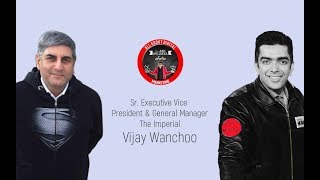
Avi Arya talks with hospitality veteran Vanshu Manchu about running standalone hotels, the challenges hoteliers face, and how the industry is changing. Manchu shares strategies for guest satisfaction and what independent hotels need to do to survive.
I can hear you loud and clear.
All right. Okay.
Great.
Excellent. So, shall we get started? I'm already recording.
Yep. So you can see clearly.
Absolutely. Very clear and sound. And everything is perfect as it is with all your. The organization, the way you run your organization.
Thank you.
I was in your mind searching for loose.
Searching for truth.
I couldn't let you go without a.
Request or even the task.
Okay, so, Mr. Manchu, welcome to the Ask Kavi Arya show. This is a show that I started many years back. It reaches out to 142,000 hoteliers on 11:30 every Tuesday afternoon. And it's the analytics of the show that has shown us that we used to do this on a Monday morning, but Monday morning we realized hoteliers are in morning meetings. So therefore, Tuesday 11:30 came out to be a time when most people view this show in different parts of the world. There are two objectives to this show. One is to have all the budding hoteliers from across the world understand and learn from the mistakes and challenges that we have faced as hoteliers and the conversations that I have with my guests like yourselves. The other thing is that as the hotel industry changes with digital and social, people still remain a relevant part of hospitality. And there are a lot of changes that are happening in the field now that a lot of people moving faster, they're jumping ship faster, wanting to reach a certain stage. Some people call it nirvana. Some people call it, you know, becoming, you know, starting from somewhere, becoming the GM of the place. So we just wanted to have, you know, your insights on what is a. The best practice in terms of morality, in terms of loyalty, in terms of how somebody should plan their career, which is good for them and good for the organization. And the second part of the conversation, we talk about how the industry is changing and what are the things that are needed for hospitality professionals to stay in the game. But the first section of the episode is always the most interesting part. It is called what's yous Story? Where we invite you to share your story. And the story could go as back as your childhood. Some people share about their first girlfriend, their first job, or their first car or their first crush. Anything so slightly more personalized story on who you are, where you began, so we get to know the person behind the brand.
Okay. Yeah. So. Well, you know, I belong to Kashmir originally. Like, people ask me, which part of Kashmir are you from? And my answer is, I don't know, because we've been in Delhi for three generations now.
Okay.
So we really lost link with Kashmir. But as my name Suggests and my looks, definitely, you know, we belong there. And in terms of all our cultural connections and the food, the weddings, the kind of weddings that we do is quite similar to what happens in Kashmir, maybe less traditional, but we kept the links through these chains.
Right.
And so I. I'm born in Delhi. My father was born in Delhi, but they moved to Shimla. My grandfather also lived in Shimla during the British time when the. It was a summer capital. So I have a lot of fondness for Shimla. I was born in Delhi, but I love to go back every. You know, there's a lot of connection between me and Shimla personally.
Right.
Dad has been a sportsman, you know, and imbibed a lot of sporting talent from him.
Okay.
He was level. He was an ice hockey player in simla in the 1940s and 50s.
Lovely.
So they moved to Delhi in 52. I was born in 58 and I studied at Saint Columbus School in Delhi, one of the good public schools. And my father was in the government throughout. So we lived in the same house for 26 years.
Okay.
And so that's something I would say. It's. Sometimes it restricts you in a way, you know, when you're in one place for too long.
Right.
Happy to move out of Delhi. I became a total Delhi person. And even a posting outside, which I'll talk to you subsequently. Not happy to go.
Right.
That's how it was, you know. So Saint Columbus 1975. I finished my schooling and you know, we had a six month break in those days after isc before the colleges opened because our exams were in December. I was sitting at home one day playing carom and my father said, look, I'm taking you to a friend of mine. He is the guy in the Ministry of Labor who organizes the apprenticeship programs in hotels. What do you mean hotels? I have no interest in hotels because I actually wanted to play cricket for India. I was pretty good at cricket. And I still play cricket, by the way.
Okay.
Yeah. At this age I still play cricket at least five, seven matches a year. And. But I also wanted to join the army and that didn't happen so well. Anyhow, I said, let me go. And I went and visited this friend of my dad's and his son was already doing this course at. At ittc. So I was a very shy person, completely shy. I was hardly able to talk. So at the end of this conversation I must have just said a hello and a thank you. And so the son, you know, was probably a year older to Me says, sorry, you're not cut out for the industry because you hardly spoke and we need people here in the industry to talk. So I came back very dejected. I said, or maybe happy.
I had no choice. I mean, I thought my ego was tarnished. And I was like, you know, and all of that. I wanted to leave the house, but my mother spoke to me. Better sense prevailed. Next morning, I found myself behind my dad's hotel reception. This was a small 40 room hotel near the New Delhi railway station, Paharganj. We had a small restaurant. I learned housekeeping. I learned the restaurant. I learned how to take care of guests. I also learned. My dad is doing a fabulous job of running a hotel. He had two registers on the front desk. One was called personalization. The other one was called offers. Personalization was because they say that. So my dad, you know, you see the world from the lenses that you're wearing. My dad always had a migraine problem every single day of his life. Unfortunately, he still has a migraine problem every day. So he thought everybody has some ailments. We had a personalization register where he used to ask people what ailments they have. Aspirin, dysprin, whatever. So he used to give. So that was one. The other was offers. So he had handmade offers to say, These are the five offers I have for the next three months. If you give me 500 rupees today for your future booking, I'll, you know, I'll give you a discount. So he had future bookings coming in and he had personalization. So I thought he knew exactly what he's doing to run his hotel.
This is marketing, you know, at its best.
Right?
That's what I thought. I was like, you know, he knows how to run his hotel. Now I've come in, where will I find my place here? So I always wanted to find my place. So one day this foreign guest came into our hotel and he paid us in Dutch guilders. I converted the Dutch gilder. If you remember, at that time there were two separate tariffs. One for Indian tariff and one foreign tariff. So. So there was. So we converted the Indian rupees into the. Into Indian rupees. And it turned out almost double the tariff. So I'm thinking to myself, we had a GM who was working with my dad for the last, you know, 200 years. You can imagine, small hotel. You know, we had a family, sort of a history with the gentleman who was working with us. So I said, you know, his name was Devinder ji. I should call him. I said Mr. Devinder, you know, so he said, I said, why don't we have all foreigners? So he said, I don't know. So I'm thinking to myself, if I can replace all 40 guests with foreigners, we double the revenue, double the family income and I become a star in my dad's eyes. So that was my mission. I came across a paper magazine that told us about a company which does this for, you know. They said, we help you connect with your customers globally. I called up the company. No office in Delhi, no office in India, no office in Asia. They said, they're coming to the sideline. They said, we could meet you in that. We are we exhibiting in conferences in London, New York and all of those places. I spoke to my dad. I went there, I went there, met those people. They said, we will list you. I said, listing. They said, Internet. They say, yellow pages, Internet. I was like, fine. I signed up with them. They asked for photographs, pictures. I went back home, send them the pictures. But listing, Internet, Internet, India, maybe a Sheraton hotel. Janakkapuri had the Internet for 350 rupees for half an hour and the British Council had it. I just knew two people, two places that the Internet. So at that time, Satyam Sifi Cafe gave an ad saying that we're looking for cyber cafe people, give us your place. So I was one of the first people who went to them. Delhi, me, Cyber cafe Khula. And then that's how my journey of the Internet started. We started getting, you know, we logged on with a new company called Expedia. Nobody knew who they were. We logged on with a new company called Google. We didn't know who they were. And slowly we became one of the first, one of the first ever Indian hotels, you know, in that budget range to go online. Business started booming. We bought three hotels in the next three years. Dad took 40 years to build his first establishment after the Internet came into our lives. The next four years, you know, so the story between that story. There was a small period with my dad said, you can't work with me because you're not qualified. So I said, not qualified? So he said, no, you have to do some kind of hotel program. So he sent me to Claridge's which had a, you know, one year program. And I was asked to wear a bow tie and this thing. And I went to modern school, Barakamba Road. And my evenings used to be at the nightclub in Gungru. And in the morning I'm holding a tray, making sure that nobody recognizes me. So what, your story just resonated with me. So that's great Mr. Vansu. So then you came to the imperial and all of that. So tell us, you know when you meet from the time that you started and you know your journey to now, all the new people coming in or the youngsters who are coming in what's the change that you see in hospitality? Human beings, you know, are they the same? Are they coming to serve or are they coming for careers? And if they're coming for careers is that very wrong?
But I think you know, I'll take you a little back. When we were in college there was no all India, you know board which used to interview people across the board and then decide depending on your score, where will you go. Okay, top 350 will be in Delhi. 351 onwards in Mumbai etc etc. In our time the interviews were held, there were no exams and we were selected on basis of the interview for that particular college.
Right?
And today system is All India entrance exam right? Now sitting in the board for the entrance after the exam and then doing the interview or just based on marks you don't know how fit the person is as a personality or his mental makeup. Right? I mean a guy could be 95% but he may be unsuitable for the industry. So I think lot of are being selected on the basis of their marks and that is incorrect. I would definitely urge the government to look into this. You got to have personal interviews, you got to look into the guy's psyche, what does he want really? And perhaps that's where the mistake happens and you go to catering colleges. The other aspect is there are thousands of catering colleges in India today. Whereas at our time when we passed out there were maybe two or three in Delhi or five today there are 2530 colleges in Delhi. So I think the three in Delhi or five today there Are 2530 colleges in Delhi. So I think that also brings us to the fact where are the teachers? So many teachers, you know, you need good faculty for teaching you. So I think those are the things that the people and authority have to really understand now coming to the people who are coming to the industry. Every year I get about 60 to 70 industrial trainees coming from colleges and you can make out from the personality from which area they're coming in and from a lower end college. Obviously we don't have the right kind of profile. I think people are really not very serious about staying on in the industry for too long.
Okay.
Because people leave, you know and they jump around jobs Too fast. Because there are opportunities, right. Today if you don't become a GM at 32. 30, 32, you say you're late, right? I became a GM at 42.
Right.
I'm happy with it, of course. Because I think people today don't want to learn, they don't want to get strong in their basics.
Right.
Tell you, till today when I interview people, I especially fnb, I've been a chef, I go back to basic questions. I ask simple questions like tell me five international soups or five international cheeses, right. And I don't get most of the time all five. Right. Maybe two or three.
Right? Right.
I asked a chef a basic simple question, how to make a consume. But they don't know the answers because they have never made it today. So the whole industry, technology has changed the industry in front of the house in terms of reservation systems. You mentioned Expedia. All that has changed today. Yet I think it does take away that personalization example. You have a key card, electronic card you're given at the check in and you give it back at the checkout. Of course it has its advantages, but in the old days when you had a physical key, you have to every time go and give the key to the reception before going out of the hotel. More personal connection with the staff.
Right.
Because of these cards it's gone down. But then there are other advantages, right. I think the basic concept of hoteliering never changes. I mean whether it was 100 years ago or 50 years ago or now, the basic concept is the guest is right and that will never change. But not many young people understand that today, right? Because the guest that I have seen people trying to argue with the customer. I said forget it. You know what happens? You may lose a few thousand rupees, right? Do not let the guest go unhappy from the door because he is going to put you on the TripAdvisor. That's a big challenge today. You know, for 100%. TripAdvisors are very, very, you know, double edged sword, if you like that. So I think the people are not really focused on continuing too long in the industry. They leave. I mean out of my batch of hundred people today, twenty of them may be in hotels. Rest have all left.
Oh really?
Yeah. And that's true for most batches. And okay, another, another example the the allied industries, how many media companies, how many FMCGs, you know, how many of them pick up hoteliers, airlines, they're picking up hoteliers today and people get attracted to go to hotels, to airlines. Why Maybe it's too much of a workload. I mean, you know, hotel today I still put an average of 10 to 12 hours a day. And there were times I used to work 14 to 16 to 18 hours a day.
Sure.
I was in FNB. Probably that's something today children have to understand. Leave your watches, you know, forget your watches once you are in a hotel, in the inside your hotel. Forget what time you have to leave, forget what time come back in the morning. You got to finish your job. And I think that's another challenge today. People do find it tough to spend more than you know, 10 hours, nine hours in a hotel because of the thinking, because of the opportunities available in the market today, because of number of hotels. So I think that's a big challenge.
Also, Mr. Vanshu, don't you think? And you know you're way more experienced than you know we are here. But don't you think that any space you get into, you know, you go to Bollywood to become an actor or you go to hoteliering to become a hotel rock star. You have to give it all you have. You can't say I'll work 9 to 6 or.
Growth.
You have to give it all you've got 24 hours, nine. Only then you become a rock star. And only those really good people are the 2% people who are successful. So it's a non stop. That fundamental has not changed, right?
Yeah. It's not only just working hard, you got to work smart today. I mean, I know people work 16 hours a day, but the output is four hours. That's not good enough. You know, in those nine to 10, 11 hours you work, give it good output, you know, see what you've done. At the end of the day, one thing I learned from my, one of my gurus was okay, you're saying you're doing so much effort, this is the input that you're giving in. What's the output on the other end? Right. So output is important. You're right. I mean people have to work to achieve results. And what are my, my measurables in an organization, in a hotel like mine, my measurable is guest satisfaction.
Right.
The day guest has to be satisfied 100%. So on a TripAdvisor, I want five bubbles, I don't want four and a half. But it's not easy, not easy at all too because you know, you got 10 good comments, you have one negative, right? And challenge to everybody is you. This is the sad story of hotel industry. People say, oh sir, I've done so Many good things. So what if one complaint, I said, no, you can do 22 things that one complaint of a burger not being okay or a check in not being good is bad enough for me.
Right.
That's stuff, you know, it's tough on people, but definitely, I think the yardsticks are very, very clear.
So in this scenario, which is getting overly complex and overly challenging with, you know, with review management sites, with reputation management sites, with people wanting different industries and hospitality professionals now getting jobs from other industries also because they feel if you train in hospitality, you can take care of the service sector within hospitals, within, you know, different industries, within that complex environment, you've still, you know, managed to be the most, you know, admired brand in the city. How do you do that?
Well, I think the Imperial has its own, you know, history and aura, the charm that it, you know, but that.
Leads to more pressure, right. And more expectations.
Yeah, absolutely. The challenge is to make a guest happy every time he comes and make him happier than what he was last time.
Right.
So I think what I have done is to share with you. In the last nine years, I have, you know, handled this hotel in different levels. You know, be it the customer, be it my associates, I go and sing and dance with them on our annual day, and I make sure I shake a leg with them. I make sure I sing a song, though maybe I don't know how to sing, but I'll still sing a song for them on the annual day. And I will play cricket with them on the field.
Right.
And take a few wickets, hopefully. And I play badminton when they have the badminton tournament.
Right.
So also I once in a while go and cook for my staff.
Okay.
Which is different. Yeah. So this is at the staff level. I mean, I go to the grassroots level.
Right.
As far as guests are concerned, I have to be in touch with the guests. So every day in the morning, my day starts early. I'm in the hotel by 8:15, 8:30.
In the morning, and I make sure.
I go to the coffee shop and meet as many guests I can to get a personal, you know, response and feedback. The other aspect is that there are possible times when the guest is not happy. And no GM of a hotel can say, I've never had a complaint in my hotel.
Right?
Nobody. It's a lie. So, okay, you had a complaint. How do you handle the complaint? You know, what do you do? So I have instituted two or three processes which are unique to my hotel, which are very quick communication, you know, to everybody in the hotel. Mr. John came, he didn't like the soup. Make sure that he's happy every time.
Right.
So the other is a guest is extremely happy. Let's look at the other aspect. He's extremely happy. Now here's a challenge. Why? Because five hours later he might go to a restaurant, not like the food there.
Right?
Communicate. Look, this guy is extremely happy. Make sure the next service is above that level.
Right.
Point I'm going to come and tell you here is that you have to exceed the expectations of the customer every time. And it's like Sachin Tendulkar said, you know, I may have scored 50 centuries, but next one day is still a.
New one day, 100%.
So the next stay of a guest and fresh day is a new challenge for you. So I think that's very, very important for people to remember that we cannot survive without the guests satisfaction.
Right.
You said about how to maintain this. I think it's all about connecting with the people and also being a bit different. I'll give you one more example how we are different. There are seven festivals events in the year which I celebrate with my customer. And I quickly read them to you.
Yeah.
26 January, we have a Republic day flag hoisting and march past by our guests, by our staff.
Okay?
We have holy. I play Holi with them. I come on Holi and play Holi with them. We have Lodi. We have the bonfire. 15 August is coming around the corner. We have again flag hoisting and kite flying with them. We do kite flying with them. Then comes the shera. So we do Dandiya dance with them. My own team performs.
Right?
Then we have Diwali. We do Diwali a day before. Last year we never had crackers. This year again we won't have crackers. So we do it differently. We rangolis and stuff like that. And then we have Christmas. So I am there in all these events myself. And believe me, if you're a foreigner, you're staying in my hotel on Holi. You don't expect to be playing Holi. We give them colors and for them they carry a piece of India with them.
Of course.
And these are the things which really connect. And then we of course send it, beam it on the social media. So these are the things which I do with the guests. And I think the guests carry that very well with them. They really one American. Indian. American. You know, he came here last to last year, last year, not this year. And he says, you know, Mr. Manchu, I love that Holi. Now in the month Of July, he's playing Holi in US with his guests and he sent me some pictures.
Lovely.
It's so interesting, you know that they replicated over there.
Right.
So I think the guest interaction is very important. And again, it's a fresh day every day. You cannot go by your yesterday and said, oh, it was great day. Today is going to be automatically great. So you got to control the situation every day.
Understood. So, Mr. Manchu, you know, in today's day and age when all the OTAs are becoming increasingly important, there are many standalone brands all over the country. Some are small, some are large like yours, but they're still standalone. So how does this, what is the strategy that a standalone hotel has to get more direct customers? And I know the OTAs are great partners, so they're here to stay, but there's a strategy to have direct customers coming in through our service and personalization today, which the OTAs don't have. So what kind of strategy do you recommend to standalone hotels?
Well, yeah, it's always a challenge. But you know, we of course have tied up with the preferred hotels, you know, Preferred Hotels International, this is a international marketing arm for us.
Right.
And they sell us across the world. They have about 1800 hotels across the world. So we have a very good loyalty program with them called I Prefer.
Right.
Which directly helps all the members of I Prefer. So if you're staying in a hotel in Manila or in New York and you come and stay with us, they get the benefits of those, you know. Similarly, the other hotels will get a benefit when a guest stays with us. So that's, that's helping us a lot. So, and a lot of bookings through the website.
Are these benefits, the discount or the offer or the, you know, the deal that you have to give, are they comparable to what the OTA can give? Because they're burning money and so are they able to give similar or better deals to their customers sometimes?
Well, you know, we do give you free spa treatments and things like that, which additionally cannot give you.
Okay, so you make offers. So it is not an Apple to Apple comparison. You are giving to your preferred partners something different and to your to preferred, as a preferred partner something different. Okay, that's a good strategy.
Right.
And the OTA is like, I mean, it's there to say it's going to grow only, you know, the percentage of bookings will keep.
Also, many years back I'd spoken to you. I don't remember when, but I think I remember if I'm not wrong, you had mentioned that you have a meeting with your team in the evening or in the morning where you, you know, you decide what is to be done for tomorrow's check in clients, right?
We have a morning briefing at 9 and evening briefing at 5:30.
Okay?
So we review the entire VIP list coming in. And I've started one more unique thing that, you know, earlier there was lot of information coming in from front office, from housekeeping, from hr in various emails, right. I have created a template which is.
Called the Daily Post, okay.
It has these windows in it, right? Everything is put in, combined and put into two sheets of paper, okay. And those are read in the evening briefing, right? We know that X customer is coming. We have a list of VIP guests, you know, for obviously, you know, there is a certain section of VIP guests or what we call spat special attention, okay? All those guests are written personalized letters by me. I sign those letters, okay? 30, 40 a day.
I sign them, right?
With a little photograph of mine on that, okay? It helps a lot. It's not for my own promotion.
I understand.
Because the guests can. Oh, you're the guy. I saw your picture, you know, Right. So you're the boss. So it helps a lot in that way. We celebrate guests birthdays, anniversaries. We have a part of the Daily Post, a section called Guest birthday for tomorrow.
Okay?
So make sure that everybody is aware because that Daily Post goes to everybody.
In the hotel, right?
So that's in those meetings we decide, you know, what the plan of action is. And we have precon meetings for our VIP movements, Right? That is important to do. So I have to be in touch with those minor details every day. Even fp, fp, the function sheet for the next day, my banquet guys to come in the evening meeting and talk about the next day's events, right? What are the events? Any particular issues? Like I've got a big event tomorrow, Sunday, I'm going to be here. So we already had the morning, in the morning, a big discussion about the event, right? The flow of the, you know, the evening, how it's going to go, etc, etc. So it's very important to plan ahead. You know, maybe not 24 hours, maybe 48 hours and more.
But how important is, you know, so all this I understand it's very crucial. And these are systems which are set into an organization and drilled down every single day and repeated and repeated. But is it ever possible? Because I'm right now, I'm hoping all the small standalone, all the standalone hotels that are listening to this, they must be Having this question in their mind. So I'm asking on their behalf, is it ever possible for the boss of a small hotel to sit back and relax and say I put in the system. They will now happen automatically at least for a week or 10 days or a month or whatever. Or is it that the boss has gone and the system falls flat?
Well, you know, it's a different ball game when you come to a hotel like the Imperial. I mean we are a standalone hotel but 80 years is a long history.
Hundred percent.
Just to diversify a little bit. I've got about 150 employees who have worked in this hotel for more than 20, 25 years.
150 people have been there for 20 years.
20, 25 years plus.
Wow.
I mean probably more. I'm just giving a rough figure. There are people who worked here for 40 years. 30 years, 50 years.
Wow.
There's a man who works here, he's been 49th, he's going to be completing 50 years. So they've been here. And so when you have so many people who work for so long, the guest recognition is so easy and the systems, well it's, it's no rocket science. I mean in a hotel it is important to just follow the basic processes in place. And you know when you say that, oh, I just said the GM can think, oh he can relax because systems are working. I'm sorry. It's like flying a plane, you know, you may be on autopilot but you got to be alert all the time.
That's a good example.
Yeah. And you know we used to think when we were in fnb, you say so much hard work. When is all this going to end?
Right.
Vp? I said, sir, I've had enough, sir, I can't do this. Going and coming in the morning, 8:39 and leaving at 2 in the morning.
Right.
You only do this. He says, my son, it'll never stop.
Right.
You know, so today as a vice president, executive vice president, 40 years in the industry, it hasn't stopped.
Right.
So it'll never stop. Pressure will never stop. Yes. You might be lucky going home at six o' clock one day, right. The whole process, design place and on duty is there till 10:30 to look after the hotel.
Right.
Like I don't have a deputy deputy. You know, I don't have like an RM or me and I'm a division heads but I know that if I'm away for five days things work. Sure, things work well because people are in their roles doing their job.
Sure. Yeah, that's Excellent. So this brings me to the last question. You know, I asked for 40 minutes from your team and if you're coming to the end of 40 minutes. So this is my last question. Where do you see the future of standalone hotels in the next 10 years? Are they all going to become part of some hotel management company or do they have, do they have a future on their own as well? Because customers sometimes want a branded experience and sometimes they want something which is different and could be a surprise, you know, so there are all kinds of customers. So where is the future of standalone hotels headed?
See, there are two things. One, if you tie up with any marketing company, it costs money, right? You know, you got to pay them a marketing fee, 8 or 10% of the marketing fee or operations fees, etc, etc, so it comes at a cost, right. If you have deep pockets, if you're willing to share that profit with them or the top, from the top line, then you know, you can do it. However, I think there's a lot of more involvement, a lot more passion if the owner is himself involved in bringing his chain up. He may not get the international or the name of that corporate or a company. But I think for instance, there's a Tree of Life hotels a friend of mine runs, Mr. Himad Anand and I love the way, you know, on his Facebook he puts a lot of postings in. Himad sees that. I must say that's, that's really commendable. You know, he's a batch senior from college in Pusa and I always looked up to him.
Right.
He was a very good sportsman himself. Oh, I didn't know that he was a badminton player. If I remember, I'm in regular touch with him. I didn't know.
Yeah.
So you know, I think that kind of passion that he has reflects in the, in his hotel.
Right?
Whereas a chain will bring in systems, they will bring in their people, but the heart and the soul will go away.
I understand.
You know, for instance, I have a spa. When I joined the Imperial, the spa was coming up and we were planning to earlier tie up with the, with international brands.
Right.
Then I decided, no, we will open our Imperial spa. We will hire our own people. And we did that sportsman himself. Oh, I didn't know that he was a badminton player. If I remember.
I'm in regular touch with him.
I didn't know about him. So you know, I think that kind of passion that he has reflects in the, in his hotel.
Right.
Whereas a chain will bring in systems, they will bring in their people, but the Heart and the soul will go away.
I understand.
You know, for instance I have a spa. When I joined the Imperial, the spa was coming up and we were planning to earlier tie up with the with international brands.
Right.
Then I decided no, we will open our Imperial spa. We will hire our own people. And we did that today. It's very successful. It has the soul. Otherwise giving a Rolls Royce to a driver to run.
Right.
Sometimes I feel personally you should run your own hotel. Operationally, you know, marketing is one aspect. But operationally the owner should try and run with the right people with the right kind of manpower and the leadership in the hotel. So realistically I think it's a 50, 50 situation. Many hotels will definitely tie up with the management brands which are running in India either. Today it's very successful because it has the soul. Otherwise giving a Rolls Royce to mid priced. But most of the tie ups will happen in the mid priced four star category. But in the luxury element, you know, it might happen with the international chains more as you see it today.
Right.
All the brands will slowly there'll be more brands coming into India for sure.
Understood.
They are looking for people to tie up.
Perfect.
Mr. Vansu, this was a great 40 minutes spent with you. My most favorite part was the first part of the story that you know that you told us about how your journey began and how you were fearful and how those days, you know, as you're wanting to see how am I going, how am I going to get into hotels and your dad let you there. That was my most favorite part. And to this day to the journey and the system and the brands that you've created. Everybody knows that the brand that you've created and you continue to. I'm sure from your conversation. What I can learn is that a brand is created by your performance on an everyday basis. You can't just create a brand and say hoagia. It's something that is continuously created. So thank you very much. I will take about two weeks to put final editing touches to this and we send you a copy. If you think it's okay then you know, we'll make sure that the world gets to know your story.
So just to tell you that people are very important. I think most important element in a hotel is similar organizations. The people who are there.
Right.
And just add on. My son is a hotelier too.
Oh, where is he?
He did four years of hotel management with itc.
Okay.
And he's in Bangalore at the ITC Gardenia.
Oh excellent. What's his name?
Raghav. So if you go there. Raghavanshu so when I left ITC in 2006, so. And my son joined a few years later. So one of the managers, I said manshu never left.
You know, I hope he takes on.
The legacy and carries on.
I'm sure it's like. It's like Bollywood. The stars son comes in and he's got so much pressure to perform. So I'm sure he will have his. He'll make his, you know, his name, his presence felt in the industry as well.
He's looking after the coffee shop there and he's got more responsibility at the same designation. Now he's running three restaurants. So, you know, he's very proud. You know, I'm very happy that his.
Two years of hard work has paid off 100%.
He's in the right direction. Let's see. I'm sure he will.
I'm sure you're there to guide him.
Great.
Mr. Panchu, thank you very much for your time and I. I look forward to dropping in for a coffee sometime at your place.
Absolutely.
Great.
Thank you.
Bye bye. Bye bye.
More from Avi

The strongest mindset doesn't begin with meditation. It begins at home. Before you conquer the wor

The strongest mindset doesn't begin with meditation. It begins at home. Before you conquer the wor

Your mindset isn't something you fix once. It's something you train every single day. Just like yo

Don't build a company just because your friends are. Build one because you're ready. A startup is

Everyone dreams of becoming the boss. Very few understand what that really means. The moment you b

Most entrepreneurs say, "I don't have time for coaching." The truth? You don't make time for what

Over hiring doesn't always solve problems. Sometimes, it creates them. Having a small buffer in you

"The highest-paid" isn't the goal. The highest-value is. People often ask why premium mentorship co

The founder will always be a bottleneck... at some stage. The goal isn't to pretend you're never th

People ask me how I stay consistent with my morning routine while traveling across countries and tim

People ask me how I stay consistent with my morning routine while traveling across countries and tim