Jessika Phillips on - Pay Public Speaking, Relationship Marketing & Gratitude | IMOTW
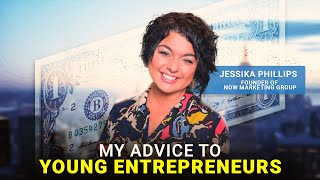
Jessika Phillips discusses how she built a paid speaking career through relationship marketing instead of chasing followers. She shares strategies for authentic connection, balancing family and business, and why genuine relationships matter more than sales tactics when growing a digital marketing business.
I like to introduce myself by my personal mission because I feel like that's the fastest way to describe me. So my personal mission here in this world is to help others love more, give more and be more through their business and their personal life, through using the art of authentic relating in their everyday life. And I just happen to do that through relationship marketing. The biggest strength struggle is always getting started, right? Like just choosing to believe and get started and follow your passion. So that's always a continual struggle, struggle even as you try to level up. And I think by doing that and being in that place and that mindset when you're first starting out, you tend to make mistakes along the way with accepting less than what you're worth. Yeah. So my journey into paid public speaking wasn't like, oh, I want to get into paid public speaking. So it's a little bit. I think it was a little bit different. My goal was to help educate and teach more about what relationship marketing is and what it was at the time. And kind of going back to where I live in a very small city. This was before the day of live video and all this awesomeness when I started the agency in 2010. And so all I had to reach these brands that weren't on social media at the time, trying to tell them the value of social media was inviting them to learn about it, how they could grow their business.
My name is ABHI Arya, father of two girls, six dogs, husband to a superwoman, a streetcar racer turned hotelier, now social media marketer and founder of the Internet moguls of the world. So Jessica, how would you introduce yourself to the world as with your hero introduction?
Yeah, I like to introduce myself by my personal mission because I feel like that's the fastest way to describe me. So my personal mission here in this world is to help others love more, give more and be more through their business and their personal life through using the art of authentic relating in their everyday life. And I just happen to do that through relationship marketing.
Awesome. Lovely girls, your turn. Question.
Do you want to go first?
Yeah, sure.
So my first question is, what was the biggest struggle and mistake you made that you suggest new entrepreneurs that are just starting to build a business would avoid?
Yeah, I would say the biggest struggle is always getting started, right? Like just choosing to believe and get started and follow your passion. So that's always a continual struggle, struggle even as you try to level up. And I think by doing that and being in that place and that mindset, when you're first starting out, you tend to make mistakes along the way with accepting less than what you're worth. And so I did that very early on with playing small and really thinking, okay, because I'm in this small town, because my area that I live, Lima, Ohio, is a very small city. And social media was very new. Internet marketing was not even heard of still. They're kind of adapting to it right now. But the pricing model was not set up for success at the beginning, and I started taking on some clients that didn't really value what a relationship and partnership should look like. So it was a struggle at the beginning, as well as a lot of lessons learned on it's okay to say no. It's okay to stand your ground with what you know, the value that you're bringing and can offer to them when it is a partnership with the right audience. So it was a lot of those lessons. Now I'm not afraid to say no to people that I know it's not going to be a good relationship and do stand firm and the value that comes along with the price that's being presented for the partnership.
Got it, Raya.
Okay, so your talk was awesome at.
Social Media Marketing World.
And so how did you get into paid public speaking and what is your advice for our audience who does want to get into that business?
Yeah, so my journey into paid public speaking wasn't like, oh, I want to get into paid public speaking. So it's a little bit. I think it was a little bit different. My goal was to help educate and teach more about what relationship marketing is and what it was at the time, and going kind of going back to where I live in a very small city. This was before the day of live video and all this awesomeness when I started the agency in 2010. And so all I had was to reach these brands that weren't on social media at the time, trying to tell them the value of social media was inviting them to learn about it, how they could grow their business. And so to do that, instead of me going like door to door, cold calling, which I'm not a fan of and don't believe in. Right. I instead said, hey, I can teach you how to grow your business on Facebook. Or maybe that was one of the topics, for example, at the time that was popular. And so I would bring. Invite these businesses to do that, and they would just come to this, like lunch and learn. And the people that resonated with that message would then eventually become clients because I knew they weren't hiring me because they could figure out and Google how to Do Facebook. Right. It was really just about them seeing the value in it, but didn't want to spend their time doing it. So, long story short, I started offering more of these teaching sessions, and because of that, got referred to do more of these for other businesses in other areas. And then as the request started coming in, more and more I had to look at it like, I love doing this, and I do want to continue doing teaching, but I also need to value the time. So some of the. When I realized that it was in a more high demand, then I started putting a cost associated with some of those traveling to go speak and present in those areas. And that's when I had to start researching. Okay, what does this world look like? So the advice I would give is, first figure out what you're passionate about that you would do for free if there was no payment involved. And is it something that somebody would be willing to pay for? Right. Like, is it a value? What can they get out of it? And then educate yourself on what you need to have in place. So I knew, okay, if I'm going to take this part seriously, I needed to hire a mentor and a coach in order to see what I need to have besides just the cost associated to public speaking. And so then I got a media kit, created some videos, created a personal website, and treated that as a business, too. So when you take it serious in that way and you do want to make an income stream from it, then learn from others. That's kind of already paved the path. But don't immediately think just because you're good at speaking that you're good at. You can make just a career out of it. It has to be something that you're passionate about and that others can find value in.
Hopefully that answers your question.
So, Jessica, you said that you created a website, you created a kit of sorts, and you created videos. Can you tell us what went into those videos and how you use those videos to get more speaking assignments?
Sure, yeah. So I created a couple different videos. The first was videos in examples of what I was presenting. So I would have, like, a sample full on talk, right. That I've done. One of the ones I did for free just so somebody could get a sample of who I am, what I. What I do, and I have that on YouTube for more people to find me. Right. And then the other video they created was what they call like a speaker video, which is snippets of different talks that you've done or maybe things that you've said, along with testimonials from others that have been in attendance, attendance from those presentations. And then really the whole goal is to try to recreate the energy that you're going to bring in that room. And that's what that video should be about. So it's really trying to see snippets of what you're about, like what the speaking is going to be about, kind of what your focus is, what your expertise is, as well as the energy that you're going to bring to the room and what the audience is going to get out of it. Because as an event organizer, their goals are to bring good talent. Right. And to make sure that everybody has a good experience. So that's what you need to put in that video, a reassurance of that you've done this before. They can be confident in hiring you, that your talks align with what their goals are to get out of the event, as well as other attendees have enjoyed what you've had to say. So that was the second video and then the third video. It was just, you know, other people kind of advocating or just kind of a testimonials piece. And that again, had some B roll footage of just different examples of where I spoke along with you. Put kind of like some of your accolades in there, I guess it's called. I call that the humble brag video, if you want to call it that. And then from there, the media kit is just the things that people are going to ask for. Your headshot, what your topics are. Because usually they're like they want you to turn in kind of your title, your description, and then what people are going to get out of it, as well as your bio sheet, if you will, and accolades, if you will. So I put that on a media kit, and then that way somebody can kind of preview it ahead of time and think of it as your speaker resume. And when you get all that created, you can put that on your website. In my website, actually. My new one's going live, like, right now, as we speak. Thank you. I'm excited. So the. On the website. Many people's goal for speaker websites are to book more speaking gigs. Mine definitely, I want to, of course, get some of that out of it. Mine was more to let people know what I was about. So if they're watching an interview like this or reading something, they Google and they're like, oh, okay, that's what relationship marketing is. Oh, okay, I see. And then kind of build into a community. That's my main goal of the website, is building more community, not just getting the speaking Gigs.
So just so I understood, you know, the three components of the kinds of videos that you send, and these. Most of them, you obviously have a set template, but before you send that video, say you're sending it to a different audience. Do you make another video to say, hi, I'm Jessica, and I'm going to send you another video which has got my. So do you personalize the intro?
Yes, of course. Yeah. You get it? Yeah. So before I send anything, if I'm following up, I'll always do a video, email back and just say, hey, you know, thanks so much for reaching out. I'd love to set up time. You know, just definitely personalize your response back to them. I also like to have an interview or just a quick chat, even if they don't want to do it over the phone. I'll send them the questions that I have before I would agree to speak at an event. Because I want to know who is their audience, what's their goals of the event, and what's a little bit of the track record of the event? Meaning, like, is it just people that are paying to speak there? Right. Because there's still some of those events around. I don't really want to align myself with that and you know, who's going to be in attendance. So I make sure that I can add value to the event and that it's going to be a wise investment for both of us. Right. So I try to at least have a talk with them first before I agree, to be clear, before they agree to hire me. Right. I don't want them to have one notion of what they think. I want to talk about who I am, and then I go all in on organic marketing and feel good stuff and they're, you know, preaching something different, you know, so I wouldn't let them know what they're getting.
So again, from the first video that you send, the personalization in the video and the fact that you want to have a conversation with them beforehand, it's relationship marketing throughout. In your business DNA, you know, you're not, you know, you're not selling a cookie cutter product. You're selling a relationship. And like you said in your talk, awesome. Love that. For all those people who were not part of social media marketing world and did not see how your room was one of the most packed rooms at that conference and it took almost one hour for you to get free from people who wanted selfies with you and all of that. Can you tell us how that talk was and maybe give a synopsis of that Talk for our audiences.
Yeah. So one, I'm humbled by everybody that was in the room and I think it speaks volumes of where we are today. Right. Like both as there are people that owned a business, there are people that are agencies that are in there and there are people, they're just wanting to do something different in their solo career. Right. And the talk was geared around relationship marketing, which means that we're really focused on working with people that we can connect with on a real level, we can add value. And then we're not just focused on selling something, we're focusing on building a sense of getting belonging over buying. And what I mean by belonging is really focusing on who your ideal audience is. And once they become part of your community, that you're really focused on making sure that they are delighted and advocates for you. So I like to say that it's turning your followers and like social media from thinking about followers and people that are trying to grow their business there into true fans for you. Because there's a big difference between just a follower and then somebody that's willing to advocate for you and share what you have out there and mention you, you know, online your clients into true advocates for you. So people that are willing to refer you on to other businesses and to their co workers and really give you a good testimonial, your community into collaborators. So people like this, you get relationship marketing. That's why you were saying, you know about the personalized video and that's why you were in that room too, into collaborators. And now we're collaborating, we're doing this together. Right? Like that's what it's about. And your team members into evangelists. Because your team members are the ones that are typically client facing if you have a team and you want them to believe what is at your core company. So starting with the focus of marketing from the inside out is really what it's about. So being the business brand that you want to really have somebody have a feeling about before they get to work with you and having your team members also believe that too. So it's relationship marketing was the core message of it. But it's teaching a new way of doing business that there's enough work out there for all of us that we really just need to be focused on serving our clients better, faster, smarter and more relationship focused. Because 90% of all buying decisions are starting online right now and 60% of the buying cycle is over before somebody's even talking to a representative at your business. So people are making decisions just Based on what they see. And the only way of them understanding the experience that your company is going to be bringing to them is by them having a conversation with your community, with your fans, you know, and with your team members. So really getting that sense of a feeling out there so you can stand out amongst the competition is where it's at. Lovely and short and dirty of it, I guess. And a funny thing is next year, well, in six months, Google just rolled out their new, announced their new update. That's going to be the page experience update. And they're basing it on a lot of these factors now too. What is your customer's experience like on your website even to say whether you're going to show up in search results. So all of these things that are happening, dark social, Google's new updates, Facebook, Instagram, not showing the likes anymore, everything's moving toward just being good humans, you know, and that's.
I like the way you said that. You said you brought marketing back to being a good human. I love that. So, you know, you have to be good at what you do. And what I loved about the last 10 minutes is that you seem to be a believer in saying that I don't need a million followers. I just need to, I need to take things very slow and make sure that. Because your audience will only talk good things about you if you know not. They won't talk good things about you if you're all over the place. It has to be a small, it has to be a village. Right? But everybody knows your name and knows what you do.
Exactly. If you look at me on Instagram, there's many people that have way more followers than I do. And honestly, I don't post every single day, but I'm communicating on there every single day. A lot of times in the inbox because that's where real relationships happen. Right. I'm sending messages back and forth, I'm having conversations, I'm asking people about their day and I don't have a huge following there, which is fine. But I get business from that. And even though that's amazing, it's not like that's my only mo. But that is the ripple effect of what will happen is you will grow in your business when you focus on just being real first and building one to one relationships.
Got it, Aviana.
So my second question is how do you balance out your family time with your business time? Like growing your business?
Yeah, great question. So right now it's a little different than what how I would answer this like a year ago with working from home, but so. And also a lot different than when I first started out. So when I first started out, I was very much working a lot more. But I still believe that there's not really such thing as like work life balance. I believe that there's a thing of balance, which means right now I may be spending more time working, like when I'm launching my personal website, right. And I'm diving in and spending a little bit more time there. But then next week I'm going on a vacation with my family where I'm spending time there. So I think you really just have to have emotional intelligence to know what is priority without neglecting your priority of your family, priority in your business and priority in your family. And so it's really just making sure that you do what's needed with your business, but then also making quality time with your family. So like every time that I was driving my kids to school, for example, and now we just do it at the breakfast table, I'm asking them things that they're grateful for. Not just like listening to music, right? Like, like I'm making sure that we have quality time and quality conversations there. We're not just watching TV at night, we're doing something. So making every, every thing that you do together, making sure that it has more of an impact versus it just kind of you being there, if that makes sense. Yeah, yeah.
Raya.
Okay, so my next question is how did you get into the right ecosystem to be able to, you know, like get more clients? We will network and be able to speak. At social media marketing world, a lot of people struggle with kind of, you know, getting into the right network and.
Making the right friends.
So how did you get into the right ecosystem?
Very good question. I think some of it is just the law of attraction, I guess, but really it kind of goes back in a haket being redundant. But like I really did focus on making one to one conversations and really meant it. When I went to my first year going to social media marketing world, I was there from the very first year and I just observed who was first before I even got to the event, I should say. I looked and seen who was speaking. I went and followed them online. And then the people that I read what they were about and what they were talking on that resonated with me personally. I did a see first on Facebook and a Twitter list on Twitter so I could make sure that I was connecting with them more often. They were seeing my name and I was genuinely connecting with them. It wasn't just like the like. Right. And then when we got to social media marketing world, I already knew who I wanted to meet up with. And some people, I'd even message them ahead of time, like, I'm really excited to meet you, I love what you said here in this blog post and I love what you stand for and da da, da da. Right. Like, so they knew that I was not trying to sell them anything. I really wanted to connect with them, focus my time at the event with making one to one connections with those individuals as well as others that I just observed that were being good people at the event and then from there stayed connected with them. Those connections turned to referrals. I was both referring those people that I met, others that I had met that I thought could really align with each other well. And then they were doing the same for me. And from there the community grew.
Lovely. So you said that you researched them on Facebook and Twitter and the ones whose message resonated with you, you actually didn't just like their messages. From time to time you sent them personal messages, read their blog posts and said, this is what I liked. And so you relationship marketing before you actually meet them in person. And so, and then when you landed up and met them for the first time, the first handshake was, oh, I already know you and thank you very much for your attention.
Yeah. And even a couple of them, like, I brought a pair of crazy socks for one that I knew loved crazy socks. So I was trying not to like step across the line of being like stalkerish looking like the guy, but also showing that I was taking notice of what they were saying because I really, I really did. You know, I thought they were awesome. And now, like I host an event in my community Social Media Week Lima that's grown quite a bit to be one of the largest social media conferences in the Midwest. And a lot of those cool and core speakers that are really looked at as thought leaders in this space are coming to speak at it at this very small community. Right. Because of those relationships that were formed then.
Wow, that's fantastic. Is it, is it Peru?
Lima, Ohio?
Okay. I thought it's Peru. Lima, Peru. Okay.
No, we get that a lot though, but it's pronounced Lima. Maybe that's where they first agreed to come. They thought it was Peru.
I don't know. Excellent. So tell us. You know, my mother is. I inherited this from my mother. That, and I think many of us did. When you go to somebody's house, never go empty handed, even if it's A sweet. You pick up something and when that. When somebody, when you say you borrowed, somebody's brought you fruits or some ice cream or something, you'd never give the utensil back empty. You know, you put something back in it. So I always learned that from my mother and every single digital marketing conference. I'm 43 years old. I did my first website in 1999 with the first ever hotel website in the country of India. I mean, a standalone hotel. Nobody had done it. No Google, Expedia. Anyways, from those times to now, one thing that I did always was I carried a gift with me. And now in the office, we have a cupboard where we have gifts based on people who have kids. We love dogs. We have six dogs, so definitely stuff for dogs. And depending on where we are going, I try to pick up something. You know what? This guy is always talking about his grandfather. Let me pick up some. And it is such a beautiful feeling to be able to have something to offer when you're meeting somebody. It's like, oh, my God, how come you were so thoughtful and you just. You do it because you want to do it and not because you wanted to pay off, but it just, it's a beautiful feeling first, but also when it comes to marketing and building a relationship. I mean, that's why we said, we stayed to the very end of your talk and we loved every single thing that you said.
That's so sweet. And, yes, you had a good family teaching you those lessons. My family did the same thing. It's like. And it means a lot. I think people love when they feel like, oh, you listened. Like, you took the time to listen. Like, one of the people that were on my talk, she gave me a keychain. It was like a little keychain. It just had like a dandelion on it. And I was like, in tears because she had seen a painting that I had done for my dad where it was my daughter blowing a dandelion, making a wish for him. And so it was so thoughtful and so meaningful and it was like the littlest token to just show I, you know, will forever remember her. I didn't know her before that, and I still check on her ever since. The event, like that was just something super meaningful.
So for all the viewers listening, like I said, this is Internet moguls of the world. It's a family digital marketing school. Our aim is to get families together, kids, parents, grandparents, everybody. Learn one aspect of digital marketing and start your business to be able. Because this is something that you can do from anywhere in the world. Spend more time together. Don't spend time in traffic. Don't spend time away. Life is too short. Spend time with your family. That is our mission. And in this mission, for everybody who's listening, you're saying build connections one by one, one by one. In this rat race where everybody's like, if I don't have a million followers and all that means I'm not loved. You know, if I don't have $100,000 in affiliate income coming on the side, I haven't done any marketing. And you're saying twice, you mentioned go back to being human and just, you know, what our parents have taught us. Social media may just be another tool, but the relationships that human beings share, Human beings share with each other have never changed. They've always remained the same. Thank you for reminding all of us of that.
Absolutely. No, and it's so true. And, yeah, I mean, it's. I mean, just think about it for yourself, like, what kind of party or event would you like to go to? You know, five of your close friends in a backyard hanging out? Or are you going to a place full of people that you don't really have a good connection with anyone, you know, and maybe full of people. So I think it's a good reminder. And it's also where we're shifting, as in online anyway, where dark social is growing, where private communities are going to be the norm. People are craving it, they're building it, and they're spending more and more of their time in the inbox. So you want to be invited to that conversation, and only way to do so is to have a genuine connection with people.
Awesome. So tell us. You know, my next question is when people are starting a new business. You know, I heard garyvee talk the other day about communities you just mentioned three seconds ago. Communities, Facebook groups. Can you tell us a little bit about what would be your advice on people wanting to build communities through Facebook groups and all of that?
Yeah. So first think about, again, going back to your core of how you're adding value, how you want to show up, what you want people to know about you, and then who your audience is. So who they are at their core, too, of what they want to learn, what their pain points are, what their goals are, and think of what you can build to serve that community. It doesn't need to be just your business name. And now you're turning into a group. Like, that's not the goal. The goal is to create something that's there to bring Others together around a common purpose, a common thing that people care about. So my friend Bella, she's created one from like pet sitters, you know, and she's grown that group to be a six figure group to bring others together around a common purpose, a common thing that people care about. So my friend Bella, she's created one from like pet sitters, you know, and she's grown that group to be a six figure group making six figures. I mean, and it was, it was just there to serve first and add value. It could be something like we started groups for one of our clients that was a staffing agent. And this was years ago, before Facebook had jobs there on Facebook, but it was, the group was called Jobs in Lima, Ohio, and where people were, you know, just posting what jobs were available there. And then job seekers were coming there as well to find the jobs and they were able to grow relationships by facilitating the conversation there. So think about what you can do that kind of aligns with your business, right, like, and where you can add value and then not just what ones you can build, but which ones that may already be built that you could join and add value in. Like one of our mutual friends, Mitch Jackson, the attorney, right. Like he has a group for legal minds and how he, how they can show up in social and what the rules are and that kind of thing. And you know, he's invited me and others from the digital space, if you will, that aren't attorneys to come in and add value in that group. And we've been able to build relationships then with attorneys from there. That's turned into some business and things like that. So again, thinking about belonging over just getting people to buy. So how you can show up and serve and get invited to those conversations as well as facilitate those conversations in other channels is what's going to be the norm in the future as people are looking for niche communities to serve them.
Perfect. It's lovely. Jessica, tell us. You know, for the first time, we all feel united as a world for the first time ever under very challenging circumstances. Many people are wanting and especially through our digital marketing school, we want more people to start their digital marketing journeys to be able to either learn digital and become digital marketers like all of us, or use digital to further their business or to start a new business. Somebody's in a challenging position, they've lost their jobs and they're listening to this interview. What would be your few things to tell them how they should get started on a business asap using any of these digital tools?
Yeah, first, ask your community, reach out. Tell them your situation, right? Be vulnerable and let them know where you're at, what you're looking to do, and ask them to point you in the right direction, too, of people that you may already know that can help support you. If you're truly looking to get started in a business, I went to what's called the Entrepreneur center here in Lima. That's. That's ran by a college here. Many areas have it. A lot of people don't know about it. The Small Business Developmental center and the sba, they fund these all across the world. And it's free resources for individuals to get their business set up. Because our countries are ran by small businesses. They employ more people than anyone else, so they want more small businesses here. So make sure that you can look and see what resources are free and available to least get you registered, your tax ID number, all of that. Then if you get that legal stuff done, then you want to start out. And I mean, I have a guide instead of going through all the steps, if you want, I can provide the.
The link.
It's bit ly all CapsCare, C A R E capital M and then O R E lowercase so care more. The care is just capital and the M is capital the more. But that will give you a guide to help you to identify your brand, messaging, your ideal customer, who and how you stand out so who you can align with that already maybe have some communities that you could align with. So they're introducing you to this trusted audience that already trusts them. That will help rapidly grow your community in a way, because you're growing it through somebody that already has trust established, as well as coming up with content ideas and getting started with presenting yourself on digital. So you're not just. There's so many people, when they get started, they sign up for everything, and then they don't spend their time wisely. You know, it's better to focus in on what channels should I go on and how much time do I really have that I can invest in it. So you can choose those wisely and grow from there.
Got it, Aviana?
Yeah.
So my last question is, we use the term Internet moguls a lot. And for us, an Internet mogul means someone who spends quality time with their family, but also works hard on improving their business and growing their business. So what would your definition of an Internet moguls be?
I like your definition. I think that's awesome. I love what you guys are doing, but I would definitely say it's someone that is Living by example and. And really someone that is inspiring others to see that there's a better way. The whole reason why I started now Marketing Group is because I wanted to create a place that I wanted to work at. And I was a little frustrated at the time with, like, corporate America and just how they could treat people just based upon what they were selling at the time, because I had a really great job there. And I ended up getting sick. And my job was taken from me at that time because I couldn't work physically at that time. So I knew that I wanted to create a place where not only others could do their best work, but where they felt safe to know that they're looked at as a person first. And I value their input and how they show up. So when they're sick, they're sick, or if they need to be there for their kids, kindergarten, graduation, that's more important. Right. Like, those kinds of things. So I think being able to balance what's really important in that moment is what should be the focus. And I think somebody that can lead by example, doing that and inspire others, that we can all do this together and still run successful companies with putting family at the. At its core is very powerful. So I love your. I love your definition of it.
Awesome. Raya.
Okay, so we wrote a book about a year and a half ago called Bedtime Stories for Tomorrow's Entrepreneurs.
Yes.
And in one of the chapters, we talked about rituals and why they're important and standing your beliefs, not letting anyone else, you know, judge you based off of that. So do you have any rituals that have helped you to get to where you are today?
Yes, I do them all the time. So each morning I do gratitude, and I do those with my girls at the breakfast table or when we're driving to school. So we start off the day with just what we're grateful for. And then I always take two times a day I have it set on my phone where I will just meditate and just focus on calm and peace. And then my other rituals are learning. I block out at least two hours a week to learn something new. And then I write out my affirmations that I read every morning and every night that just like kind of I am statements just because you go out. And when you're out in the world, there's just so much doubt that's put into you. And if you can just keep that positivity going, then, you know, that's. That's just the only way really to be able to share your light with others. That and then I listen to podcasts on driving that are more inspirational kind of stuff. And also when I sleep, I listen to like binary beats to keep it all. Keep it all more positive, I guess.
Lovely. That's that. Those are some valuable insights. We would put bullet notes when we edit this.
Send you a picture of my board.
Sorry, what's that?
I said I'll send you a picture of my board.
Oh, that would be awesome. That would be awesome. That make the editing so much more fun. Jessica, you know, in your talk, you spoke about many actionable tips that people were taking notes. Can you share some of them here with us?
Yeah. So all of them are in that CARE workbook as well, but just a couple here. So a couple of them we mentioned. Use the native tools that are built in if somebody is connecting with you or you're wanting to connect with someone online, send them an audio message, send them a video message, use some of the native tools that are built in and think more technique over just tools. How can I use what's already built in here on many of these tools to make a more meaningful connection? So audio messages are powerful. Video messages are powerful. Commenting on your or posting rather on your own social media channels. Read your post out loud before you just post it as you're writing it to make sure that it sounds human, that you would say it to someone sitting across from you and that it has the ability to start a conversation. So instead of just saying, you know, here's my interview with so and so, and then post the link, you would say, what are your thoughts about, you know, balancing work and family? You know, what's your number one ritual to get this done or something. Here's the interview that we have here. Let us know your thoughts or whatever, you know, because you want people to engage, and then when they do engage, you want to make sure you're commenting back, not just liking what they say to keep the conversation going. Those are a few tips. The other super powerful one, just a one other part of it, and this is all part of, by the way, the care how you can out care your competition.
I love that. Out care. That is so beautiful.
Yeah, thank you. So CARE stands for capturing attention, articulating your message, relationship, focus, and building exceptional experiences. So each of these are a step process and I'm giving you just a couple nuggets from these. But another one is creating a brand manifesto for your business, because that's your declaration statement. So if we're talking about how will people connect with you online if they're not talking with you yet. Like, if they're just looking at your website, right? Things like that. How can you show up in a way that people can get to know your brand on a real level? And it first starts with creating that brand manifesto internally. That's kind of like your declaration, and this is the one statement that you can make that then you know the top tone of voice to use in your social posts, you know the tone of voice to use to use and capture in your images. You know who you're trying to connect with. All of those things can kind of tie back to that brand manifesto. So there are some examples in that care workbook, but also you can just Google search brand manifesto online, and there's some really powerful examples that will come up in a guide to help you create your own.
I wrote that down, too.
Jessica, does it ever get easy to sign new clients? Because, you know, I love what you said, build relationships with people. You know what, like I said, I want to tell you this. I've got two amazing parents. My dad is 71, mom is 65. Mom would not like me telling you her age on a public forum like this, but my mom and dad used to be models back in the day. They used to be almost India's first supermodels. And I'm very proud to say that. Anyway, so they're both entrepreneurs, and they both work 8, 10 hours even now, you know, busy with doing whatever they're doing. My dad always has been like, you know, take care of your product. Your product has to be best, the best in the market. And then when you can sell, then go out there and sell, sell, sell. You know, every day you should be selling. My mom is like, you know what? You don't need to do any selling. If you got five customers, love them like your family, they will go ahead and sell for you.
So, you know, I'm on my team.
When I'm speaking to you, the messages that you're giving, I'm like, you know what? I understand that there's a value system which is, you know, which is similar. So. And also your demeanor, the way we talk. You don't seem to be a digital marketer who's in a hurry to say, you know, know what? Let me get stuff done. So what is your message to the digital marketers or any business owner listening to this? How I need to pay my bills. I need those two, three clients to make three, $4,000 a month. And I like Jessica's demeanor. Slow and steady. Take care of your customers. But I still need money this quarter. How should we answer that question?
Oh, I'm definitely working and so. But my demeanor, people can feel it. It's almost like, have you ever went to a car dealer shop or a car lot and you drive up and all these people like surround you, you're like, oh my God, like, does anyone want to buy then?
Right?
You know, not at all. But if you're there and you're approaching, you know, and somebody's like, oh, you love that, you know, sink that they have, do you have kids, you know, and ask you questions about you, then you're more likely to go into a conversation with them. So I'm not saying don't sell. What I'm saying is don't be salesy, right? Like so when. Because people can sense it, they can sense when they feel like this pushiness or sales approach coming on. And you can just ask yourself that question. Like, if you feel like you're being sold to, you're gonna back away. But if you feel that somebody's there to genuinely help you, you're more likely to give them your business because the trust is built and you feel more comfortable. So I've never had a sales rep. I was able to use these methods and grow to a million dollar agency in less than a year by not selling. I sold, but I wasn't being salesy, right? Like, so it really is not sweating it and pushing it. There's always things that you can do to look at your methods and your technique just to see if there's a structure in place that allows people to find the answers that they're looking for you to find out who you are about and let them sell themselves basically until the end of the transaction where you're going to ask for the sale, but they're already going to be convinced that they want it by the time that they get there.
Got it. Jessica, do you work with remote teams?
So I do have an office where some of my team works in there. We haven't been in there a few months with all the COVID stuff going on. But I also have team members that are other places in the US that have worked remote even from the beginning, though we've only worked in the office. Each person has only worked in the office two days a week, the rest of time from home. Just because I think it's silly. Like most of them are driving 30 minutes or so just to get into the office, but allowed us to collaborate in person and do team outings and things like that. But honestly, we're finding a new way of doing that with what's going on with COVID Anyway, so my question is.
So for all the people who are watching right now and wanting to build digital agencies or semi digital businesses and to be. And if. Because you've been doing this for a while and you've been twice a week and then everything else, what would be your advice to them? Do you need to have very good systems and sops in, you know, in place only you know what you need to run a business like this in the future?
Yeah, that's a huge mistake. I see all the time with people doing this they don't do. The discovery process is the most important. You need to have a system. You need to have the appropriate discovery process so you can find out who you're going to be working with if it's a good fit and then if you can get to that part, then make the proposal. Spend more time talking about what you. What's not included as well as what's included. So you are all on the same page. I think so many people get so excited about a sale coming in, they don't do the work necessary at the beginning. It's going to save them years of trouble and stuff at the end if they can even stay that long with the client because the client's most like, I thought you did this. So then they'll end up doing it. Save the client. And then they're spending all this time and not making more money instead of just setting it up at the beginning. So yes, system in place. I mean everything that we do, I could leave while and it's going to run smooth. Right. It's like clockwork that it runs.
Wow, that is music to my ears. I need to book a concert call with you to understand how that works. So not only with your clients and you have systems with your teams as well.
System, yeah, the team does. I mean they're amazing, right? Like all of us go through the same process. Now granted there's always going to be someone because you're, you know, the face, the one that's out there that people see. They're like, I want to work with you. I'm like, you really don't Like, I love you and I will definitely help you. But my team is really good at this and they have the top more time and they're going to make sure that you know, everything that we believe is tied with this. And I love working with clients too. But not every client can you work with. Right. It's not realistic and Some of them are way better working with another person than you. As long as everybody's on the same page and doing the same thing. Everyone on my team believes relationship marketing. They all are following the principles that I'm saying. I'm just the one saying it.
Which means that when you hire people, you go through, as much of KYC know, your colleague. Let me say that process as much as you edit the clients that you work with.
Amen. Amen. Amen to that. Those are make or break for your business. Every client you take on, every team member you take on, I always say it's either adding culture credit or brand credit or brand debt. Culture debt, you know, so you have to look at how you're investing in.
Every relationship or brand credit. I like that.
More from Avi

The strongest mindset doesn't begin with meditation. It begins at home. Before you conquer the wor

The strongest mindset doesn't begin with meditation. It begins at home. Before you conquer the wor

Your mindset isn't something you fix once. It's something you train every single day. Just like yo

Don't build a company just because your friends are. Build one because you're ready. A startup is

Everyone dreams of becoming the boss. Very few understand what that really means. The moment you b

Most entrepreneurs say, "I don't have time for coaching." The truth? You don't make time for what

Over hiring doesn't always solve problems. Sometimes, it creates them. Having a small buffer in you

"The highest-paid" isn't the goal. The highest-value is. People often ask why premium mentorship co

The founder will always be a bottleneck... at some stage. The goal isn't to pretend you're never th

People ask me how I stay consistent with my morning routine while traveling across countries and tim

People ask me how I stay consistent with my morning routine while traveling across countries and tim