Journey of a Podcaster to Founder of a Podcasting Tool - Squadcast |Virtual Collaboration Tool
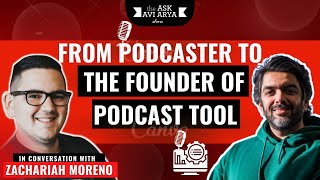
This is a YouTube video titled "Journey of a Podcaster to Founder of a Podcasting Tool - Squadcast |Virtual Collaboration Tool" containing an English conversational interview recorded before July 21, 2021. The conversation features Avi Arya, founder of Internet Moguls, interviewing Zach, co-founder of Squadcast, a podcasting platform. They discuss Zach's journey from art school to founding Squadcast, challenges in podcasting technology, startup advice including product-market fit, funding, and growth strategies, as well as the evolution of podcasting tools and content creation. The dialogue is rich with personal stories, entrepreneurial insights, and practical guidance for aspiring internet moguls and podcasters.
Shortest distance between two human hearts is always a story.
Focus on the creator and empowering them through technology, through tools that are unique to SquadCast. Like we have two patents pending that really get us that quality, but also reliability. So that way, you know, we set people up for success when they go to produce their podcast and reach their audience. There's no time wasted having to deal with like janky content or like quality issues or alignment and some of these other things that can really slow you down, down or cost you money in post production.
Hey guys, this is Avi Arya, father of two girls, six dogs, husband to a superwoman, a streetcar racer turned hotelier, now social media marketer and founder of Internet Moguls. Welcome to my channel. So, Zach, I'm on the 29th of October, I turned 44. But the story that I want to tell you is when I was 18 years old, born and brought up in New Delhi, India, all I wanted to do in life was to race streetcars. My dad used to go to sleep and from under his pillow I would steal his car keys, race with people, make some money on the side. And in my 18 year old head I was like, I'm going to become a streetcar racer. I'm going to go overseas and study car racing, study abroad, do all of that. I had a plan, but one day my dad told me he lost everything in his business and he had a family separation. And he said, I need to speak to you. So I went all the way to his office, which was one hour from home. I remember walking in, Zach, as if it was yesterday. There was a red carpet on a wooden floor. There were these two landline phones which were off the hook. My dad broke this news to me that we've lost everything. We have to sell the house, sell the cars. I can't go overseas to study. And as the eldest son in the family, I am expected to start working with him from tomorrow morning. If not, I can leave the house. Too much for me to handle in a two minute conversation.
That's heavy.
Yeah, it was, it was, thank you for understanding. And then so I darted out of the room and I, you know, my mom was waiting outside. I had a nice conversation with her and I think better sense prevailed because the very next morning I found myself behind the reception of my dad's small 27 room motel. I learned housekeeping, I learned restaurant, I learned everything. But I also learned my dad is doing a fantastic job of running this place. Where do I find my place under the sun under these circumstances? One day an international Tourist walked in and he paid us in Dutch guilders, the currency of euros before the currency of Holland before the euros came in. And I converted the Dutch gilders and it turned out to be double Indian rupees. Now I'm telling myself, wow, I am. If I am able to convert all 27 rooms into international tourists like this one, I double the income, double the revenue and I become a star in my dad's eyes. And then maybe I can go overseas and pursue my dreams. I finally had a plan. Yes, I finally had a plan. But I didn't know how to execute it. Because back in the 90s, how do you connect a small 27 room hotel to people around the world? During that time, Zach, there was a new phenomenon on the market called the Internet. This was a service that was allowing people to connect with different parts of the world. I saw an ad in the paper Satyam Computers looking for cyber cafe partners. Contact Rohit. After 25 years, Rohit is still a friend of mine because I was the first person to contact him for a cyber cafe. After three months of unnecessary paperwork, we got a cyber cafe. Now Zach, I had 24 hour access to the Internet on the planet. Somehow I got in touch with people. I went into forums. People said do a website. I took six months to somehow get a website done. Then another six months to tinker around with things. We started getting electronic mail corresponding with people. One and a half years of doing that, started getting some people coming in from different parts of the world staying with us. More people, more people, more people. We had so much business coming in, we started booking other hotels. After two years of booking other hotels, we thought we have enough business on books but we can now buy one hotel. Then we bought another one. Then we bought another one. So Zach, essentially my dad took 40 years to build his first hotel. After we discovered the Internet, in the next four years we outright bought small four small boutique properties. So that was our first journey from the Internet. Then I started traveling. It was amazing. Then by from 18, I'm now 25, I started a travel affiliate business. I had no idea what I was doing. I kept creating content. I got a call from people saying, you put a code on our site, we'll give you an affiliate. I didn't know what an affiliate, what they did, what I did, what they told me to do. We were making nearly 1,000 to $1,500 in net profit every single day from those websites. In 2005, that was a travel affiliate business. Lasted for two years. Then I lost all My rankings and the business went down then. By now, TripAdvisor, Facebook, all of these large companies had come into India. Some of them asked me to become their evangelist and say, speak on stage around the world for us. Tell us how a small business leverages these tools and becomes big. As you can see, in my last five minutes of interact with you, I love talking. So when I got an opportunity to talk on stage, I immediately grabbed it. I went on stages all over the world, told people my story. People started coming to me and saying, can you do this for us? That is where in 2009, with a four member team, I started a company called Internet Moguls. Bootstrapped completely, no co founders, no borrowing money, four member team. Last 11 years we grew from four to 225 people, working with 700 clients in 10 countries. So that was our story. Now I live in Vancouver, Canada. My business is in India. I travel back and forth. I live here with my family. That was a long form story of who I am, where I'm coming from. I founded an alliance called the Digital Masters alliance, which is the alliance of all digital marketers in India. I'm still the founder of that. Almost every major digital marketing event happens through our forums. I've got about 200 plus thousand followers on me. Amongst all of us, we've got a million followers in the alliance of nine people. Most businesses happen, sort of any large speaker or anybody who comes to India, any tools, we love to promote them and say we want to be your gateway to India. So I'll introduce you to some of my other master friends sometime soon as well. But Tyler has been a good friend of mine for a very long time. Great guy and he only and only talks great things about you guys. And I was like, it's high time that we get Zach on the show and we introduce him to our audiences in Vancouver, Canada and all over India. So Zach, thank you so much for your time. This entire story that I told you in eight minutes I have an eight second version of it as well. Here we go, Zach. My name is Avi Arya, Father of two girls, six dogs, husband to a superwoman, a streetcar racer turned hotelier, now social media marketer and founder of Internet Moguls. So that's my eight second on the eight minute story. We got to jump in right into the session now. I really appreciate your time, Zach. Like I say, the shortest distance between two human hearts is always a story. You tell a perfect stranger a story and you, you win their hearts for life. Before we get started, for the people who don't know you, what is your story?
Well, I appreciate you sharing your story. That was a very quick masterclass and it's tough to follow. But my story is one that's really rooted in a common thread and that comes to life in different chapters across my journey. It, for me is about connecting creatives and I feel that creativity is enhanced when more than one people can come together and collaborate on. On something new, because there's kind of an element of improv that's introduced that isn't there if we're just kind of in our own head, creating. So that's really what I focus on in my personal mission. And, you know, I have, I have the privilege of having been able to bring that to life in a couple different ways throughout my career. First, when I was at art school learning graphic design and front end engineering and teaching myself back end engineering, I saw kind of what happened when two people came together and did like pair programming or collaborated on a design for like print media or for the web or for mobile. And that was like the first time I think I experienced it. And then fast forward a couple more years and I did my internship on the Google Chrome team where I pitched an open source project on building something, building an extension for developers to collaborate for pair programming inside of Google Chrome. And back then people were using Dreamweaver with previews of websites kind of baked into that software, but that didn't feel like the real Internet to me. So there was like, that was like collaborative creativity brought to life for software engineers. And, you know, and along the way, my, my now co founder and longtime good friend Rock introduced me to podcasts. I love learning, just kind of fundamentally.
Rock.
Rock, yes, his name is Rock and he's now my co founder of Squadcast. No, no. Although bring him on the show as well. That'd be cool. Yeah, I'm a big fan, of course.
Yeah.
Moana is one of my favorite movies and I think he's hilarious in that movie. Anyway. Yeah, there we go. Maui. Yeah. Yeah, nice. So with, with, with podcasts, I love listening and learning and going deep on subjects very quickly. You know, half hour, 60 minutes, you could learn a lot in a podcast. And I kind of stayed like that for a while. A while. And then it wasn't until I was kind of frustrated in my career and wanted to do a creative side project. I have this also this theme of just working on things on the side and projects, whether that's art or design or client work or technology. Like, side note, for Our wedding. For our wedding, I built an app for a restaurant, and we traded the app for catering for our wedding. So little things like that along the way. And then I wanted to do a creative side project that was kind of outside of my comfort zone. And that's really where I started thinking, maybe we should do a podcast and let's challenge ourselves. Like, my brother's an audio engineer. My. My good friend is a. Is a decorated playwright, and. And I had written. Written a book as well. So it's like, we should be able to do this. You know, we have some skills that other people maybe don't. Hmm. So this was. This was kind of the middle of 2016. So I was in, like, my mid-20s. Yeah, right, mid-20s. And that was where we wanted to do the science fiction podcast, this audio drama, and really challenge ourselves and get outside of our comfort zone. None of us had ever done anything like that before. And we set out to do that, and pretty quickly we found that there were some challenges with recording quality content when you're not in the same room with the other people that you're collaborating with. And we kind of just kept assuming that that was a solved problem, that podcasting had been around for a little while and we just hadn't, like, done the right Google search or something. And we kept looking, we kept looking, and we just couldn't find a good answer other than use Skype. And that's really where we started talking to podcasters and asking them, like, okay, you use Skype, but like, are you happy with it? Have you talked to your audience about it? Like, does anybody enjoy it? Is this already a solved problem and it's not really an opportunity to build something new, or is there an opportunity here? And that's really where we kind of took a step back and pivoted from the podcast, essentially, to building out squadcast, which is that solution. So it's a platform that helps professional podcasters connect with people all over the world and record studio quality content in audio and now video. And we focus on the creative experience, we focus on the creator and empowering them through. Through technology, through tools that are unique to SquadCast. Like, we have two patents pending that really get us that quality, but also reliability. So that way, you know, we set people up for success when they go to produce their podcast and reach their audience. It's. There's no time wasted having to deal with, like, janky content or, like, quality issues or alignment and some these other things that can really slow you down or cost you money in post Production, So we make that really easy to record. Like, we can kind of forget sometimes you've been a great host and like inviting me here and everything, but, you know, sometimes, and this isn't true of my experience with you, but sometimes hosts can kind of forget that their guest is not a professional podcaster. So with SquadCast, we make that super easy for the guest to also be equally as professional. And there's been some research that shows that audio quality is directly tied to the credibility of the people speaking. And that credibility, you know, when we want to have influence, we want to have our guests come on and, you know, be experts in their subject. That credibility is meaningful to our show, to our audience. And that's really where we see our squadcast, our technology having an impact and really helping a lot of podcasters. We're so grateful to be in service.
So fantastic work, Zach, for all the people who are listening. The idea of this show, we call it the Internet Moguls of the Show. People who've used the Internet to create massive success for themselves and add value to people's lives. Now, as an Internet mogul that you are.
I like that title, thank you.
Yes, you are my friend. As an Internet mogul and all the others who are listening and wanting and getting inspired by your journey, how does a startup find a problem and validate it for themselves that this is big enough to work on and give a few years?
Yeah, it's a good question and I didn't really have the answer before starting squadcast. This is my first company. I'm a first time founder. Although I will say that there's a lot of parallels between starting a technology company, doing a startup and say a podcast, or, you know, a creative side project. And really, you know, we all kind of are investors of time, you know, so I feel like there was some kind of mental model for thinking through that. But we found some really good advice. We start. We're. We're very much students of the startup ecosystem and the startup space. So we set out to learn, you know, and we use podcasts to do that. And the. We started with a set of videos on YouTube, a playlist called how to Start a Startup. It was a course at Stanford University that had courses by Y Combinator founders and alumni. So we started there and, you know, they were like Eric Reese, Lean Startup. And that's how you can kind of create these experiments and come up with the hypothesis, validate it by talking to people, trying to remove bias from those conversations to actually learn. Is this a legit problem, or is this a made up problem? Or another term we've learned is like, is this a, is this a painkiller? Is this a vitamin? You know, and drawing that distinction is exactly the question that you're asking. And that's the process that we did. And then as I learned more about the Lean Startup and read that book, I highly recommend it, or there's videos, you know, this has been around for a minute, so there's probably faster ways than reading the book. But whatever you're into. Eric Reese is a fantastic podcast guest on a number of podcasts. That's another way. But I started to see it as design thinking. So here in California, we have Stanford and the D School, design school at Stanford, and have spun off a company called Ideo. They have this approach called design thinking that really is the same thing as Lean Startup. It's a way to come up with these, hypothesis test them and really try to prove or disprove, you know, is this a real problem or is this a made up problem? And that can help you rule out, you know, in the early days to try to say like, you know, because another way to ask the question that you asked is like essentially product market fit. But product market fit is like product market fit comes like a year later or maybe, you know, two years, three years later, depending on how long your journey is to find it. But this is kind of the first signals of product market fit is just talking to people and, you know, try to try to see people who have the problem that you've experienced. We were lucky that we experienced this problem firsthand. And then we kind of talk to podcasters and say, do you have this problem too? Or, you know, is this just something that we fantasized about and thought up one day? So I think that's how I think about it. And, you know, we, I've also learned that there's kind of nested experiments. So good ideas tend to lead to more ideas and, you know, there's the big questions of a startup, but then you start to like. And once you validate that, like we did, we went and sponsored an event to talk to people and get in front of people and show them an alpha product. We sponsored podcast movement to get that initial kind of feedback and validation. And I got to be honest with you, Avi, like, we were terrified. You know, that's the part that often is kind of left out of these stories is, you know, at some point you want this to be something, right? You want to be a startup founder, you want to build Something cool that people use. And at some point you start to wonder, I want this to be true. And that's really the bias piece of it. So trying to remove that. But eventually you got to put yourself out there and ask the question, is this something you'd pay for? And as soon as you can get to that place and work from there, you know, and also being cool with people telling you no, you know, and just like being ready for that, if anything, expecting that, you know, I'd kind of be surprised if they say yes. And yeah, I could talk about this one for a minute obviously, but it's something that I think, you know, those are good resources that have helped us in answering that question.
Awesome. I love that answer. Tell me Zach, firstly, is my audio better now?
Yeah, you sound good.
Okay. The other thing I wanted to ask was when is it you said like, you know, the product market fit comes one, two, three years later and as soon as the startup founder or to be prospective founder somebody, you start thinking, you know, let me quit my job, start a company or have a business plan, start a company, the person listens to what you just said and like two to three years to find a product fit. How am I going to survive for those three years?
Yeah.
So people who are listening to this and want to become Internet moguls like yourselves and find a problem in the market, do you suggest they always hold on to whatever source of income they have and do this on the part time before they can actually jump in full time?
I used to have a yes or no answer to this question. I feel like it's a bit more nuanced now depending on the kind of landscape of all the possible startups. Right. Like on one end of the spectrum you have like startups that have to deal with a lot of regulation. So depending on what region or country you're in, regulation may mean different things. But what kind of blew my mind here was going to a reverse pitch day in San Francisco and seeing a medical startup out of UC Davis that had a male contraception like prototype startup and had raised a seed round through, through this fund their Runway to even have a potential product because of the scrutiny and regulation of introducing a new medical treatment into the medical community. It's a multi year process. So with that the answer is like you almost, you have to, you have to raise money. In that scenario you're not going to bootstrap your way unless you have some crazy scenario. You know, I guess it'd be possible for some people coming from means, but I think Most people are not necessarily coming from means. Like I can't speak for you, but I am not coming from means along those lines. And that's okay. So to answer your question in our case. Well, let me finish my anecdote for a second. So that's kind of one end of the spectrum, right? Is like this medical thing that's going to take a long time, you probably need to raise. It's going to be multiple years before you even start to think about a product and a market. So how do you know if you have product market fit and the testings and all the stuff that's involved with that? On the other end of the spectrum is something like Uber. On day one of Uber, they had product market fit and they, they how people, I've heard different people within the company at that time tell the story is like it was scary. It was like all of a sudden you're on the world stage and like the game has changed and all, all of this stuff, right? So that is extreme. Product market fit on day one. Like they didn't have to wait at all. You know, they could basically walk into any venture capital fund and just be like party, you know. So I think that that's two ends of the spectrum and most companies are probably in the middle somewhere to be real about it. Especially with like modern SaaS and cloud and all the pieces there that make it easier to or faster to start. A startup that's been accelerating over the last couple decades is the kind of building blocks of a startup have gotten more malleable and easier to access. And that definitely makes bootstrapping and iterating through product to find fit is something that we, in our story, we kept our day jobs for a year and a half while we bootstrapped from that. We are our angel investors in the case of SquadCast. And that comes with the level of independence that we're very proud of having. You know, been in the game for almost five years now and been able to make a sustainable company and grow the team and you know, some of these huge milestones that seemed like science fiction when we were first starting out. You know, we, we just wanted to do the experiment honestly of like, can we bootstrap this? Or how long can we bootstrap this before we start to need to cross a bridge where we can't afford to pay for it. And the first milestone that we set for ourself was like, let's get the technology to pay for itself. Like, that's the first. Before we even start to think about Paying ourselves or quitting our jobs or going and spending other people's money. Let's try to get the technology to pay for itself, like kind of break even on the technology costs. So we did that and then we were like, okay, that's probably a pretty good indicator that we should quit our jobs. And during that time, Rock and I had each set saved and had a financial support system where we could essentially have a year of Runway from that point to get to a point where we could pay ourselves. And that was kind of the shakiest period of time in this whole, this whole thing, you know, And I, I sold my car. Like, we made a bunch of sacrifices, slimmed everything down. We had kind of been preparing for this to some sense. Like, I don't think any of us had a plan for our savings or how we were invested or anything like that, but it was just kind of like, okay, we have some sort of savings. My, my wife has a job. You know, I can, I could do work on the side. I know Rock did some accounting work on the side in that 12 month period just to kind of supplement. But we made it to that point and, you know, at that point we started paying ourselves. We started, you know, paying our team. They quit their day jobs and. And then we've been growing the team and the product from there. And then we have had two different pretty massive inflection points along the way that are just completely outside of our control. But I think once you have product market fit and you've built up, in our case, we are very careful and mindful about crafting a reputation that is meaningful to us in the community. So, you know, when a tidal wave comes, you got to be ready to catch it. And, you know, your technology needs to scale, your team needs to, you know, be ready for that, prepared to scale. And, you know, we're really grateful that for those things as well.
Awesome. My next question is when somebody finds a product market fit, and I think I found something, but how do you validate or how do you even analyze if that product will be relevant five years from now?
That's a hard one. Yeah, because that I think gets to the timing here, which is also outside of people's control, you know, and they're the. The road of startups is littered with the corpses of companies that didn't have the right timing. The founders of Twitter, before they founded Twitter, they founded a podcast company called Odeo. And the timing wasn't right. Podcasting wasn't there. The ecosystem wasn't ready for a platform like that. And also there were some substantial technology pieces that were not in place either. One example is that most audio video on the web at that point in time was used Flash to achieve that. And Flash was not a stable platform to really grow a business off of. And it certainly wasn't standardized across browsers. So you have licensing and things like that. So that was ahead of its time. And they killed it, you know, and then they pivoted and did Twitter. So I guess that's, you know, serendipitous in some way. I don't think anybody would change that story. But I think even if you can have a clear vision and see product market fit, if the timing is not right, I don't think there's much you can do about it. That's a really tough one. What I've seen companies do, and this is another way to use venture capital, is if you're taking a position that's a very long time horizon. You just need to make sure that your investors are. Are in alignment on that. And that is very clearly articulated. And try to support that with as much like, evidence as you can. I mean, I do think there's an element here, a pretty big element of, like, at some point you just have to make like a gut decision, you know, is this, do I believe this is going to happen? That's where I think founders. Right. You have to believe.
Have you wondered, what if YouTube came up with a solution for most podcasts or most interviews are being featured on YouTube, what if they come up with a solution? What if Twitter comes up with a solution? You do wonder all of that along the way, right?
Absolutely.
And that's good. And that's good to do. Do you always also coupled with this question is, do you sometimes feel, if they do, I'll be a better product and maybe they can buy me out or integrate with me, and so let me do what I'm doing best, because they look for the best company and I need to be the best. And so forget about them making it themselves. Let me worry about them. If they think about it, I should be their first choice. Do you also think about those kind of things?
Absolutely. Yeah. Yeah. And. And I don't think that ever really goes away. We. We started this knowing that Microsoft already had a solution here. And it's an audacious thing to say that we think we could do something better than Microsoft could. And that's essentially the statement that we made when we first set out to try to build something here. And the same is true for Zoom. The same is true for some of our closer industry competitors like zencastr or Riverside. That's totally fine. You know, I respect anybody who's trying to contribute meaningfully to solving some of these challenges. I wish people would be a bit more original, but I think that it's our job to be original. It's our job to really only compete against ourselves and try to be better every version, try to optimize for our customers experience. Listening is a huge part of that where we get a lot of feedback and podcasters speak for a living. So we love listening to the feedback that they have. And that's really helped us kind of stay in our own lane and really just compete with our last version and get better and better. And also having a bias towards innovation as well, I think is another element here where we have made some decisions in our product. I think, you know, having a product is essentially having a point of view. And we have a different point of view than Skype or Zoom. And our point of view is that content creation is different from a call conversation. Even if you add a recorder to that conversation, that's different than, you know, a creative tool that is optimized for quality, the creator experience, the conversation is almost secondary. In Squadcast, it's. We're a recording platform that features conversations and a Skype and Zoom and the other, the other, the other ones that I've mentioned, it's more the other way around, right, where they're a conversation platform that features a recorder. So I feel like that's. As long as that's still true, you know, we're working to define our own category here. And I feel like that's, you know, remote content production is more what, what, what we see things as and you know, like teleconferencing, things like that. That's, that's not really why we exist, you know. So I feel like as long as that point of view is unique, we'll be fine.
Zach, tell me, when a company like yours does what I was waiting for you to do for a year, which is to get video, do you often also get plagued or confused by the idea of we should be known only for audio? We have to have a micro niche. If we do audio and video, we lose our sort of, you know, we should stick to our lane, have our own micro niche, be specialty experts in one. Did those thoughts come to your mind? And if yes, how did you overcome them?
Yeah, they have come to my mind. And it wasn't obvious for us to add video that was, you know, through listening to customers like yourself tell us that you want a video, you know, and that's, that's really kind of the catalyst.
So I sent you telepathic waves. Yeah, you got them, right?
Yeah, totally. And we put them, you know, we use them to energize our efforts of getting, you know, video working with our approach. That's the thing, as I mentioned, our progressive upload, our patent pending technology, our innovations, that was something that we knew we wanted to add video recording when we created that. But it comes with some unique challenges of we essentially want to take what we've learned about how we record audio and apply that to video. But that's not necessarily like a straight path. It's easy to say that. So that was, you know, that was a big part of it. But we started with within a niche, you know, and that being long form audio conversations for content creators. So we viewed it as like we're still focused on the same audience because this same exact audience is the one telling us that they want video. We're not all of a sudden shifting to kind of two markets where we have video content creators and podcasters as two separate things. Because video landed at the end of February, we very much looked at still being in service of the same audience, but giving them tools that they wanted to engage their audience. And we will cross the bridge in the near future of like figuring out marketing to two different audiences. That's a non trivial act on its own. So we chose to focus on the technology first. We also have kind of, as a counter example to kind of set some bounds around how we think about this too is that we have people recording audio books on Squadcast and we always have. And there's other forms of content that we help people create. And that's really awesome to, to us. So that's another way to look at it is like, you know, we are, we're already serving people outside of, you know, what however you define a podcast as and, and marketing is one thing, but product is another and you know, products always going to be out in front of marketing. So I just look at it as a, you know, an opportunity to help more creators still focus very much on podcasters, but, but also video creators are obviously, you know, can benefit from the platform as well.
Zach, tell us. You know, you mentioned that you spent some, invested some money and sponsored the podcast movement to get feedback and some presence so that you get some traction rather than just, you know, two founders being in their office. You needed to get out into the market. So is it Advisable in the first few months when you, your product is ready and you're going out in the market, you're not getting in traction, it's have a chunk of money to invest, get dive in to the market that you otherwise would have dived into two years ago. Say maybe you took a booth at the social media marketing world event. You're like, oh my God, that's too scary. There are 5,000 people. They're going to judge my product right away. It's still a baby. It's just started walking. I don't want to do that. But still, do you think it's a good idea to make a splash and go there, be overwhelmed with the response and the critique that you get and then come back and work on it and go back next year and say that 12 months, I made it happen. Do you think that's a good strategy to have?
I do. I also think that it's one thing to say it and it's another thing to do it. Of course, you know, and I actually, that was not intuitive. That wasn't like us knowing intrinsically how that this was a good idea to do. I was teaching a course at Cal Berkeley at the time, and one of my students just happened to be the head of Intel's investment fund for the Middle east. And he knew more about startups than I did at that point. And we were having coffee before class or after, I think it was before class. And he was like, you need to get out there. Like all these startup people say you need to get in front of customers. Like, the sooner you do it, the better. It's like ripping off a band aid. Just do it. And he knew that I had been kind of building on my nights and weekends for the Squadcast platform. And I don't even think he had tried it at that point, but he was like, how are you going to do that, Zach? And I was like, rock and I, my co founder, we're planning to go and attend this conference that's going to be in la, in Anaheim, and we're going to go and talk to some people there and kind of float the idea out and see what kind of feedback we get. And he was like, that's a good idea, but you need to sponsor it. Like call them, get a booth. You need to be part of the show, you need to be part of the establishment, not somebody floating through the crowd with a T shirt on. And that's going to help you get better feedback, that's going to be better for your brand. Like Trust me on this. And it's like, okay, but we're bootstrapping this. We got to pay out of pocket. Let's see how much that costs, all this stuff. It's also the conference was in like two, three weeks from then. It wasn't that far off. And. And also, who the hell are we? Nobody knows who SquadCast is. You know, if I pick up the phone and call Dan Franks and POD Podcast movement, they're not going to know who I am. I haven't built up any relationship. Like, you know, you start to have a bunch of imposter syndrome anxiety around that too. Like, we don't have any street cred. Nobody knows who we are. These are things that we talked about in depth before we sponsored this event. We had all this anxiety and I'm so grateful that, you know, one the show took a chance on us and let us sponsor. We were able to come up with the cash. We were able to go with more than just me and Rock, but also our team. My best friend's mom got us a hotel room. Thank you, Andrea. There was like a whole bunch of things that like, lined up. The show happened to be in California that year, which it's never been on the west coast before then or since. They've come back to LA for a podcast movement evolution. My bad. Strike that. So, you know, they don't come out to California all that often. So we were very lucky that. That timing. It's another element of the timing. There's a bunch of pieces of the timing that I could go into on the technology, but also on the platform or community. And anyway, you know, we sponsored and we put ourselves out there. So I do, to answer your question, I do think it's a good thing to validate as soon as you can for a number of reasons. One, you'll save yourself money. Like we. The tendency is to get disappointed because you want a startup, right? You, you're like, oh, this will be so cool. What if I'm a startup founder? What if this is actually something. This is going to be so cool and life changing and I'm going to get to help so many people. So we start to want the idea to happen. So you start to look at it as like, oh, I'm going to prove myself right, you know, and not necessarily like looking at is like, okay, I want to prove myself wrong. Or maybe it's the other way around. I think it's the, yeah, prove yourself wrong instead of proving yourself right. And that's the way we looked at it. Was like, we think. We constantly. We were like, we have to be wrong about this. We're super skeptical. Like, we. This is not going to be a thing. We can't. Who the hell are we? Like, you know, this is not going to be a startup. We're just going to keep taking the steps until somebody will eventually tell us, guys, go home. This is not a startup. Like, you know, it's been fun, but he will eventually tell us, guys, go home. This is not a startup. Like, you know, it's been fun. And I still feel like that sometimes. Honestly, I love that. And that just never happened. Everybody just, like, kept, like, wanting it to happen. And I think that that's something that doesn't happen for every startup. So one of two things will happen if you put yourself out there. People will say, I want this. It is something that's meaningful for me. I want to solve this problem. And I'm grateful that you're helping me. Let me help you. That's one scenario. The other scenario is they're going to say, no, it's a vitamin. This isn't really a problem that I have. I'm not all that interested in solving it. It's not a big deal. And that hurts, right? That hurts. But we still need to listen to that person in that scenario, because you're.
Enjoying this episode as much as I am.
Yeah.
All right, you're back now.
Yeah, sorry about that. So the. If somebody tells you, no, I don't. I don't want this, you know, I don't have. Fundamentally, this isn't a problem I'm interested in solving. That person is trying to save you a bunch of money and time by helping you validate. Not that the thing you want it to be true is true, but the opposite, that it's not true. But you get to go about your life and come up with another idea. And if you stay on that path, wanting to believe for too long, you waste money and time and you spin your wheels. There's stories of startups doing that as well, so it's not a bad thing either way. I just turned 30. I am 30 years old.
Awesome. You look much younger than 30. Hats off for whatever you're doing, your early morning yoga or whatever you're doing.
I love yoga. Yes. Thank you.
Awesome.
I'm looking forward to getting some gray hair. You're rocking it. Well, I like it.
Zach, tell me as you're building this product, and like I said, I became a fan from the get go. I called up somebody for a podcast interview, so What I've been doing, I'll just take a segue over here. And what I've been doing is me and my two daughters who are 15 and 11 now, we have interviewed Gary Vaynerchuk, Grant Cardone, John Lee Dumas. We went around the world, we traveled, we took, we said, we got an appointment, we're going tomorrow morning. You know, school can happen later. Everything can happen later. So we traveled. My girls loved it. I loved getting on with the girls. When I introduced this to, you know, when the girls met GaryVee and all of these people, they love the idea that a father is teaching kids entrepreneurship and we take that more seriously. School and everything can happen later. My girls come with me at the from the age of 10 to the social media marketing world, go and reach out to people for appointments. They send micro videos. Can I have an appointment with you? They get a lot of action, they learn a lot of stuff.
Now objection. Is a gift. You know, That's a skill.
100%. I love that. And all of these things, all of these things, you know, hopefully make them who they want to be later in my V star and my younger one wants to have a horse stable. And so I said, doesn't matter. This entrepreneurship training with somewhere fit in and, you know, it's never going to go waste. So entrepreneurs too, 100%. As we, as we traveled around the world, met all of these people, did all of this. You know, this podcast is called the Internet moguls of the world. People who leverage the Internet to be able to build a business amidst, amidst and despite all odds. And when I say amidst all odds because people feel, oh, despite all odds and now everything is hunky dory. I don't think it ever is. Just because I've got money in the bank and my company's taken off for a bit doesn't mean that I don't have fires to put off tomorrow morning. And you've acknowledged that so many times. You know, I love when in the, in our conversation over the last few minutes, you said this was not, this was not intuitive. It just happened. So there are so many things that, you know, thank you for being so honest with us because some things are not intuitive, you still do them and you see where the chips fall and you know, and many times things, things fail.
My co founder is always pointing out that so much of the work that we do as startup founders is not intuitive. There's so many things that are not intuitive. So, you know, I think try to, you know, use your intuition, train it, you know, make it refined over time, but also be open to the people who, you know, have. Have done this before. And that's where I think advisors and mentors and, you know, conversations with other founders are so important.
Right. So. And that also, you need to know who you. How much to listen, what not to. It's such a mix. It's such an. It's such an emotional roller coaster in terms of, you know, I think the Reese guy, the Reed guy from Netflix, I think he may have an answer for this. Or maybe not. Maybe it's just Gary Vaynerchuk.
Reed Hastings.
Yeah, yeah, so. Or maybe it's just Gary Vaynerchuk says, keep, keep, keep putting out content out there. But you guys created a podcast platform. I love when you said in the beginning of the show, you said, I want the guest to look and feel cool. Professional as well. Most guests who are not professional podcasts, they land up without a mic. There's Echo and there's all of that. Well, they are brands and amazing human beings and great entrepreneurs to reckon with, but they.
Yeah, we have to.
Our job. We have to help them. I love that. I mean, I've never heard anybody say that in this whole process of doing all of this and becoming an Internet mogul like you have. When it comes to building a community around a brand, which is what all of us talk about, it's been there forever, but we talk about it more now. Build a community. The community builds the brand. Yesterday I was watching the interview with the hundreds. I don't know if you know, the hundreds, the T shirt company and all of that. So, yeah, community build the community. Community builds the brand and all of that. So what is Zach's take on community? And then how did you build community? How are you building community for Squadcast?
Well, there's already a strong foundation of community in podcasting, and in some ways, we kind of stepped into that culture, but we've really embraced it at the same time. And I think it all comes back to how open the podcast community was. To come back to that first event where we put ourselves out there. I said some things about how we had anxiety about not having street cred or relationships or kind of knowing anybody. Um, and it's tempting to think it's logical even to think that people will just kind of look the other way, not acknowledge you and just kind of whatever. But the podcast community is unique. The podcast community was so open to meeting us and getting to know us and telling us what they wanted and. And was just really Open and friendly from the get go. Everybody is very collaborative in podcasting. If you look at any one category of podcasts, like in your podcast listening app, chances are the top 10 shows the creators have collaborated with one another, they've recommended guests to each other, they've interviewed each other, and that is unique that there's so much collaboration that's not really coming from a place of competition, and that's really cool. So we've embraced that wider culture of podcast community and we've really embraced it through our own efforts.
Sorry to interrupt. Mean that you would also, when you say creators are reaching out to other creators, so there's no competition there, everybody. So would you also reach out to a riverside or a Zen caster and, you know, have some collaboration opportunities? You'd be open to those doing that as well. And that's what you recommend?
Yeah, I've spoken. I've spoken with the founders a handful of times.
Sorry, I didn't. We lost you for a second. Yeah, you're back.
Sorry about that. Yeah, I've spoken to the founders of those companies a handful of times. Like, I've talked to people who are like, on the board of Zoom and other, other. You know, Microsoft is a customer of SquadCast. Even though they have Skype and teams, all of their podcast production happens on squadcast.
How did that feel when you made that happen? Did you go back and tell your. Tell your mom and dad and your wife and guess what happened today? The Microsoft is now a client.
It blows my mind. You know, it's awesome that. It's awesome that they understand that content creation, remote content production is different than conversations and, you know, remote kind of calls and they understand that difference. And the producers that they work with understand that difference. And the cto, Kevin Scott's podcast is recorded on platform and he understands that difference. It's amazing.
How. How does that make you feel?
Fantastic. You know, to be. To be straight up about it. It's. It's like, it's validating on some level that, you know, I'm not crazy and I didn't spend the last couple years of my life, like, believing this and that, you know, what an honor to be able to help my.
100%, 100%.
It's awesome. And I think that's really beautiful. So that, that is something that, you know, that, that collaboration is really cool and there is some level of competition. You know, I'm not going to lie about that either. Sure. You know, when we block each other on Twitter, it's kind of hard to have a conversation. But I'm open if you're listening.
Alrighty. Love that. So tell me. I've got three questions left, and then we wrap up the hour. Zach, when it comes to. When it comes to an outreach, so, yes, you got Microsoft, you got all of them, but you're always, as an entrepreneur, hungry for. Do those guys know about us? Do they know we exist? We'd love to collaborate with these guys or those guys. Or maybe I'd love the Breakfast Club. You know, though, that channel, they should be on our. On our thing. That's my favorite podcast. So do you do a lot of outreach or, you know, just pick up the phone and. Or try to reach out to people and say, hey, this is who I am. Or is it cold marketing? You do Facebook ads at your stage of the company. What does an Internet mogul do? Do you do out, outbound, inbound, or both?
The community is a big part of it. To come back to that, we have a community manager, Ariel, who is awesome. Thank you. Arielle really fosters an open conversation with the community, empowers the community through different ways and empowering them to create content and collaborating on that. But then also, there's an element of virality to squadcast, because the first thing you do, the magic of our platform, is when you invite and connect with somebody else and then you record together with them. Now, what we didn't know and what I don't think we could have planned is that podcasters, because they also interview other podcasters or guests on podcasts, may be inclined to start their own podcast. That there's an element of virality here because if you get interviewed on squadcast, you're getting kind of a passive demo to how easy this can be, how good you sound when that episode comes out. And. And, you know, that's something that there's this metric called viral cycle time that I learned about after the fact. But we kind of knew that this was happening and blew our mind and all of those things, like, you know, far out example, extreme example. Our advisor, Jordan Harbinger, is a number one top podcaster. And all this, like, accolades and crazy stories and backgrounds and guests. He interviewed Kobe and just like remarkable guests and. And this happened with him. We met him because somebody interviewed him on their show. He asked about the platform. The host in this case was our friend Eric Hundley. And Eric was like, oh, I know Zach and Rock. Let me send a quick email. And they'd get a kick out of talking with you. So this has happened many Times. And I think that's the. To answer your question, that's the foundation of our growth is that elements of virality and. And we do other forms of marketing too, mostly content marketing. So we have our own podcasts, we write blogs, we speak at conferences, we've had our own events, we sponsor meetups, we sponsor newsletters. We try to do. We try to practice content creation, remote content production, and really, you know, walk the same path as our customers to have empathy and understanding for the work that they're doing. They're also, podcasters are also trying to build their community. So in some sense we want to inspire them, we want to try new things and also kind of meta, like provide that as a resource to them about, hey, this is working for our community. Maybe that'll work for your community. And that's something that's been really, really refreshing, that we don't have to do a bunch of ads or we don't have to. Yeah, I do email and call people, but pretty minimally, in fact. So I think that that's. That's something. That's not really my style. Maybe I should more. That's not a bad idea, Avi. But it's something that hasn't really been part of our story because we have so grateful for that virality.
Lovely. So my last question, Zach, is, and I ask this at the end of every interview because we want to show and make people hear of the person behind the Internet mogul. So this is a personal question. Honest disclaimer. Some people have chosen to decline to answer this because it's very personal. And if you want to do that, I totally understand. It can get very. It's because it can get very emotional. So it's totally up to you. Are you ready?
Yes.
Who are you a big fan? A bigger fan of the Hulk or the Iron Man? I told you it's going to be tough.
I'm gonna have to say. I'm gonna have to say the Iron Man, I think he's a little more tech. So I think.
And why.
He'S a tech founder. You know, I'm not really into weapon systems, but Tony Stark is inspiring as, as a. As a tech founder. So that's pretty cool.
Awesome. And I asked this question because they say you see in others what you have inside of you. So where do you think, like in your favorite superhero and why.
He'S a tech founder? You know, I'm not really into weapon systems, but Tony Stark is inspiring as, as a. As a tech founder, so that's pretty cool.
Awesome. And I asked this question because they say you see in others what you have inside of you. So everything like in your favorite superhero is what you have inside of you. You are a tech founder extraordinaire, my friend. I have if something tells me very soon, you know, we'll, we'll. We'll be taking your name amongst the Jack Dorseys and the Mark Zuckerbergs of the world just because your demeanor is so, so easy, my friend. And that's, that's what Travis. What you have inside of you. You are a tech founder extraordinaire, my friend. I have if something tells me very soon, you know, we'll, we'll. We'll be taking your. They said it's not the platform, it's not the idea. It's the energy of the person behind the idea. And when the idea is right, the person emerges. The person and the energy to your name amongst the Jack Dorsey's and the Mark Zuckerbergs of the world. Just because your demeanor is so, so easy, my friend. And that's, that's what traveled and I, and I. And I know you believe all of that because you're into yoga and all of that. So great Zach, this has been fantastic. This has been a great story. I would love for you to parcel. They said it's not the platform, it's not the idea, it's the energy on My regards and respect to Rock Oriole and Andrea, all the people that you mentioned in your journey throughout the last one hour. And for all of you people watching, that was Zach, another Internet mogul based in San Diego.
Oakland, Oakland, California.
Oakland Calorie of the person behind the idea. And when the idea is right, the person emerges. The person and the energy together. And I, and I'm. And I know you believe all of that because you're into yoga and all of that. So great Zach. This has been fantastic. This has been a great story. I would love for you to Pasifonia, the founder of Squadcast. You will be hearing about it especially for my audience watching and listening in India. You'll be hearing about this tool much more on my regards and respect to Rock Oriole and from me in all my interviews because I'll be mentioning this name because I will be using this tool as well. And all of you people who are listening must check it out. We're going to pundre all the people that you mentioned in your journey throughout the last one hour. And for all of you people watching, that was Zach, another Internet mogul based.
In San Diego, Oakland, Oakland, California.
Oakland, California Link at the end of the of the show as well. Check it out and see how this tool works for you. Content is everything. Community is everything. Outreach is everything. And just between all of these fits in squad cast, I highly, highly recommend it. Some of my friends work for it. They recommend it. We downloaded the tool about 11 days California, the founder of SquadCast. You will be hearing about it. Especially for my audience watching and listening in India, you'll be hearing about this tool much more. Go. And because one of the people I was, I was interviewing this from me in all my interviews because I'll be mentioning this name because I will be using this tool as well and all of you people who are listening must check it out. We're going to put we're not coming in if you don't have SquadCast. So that's how good the tool is. Go ahead and check it out for yourself. Thank you very much for your time, everyone. Once again, my name is Avi Arya, father of two girls, six dogs, husband to a superwoman, a streetcar racer, turn hotelier, now social media marketer and founder of Internet mogul. Signing off a link at the end of the of the show as well. Check it out and see how this tool works for you. Content is everything. Community is everything. Outreach is everything. And for now, and don't forget, you listen to the last three episodes and go to your Instagram account, tag, write your biggest takeaway and tag me just between all of these fits in squad cast, I highly, highly recommend it. Some of my friends work for it. They recommend it. We downloaded the tool about 11 days ago. Every Sunday we send you a book from one of the Internet moguls, Courier to your house. Thank you all for watching. This is Aviarya signing off for now. And because one of the people I was, I was interviewing, they said we're not coming in if you don't have SquadCast. So that's how good the tool is. Go ahead and check it out for yourself. Thank you very much for your time, everyone. Once again, my name is Avi Arya, father of two girls, six dogs, husband to a superwoman, a streetcar racer, turn hotelier, now social media marketer and founder of Internet Mogul. Signing off for now. And don't forget, you listen to the last three episodes and go to your Instagram account, tag, write your biggest takeaway and tag me. Every Sunday we send you a book from one of the Internet moguls, courier to your house. Thank you all for watching. This is Avi Arya signing off for now.
You find me loser, set me free. You make me win every way you showed me how to spread my way.
More from Avi

The strongest mindset doesn't begin with meditation. It begins at home. Before you conquer the wor

The strongest mindset doesn't begin with meditation. It begins at home. Before you conquer the wor

Your mindset isn't something you fix once. It's something you train every single day. Just like yo

Don't build a company just because your friends are. Build one because you're ready. A startup is

Everyone dreams of becoming the boss. Very few understand what that really means. The moment you b

Most entrepreneurs say, "I don't have time for coaching." The truth? You don't make time for what

Over hiring doesn't always solve problems. Sometimes, it creates them. Having a small buffer in you

"The highest-paid" isn't the goal. The highest-value is. People often ask why premium mentorship co

The founder will always be a bottleneck... at some stage. The goal isn't to pretend you're never th

People ask me how I stay consistent with my morning routine while traveling across countries and tim

People ask me how I stay consistent with my morning routine while traveling across countries and tim