Learn The Deep Insights Of Running A Creative Agency | Avi Arya | Varun Duggirala |
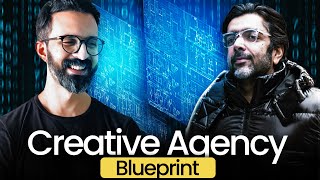
Avi Arya talks with Varun Duggirala about running a creative digital marketing agency. They cover niche specialization, pricing models, and how to add strategic value as you scale. The conversation also touches on work-life balance, fitness, and the personal side of building an agency.
When you start or at any stage of your life, whenever you're building a business, it's a little bit for it is for the money because you need to pay the bills, you need to take care of your salaries and all of that. But at the same time, it's also for the fun that you want. So it's always going to be a balance.
I think I honestly got into it because I thought it'd be fun to do and for me to try it out. But very quickly I realized that there's a community being built around almost democratizing business learning. Because I'm playing my audience. I'm not an expert. I want to ask every guest of mine, okay, what can you tell me about. And the thing with an agency business, you got to figure out how you can scale and what will give you the ability to not add more cost and still add more profit over time. And that only happens at finding one of these options.
You don't have to be a subject matter expert before you get into a podcast. You can be a seeker on a particular subject and you seek on behalf of your audience or joabunko sikha chath and it helps it become the win, win situation for everyone.
Hi guys, I'm Vardu Girala and you should listen to this episode me on the Internet Moguls podcast with Avi because we spoke about so many things that can help you build your own creative business, build your own agency, and more than anything else, kind of like do it with the right kind of framework to make things scalable in the long term.
So my name is Aviarya. Father of two girls, six dogs, husband to a superwoman, a streetcar racer turned hotelier, now social media marketer and founder of Internet vocals. Over to you.
Tough one to follow. I'm Varun Dugirala. I'm a creative entrepreneur, multiple podcast hoster, if that's the word to use. Author, father of two dogs, a daughter, and a midlife crisis creator. I also dabble in learning most things which people call useless, but eventually end up being useful.
When you start or at any stage of your life, whenever you're building a business, it's a little bit for it is for the money because you need to pay the bills, you need to take care of your salaries and all of that. But at the same time, it's also for the fun that you want. So it's always going to be a balance. There may be some projects that you pick up for for sheer fun. And I get I don't care about zero Budget, huh? Because you love it and you want to build your portfolio or just build your life around that project. And there are some that you pick up primarily for the money because you know this is going to fuel. So there's, there's no harm doing that. There's no, only passion based work, especially in the service industry.
Yeah. And I think also when you say the passion part, the passion comes in the fact that we've taken this project on. I might not enjoy it for what it is, but what it's going to deliver is for me to be able to give my employees what they need to be given to give the, to kind of build the facilities we need to build in the organization. So I think the passion comes in on the other side at some point that comes in, but it might not necessarily just be on the delivery side, might actually be more internal within the organization.
I love that, I love that a lot of entrepreneurs, especially the younger entrepreneurs, need to listen to this because passion, passion, passion. And then therefore they don't do anything. So you, you are, you know, the first time I've heard a different take on this, that you can find the passion or the mazara on another side. Like for example, for me, you know, I love car racing and I spend a lot of time, you know, doing all of that and it's an expensive sport. So whenever I'm working, I say thanks to my work for some of the things that it delivers to me with the tension and the stress because it allows me to go every Sunday morning to be able to do what I love to do. So look at where that, how it's helping you lead another life of passion. And so that will put things in perspective.
I just have one thing to add that I think what happens is I read sometime back, I forget where I read it, so that your passion doesn't have to. All your passions don't have to be monetized because oftentimes if you do your passion really well, it might just open other avenues. Like I don't podcast to make money out of it, but it's opened so many opportunities for me on my business end on, on many other fronts. Whereas if I just focused on podcasting, it needs to make me money from day one, I don't think I would have been able to do it the way I've been doing it.
Got it. That makes sense. So, you know, moving on to the next gear, since we are on the podcast thing, what are the advantages that you got out of podcasting? Because every entrepreneur feels, you know, yes, I have a lot to say, a lot to. So should it be very structured? What should I talk about? And should everybody have a podcast?
So I didn't get into it as an entrepreneur. I kind of stumbled into it. I had actually gone to be a guest on a friend's podcast. He was doing his pilot, and pilots rarely, if ever, go live. And he said, okay, you're my friend. We'll go for a dinner and dinner and a drink. I'll buy that for you. Just come and be a guest. So I did that and enjoyed it. And the company that was producing his podcast asked me, are you also game to do one doing one? Because they liked what I was seeing on the episode. And we got talking, and so I guess I ended up building an advertising agency without meaning to build one. So I didn't know how the industry worked. I didn't know the traditional pieces or the legacy of it. And so I said, I can't do a podcast on advertising because I don't know enough about it, even though it's been like a decade of building that out. And so we set out to do a podcast, and that's something. I'm an email platform. And then I broke. What I've actually gotten out of it is that I'm talking to someone. Instagram conversation with someone, you obviously can have a better relationship than if you just meet them for a meeting. It's also helped me find a lot of good talent. I've had people who've reached out after listening to the podcasting. I want to work for your organization. I hear you talk on it, so you got to think about what you get out of it. But I honestly got into it because I thought it'd be fun to do and for me to try it out. But very quickly, I realized that it was a community being built around almost democratizing business learning. Because I'm playing my audience. I'm not an expert. I want to ask every guest of mine, okay, what can you tell me about? So it's less pressure on me as well. The other podcast all one is a little bit more on the learning and personal development side. Another one, which is called Think first, is actually a little bit more on perspective on what's happening in the startup space. All those have happened because I now enjoy being a creator more. It's not necessarily for my business, but what I've actually realized is that if you are building a podcast as a business owner, then you can do one of two things. One is to popularize your culture so you attract talent A lot of talent wants to know what the companies like. If you listen to the company's podcast, you understand, you know what a culture is like, you know what your thought process is. The other option is to really build a network out there. But you got to do it consistently. You just doing a few here and there will not do it. You will have to commit to it saying, this is part of my marketing strategy, this is part of my talent acquisition strategy as a company. And once you look at that with the expense isn't that much.
Got it, Got it. So I like what you said, you know, yes, it helps build relationships with people, it helps you have fun, it helps you get into people's minds. But most importantly, what I like was when you said that I am playing my audience, I am asking questions on their behalf and so therefore there is less pressure on me. So for all of you people listening over here, you don't have to be a subject matter expert before you get into a podcast. You can be a seeker on a particular subject and you seek on behalf of your audience or joab unko seekhana chato aapo seek. And it helps. It becomes a win, win situation for everyone. Okay, so Varun, tell us a little bit about, you know, so what I talk about is, you know, all I want is everything. Yeah. So, you know, I want a good family and I want good business. And now what happened was that many years ago I was living that life as I spoke to you yesterday, where something or the other was getting compromised. And I'm like, why can't I have, you know, time with my kids? I just dropped my kids to school and, you know, spend time with them. Early morning conversations. You know, they have so much in their heads. School. I was very happy to have that 20 minute conversation which I was missing for, for a long time. And now I'm here and I'm going to have a full day of work and everything and I am going to go to the gym. Thanks for reminding me. So what's. What's but business Banana Family though compromise family. Banara. You know, you have can choose one. Don't. So I feel like all I want is everything but everything. But thanks to the Internet and thanks to, you know, being able to do podcasting and all of that, you're able to set up your, you know, your, your solutions or whatever services like you're saying, services business also from, from anywhere. So tell us, what is your take on balancing of family things? Everything. Or is there no balance? Or is there a fine balance or can you do. Is there a balance which is, I'll take care of the family at this time in the morning, this time work or you like? No, sometimes the balance means one month of work or one week of work and spending two weeks with the family. What. What is balance according to you? And how can we. How can one entrepreneur balance everything?
So if I go back to when I started off, I didn't know enough late 20s at that point, I didn't have any responsibilities, just had to pay for myself. But even then, I remember that Rohit and I had this thing that. My funniest story about saying how we looked at Balance the company from day one is we started on the 1st of December, 2009. That was a Saturday. Rohit said, I don't work weekends, which means technically, the first day of working is 3rd of December. Right. And that was literally both of us. No employees? No, literally him and I and. And we operated with that. We always said that we need to have two days off. So from day one, we had Saturday and Sunday off for the organization. We would, if somebody would kind of take some time off, we would give them that break. Somebody, I think, remember the early days somebody broke up, we would give them a day off saying, you know, you're mentally not going to the right place to work. And over time, that seeped into the culture and we kind of build that up. And that's always been my thought process is that there is work, there is life, and there is self. You got to make time for all three. It is. There is a way to do it. It's just that you need to make some compromises on stuff, which is actually, you realize, not that important. So my early morning and late at night is for self. So I wake up in the morning, I journal, you know, I make myself one of these cups of tea. And before I wake up my daughter for school, I kind of just like spend some time with myself. Don't pick up. I'm trying rather, but four or five days a week, try to not pick up the phone. I think one, two days, you will not. You can't resist that. And then it's time for family. My mornings are with my daughter and spend time with my wife. And eventually then work kicks off at some point in time right after my morning workout, and then it's back to back work. But I give myself like 15 minute breaks in between because I give my brain a bit of a breather in between. Pick up a physical book if I need to play with my dogs, if I have to and then evening again, the cycle just flips. Time with family and time for myself. And I get about six and a half, seven hours of sleep every night trying to make that seven hours now. So I stick to that cycle. What I give up on is that I don't binge watch as much. I feel that oftentimes you binge watch a lot of content. You spend so much time on doing so many things that that's what takes up your time. You can use that time to actually do the work you need to do or just spend time with friends and family. And there I make it a point that I call my, the group my people, which is basically my close friends and family. I make sure that in a week I spent to whatever extent some amount of time with them. Family obviously happens easier, they're at home. But in my close knit friends, at least every couple of weeks, I make sure that's there. And these things help you for your mindset. We might believe that it's taking you away from the hustle, taking you away from the work, but it's those small things that make the hustle and make the hard work worth it. Because that's what you're doing it for. Like eventually keep doing that cycle, doing that cycle and suddenly, like one day, five, six years later, like one second, I have nobody to share this with. I don't. I'm not. My friends are saying, are you around? What's. Or they'll just stop inviting you. And you don't want to go that far. Maybe you will scale 5% lesser in that year, but I think you'll scale a lot more in the long term. So it's a lot. If you played long term in terms of that, then you got to bring that. I've always believed in that fact.
Awesome. Also, it's therapeutic, right? You're coming out with your. Yeah. With people who you can just, just be yourself around, talk about being authentic and all of that. You know, you be around school, college, friend, then automatically you're back to your friends.
Tell me, are you coming here to meet us or you come to do a podcast? Podcast Hangout.
Awesome. So Varun, tell us, you know, what is your, what is this passion around working out? You work out every day and you know, how old are you, if you don't mind me asking?
I'm going to be 40 in four months.
Awesome. So you still. That we can still say 40 under 40 on the Ask a VRA show?
Almost. There are four months left.
Okay. So what is this thing with working out That's. That's so inspiring. And so. And that workout also, obviously takes away time from everything else. But why.
So I used to work out for the same reason I think most of us started working out for is that you want to look a certain way. Visually, I've always been a scrawny. I was a scrawny kid. I would not put on weight. I'll just be the thin person with a slight punch. If I didn't work out, and I always would try, and then I would stop for six months, a year, then again, do it. I'd pick up an injury in my shoulder, something like that, because I didn't know, practice the technique and stuff like that. And there was a period of time around 2016, 2017 that I'd buffed up a lot. I'd really put on a bunch of muscle and. But more like, I was more puffy than I feel that I was muscular. And we just had a daughter. Our daughter was born in 2017, and I would be carrying her around, and I would be huffing and puffing all the time, right? I mean, five minutes holding a newborn baby, and I'm tired. My arms are tired. And my wife said to me that, what's the point of having muscles if you can't carry a newborn baby around? And it was like a flip. Like, it was like a switch goes off, right? You're like, okay, one second. I got to figure this out. And I was thankfully in touch with someone I knew who was a fitness coach. And I just spoke to him, and he gave me a very interesting thought process. He said that in life, you need to do three things. You need to run better, you need to lift better, and you need to jump better. Any single physical activity you do relies on one of those three actions. And because of that, you need to just focus on the fact that if you can do those three well, the muscularness, the energy, all of that will come. But you build your entire focus on these three things, because then you'll be fit for anything life gives you. Like, we were on a family holiday a month ago, and my daughter's now four and a half. She's obviously much heavier than she was when she was a newborn baby. And I was. There was one of those. We were in Disneyland, and one of those positions was there, and she wanted to go after a character. I put on my shoulder, and we were walking behind that carriage for half an hour, and I didn't get lower back pain, right? So for me, it's that, like, I've really Focused, I would say, since 2017 to now, but saying, how can I perform better physically? And that's given me so much more energy to do everything else. And also that one hour, one and a half hours I work out every day is really, like. It's almost like my meditation. Like, I've switched off from the world. I'm focusing on the workout. Gives me time to think as well and gives me time to kind of like. I mean, I just call it my meditation. That's what I like to call it. But so.
But workout, right? Protein, right? All of that. You fussed a lot about that.
I'd say 50, 50, to be honest. Some days I'm good, some days are not. I have a sweet tooth. I. I like to have, you know, some form of this thing. But I've reduced that on. On weekdays now. I'm also getting close. I've also been told since I'm getting closer to 40, I should watch those things more. But I've never been a picky eater. Like, if you give me, like, healthy food, you give me, like a biryani or a pizza, I. I honestly will not have an issue with eating any of them. I'll enjoy eating all of them. So occasionally I will have the binge. I will do, like, one binge in a week where I will have something. But on a weekday, I eat. But, like, I have a portioning system. I learned. I did a workshop with the sports nutritionist, and she said that look at your plate and you just need to design your plate, which is basically like, you need to fill half your plate with vegetables. It is one third or half your plate of vegetables, and then there's another one third odd, which is going to be a protein, and the rest is your carbs. So when you look at your plate every day, when you fill it up, as long as it's. That proportion is fine, you're fine.
Okay?
You don't have to worry about, like, I don't weigh food. I don't do any of those things. I just focus on that proportion. I like eating vegetables, most of them, at least. And I just realized that when I started to do this plate thing that my protein proportion was lower. So I decided to do that. So. But yeah, like, if you put a cookie in front of me, I'll have a cookie. If you put, okay, you put a cupcake in front of me, I'll have it right away. Or biryani, I'll never resist in my life.
So no way.
Those things, I mean, what's the point of Giving those up. Like, what are you working out for? If you can't have the occasional biryani, then what's.
Get fit to a level where you can have a little bit of everything and balance it out first you have to.
And you don't have to do it every day also. No, see, even if you have a, even if you have like unhealthy food every day, eventually not taste as, as fun. Now for me, when I have that one weekend or like during the week, one day an opportunity comes, like Tuesday is going to be like, I know for a fact biryani is going to be fully available because it's eid. I know I will get it from multiple people who have made it proper in their home. Tuesday I'm going to eat. But does that mean I don't, you know, stop myself from thinking about today, will not have this and stuff like that? I don't necessarily. As long as you, in the long term, you are proportionally kind of maintained. That.
Got it. But you know, all these things, you're having your, you're having your green tea instead of maybe milk, vada, chai. So there are some lifestyle choices that you make, you know, along the way and there's a trade off, like, you know, I'll do this, I'll have the cupcake, but then let me not have chai four times a day and let me. So all of this has got a lot to do with how I'm feeling inside. You know, when I'm feeling really crappy or I'm feeling depressed or like you said, somebody broke up, you give them a day off or, you know, when you're going through life challenges, food sort of becomes a bombing effect, you know, gives a bombing effect, gives a hundred percent. So, so that means if you, when you look at somebody, I'm, you know, this is how what I'm. What I'm. What I assume when you look at somebody who looks good, is fit, works out regularly, has green tea and all of that. I see a person who is consciously being aware of life. When you're aware of how I'm thinking, you get aware of how I'm doing. So. So that life doesn't just happen to you when you're mindless, eating mindless, whatever. So is this coming to shifting gears from the food to awareness? Is awareness as an entrepreneur, as a family person, Is awareness a conscious part of your life?
Yeah, to be aware and to also be willing to evolve. The problem is oftentimes you also get sucking. No, this is the way I am or this is the way I will do things. If you're able to evolve, if you're aware, then you can actually evolve because you are also seeing what you might have to change. You're also seeing what the other person's perspective is like. And I agree with 100%. You need to be aware of not just like what is good for you and what is not, but how things will affect you in the long term, in the short term, like I said, like, if you're having a bad day and you really feel like, let's say if you want to have a drink, you want to sit and sit down and have one full bucket of ice cream, which I've had literally last week. Someday you feel like you eat it, like what is there. You make up for it over time because your body will tell you, the more you focus on having some form of health in you, your body will tell you next day, morning, you won't go to work, right? Because you do feel that drag and then you automatically won't do it again for a while. So the point is to almost give yourself that awareness to say, this is what I'm doing for this reason. And the more and more you do that, you also kind of evolve and it becomes a part of a system. Like you mentioned the tea, like I actually enjoyed this. Someone gifted this to me once. It was, it's kada. And I just drink it like twice a day. And I morning and in the night and I really enjoy it. I've forgotten to have dudwali chai in a long time.
Amazing. So you know what, this tub, you know, I really hold you in high regard. Once you told me that you finished a tub, but I have a story of a tub. So you know when, when they say we are pregnant, right? So they don't say my wife is pregnant. So we are pregnant. You know, you're going through the whole thing. So we were having our first child and this was when Raya was 16. 16. So about 16 years ago. And we got this one liter tub, okay. And my wife is like, and this was this 60 I, I, this was such a beautiful memory because I went to Blockbuster right next to my house and I, you know, you go and shop for, I still love to go and shop for CDs or LEDs or whatever. Netflix experience. I like, I used to like that, get a box of popcorn and you know, come with two movies. So she said, I'm really craving for ice cream. Get some ice cream. So I said, fine. So I got a Very nice. Two nice movies. And I got a tub of ice cream, like a 1 liter badawala tub. And I came home to find her fast asleep. So I finished two movies and I finished that one liter tub of chocolate ice cream.
Well done.
I know, right? I cherished that day. I cherished that day. Only that day after that, I didn't like those days, that decision of mine. But that day, I enjoyed it.
The next day, morning, you don't like it.
Next morning, you don't like it. Like, what the hell just happened? So, yeah, once in a while, having a tub doesn't matter what kind of tub you get is. And I'm telling myself, you know, I'm a large man, I'm big and tall, and told bantai and all of that. But my family gave me hell for. For years. They still talk about that fact that, you know, because the next day I couldn't put that tub right in the kitchen. Right? Like, how do you tell, like, you don't want everybody coming to you and said, what the hell have you done? So the tub went under my bed. I thought I'd get up in the morning and I'd throw it, but they found it. And so it became a story.
Just full clarity. The tub I had was this small. It was not a big tub, it was a chota tub.
Perfect. Perfect. Okay, so Varun, tell us about your. I love the title of your book, and I believe it's doing extremely well. Congratulations on that.
Thank you. Thank you.
So two things. When should an entrepreneur write a book? And why did you write a book?
So I actually, I've always wanted to write a book. I didn't know what I wanted to write about initially. I thought I would write fiction because I think we all first started off thinking about writing fiction, but I never ended up writing anything. This happened because a friend of mine got a book deal and he was asked to suggest names of other people who we thought would also want to write. And so the publishing house kind of asked me if I had any thoughts and I had a few ideas. One of them was literally to say that while we are taught many things in our lives, through college, through school, there are a bunch of things that we only learn through life and what you've been through.
So.
And my early 20s was a period where I was very confused. I didn't know what I wanted to do. I also went through a lot of stuff in my head, more than in, like, in the world. Because I moved from a small town to a bigger city. I wasn't doing as well. I'd gotten kicked out of boarding school, didn't do well in engineering. A lot of stuff happened around that time. So I was like, what would I at 18 to 20 would have want? What would I have wanted to know then that I know now? And it came down to five fundamental things, which is basically the fact that you never taught how to start things in life. You never taught how to make choices, you never taught how to learn, you sent for education, you never taught how to learn, you are never taught how to build connections with other people and you never taught to reflect within yourself. And I said that in life one of the core learnings I've had is these five things. And because those are out of syllabus to me when I was 18 and 20, but in some form I have a syllabus of that in my life because of my experience over the last 20 years. And I said I want to write about that. So initially the book was actually called like Work is out of syllabus, Career is out of Syllabus, Life is out, syllabus of. So a lot of stuff there. And we were just going to have this at the bottom and they said let's remove all of that, let's leave the other thing as a syllabus here. And so that's what the eventual title became. It's a bit of a bunch of learning. It's learnings from what I've. How I spent a start of my career, from how I figured out my internship and how I actually managed to take those three months and really build a foundation for myself, from how I found a mentor to. But beyond just the work stuff, even like how I build relationships with some of my closest friends, you know, how. How I found love. And also on the other end of the spectrum, also like smaller lessons on failure, on. On kind of looking at plans in life and how like really internalize some of those thought processes, what I kind of put down there. So it's a ton of learnings from my life, but also a ton of learn pieces from other books and stuff. So I realized that it's not like I didn't want to be that person. I know everything because I don't. But I've actually learned so much from many other people through their books, through their content and stuff like that. So there's a lot of stuff you can learn from. How to deal with pressure, how to deal with procrastination, how to kind of deal with even like learning and evolving, how to have conversations. So all of that Stuff is what's in the book. It's not a big book. It's about 150, 200 pages. It's written so that you can flip to any chapter that you find interesting and it still makes sense but if you read it in sequence it'll still make sense as well. I actually spent the most amount of time on structuring to figure user journey and should an entrepreneur when should an entrepreneur write a book? Is that when you know that what you put in on is not for yourself but it's going to be enough value for the people reading it? Because there are many books which come out which are about okay, this is what my journey has been like. But I feel what people really want is what can they learn from you or anything. It might not even be from you. It could be just something that you know about and that's when you should write a book. It shouldn't be. I mean there's a lot of self promotion book and I didn't, I've never believed in that. So for me it was more about. I wanted to showcase what has helped me get to where I am but also like what could help somebody else kind of build their own instruction manual for their life if that's the term to use. That's where I came from. But yeah, just go with the value you can actually give someone. I think that's the reason why you should actually write a book.
Awesome. And I'm going to put a link once we publish this podcast on the channel and everywhere I'm going to put a link for people to be able to collect this book 100% varun tell us so you know, advertising digital setting up an agency completely services business. Right. So people heavy, you know, you make system system break. So how does one start an agency in 2022 and how do you like you before build a team of five people Everybody has responsibilities because you know you can't do it. But you were only two people. So in today's perspective a lot of people find this very glamorous. I'm going to open an agency. That agency is something which is so and then you open an agency like Mayur. I don't know what to do next because there's so many moving parts. There's no so what would be your advice to agency owners or people wanting to start agencies? How should they start and what are the things to keep in mind?
So the way today's market is compared to when we started off today's markets, the niche market. So if you have a Very specific skill set and a niche. The deeper you go into that, the better you will do. The problem is also because the market has too many agencies. So if you try to go wide and say, okay, I'll have all the services, let's say some of the larger agencies have, or I'll try to get, let's say about 20, 30 clients across different services, the chance of you stretching yourself and your team and not being able to hit that revenue number is very high in today's day and age. If you are someone who's like let's say super specialized in a certain kind of branded content, let's say hypothetically, if you're a agency which creates really good content for direct to consumer brands to be able to create that content, they can put out there for pushing for purchase, to push out there for performance marketing, et cetera, that's a great niche to have. Now you will find many clients who will say, okay, they're specializing in this, this is what they're really good at and that's what will tap into them for. And also because you'll have a cost benefit in the beginning because there'll be other people who might have more overheads than you. So you can honestly many ways kind of come into the market and kind of break the market a little bit and then over time scale. The other one is to kind of look at it by saying that okay, can I almost come in? And this is more from a tech stack perspective. Technology is now such a core part of how advertising works end to end a lot of things which you would have humans do before. Right now we just kind of optimize it by just putting technology in. Simple example, before you would have designers in an agency who would make the main creative and then do multiple versions of that for every single platform. Today most of those versions are done by automated software. But if you're someone who has been able to create that software, then you can price it right? And it doesn't matter if there are global examples. I'm talking primarily from the fact that because I've actually spoken to some startups in this space and they're doing really well because the price benefit you will have by pricing from India versus what the price somebody who's kind of built it out of, let's say the European market or the American market will be much better. So you'll get more projects. So you need to find that niche or build a product people will connect with. If you go about it the straightforward way, you can still do it that I'VE seen succeed only when somebody who's already a reasonably large name in the, in the agency space kind of leaves a bigger network and builds their own agency, that connections help because globally what's happening is most of these companies are either moving to consolidation or they go for very niche or really focused agencies. It's the same way how whenever Cred does their ads, the simple fact is that they go to Tanmay and a few Bhopana, some of those people, because they are very specialized in that kind of advertising. And brands today are very clear about who they're going to for what. They don't necessarily go to one partner for everything. So you need to just become that one partner for that specific thing and you will find enough brands who will work with you.
Okay, so I'm just recapping what you just said. So you're saying that a definitely niche down because you, you know, going wide is going to stretch not only yourself but your team because every kind of project or industry that you work with has a learning curve and to go through multiple learning curves and be successful and have revenues is going to be difficult. So find out a niche that you can sort of zero down on, number one. Number two, try to pitch for international projects because you have a price advantage being in India and to have a product. And third is you said that you could have a product as when you said product you mean a tech product.
Yeah, a tech product. So while you example, there's a startup which I actually came in touch with here in India and we actually work with them as well. What they were doing was simply what I mentioned earlier is that you know, you have a master creative, you want to make multiple dimension versions of that for different media networks or something that will go on, let's say across media channels you have different dimensions, you have to scale it differently. The font have to move. You can set rules and guidelines in the software and it will auto generate all of those creatives for you, which normally would be a 2, 3 humans job that machines is automatically generating it out there.
Right.
And his cost was, I would say less than half of what a global partner was telling us it would cost. His product was I would say 80% as good, 75% as good. But we chose to work with him because A he was willing to customize it for us for any requirements we might have and he was in India, which means that we could actually work with him on developing his product so we could get more value out of it. And the cost, the 25% made sense. It's local, he'll customize and the cost works versus a global partner who will be a little more rigid in changing things around. So the opportunity is there. The opportunities in the, in the tech part, which is a major player. I think I've used the word tech stack in advertising more than I've used anything in the last two years.
So Varun, when you say tech and when you say agency, let's talk about digital marketing agencies. So a lot of people go with, okay, I'm going to do SEO, I'm going to do ppca. So they're selling it like Aloo Prudelo, you know, instead of saying get tech, I help real estate companies sell more apartments every week and create 5 crores extra to the, you know, some kind of a tangible result. So in terms of marketing, because you've been through so many agencies, so many, your own experience and everything, can you give us a few examples like these on how when somebody is getting started, how they should position themselves? Because I see a lot of people positioning by reading with products and you figure out what you can do with this.
See, you can do that, but then you become a vendor. If you want to be a partner, you need to add strategic insight. So no matter what you do, you need to come in with saying, okay, strategically, this is what we can add and this is how we can develop it. So I'll give an example. There's a production house which I know here. Their job is like most production offices, an agency and a brand company creative and they have to execute it. But I know that even if they get a normal brief, they come back with things strategically. From what we have worked on in this market, these changes would be good to make in your creative so that it will get better results. So they come in with a data point, they come in with strategic changes for what will make the product sell better. And suddenly the brand's turning around and saying, once again, they're not like a regular production house. I won't treat them like a vendor, they give me more value. So if you can come back with just that amount of strategy, there is genuinely that relationship is much better. And you can overtime actually even charge for that. You can turn around and say you want the bare bones vendor Walla like you said Sabzima scenario, this is how much we charge, but you want us to give that value at. Then this is the cost that comes for those people who give you that. So you could call it a creative cost, you could call it a creative strategy cost or just A strategy cost. But you build that into your budget and that's what's scalable. Because everything else is a commodity, like your light car, it will only go so much. Your camera, it will only go so much. But that person's rate for how much value they're bringing, you can scale it up however you want over time. And I think that's really where like for instance, for us, that's core, we do our own production. But where we eventually have been able to scale is we've scaled our strategy value. So brands have paid us more and more for strategy over the years, whereas our production costs, at some point the margins would go down because the market always moves towards commoditizing it. So always look at it from that sense. If anything can be commoditized, make sure that that's not where you make your money from in the long term. If something can be commoditized like a human, actual insight in there that that's a great value to add. Even if you're doing tech and automation and everything else, it's that person saying, this is how you should use the tool, this is how you can better optimize it.
Oh, interesting. So even when you're giving a product which is, which should have a fixed monthly cost, your brains and your understanding of a particular business and seeing how I'll tell you how to use this, better add more value and therefore more price to your retailership.
Because eventually whatever is, whatever you can eventually give to a machine to do will go to a machine. What's left for humans to do is going to be strategy, is going to be creative, is going to be something that is analytical in our head. Everything else is already moving, has moved to a large extent to the machines. So you want to kind of build in that as your clear differentiator to build more and to underscale revenue.
Varun, you've been doing this for such a long time, for so many years when you started with just you and your friend and is he still working Monday to Friday or do, do you, do you stretch him on weekends as well?
I know we both of us only work Monday to Friday.
Okay, so, so you've been doing this for such a long time. And so what is your advice for new agencies that are coming up? How you know, like, is there a typical way to price a product when you, you know, you're new, you're two co founders, you're like, okay, I'm going to go and solve this digital problem for this client. How does one person charge like how do you, how do you charge for a. Do you see that? I'm going to give you, I'm going to sell your apartment for 5 crores and I'm going to tell you two more apartments. You give me 2% like you give to the real estate agent as well. So you, what are the, you know, any idea on how to charge?
I don't think there is a, the right way to do it, but I would honestly say that. So there are pros and cons to breaking the market. There are people who come in and say I will do it on cost so I can get more clients in. The problem with that is for you to at some point add a margin becomes much tougher. So the way I would say it is look at your costs very clearly. Make sure you add on a certain level of establishment costs. Because what we often don't factor in is that, okay, you, this is the cost of the project. What is the cost for everything else, the office, the lights, the, you know, anybody who's an admin, et cetera. So add a certain percentage for that and then put a slight buffer and that's your cost and you're going to giving a client a budget. If they say okay, I want transparency. Some clients nowadays ask for transparency on cost, right? You then building it down, saying this is my cost for team, this is my cost for overheads and this is my margin. Because if you're not doing it for a profit, why are you doing it right? And we've sometimes been transparency. This is our margin. You can audit our numbers and everything will be clean. But as long as you make this percentage here, and some people agree, some people don't, it's a good one to try. A lot of them will look at you like are you serious? You're showing me your margin. Like this is what I want to make. What's the point of doing the project otherwise? And I'd say don't compromise too much on that. You should at some point should get a project which you know will give you scale. So we've sometimes done projects with very minimal if not negligible margins, but we knew that's a foot in the door to a larger set of projects. But if you do that too often, then people will hold you to that kind of a margin, that kind of a cost. So go base level, your cost, your overhead cost and what margin you want to make into. And one big learning for me is that always calculate the profit, the margin by minusing off how much you will also give for tax because oftentimes we all forget how much goes off for tax. And then you say I made this much profit. Like then someone says, one second, but that's gone in.
That's not your money.
What's left, right? I made that mistake so many times and then eventually, thankfully had a decent finance person who turned to me and said, yeah, taxi, some joke. I'm like, okay, fair enough is what happened.
You know, I, I'd gone for this grant Cardone's conference once and they had. I learned a lot. And I quote this many times. There was John Travolta sitting over there. There was Kevin Hart and there was Mayweather the boxer. And there was, how can I forget one, one of my favorite rappers. I'm forgetting his name. So these people are sitting, you know, and they're talking about different things. So two things I want to just, you know, bring here. It'll help the audience listening and I'm sure you'll find it. So Kevin Hart said the same thing that you said. He said, you know what? I make multi million dollars every month, every quarter from every movie and all of that. He said, I put 50% of it in my account and 50 is not even mine to touch with. And that's how I start, he said, because when it's all going to go toward taxes and everything, I just, 50% comes to me and I then start my journey from there. So he said, always have a different bucket because eventually later when the tax man comes and you don't have money, you're going to get into trouble. And what John Travolta said was very interesting varun. You know what he said? He said that he had a bit of a problem. He said he's got multiple planes because he's fond of flying and he has commercial planes. You know, he likes all kinds of planes. So he says, he asked one of his accountants one day and they said, he said, how much do I pay for fuel costs? So they said about $1 million a year. So he said, no, somebody else should be paying for this. So he said, so I started looking for advertisers. He said, I have a, I have a team, I have a, you know, the whole shebang. But guess who went out and putting this deal? So he said, I called up people multiple times, put the deal together and finally I had a sponsor to pay my, for my travel. And so that the fuel. Kevin Hart said that after every time I do a movie, people think he's so busy they don't want to pick up the phone. But they don't realize I don't have a project. So I pick up the phone and I make projects happen. So the projects that are coming to you, what I learned from there was the projects that are coming to you are the ones which are coming to 20 people. And maybe the lowest bidder gets it. But the projects that are really valuable, sometimes you have to go for them. Just go for an agency, go for a client and say, I'm going to pitch to these people. There's no RFP in the market. What's your take on being aggressive? Are you aggressive and go all out after your clients or do you wait for them to come to you or. A little bit.
So we've done a mixture, but what we actually did was the strategy that worked for us in the long term. We realized that we spread ourselves between too many clients. We have to find too many people for sales, too many people to manage those clients. So we actually focus on conglomerates. So it's okay, we start working with the Unilever. You know, there's so many brands within Unilever, the number of people required to service that from like, really going deep into the business will be lesser than if you go for separate companies. And what we started to do was we started to work on projects that we knew people will kind of notice and say, okay, who did that? And some glitch did that. And so that's how we kind of spread across the ecosystem. And we would have our team literally in the Unilever campus on a regular basis, making sure that people knew we were there, people knew this, the work we were doing. We would never see it, but it was very obvious that there's a set of people who seem to have invaded the coffee shop area in the Unilever campus for one project or the other. And we also build relationships that we build relations by saying, okay, what's the worst that will happen? Somebody will say they won't give us a project. We would say, don't give us the digital mandate. Give us the overall creator to mandate. You would say, don't just give us the digital film production, give us the full ad film production half the time. More than that, they would say no, but we would say that just for you to know this is what we can do, which the bigger guys can't. So, for instance, when we did a digital film and a bigger film, we. We actually had a system of function which you still use. It's getting the big one and the small ones and everything else shot in a. In little, the same Space. So instead of you doing two short shooting one and you will get a cost benefit out of it, we will get a margin benefit because we literally we strategically plan it in a way that we also make money out of it. So we'll go and talk about that. You got to, you got to got to state what you can add to it, not just asking for it. This is what I can do beyond what the other person's doing or beyond what you're normally used to and also like know where you shouldn't really go. We realized early on because we understood digital and there were a lot of digital first being brands being launched by some of the larger companies we were pitching. We understand digital. So your overall creative for these brands shouldn't go to a traditional agency. Should go to someone who understands digital. We'll handle the overall creative also. And so that's how we kind of got in is that you got to go in and play to your strength but also kind of ask by showing not the advantage that you are going to get but actually what the other person is also going to get. Right. I think that's my favorite part about negotiations is that you're saying I'm making you win by working with me. It's not necessary to say that I'm going to win by getting this project.
From you Got it. Love it. Varun. When it comes to, you know, I just wanted to for the audience who's, you know is going to be listening on the different channels when you say creative, there is one creative is I know how to make creative on Canva and my co founder knows how to write very well. So we are a creative agency versus Amul. They just came up with the two cheese for their new cheese. They said you're two Cheese but he have musk. Musk. You know, with. So that is creative which gets, you know, which you know, you, you, you charge a bomb for that. So that. So for agencies who are saying I'm a creative person, I need to be charged for my. So this is real thinking to cheese buddy. Ha. Musk. Musk. It's relevant. Everybody's talking about musk. And so what's the difference between this creative. So this is a partner versus what you said. The other person is a vendor who'll say.
And also. And the difference is that the second one which is the Amul one is you're spending time with the brand. Singh, in the long term, what's our voice going to be like? You know, what does the brand stand for? What are the brand's values because whatever Amul puts out, you know, it's Amul creative because you know, it's almost like you can, you can make out that there's a tone to it, a certain voice to it. And to build that requires literally a strategy and a planning team from the agencies and working with the brand and building that whole thing out basis consumer insight basis data. You kind of putting that entire Persona to a brand and then you have a set of creative people, what we normally call a creative, which is basically your writers, your writers and designers who are saying, okay, how do we visually represent this voice? Which means you then sitting on okay, what colors do we use? What kind of language do we use? What is the, what is the script you put together? What is the copy you put on for a social post versus how will this copy change when you're using it for online? Like creative that's pushed in performance marketing and it goes deeper. And then now we also tag that and see how do you eventually execute it? How do you kind of make sure the execution is actually sticking to all these lines? That's when you become a true blue creative agency is that you're connecting all engine, taking the strategy and the data from the consumer. You are building the voice for the brand. You are also working on the creative for what's written there, then working on pushing it out into the right channels by building the right creative and then doing the whole thing again now across multiple platforms and multiple channels.
Got it, Got it. Lovely. This puts in a broader perspective for a lot of agencies who feel, you know, it's just putting a Canva creative and putting some words on it, which.
Is basically, which I think is the only thing with that is that then you're working at a scale which is not scalable. At some point of time there's only so much you can charge for the canva creative.
Sure.
You will then run out of energy to do those creatives and what is scalable for you. And the thing with an agency business, you got to figure out how you can scale and what will give you the ability to not add more cost and still add more profit over time now and that only happens with finding one of these options.
Got it. Varun, what is. So you know you've been building your personal brand and is it deliberate and how does a personal brand help an agency and tomorrow if you want, can the agency be run by somebody else and you just run your personal brand? I mean can those things happen?
So also from the agency front, so I'm not the CEO of the agency. I've actually never been the CEO. So my wife Pooja, she's actually the CEO of the agency. We never had a CEO before she joined the company. She actually came on to lead our sales team. And I used to be called Left Brain and my partner with a studio called Right Brain because we didn't. Because you know, if you suddenly say CEO cco, but we thought it'd be really random. So we called ourselves Left Brain and Right Brain and we started off, I love that. And eventually we took formal titles after we got acquired because this global network become easier to explain. But she really drives and runs the agency. I will see the entire production and content part of our practice, which is going to be a lot more for what is executed for most of the brands we work with. On the personal brand said it honestly wasn't a plan. I started to do the podcast and I just started sharing stuff. I like learning how things work. So I studied how to kind of create more content without having to also manually have to do all of it. So how do you repurpose across a podcast? How do you kind of look at sharing a certain kind of creative online? How do you write? And I went back to think, what are the fundamental things I can do really quickly? I can write very quickly. I can record a podcast, which is audio, very quickly, video. I've had to learn I wasn't as comfortable on camera as I am now. So slowly over time, I think recording reels takes some time for you to learn how to do that. And my idea was simply the same. What am I sharing with the world and how to put structure around it is how I've kind of built it. There wasn't a plan till I would say, almost like six, eight months ago. And I was just sharing anything on everything across all platforms. And then actually sat down and said that why should someone consume my content on any platform? And then I broke it down and said, okay, this is what I I'm going to take out of what I share on LinkedIn. This is what I'm going to take out of what I'm sharing on Instagram. This is what I'm taking out. For me, it is a taking out problem rather than add more because I was sharing everything everywhere. And it also was like tiring myself out trying to do all of it and what can I outsource? So I've actually, for instance, my podcast, I only do the recording part. All the production, all sound design, uploading, scheduling is done by my producer. He takes care of that similarly, when I do my newsletter as well, I actually write a lot of my newsletters except for one piece every week, which is already pre created once a month because I like to write it myself. I write everything, just give it to a team I have who again schedules it out. I don't want to schedule for a specific time. They take care of any of the design parts and the hyperlinking and all that stuff. Again with stuff like tweets or any of those. So I've handed over scheduling. I know that eventually someone's told me that I will have to hand over some form of writing, which I think I will eventually will some parts. But I think the longer pieces, I enjoy writing them too much to give them up. So have I thought about it consciously as saying, am I building a personal brand? I don't think I've looked at it that way. I've looked at a thing. I'm building a media network for myself. I believe that every person creating content online is a media network to themselves. And I'm a media person at my core. So I'm like, if I was to flip it around and saying, what am I sharing? If I was a media network today, what should my channels of distributions be about? How do I make sure that if I'm building a certain flow on a YouTube channel, can tomorrow I create another property and can that rest there as well, which doesn't even require me to host it? Would my LinkedIn have more collaborators? So that's how I look at it, is saying that an individual is never scalable. I'd say a channel is scalable if you can add more elements to it over time. And that's how I've approached it. I haven't approached it as branding, although I've gotten a lot of advice on it and I have taken a lot of that advice as well. Like I, I work with someone as a YouTube consultant for my YouTube, right? I work with Manish Pandey. Manish is amazing. He's giving me a lot of things on that. Someone actually turned to me and said, you haven't optimized your LinkedIn? I said, I don't know what that means. So I said, can you tell me what that means? And so actually an entire session with someone who had done that for a few other people online and they said, okay, this is how we should write stuff.
More from Avi

The strongest mindset doesn't begin with meditation. It begins at home. Before you conquer the wor

The strongest mindset doesn't begin with meditation. It begins at home. Before you conquer the wor

Your mindset isn't something you fix once. It's something you train every single day. Just like yo

Don't build a company just because your friends are. Build one because you're ready. A startup is

Everyone dreams of becoming the boss. Very few understand what that really means. The moment you b

Most entrepreneurs say, "I don't have time for coaching." The truth? You don't make time for what

Over hiring doesn't always solve problems. Sometimes, it creates them. Having a small buffer in you

"The highest-paid" isn't the goal. The highest-value is. People often ask why premium mentorship co

The founder will always be a bottleneck... at some stage. The goal isn't to pretend you're never th

People ask me how I stay consistent with my morning routine while traveling across countries and tim

People ask me how I stay consistent with my morning routine while traveling across countries and tim