Leverage Twitter To Generate Massive Results For Your Business
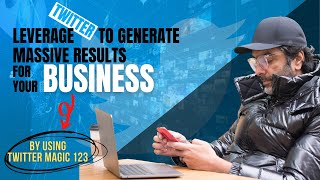
Avi Arya and Keith discuss how to use Twitter for leads and audience building. They cover following targeted users, posting video content, and live streaming. The video offers practical tactics for entrepreneurs wanting to grow a business on social media.
The shortest distance between two human hearts is a story.
And I call myself a lifestylepreneur. What that means is that I do what I need to do to live the life that I want. Because I live on the Internet and I connect. I hated my job. I worked for 20 years in the city, and on my 40th birthday, 2006, I decided I'm not working for anyone else anymore. I'm going to find my own path.
My name is Avi Raval of Cougar six Dog, Husband to a superwoman, a streetcar racer turned hotelier, now social media marketer, founder of. And I'm going to be teaching you something very interesting. So I'll get right into the interview now. Okay. And so you know, Keith, one thing that we tell all our students is the shortest distance between two human hearts is a story you tell someone and you win a heart. So I have a format where I say, when you do any video on the Internet, before and at the end of every video, put in a small introduction. We call this the hero introduction, which allows you to connect with people on various levels. Family, your hobbies, they get to know who you are. So what I do is I start with my hero introduction and I request you to tell us yours.
Okay? Okay. Okay.
So my name is ABHI Arya. Father of two girls, six dogs, husband to a superwoman, a streetcar racer turned hotelier, now social media marketer and founder of Internet moguls, and creator of the Micro Video Mastery System, a system of 33 videos that allow every entrepreneur to become a video entrepreneur and get known, get leads and get sales using just their smartphone from anywhere on the planet.
Brilliant.
Over to you.
Well, I'm in Melbourne, Australia. I live an hour from the city and I call myself a lifestylepreneur. What that means is that I do what I need to do to live the life that I want. I walk on the beach every night. I go to get a coffee in the morning with my wife. I live life first, and everything that I do is based around that. So I live an hour from the city. And even if I could, I'd never go to the city. So what you're doing absolutely perfectly maps over what I do because I live on the Internet and I connect as we are now on the Internet. Yeah.
That is fantastic. So tell us a little bit about your Twitter story because you're the Twitter expert.
Yeah.
So tell us about your Twitter story and how did you get started on Twitter?
Well, my story starts, like a lot of people. I hated my job. I worked for 20 years in the city, and I worked in a call center, and I worked at all these places. And on my 40th birthday, 2006, I decided, I'm not working for anyone else anymore. I'm going to find my own path. So my path started with an intention. So in April 20th, 20th in April 2006, I decided I'm not going to work anymore for someone else. I'm going to work for myself. And I'd always wanted to be on the radio. So I had a podcast for a long time, and that went quite well. But I found this is why I got into Twitter. I found that of all the ways to promote a podcast, Twitter was and still is, by far the best way. And I just got really, really good at Twitter, and I got really great results on Twitter. And then people started to ask, as they do, how you doing that? How did you do it? Can you teach me to do it? Yeah, I can teach you to do it. Can you come and speak about that? Can you come on my podcast and tell me how you did it? Can you write a blog about that? So suddenly the universe was saying, well, look, this is your path, Keith. You've nailed this. You've got to do it. So I created this system called Crack the Twitter Code, and basically, for the last 10 years, have taught people to use Twitter to get traction. Exactly what you talked about. Getting leads, getting sales, getting engagement, building your brand. And I do it with Twitter. And so I just found that Twitter worked for me. And I think that that's the point. You have to find something that works for you. You have to find that secret source that you can resonate with, because I was doing. Was working. So it's just. It's a miracle, and I love it. And so now I just teach others to do it.
I love it when you so call it a miracle, because that's what I talk. That's how I talk about videos. I say it's a magic of the 21st century where you can send a message, use Facebook ads, and make sure that that video reaches a person in another part of the world. What. What else is. I love the way that you, you know, you. You resonate with the same stuff. So, Keith, I'll get to the basics. So, you know, this is interview that we watched by entrepreneurs at all levels. There'll be marketers, there'll be people who have no idea of Twitter. So how should people get started? Can you get us, give us a few, like, three or four ideas?
Yeah, look, I actually have a Twitter. You'll love this. I have this project I call Twitter magic123 Twitter in three steps. One is follow first. This is huge. Have the courage, have the humility to say, you know what? I don't know everything. I'm gonna follow other people first and reach out and help them. Always start with an open heart. So I follow lots of other people, and then when they follow me back, I reach out, I start chatting and I ask them what they need, and then we become friends, and then they retweet me, and then they introduce me to their friends, and then I go on their podcast. And it's a circular sort of system. Always follow first. Have the humility to know that not everyone knows you. And it's easy. You can follow up to 5,000 people before putter stops you. I don't recommend that. Maybe 20, 30 people a day. The second thing is, I want you to follow back.
These people that I follow cannot. Should not be random people. They should be people who are in my interest circle.
From whom? Oh, yes. Well, that in itself is a very good story. So if you have a very strong understanding, that's where you need to start. You need to have a very strong, average understanding of who your avatar is, who your ideal client is. So, for instance, I'm doing a project for writers, so I'm now following a lot of writers. So when writers follow me back, I think, well, instantly I've got something in common. I followed them first. I've got a product for writers, and I start talking about that eventually. So, yes, that's a very good point. Follow people first. Who you want to be followed back by, who interest you. It's not random people, not famous people. And then when you get your mojo and you start getting people following you, then you need to follow some people back. I know a lot of people have said to me, mate, I'm on Twitter because I'm the star. I mean, I'm the dude. And I said, yeah, well, that's right. If you're Stephen King and you've written six books and you've got a national number one best seller, and you're living in a really cool house in Malibu, no worries. You can do whatever you want. But when you first started and no one knows who you are, you've got to have the humility to say, look, I'll follow some people. I'll follow them back. So follow first, follow back. The third one, this is the clincher, is follow up. Follow first, follow back, follow up. So what I do every day, every Single day, maybe, with the exception of weekends, is I find out who's followed me the day before and I thank them. Hey, thanks for following me. How is Vancouver, Canada today? Spring here it's four there. Is it getting cold? Sorry.
These are personalized messages.
That's right. I personally love DMs, but I do them myself and I personalize them. So if we connected, I would have said, okay, how is Vancouver, Canada today? Because you live in Vancouver, suddenly you get the sense that, wow, this guy knows where I live and he's into it. He's actually researched me. He's looked at my website and he's interested. It's not a spammy sort of randomized auto DM. So follow first, follow back, follow up, Twitter magic123. That in itself is really all you need to listen to.
Thank you for the interview. Nice talking to you. Bye. Bye. That was, you know, that could be the trailer of our interview when we publish it.
Yeah.
Fantastic. So tell us. So you know, there are entrepreneurs who are now watching you who have unfortunately gone through a major up. I won't say upheaval. That's. I'll say, you know, a revamp of their business strategy. And they're now looking at Twitter. Seriously. So what would you tell them to do in the next, say, 90 days? Do this. Build your own brand. What would be your strategy for that?
Yeah, okay, I can tell you exactly based on Twitter magic. One, two, three. Follow 30 people a day for 30 days.
Okay?
That means that you would have followed 900 people. And in that time, some of them will follow you back and you've hit the ground running. Follow 30 people who find, first of all, find out who you want to target. Writers, entrepreneurs, singers, whoever is your target ideal client then. And you can do this via keywords and hashtags. And there's all sorts of tools on Twitter to do this and follow first. 30 people a day for 30 days. I have this hashtag, Twitter3030, if you want to follow that. I've got lots and lots of resources on that hashtag. So then by the end of the month, 30 days, you would have followed 900 people and probably about 30%, 3 or 400 people would have followed you back. And then you're off and running. You've got a couple of followers, people are starting, and you can start DMing them direct messaging. And then what I call rinse and repeat. Just have a look and see how your strategy went. Did it go well? You followed 900? Did you get 300? Would you get 100. Are you on target? Rinse and repeat, have a week off, then start again.
Right.
And if you start with the idea that you're. You're driving it, you're not waiting for people to follow, you know, waking up in the morning and saying, hey, guess what? I've got two new followers. But who are they? You drive. You drive the train. Yeah. Suddenly, in one month, you followed 2700 people. You've probably got a thousand followers. And then you're. You're off to the races, aren't you? You've got a thousand people you can talk to. Does that, does that resonate?
100%? 100%. Great. So, Keith, when it comes to say I'm a. I've done what you've said, I've gone through the first 30 days, 90 days, and I've got a thousand followers, and I start talking to them. Is there what is. What's. What should be the next step? Should I go, Can I go live on Twitter? Should I do a video on Twitter? How do I get them to come into my funnel so that they can book a call with me so I can tell them about my package or sell them my webinar or.
Okay, okay, you've actually, you've asked a couple of questions there. One is, the first question is go gently. So I have this really fantastic system which I call the 8020 rule. That's not my phrase, but the 8020 rule is for every time that I talk about myself, I find this is a rock solid strategy. I find four other things that are not related to me to talk about, and I'll tell you why. If, for instance, I tweeted four times a day about all my friends, the one time that I tweeted about myself, guess what they're gonna do? They're gonna retweet it because I've helped them first.
Right?
So from the point of view of this content, you find four other things to talk to tweet about. And this is the major thing that people do wrong. They only talk about themselves. Here I am. Book a call, give me a call. I'm here to call. You know, blah, blah, blah, blah, blah, blah. Too spammy, too fast. Take some time to actually find some good tweets, find some good buddies and say, okay, I'm going to tweet about sunny, great video content in Vancouver. I'm going to find such and such who's a blogger. I'm going to find such and such who's a Twitter dude. I'm going to find Someone who talks about Facebook ads, and guess what I talk about. And then that's a nice mix. Five tweets a day, four about something else, one about me, then this is very wholesome community building. You've got four other people looking after you. They're probably retweeting your stuff. So everyone's getting at least five retweets a day. Then you start to build it. Then what you start to do is you start to ramp up the type of content. Is it. Do you create video? Video is very powerful on Twitter. Do you create it? If you're up for that, then that's very powerful.
Right? If not, you could have a blank micro video mastery.
Yeah. Yes. Well, here's a really cool hack. I don't know if you know this one. This is my secret hack on Twitter. Videos that are less than 60 seconds loop.
Nice.
So if you can make videos that are less than 60 seconds, preferably 20 seconds, but if you can make a video that goes less than 60 seconds, it will never stop. Now, what happens there, why that's powerful, because there's 9,000 tweets a second as people are scrolling through their Twitter feed when they're getting their coffee or they're on their train, trying to think of what the consumer's doing. They're busy, they're driving, or hopefully they're not driving, but they're on the train, they're getting a coffee, they're at the airport, you know, and they're sitting and they got a minute, and suddenly this video comes up and it's just cool. And it keeps going. It never stops. It's like constantly rotating. What would you rather look at? Some random static text or a moving picture? This is exactly why you teach video mastery, isn't it? Because that's what gets people's attention. It's moving. Yeah. So Twitter, you can. On Twitter, you can have up to 2 minutes and 20 seconds, 140 seconds to fit in with 140 characters, which Twitter was known for. But we've noticed that when videos are less than 60 seconds, because they loop and therefore never stop, the traction goes through the roof, just through the roof, by comparison to other content in a similar format. So there's a little hack you can try.
Can you go live on Twitter?
You can with Periscope.
And have you tried that?
Oh, yeah. So you talked a lot about recently, the idea that the word is pivot. You know, that entrepreneurs are thinking, well, geez, you know, for many, many, many, many years, this was working really well. And now I have to change. We call that a pivot. It's a good thing. Right. So I have pivoted slightly at the moment to a lot. Do live streaming.
Okay.
And there's two ways to do live streaming. One is you can grab your phone and you can just live stream with you staring at the phone with Twitter or Facebook Live or whatever. That's the old style live streaming. But what is now happening, and I'm getting quite good at this, and I'm still in the learning stages, is you can use software like Streamyard.
Yeah.
Which is actually a Vancouver product. They're in Vancouver. Those guys. I don't know if you know them, they'd be great for your show. So Streamyard is two young guys. You are. Yes, yes, yes. So you know these guys. I love them. Two young guys. They created this platform. And if you haven't tried it, I want you to go to streamyard.com today. If you do nothing else, streamyard.com and what it does is it creates a lovely file here, like on Zoom, except it sends that file to Facebook, to Twitter, to LinkedIn, to YouTube, all at the same time.
Twitch. All of that.
That's right. Up to 10 different sites. Actually, no, you can have up to 10 variations, but the Pro version allows you to choose eight of those variations simultaneously. So what we used to do is we used to grab our phone and we used to sort of livestream to Periscope. Then we'd go over here and we'd live stream to Instagram.
And then we.
Some people used to have like six phones going now, and I've seen that happen. But now Streamyard, you can do this one file with two people, up to 10 people side by side, talking like an event. And you simultaneously stream that to Twitter. I do it a lot to Twitter via Periscope, because they're on by the by Twitter, Facebook Live, LinkedIn, Live, YouTube, Twitch. And I'd be very interested to hear your thoughts on live streaming. But I think in 2021 and moving forward, live streaming is going to be the thing that's going to be the number one thing that people are going to do, because it's. It's quite new and it's a bit scary. But once people get their mojo, you know, there's the interaction piece. You can see my face. You know, you can. You can actually interact with me live. So you get a sense that it's not a static video with me talking at you. Do you get this? Are you doing this yourself?
No. 100%. What I what I like about the live video is that every time I'm live video I put a nice heading how to new sales in the next seven days using this strategy. Watch till the very end. And so people watch the video and during the video I'm like, if you understood what I said, just type love it in the comment box. And then I keep on going. So I continuously ask for engagement. What happens is even after my live stream, weeks after, weeks later, yeah, I keep getting comments and that keeps going to the top of the feed because I'm asking questions, I'm prompting them to come back on and give me some. Yeah. So lives work wonderfully well. Also I tell people if you find yourself like you know, go to Google keyword planner, Google Trends, answer the public and find the right content. Go to Quora like to find the right content and see what is it that your customers are typing for. But if you like 95% of the people who had are lazy and don't want to do all the hard work then just call somebody to do a live with you have that person ask you questions around your work area workfront and you see your brilliance. Your light bulb comes on when people ask you about what you spend most of your time doing and at the end you have one hour content. You repurpose that on five different channels and your social media for the day is done. So that's what we talk about.
It absolutely is the number one strategy I'm personally recommending for people. Whatever platform you use, whether it's Streamyard or Zoom or whether it's Live, Facebook Live or LinkedIn Live, whatever you decide, I think link stream streaming, live streaming will become the number one sort of activity for the 2000s. I'm predicting that.
You're so right. Amazon just started and they're saying they will give all their E retailers live streaming so that they can all sell like a shopping channel. So there'll be.
Wow. Yeah, Amazon is doing that now.
Yeah. So there'll be like millions of people live streaming and saying oh buy my sunglasses, buy this, bye bye, whatever. So it's going to be shopping channel into one.
All you have to do is simply click on the link here to get it. It's, I mean it's brilliant, isn't? It's genius. It's absolute genius.
It's amazing. It's amazing. We human beings keep looking at magic to happen. When magic is happening right now, it is happening already.
Yeah. Oh, that's great.
Great. I've got.
Can you put that in the show notes. Can you put that particular link in the show notes? Because I want to refer that idea 100%.
I'll do that. Keith. I've got two more questions for today. One is that you look very, very, you know, like you're pink in the cheeks. You look happy. You've been, you know. So this is the first time you're talking and you come across as such a, you know, a loving, genuine soul. What keeps you happy?
Ah, wow. Well, I live in Melbourne near the beach, so we have decided during COVID that we. We've got this really cool routine. I'm very proud of this. Every day at 7am we go for a walk and we get a coffee and we start our day with a sort of a bit of a plan. Okay, what's on for today? What do we got to look forward to today? So it sort of gets the cobwebs out of the brain and it sort of gets us moving forward. We've got something to look forward to and this is what we're going to do today. My wife and I both work from home during this period. And then at 5 o' clock on the dot, we stop work, have this work life balance and we go for a walk. Sometimes we get a hot chocolate if it's cold because we've just come out of winter. But often we walk on the beach and we look at the sun and we go, guess what? We live near the beach. Whatever happened in the world today, they can't take away from the fact that the sun is setting. We right here, right now. And we often take a selfie and we, you know, we often make fun of that, you know, that we're at the beach and we've got our masks on because we have to wear masks and we've got sunnies on and look like gangsters. But the point is, the sun is setting and no one, doesn't matter what's happening in the world, no one can take away from me that the sun is setting. And so we try and look for the. We try and look for the moments. It's not always easy, but we try and be grateful. We try and look for the moments in the day where we can, you know, sort of reflect and say, hey, we're going. All right. It's not my ideal arrangement, but we're going, okay. So we've got a bit of a system, but we've also got a mindset. And the mindset is we're going to look for the good stuff. And maybe that's right. It is Resonating. My chinks are. My cheeks are pink and the sun is indeed sort of. Sort of setting and. But we live in it. We live in a good place, but we also have a sort of a positive mindset.
Yeah, brilliant, Keith. My last question for the audience is digital. I always say. I've got a business card which I created many years ago and I still have that. It says social media is the. Is the biggest opportunity in the history of business. A lot of people are struggling. What is your parting goodbye message to all of them from your side?
Well, I think the point is that the online environment offers us enormous opportunities to think differently. And a lot of us have been used to living in very insular arrangements. We go to work on the train and we work in an office in the city and we get our lunch at a certain place and we know certain people and a lot of people haven't yet discovered that, you know, there are 8 billion people on the planet and most of them have an Internet connection. So if you can get your head around the fact that, you know, you're in Vancouver, Canada, I'm in Melbourne, Australia, but we're chatting like we're next door.
Right.
So I want to encourage people to think globally. I want. I want to encourage people to think about the Internet as a. As a really sort of a big community. We're all people struggling with whatever.
If your business is not doing well, wherever you are, you're saying that the world is your oyster and you have the Internet, you don't need to think local.
Yeah, look, that's the way I've always believed. I've always believed that the world is my marketplace, my tribe, and I think globally. I know it's not always possible and sometimes products need to be shipped locally, but I want to encourage people to think about creating experiences or products or offerings that can translate, because as you said, look, Keith, your cheeks are pink. You must be having a good life down there. I wouldn't mind coming to Australia. There's something in the water. So I'm an Aussie and I live here and I take that for granted. But you might not have ever been here and you might want to come. So why don't I share some of my experiences and then suddenly there's a connection. It's not always easy to do, but in this current environment, I. I really want to encourage people to just open up to the possibilities of the Internet. Especially with what you've said there about Amazon having a sort of like a shopping channel for your products.
It's crazy.
Does that resonate with your tribe? Do you think the Internet really is the. Is the gun 100%?
Keith. Thank you very much, Keith. Take care. Bye.
Bye. See ya.
More from Avi

The strongest mindset doesn't begin with meditation. It begins at home. Before you conquer the wor

The strongest mindset doesn't begin with meditation. It begins at home. Before you conquer the wor

Your mindset isn't something you fix once. It's something you train every single day. Just like yo

Don't build a company just because your friends are. Build one because you're ready. A startup is

Everyone dreams of becoming the boss. Very few understand what that really means. The moment you b

Most entrepreneurs say, "I don't have time for coaching." The truth? You don't make time for what

Over hiring doesn't always solve problems. Sometimes, it creates them. Having a small buffer in you

"The highest-paid" isn't the goal. The highest-value is. People often ask why premium mentorship co

The founder will always be a bottleneck... at some stage. The goal isn't to pretend you're never th

People ask me how I stay consistent with my morning routine while traveling across countries and tim

People ask me how I stay consistent with my morning routine while traveling across countries and tim