Mr. Faheem Ahmed on AskAviArya Show.
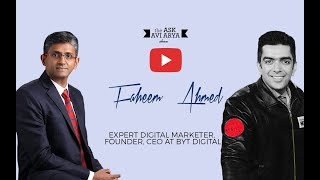
Avi Arya talks about his path from streetcar racing to running a hotel and then a digital marketing agency. He covers scaling businesses, personal branding, outsourcing, and managing the mental toll of entrepreneurship.
Searching for truth. I couldn't let you go without a.
Request or even a test. Great, Great.
We both are in black and white.
Yes. The easiest thing to do when in doubt.
I know. Serious.
This video set a pretty cool setuper.
We have the lights over here.
Great.
Yeah. And we have a couple of lights on top. And then I had all of that. You know, we have the mic set up.
Nice. Ah, the same mic is what he's using. So I need to get some of that stuff going. And is this a special room for this, or is this your cave?
No. So this is. This is my. This is my cabin. And what we. I'm sort of. I'm just. I'm just renovating it. I'll show you the. I'll show you the whole space. I'm just renovating it so that I can make it into a better studio. Cool. So right now it's under construction, and, you know, I've just. My couch is not fitting in. So we're breaking that wall.
Ah, cool, cool, cool.
That's sort of my command center from here. Right. That's what controls.
Oh, cool.
So that's. That's a little bit of the setup.
This is what you should also. Nice.
This is. This is all the vision for where DMA has to go all over the world.
Fantastic.
One. One wall for every mission. One is dma, one is Internet moguls. And then here is. I'll show you the office. Come out. One section of the office.
Great.
Saturday.
I'm sure everybody is ready to leave. Nice.
So that's.
So they bought a TV with no news and stuff, running entertainment or whatever?
No. So this has got. That's sort of the. That's a. That sort of takes care of the call center. So what are the calls coming in? For which hotels? At what time? Which are the calls which were missed, which are the calls to be called back on. Oh, and for that one, we have a revenue management team which will have the rates of all the hotels. And, you know, if it's fluctuating, what should we do? Call up the hotel, change the rates, all of that. Then when we come here, project management section.
Nice.
So this is where all the projects are happening.
Very nice.
Let me go here.
This is in which location? Oh, okay.
Then we have this here, and we have two other floors, which I don't want to go up and down right now. I'll show you some other time when you come.
Sure.
So, yeah, it's a very interesting space, but we're doing a lot of, you know, I'm trying to create the entire office to be instagrammable. The entire office so that I can shoot from anywhere.
Fantastic.
So I've got a few professional lighting experts who've been coming and putting different lights and seeing how it's going to work because I said I don't like to sit in my cabin and keep recording. Want to record from, you know, maybe the project area sometime. Sit with my team, send a message to the clients that we are sitting together. Let's do a call. So the whole office is going to be video studio hopefully. Yeah.
Fantastic. So how do you want to do this thing? Shall I go first? Shall I interview you first?
Whatever you convenient with. I'm ready. I can however you want. I'm ready both ways.
Okay, so yeah, let's. Let me get you started with the interview.
I think I'm recording. Are you recording as well?
No, only one of us can record. Since you initiated the meeting, you go ahead and record it, share the video and then we'll see how to slice it.
Okay, sure.
So, hey. So hi. Great to have you here. Absolutely. Okay, so let's get this started. Ali. So yeah, for my viewers here, why don't we get some kind of introduction going? Can you share a little bit about yourself? Ali?
So I like to introduce myself. This is what everything on my card says. I said I'm Avi Arya, father of two girls, six dogs, husband to a superwoman, a streetcar racer turned hotelier, then travel agent and then I became a social media marketer and now founder of Internet Moguls where we are a team of 225 moguls helping people, humans and business transformation through social media because we believe that social media is the biggest opportunity in the history of business. And I'm dedicating the next 10 years into making whatever we've done so far go global and reach more humans and more businesses.
Fantastic. Now right there, there's one interesting thing that you're doing. Can you stick out your business card? Let's take a look at that. Very interesting. Your business card.
Give me two minutes, I'll just get you my business card. These are actually my.
Oh yeah, yeah. Sudhavas. Nice.
These are our success mantras. We give it in a card format like that.
Nice.
So they open it and everybody puts it. So on one side we've got quotes and the other side we've got how to guide. So for YouTube and what I learned from Gary Vee, what I learned from Dan Law, my morning routines, all of the things that I've learned from meeting the best people in the world. And so we give it as a part of our workshop and for your audience, we'd be happy to, you know, ship out some of these just to say thank you for having us on your show.
Would love that. Would love that. Fantastic. Great. So walk us through your journey in terms of how did you know? How did that transition happen from streetcar to Internet moguls? Was it an accident? Happy accident.
You know what? That's what my first ever blog was called, the Accidental First Mover. Because unlike what I've done right now, as I showed you in my office, every single mogul has a dream chart of where they want to be in the next 12, 24, 36, 48 months. So there's a vision board, there's a dream chart, but I had no dream chart, no registry. I was a street car racer. I used to. My dad used to go to sleep. I used to pull out his car on neutral in the middle of the night, go out and race with people. And I started getting good at racing. I had a good time. And so people started coming and saying, we'd like to race with you. And we started betting on the races. And so other people started coming. I had organizing races for them. And a little bit of money used to come by, which was very good money during those days. But my dad didn't like it. So one day he called me to his office and he said, son, I've got two options for you. A, join my business from tomorrow morning. B, get out of the house. I wanted to leave. I said, you know, screw this, I'm leaving. I went out of the room. My mom was waiting. I had a nice three, four hour conversation with her. She convinced me, and I think better sense prevails. Very next morning, I found myself behind my dad's hotel reception. Small hotel. Learned the housekeeping, learned how to take care of the restaurant and all of that. But I also learned that my dad is doing a fantastic job of running a hotel. And I was like, what should I do right now? Where does that lead me? I needed to prove myself to him and to myself. Just during those days when I'm thinking of that one foreign guest walked in and he paid us for our room. He checked into the room and he paid us in Dutch guilders. And so we assuming he was from Holland, there were no euros back then, and we Dutch guilders. And it turned out to be a lot of Indian rupees. More than just the Indian rupees for the room. There used to be a different Indian and a foreign tariff during that time. And I'm thinking to myself, what if I'm able to convert all guests into foreign, you know, guests, and I'm able to double the family income, double the revenue and I become a star in my dad's eyes. So I'm like, this is what I want to do.
This is in the year.
Late 90s, late 90s. So what should I do? There was this thing called the phenomena called the Internet, but it didn't, you know, maybe in Delhi there were two places, the British School library and maybe the Maurice Sheraton Hotel, which I think was 650 rupees for half an hour. So that was out of bounds. So I came across a paper magazine which said there are some tech companies overseas. And one of the taglines was, we have to connect with your customers globally. That's what I wanted. I convinced my dad, he said, you know, he said, oh, you want to meet a travel agent? I said, no, these are tech companies. He said, no, these are travel agents. So go meet them for sure. I got my first business suit done, a bag full of 200 brochures which I never used. And I went for my first ever business trip, met some of those people. They said, we will list you on our website. I didn't know what listing meant, I didn't know what a website meant. But I had access to cyber cafes because I was abroad. And I went and it blew my mind because I got in touch with this thing called the ICQ messenger, which allowed me to connect with my cousins and my friends. And I was like, this is amazing software. Oh, it was amazing. At that point in time I came back and I was like, this is amazing. This is really what I want to do. I want to connect with the whole world and my business can connect with the whole world. My dad said, did you get any business? I said, not really. He said, letter of intent at all? I said, nothing. So but they asked me to send them some pictures and all of that took me some time. I got the pictures done, sent it to them. Nothing happened. Just there was an ad in the paper saying Satyam Computers looking for cyber cafe partners. So I was one of the first people to apply. We got a cyber cafe in the hotel and that changed everything because Now I had 24 hour access to what was fast speed that time, 24, 7. And I started getting into forums and, you know, Yahoo forums and Lonely Planet had travel forums. And I'm looking at them and I'm thinking, who should I Talk to and people are asking. That's when Ask Kavyaria started because I was my handle was Askavi Arya for any questions to India travel and I used to ask them about Internet and how that works to get business. And so somebody said you need a website. So Fahim during those days there were very few Bangalore based companies which were doing websites for foreign companies which so the lowest deal after various rounds of negotiation the lowest deal we got was about 2 lakh 10,000 rupees. I'm talking about for a website during those days and hats off to my dad for shelling out that money. We got the website done. It took about six to eight months and guess what happened to our business Precise zero. Nothing happened, nothing moved. And so I'm thinking now I've already taken one trip abroad, I've done the website and my dad is thinking this guy's useless. He's spending money doing nothing. I went back to those forums and I'm asking people what to do. Somebody said hey, you need a query form. So then we got a query form built. Somebody said you need call to action on certain pages. Somebody said that you need toll free numbers because foreigners like to talk on toll free numbers. So we did whatever was you know and tweaks possible and all of that. Slowly we started getting some bookings and I replied to each one of them, you know very excited. They came to the airport. I picked them up. They came and they paid us. That's when I realized I said this whole thing works. Then I started deep diving and I started doing more and more of that and we started getting more. It was all of trial and error. I didn't know what I was doing. I'm just trying to understand what people are doing. Copy paste it. And the website started doing well. We had for hotels in Delhi Delhi hotels. Every single keyword on first page we were about 45 position we had so we were dominating the pages. Every keyword, everything. But it was not funny. It was crazy stuff.
Both Google and Yahoo even at the time.
Oh yeah, absolutely. Absolutely both Google and Yahoo and the business was. And when we put the phone number the phones didn't stop ringing. It was madness because we were everywhere. And that remained for about good 2 years. Our first paid position with all keywords, 4 to 5 keywords each. Ajantahotel.com Even Google had featured it. So when Google went out to meet its client and told initially and they used to tell clients how to do marketing and SEO and all of that they give the example of what I had done for my hotels. So that was on their study for the longest, longest time. So as a result, the business started booming. We had so much business coming in. We started leasing other hotels. Then we were like, the business is not stopping. Let's buy one. Another one, another one. So essentially, Faheem, my dad took 40 years to build his first hotel. In the next few years, you know, we bought four more hotels. Things change. Now, step stage two of my story, because we have four hotels full of foreigners staying with us. They all wanted to travel. My mom joined the business. We started a travel company, and we started travel for them. Then I realized from all of them, they all are asking for tickets to, from, and within India. So I set up a, you know, I bought a lot of domain names, like 200 domain names, and I'm putting information and all of that because we made a lot of mistakes. I didn't know I don't need 200 domain names, all of that. But it was a lot of throwing stuff on the wall and seeing what sticks. One website started doing very well, which became an affiliate website. One day I got a call from a company called Make My Trip. They said, we're a new company in India. This is what we do. I said, yes, I've seen your ads. See, this is the. This is the beginning of the Internet era in India. So we all went ahead of each other. So they said, we want to do an affiliate model with you. I said, sure, let's do it. I don't know what it means. Can you send me an email? So they sent me an email. They said, we'll give you some money per ticket. I said, fine, six, seven, 800 rupees, something like that. And we started doing some 40, 50 tickets, which was about 40, 50,000 rupees a day. So three, four businesses came off the back of the Internet and things were going great. I started getting recognized because, see, the Internet marketing sort of ecosystem was very small. So everybody knew everybody. So then the head of a new company came into India. It's called TripAdvisor.com and they said that, you know, we'd love for you to speak on our forums. So they took me speaking all over the region. And when I used to do that, people started coming up to me saying, you know what? I love your story. I love what you've done for your SEO and your all of that. Can you help us? And that's what I was thinking. Why should I help somebody else? And this is for my own hotels and all of that. And then eventually, you know, some very senior people in the industry convinced me and said, this is very good money. You should start something called an agency. And I was like, advertising agencies. Because I didn't know how this model worked at all. I shared my story from the age of 18 till now, so there's no experience of an agency. I was like, what's an agency? So they were like, you know, so just think of it as a consulting firm and you can consult people. I was like, fine. And so my first ever, I was riding high on confidence. The only name I could think of was Internet moguls. We started a company, hired four people and my first retainer was 80,000 rupees a month, which was a lot of money. We were having a great time doing that. And then last, for the last 10 years we ramped up and now we're almost about 225 moguls working with 700 hospitality clients in 10 countries. And so things have been great. And last two years back, you know, I started traveling abroad, meeting people like you. And I recently met Jack Canfield, we met Dan Lok, met garyvee a couple of times and many, many, many, many other people. And what I learned from them was the power of personal branding. So even in my small niche, which was hotels, for the longest time with not many followers, with not many large email lists, I was able to build a substantial size business just because I was everywhere and I was adding value on all channels before everybody else thought video was important. So I realized the power of personal branding has helped me set up 2, 3 businesses which are doing very well. So now for the last two years I've been doing personal branding workshops for.
I want to come to the personal branding part of it in just a little bit. I had a couple of questions around your agency and all that. I mean, I think we answered your very important question that any agency owner would like to know is what did you build your first client? Right? So which you explained who was your first client? Do you still have them as a client?
My first client was the Shamriza Hotel, New Delhi.
Okay. Do you still have them?
No, we don't have. We don't have them. But our second client was the Park Hotels which were the whole chain we got. They were with us for some time and then they left and last year we got them back. So it was a very happy moment for us that we got Palputas back.
Fantastic. Fantastic. Abhi, you mentioned a couple of companies, right? You mentioned ICQ Software, you mentioned Yahoo, you mentioned Satyam Infoway. Sifi, cyber cafes, all those companies are gone.
Right.
And you're still around Internet wave. Kudos to you. Fantastic. So success is great. I mean but we all know that success is not a great teacher.
Yeah.
What are one or two crisis that you can share with us Avi that were able to help you pivot point in your career as an agency owner.
So very good question. I tell you before, you know, when we scaled to four hotels, we could have scaled to 40 hotels. But I was slow. Speed is the name of the game. I was slow. I was waiting and watching. We were first movers on the Internet. We were able to build it. We could have gone India wide. But then I took time and time doesn't, you know, doesn't wait for anyone. So speed was the name of the game. I should have had a vision so I couldn't scale the hotel business like I wanted to when it came to cheaper tickets. India, the portal that I had which was giving me passive income, I should have grown it further. I should have had a team. A lot of people think passive income means that it continue to happen on its own but you need to keep on pumping the engine with lots of energy, time, money, resources to keep on happening. I was taking most of the money home and putting it into other businesses but not putting it back in the affiliate model. So Google algorithms change and the business changed. So it taught me that a reinvest in the business only take out what you want for yourself and your family a little bit if just to run the house. Everything else should be put back into the business which is giving you money. Don't take it out and put it into another business because this business number one and number two, what I learned was that the Internet is very unforgiving. Algorithms will change. Nobody's going to allow you to make money for a long time. The biggest websites in the world saw that there's a guy in India who is dominating the search for hotels and tickets. They were obviously out to get me and I didn't see that coming. I thought it was going to last forever. Below me were the largest OTA companies in the world. Below me were the largest hotel chains in the world. So I should have seen that they're not going to let me dominate for a very long time and I should have been more proactive. So that's where I failed.
But two years is a long time.
Yes, two years was enough of a Runway for us to go ahead.
Absolutely. So the challenge in terms of scaling your hotel business was one, the mindset sometimes from one to four to 40 is like a big mindset expansion. Apart from that, how much do you think is financial backing, the working capital, taking loans, taking a partner? What are your thoughts on that?
You've always been great at asking questions. It's so important for people to know this. So the thing is that a I come. So it's very important, you know, it's oxygen. You cannot say that, you know, without money you can do anything at all. So my, I gave all my credit, all credit to my parents who are entrepreneurs. And so my dad never allowed me to buy, you know, a Rolex or buy a fancy car or whatever in the formative days because he was like, you know, your business is going to need money. And I was like, I'm doing well, I have the money. So no, your business is going to need money. You know, be ready for those times and, you know, if you don't know what to do right now, just hang on to the money. So he never allowed me to throw away money, which as a youngster I wanted to. And if it was a business expense, like putting a large sign board or like whatever he thought was possible, we did that. But money was really, really important. But like I said, so he allowed me, he taught me how to just reinvest everything back. And so I was just happy on the recognition I was getting. See, I think when you're doing a business and when you create a baby, you want a couple of things. Obviously you want money, but you also want recognition. You want to say that, you know, I've been able to take pride in ownership. Yeah. So you have to, you want to. You know, if somebody says that I don't care, I don't think it's true. At least I wanted it. And so while I was getting the recognition, so I kept building with the recognition. And I didn't think that the money was needed for me to dress any fancier or buy good cars or whatever. So money was absolutely, absolutely crucial. But there were times, like I said, when I started the agency and when one business went down, when the algorithm changed and our affiliate business went down, we lost a lot of money. I almost cried. Like, you know, we lost a family member in the house. I was devastated. But because I thought as a youngster that I've been able to do something that nobody in my family ever dreamed of doing. You know, affiliate my making this kind of money and nobody knew that that exists. But, you know, I remember. So then we started the agency and we got good clients. And I remember one of my biggest clients. When I had only two clients, my biggest client left abruptly. Wow, I love that.
You can share. That's, that's a good one. The agency life is always a challenge.
So, so I remember that we had a team of about, about 10, eight to 10 people. And to be very. Now I can say it, but that time we were, we were dependent on that client. We didn't have any other money for Internet. And the client left and I was going for a movie because I love to go for movies at least twice a week. That's my, you know, that's just, I wanted to be a filmmaker. So movies are my get away from everything. I remember going for a movie and I called my dad, I said, you know what? That client is left. So instead of asking, why did he leave? What happened? My dad said, you know what? That's part of life. Don't let it stop you from watching a movie. And that client hasn't brought you so far. That one client. Nobody can change your destiny. You get back to work tomorrow, you know, and figure something out. How do I figure out such a big client? You know, the big client takes one year of work and that client is taking care of the whole agency. How do you figure it out? And, but we figured it out. But we figured it out. You know, we told the team things are going to be tight at Internet Mobile for the next two months and we have to go out and get a client. And so I didn't take care of operations. I forgot about my IT servers, my systems, my hr, everything. I said something has to take a backseat. I ran in the, I went to the market and I told the whole world that I am the best digital marketer for hotels and I can revolutionize that project and change their fortunes forever. I over promised, over, over promised everything. And then I came back and told my team that we have to over, over, over deliver because only if you're able to over promise you will be able to get a customer because there are many people promising things. Go above and beyond your call of duty and then come back and deliver all the massive stuff that you've done in the next 60 days. Everything, cash flows came back and all of that. But that 60 days I mapped on my calendar how many flights I'm going to take, heads of the hotel companies that I'm going to meet, where they live or where they, you know, go for a walk, where they play golf, whatever I needed them, I had to go because I couldn't go back and tell myself and my team and my dad that I'm getting back, you know, like from one business we created three and now Internet mobile started but the agency doesn't have business now, should be closing it down into affiliate model had already closed down so I didn't want to have, I didn't want to accept defeat. So. And plus there were 10 people who were waiting for me to, you know, to come back with some business for them. So.
Would you consider this as the biggest crisis of Internet Morgans?
Not by far.
Because mind you, many businesses shut down because they're one of one or two of their marquee clients suddenly leave.
Right.
Many businesses shut down. I mean you came out unscathed.
So in the last 10 years maybe it's happened 10 times.
Wow.
Yeah, in the last 10 years happened 10 times. But, but it happened, I mean 10, I would say 10 crisis situations but not really. The big client leaving now, we're very happy to say deliberately. It took me 24 months to deliberately not have any one client who can give me a sleepless night. So I'm not saying that I'm not going after the big guys but I'm not having one person who can control my cash flows at all. It's nerve wracking if you are sleepless nights. And so many people's future is at stake if you make that business decision.
Absolutely. I think just for everyone that is listening who want to be entrepreneurs, who are already entrepreneurs, what Abhish shared is just absolutely a very, very important thing as part of your entrepreneurial life. We have had this sometime in the past. It was just a chance conversation that I overheard one client speaking to another vendor and this client was taking away the business, which means he could have literally lost no his entire business. And I remember that day telling myself that I don't want any one of my clients to have more than 5% to contribute more than 5% of my revenue ever. And I think those are those important decisions that make you go and do what is required. For example, if you have to hedge your bets, you need to hedge your bets against 10, 15 clients and not one or two one trick pony kind of operations. That's never a real business.
Also, you know what I've learned because I spend a lot of time in Canada and America so I, you know, I. What I've learned from some of my friends who are running agencies that were born there and grew there grew to a decent size, like you know, a couple of million dollars in revenue. What they have done successfully, not all, but some of them he's mapped every retainer with a project team and everything is outsourced. So he's got a team of 34 people. None of them are on his direct payroll. They're all independent contractors. And whenever he gets a project, somebody does the content writing, somebody does that. He keeps a 25, 30% margin and they do the work. And if the client leaves, he just sends them an email like he got an email. So that. And I see the happiness on his face and I see him, you know, being able to go for holidays and all of that, which many digital agencies can't, because most digital agencies are keeping fingers crossed, thinking what's going to happen in the next month. So I thought that was a great model.
This is something very valuable point there on outsourcing. I think there's much that we can learn from the west, especially project management and all of that.
I just came back in Philippines and it opened my eyes. A lot of people in Canada have told me that outsource people to Philippines and people in the uk, all of my friends, I mean international digital marketers. But I, you know, I was like, you know, working in India, you have enough, you know, have a good team and all of that. But what I learned in the Philippines was obviously that their level, their command over their English is, you know, is very strong and they like to follow systems and, you know, like Indians like to get to the goal post as fast as possible. It doesn't mean that they follow the process, but they still get the work done. But when you need system, but when you the system to be followed. I thought these people were great. And I just went last week and in my 38 hours that I was there, I hired three people. Back to back interviews and we hired three people and I'm very excited right now.
Fantastic. What kind of roles?
So they're all right. So they're all VAs. But one VA is going to do a project management. The other person is going to do business development and reach out to other organizations to call them to hire me as a speaker. And third, VA is going to keep an eye on some of my project managers here and give me a report on efficiency. And she's going to. She uses Trello very well. So have everything mapped out so that every time I talk to her, she can tell me this is where I need to focus. And, you know, so sort of, she's sort of my mind map, mind mapper. And she's done that for others. So I thought it was a. And at about 10 to $12 an hour. You get some very good people. I hope it works out. Fingers crossed. It's just been three or four days.
I'm sure, I'm sure you'll go through a few years before you settle down. I hope this is your final set of years, but I'm sure it will work out. So tell me you. I mean for our viewers who don't know, Avi runs two offices, one in Vancouver and another in Delhi where he's currently. So how do you do this?
You know what, in fact somebody told me I should do a course and tell people how to live in two countries and work in two countries. So what it just. My wife and kids live over there and we have a home in Vancouver, we have an office there, we have a team over there. So it's second home for me or you know, base and all of that. So the only thing is the time difference. I start working at 9:30 over there at night when everybody goes to sleep and I work till about 3am and the same office with the same camera. I've got as big a TV over there in my living room. I see everything happening in the offices. My phone is there. The only thing is that, you know, they say when it's dark outside sends a message to your brain that you need to go to sleep. That's the only struggle. But otherwise it's really good because what I've realized is that when your mind says that you are distancing yourself from a problem. Like if I'm in my office and there's a crisis happening, my anxiety levels are very different from when I'm there. It's still my office, I'm still responsible, my cash flows are going to be hit. Everything is. I'm going to be responsible. But because I am slightly at a distance, I'm able to say, give directions to my team and say okay, fine, call me back. And I see what's happening on the system and computer, I talk to the clients but it doesn't go internalized. It's a very freeing feeling, you know, like so out of.
You're able to look at the problem crisis more dispassionately.
100%, that's the right word, dispassionately. And that just changes everything. I sleep well and all of that. I'm not. As soon as I come back into this whole physical location and my anxiety levels are different. So that works well. The other thing is when people say how do you remain jet lag 12 weeks of the year? Because you know, six weeks, six times I go six times come back. But you know, I've also discovered jet lag. When I come back, I sleep. I cannot stay awake more than 8 o', clock, later than 7:30, 8 in the evening. And every cell of my body goes to sleep because I'm knocked out and I cannot. And I get up at 4am By 5 I'm fresh and I, you know, do my prayers or meditation or whatever I want to do. By six, I want to go to the office. There's nobody here. Seven o' clock, I reach the office. Seven to four, I'm the most fresh because I've had the best sleep ever. I'm super energetic. I come back again, crash at seven o'. Clock. So it's the most productive four to five days. Then I get back into the system and my routine goes for a crash. But 12 weeks back and forth, I look forward to the jet lag, sleep and waking up with the energy and all of that.
Fantastic. Tell us a little bit about your health routine. What do you eat? What do you do to keep your energy levels high?
Yeah, so I'm guilty of not having the amount of water that I should have. And that took a toll on my health last year. I have a trainer that comes to my house who trains me about four to five times. I like to lift weights, everybody. Some people like to run, some people, I like to lift weights. So somebody comes home and we do that and it's very good. I like it and that's what I do. And then because he's now become a friend and he's an athlete and he knows a lot of stuff, so he makes me meditate for 10 minutes after that. So body, mind, both of both the things are done and that's all just. I have a lot of water and you know, just having a lot of communication, talks with my, my wife, with my kids and my mom and dad. I think that's the healthiest thing to do. The biggest problem in this world is people have stopped communicating with their families, especially in the west, you know, without having any bias to any part of the world or anybody. But I feel a lot of people are lonely and they don't talk, they want to talk. And that's when every problem starts. Something happens here and it manifests in the body because you're. Any problem can be spoken about and being, you know, I'm stressed at work, my client is giving me a hard time and I have only two clients and one of them leaves, something will happen to me. I feel I'm going to die. My business is going to crash. You need to talk about these things to. About these things to somebody at the end of the day. But if you have, I'm glad you.
Talked about mental health. Right. As entrepreneurs, it's a very, very lonely position at the top. Position at the top or bottom, wherever you want to call it. On that note, Avi, about entrepreneurship itself, I know you started this business with your dad and your mom too, but you were pretty much a solo founder, right? Now, if you look at the top 10, 20 companies in the S&P 500 in the US most of them have two or more co founders, and that's kind of the recipe for success too. So you pulled it off as a solo founder. So if you were to do this all over again, how would you do it and how are you doing it currently in terms of being the solo founder of the company?
So it is stressful. It is definitely stressful. And I do at times wish that there was somebody fielding like, you know, Dhoni sitting at the back always, you know, he's a fielder. So, you know, if I miss the ball, somebody should be there. But, but I've never, I've also not been trained to work in a, in a setting of people to take, where you take multiple decisions and all of that. So. So, you know, so I would, I would also not welcome the speed that is curtailed because of, you know, somebody saying, I'll get back to you, let me think, and all of that. So if I want to have a meeting at 12 at night, I'll call everybody on the phone and take a decision right there. You know, somebody said, we'll get back to you in two days. I'm not, you know, I don't know. So it's got its pros and cons. It's got its pros and cons. I don't think I would go back and change anything. But yes, now when I'm a little more mature and I think that I have the patience to understand that other people have better points of view, more intelligence, and, you know, other, other rationals that can benefit me now I'm more open. I will not open 10 years back, but now I'm more open to having more people. So if I would now do another initiative, I would definitely not do anything on my own because it's the power of an alliance, it's the power of a group, it's the power of co founders. And you can go 10x. So now I will not do anything on my own.
Fantastic.
In the past, also right Right.
So coming back to something that you touched upon early on. Right. Welcome to know the millionaires world where everybody's on a selfie and videos and whatnot. Right. Even for the personal life.
You can, you know, our picture says whenever he asks a new question, you can take the question my answer and we can make micro videos out of that. Okay, so he's asking a new question. So you can come at the back and then come in front for my answer.
Hey, so Avi a great. We talked about icq, Satyam, Infoway, Cyber cafes and all of those things. Now welcome to the new world, which is the millennials and the selfies and Instagram and pretty much what is called as the New York Minute of the millennials. So you're doing quite a bit of work in terms of personal branding, putting yourself out there. So somebody who's not a millennial but who still sees the power of putting yourself out there, how are you leveraging personal branding for yourself, your business and your plans for the future? And also, what would you recommend for people who are just starting out or who are even considering putting themselves out? It's not easy for everybody to do that.
Not at all.
So your thoughts on that?
Yeah, so. So, you know, so the thing is that, you know, in Hindi they say that, you know, the biggest fear is what will people think if that is removed? If I'm able to remove that from somebody's mind, the person doesn't mind getting, putting himself out there. That's number one. But then the thing is that every single person, the most introverted person on the planet has one thing that he's very passionate about. So he has to find that one thing. I will not talk in a parent teacher meeting. I will not talk on a football field. I will not talk on digital marketing issues. I will not talk on, you know, on human rights. I won't talk about animal abuse. But if somebody says that the Indian cricket team is, you know, is inferior to any other team, then I might get angry. That's not me. I'm just giving an example. I don't follow cricket at all. I'm one of those Indians, you know, I'm guilty of not following cricket. But so there are people who say that no cricket, when it comes to cricket, this guy goes crazy. So somebody talks about like my daughters. My daughters are very, you know, very good girls. They work on a lot of things, but when it comes to animal rights and animal abuse, they go crazy. So that one thing that excites you and you don't, you Feel that, you know, when you talk or when you put yourself out there, you're not doing it for yourself, you're doing it for some cause that you stand for something.
That you're passionate about.
That's when that. That sends a trigger to your mind, saying, you know what, I should not be shy, because if I don't say it, then more animals will be abused and all of that. So that sort of sets you on that path to start creating. And then I always say that, you know, if you're shy then, and you don't want to be in front of the camera, then, you know, blogging still works.
It's very encouraging for people who are introverts. Right? So you could be an introvert, but you still have your passions, which means you can be in front of the camera talking about it and hence building a personal brand.
And, you know, we actually have Gopal, actually. He helped me fine tune my course, which is, you know, the Micro Video Mastery, where we actually help people and tell them that, you know, create a video and say whatever you want, don't publish it, you know, till you're comfortable. And so, you know, every video. So a lot of people try, oh, fine, you know, a. I found my passion. This is one thing that if I don't do it, harm others. So I've got a voice now for that. And then I created a video. I still don't need to publish it. So he's already. He or she's already come 60, 70% of the way by finding a voice and sharing it. And then the next step is to share it with others and seeing how the response happens. So it's a journey. It's everything in entrepreneurship or anything that we do in life is a journey of, you know, with the brain, between the brain and the heart. That's all this whole they say this is. It's maybe about two feet here, but the distance is, you know, take sometimes years to.
Absolutely. What would be two or three things that people can try to do right after this, you know, interview that will set them on the path to personal branding? What would you recommend? Two, three things.
Excellent, excellent, excellent question. So that's what I always say. And I'm very inspired by movie stars because, you know, movie star gets 25, 30, $40 million to do a movie. You know why? Because he says that I understand the impact is big. So he will transform his body. They lose 20 kilos, they'll build an awesome body, they learn a new language, they'll get into somebody else's mind. In 30 to 60 to 90 days, shoot a movie and then get out of it. So they are also human beings like you and I, but they've just understood they're part of a big mission. And because of having the right coach and the right mindset, they're able to transform their minds and bodies and become somebody different in three to six months. So that has always encouraged me and said, if a film star can do it, he's another human being with the right coaches and a mission. He has a big mission. I'm doing a big movie. If I'm able to convince myself that my mission is as big as that guy's mission, then in 30 days, if I have the right gym trainer, if I eat right, if I go to bed on time, I can also have the best body in the world. So if I can have the best body, what about my work body? The body of my work? I can change that in 90 days, 60 to 90 days as well. So the one thing that we, the two, three things that we suggest in personal branding is always to say that, you know, identify who you are as a, as a person. Somebody says, you know what, I resonate with Amitabh Bachchan. Somebody say I resonate with Bill Gates, or somebody will say, I resonate with Fahim. So who do you resonate with and see what that person is doing and what kind of impact he's making, what kind of videos he's making. And so, you know, understand, put an avatar on yourself to say who you are, because that allows you to say, you know, who am I? You know, which kind of an avatar am I? And it allows you to, you know, sort of gamify your thing and say, okay, now this avatar is going to go out in the world and he's going to create magic. So, you know, we play with avatars. And so once you say, fine, I'm Spider man or I'm Superman, or I'm like I said Amitabh Bachchan in my head or, you know, whatever. And so that's why I've understood who I am. And then I found my voice. And then we say, fine, to find three, three people who you really love and what is the video that you will make for them? Because I believe that the video mastery is essential for everybody. It takes so much time to build a business. You can cut it down to one third if you use videos in your business. So we say, we say that have tasting. Yes, absolutely. And I can explain that later as well. So there are three people who you love, you know, and so for me, you know, if my kids, my wife and my mom, so I'll be happily, gladly, without any, you know, shyness, I'll create videos for them and send it to them. It sort of unlocks the thing that I can't make a video. I've been able to make a video. So that's, you know, that sort of unlocks that. And the number, the third thing is that you do not need to have millions of followers, just having maybe a thousand or two thousand people who are from an industry that you want to serve. And if you're able to put regular pieces of content three times a day into 60 days regularly, Hodi, Diwali, Eid, whatever, whatever resonates with those people, with your audience in 60 days time, when you then go for a conference, we always say, map out a conference. What is happening in your industry where you have to go. So if there's a conference happening in two months and I have to go there, the audience, which is say hoteliers for us, we keep putting posts on what's happening 10 days to the conference, this is happening. This is how we're preparing with Internet moguls. This is what's happening in 60 days time. When you land up at the conference, 20% of the people say, hey, you're Avi, right? I've seen your videos. Hey, I love what you said about personal branding. Or you know what, when you got Fahim on your show, that was the best ask Avi Arya show that ever happened. I'm instantly in conversation and relationship with 20% of the thousand people who are there. If I had not done any of this personal branding work, what would I have been doing? I would go for the conference, give out cards to people. Nobody cares about my card. Go there for three, four years, have few lunches, few after parties, maybe make a few relationships or maybe. Or like 90% of the people give up halfway or have no budgets to go every time for the call, give up halfway and say, you know what? Conferences don't work or exhibitions don't work or events don't work. It works. But I have not been able to create my personal brand in that niche of thousand people who are congregating every day. So these are two, three things. We always say that fantastic.
You could do that way of going into a conference or you can do it the other way, which is going there as a mini celebrity. Fantastic.
I always say anytime that I'm going abroad to a conference that we've never been to, we find out the customer aftar what kind of people there are. And we do Facebook ads of me talking to them all the time. And when I go there, I'm not a stranger to a lot of people. It helps me, my team say, recognize my job now as running a decent sized agency is to encourage my team or sort of enable my team to be able to walk into every single meeting and say, we know Internet moguls and we've been watching your videos. Their 50% work as a CEO, I've done their work. 50%. And so we take regular feedback. You know, when you went for a meeting, did they know you? Had they seen the videos? All of that.
Fantastic. Like they say, people first have to like another person before they start transacting, before they start doing business. And doing these personal branding videos makes all the difference. Fantastic. So I kind of remember that you have a kind of a program for entrepreneurs where you want to teach them how to do this. Video mastery, right, how to quickly do this. So I definitely want to sign up. Maybe after you tell us a little bit more about that, you should share a couple of links and how do I sign up now I'm really interested. So, yeah, if you can share a little bit about your program.
Basically, it's called Micro Video Mastery where we have, we do about 21 videos on how to hire the right talent fast and turn people who are considering working with you into fans to say, I really want to work with Fahim. I love his videos, I love his thoughts. I know who he is, I resonate with him. I want to work with him now. Because you've communicated your message, the way you hire and all of that as the founder of the company through videos. It also helps you take your sales process for yourself or your team and do micro videos for your prospects. We also teach you how to do video proposals so that at the end of the 2021 minute video that your client watches, he 60%, 70% understood what you want and you instantly cut that time and go to how much you know, for the negotiation phase, because that's what it is for an agency. 30 days goes by like this. Our costs are fixed and if we don't get new clients, we are done. So what should we do to make sure that this 30 days, you know, goes long, you know, or so the more videos we do here we have a 14 or 14 people and we do videos every single day and we send out video mails, video proposals, and so instantly people are like, just like this. So in your case, I'll give you an example. So I would say hi Fahim. My name is ABHI Arya, father of two girls, six dogs, husband to a superwoman, a streetcar racer turned hotelier and now social media marketer. This is my team. We've been working for a long time and these are the awards that we got. Whatever I want to say about myself and by the time this is Sid and this is Deepak and this is Sanjay and these are my, you know, these are people who work with me and this is what we've been doing and you know for the firstly thank you very much for the four minutes that I've asked of you. It's already been half a minute and in three and a half minutes that's all the time that I need from you. I've been going through your website and we went through your social media channels and here are the things that we feel we can do for you. A point number one and we break it down two, this is what we can do. Three, what we can do for you. I've now reached almost three minutes and this is the time that I asked of you and to thank you for the time that you've given us, we've already plugged in a free 15 day social media calendar. All the graphics and the posts and everything are copyright free. You can use it wherever you want. This is just to thank you for your time, see how it works and if you think that this is the kind of work that you wanted and this is the kind of team that you want to work with, we'd love to invite you over to our office or come to your office and discuss a proposal. Where do you think in the next 12 months we can change the business of your project just the way we've done with these other projects. It's already four minutes. Thank you very much for your time and I look forward to talking.
What's the success rate been AVI doing this.
As against 10% closures when you call or whatever long term 7 to 5 to 10%. This is about 30%.
Wow, that's like 200% better.
100%. Yeah. It's almost like you know, but it's almost like when I sit but, but, but we do a lot of study before that we do a lot of study so that I sincerely carry out.
Your brand audit or social media audit.
And then sure if, if I tell you that you know Fahim, I'm going to help you lose weight and you like you look at me man, I'm already so fit. I think you called the wrong person that we've lost him for life. So we have to find just do a little bit of homework and the homework also takes about maybe 45 minutes. We also talk about that how to make a video proposal. If somebody long proposal. How to make a video proposal and which are the main areas that you take their attention to. Nobody wants to read a 10 page proposal. Nobody understands a one one page proposal.
Absolutely.
Every time you send a proposal people are like I didn't understand, I didn't like it. Because one time.
What is this recurring fee? Why is this, isn't it similar?
You know, they say that if you confuse, you lose. Don't give the client and any other human being that you're talking to an opportunity to think because thinking takes the maximum calories from the brain and people get irritated. Make it as simple as possible. So you know, like play around with this. So I find firstly select which is your best character or you know, Khushboo, this person has just joined my team. So you make it entertaining so that the he consumes your. That's all you want. If you're really good at what you do, all you need is four minutes with somebody so that he consumes what you want. But how do you get that attention? You know, so we send most of our videos on WhatsApp because on email also they get lost. So we say here's a, here's four minutes. And we put it, sometimes we put a timer on it so that it's, you know, more exciting and all of that. So all of those things, they're not difficult to do at all. But it's just, it's just a mindset shift, you know that I've been doing it email for the last 20 years. So let me continue with emails. And so they say only 2% people change in this world and all those 2% people remain in business forever.
Wow, fantastic. Hey Avi, looks like we definitely should be doing a part two of Askavi. But we still have a couple of minutes. If you have any thoughts in terms of, I mean anything else that you would like to share with your viewers as well as ours now, please chime in.
Yeah, so basically, you know what I like, I always like to say that, you know that most of the times we tell ourselves this story that there's too much competition, anything, whatever, you lose so much competition. So you know what? I think I should close my digital agency and I should start selling online courses. You know, it's a better. But you know, even online courses is, you know, it's very, I have to do Facebook ads. Let me start selling from stage. You know, one day I'll make so much money. But you know what, by the time I convince people to get me on stage, that also takes time. So I'm continuously looking for a more efficient, more easier option because I feel I'm in a position which is difficult. Everybody thinks that their business is difficult and there may be an easier way out. What I have discovered is that they said that in the couple of thousand years back, there was a scenario when there were less than half a billion people who were inhabiting this planet Earth. And at that time, if somebody wanted knowledge from somebody else, they would take a camel or whatever and they would go for months to meet somebody who was a guru on health or relationships or whatever. Learn from the guru, come back. If he were not eaten alive or taken hostage by robbers, he would come back and then he would become a guru in his own town. And that's how knowledge was disseminated in the earlier times. So half a billion people and this is how knowledge. But now Fast forward to 2019. There are 7 billion people on the planet. And for knowledge, all you need to do is how to in front of Google and how to go to the moon, how to become a teacher. Everything is possible. In the earlier times, 2% people were successful. Guess how many people are successful now? When there are seven, perhaps seven billion people. And knowledge is like this available 2% because it's only those 2% people who take action. Everybody else is thinking that, you know, I will do it one day or whatever success. So like they say, most people buy courses and they don't finish it. Most people take a course and don't implement it. So I, that gives me a lot of encouragement because I tell my team and I tell my, my friends or anybody who I'm talking to, the founder or entrepreneur, I'm like, you're only competing with 2% people. Everybody else is not doing anything. Just because they go into the office six times a day and they have a team and they have an office running doesn't mean that they're competing with you. If you go to the gym every day and you work out for two hours and you have the right train and you eat right, everybody who's coming to the gym is not going, doesn't have a good body. We all know that. We go to the gym. There are people who are fat. They're still fat, unfortunately, because they don't the success only 2%. So I, whenever I do an interview and I talk to somebody I always say that it's not difficult. It's only 2%, you know, if you have to be part of that 2% and for that 2%, yes, then you have to meet the right people, have the right mental diet, have the right, all of that. So you're learning from them and implementing and that's, that's. It doesn't take much but then it always comes if you have some drive. Either I have to pay my kids tuition fee and so that's my drive for me that I have to send my kids to the best school or I don't have money, I don't have money to put food on the table or my drive is coming from a fact that I was, you know, that whatever you, whatever you want to become, your drive comes from there. And then once you found your drive, that's when you want to be part of the 2%. That's when we invest money and say like I'm going for, hopefully fingers crossed this year I want to go for Robin Sharma's Tools of Titan summit because I'm hugely inspired.
Summit.
So I want to, I want to go for these kind of people, you know, so surround yourself with these people and they make you. Their seminars will make you feel bad because you realize that people are doing the right thing and you're not and all of that and you need to be in that uncomfortable zone. And once you, even if 20% rubs off, you don't become Robin Sharma in one year or even never, but you become a better Avi Arya after going to those kind of fantastic.
I wish you the very best. Thank you so much for your time. Really appreciate it. Now how do we learn a little bit more about you? How do we sign up for.
Please share your website. Ask Kavyari on Instagram. That's. That's my new home. I'd Ask Kavyari on Instagram. That's where I'm putting in posts. That's what I'm putting links to the video Mastery program that I'm starting next week. And what I'm doing is I'm doing a beta program. So I'm inviting about 20 people and it's going to be absolutely free for the beta program because I'm inviting feedback because it's 2019 and it's a new program. I'm putting in new modules on it. So the first 20 people who come in is absolutely free and I'm going to get. And then next month I'm going to come up with a full module program which is going to be slightly longer.
Fantastic. And we can find this information on askavi askavi.com also, or is it Ask Arya?
Askavi Arya. We have the link in the bio. The link will take you to the website.
Fantastic. Fantastic. Thank you so much, Avi, for being with us. Valuable time on Saturday. Really appreciate it.
Thank you.
Thank you so much.
Saturdays are the best to do these kind of.
More from Avi

The strongest mindset doesn't begin with meditation. It begins at home. Before you conquer the wor

The strongest mindset doesn't begin with meditation. It begins at home. Before you conquer the wor

Your mindset isn't something you fix once. It's something you train every single day. Just like yo

Don't build a company just because your friends are. Build one because you're ready. A startup is

Everyone dreams of becoming the boss. Very few understand what that really means. The moment you b

Most entrepreneurs say, "I don't have time for coaching." The truth? You don't make time for what

Over hiring doesn't always solve problems. Sometimes, it creates them. Having a small buffer in you

"The highest-paid" isn't the goal. The highest-value is. People often ask why premium mentorship co

The founder will always be a bottleneck... at some stage. The goal isn't to pretend you're never th

People ask me how I stay consistent with my morning routine while traveling across countries and tim

People ask me how I stay consistent with my morning routine while traveling across countries and tim