Mr. Sanjay Shenoy on AskAviArya Show
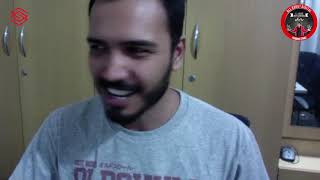
Sanjay Shenoy talks with Avi Arya about building a digital marketing business, creating content, and growing an online community. He shares strategies for aspiring entrepreneurs looking to make it on the internet.
I was in your mind searching for.
LS searching for truth I couldn't let you go without a request. A lot of good things are happening. Oh, it was an amazing experience. Beautiful experience. How was your TEDX car?
Good. Good. Very good.
Very good one, right?
Yeah. I did one a couple of weeks back. Almost everything. About two months back now.
Yeah. Is the video live?
They have to send me the link. When? Very soon.
Okay. It's not uploaded yet.
Is it any day now?
Okay. Okay. Perfect, Perfect. Nice. It is coming in perfect timing for you to, like, set up the funnel and all of those things.
I know, I know. I'm very excited. I'm just put here so many things that are coming together. I can't do. I'll show you after this. I'll show you the calendar be putting together for what you want to do in the 52 weeks. It's maddening.
Awesome.
Sanjay. Welcome to the Askavi Arya show where we interview Internet moguls from all parts of the world. People who we define as people who are living their life on their own terms, leveraging the Internet to take their message, product, or service to people all over the world and still be able to grow their revenues. There was a time when all three things were not possible, but today it is. And so in our search for identifying such Internet moguls and inviting them on our show is what we've been doing for the last two years. So thank you very much for accepting this invite.
Thank you very much. Avi. Such a nice way to describe what an Internet mogul or a true Internet mogul would be.
Absolutely.
And I am striving every day to, like, very well fit into that explanation or, like, idea or concept of an Internet mogul, like you just mentioned. And yeah, thank you very much for having me here. And yeah, let's see how it goes.
Excellent. So tell us about, you know, tell us who is Sanjay Shenoy? Who are you? You know, the man behind the Bollywood personality. How. Who are you? Where were you born? You know, your childhood, dreams, fears, you know, give us a behind the scenes of who you are as a person.
Okay. So I was born in Bangalore. I was raised in Bangalore for the most part of my life. But since my dad was in central government, he used to, like, travel a lot. So I've grown up in, like, multiple cities and I've gone to, like, a lot of schools. I've gone to, like, about six schools. Totally, like, until 12. But that. That, I think was a great advantage for me because, like, that allowed me to go out There and like talk people and like, be social very easily. More importantly, be adaptable, you know, like, because I had to go through that at a very young age and like, I don't have to go through it right now. So I think that was like one thing that happened very nicely. And college was in Bangalore. And during my college days, you know, like most people are like, I was also broke and I was like trying to like make some money on the side with some side gigs and all of those things. And yeah, and the Internet came along and it was like booming back then. I mean, it was not exactly booming, but people I knew at least that, you know, there is something out there that can be done, you know, and it took me a long, long, long time to figure out how to go about it and all of those things. It actually took me about two years. I think I started it around when I was 17 and by the time I'd actually figured out how to like make some money with like a proper setup and all of those things as a business, it was about 1920. So I started a SEO agency business wherein I was taking clients from all over the world. And I ran it for about close to four to five years. I ran it both in Bangalore and then eventually I moved to Singapore for my mba. So I used to cold call clients there in Singapore and just like match clients from all the other people because I was just providing the same services at a much cheaper price. So I ran that for about four to five years. And then I realized that, you know, I came, I moved back to India. I thought that I'll properly set up an agency and all of those things. I think that was the biggest mistake that I've done in my life. And that experience taught me a lot more than my entire MBA did ever. So. So every classic mistake an entrepreneur would make, I have made in that couple of years after, like coming back from Singapore to Bangalore to set up an agency, how to go about it. I made like very, very stupid mistakes back then. And in my defense, I was quite young and I was inexperienced. I was naive. But those are the kind of experiences is what makes you right eventually, like, yeah, it kind of like hits you very hard and you kind of take it to the grave. The kind of lessons you learn from those experiences. And then it was like, it was becoming a big struggle to like stay afloat because back then it was. It was very difficult to convince clients to come and like market online, right? And back then it was. It was for us to convince them to start getting Online now people know that they want to be online and it's just convincing that we are the best ones to do it right now. That is the situation out there. But back then it was like how to like from offline to online. It was becoming very difficult for me and I felt that I might be a little too early in this or I do not have the right resources to penetrate this market as of now. And I wanted to try my hand with a product company and I wanted to see how I can go deep in a product company and market that. So that's when I joined Thrillophilia. Thilophilia was an outdoor experiential platform, used to list out all the adventure activities that you can do all across India and all of the world also right now. And that is where I truly understood the power of content. I built like an amazing team over there and beautiful people that I worked in Philophilia with. I'm still very, very good friends with all of them. We did amazing things there. We took the traffic like twofold. We crossed like a million sessions per month. We took so many sessions, I mean so many blogs. Viral. Actually made a viral contest for which we got about 2,40,000 entries and our target was 25,000 entries for a 30 day period. And we did that in like 24 hours. Like just like we blew it up. We just like blew it up. So amazing stuff we did there. And that's where I realized how content can be so powerful and if you do it right, you can like truly make a massive impact and you can truly run your business with just content, if you ask me. And if you supplement it with the right kind of paid advertising and like a solid funnel, you're in for it. Like, you know, it's like there is no way that you could lose out. Then I went to Explorer. That's where I wanted to see whether I just got lucky or can I like recreate what I did in Trilophilia. That's what I did in Explora. Took a blog from 0 to 100k in like less than 6 months. And again we went like super viral. One of the blogs got about half a million sessions in just one week. Like we literally blew up the servers. Again, an amazing experience. So all of that and I worked in a few other startups after that. Then Deepak came along, our very own digital Deepak came along and it's like, hey, why don't we like join hands together and like do something? And I was still working back then and I was just about to go to Bali for a vacation, and he dropped this bomb just when I was about to leave to the vacation. It's like, hey, how about you, like, join me and we'll put our hands together and, like, you know, see what we can do. And I said, okay, let me go on a vacation and, like, think about it on my vacation. And that's what I did. And as soon as I came back, I dropped my papers and I. Me and Deepak started off with our office in Kormangala, Bangalore. And it's been two years now, and it's been going absolutely great. So many things you have done, so many things you learned, so many mistakes, so many lessons, so many successes, so many failures. It's been like a beautiful journey. So that's me. Longer than I expected. Navi.
Not at all. Not at all. Not at all. Perfect. Your baritone voice helps, you know, even if it's an extended conversation, it helps because I know I. Whenever I'm doing something like this, I'm thinking, how are the audience going to listen to this? And I'm pretty sure because, see, you know, in any. In any form of content with video, mostly it's a voice. A lot of people are not comfortable in front of video. If they're comfortable in front of video, then their voice is not modulated well enough. I think voice is where you win, like, hands down. And, you know, that.
Funnily enough, I didn't know this until very recently, until I started coming out there and, like, making courses and all of that. I never knew that I had a voice which people would appreciate. Like, only when I started making these videos, people like, you have a great voice and all of those things. In fact, my first video I ever made, I won't. I was very desperate to know what. How the feedback, like, what the feedback about the video is like. Did you like the video and all of those things? And everyone is like, your voice is great. Your voice is great. And all of that. I'm like, okay, that's, like, a little awkward. But, yeah, I didn't know that. But now since I do, I want to, like, double down on it and see how I can capitalize on it.
That's it. You know, that that brings me to the very learning, because a lot of people who are young people, especially the kind of digital groups that you're running, there's so many young people, or even. I mean, young or inexperienced or less. Less experienced people at all ages, they all. They say, you know, I can't do this, or I can't do that. It's because they're not really done stuff. I'm like, you know, do what? Do a million things. You will discover things which you were not, you know, you never thought you would discover about your own self and then could become your passion for a few years. And then maybe you leave your passion and do something else, and your passion also changes. You know, like everybody said, what's my passion? What should I find? I don't think you. Some people can find it right away. Other people have to do 20 things before they find it.
Yeah, absolutely. I mean, amen to that, first of all. And the way I look at it is, like, a lot of people get away from the fact that there is an element of luck involved in both success and failure. Like, whatever you try to do, like, you know, if you're playing basketball and if you want to hit the basket, say that you have a probability of one out of 100 shots. You still have to take that 99 shots to probably get that one shot. So if you're lucky, if all the factors are in your favor, maybe you'll get it in the first shot, or maybe you will get it in the 37th shot. Maybe you'll get it in the 65th shot. But whatever it is, you have to go through those failure shots before you get to the actual success one. And once you get successful, once you know what you're really good at, just double down, triple down, like, put all your chips in and just go full guns blazing.
But. So tell me, you know, like, it's. It's. When it comes to. So that's. So that's one part of your story, what you've done and all of that. But the thing is that to be able to, you know, I want to bring this very crucial point because I, you know, a lot of people, it's become. It's become a fashion, you know, and I'm very scared. I'm actually scared and concerned about this fad, which is, you know, that I'm going to throw in my papers and stop, you know, quit my job, and I'll build a parachute on my way down. That scares me. A lot of people are doing it, and eventually what many people, not everybody. I mean, there are success stories everywhere. A lot of people don't find what they want. They don't find that initial traction, and then there is a road down, depression or mental health and all of that, because they're not able to find anything to do. So what do you think of, you know, people who when you, you, Deepak gave you a call and you thought about it and then you went after it. So what's the best way to leave your job? Is there a strategy? What.
I'm glad you brought it up because I feel that I need to elaborate on how exactly it happened because a lot of planning went into it before we actually jumped in. Like, me and Deepak have discussed, like for donkey hours, like day in, day out, we meet every day after work and like discuss things for like six, seven hours. And like first it was like very important that we are at the same wavelength, number one. And after that, we knew that we had to figure out how to have a monetization strategy that was number two. And number three is how do we survive? How do we sustain ourselves? What is the strategies to sustain ourselves for the next one year? And once we knew that, and Deepak pulled a lot of strings for this particular thing, hats off to him in the initial stages. And once we knew this, once we had figured out how to go about doing all of those things, that is when I had the confidence to put down my papers. So what I would suggest is if you want to, if anybody wants to put down their papers and start something on their own, I have done that. That is one of the lessons that I learned when I started my agency. First, you know, always start off small. Always start off as a side gig, like have a financial cushion for you going on, have a salary going on for you. Do it as a side gig until and unless you know that your actual day job is an opportunity cost for your actual gig, whatever you're trying to build a startup or product or whatever it is, until then, keep the job. Once you're confident that you know your whatever, whatever you're doing on the site is going to sustain you for a longer, at least for one year. I would say that keep yourself a Runway of at least one year and you might burn through the whole entire Runway. And if you do, at least in that six, seven months, you'll figure out whether you can actually go through this or not. And that Runway is going to help. So I would suggest, like build a Runway for yourself in terms of save up money for at least 12 months of your, whatever expenses that you have. Plan it out properly. Started off as a side gig, you don't need fancy offices, you don't need fancy business cards, you don't need all of those things. Start off small, minimum viable business, you know, not even product, like whatever is the most minimal requirement is for that particular thing. And most of the things doesn't require. Figure out how to go about it and then put down your papers if you have to.
Okay, perfect. Perfect. So once. So once that happened, now you're, you're into entrepreneurial mode. So what's the, what's, you know, what do you see? Because what we've realized over time is that my mindset and how I'm feeling, physically, how I feel, determines how my business is doing. If I'm feeling really great in the morning today, I'll put in 10, 12 hours of work. I'll motivate the team, I'll get things done. But then because of whatever thing, maybe I'm not going to the gym, maybe I'm not feeling good up here. That day is slower. My team will feel the effect, and that day I won't be able to do it. So a cumulative effort of me feeling good or not good, you know, takes an effect on my, on my business. So what do you have to say about that? You know, how do you, how do you make yourself feel good every day or every week? And, you know, how does the journey go? Up and down? Is it always up? Is it down? Is it up and down?
So the short answer is sleep. To be very honest, I prioritize sleep more than anything else. And the reason why I did this is I worked backwards. I started looking at my problems, like, why is my productivity being affected? What are the reasons? Like, what am I eating, how much physical activity I'm doing? All of these things. But if I have to do all of those things, what is necessary in the first place? What is the prerequisite for me to go to the gym? What is the prerequisite for me to maintain a diet? All of those things. When you work backwards, I realized that going to bed early and getting good seven to eight hours of sleep just sets you, sets the stage for the entire day. Like, I, right now, I wake up, I am waking up at like 6, 6:30 every day, and I'm just waking up very naturally, and I'm waking up really fresh. I go workout for good one, one and a half hours. Then I start with my day. When you start off a day like that, with good sleep and a good workout and a good breakfast, you can maintain that energy level for a longer time of the day. So that first three, four hours that I put in, it gives me a lot of creative energy to do a lot of research, understand a lot of things, break things apart and see what is happening, what is not happening, and all of those things. So I Would suggest sleep, number one, is very important on determining how you feel the entire day. And there is a lot of machoism, you know, out there in terms of how less, you know, there's this machoism, unnecessary machoism, like, hey, I don't even like four hours of sleep and all of that. You can't, you know, you just can't. And you are actually going on half capacity. And why would you do that? Like, might as well, like, go on full capacity. And I read and researched a lot about sleep and how it affects your productivity, how your learning abilities and all of those things. And it literally changed my mind. So I actually put sleep, prioritized sleep, and that literally put everything in place for me, like here, here, everywhere, you know.
Perfect. No, no. That's a brilliant answer. That's a brilliant answer. That's one thing that sets everything in motion. So when it comes to, you know, content, because that's where you started specializing from. When it comes to content, obviously, all these social media platforms that are enabling anybody to become a personal brand, any company, to be known all over the customer base, they have the social media platform. There are these opportunities, but these opportunities are hugely dependent on the kind of content that is being given and the content that is being matched with the right audience. So how go about a campaign? When you see a campaign or you see a product, or if you have a customer who comes to you, what should be the right steps to put in place before you start creating? Actually.
The first thing is you need to work backwards and understand your audience first. Rather than trying to create the content and match it with the right channel and right audience, you work, you take one step behind and understand the audience first. The more you understand your audience, the more you will be able to empathize with them. And the content you'll be creating will be extended, extremely relevant and extremely useful to these guys. And when that happens, like people, a beautiful thing happens called something called as trust builds. You know, trust builds between your reader and yourself. And once that trust builds, like, the next step would be for him to, like, transact with you at some level, whatever level it is. So for all of these things to happen and to. For it to happen very consistently and very smoothly, you need to understand your audience. You need to understand what their motivation, what their goals, what their challenges, what their concerns are, and create content which addresses all of these things. It's as simple as that.
It's like, give us an example, give us an example of a person or a product and, you know, Because a lot of people don't understand themselves. They don't understand their brand. So I'm sure you help people, you know, break down and see the mirror. And sometimes it's not a good feeling when they see the mirror and say, no, this is not who I am and I want to be this.
Yeah, yeah. So very recently, we locked in a real estate client and we are trying to work on some content. And they're not exactly real estate, slightly, I mean, within real estate itself, but they're not exactly builders, but whatever. So they came up and they're like, we need to, like, create content and all of those things. And I was like, yeah, sure. So. But it was a very niche product. Okay? It was a very, very niche product. And what I suggested first, we understood the audience, like, who the audience is and what their problems are. How are they perceiving this particular whole concept of whatever they are trying to sell. So what we realized is a lot of people are not aware of the problem itself. Forget about the solution. So first you need to create awareness of the problem. So we started creating content which addresses the. Creating awareness of the problem. Like, these are the problems. Are you facing these problems yourselves? So the moment people see that, they're like, hey, yes, I am facing this particular problem. Then you go on to the next step wherein you create a solution. So when you. When you create that solution, people will be like, yes, this is a great solution. And then you move a little further, saying that our solution is the best solution. A lot of people, what happens is only focus on the our solution is the best solution part and forget the all the rest of the things. You know, a lot of people, what the mistake they do is content. I feel a lot of people, the way they do it is very egocentric always about them, what they are doing, and all of those things. You should be doing the exact opposite of that, exact opposite of that, like what the audience wants, what are they seeking out of your content, out of your business, whatever it is. So you need to give them that using your content. So this is how we approach this particular thing also. So you might observe that we went a little higher and wider up in the funnel, like we addressing the awareness of the problem itself. So that what happens is if you figure out a funnel like this, everybody is focusing on the action part. Everybody wants to convert this guy who is likely to convert in the next 24 to 48 hours, and everybody is fighting over this small piece of piece. So what we are doing with content, pretty much to every client not just this one client is that we are going here and we are trying to capture the audience here and then drive them through another parallel funnel so that we don't have to fight with these guys. We nurture these guys and we take them into the entire funnel ourselves. We engineer the whole thing in a way that we address that. We create awareness of the problem and then the solution, and then we tell ours is the best solution and how we can help them and testimonial, social proof, all those kinds. And then the transaction happens. So this is the way we would approach pretty much every client, if you ask me.
Excellent. Excellent. So now when it comes to content, you know, today, day and age, tell me how, what would Sanjay Shenoy's reaction be to when people say that text and the written word is dead and emails don't work anymore?
It's very contextual, to be very honest. And it completely depends on your audience. And I know for a fact that my audience loves text content, you know, and that is the one piece of one format of content which I feel never goes away. And the reason I feel is that when you read things, right, it's a very unique experience to you. Whatever you read, the way you consume it, the way you approach it in your head is a very unique experience to you. When you read a book also, which is why people reading a book over watching the same movie, right, because they construct this imaginary reality in their head which is extremely unique to them. And they kind of like. Yeah. And they're very fond of the kind of impression that they have created. And which is why I feel that consuming content via reading will never go away. You know, people would love to, like, still consume text and all of those things. But of course, all the other formats are also catching up. And they have their own advantages also. Like, you know, for example, video. Video allows me to reach out to an audience which might not be able to read at all. You know, so this opens up a much, much larger audience size for me and I can reach out to a much larger audience size. Now, coming to emails, I feel that email marketing, if you talk about broadcasting and like sending, doing email marketing, like a broadcast, 100%, it's dead. I'm so glad it's dead. You know, that's not the way to do it at all. Like, you know, people are extremely aware of this sense a sales pitch from a mile these days, you know, because they are always being like sales pitches and ads and all of those things. But if you, if you extend that sales pitch over a longer period of time. It's like a softer punch to your customers and trying to, like, get them to favor you over a period of time. And if you do that with email, it works brilliantly. Well, you know, you can do the same thing with your messenger also, which is actually slightly more effective. But then again, it depends on your audience, where your audience are. And then the biggest advantage of email is that you own that data, you're not on somebody else's platform, and, like, you're not dependent on some other platform. You own that data and it's all yours. So you can do whatever you want with it. And of course, you can use it for your retargeting and all of those things.
So the audience that will be listening to this, if they want to know what kind of digital marketer they should become, should they become jack of all trades, or can somebody be a content specialist and still make a good living?
Great question. I was actually talking about this to a friend of mine. Hey, what's up? How you doing?
How are you doing?
So, yeah, where was I? Yes. I was talking to my friend and she's a content writer. So she was like, hey, I'm kind of feeling stuck in my job, in my career and all of those things. And she was in my team in Philophilia, and she felt a little stuck and all of those things. I was like, why do you feel stuck? Because she's like, I'm still writing content, and I feel like I'm writing good content, but I don't feel like people are appreciating it. And I don't see that my career is going anyway. So if you want to become a content specialist, your job should be to understand how to make content work for the company that you're working for. It's not just writing anymore. You cannot be a content writer. There are plenty of content writers out there. If you want to become a content specialist, you need to understand how you can make your content work for your company or yourself or whatever it is and convert that attention into transaction.
I think we should forward this video to our team, also our content people in the team. Also between a content writer and a content specialist.
Yeah, that is the actual difference between a content writer and a content specialist. Because when you're a content specialist again, you start working backward. You're not. You don't. You're not given a particular topic and then you just like go, blah, blah, blah. It's not like that. That's what most content writers do. So you need to work backwards. You need to have a very deep understanding of that particular topic and all of those things and how you can make that content work for you. That understanding also is very important.
Excellent, excellent. Now tell me when it comes to building community, because that's what you're doing now. You're building communities. And you know, which is, which is a group of human beings who all may have different, you know, expectations on how the message is delivered to them. Yeah, and I see that on your, in your community, you keep asking questions, you know what you like, what you don't like, and so they're trying to understand. So what is it? Give us a few ideas on how people can build communities. And do you have to have a hundred thousand people community before you can actually call it a community? Or Even if it's 500 people, you should, you know, you should start taking it seriously.
If it's like 50, 60, it's still a community. It's still a community. Like, I would say that you need to build a very tight knit tribe. That is what you need to be like, focusing on. It's not about how big your community is, it's about how tight knit your community is and how your community is helping each other. And that is the whole agenda of building a community. It's not for you to step in and like, help. Of course you need to help. Of course you need to add value to the community. That's the only way the community is going to stick. But that is not the only objective and that is not the only intention. The intention of building the community is to connect other people and allow them and give them a platform to help each other. And that is what we are trying to do everywhere. It may be big, it might be small, but we try to encourage people to open up to others. We encourage people to ask people questions that they have. We encourage people to answer questions in whatever sense they know and whatever experience they've got. And recently we realized that building a community offline is, I don't know, 1 million x more powerful than building a community online. You know, and I love that, I.
Love that people are forgetting that so much engagement goes down if you haven't shake, you know, if you haven't hugged them, you know.
Absolutely. When the moment you meet them in a physical setting, it just changes the relationship you have with your audience. It completely changes. Like a lot of people know me just because I go out there and like meet these guys. And that is my tribe. You know, my tribe alone is very small right now. My core tribe, if you can ask me. There are a few bunch of people who are like emailing me, talking to me, understanding how to do things and all of those things. But most of these guys I've like, you know, met in meetups, I've like met in like. So me and Deepak used to go around the country very often. Last year, 2018, May, we went to a lot of cities, went and met all our audience, all our students and all of that city, 70, 80 people used to turn up. But then we realized that we need to be out of this equation and still allow these communities to. So how do we make this happen? So that is when we came up with an idea. We have started this digital marketing club right now which we are running on a pilot in Bangalore right now. So you must be aware of Toastmasters. I am a toastmaster myself. For people who don't know. It's basically a chapter wise community which is spread across the world which helps you in public speaking and leadership and trust me, Toastmasters has helped me so much with public speaking and all the other things. And that is the same kind of benefit we want to bring in to the digital marketing club but in a context of digital marketing. And that is what we are doing. We are connecting people offline also. And it is so powerful. The moment we do that it is so, so powerful. And people have this innate requirement for them to go and connect with other people.
Absolutely.
And it was mind blowing for me to see that manifesting itself. So we did like a small event where we announced that we are starting the digital marketing club and whoever wants to sign up can sign up right now and we'll give them like a thousand rupee discount. And we did this in Bangalore. 38 people signed up on the spot. I was just mind blown. I was expecting like three people to like sign up. Honestly speaking, that is the kind of expectations we went in. But 38 people signed up on the spot. If that doesn't tell you that people want a platform in an offline setting to connect and network with like minded people, I don't know what what else drive that point home. And you might be seeing this trend happening all across the ecosystem too. Like I keep a close watch on apps that allow people to connect offline and those are the kind of apps I think that may benefit a lot of people in the long run, including themselves. Meetup.com is one of them. They're like doing a fantastic job. We recently bought them up also because of this exact reason people wanted to like meet offline and all of those things, it's the best thing that can happen. And you should also try doing it. Whoever is watching, in whatever sense. It might be 10 people just getting together every once in a month, probably over a couple of beers or no beers or just coffee or whatever it is, whatever it is, just connect with people around you, build that community, build that tribe in an offline setting. Trust me, it is so much more powerful and impactful than an online community. But you need to build an online community also. Don't forget about that. And when you do this offline community building, what we have realized is our engagement on the online community goes up exponentially. Because the moment you post content on the group or on your page or anything, the people who have met you, who have seen you, they start commenting and engaging with you a lot more. So even our email open rates go up because of this particular thing. Which is why we say the biggest hack for increasing your email open rates is like, go meet your email subscribers. They'll never forget you. They'll always open your mail once they like, meet you.
So like everything else in life, there is no one formula for making it so. It's content, it's community building, it's offline community online, it's email marketing, it's Facebook ad, it's content. Becoming content specialist, understanding it. So, you know, all those things that you said, it takes all of these ingredients together in different varying capacities and proportions and to be able to come up with a formula that works. And then when it works, it works for a bit and then it breaks again, repurpose everything. And that's what. So tell me, you know, now we're coming to the end, you know, to the last two questions of the, of the interview. There are said, you know, there are a lot of people who feel like we said, the true spirit of being an Internet mogul. You can start a business and be able to provide online coaching from wherever you are. So people who are looking to, you know, it could be work from home mothers, work from home fathers, or just there's people who just want to wear a T shirt all day and not never go wear a tie and go to work or travel or spend less time in traffic. All of those things which allow us to live more A, live more B, spend more time with the family, live more B, spend more time with the family, make a bigger impact on more people and make more revenue. These three triangle pieces never met. I want to make more money. I have to keep on traveling. I have to make an impact. I have to keep on traveling, but I have to stay with my family that I can't do all of these things. But today, you know, people like Pat Flynn or even our very own Siddharth Rajshekhar has shown that you can spend time with your family and continue to build a tribe. And this triangle, all three corners of the triangle meet. So what would be your views on this? People who want to be Internet moguls, you know, what would be your two, three things for them?
Oh yes, you're absolutely right. See, I recently spoke at TEDx and the talk I had was about how information change. I mean the topic was content without context is useless. That was the topic of my particular talk. But I spoke about how information sharing has evolved over the few years and always it was throughout history. Content creation itself was a very, very difficult thing and there is a massive barrier to entry, right? And once the Internet came, that wall was just like broken down and like it was just like a flood of information and flood of content. Now anybody can create content, anybody can be content creators. And I feel that there is almost like a balance between content creators and consumers right now because like they are like the same people right now people right now. Like there used to be two different people before, but they're the same people right now. So having said that, I'm sure that everyone has a particular skill which they're really, really good at. And the fact that Internet, you, we are living in the best time possible, best time possible is right now. Like in terms of everything possible. You, you know, the way we are connected, the way payments work, everything, you know, the trust factor which is going to higher and higher in this particular country especially people are willing to spend online, more people are willing to spend in general. Like all of these positive trends is happening within this country and globally also. So if you want, you can capitalize on it. You know, if you're a stay at home mom or you are a working professional, whatever it is, there must be something that you might be really, really passionate about. The first thing you can do is start creating content, start creating information, start gathering. In fact, you don't even have to create content. If you can curate content, people will love you for it. Because like I said in the, in my TEDx talk, there is way too much content right now. That is not the problem anymore. Content creation is not the problem anymore. How do you put that information in the right context so that it gives you the maximum impact? That is a problem now. So you don't even have to create content as Long as you curate content, people will really, really appreciate you for that. So whatever it might be, whatever industry it might be, and I don't know why this happens, the moment we start talking about being an Internet mogul, people automatically think that you have to become a digital marketing trainer. We are absolutely not saying that of course you can be. There is no reason why you shouldn't be a digital marketing trainer. But that's not the only thing. What we are trying to say is that you need to capitalize on the power of Internet, to put your message, to put your interest, to put your information out there. You can, you can be really good at cooking, you can be really good at painting, you can be really good at sports, you could be really good at whatever the hell that is. There is a market out there. If you do your proper market research and do things, in fact, you know, teachable, right? Like that is the elements that we use. I was talking to the CEO the other day and he was like, you know, what is the highest selling course on teachable? You won't believe it. You know, there is a course which teaches people how to make those flowers on a cake, you know, that icing flowers you get. Wow, can you believe it? Like, that is one of the highest selling courses on teachable. It has made like some $500,000 or something like that. There are so many courses like this, which you would have never thought. I saw one more on teachable. Very recently. I saw there was a course on how to take notes and that guy has made more than $250,000 in sales for that particular course. Yeah, right. Like there are problems out there which people want solutions for. Right? And the more content you create, the better it is. But make sure that you create that content in the right context so that it has the right impact. And eventually once you create that impact and add so much value to you, to your audience, people will reciprocate that value addition by paying you money, you know, so that is what is going to happen. And that is how you monetize whatever you have. And then you can like, you can build a personal brand. Being a chef, you can build a personal brand. Being a painter, you can build up a, being a gym, fitness trainer, whatever it is. So there are so many opportunities out there. Like Internet has truly democratized the entire economy. Like if you don't utilize it right now, I don't know, we have nothing to complain about. We have no reason not to.
Neil Patel posted on your forum and said that he's looking for Hindi Or English. It's opening up. The whole world is opening up.
Whole world is opening up. Who would have thought that Neil Patel would come here and like, ask for content writers here, right? You never know. It's like if the whole world is opening up and just like ripping it apart. But at the same time, it is so well connected. It is taking the powers away from all these big multinational guys that used to, like, enjoy this content creation power. It does not belong to them anymore. You know, it belongs to the people. It truly belongs to the people to a large extent. And you can take a slice of the entire Internet with your talent, with your skill, whatever it might be on this, whatever it might be, it might be anything. Think about it and like, create information and you can be an Internet mogul too.
Perfect. Perfect. Love that, Sanjay. So now there are so for people, you know, this show is going to be marketed to people, to our audience in India and obviously to the people that we serve in Canada. And it also goes into the Internet mobile library. And all of our clients have access to all of this information and it's sent through WhatsApp groups, emails and all of that to our existing clients who are looking for this. We sort of properly search, keyword, tag it and put it there. So when people want to, you know, actually reach out to you for content help or community building help or, you know, just to have a voice like Amitabh Bachchan, where can they reach out?
Yeah, so I think the best way to reach out to me would be email or they can check out my blog, Sanjay shenoy.com or you can send me an email@helloanjeshinoy.com these are the best ways to reach out to me. And I'm always on email. I will always reach out to. I can probably send it across and you can put it in the comment section below.
Perfect. And we're going to tag. We're going to tag it here as well. And today's Saturday, so the office is on.
On new office.
Yes, yes. So it's still coming along. It's still coming along.
Oh.
And so just give you a tour. People are. Some people are still here being a Saturday, but we work.
Oh, that looks amazing. I love red.
This is the revenue section that you can see.
Oh, nice.
We come here. So this is where the sales team sits. We obviously don't want the sales team to be sitting. They're supposed to be sitting here, but they're not supposed to be sitting here.
Yes, yes, of course.
So this is the reservation center where we do where the calls are picked up for the hotels.
Oh, you guys provide that also.
And then, so then this is. This is obviously all the interesting people that I met.
Oh, I see. Of course.
Yeah. So all of these people here. That's Ritesh from Oyo. He came to. When he came to the office.
Nice.
All of these guys. So this is sort of a memory wall. And then here we come to another content section. That is Alori who takes care. She's actually a content specialist.
Hey. Hi.
What's up, genius? For the last hundred years. Four. Four years she's been. She's been taking care of everything.
Employee of every year.
She's saying mogul. She said mogul.
Nice. Nice.
So that's. That's one section here. And this is where we say all we do revolves around a lot for hotels.
Oh, nice.
And that's Reggie.
Hello. Hi, guys.
And this is our.
Rapper.
You have to check out his YouTube channel.
Oh really?
You have to check out his rap.
It's really cool. Nice. I surely will.
And this is what we're building because I told you, you know, next 52 years on personal branding is going to go crazy.
Yes.
I said we wanted every day to have at least 2 inches by 1 inches worth of space and we didn't get it. So we got this actually printed. We got this custom made. And in the next day or two we're going to map out the next 52 weeks events, you know, DM IT events or everything that we're doing for personal branding.
That looks amazing. I think I'll probably put it on my wall also somewhere.
Yeah. And I'm too lazy to take you upstairs and downstairs next time.
That's why. Yes. I'll probably visit the office and I'm in.
A Monday and on a weekday it's a very different vibe.
Yeah.
Perfect. I'm back to where we started from. Great, Sanjay. Perfect. This was amazing.
Great interview. It was a very nice talking to abhi.
Alrighty. Take care.
Thank you. Thank you. Bye. Bye.
More from Avi

The strongest mindset doesn't begin with meditation. It begins at home. Before you conquer the wor

The strongest mindset doesn't begin with meditation. It begins at home. Before you conquer the wor

Your mindset isn't something you fix once. It's something you train every single day. Just like yo

Don't build a company just because your friends are. Build one because you're ready. A startup is

Everyone dreams of becoming the boss. Very few understand what that really means. The moment you b

Most entrepreneurs say, "I don't have time for coaching." The truth? You don't make time for what

Over hiring doesn't always solve problems. Sometimes, it creates them. Having a small buffer in you

"The highest-paid" isn't the goal. The highest-value is. People often ask why premium mentorship co

The founder will always be a bottleneck... at some stage. The goal isn't to pretend you're never th

People ask me how I stay consistent with my morning routine while traveling across countries and tim

People ask me how I stay consistent with my morning routine while traveling across countries and tim