Podcast with Marlon Doll: Get your first $100k in agency business (Part 1) Agency Founder Episode 3
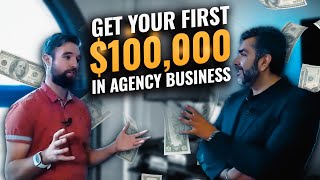
Marlon Dahl, founder of Vereo Video in Vancouver, shares how he built his video marketing agency to six figures. The conversation covers client acquisition strategies, niche targeting, sales processes, and advice for agency owners and introverts.
Okay, here we are.
Marlon. Hey, Gabby. You doing great. Nice.
I've got my crew with me.
Oh, hello.
Thank you for taking the time out. We're going to do this episode.
Okay, sounds great.
Let's do it. A lot of people get inspired when they listen to a new startup story. But how scary was it going in? Like, did you think? And what do you recommend going by? What are the three things that you would do differently?
If someone is already producing YouTube content and, you know, has 100,000 subscribers and it's like something that we want to take to the next level, then we're more inclined to, like, figure out how we can make it work.
Foreign.
Hi, guys, this is Avi. And I'm very excited today because today I'm dropping the episode with Marlon Dahl. Marlon is the CEO and founder of this agency here in Vancouver called Vereo Video. And you know what? All of you people have seen so many people having video marketing agencies, but this guy is the OG. He still looks 21, but he started this agency ages ago, about 10 years ago. I've known Marlon since. He had an amazing cooking channel which now has 70,000 followers. And then he and I used to go and check out his skateboard. We've been friends almost before he started this agency, and now it's been so many years. He's got a beautiful office and a beautiful team. And he talks to me about how to start an agency, how to have a niche idea, what to do to get your first three, four clients, how to make your first hundred thousand, how he has found funnel works, where he gives ads in different parts of the world. Who picks up the phone, what does his appointment setter do and say, his actual scripts, how he closes, how he takes care of his expenses, finances, tracking all the way till the very end. So before, during, after of the agency, behind the scenes like never before. So if you're an agency person who's been following my channel, this video with Marlon at his office is going to blow your mind away. Okay, here's what you need to do. Keep a paper pencil diary with you to take notes and use the comment section as your giveaway poster. Whatever you want, everything that goes into your mind. Put your giveaway there, put your takeaways over there, and I and Marlon will look at every single comment over here. And we select three winners and I send you all the books that I have. The Internet mobiles of the world. The book is coming to you. Three winners from the takeaways. So post your takeaways on the group And I look forward to seeing you. This episode is amazing and it's divided into two parts. So watch part one comment and then stay tuned for part number two. Introducing Marlon Dahl, founder of VideoVideo. Have fun, Marlon.
Thank you for having us. We've been wanting to do this for a long time. And congratulations, you're a dad now.
Thank you all the same.
I met you 10 years ago. You have not changed a bit. You still skateboard around town or what?
Occasionally I have the bike and the car and. But yeah, gotta have a few options. Whichever gets me to the office the fastest.
So which one does right now?
Well, in the summertime, the electric skateboard. But everything else, the bike faster than the car.
But I know that you got the electric skateboard one of them. You were one of the first people who got the electric skateboard before it became a thing, right?
Yeah, yeah. I need upgrade now, but it's been a while.
Awesome. So congratulations on video and how it's growing and everything.
Thank you.
Because I troop. You know, having a digital marketing agency is one of the most difficult businesses because there's so many moving parts, so many variables. We make a promise to a client and then like for example, in your case, just to do a YouTube video. And my God, everybody has a different expectation. The color, the grading, the editing and all of that, but to be able to then build a business from there. And I remember you were one of the first people who introduced me to Vidyard. And after that, I recommended you to only about 10,000 more people on how to do video outreach. Remember?
Yeah.
Back in the day, we used to, you know, talk and everything. So if you can, you know how we'd like to start this? Is that the one thing that I always say is that for any entrepreneur, the shortest distance between two human hearts is always a story. You tell a perfect stranger a good story and you win a heart for life. And that's what we do for ad marketers. So the one thing that I started doing in my webinars while I was doing my during COVID when nothing else was working, I said, my name is ABHI Arya, father of two girls, six dogs, husband to a superwoman, street car racer, turned hotelier, now social media, founder of Internet moguls. And it went viral. And then I used it in my Facebook ad. The Facebook ad got 3 million views and we had about 3,000 registrations. And so we created the case study and put it online. But just the way you connect with people can just change everything. Some people were curious, some People were trolling, but nevertheless it got the word out there. So using the same format, I'd like you to tell us about your hero story.
Okay, well, I have a beautiful golden retriever and I just had had a baby and I'm married. I love to adventure and I have this agency that's been kind of a baby for the last six years. Awesome. So this is something that I'm proud.
Of, what we've built. Of course, of course. So tell us, you know, like, you were definitely amongst the founding members of the Vancouver digital agency scene. You know, people were like, maybe agencies were somewhere in New York, Los Angeles, whatever. Vancouver. But not the agency thing. How did you stumble upon this business? And you know, how did you come to development?
So I used to work at Broadband TV, which at the time was world's largest YouTube network. And my job was managing and teaching creators how to grow. And then while doing this, I thought, well, I probably should have my own YouTube channel to practice what I preach. And so started doing that. Got my first like 5,000 subscribers, like pretty early on. So I was asked to do a talk at, I was at Internet Masterminds and then, yeah, I did the talk and someone asked me to do some consulting for it. And so did some consulting. But it was my goal to be the most knowledgeable person about YouTube at BBTV. And so I just tried to. I paid for courses, I did my own research, read books all along, like marketing. And then people came in and started inquiring to do some private consulting. And then I thought, okay, well, there's clearly a need for businesses that would invest into creating great video content, but then not really get much viewership or not reaching the audiences they want. And so applying the practices that we're working for, creators to build and grow audiences to businesses that want to get in front of their ideal target audience. And so, yeah, just started finding the right people to bring together and make something happen.
Awesome. A lot of people get inspired when they listen to a new startup story. But how scary was it going in? Like did you think and would you recommend going back? What are the three things that you would do differently?
Oh, interesting. I think I would have tried to hire for certain positions earlier, so I was very frugal to make sure that there was enough funds to keep it going. But placing some of those investments a little earlier on, I think that would have been good. But I don't know if there's a lot that I would change. But it certainly was, you know, nerve wracking, like quitting My job at the time I was like doing the YouTube channel the job and also now taking on some clients. And so it was a lot like, you know, like 3am nights doing a lot of this stuff myself. So in a way like doing the stuff myself and doing all aspects of the business. While I say hiring like earlier, it was also helpful in being able to learn all aspects of the business because then I could then hire the right people, train and create sops for it.
So outreach.
So I remember you were one of the first people who told me about Vidyard. And like I said after that I recommended it only to about 10,000 more people because to send out a video. But the thing was people were very fearful even now like how should I put myself on camera? And all of that. So we'd rather still send in 2023 a boring email and say I'm working very hard on outreach. So can you give us a few tips on, you know, you're getting started, you have a little bit budget, your first two, three clients can give you that make or break confidence that you need. So can you just tell our, you know, our listeners, startups, agency owners on what would you describe as a video free strategy using Vidyard?
Oh well, I can't say I've used Vidyard in a while, so I don't, I don't know if I can speak to that. Great. But when we do outreach we try and always personalize it. So we're not doing a lot of outreach now. It's actually most of the stuff comes in inbound.
Lovely. So that's how does it feel to.
Say that it feels great not you know, begging people coming in.
Right.
And so it's either. So we do have ads, but then there's our SEO and blog content that brings people in but then we actually have people have written about us and so we get a lot of referrals just like, like known as like listicles, like top YouTube marketing and top YouTube advertising agency and some of the best clients that we've had come through that and then just word of mouth and referrals. But yeah, in the beginning it was reaching out to people with like not mass, mass reach out, very personalized pitch because like I'm sure you experience it. I get so many emails every single day inquiring, reaching out for a different SEO service or say actually sales outreach services, just people pitching. Most of it goes to spam, but like still like four or five emails every day for trying to pitch a service. And so if it's not personalized. It just goes into spam.
Right. So zero. Like at this point, a lot of startups would like to know, okay, so I'm going to what. What have you learned right now from Marlon Listicles? You know, like people talking about you as one of the best agencies in a particular field, going out for talks.
Outreach.
Now there are two components to this. I can use Facebook ads to get people or YouTube ads to get people. You know, that's inbound leads. I can use a software and start doing outreach. I can hire somebody, say, okay, you're going to do 10 outreach messages a day. YouTube ads are working and I can sponsor a talk. And all these three things cost money, but they can have come fast. Like all these things together, one resource to things automatic and. Or if you don't have budgets, you bootstrap everything. Now, going back and looking at speed and the opportunity cost, would you invest money on all these three things to make it happen faster? Because like you said, mysticals could or could not happen. You did your best work and somebody covered you. But it could or could not happen. So it's not predictable revenue.
Yeah.
So what in 2023, if somebody has limited cash flow, what would you suggest? Go pay because pay can get results faster or just go the organic way, do your good work and people will find you?
I think it would depend on the value proposition. So like a general. Well, first I would go go niche for whatever. If building an agency or whatever value prop is like start niche, we try and do everything. It's going to be really hard to get customers that way because there's so many people who offer better specialized services. Branding for skateboarders, sure, yeah, if there's a market for it, if there's market demand. But I'd say over all the things that we've done that I guess I didn't really mention was just putting like myself as an introvert, putting myself out there, going to events, going to different workshops and meeting people. Like so building that network and then the confidence to be able to speak on the services and just connect with other business owners. Like that was probably the most valuable thing both for me in developing myself, but also in connecting. Like some of our biggest clients that we've had have come from just personal relationships that have developed and often those were in a speaking training course or at different conferences. And so that would be probably a great way to go is just building up personal network.
So two things over here, Varun. So you said going out to these events and somehow people are always in a hurry and there are very few people who are ready to listen. Although the art of networking you should listen to the other person, give him or her the importance and see how you can stop them. And automatically the next question is hey, what do you do? But in this fast paced world, you know, you leave your office, you go into a networking event after an event you had, you know, a couple of people have had a few drinks and all of that. Is there like a specific line you think that goes that works like hey I'm Marvin from this is Marwan and Lashi from VideoVideo and we help you look like a rockstar so you can get three more leads a day. Something as crazy as that. Is there a line that you have?
We say we help turn convert viewers into customers because it doesn't have all those social proof baked in. We have longer versions of that but it's. It's the main thing that we do. So people build audiences but then don't know how to then convert them or even growing that audience. And so that's a big. That's like kind of our tagline, right? I love it.
Yeah. So do you have something called like we have something in the office called the monster avatar. We the customers we don't want to work with people who don't pay or don't pay on time or they don't understand us and always want something else because they don't know who they are. We like here the five trends of avatars we're not going to work with and everybody else could be your customer over the years of six years. Do you know who dot to work with and do you think that's important to have?
Yes. I don't call him the monster avatar but I think I'll definitely absorb that. So restaurants not because the owners aren't in alignment just because it's not the type of business that would service are like small margins and local. So it doesn't really work for our niche. But there are agencies that speak specifically go after that we know for my business that's not right.
Real estate agents who are making more than $250,000 a year like those kind.
Of niches are those are even still not great. So generally would prefer that they have a company has at least a million in revenue because we're also a very niche service. And so it might not make sense for them to put all their or like if a larger proportion of their marketing budget towards just YouTube advertising for it. And so while we think it can be the best Channel, they might not have the capacity to be able to allocate towards the other things like their website or CRO or any other channels.
So tell me, Marlon Agency, somebody comes to you or came to you in the last few years and said 250,000 and you had burnt your fingers knowing that these people don't have the capacity to work with us and nor do we have the capacity to serve them and take them to the next level. So when you started saying no, was it tough and is it easy now?
It's definitely easier now. So yeah, we still like, if someone is already producing YouTube content and you know, has a hundred thousand subscribers and it's like something that we want to take to the next level, then we're, we're more inclined to like figure out how we can make it work for them or if it's a business that or organization that's more in alignment with our values. And so companies that are more impact based, trying to make the world a bit better of a place that were more inclined to, you know, make something work in terms of like price and services that we offer them.
Right. So you're saying, and I really love what you said, are you saying, if I'm understanding correctly, there is a space in a business relationship to serve somebody based on shared value and not just price?
Absolutely, yeah. And it's not always easy to be able to like, I'd like to just be able to focus on those types of businesses, but not all the ones that come inbound are that. And we're still able to work with lots of great businesses, but we've turned down companies that aren't in alignment with our values.
Of course. Got it. Now moving to the next section before we can go out for a walk in this beautiful city. The beauty about advertising on YouTube, which you do for your own business and you help others do for theirs, is that you get clients from all over the world.
Yeah, mostly, mostly in the States and we're in Vancouver, British Columbia, but most are in the States. But yeah, we've worked with companies in Europe, in Australia, so it's yeah, bit of the spectrum, but I'd say 80% are in the States and then another 10% in Canada.
So in today's time to 2023 after Covid, when people have sort of more people have adopted the digital nomad lifestyle and some of them don't want to go to work and they still want to start an agency and they feel we're in a smaller location or a smaller ecosystem, it should not matter to them. Because if you're starting an agency, you can now get clients from anywhere in the world. Yeah. And so do you do YouTube ads or to reach out to people in different geographies and they book a call with you, post your calendar and then people follow up. Is that the process?
So in terms of intaking new customers. Yeah. So we have like a consultation form. So they'll request consultation, have initial talk, provide some. Provide some value on the call, and then see if they're a fit. We'll do a bit of a discovery from there. We'll go to a proposal. But yeah, we don't need to be in the same room with them. Like, I've only done one proposal in person.
Wow. I love that.
Entire time that I've been doing the business.
Six years.
Yeah.
Face to face.
What do you want? Well, I've been face to face with some of the customers more time, but, yeah, majority has been.
That is fantastic. Yeah. So, you know, I studied your. Before I came in here, I studied your. Your entire funnel. I actually called it as well. And I spoke to the guys just to understand how it works. So I understand I can interview you. So I see that every time that an email goes out or an inquiry comes in, you send an email back with lots of value, some of your videos and saying while you're waiting and we are analyzing your form, this is a video and all of that. So when the form comes to you, say you get 100 leads a month. What percentage of leads do you reply back and politely decline? Because just looking at it for 10 minutes knows they're not the right fit. I'm trying to make a point because most digital agencies that I consult with or I talk to, I see that they're so eager to pick up the phone and talk to a customer without actually have that Google form in between. There's a huge resistance for a lot of people. And you do it so beautifully. So just, just tell our audience on how that serves you just by having that partner.
Yeah. So the form gives us, you know, their, their project scope, their budget, YouTube channel, website. So we can go check out, make. Okay. Make sure it's not a scam. Like, that's the thing, the top, the first, first part because, you know, we get different crypto stuff or just weird, weird channels, things businesses that aren't in alignment. So if anything's like that, then, yeah, it's pretty easy to filter. So I'd say like, so we go, we call it. We have leads that could be anyone that requires. Because we also have lead magnets that people can download and then we have mql so marketing qualified leads if they are, if they basically down request a consultation. SQL's sales qualified lead, if we reach out for a phone call and then meetings booked. So that's like first, first call, then opportunity, which is a proposal and then close and so down the funnel it's about from MQL from the first inquiring for consultation, about 50%. So 50% are worth having a call.
Oh, amazing. Thank you for saying that. So you save 50% of your time just by doing that. So that can be a make or break for a startup. You know, you do 100 calls and you're tired, you know.
Yeah, brain fog or mental fatigue and.
You'Re like I'm giving up this agency thing, it's not working. I already did 300 calls, it doesn't work for me. So maybe you should have done just 150 of those calls.
Yeah, I mean as a caveat, if you don't have a lot, like if you have 10 more calls in a month and it's still new, I think.
I would take all of them. Got it.
And just hear what are the market demands?
Like what are people asking?
And just being able to say your pitch. So when I have new salespeople start, have them take every call pretty much for it just so that they can practice and also see what even smaller channels or businesses are interested in because we do want to be able to still provide some value. It's just generally not worth it for them for our full retainer services. And so we're also looking at smaller scope services. That doesn't help take as much of our team's time, but we can still provide value to those smaller small businesses.
So Marlon, you know, I have consulted with, I run my own agency, but I've also consulted with agencies which are few years where I am a few years ahead in the game. And so coach, discipline, mentor, you know, their processes. One of the things that I've seen is some people don't have a very well defined business equation and I call it a business equation from how many people get to know you through the listicles or your views or whatever to how many people actually give you leads, to how many people are going to give you sales and broken down into a one week format. So for example, if you're getting 10 leads a day through your YouTube or Facebook ads, say Monday to Friday, 50 leads from 50, you say I'm going to convert 10% and every lead is say worth $5,000 if they convert. So 10 leads that convert in, five leads out of 50 convert at 5,000. So it's $25,000 revenue. What should be the cost of that lead do you have?
Yeah, so I don't know what the numbers that you just proposed. So yeah, but we could pay for sales qualified lead, like a good one, about $200 for it. That's two to $300 is kind of what we, what we try and get a sales qualified lead for.
So like it could be different for different people. Right. If somebody's trying to sell an apartment and he makes a 10%, 5% commission, which is like $40,000.
Yeah.
So that guy could be able to, he may pay $500 or $700.
Yeah.
So is there a formula that your lead cost or should be 10% or 15, is that a gap? Like if I give you a great deal, 500, will you say no? I'm trying to understand.
Yeah. So yeah, it requires a bit of calculation. Like you want to look at your lifetime value of a customer and see, okay, well how much can I spend to acquire a lead? Because what percentage of my leads actually convert? And two customers. So I'm not going to attempt to do the math, but there are calculators that will, will show you those percentages. We just use Google sheets based on our averages. So every month we track, okay, how many MQLs do we have and how many of those convert into SQLs?
Right. So do you track every month or every week or every day?
We don't track daily. We track weekly and monthly. But the weekly is actually a new thing that we just, but tell me.
As, just to understand, as a business owner, don't you already 80% have it in your head? I mean you need to actually go and track like, don't you? Or, or no.
Like we don't need to make a lot of adjustments, but the tracking is helpful to know just if we're, if we need to make improvements, if there's a big drop. Like why is there a drop? Because often like now I have a marketing manager. Sales manager. So they have a better perspective. And so it also helps to give me a better perspective on when things are going really well and when, when we need to fill up our pipeline value.
Who would you hire first, Marketing or sales?
Sales. Well, it depends if you have leads, I guess. Right, right. If you have leads that are coming and then definitely, definitely sales.
Right.
If you are trying to build brand also, I mean it'd be fulfillment before. So Being able to fulfill. But it really depends what your zone of genius is for it and what are the missing. Missing gaps.
Three tips you would give to other introverts because you mentioned you said you were an introvert. I never saw you as one, but you said you were an introvert and going out to these events could have been challenging. Three tips for introverts on how they can, you know, they can sort of break through this challenge.
Yeah, I mean you should have seen me 10 years ago. I don't think I could hold the conversation very well. But I read a lot of books that was something so that I felt like I could actually provide value to people. And so that would be. One is read, educate for it, then put yourself out there. Like get comfortable with the discomfort for it and then be curious for it. So curious about other people and what they're doing. Like genuine curiosity. And then if it's also be interesting but you're not trying to push all of your stuff but like interesting for yourself. Like I meet a lot of people through sports that I. That I play or through creative pursuits or through being an entrepreneur. And so that also helps to be able to put myself out there because I'm also like doing cool things with people.
Lovely. So when it comes to modern actually going out and closing a deal like.
You know, you have going out on the computer.
Yes, yes, yes. I love your setup and we can just, you know, planning as a secret setup. Everything is, you know, you're ready to your call. Is there a mental prep?
Yes. Yeah. I mean it's a boss.
He's going to close more than us. You have to lead by example. You keep that pressure on yourself.
So now it's. I mostly rely on the team. But yeah, today I did a sales call because it was like a lead. It was proposal but it sounds like it will. It's really interesting business. But I'm not. I'm not doing as much these days. But in the beginning, yeah I would like practice through the proposal all the time. Take a couple breaths and there's still sometimes like feel a bit of like fluttering like nerves. But got a lot more comfortable with it where I actually like enjoy speaking to it. I've done it 500 times. So yeah, it's become a lot more comfortable where I can just go on.
Where I remember when I came to your first office which was in the apartment where you were staying as well. You and you had a co. Founder or a partner and you had two separate rooms with two computers each.
Yeah.
Go into your rooms do your sales calls come out? So you always had a process. I mean, I knew that you always had. So were you always like engineer minded, structured in your head like this is how it's going to work?
No, originally, like, so we use a great tool for proposals is proposify. And so we use that to have each section of our proposal kind of mapped out. And so that helped to have like a visual, like kind of guideline. So we had our services very clear, but it's been a work in progress. But we still use some of the elements from when we, when we started for it. But that helps to be able to have like a clear structure for it.
You know, I, I use proposify and a client of mine had asked me to study it to see if I should recommend it. And I think it had analytics, right? It still does. Yeah. And when we saw the analytics, most of the people were going to the last page, which is the price.
Oh yeah, of course. That's where they spend the most time. Right, right, right.
So it was interesting to, you know, we made a few tweaks here and there to be able to see that we're breaking down the price into two parts. So you'll find one on site, 10 and on, you know, and then we start to see how many people are going there and breaking down the price. It's very interesting to see the analytics on the proposal and being able to sort of tailor, make that. So you've always been a big tools guy. Like.
Yeah.
You understand what can help you save time.
Yeah, And I've been frugal with the tools. Like now we pay a lot more for larger tools like HubSpot, but. And I don't think you should necessarily. I mean, it can be. Maybe it would have been better if I just went all in on one tool, but I would like kind of Frankenstein. So I would buy different tools on AppSumo. So you pay 50 bucks, it's like the Groupon or software and get lifetime value. And so I probably have purchased it, purchased 30 products and still use like four of them or occasionally another four. But still worth it. Yeah. So definitely software.
Could you recommend a few tools to an agency owner? Because this is always the favorite part.
Yeah, tools. I mean, so accounting definitely want to get that set up right away. So QuickBooks, obviously, ChatGPT, of course for it.
So that's for the God mode.
Yeah, yeah. And for the price, it's totally worth it. We actually used a couple other different AI tools, but now they just don't. Don't compete in the same way for it. And those were actually purchased via appsumo.
Nice.
Via that when you have a team like some form of time tracking system. So we use we also not HubSpot. It's called Hubstaff and yeah lets people track per hours per project. But if I were to go again I would use something like ClickUp that allows you to actually be able to track like per project within it.
Interesting.
So it does more like in A1 system for it. G Suite. Definitely 100% use G Suite or Google Workspace now. Totally, totally worth it for it. So yeah, those would be a few.
You know, one last question before we head downstairs. Every agency owner, I mean a lot of agency owners that I've been working with, they eventually go down the route of saying I need to have my own tool. There's a fascination for that.
Yeah.
So have you thought of such ideas like I should have my own tool because nobody's solving the problem that I see.
Yes. That was. It's been a big consideration for like what we. You know what, what's the next step? I actually had a meeting today with someone that is currently building one of those tools that, that I thought okay, there's a clear value like need for this. And so found out that someone was recently building this. So I reached out to him and so maybe there's some, some partnership. So we're in discussions about something for that because I would like to build my own like something more sophisticated but I don't have a highly technical background produce myself and there's huge costs involved. So want to make sure that you know, if we go down that route that we have the revenue to be able to support that additional project for it.
So if you could just look at the camera and tell us what does videovideo do and why should people, you know, what problems do they should they have before they call you?
Sure. Verio video is leading YouTube marketing and advertising agency for businesses and brands that want to grow on YouTube. And so that can mean greater viewership and subscribers, but also for being able to increase your overall lead generation and sales mostly via paid paid media. So YouTube ads remarketing to people who've already had a touchpoint with your business. And so we've, we've been doing this for six years and we, we focus on a couple key pillars. So that is the strategy where we do the research and we come up with what, what videos to actually create different video series ideas and then the optimization. So optimization including SEO and thumbnail design. Be able to maximize the amount of organic reach for it. And then advertising. So paid ads designed to get people to take action, to. To sign up for a lead form or to take a make a purchase.
Lovely. If you're in the agency, owners, just give a thumbs up and tell us what's the biggest thing you learned here. But if you're somebody who's looking for this kind of video service, then fill up the form and get in touch with Marlon. And now we're going to head to the park or somewhere in the neighborhood to continue our conversation.
More from Avi

The strongest mindset doesn't begin with meditation. It begins at home. Before you conquer the wor

The strongest mindset doesn't begin with meditation. It begins at home. Before you conquer the wor

Your mindset isn't something you fix once. It's something you train every single day. Just like yo

Don't build a company just because your friends are. Build one because you're ready. A startup is

Everyone dreams of becoming the boss. Very few understand what that really means. The moment you b

Most entrepreneurs say, "I don't have time for coaching." The truth? You don't make time for what

Over hiring doesn't always solve problems. Sometimes, it creates them. Having a small buffer in you

"The highest-paid" isn't the goal. The highest-value is. People often ask why premium mentorship co

The founder will always be a bottleneck... at some stage. The goal isn't to pretend you're never th

People ask me how I stay consistent with my morning routine while traveling across countries and tim

People ask me how I stay consistent with my morning routine while traveling across countries and tim