The 1000 crore agency club is back with MORE - Download what it takes to make a successful agency
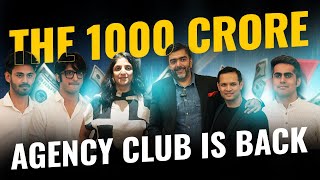
This is a YouTube video titled "The 1000 crore agency club is back with MORE - Download what it takes to make a successful agency" containing a multi-speaker discussion primarily involving Avi Arya and other participants such as Rohan, Viraj, and several unnamed speakers. The conversation centers around agency business growth, talent management, employee attrition, leadership challenges, and personal experiences in entrepreneurship. Avi Arya actively participates in the dialogue and also provides a closing segment promoting his consulting services. The content was created in November 2023 and focuses on insights into running and scaling agencies successfully.
Like that in few years time he built a agency business listed on the Swedish nasdaq, then went into this business. So I agree with you that you know, like actually it teaches you a lot of skills to be able to build a platform. And then I think each one has their own journey. Some may want to exit the service business and then go into another business. Some may want to continue running the service business while continue other like you know, each one. Because that would be the journey that each one would have. Yeah, but point on.
Like Gary B. Is saying now, like Gary B. Wants to do products and toys and you know, he ays, I used VaynerMedia as sort of a platform.
Yeah. You should look at Ryan Reynolds. That's what he's doing. Right? Like, I mean if we look at it from that perspective. Yeah, exactly.
He's a marketer more than anything.
Yeah, Ryan Reynolds, I mean, brilliant.
Their current needs do not align with the.
But yeah, just coming back to, you.
Know, employee turnover, I think, you know, completely right with that, that the culture is the thing that keeps it together more than anything else. But I think 25, 30% attrition is something everyone has to become very comfortable with because that's the nature of the new generation now. So earlier it was all about loyalty and spending long years at organizations. Now I think organizations need to focus in that two period time frame, which is the average time frame, one and a half to two that a lot of people are spending in organizations. How do we make them fully, you know, productive in the fastest way possible and manage to utilize that time in the best way possible, creating a great experience for them and for the organization? I think if you create that kind of a learning culture, that kind of a culture which breeds, you know, collaboration, that's something that's going to happen really well in the agency business and that should be the cornerstone of what you're doing. Plus I think what she was alluding to when she said, you know, a leadership team has grown together. We track this thing called effective attrition. And effective attrition is how many people left, which I wanted them to scale. And that is a much better metric to drag us than attrition because attrition is all going to be aware. Right. Like I'm sure you all have significant numbers. Especially with the pandemic and the disconnect which happened through, you know, just having remote workforce, it's been more.
Right.
I think that will stable down but some of it will have to become.
Just, just a throw up to that question, you know, and this could be for anybody. Is firing a bad word? Like, you know, you're holding in your heart and soul and money into this and you don't find the right fit. Is firing a bad word?
No, it's not. I don't think we are the right people to answer that because people come from bias view. I don't think any efforts not making business and keeping a certain resource, it's.
Like a fair to the individual and not you. So it's just better. You have to do it in a humane manner, you know, being very cognizant of what that person's career is going to go.
But I think firing is sensitive about it. I think it's the best interest. More from a like employee churn POV. We are a very young agency, so like about 80, 85% of my team is under the age of 26, over 25, which is technically how many total people have got 100 people now. So it's a predominant Gen Z employee, you know, count that we have. Which means that like Rohan said, there is absolutely zero concept of loyalty. Like, that's a word that I don't even speak of. It's actually wrong of me to speak of anything like, because people now care a lot more about personal growth than company vision and culture also, I feel. So while company vision and culture are super important, that will hold the team intact. They will have a common goal to work towards. But what we're also constantly working on is speaking to them on what are their personal goals and what are they trying to achieve and how can we help them achieve those goals? Because, I mean, especially in an organization like ours, where we are actually more, say, individual focused in terms of being talent first as opposed to, you know, necessarily being brand first, as most of these guys here, there is too much glamour in being, you know, a talent manager or an agent or representative. There is too much fame that comes through very early. There's a lot of, you know, they are essentially gatekeepers of these people to the mass. So there is just like a surge of power that gets to your head so soon because you are their bodyguard, you're also their mom, you're their best friend, you're their business manager. Everything rolled up in one, for example. So that is for one segment of my team, which is the talent managers, the people who are at 21, 22, they're working with such big names in the industry that it is naturally easy for them to think that, hey, you know what, this is easy. That there's no entry barrier either. I Can do this myself, I can break out of this agency and start my own thing. Take some of the clients myself. Or it's like the thing is that a lot of these 21 year olds that they are managing are making insane amounts of money.
Right.
Who are like influencers themselves. So take this like a 24 year old talent manager who is managing a 19 year old kid. The 19 year old kid is making 50 lakh rupees a year or a crore a year and the 24 year old is making 6 lakh rupees a year. So that dynamic is just. It's mind numbing to most people that how, how can I be doing this? How can I be living this life? So in because of that also we face a lot of attrition and also beyond the point. We've just conditioned ourselves to thinking that there will be about 8, 10, 15 odd people who will be part of the cohort management who will stick through with us for a longer duration because they're here for the vision. And that vision also aligns with their personal goals. The others are going to be like on and off. So people have we just conditioned ourselves to figure out.
Interesting, interesting. So this perspective happened two years ago or since the beginning in the first year or it was like.
No, in the first. It was for the first three years we didn't have any attrition at all because we were a team of 20, 30 people this three years.
Right.
No one really left. So I used to really pride myself on. Yeah, look at us. Like there's no attention and like during COVID post Covid just it went through the roofs. So I realized that it's just part of life.
Awesome. That is amazing perspective. I can just, I can totally imagine. Especially at that age I must be doing something.
Yeah.
And I mean making money on the Internet is much easier now. So it's a natural question. Like we have some case studies where someone who started as an intern in our company is now a talent that we manage.
Who is this?
Divya Katira is this guy. He's at 100k on Instagram now. He used to make 10,000 stipend a month and now he's.
You know I have just 2, 2 points to add in this one is, you know, I think the second or third time I'm meeting Rohan. First time I met Rohan, he told me one thing which I still remember and then I followed he said one, I think uncle of his told him that solution to all problems is growth. So you know, that stuck with me the first time when we had met. So that is I think the biggest way to retain talent if you keep growing faster. Because connecting the dots, you know, see while we are talking, we are agency leadership founder this that we are saying we are scalable, we can do everything. That means a lot of people can also enter this business. If they can do everything, they also setting the springboard for their career. So if we can continue the growth, then they can come in second. Is there is a very good talk I would recommend everybody who is listening to go and watch. There's a good talk by Azim Premji on the journey of Wipro. So he gives very few talks. This is one talk. He's given it at Stanford and he's made two points which is that IT industry and I think for us service industry, IT industry is already sitting as a benchmark to look at. So they grow at attrition wise. They basically have 20% year on year attrition over long term period. And they say focus on two things, maintaining attrition at 20% and second is increasing productivity on the same workforce by 5% every year. So you have gains on the same workforce by 5% and you are increasing, you know, you are facing yourself for attrition of 20%. So you tune your system for that. Basically.
That's a nice formula. I think we need 20 is fine, but on the top end you need 30% every year.
So I'm doing the courses for OPM at the Harvard Business School and there's one case study that we studied very deeply and what the takeaway that came from that is that we don't let enough people go. By the way, that was very interesting. You know, like we speak about like leave the company. Yeah. We don't let enough people go. Right. Sometimes as you are growing, solution to all the problems is growth. As you are growing, it's a cycle. Most people who start with you sometimes are not able to grow at the same pace, are not necessarily aligned to the way you want to grow your company. At which point I feel we end up holding on to more people than we should.
And thank you for saying that.
Absolutely. We end up holding on. There is emotion, there is, you know, there is fear, there is emotion, all of those things. Right. So people who should stay with you are the people who can grow at the pace you know that your company is growing. That's, that's point number one. And the other interesting thing you know about, especially about senior leadership is there's a concept of talent portability.
Okay.
Especially in the Services business so investing concept.
Hey guys, I hope you enjoyed this video. Now here are the next steps. If you want to book a call with my consulting team to be able to understand how we can help your business as a coach or an agency founder, you're stuck, you're not getting sales. There's a link in the description. Click on the link and book a call with my team. In that 30 minute call, they'll understand what you need and accordingly give you the right resources and the right roadmap forward. Second, if you think that you're looking for the Avi Arya personal mentorship, which I do very few of, but I do keep my sorts open. Then again, click on the link in the description and speak to my team. They will understand your business and accordingly, if you and I are the right fit, then connect you and I on a 30 minute call and I look forward to talking to you. Thank you very much for watching all my videos. There are going to be lots and lots of new videos coming up. Keep watching. Fill up the link in the description. And I look forward to talking to you and having my team help you with your journey of entrepreneurship. Thanks a lot. This is Avi Arya signing off.
For now, the intellectual capital we believe is something that is, I mean as individuals they feel they're portable because they're knowledge workers. Right. They feel like you're doing very, very well in one place, you can go to another place and you can do it equally well. But data shows that it is the culture of the organization that makes the star performance work as star performance.
And these are leadership or non leadership.
Primarily leadership. See, when you're younger, you're very adaptable and then you grow within the organization. So the organization has created an environment for you to grow and actually shine through. And then if you think that that talent is portable to another, of course, conditions. Right. Like culture, strong organization, culture, not so strong organization. Moving from maybe a flexible culture to a more rigid culture. So both of variables. But talent portability is interesting or important.
You know, I think what Viraj said and I think that it's a young agency. You and I have been running our agency for, you know, a different decade. But let's see. One thing I like what he said was that everybody's got a different need in life.
Yeah.
Talk to them, you know, like it makes sense.
Yeah.
I would say the vision has to be all encompassing to think how the individuals will also grow as part of it. And some of them might not vibe with that over a larger period of time. But I Don't think the vision is only limited to the. I would say that the vision is for the entire organization because the bottomless guy who needs to connect to the vision more than anyone else, he might not connect to that vision for a long period of time. But while he is there, at least he's right. No.
That's why I don't have a lot.
Of regret about people. You know, earlier when early days of running an agency the first few years.
I think fabric had done people used to leave.
It felt like a personal thing. You know, you are leaving me now. As you mature I think you realize that they're not leaving you. It's just that their current needs do not align with the needs of the organization. And maybe that's not the best place to be. And sometimes it's about them sometimes moving faster than the organization and sometimes the organization moving faster. Sometimes just a compatibility issue.
At that time I had this one person who left and you know, and I wanted to know why stepping obviously taking it personally because massive sales he was bringing and took me a long time took him a long time to, you know, to speak in the same language that I could understand for you know, for various reasons we got together and I understood that he said that every time you. You talk about this, you know, this pictures that clouds is going to happen and all that I want to give on even the money you show me more money I make more. Then you were talking to me about my money. I was okay. Whenever you started talking about all these things I used to get lost. And it was a time so I was like okay, so coming back to your point, this one's also that's true.
And there's nothing wrong in doing a transaction. See, this is a transaction and there's absolutely nothing wrong in doing a transaction as a business person. But you need the vision holders as well, you know, for you to build.
An institution in the long term.
So I was 18, 19. My thing was that I wanted to. I genuinely wanted to become a Steve. My dad's race with people. I actually thought I want to become a streetcar racer. I believe it and I would offer to study.
So you did streetcar racing and the.
Ground whatever was available in India in Delhi at that point. Everybody did it. Everybody who got access to a car which was the mother the fastest car possible esteem ideals. So anyway that's what I wanted to do but because you know with the total upheaval in the business family whatever. So we had to leave every day. So I couldn't go abroad. I couldn't do any of these things. So I started working with my dad. We had a small guest house in Delhi. We had a New Delhi railway station which is what you know. Eventually we were left with. They used to do superfoods. Beautiful logo and everything. And during that time the branding, I remember it was amazing.
What brand was it?
Superfoods.
Superfoods.
The. The tea guys they said sold it to D.
So I think the gentleman who bought it was the son in law or something like that. So anyway, so this was a go down which was kept here. So he was left with only that. So that go down was converted into guest house. All that thing happened. So that guest house, this guy who wants to go to Oxford and do streetcar racing. And now at that go down in that guest house. So obviously you grow up angry when your dreams are like this. That will happen. But at that time the Internet was a new thing. Trying to dabble around with a few things. Created a website called. And then it just took off. Get 50 booking a day, 800 rupees. And we didn't have enough rooms to book other people.
More from Avi

The strongest mindset doesn't begin with meditation. It begins at home. Before you conquer the wor

The strongest mindset doesn't begin with meditation. It begins at home. Before you conquer the wor

Your mindset isn't something you fix once. It's something you train every single day. Just like yo

Don't build a company just because your friends are. Build one because you're ready. A startup is

Everyone dreams of becoming the boss. Very few understand what that really means. The moment you b

Most entrepreneurs say, "I don't have time for coaching." The truth? You don't make time for what

Over hiring doesn't always solve problems. Sometimes, it creates them. Having a small buffer in you

"The highest-paid" isn't the goal. The highest-value is. People often ask why premium mentorship co

The founder will always be a bottleneck... at some stage. The goal isn't to pretend you're never th

People ask me how I stay consistent with my morning routine while traveling across countries and tim

People ask me how I stay consistent with my morning routine while traveling across countries and tim