The Only Limits You have are the ones You put on yourself | Victim to Victor 😎 | IMOTW
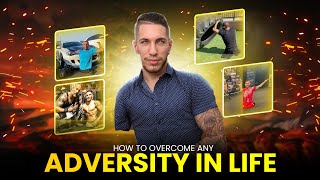
Nick Santinostasso, a bodybuilder and model born with Hanhart syndrome, talks about overcoming physical disability through mindset and fitness. He discusses how he built his body, grew his social media following, and shifted from seeing himself as a victim to taking control of his life.
I'm nick Santinostasso. I'm 23 years old. I'm a bodybuilder, model, and shifter of perspectives. I have a quote. I have a quote on my arm. It's in a tattoo. It says, you laugh at me because I'm different. I laugh at you because you're all the same. I try everything because at the end of my life, I want to look back on my life and say, I have more remember whens and less what ifs. They promised each other that they were going to focus on the 30% rather than the 70% of me dying. Right. Because where focus goes, energy flows, and my parents didn't want to focus on the negative. And so that's what I always tell people is, you know, focusing on the negative really never serves us. Yeah. So working out is extremely important. And the reason why it's important, it's not just physical, my friends, but it's mental. It's therapeutic. It gets you to operate at a higher level in life. And the reason being is because when you put your body under stress, whether that's a workout, a jog, a run, your body then releases dopamine.
My name is ABHI Arya. Father of two girls, six dogs, husband to a superwoman, a streetcar racer turned hotelier, now social media marketer and founder of Internet moguls. But you have done. You're a true hero, man. We'd love to hear how you would introduce yourself to the audience with your hero introduction.
Yeah, great. I'm nick Santinostasso. I'm 23 years old. I'm a bodybuilder, model and shifter of perspectives.
Bodybuilder model and shifter of perspectives. I love that. Awesome. So, like, you know, Nick, my question for all of the audience, this is right now, we've got a few people live, but this is going to go out to hundred plus thousand people in our community. We wanted to know, tell us a little bit about your backstory. Where were you born, circumstances in life, and how did you become, you know, challenges, adversities, and how did you become like super popular, super bodybuilder model, all of that?
Yeah, absolutely. So in 1996, my mom went in for a late ultrasound and, you know, they brought my parents in and they sat them down and they brought the baby up on the screen. And suddenly the doctors started looking at each other with puzzled faces. And they said, well, what's wrong? And they said, well, we have some very bad news. They said, from the looks of it, it doesn't. It doesn't look like your baby's limbs are being developed. It looks like he's missing his legs, his arm, his face might be messed up. And soon they classified me, you know, a little bit after they classified me with what we call Hanhart syndrome. And Hanhart syndrome is a super rare genetic disorder that either leaves the babies with undeveloped limbs or undeveloped organs. And so in 1996, I was actually the 12th baby in medical history that they've ever seen this happen to. And out of the 12, eight of those babies have passed away due to undeveloped organs. And so that means the babies are born and they can't breathe on their own, they can't eat on their own, and they later on pass away. And so, you know, the doctors told my parents that their son has about a 30% chance to live. And this was, you know, a power move. A power move by my parents, or a massive decision that my parents made. They promised each other that they were going to focus on the 30% rather than the 70% of me dying, right? Because where focus goes, energy flows, and my parents didn't want to focus on the negative. And so that's what I always tell people is, you know, focusing on the negative really never serves us. And, you know, what's negative or what's, you know, not great in your life is always available. It's always available for you to focus on, but what's great in your life is always available to focus on as well, right? And so we tend to focus on what can we appreciate, you know, what are we grateful for? What is the good that comes out of every situation? And so that was the massive promise my parents made to each other. And so a couple months later, my mom went into labor with me, and she had a C section. And I came out, and they took me and did tests on my organs, and my organs came back 100% healthy. And the only thing that was affected were my limbs. And so I was born with no legs, one arm with one finger, a shorter arm, and then I have no legs as well, and a walking unicorn, right? And so I'm grateful to be here, grateful to be alive. And my. My parents, they went against the grain. And so during that time, it was very common for families to hide someone like me or to keep me away from the public and shine me away or abort me, right? Or institutionalize me. And my parents were like, everyone's gonna know who Nick is, and we're gonna show people that, you know, despite the disability or whatever you want to call it, that he's still just a beautiful baby boy. And from an early age, my parents sat me down and they said, listen, Nick, you're born with no legs and one arm, and the world's not going to stop for you. You know, you have to adapt to things. You have to figure out how to do things Nick's way. And so, you know, in the most polite way, they would put my clothes in front of me and they say, all right, Nick, figure it out. And they give me verbal suggestions and, you know, I try to put my clothes on and I get pissed off. I couldn't get my clothes on. And I'd finally figure it out. And then, you know, my second challenge came, and they put me in a high chair with some food there and said, all right, Nick, figure it out. And the two massively important things that my parents engraved to me at an early age was, the first one was at an early age, they got me comfortable with uncomfortable situations. And oftentimes, this is stuff that I teach adults as well, is like putting yourself in uncomfortable situations. That's a muscle. That's something that we cultivate. That's something that we need to continuously do. And if someone veers away from a challenge, if someone runs away from failure or a challenge, that just means that they haven't been in that situation enough to realize that it's okay. Right. We're kind of scared of it. It's unknown for us. And then the second thing is, at an early age, my parents got my brain in the habit of focusing on the solution rather than the problem, which is massive. Right. Being solution oriented. And so instead of wasting my time on focusing on the problem, the majority of the time I'm focused on the how, the why. Like, how can I go left, how can I go right, how can I get on a chair, how can I feed myself? And so I think also for the. For the adults as well as the kids listening, if we can get in the habit of just bringing forth solutions, that's way more empowering than getting crippled and handicapped by the problem, because that's what we mostly do is we. We focus on the problem. And so, you know, after that, I didn't realize I was too different until I got into middle school and high school. And we can all agree middle school and high school are probably the most judgmental times of our lives. And, you know, I got into the victim mentality, I got into the why me. Right? Right. We can all reflect on a moment in our life, in our inner dialogue, where we asked ourselves, why is this happening to Me, right? And so that was my big question of why me? Why do I have to be born like this? Why do the kids have to make fun of me? Why do I have to go through these challenges? And I was looking for a way out. I was looking for a way to build confidence. I was looking for a way to fall in love with my body a little bit more because I hated it. And so I'm from New Jersey in the United States. And in New Jersey, wrestling is a big deal. The sport of wrestling is a big deal. My older brother was a wrestler. All my best friends are wrestlers. And I thought, you know, in my mind, if I could become a wrestler, I'd feel more confident, right? You know, I'd be with my friends more. I'd be labeled as an athlete. Maybe the girls would like me. I mean, this is my thought process as a 15, 16 year old kid. But I had a little bit of a challenge. And my challenge was this arm was about 5 inches longer than it is now. And my bone was growing faster than my skin. So it was super sensitive. And the bottom line is if I would have hit my arm hard enough, my bone would have came through my skin. And so I couldn't do physical activities with it. And so, you know, one day my friends were like, dude, you should become a wrestler. And I was like, I can't. My arm. You know, And a little fun fact about humans, we always start off with the word can't. It's like a habit for us. And can't, not only is disempowering, but it blocks your brain from stimulating solutions. And so you're, you're immediately closing off your brain to stimulate solutions. When we frame something, we can't. And that's why. So I always ask myself how? Because the quality of our life comes down to the quality of the questions that we ask ourselves. Our brain is like a. Yeah. The quality of our life comes down to the quality of the questions that we continuously ask ourselves. And what I mean by that? Our brain is a computer. And so you ask a question, you get an answer. If you don't like that answer, you ask a better question. If you're asking a negative question, you're going to get a negative answer. That's going to be what it comes back to you. And so we have to be very conscious of the questions in our internal dialogue that we're talking to ourselves. And so I was like, man, how can I become a wrestler? How can I get over this arm thing? And so one day, you know, I sat my parents down and I said, mom and Dad, I want to be a wrestler. And my mom was like, oh, no, Nick, you know, wrestling is the most physical sport. What are you going to do if you hit your arm? Your bone comes through your skin. And I said, well, can we cut my arm off? And they said, what? And I said, yeah, you know, can we cut my arm off? And, you know, there was kind of some awkward silence. And they were like, what do you mean? I'm like, well, we can amputate it. We can do something about it. And they're like, dude, is this something that you really want to do? And I said, yes, it's going to better the quality of my life. I'm going to be able to become a wrestler, an athlete. I'm going to fall in love with my body a little bit more. This is going to be amazing. And so my parents, because I brought forth the solution, right, they accepted it. And so my sophomore year of high school, I went ahead and we did the amputation. And the question that I'd like to the viewers to self reflect on is what are we willing to sacrifice for our dreams? What are we willing to sacrifice to improve the relationship with ourselves? What are we willing to sacrifice to be that dad, to be that mom, to be that CEO, to be that leader? What are we willing to do? Or maybe it's a little bit deeper. What are the things in our life that we need to cut off? It's probably not a limb, but I'm saying, what are the friends? Maybe there's people in your life that don't align with your vision. Maybe there's people in your business, on your team that don't align with your core values. Or maybe there's a story that you're continuously telling yourself that you're not good enough, that you were born in the wrong area, that you don't have the resources, your parents didn't have the money, you didn't have the right upbringing. These are all called limiting beliefs, right? We all know what limiting beliefs are. And so we continuously tell the story in our head of why we're. Why we're not where we want to be. And so maybe there's a different story that you need to tell yourself a more empowering story, right? Because when you change your story, you change your life. And that's what I've realized by changing the story about my body, right? The way that I look. And so I go back to school, you know, happiest kid that just cut his arm off, I'M in school, people are like, oh my God, what'd you do? I'm like, I amputated my arm and I said, I'm going to become a wrestler. And, you know, there was people that laughed at me. There was people that said, nick, let's be real. What is your plan B? How are you going to become a wrestler? You have no legs and one arm. And that's what I always call the outside noise, right? We all have outside noise. That's the haters, the naysayers, the. The people in your life that tell you that you're not good enough, pretty enough, whatever may be. And I always tell people that we all have the same choice. We can let the outside noise affect us or we can let it drive us. Use it as motivation, right? Instead of letting that sink us and cripple us, we can use that as motivation to obtain our vision. And so, you know, I was like, you're right, I'm not going to become a wrestler. I'm going to become a varsity wrestler, right? And you're going to watch. And, you know, I tried out for my wrestling team and I had to be, you know, solution oriented and focus on my strengths. I think oftentimes, especially in entrepreneurship, it's outsource your weaknesses or delegate your weaknesses, the things you aren't good at, and double down on your strengths. And that's also what a great leader does. A leader puts people where they excel. If someone's not good at numbers, I'm not going to put them in a numbers role, right? That's just logic. So you want to put people where they excel. And so in wrestling, I had to focus on my strengths. You know, maybe I couldn't pick people up, but I can, you know, hit. Hit my head on their need for them to fall down. Like, I just had to, you know, figure out a way to double down on my strengths, right? And so I told my best friends, you know, because it was mostly my friends in the room, I said, guys, you need to beat me up. Like, you need to go as hard as you can on me, because if you hold back, I'm not going to know how to become the best wrestler I could possibly be. Right? And that was the same approach my parents took. My parents didn't coddle me, my parents didn't give me everything. My parents didn't put stepping stools and little, you know, loopholes on the doors for me to make. Make things easier. Because when I went into the real world, I would have got smacked in the face by Reality. And so for the parents, for the adults, we can self reflect. Are we doing too much for our kids?
Sure.
Are we doing too much for our team? Are we, Are we just loving on our team? Are we putting them where they needed? You know, pushing them when they know they need to be pushed?
Just like your neighbor Gary Vaynerchuk from Jersey says, don't give 8th place trophies to your kids.
Yeah, right. Like the whole participation trophy, it's like, no, not everybody wins. Not everybody wins. Right. It's winners or losers. It's people that work hard and there's people that don't work hard. And if you lose, that's okay. You just analyze and see what you can do better. And so from an early. Right. An early age, we're kind of teaching our kids, like no matter how hard you try, you get a trophy, which doesn't really help anything. You know, it kind of doesn't. It doesn't craft your kid into a winner or a loser. It just like everybody wins. Right. And so I, you know, I always tell, tell the kids, a winner never hates on another winner and a winner never hates on a trier. Someone who's trying. The only person that's going to judge you for falling down, the only person that's going to judge you for failing and getting back up is a loser. Is someone who's on the sideline, wishing, hoping, and going to regret that they didn't try those things or pursue those dreams and goals and ambitions. Right. And so winners don't hate on other winners. I'll never judge you for falling down and pursuing something that you enjoy. And you'll never judge me for that. Right. And so take a sense of comfort in that, my friends. Take a sense of comfort in that. The only people that are going to judge you for falling down are people that are not doing anything with their lives. Right. So that opinion doesn't matter.
Sorry to interrupt. Can I just reverse a little bit? I want to. I wonder for the audience. So you obviously had some very good friends growing up because you mentioned your friends so many times in the conversation.
Yeah.
How was it going to school? How did you make your first few friends? What was the most trying time for you?
It's a great question. Be like, this sounds so mainstream, but when you show up your authentic self, when you show up you and you're just genuine, genuinely you, and you're just, you know, you're just Nick. Right. Then you're gonna attract the right tribe who loves you for you. You know, I have a quote I Have a quote on my arm. It's in a tattoo. It says, you laugh at me because I'm different. I laugh at you because you're all the same. And that's not a quote of Nick making fun of people with legs. That's a quote letting people know that so many people are trying to be someone else. Right? So if you're a kid, the only person that could be you is you. And when you're you, if people don't like you for you, you know exactly who's not going to be in your life? That person's not going to be in your life. And so I think for me, my friend, I just showed up in school and I was just me, you know, just. I didn't try to be anyone else. I kind of just did my own thing. And I attracted. Because I believe energy attracts. Right? We're literally electric, Electric beings. And we, and we, and we. We have a frequency that comes off of us when we're positive.
I'm just assuming you went to school in a wheelchair. On a wheelchair, and you felt awkward initially. There were girls, there were boys, all of that. And then you told yourself that I need to. I need to feel better about myself. And then you went into your arm surgery, you became a wrestler, and then from that journey to then, you became like the hero of your school. Is that how it worked? Or did that happen later on? Because today, all of you people who joined in now, Nick is a famous model. He's a motivational speaker. He's an entrepreneur. What are you not? It'll be easier to know what you're not. So what you're. You model professionally?
Yeah. I'm not a professional soccer player. That's not my strength.
No, do.
Yeah, yeah, yeah. But that's the thing. I try everything because at the end of my life, I want to look back on my life and say, I have more remember whens and less what ifs. I don't want to regret anything.
Can you just repeat the last part? That was awesome. The people to hear it again.
When I look back on my life and I'm on my deathbed, right? And I'm surrounded by my family, however way I go, I want to look back on at my life and say, I have more remember whens than less what ifs.
More remember than less what ifs.
I love that I don't want to have regrets, you know? And so for the people out there, you don't want to live with regrets. And so try things. I try everything. My mantra is, why not me. Why not me? Everybody is like, well, I can't do that. No. Like, why not you? And why can't you?
That comes a lot. Large part of you born without two legs and just have one arm. And you still went on to become a model and you're a wrestler. I mean, you can beat up a lot of guys today, right? And you can do that because. Is it because your parents gave you the right upbringing, self belief and love, but not too much love that will cripple you later on in life. It's difficult for parents also because to find the right balance, you know, like parents want to surround their kids because they're like, nothing should happen to them. But your parents gave you love because I can see that in your conversation that, you know, your parents are such a big part of your life that love, you know, but at the same time, they allowed you to be who you want to be and they made sure you do everything yourself. And that today turned you into a model. Tell us about your modeling career.
Yeah, so with modeling, it's funny because I was an unconfident teenager. You know, I was uncomfortable in my body. You know, the girls didn't really like me. And so maybe a part of me becoming a model was to be like, to prove people wrong or maybe I'd win over the girls. I don't know what my thought process was at the time. I'm just being fully transparent. But I also knew, like I said earlier, that the most attractive thing you could be is your authentic self. And so if I can go into an industry that has these cookie cutter, right, you have to be this tall and this weight and you have to look a certain way. If I can go in there and disrupt it, maybe there's going to be a new definition of beauty. Maybe there's going to be a new definition of people embracing themselves. Right. And so modeling actually came about. I was speaking on stage and I am a massive believer in planting seeds. And what planting seeds is, is I'm always speaking out my goals, my ambitions, the things that I want to accomplish. Because you never know who's in the room. You never know who that person knows, what resources are around you, what, what networks are around you to help you get to the next level. And so I'm always verbalizing my goals and ambitions and the things that I want. And so I'm at an event early in my career and I'm speaking, and at the end I said, and these are the things I'm going to pursue. I said, I'm becoming a bodybuilder. I'm going to take over the mainstream modeling industry, blah, blah, blah. And I started labeling off these things. And then I come off stage, and I go backstage, and there's a couple waiting for me. And they're like, oh, my God, Nick. I'm so and so. I'm so and so. We are one of the owners of New York Fashion Week magazine. We would like to fly you to Alaska, where we do a cover shoot. And I want you to speak to the kids, because in the modeling industry, kids, you know, struggle with confidence and suicidal thoughts. And you'd be the perfect candidate. If I never would have spoke that, if I never would have let the crowd know that I wanted to become a model, that opportunity would have slipped by. And so I went to Alaska. I landed the COVID I spoke to the kids, I built a relationship, right Value. And then next thing you know, a couple months later, they connected me with the person who puts on a Runway show in New York, New York Fashion Week. And there I am, right? Just like, I remember, I'm sitting backstage, and I'm about to go out on the Runway. I'm like, oh, my God. Like, I'm in my outfit. I got this little, like, satchel thing, and I'm like, oh, my God. I'm like, I'm a model. Like, this is. This is crazy. And that's what I want people to know, is you're one person away. You're one network away. You're one conversation away from changing the trajectory of your life. But if you don't verbalize your goals and your visions and your ambitions, no one else knows how to help you.
Wow. That is so powerful. I'm just, wow, that was amazing. I needed a few seconds to digest that information. That is awesome. Tell us about your workout routine. How much do you work out every day and every week, and how do you wrestle and all of that? Yeah.
Yeah. So working out is extremely important. And the reason why it's important, it's not just physical, my friends, but it's mental. It's things therapeutic. It gets you to operate at a higher level in life. And the reason being is because when you put your body under stress, whether that's a workout, a jog, a run, your body then releases dopamine, which we call awesome sauce. It's the stuff that makes you feel good, right? That stuff makes you feel good, more confident, you know, you're thinking clearer, you're stimulating better solutions. And so that's one of the reasons why I work out. But like cars. And so let's say. And I know you like cars as well, right? So let's say that's it.
You're.
Let's say your body is a Ferrari because we should view our bodies as a Ferrari, right? It's a holy temple. If you put regular gas into a Ferrari, how is that Ferrari going to perform?
Right?
Not so good, right? Not. Not how a Ferrari should perform. That's the same thing with your body. If you're not putting the right fuels, the right gas into your body, you're only operating in a certain level because your mind and body are connected. You have to fuel it with the right stuff, right? And so that's another reason why, you know, fitness is such a massive part of my life is because it makes me feel good, it makes me operate a higher level in life, and I'm more confident, I'm more, you know, comfortable in my body. And so the way that I became a bodybuilder is I used to be a prankster. And I was famous for pranksting. I would do zombie pranks and scare people in public. I got real famous for it. And then I realized it didn't fulfill me anymore. Which as human beings, we're all chasing happiness and fulfillment. Every single human being wants to be happier, wants to be more fulfilled. And so I wanted to do something bigger and better. And so I analyzed the fitness industry and I said, well, there's no man with no legs and one arm bodybuilding. If I do it successfully, not only will people watch, I might be able to monetize it. And that's one thing in my life that people can't underplay me. And what I mean by underplay is they can't say, well, it's easy for you to become a bodybuilder. You have no legs and one arm. They couldn't say that anymore. I took away the power, right? And so, just like anything in life, I modeled. I'm a big believer in modeling. And what I mean by that is right now, there are people successful in your industry that you can learn from.
Sure.
You can model them, you can go to their website, you can go in their sales funnel, you can look at their products, you can look at the way they sell, you can study their content. Because what that's going to do is condense decades into years. You're gonna save time, you're gonna save years of your life by modeling people who've already done it. And so, you know, I'd surround myself with bodybuilder friends and especially for me, I'd go in and it would be trial and error, you know, figuring out how to work my body, especially having, you know, a shorter arm on this side. And so, you know, I do a lot of resistance bands. If you guys go on YouTube or Instagram, you'll see me with like bands hooked up to me and I'm doing resistance training or like I'll slide weight plates on my wrist and I'll lift this way or I'll, you know, press or I'll do some side raises. But I've got, I've just gotten creative. And that's the same thing with everyone listening. Just go in, whether it's the gym or business, and go and find out what works for you. You know, find out what works for you and is really bringing value to your life and focus on those things. And so, you know, I became a bodybuilder. I competed in a show and I actually took third against, you know, able bodied guys. And that was really motivating for me. But I just wanted to show people that it's not the, it's not the physical body that holds you back, but the biggest disability you can have is a bad mindset.
That is lovely. The physical body doesn't hold you back. I, I'm getting chills just listening to that. All the excuses we make. Nick, thank you so much for doing this for us. There are about 26 people live on Facebook and guys, any of you have any questions for Nick, bring him on. I'm going to ask your questions to Nick because I know many of you people. So we're getting messages. Wow. Verbalizing your goals. Amazing. This is so inspiring. So powerful. Visualizing body as Ferrari. That's amazing. Nick, I'm so blessed to be hearing this. People are going nuts. Thank you so much. Nick. Have you written a book? Do you have a podcast? Tell us about your Instagram. Let people follow you.
Yeah, absolutely. So I have a book, it's called Victim to Victor. Right. So going from that victim mentality to the victor of your life, you know, my brand's victorious and I think that really symbolizes taking control of your brain, you know, because listen, your brain isn't designed to make you happy. That's your job. I'll say that again. Your brain isn't designed to make you happy. That's your job. What we have here is a 2 million year old brain and it's called a survival brain. And that brain's job is to keep you safe. So what it does is it focus on your Insecurities, it focuses on your fears, it focuses on all the negative. And that's why it's so important to train this thing, this mindset to focus on the good, to only win or learn. Pull the, pull a lesson out of, you know, any situation. And so basically that book is Stories of My Life and then the framework is Story Lesson Application. So it's a story of my life, it's the lesson I teach and then how you can apply it into your life. You can find that on Amazon and then I'm all over, you know, Internet, on Instagram, YouTube, LinkedIn, Facebook, TikTok. Nick Santinostaso. But I understand that's a very long last name. So if you type in Nick Space, Santo S A N T O. I'm the guy with no legs and one arm with a bunch of tattoos and there's not many of those running around.
Awesome. Nick, you know, we have a few questions. There's somebody who's saying, Nick, what should I do if I don't have parents to support? How should I train my mind? How should I?
Yeah, that's a great question. A lot of people don't have that support growing up, which is, you know that which is understood. And so what you need to realize is that your mind is a garden. And if you don't tend that garden, weeds are going to grow. And so what does that mean? Well, that means you may not have parents that are guiding you in the right direction, but you can control what content you're consuming.
Right?
You can control the podcasts, the books, the things that you're reading on a day to day basis. That's what I would suggest is continuously feed your mind with knowledge that is congruent with what you're working on, whether that's fitness, business, real estate, marketing, you name it. Start reading more about that stuff. That's going to fuel your brain, it's going to feed your brain and you're going to feel something called progress. And humans love progress. And that creates momentum in your life.
Lovely. Awesome. Ajay or Seema Nanda? Any of you have any questions? I'd love to. Ajay has been part of our community for the longest time. He's a great human being. And Ajay says, he said, we love you Nick and where do we follow you? So I've answered that question. And victim to Victor, your brain is not designed to keep you happy. It's your job. People are just repeating what you're saying. They're loving it, love it. Do you feel negative sometimes? If yes, how do you fight it?
Yeah, absolutely. Take a sense of comfort, right? Like you, me, we all, we all have low days, right, because we're not perfect. And so in that, in that, in those times when we're feeling negative, there's three things I want you to do. There's three things that will help you get out of that. The first thing you can call a friend. Call a level headed friend someone who's not in that same state as you. Let them talk to you. Be like, dude, I'm feeling this way. I just want to let you know I'm feeling this way. And they'll talk to you and you'll feel better about it because you're verbalizing your emotions. The second thing, massively important, move your body. Move your body. Whether that's some push ups, jumping jacks, going on a walk, going in nature, getting some sunlight, that stuff is going to change the way you fear, right? Because we're changing our physiology. And then the third one is flood your nervous system with gratitude and appreciation. It may be hard in the moment, but think about the ones you had today. Think about the wins you had this week. Think about the things you're grateful for and appreciative of because the emotion of gratitude outweighs all the negative emotions. Gratitude is the antidote to fear, to anxiety, to stress. And so that emotion outweighs all the negative emotions. And so it's emotionally impossible for you to feel grateful and sad, grateful and angry, grateful and stressed at the same time. And so, you know, go through some meditation. Think about the things you're grateful for. Think about the things you're proud of. Think about the moments in your life that were, you know, guided, that just happened, you know, and you don't know why it happened. Think about those things. And so those are the things that I would, I would say to do in those low moments.
There's a gentleman over here who says, I have a special child. How do I keep him to stay positive?
Yeah, show him some videos of me. Show him some videos of me or other people. But what I would say is just, you know, try to, try to give them the right content. You know, motivating content, inspiring content, of people that are special, just like him, that are doing amazing things because there'll be a breakthrough for him or her when he says, well, if he can do it, I can do it.
Sure.
It's a massive breakthrough, right, for a kid to realize like, wow, this kid is doing that, I can do it. Or you know, and then, and then what you're already doing is just loving them. You know, loving them and not having an expectation of who they should be, but loving them from where they are right now. You know, don't expect them to be like, you know, soaring and progressing super fast. Just love them for where they are and support them from where they are right now. And that's what I would say. But be very conscious of the content and, you know, the videos that they're watching and, you know, trying to get that breakthrough of, wow, if these guys can do it, maybe I can do it as well.
Perfect, Perfect. Love that. Rina Walia is asking, during the journey towards our goals, we leave some people behind. Is that okay?
It's going to happen, right? You agree, right?
100%. 100%. Some of your best friends, your family, it's not that you stop, you start hating them or you dislike them. It's just that, you know, when you go to law school, your family doesn't come with you. When you go to study medicine, they don't come with you. So when you get into a school of bodybuilding or whatever you do in that school, nobody's coming with you. So you're not leaving them behind. That's my take, but up to you.
Yeah, I love it. Yeah. And listen, we don't have to cut them off. We just love them from afar. And what that means is you give them less energy and that's okay. Right. So we can really analyze right now who's in our front row of our life. The five people, right, that are in your front row that you give the most energy to, towards, because they fuel you up, they build you up, they motivate you, they inspire you. And then the people in the next row that could be family and friends or maybe they're not growing at the same rate as you, they're still in your life. You just don't give them all of your energy. And that's okay. It's not. What is the quote? It's not selfish to be selfless, you know, like, it's okay because you're growing. And some people sometimes, like, like you said, it's. It's your family and friends that aren't growing at the same rate or don't see eye to eye with your vision.
That's okay.
But you're growing, so commend yourself.
Lovely. Okay, so let's just talk a little bit about social media because that's big for you, right? And. And I can make out you're from Jersey, so, you know, Gary Vaynerchan, I've been to the office a couple of times, met the guy, love him, all of that. What is your social. Let's talk a little bit about social media. What is your social media strategy? And give us a few tips on how you've been able to grow your social media.
Yeah, absolutely. And so a lot of people are portraying this perfect life. I pride myself on sharing stories that no one talks about. I share my darkest and deepest challenges because that shows people, one, you're human and two, that it's very relatable because they're going through the same stuff. Right? So share things that are near dear in your heart because you know it's going to impact someone. The second thing is try to post, you know, consistency, right? Consistency is massive. So try to post consistently. And I would say engage in all the comments, especially within the first 45 to 45 minutes to an hour. Engage in the comments on Instagram and Facebook. That's going to spike the algorithms. And also just, you know, when you're on your stories, talk to like, who first really get your ideal avatar. Like, who do you want to be talking to? Like, who's the client? Who's that? Who's that gold mine that you want to be marketing to that person? Right? You know, you know all about ideal avatar. And so is it a single mom? Is it an up and coming entrepreneur? Is it someone that makes 100,000 a year, 500,000 a year, and craft your message directly to that avatar? And so when you're talking on your stories, you know, instead of saying, I learned this just like a little bit ago, instead of saying, hey guys, hey girls, it's like, no, hey you, how are you? How are you doing? I just want to check in on you because that person's looking at you and now it's very personable. Right? And so those are the things that I would suggest, consistency, being vulnerable and.
Sharing personal stories one on one. Instead of addressing the whole crowd, go in and mingle with everybody on social media, comment with them. That not only makes personal relationships happen on social media, but it also allows the algorithms to fire up, like you said.
Yeah, absolutely.
Awesome. I'm just seeing Mohit Jain is here. Mohit is a fitness influencer and he also has a digital marketing agency.
And.
Hi, Mohit. You have any questions, please let me know. Atul Tyagi says it's difficult to stay focused and we're on the right track, but due to lack of focus, we find it hard to proceed. How do I stay focused every day? Like you said, Meditation workout. Surround yourself. Yeah.
Yeah. First, you need to understand why you're doing what you're doing. Because when the why is big enough, the how will reveal itself. And so why is big enough, the.
How will reveal itself.
Yeah. So is your, you know, is it for your family? Is it for you? Is it you want more freedom? You want to take control of your life? Do you want a better quality of life? First, get that down. Then the second thing is my mentor, Tony, he has a quote, it's called complexity is the enemy of execution. Complexity is the enemy of execution. And what that means is keep things simple. And so for your day to day, instead of having a to do list, because we all have one of those, have an outcome list. Have an outcome list. What are your major outcomes today? What are your major outcomes for the week? And not only write them, but write them in a compelling way. And so, for example, for me, I'm learning copywriting. And so instead of on my outcome list, I need to finish my copywriting course, I'll write, I need to finish my copywriting course so I can change millions of lives through my emails and my sales letters. That's more compelling. Right? And then on your, on your outcome list, don't put 10, 15 things for the day, because the way that your brain works, it goes 1, 2, 3, many. We kind of forget after, you know, 3, 4, 5. Right. And also, if you have so many things, you're going to be like, well, there's too much going on. I'm not going to do any of it. Right. And so what are the one to five things, the massively important things? Just little things that you know are going to move you towards that goal. Keep it simple.
More from Avi

The strongest mindset doesn't begin with meditation. It begins at home. Before you conquer the wor

The strongest mindset doesn't begin with meditation. It begins at home. Before you conquer the wor

Your mindset isn't something you fix once. It's something you train every single day. Just like yo

Don't build a company just because your friends are. Build one because you're ready. A startup is

Everyone dreams of becoming the boss. Very few understand what that really means. The moment you b

Most entrepreneurs say, "I don't have time for coaching." The truth? You don't make time for what

Over hiring doesn't always solve problems. Sometimes, it creates them. Having a small buffer in you

"The highest-paid" isn't the goal. The highest-value is. People often ask why premium mentorship co

The founder will always be a bottleneck... at some stage. The goal isn't to pretend you're never th

People ask me how I stay consistent with my morning routine while traveling across countries and tim

People ask me how I stay consistent with my morning routine while traveling across countries and tim