The Only Secret to Rank on Google Through Smart SEO😎 | IMOTW
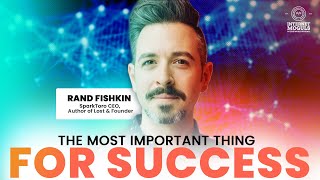
This is a YouTube video titled "The Only Secret to Rank on Google Through Smart SEO😎 | IMOTW" created on November 28, 2021. It features a conversational interview between Avi Arya, founder of Internet Moguls, and Rand Fishkin, a well-known SEO and web marketing expert. The discussion covers topics such as daily rituals for success, balancing work and family, SEO strategies, affiliate marketing, content creation, and evolving digital marketing agency approaches. The conversation is informal and includes questions from a younger participant named Raya, making it a multi-speaker dialogue focused on practical SEO advice and entrepreneurial insights.
I am devoted husband, a feminist, a traveler. I speak and do web marketing, classically SEO, but lately more broad web marketing. And my hope is to help people see more opportunities, help diversify the startup world and economy and hopefully the world of culture as well. The first thing that unfortunately a lot of people forget when you are doing SEO and web marketing overall is that the tactical portion of it is becoming less and less important. Do you have a product? And that product could be content, right? Writing or video or pictures or photos. Whatever it is, that content or that product, whether it's software or hardware, wherever you're making or selling, if it does two things really well. One, it serves a need that people have in a unique way better than anyone else can solve that problem. So that could mean you lean far in the direction of way better than everything else in the market, or it could mean you lean way in the direction of way more unique. Sounds trash. Sounds dry.
My name is Avi Arya, Father of two girls, six dogs, husband to a superwoman, a streetcar racer turned hotelier, now social media marketer and founder of Internet moguls. What is your hero story?
Hero story? Boy, I don't know if I can be as succinct as that. I am a devoted husband, a feminist, a traveler. I speak and do web marketing, classically SEO, but lately more broad web marketing. And my hope is to help people see more opportunities, help diversify the startup world and economy and hopefully the world of culture as well.
Awesome. Awesome. Girls, over to you.
Okay, I'm gonna ask the first question. So I'm 14 right now, and with this journey, it gets a little bit stressful with school and interviews and all that. So what I wanted to ask was personally meditating has helped me. In the morning, I just put on a quick prayer or meditation. So what are some of your key daily rituals that you have implemented throughout the years which you've been on journey and which have mainly helped you with your success?
Yeah, that's a really good one. So I have heard from a ton of people that meditation has been really helpful for them. And I have tried it, but I have not succeeded. I don't know, I wish I had had more of a chance when I was younger to get to see and experience lots of different things and people. When I started my first company, it was with my mom. I don't know if you know, but Maz was my mom and I were the founders. And so we, you know, built it together from 2001 up until she left the company in 2013, 2014, I left in. In 2018. But, yeah, you know, we had no idea we didn't have the exposure that, well, that you can get nowadays through the Internet because, you know, it was popular then. But also, we just didn't, you know, we didn't know any startup founders. The first time I had someone email me and, you know, ask about, oh, well, we were thinking about investing in your company. I had to Google, what is venture capital.
Right.
Not super savvy.
That is amazing. So we, you know, we spoke about discipline. We spoke about morning rituals.
One of the things that really infuriates me, this infuriated me, in fact, even when I was a teenager, is that school starts early in the morning and then they give you lots of homework, which you're supposed to do somehow in the evening. And I find that maddening. Personally, I hope hopefully your dad will forgive me for.
Right.
But if I were going to school, I want to. I want to, like, shake the teachers and be like, no, I should get sleep. Sleep is vastly more important than this busy work you're assigning me. I don't know if it's as bad in Canada as it is in the United States.
It is, Raya.
It's pretty bad.
I've been staying up for, like, till like, 12am the past few nights. So, yeah, pretty bad.
Come on. Well, all right. So see, this is our job. Like, we have to change the culture. We have to get this message through people's skulls so that hopefully for the generations ahead, there will be wiser decisions made about how much work to assign people both themselves. Right. I think entrepreneurs like your dad and I often assign ourselves too much work and responsibility, and thus we feel like we can eat into our sleep schedule, and then the next day, the next week, we're making bad decisions and it becomes this terrible cycle. So I would say sleep is.
This is a paramount importance, extremely important. Thank you for saying that, Raya. Did you note what he said? He said it's not about how much work you put in. It's about the right decisions you put in in that small amount of time.
Yeah, totally, Totally.
Okay.
Yeah. So I have a question, which is how do you work hard and also spend time with your family?
Yeah. So my. I think the way that I handle that best is to work not as many hours, but be very productive and choose to invest in the right things when I do. And that gives me plenty of time to do actually lots of things. I have a very small family. It's just my wife and I, and actually my wife's mother who lives with us right now. But we have a ton of friends. My brother, my little brother lives nearby. We get to see a lot of him. My grandparents recently moved to Seattle. They're in there, I think. My grandmother just turned 94. I get to see her almost every week. And we have tons of friends. So we have very, very busy social lives, which is amazing and wonderful. And the only way that I can really do that is to say, basically, I am going to say no to the vast majority of work that I could do and only do the things that I think are very important. And you know, my company, my company used to be 220 people, right? The first company I started. So really similar to the size of your dad's company now, it is two people. It's just me and my co founder, Casey. And so, you know, if we, if we want to do something, it's one or the other of us. Casey has got two girls younger than the two of you. But, you know, he, he is the stay at home dad. His wife is a teacher. Lindsey's a teacher. She, you know, she goes into work super early. But Casey and I both do the same thing, right? We just say no to 90% of things we could do, and we focus on the 10% of things and work hard at them, but not extraordinary numbers of hours.
That is an eye opener for me because I'm going just in the opposite direction. I need to.
Yeah, you can, you can say no to a lot of stuff, my friend. You really can. Oh, there's my wife, Geraldine.
Hi. So you know what? This, this also is a big honor for us because Raya girls, we made the cut. He says no to most of the things that come his way.
It's true. That's true. No, but your story, your story was really inspiring to me. And I think, you know, what you're doing here is so fascinating and so cool. I don't know, I wish I had had more of a chance when I was younger to get to see and experience lots of different things and people. When I started my first company, it was with my mom. I don't know if you know, but my mom and I were the founders and so we, you know, built it together from 2001 up until she left the company in 2013, 2014. I left in 2018. But yeah, I, you know, we had no idea. We didn't have the exposure that, well, that you can get nowadays through the Internet because, you know, it was popular then. But also we just didn't, you know, we didn't know any startup founders. The first time I had someone email me and, you know, ask about, oh, well, we were thinking about investing in your company. I had to Google, what is venture capital?
Right?
Not super savvy.
That is amazing. So we, you know, we spoke about discipline, we spoke about morning rituals, we spoke about family. Now we'd like to get into, you know, what the whole world knows you for. You know, the other day, what, we went to Disney World and there was $550 for a ticket with four of us. And, you know, Raya said, dad, I want to pay you back. So I said, how are you going to pay me back? But we decided that Raya is going to vlog the entire journey. And she interviewed people and said, how can you get the best deals, best tickets, and all of that? And then she's asking them for an affiliate link to put in her blog so that she can get money there. So what would be your advice to us on the SEO front? On what? The girls, if they want to start building an income with maybe affiliate marketing or SEO regarding their keyword, how should they go about it?
Yeah, I think the first thing that unfortunately a lot of people forget when you are doing SEO and web marketing overall is that the tactical portion of it is becoming less and less important. So, meaning how well optimized did you make the page and the tags and the title? How well did you sort of fit to Google's ranking algorithm as opposed to at the core, do you have a product? And that product could be content, right? Writing or video or pictures or, you know, photos, whatever it is, Right. That content or that product, whether it's software or hardware, wherever you're making or selling, if it does two things really well, one, it serves a need that people have in a unique way better than anyone else can solve that problem. So that could mean you lean far in the direction of way better than everything else in the market, or it could mean you lean way in the direction of way more unique than anything else in the market. Right. Serving a much smaller, unique audience. But that group really wants exactly what you have and not what else is out there. And this is where I think that the marketing comes in. It has to be able to be a story or a meme. There has to be a great reason for specific kinds of people to want to amplify it. And those have to be people who are capable of amplifying it. So, for example, you might say, I built this great content that is really amazing for people who are taking their kids to Disney World. And my response to that would be, do a lot of people want to share great deals about how they take their kids to Disney World? Like, that's a really small audience, as opposed to, this is a potentially silly example. But what if you took pictures or collected pictures of all of the most famous people who have been to Disney World and then you rank them in order of how many times they visited that? There are many famous people who are very addicted, weirdly addicted to going to Disney World. Like, they go way more than they really should. And that is a story that not only interests lots of people, but interests lots of people who like to link to things, share things on social media, write about things. Journalists, tabloids, papers, you know, the news. All those people want to write about that story. Right. Twitter wants to feature it on their Discover page. Instagram is going to feature it on their Discover tab. Those are the types of content pieces that have that ability to be shared and they're shared by a certain audience that is very share capable. So that is one of the things that I would urge you to do. Right. It's sort of like how you strategically plan in your head. This is why this project will work. It will get shared by people with big audiences because X and you have to fill in for X.
That is.
I'm writing down notes right now and.
I'm thinking, yeah, okay. So Ryan, do you think adding audio notes and short video clips in your long form SEO article would help rank faster, better and make it more interesting?
I mean, I think that you should generally try and provide the content type that's going to serve your users and their intent. So for example, if I am looking for a travel guide to Italy and it's primarily for high income earners in their 40s, 50s, 60s, 70s, snippet video might do okay, right? However, if I am targeting a younger audience, I'm targeting an audience that is generally looking more for entertainment than deep information. I'm targeting an audience that doesn't need to scan through text. Then video snippets. Short video snippets become very, very powerful and important. So my advice is less to try and game the system by throwing content types at it that don't necessarily match, but rather match up your content with what your audience is seeking. I do definitely recommend. One thing I strongly recommend is anytime you have audio or video, a text transcript is super helpful for rankings. And that's just because Google has not yet gotten to the point where they can rank content as well as they can rank video and visual content and audio content as well as they can text.
Got it, got it. That's very powerful. So does that mean. And when you want to rank something, like for example, you know, I'm sure there'll be entrepreneurs all the way from the age of 13, 14, all the way to 70, 80 watching this interview later. So if, say, you know, girls like Raya and Abhiana, they want to start a blog, should they? And when every time I speak to them about an affiliate income and they can build it over the years, by the time they're 16, 17, they'll have a decent sized community following them and then they see what to do with it, they're more leaning more towards blogging. So can it work the same way? Blogs with affiliate links rather than SEO, long form text with affiliate links, or it works differently?
It can work. I think one of the challenges that I've seen in the video content world, this is video of all types, right? So whether you call it vlogging or YouTube or Instagram videos or TikTok or whatever, right. The challenge becomes that the affiliate link is often in the text. But when you are talking about something, a lot of times you'll find that your visitors go and open whatever their web browser or new tab or their laptop or what have you and they'll like go search for that thing and then you don't get the affiliate credit, right? And so one of the things that I might advise is just to make sure you're thinking broader than pure affiliate, right? So if affiliate links are like the only way you're monetizing, that can be challenging. If you have something. We're directly selling a product, right? We made a book, we made a, we have a unique subscribers only section that you have to subscribe to. We have a Patreon, we have a, you know, whatever, a private forum for members only. We have merchandise, T shirts, whatever, right? Like all of that stuff can be really golden because it helps you have a financial backing that's not just based on the affiliate link. And affiliate links get funny too, because that ecosystem is just constantly evolving and changing. And to be totally frank, in the SEO world, Google really dislikes a lot of affiliate content, at least here in the US and Canada, right? My understanding is that a lot of other geos, Geographies, a lot of other places around the world, affiliate links do way better and affiliate content does way better than it does here in the US and Canada. But what I often find is like what happens, you know, what Google does in English language speaking Countries kind of ports over time to the rest of the world as their engineers roll out those systems.
Okay, my next question would be, when they do write an article or a blog or whatever, and instead of ranking them and learning the SEO tips and tricks that you already have on your amazing channel, and we watch it all the time, you use that, or do you think sometimes it's a good idea to give it a little nudge by doing a little bit of paid marketing for their article or blog so it reaches a few people and gets a few shares, and if it's nice, it finds a life of its own?
Yeah, no. I've seen a lot of folks in the content marketing world basically take content that does a great job of organically earning traffic, shares, engagement, people amplifying it, and paying to get that in front of more eyeballs. What I have not seen work well is when. When the inverse is true. Basically, when you have a piece of content that is not performing very well and you try and pay to put it in front of more people, that tends to go poorly because Facebook's algorithm, Instagram's algorithm, Google's algorithm, they kind of hate content that isn't engaging. And so it'll cost you more and more per person whose eyeballs you want to put it in front of to get it there. And then your ROI just keeps sinking lower and lower. So don't throw money after poor engagement. Throw it after good engagement.
Got it. Gul, over to you.
Okay, so one of my other questions was, most people wait for almost like a motivation or a certain inspiration that sparks their journey. For your book, Inbound Marketing and SEO, the insights from the Moe's blog for that book, what was your inspiration or your motivation to start writing that?
Yeah, so that was a funny book. I. Let's see. Technically, I authored the content in the book, but what happened was that content was from the blog. It was from the mom's blog. So I was writing and blogging, and then basically O'Reilly came to me and said, hey, we'd like to turn this into a book. Can you work with this editor and they'll transform? And I was like, sure, go ahead. And you can take the content and turn it into a book for Lost and Founder, which is, you know, the book that I. That I wrote that came out a couple years ago. That one was more of a. Basically, I had this strong desire to tell a story that I hoped could help a lot of other entrepreneurs. And that story is very fraught with mistakes and dumb moves, missteps, things that ended up. I don't know if I necessarily recommend that you read it, but you could check it out. Some of the stories are fun. The first couple chapters are literally about me and my mom starting this company and how we kind of got discovered and turned it into a real business. But that book was really about hoping that I could help other entrepreneurs avoid the same mistakes that I had made.
I love that. Okay. Yeah. So my last question is, we usually use the term Internet vocals, and for us, our definition of an Internet mogul is someone that spends time with their family but also, like, works hard. So what would your definition of an Internet mogul?
Huh? I like that. I mean, I certainly. Let's see. I. I think of it aspirationally. Right. I think that it is enabling you to have the freedom to do what is personally rewarding for you and also gives back to lots of other people. So I, you know, I certainly love spending time with Geraldine, who you met briefly, and I love spending time with. With other friends and family. But I also have this strong desire to, you know, change the. The world. The worlds of technology and entrepreneurship and. And. And of politics and culture and all these other things in different ways. And so that's how I. That's how I want to give back to the world. And I think that, for me, being an entrepreneur, being a, you know, being a success means having the ability to do all of those and in the proportion that. That you want to choose. But that doesn't mean what's right for me is not right for everyone. I don't want to suggest that. So, you know what I like about this. This idea, this aspirational idea, is that it gives you freedom. Gives you freedom to make the choices you want. If what you want is to be crazy, I don't know, 80 hours a week, and all you care about, your whole thing is maximizing your bank account number. Well, I don't think that's particularly rewarding, but maybe that's awesome for you. Right. Maybe that's what you need. And if the opposite of that is true and your financial contribution is very unimportant to you, but your. Yeah. Time with the people in your life or changing the world in a certain way or influencing a particular cause is what's important to you, that'd be great, too.
Awesome. I love that you have to be. You want to be and not compare your life with anybody else.
Yeah. Yeah. I think the comparison culture that we sometimes create in entrepreneurship is really unhealthy.
I know, I know. Tell me about it. Last question in two parts. One is for all the experts in SEO running companies, Internet marketing and all who are watching this. In today's day and age, when a client approaches a digital marketing agency, an SEO expert or whatever, how has the approach of starting work for them changed over the last few years? I mean, was it that you have 20 products in your company, coaching, consulting, this, this, and I'm going to write blogs, I'm going to rank them for you and all of that, sorry, maybe. Or do you today say I'm going to, okay, get you five articles featured and you can use paid search, some videos. So is it more compact now to say just go with these products rather than having hundreds of sites, hundreds of pages of your site's rank and with algorithm going down and you lose all of that? Has it become more narrow, more contextualized and more precise the way you would approach a client or the way you would advise people who are watching this to approach a client?
Sure. Yeah. No, I think, I think the biggest change that I've seen especially over the last 10 or 15 years is, you know, years, years ago there was not a lot of knowledge in education. So there were these, you know, sort of Internet marketing gurus and people who really knew what they were doing and they had all these tips and tricks that they could use and it was almost viewed like, you know, this mystical.
Magic. Right.
How do they, how do these wizards know how to do this stuff? Right. And it's not like that anymore. There is a lot more knowledge, even among lay people who have no experience with Internet marketing around how this sort of stuff generally functions. And it's true that, you know, folks, I'm sure in your agency know much more than their clients. They really done many more things that have worked and haven't and so they can give advice. But my experience has been that we are no longer. The agencies that I've seen have success are focusing most on accomplishing their clients goals through long term sustainable practices versus offering a specific repeated product. Right. So it's not okay. Every client we work with, we produce whatever you can have. The Silver package. The Silver package has five articles and ten submissions to this. And you know, whatever it is that I see less and less of, and I see less of that getting return business. What I see getting more and more return business and people sticking with their agencies is tell us what your goals are for this quarter, your strategic goals and your tactical goals. We will help you hit them. How will we help you hit them? It will change all the time, right? The thing that we're gonna do right now is we're gonna do video content because you need more brand visibility. And so even though traffic might be important, we're gonna put these videos on YouTube itself, which will get you zero direct traffic, but it'll get you lots of indirect traffic and a ton more people knowing about your brand new searching for your brand. And what you're looking for is brand exposure. And we can show you that we can deliver that through this YouTube content. Then we're gonna go next quarter, right? We're gonna focus very heavily on on site content. So we're gonna take a bunch of the videos that we put on YouTube, we're gonna put them on Wistia, we're gonna put new videos on Wistia, you're gonna self host it, you're gonna put that on your site, we're gonna put up the transcripts there so that those videos rank Better than the YouTube ones in Google search engineering, etc etc, right? And essentially what you're doing is quarter by quarter listening to your client, figuring out what their goals are and then doing the thing that most matches their goals instead of the one package fits all sa.
More from Avi

The strongest mindset doesn't begin with meditation. It begins at home. Before you conquer the wor

The strongest mindset doesn't begin with meditation. It begins at home. Before you conquer the wor

Your mindset isn't something you fix once. It's something you train every single day. Just like yo

Don't build a company just because your friends are. Build one because you're ready. A startup is

Everyone dreams of becoming the boss. Very few understand what that really means. The moment you b

Most entrepreneurs say, "I don't have time for coaching." The truth? You don't make time for what

Over hiring doesn't always solve problems. Sometimes, it creates them. Having a small buffer in you

"The highest-paid" isn't the goal. The highest-value is. People often ask why premium mentorship co

The founder will always be a bottleneck... at some stage. The goal isn't to pretend you're never th

People ask me how I stay consistent with my morning routine while traveling across countries and tim

People ask me how I stay consistent with my morning routine while traveling across countries and tim