The Ultimate Podcast Guide You’ve been Waiting For! | AskAviArya Show
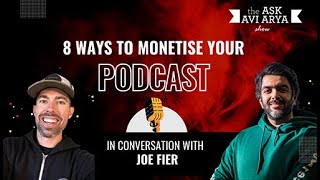
Avi Arya and Joe discuss how to start and grow a podcast, covering niche selection, formats, and tools. They share practical strategies for entrepreneurs and creators looking to launch their own show.
Step by step on how you start a podcast. Like, you come up with an idea, then you go to Spotify, and you know, you have to have a baritone voice like yours. You have to be as good looking as you, or can anybody do it?
Thank you, sir.
Hey, guys, this is Avi Arya, Father of two girls, six dogs, husband to a superwoman, a streetcar racer turned hotelier, now social media marketer and founder of Internet Moguls. Welcome to my channel.
Hey, everyone. Thank you. Thank you, thank you.
Awesome. So, you know, we have a format. I always say the shortest distance between two human hearts is always a story. You tell a perfect stranger a beautiful story, a heartfelt story, and you win hearts. Win them for life. My name is Avi Arya, father of two girls, six dogs, husband to a superwoman, streetcar racer turned hotelier, now social media marketer and founder of Internet Moguls. Joe, what is your story?
Oh, man, that's a great one. Well, you got yours down tag, man. I came from a family who I was not entrepreneurs, but I always had the desire in me to do that. So I was hustling at a young age and went through a lot of hard stuff, family, a lot of personal tragedies and things along the way. I fostered seven kids through the foster system. And I have one of my own and. Yeah, a dog as well. I know you have a. How many dogs do you have? Four, I believe.
Well, at least six at any given time.
Yeah, I know they're in multiple places, so. Yeah. And been doing the entrepreneur thing for about 13 years now. And my co host, business partner, Matt, who usually sits over there in that chair. Yeah. We run Evergreen Profits, Hustle and Flowchart podcast and Pod Hacker, which teaches kind of a blend of digital marketing with content and, you know, podcast kind of marketing blended into one. So that's. That's everything. We do a lot of affiliate marketing and cool stuff we'll talk about, I'm sure.
Of course. So, you know, ladies and gentlemen, or for all of you people, theirs is one of the most sought after podcast. And I have been listening to their podcast when I go for my walks. And there was. And every time I listened to their podcast, for me it was, you know, a good podcast is some. Is one where you become part of the interviewer's life and you're like, one day I want to be a part of their life. So one day I wanted to become a part of their life. So I sent them a micro video and that's how we became friends. They like the idea of sending a micro video, and they were sweet enough to then interview me on their podcast, after which I got hundreds of people from different parts of the world contacting me, saying, hey, we heard you on that podcast, and that was great.
Wow.
So thank you very much for that. And for all of you people entrepreneurs, one of the first lessons that we teach inside the program is how to create micro videos to reach out to amazing human beings, and then amazing things happen, and, like, they're happening with our collaborations.
Well, your. Your video stood out completely. So we get. We probably get about three or four people per day reaching out to us on all of our different channels, and there's probably even more in our support channels, you know, that I'm not seeing. But that's my inbox and Matt's inbox. And your video, Avi, with the micro video immediately stood out. I could tell it was not template, you know, templatized in terms of, like, you weren't editing it sneaky or anything, trying to duplicate your efforts. It was individual. You spoke to us, and I could see your heart, I could see your story, and it was clear what your unique ability is and the fact that you're the real deal. And you actually chose to send a video too. Most people don't do that.
Thank you very much. And that's what we've been always doing, and that's what we teach every entrepreneur in this community. To be able to reach out to people anywhere, make friends. All you need to do is share a heartfelt story, and then magical things happen. So you told us about your awesome story, and you know, how this podcast. But in between, let's start with how did you become the. How did you guys become the podcast, you know, duo? And how did this podcast became so famous? You know, because a lot of people here, we encourage them to do podcasts. A lot of people. Listener. How do we do that? Momentum just to keep going and how to get started. So tell us a little bit about your story. Why podcast? There's so many other things that could happen, for sure.
Yeah, it's a great question. And podcasting arrived in our journey. 2010. It was 2010. So it was a long time ago now. You know, it was early days of podcasting. Matt and I, my business partner, we've always consumed a lot of content and wanted to retell our lessons that we learned with our experiences. So we started making YouTube videos a long time ago. Podcasting. Didn't know the systems behind any of this stuff. Did a lot of blogging. So we were always putting content out there and curating. We always wanted to surround ourselves with amazing minds, even though at the time we didn't know who those people were. It was like Tony Robbins, Frank Kern, the big, big names at the time. And over the years, I got to know some of those people and go into those circles because I did a lot of networking. I reached out in my own way. Video wasn't as easy to send to people then to connect with folks, but I did my own thing. I've always a connector type because opportunities just through that time into about when we started Hustle and Flowchart, which was almost five years ago now, so there was a gap there where I was building my network primarily, that was most of my efforts. And I did a lot of video marketing, video production for product launches. So I did a lot of the big sales videos for these multimillion dollar launches and connected with people along the way. So it was all referral basis. Everything I've always done is referral basis. Matt was kind of doing his own thing. He was building WordPress websites and doing a lot of systems and list building. So over the years, we've always combined our efforts really well. And then that's what we're podcasting. Reentered our life right around Hustle and Flowchart time. A little bit before that too. We started the show and we had. We had a list before and, you know, we had an audience that we can kind of kickstart the show with. But Hustle and Flowchart has always been our kind of system to connect with people systematically, all the time. And then we can always do interesting things with them afterwards. Kind of like we're doing here. You know, we can do maybe another live stream or podcast on their show. We can get a joint venture partner for one of our products. You know, there's a lot of cool, win win things after you record an episode. So we've used it as a way to surround ourself with mentors, connect with our, you know, these greats, the gurus that we were studying from. A lot of them have become our friends now, you know, and these are the people that helped us start, you know, 13, 14 years ago in business. So the podcast has opened the doors to do all of that. And we learned so much. And then on the backside, we make money in a bunch of different ways from it that we can talk about later if you want. Of course.
Yes, I'd like to come to. So, guys, how many people understood exactly what, what a podcast can do? It can open doors, lead to new relationships, help you make new friends? Especially as an entrepreneur, you feel alone. So many times, what decisions to take, when and how. And so many times when you're interviewing somebody in that 45 minute, one hour window, you get those answers and people are more than willing and free, freely telling you what you want to know. A mentorship opportunity where somebody said, thank you for allowing me to mentor you. So not to be missed. Joe, for our audiences, can you sort of break down like a step by step on how do you start a podcast? Like you come up with an idea, then you go to Spotify and you know, do you have to have a baritone voice like yours? You have to be as good looking as you. Can anybody do it?
Thank you, sir. Yeah, anyone can do it. And there, there are, there's just ways, there's formats of podcasting, however it fits your, your desires in business, or maybe it's just a passion. That's okay. You don't need to make money with your podcast necessarily, but you know, you can use it as a tool to further something you're already doing or break into a new niche. You know, you can, you can start to connect with a new circle of people and then grow your influence through it that way. So you can do an interview style show, which ours kind of started as, and now it's a hybrid. So our show is an interview show and then we also have solo episodes where Matt and I are just talking and we're usually talking about some topic or maybe a struggle we're having in our business. We're pretty open about everything right there on the show. So interview shows, solo shows, those are a lot easier because you don't have to coordinate times with people and, and you can kind of do it with your own pacing. So shows like that, you know, reaction or curated type of shows where you're reading the news or reading your reaction about a trend or something that's relevant in your industry. Those are some of the easiest ones because you don't necessarily have to be the expert. You can just kind of do the reporting in your space and then become the trusted authority or the trusted resource, you know, in your space. That's one of my favorite ways to start a show. Just because you know the interests of your audience and it kind of gets you in the middle of things, you can become the point person. So I would just think about it in those forms. There's a lot of other types out there, but if you're just thinking of the types of podcasts and you know, if you're able to any, anyone can do a podcast. So there's a lot of tools now where you can take a phone, you know, a decent smartphone or a microphone, use a tool like Description or Type Studio is another one. Both of those are simple tools that will allow you to edit a piece of audio, but it actually helps you transcribe the audio in real time to text. So you can quickly edit via text if you want to do it that way. Or you can repurpose that content into all these other types of content using one of those tools, Descript or Type Studio. Those are our favorites.
Or Typescript. So once you buy your podcast, you can actually make it into a blog post or article and that automatically happens. Guys, how many people got a new idea or learned something new with that? Because this is saving time. This is efficiency. And you know, for everybody who's thinking, how can I do everything together? These are the tools of the 21st century.
That's right.
All right, sorry, Please go ahead.
No, actually, yeah, ask the question because you'll probably leave me in the right spot. I'm going to pull something up.
A lot of people, we do a lot of counseling and training and consulting with all of our students over here. And my biggest, my biggest win at the end of. So I do a 30 minute session with everybody who joins our program and all of these people are people who've joined our program. Now my biggest thing for people is am I, I want to understand their story and I'm help them find a niche, dig deeper, find a sub niche and then take a different angle and find a micro niche. So I am a doctor. No, no, I'm only a dentist. And I'm a dentist for senior citizens who need dentures only. But what about the rest of the market? Say no to everyone. Let's stick to one niche. Let's become experts over there and then maybe we can open up later. If you're a coach, great. Who are you coaching? Well, I'm coaching people who have problems getting known in the marketplace. Okay, who are you going to help? Well, I'm going to help only the scientists community. Only scientists. They're intelligent, they're nerds, but they don't know how to get known because they don't. So I'm going to help only scientists. And there's Seema over here who helps only scientists. So what we encourage everybody here to do is to I tell them, I said, once you start feeling scared that the lane that you might have to drive fast in, you still have to be fast in business. That rain is going to be very narrow. And you're scared of, you know, saying, no, no, I want to go broader. You're in the, on the right track because if it's scary, so go as narrow as possible. So if you, if you have, if you have a contrary view, very welcome. If you have a similar view, if you can tell people how you chose your own niche and what kind of podcast and other people you've interviewed over the years, you know, how should somebody start a podcast and say, what am I going to be talking about?
Yeah, no, that's a fabulous question. And I like how you offer your advice as well. Narrowing down your niche. I think it's super smart. That's what we do. We take a different approach with ours, but we do filter people through our content. So it's interesting the way that we have built our podcast and this is just our way we do it. You can definitely start very niche. Our podcast started off as a broad digital marketing podcast. So we knew that we had the network to kind of start kickstart the podcast with the audience already on our email list and Facebook groups and stuff and customers. And then we had the network already that were digital marketers. But what we knew is if we created a platform or a podcast, that kind of, when I say platform, that's basically our website, that's our email list, Facebook group, that's everything kind of lumped together. The podcast has allowed people to find it and discover the things they're interested in and then as they progress and maybe join a lead magnet that we offer. So we'll put a call to action in every single podcast and say, you know, go to flowchartgroup.com, which that goes to our Facebook group. We can then segment and see what people are interested in. And what we're doing is taking that data and putting that into our CRM and activecampaign. And we're doing this automatically. And we actually have all these different topics in our email follow up systems that talk about the biggest, the biggest interests that people are into. So we'll talk about things like affiliate marketing and have a whole track on that. And automation sequence. We'll have traffic, we talk a lot about traffic. And then podcasting, those are like the three core pillars, you know, underneath more of the broad podcasts that we've created. So that's how, that's how we, we do kind of exactly what you're saying is we segment and filter people through our content.
Awesome. Now, you know, Moving gears. I've never done a podcast before, and I don't know what kind of questions to ask. So what would.
You're asking good ones right now.
Thank you very much. It's my first time. I'm jittery, I'm scared, my feet are shaking, my dog is right there with me. But for someone who's, you know, never, never a lot of people have this, you know, I don't know what to ask. And these people are stalwarts or you're telling me to call somebody who's, you know, famous in my niche and successful. What should I. What should I ask them? So what would be your advice to people on what questions they should frame so that not only is it interesting for the audience that's listening, but it's also respectful and brings out the best of the guest for everything.
This is a very good question and a typical objection before hopping in to do anything even like this, you know, a live stream or Instagram Live, you know, you're going to have to ask questions and get really comfortable asking them. And a few ways I look about things. So there's the research phase and then there's the phase of how you form a question. So every before every podcast, we always do a bunch of research and we go to. We listen to a lot of podcasts. We read their blog posts, we read their emails, sign up for their email, list us a good tool to do this and see, you know, kind of in. In a clear shot what podcast they've been on is I go to listen notes dot com. That's Listen notes dot com.
Listen notes dot com. So you saying that there is a resource that's available that allows you to know the podcast that your existing guests have always been on and what they've spoken about?
That's right. Yep.
That's fantastic. That, ladies and gentlemen, wraps up the show. Thank you very much, Joe, for amazing insight. I had no idea, do you, how much time it saves. I've got two girls in my office who do all this research and send it to me. Oh, my God. Listen notes dot com. Thank you so much.
Yeah, I meant to put that when.
You bring that is what I say is a true definition of an expert that you have now helped 97 people save at least one hour a month every time we have. That is fantastic. Can we all drop some love for Joe in the comments?
Hey, I got another one. I put in the comment for you as well. Listen Notes is great. And yeah, I hope people find a lot of value with that. So listen, notes. We go there and see where are all the places they've been, and then we look at the show notes. So it gives us, you know, you'll have to cycle through a lot, but if you have a big name coming on or someone who's been on a bunch of shows, you can start to look at the bullet points of the topics they've talked about on other shows, kind of all in one fell swoop. Another one, I would say, is podchaser, which I also put inside the. The chat. I'll do it one more time. And what this one does is it aggregates the podcast episodes as well and the guests. It doesn't really show all of the different details of the show, but at least you can see where to kind of hunt them down. So those two sites are great research tools. Sounds like everybody else is liking that too.
So that is fantastic, because it just takes. And that is another. For everyone watching, that is another example of choosing a micro niche. There's someone who said podcasters have a challenge when they're researching someone, and so therefore, they came up with the business that helps podcasters find other celebrity guests and see what questions they should research better on. This is just a beautiful example of a micro niche. And I can just not wait to, when we finish this call, to call up the ladies in the office and say, guys, you know what? You just need to work 40% more because I just saved you a lot of time.
Yeah, and it'll be better content. So on the research phase, what we do is we do have teams to basically help us go to listen notes first, and then they tell us what are the podcasts that we should study. So Matt and I still will listen to podcasts. We'll read a bunch of stuff, and then we take notes. And what we're taking notes on specifically are the things that were not asked. So we try to find the gaps. And when we listen to all these interviews, we try to figure out what are the things that aren't being said and the things that are still interesting to us we're curious about. So a big, big part of forming good questions is being really curious about your topic and actually really caring about the conversation and thinking about your audience who's listening. Just like everyone listening here, you know, we're making sure that you're engaged and that we're giving you the right resources. That's how we're thinking about podcasting. Even though, you know it's not going to be released for, you know, it's not a Live podcast. We're always thinking about what are the interests of our audiences, what are the things that they've asked us over the years and what are the gaps that we can then really kind of COVID from the guest interviews with these questions. So that's, that's what goes on our note sheet there. It's just a Google Doc. We always have that up when we're interviewing someone.
Fantastic. Love that.
Joe, tell us.
You know, a lot of people are like, see, I feel human beings have something inside of them that will always help them succeed. But at the same time we have lots of self sabotaging thoughts.
And that's true.
There's so much resistance to start anything new. What is the easiest way you would recommend just go on Anchor and start recording on your phone. Can you give us an easiest way to start a podcast so that there's some traction that's built in before I actually go into everything else?
Yeah, no Anchor. I mean, it's getting easier and easier by the day, to be very honest. Like the technology in the podcasting space and the creator space. Even if you're going to do video, the technology is getting easier and easier. So Anchor is probably still the best way to do everything in one. So you can record with your phone, use the Anchor app or, you know, put some headphones on and it will actually make the audio sound pretty good. And it'll give you the ability to edit, distribute. You can even monetize your podcast right through Anchor. And you do have the ability to move that away to a different host in the future if you feel like it's working out for you. There are other tools though, if you feel like, okay, this is my thing, this is what I want to do. I would highly suggest using, I mean, you can use something like this, Zoom, you know, this is, this is what we actually use to record. Currently we're optimizing our systems, but so many people are able to record with Zoom these days. And it's, it's pretty simple for everyone to do. You know, a lot of folks are using this and then using something like Descript or Type Studio, like I said before. And those tools will actually help you sometimes distribute to a host. But if not, it's just going to give you an audio file. Very simple. You find a podcast host, there's a lot of them out there, places like Libsyn, there's, you know, Anchor as a host as well. And we have, we have a bunch of resources on this. Very simple to find a host out there. Just like a Website host. And then.
Yeah, first you obviously have a micro niche. You have a topic on what you want to talk about. You can go to podchaser and you can find out which guests you want and what these guests are all about, send them an invitation. Then you can use just your phone and download the ad, the anchor app, and you can do everything over there. And then you need a podcast host where your podcast actually lives. Like a website is on a server. For that, you recommended names like Libsynth.
And Libsynth is what we're using now. Captivate FM is good. I mean, there's simple cast is pretty simple. Yeah. So I would. Libsyn. Let me. Let me put that in the chat there. Libsyn is probably the biggest host. They've been around for a long time, but there you go. Yeah, I would say. But Anchor. To keep it very simple would be. Would be a no. Yeah. Buzzsprout's another one. There's so many out there. If you Google them, they're all kind of similar, but they always have these individual little things that might cater to what your needs are a little bit more. Sometimes they'll help you create the video assets that you can share on YouTube. Some of these hosts will just automatically make those for you.
Nice. That will help a lot.
Yeah.
Awesome.
Going back really quick, I want to go back to your question about asking questions, actually. So after the research phase, actually asking the questions, I think is something you should study as well. So we had a gentleman by the name of Chris Voss on the podcast, and he. Chris Voss, he's actually a pretty big name. He was an FBI hostage negotiator, so life or death, the guy had to use his words perfectly. And, you know, he was dealing with a person that was going to probably hurt someone else or hurt themselves. So he came on the show, and his book is really good. It's called Split the Difference. And I would highly recommend.
I know what you're talking about.
Yes. Yeah. For the audience. Yeah. It's a great book. And one of the things he says is don't ask a why question.
More from Avi

The strongest mindset doesn't begin with meditation. It begins at home. Before you conquer the wor

The strongest mindset doesn't begin with meditation. It begins at home. Before you conquer the wor

Your mindset isn't something you fix once. It's something you train every single day. Just like yo

Don't build a company just because your friends are. Build one because you're ready. A startup is

Everyone dreams of becoming the boss. Very few understand what that really means. The moment you b

Most entrepreneurs say, "I don't have time for coaching." The truth? You don't make time for what

Over hiring doesn't always solve problems. Sometimes, it creates them. Having a small buffer in you

"The highest-paid" isn't the goal. The highest-value is. People often ask why premium mentorship co

The founder will always be a bottleneck... at some stage. The goal isn't to pretend you're never th

People ask me how I stay consistent with my morning routine while traveling across countries and tim

People ask me how I stay consistent with my morning routine while traveling across countries and tim