Ultimate secrets to run a successful agency from 12 years -Part 1
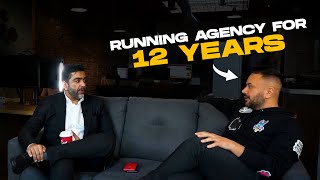
Avi Arya talks with Mod Halewal, an agency founder from Vancouver, about running a successful agency for 12 years. They cover client relationships, productizing services, and targeting venture builder clients.
This, what you said in the last 30 seconds comes with only 12 years of experience. You know, you know exactly who you want and why they should work with you and not build their own agency.
And.
You know exactly what my pain points are. I don't want to build a team from scratch and all that. So fantastic. I love that. I want to make a lot of money and I want to be in the agency field. So is there a particular micro niche in the agency world that you feel is more profitable than the others? Hi guys, this is ABHI here again. And today I'm very excited to bring to you Mod Halewal, an agency founder from Vancouver, Canada. He runs Skyrocket, a beautiful agency in the heart of Vancouver with an awesome team and a great office location. He's got some amazing clients and I love the philosophy on his website. One of the things says branding is a spiritual exercise. You must check out that article. But after you watch this entire episode where we spoke about how he does sales and brings in the big clients, how he works with a team in his office and remote, how he navigated Covid and all of those things that you as an agency owner need to know and learn from an inspiring agency founder Mod Hadewal. For you. Ladies and gentlemen, I have divided this episode into two parts. This is part one. Please go through all the answers that he gave till the very end and comment and let me know what is it that you love the most. And don't forget to watch episode number two. Presenting Modhaliwal from Skyrocket.
Have fun.
So exactly how many years of running the agency again?
Let's see, we started at the end of 2011, right? So you know, 12. Coming up on 12 years at the end of this year.
12 years. I don't know how many agencies make it past the first two years. So congratulations. 12 years is some grit.
Well, those are the ones that were smart enough to get out.
That's a good one. You know, my dad often says that because I told you we came from hospitality to digital and he's like, I'm just thinking in the last 14 years, if you were not running the agency, could we have built more hotels like trade off of a time. But then why do agency people love the agency of our world?
I think, I mean there's some. I don't know what it is. Dopamine, something. There is definitely some sort of a hit you get right from the idea of taking an ephemeral idea and making it real in the world.
Right.
Seeing it come to life.
Right. Does it also come with its own set of little bit of glamour and, you know, agency people and a little bit of recognition, some followers.
And I'm not sure about that.
Okay.
Yeah. Because I feel like that is like such a small byproduct in comparison to like, you know, how you're engaged in the work and your clients and the rest of it.
Right.
So I think that's a, that's a time.
Awesome. So how do you like, you know, for people who are watching, we have.
Some work we can do. There's a lot of work we can't do. But throughout it all, we're being a real strategic partner and a co pilot for our clients. But if somebody came into it and just said, hey, I just want to make a lot of money and I want to work in agency, I would say go the other way and productize it so that there's something really key, really specific that is in demand and you can just sell it on repeat to everybody on some sort of recurring revenue stream.
Got it. So I like this word which is often used in our sort of ecosystem, which is productize your service. Right. Is it a myth or is it possible? Or is this like 80% possible? 50%? What's your thought on that?
It's entirely possible. And it goes both ways.
Right.
Like, I remember years ago I was working with somebody in an automotive space and something, you know, in automotive, a lot of things are very, very commoditized. Right. So when you're going to get your windshield replaced. Right. Who cares?
Sure.
There's no difference in the windshield that one guy's going to sell you versus another because, you know, there's, you know, regulations and certifications, all the rest of it. Right. The windshield is going to do what it's supposed to do. Right. So what differentiates the companies? Right. Suddenly the windshield company is actually a service business. Right. Because that's the only thing that.
Nice. Nice.
Because it's not the product. Right. You know, similarly with like, you know.
Or Drake is using this windshield and looks cooler on his car, is slightly tinted, it's blue.
That becomes a service.
Sure.
Because that's the only thing that's going to set you apart.
Right.
Right. So similarly on the service side, if you can bring a high level of consistency and predictability to what you're providing, it very much starts looking like a product because then somebody's going to look at the package of things that you're providing.
Interesting.
And compare that to the packages, you know, the suite of services that somebody else might provide.
Right. I like that. That's a bulborne moment for me. I like that. So do you think that an agency feel when you strategize. Because earlier on when we were having conversation, you said you strategize a lot for your clients, you help them think through problems which, you know, they might not have been able to do themselves. Is there a separate value to that in terms of monetary dollars you build separately, or can you build separately? Or do you think that is the value that you bring to. To otherwise less understood services like SEO and social media and all of that?
No, I think for our work, most of the value is in that. Right. It's actually in helping clients solve problems, in helping clients understand where they want to go and how to get there. Because for the nature of work that we do, we're highly consultative and we're highly strategic. And in fact, the services, like whether it's, you know, SEO, content marketing, whatever, those are activities that are becoming increasingly commoditized. Right. And those are services that, you know, even though they're predictable, they're easy to prioritize.
Right.
But they wind up becoming a bit of a race to the bottom again. If it's something that's been so commoditized, then, you know, you're looking at who can do it faster.
This guy is giving me 40 keywords for $400 or. Yeah, okay.
But we'd rather be in the game of helping a client understand whether SEO is even.
But have you ever, in your last 12 years, being able to send an invoice to a client saying, the last one month was, I helped you think through this problem? Oh, yes. Can you talk a little bit about that?
Yeah. I mean, there's clients that we're engaged with right now. Right. That you can say that the service that we're providing, you know, it's not graphic design, it's not copywriting, it's not digital or development or marketing or any of this. We're just doing their positioning right now, meaning that we're talking to all of their stakeholders, we're having customer discovery sessions, we're interviewing people that engage with them, and we're doing all this work just to understand what their place is in the world. Right. And once we have a firm understanding of where they're at today, then we're going to help them develop a picture of where they want to go. Right.
Interesting.
That is just the thinking, the mapping, the positioning, the strategy. And we haven't even started talking yet about services. We haven't talked about whether that means a website or a brand, those things almost just become deliverables on the way. Right. But what we want to do is get clear on what their destiny is and where they want to go, because that's what the value is. Anybody can build you a website, but who can help you identify.
Fantastic. But more, have you ever, in the last 12 years, being scared of sending an invoice which says, I spoke to you and I consulted with you, or you've always had this belief that this is where the money is for you, or did it take time?
I'm generally pretty fearless about sending invoices.
I love that. I love that, you know, this is an actual thing. Even for a product sold by an agency guy, which can be productized 20 keywords, they are all ranking. There's still a fear of sending an invoice. And, you know, so I feel like.
That tends to be in commoditized spaces, though.
Right.
Where, you know, the product has been, I'd say, like, so saturated. Right. That, you know, those comparisons happen and there's a concern of whether the value will be perceived or not because that value has been diminishing over time.
Right, right.
And so, you know, we haven't actually had that fear because our value is actually about, you know, the thinking and the strategy, like I said. In fact, there was a consultant I worked with years ago, and she had this incredible, I'd say, confidence and also ability to deliver her brand promise. And her promise of her own brand and her own services was so strong that on every invoice she sent, there would be, like, a pretty fat figure. That was her fee, but there'd be an empty line underneath. And the line would say, if you feel that my services fell below what I promised, please fill in that amount here and pay whatever you feel. Wow. But that's somebody that knows their shit.
Sure.
Of course, it's about a long time they really care about the strategic value should bring.
Right.
Such that it was built into a brand promise. My God, I'm so confident in what I do. Here's my invoice. And if you think it fell below, just pay me whatever you want.
I love that, you know, this. This is the moment. These are the kind of nuggets that we do. I do this for, you know, because this is fantastic, because this is the real thing. People are scared of sending their invoices. And here comes the lady who knows, obviously, who knows what she did every. And because she's that confident, she doesn't mind discounting a few retainers. Here and there, and then, you know, sort of over.
And it's rare. Yeah, Right. And in fact, it's probably like, you know, I think a client that you have that sort of relationship with. Right. Because you're doing such deep consultative work, they're not likely to just fill in some number and pay it.
Right.
It's probably gonna be a phone call.
Sure.
To be like, hey, I think, you know, what about this? And it's a conversation, and I would say, like, you know, so let's actually address this a little bit. So if you're saying that, you know, there's digital marketing or digital agency people out there that are providing these services and perhaps feeling some nervousness and some insecurity about, you know, sending them, I would say that that is actually a downstream symptom of an upstream problem.
Okay, Right.
And I'd say the upstream problem is that they might have brought in a client, maybe they twisted an arm or maybe they somehow got them signed on, but there's some misalignment between them and the client and a full appreciation understanding of the value that they're providing.
That's deep.
Yeah. Because when you have that upstream confidence of, I'm aligned with my client and I know the value I'm providing. Right. And you know, that sort of work, like the, you know, the SEO, the keywords, I feel like it gets kind of written off. But somebody that does that, well, like, it's profound work, 100% a good SEO person that knows their shit and can actually position you well on the Internet.
Right.
That's not easy work.
Of course. And we're in 2023. Everybody has the same spot.
Yeah. And. And so it's. Yeah. And so, I mean, I think SEO, unfortunately, you know, sometimes gets kind of like, written off. As in, like, oh, it's just SEO work, and there's a million people that do that. But I think for somebody that really understands their value is aligned with the client and can stand behind their work, they would have absolute confidence.
Lovely. I love that very important section we've covered. So, Mo, tell us, you know, over 12 years. And when you send a proposal, does it have to have a direct correlation to the return on investment? Because lots of people and their CMOs ask for some kind of documentation, which in my case, in many is a lot, is a shot in the dark. I haven't even started. I don't know what's going to be the cost of acquisition of a client, but I have to show an analysis for the first three months. How do you navigate something like that.
I think it's entirely appropriate to provide hypothetical models. Right. And there's nothing wrong with that. I think there has been times in the past where our proposal was held up against somebody else's and somebody else was promising, you know, very specific, you know, minimums and maximums for, like, return on investment and all that sort of stuff. And. And what I did, I think a good job of in that moment was explaining why it's probably bullshit. Right. And how it is so hard to predict that stuff and why it's actually in some ways even inappropriate to try to predict that stuff.
Sure.
Right. Because you're going to have people chasing a number so hard that they might miss out on tactics or strategies. 100% work better in other ways. Right. So I think presenting a model of saying, based on your industry, based on averages that we can expect in that sort of industry, based on what we've seen in acquisition cost in parallel or other types of campaigns, here's an expectation. We have a baseline.
Right.
I think that's entirely appropriate. But the idea of trying to give it to somebody as a hard figure and say, you know, we promised this.
We predict the future. Yeah, Yeah.
I think that that's, you know, not only a bad idea. I think it's kind of inappropriate. And you should probably even tell the client that, you know, it'd be inappropriate for you to ask them.
Perfect. When it comes to charging a client for a project, do you often feel the need to take over all aspects? Or you say if a website is done by somebody else and you're like, I can't work with this. Yes, we want to upsell and get more business, but sometimes the website is. It maybe just doing great and you do a few tweaks, but it's with another agency. How do you deal with that? Do you want everything to be in house? It's better control, or you don't mind working with multiple agencies?
No, we always lead with strategy. Right. So there's been cases, and one of our best case studies the past five years is a company where we did a rebrand, a fundamental rebrand, without changing the logo. Right.
Oh, wow.
And it was because the identity. We looked at it and it was like, there's nothing wrong with it.
Right, Right.
But it was. It was the positioning, it was the language of the graphic devices. It was, you know, everything that held it together was the experience of the identity that was like, you know, totally out of alignment.
Right.
So what we showed them was that we can bring the entire thing into alignment and the logo can be the symbol representing that entire alignment and it worked. Right. So no, I mean we always lead with strategy and we never sort of throw the baby over the bathwater.
Right, right.
If we get an engagement where we get to do everything from the ground up, fantastic. But we also do a lot of transformation projects. Right. So we work with clients that have been in the market for 15, 20 years. They might have a lot of equity in their brand, they might have massive, massive content websites for whatever reason, many compounding decisions over many years that have where they are. Right. And in those scenarios, even though it's convenient for the agency to be like, oh no, no, we couldn't possibly.
Right.
We got to rip the whole. I think that's, you know, that as well, what clients appreciate as a company that comes in and says, okay, I understand where you are, we understand why you got here and what's going on and here's the moves we're going to make to try to kind of do a judo flip out of this, but without trying to burn it all down.
Right, right. Excellent. So do you want to attract a particular kind of client? Do you know who that is? You know, your customer avatar or doesn't matter.
I think we have a clear understanding of the type of roles and the nature of company. Right. So you know, we don't really work in a particular industry because again, we're not like tactically focused on selling certain services.
Right.
And there's pros and cons of that. That's a whole other conversation.
Right.
So because we don't focus on an industry, what we do do is, you know, we're clear on a life cycle of. Right. So we'll work with some startups that are funded, have been in the market, they have some validation.
Startups that are funded. I think that, yeah, they should have the money to spend with you. Absolutely.
Right. And it tends to be startups that have been around one to three years and they have enough validation that now they're ready to scale. Right. A startup is ready to scale and has an appreciation for what we provide and understands that they need their materials refreshed, need their experience refreshed, they need to drive more ads. That's great. Right. We can actually hook in there and there's value. And then the other side is actually very mature enterprises, late stage companies that might be feeling like either their brand has drifted or has some new opportunities that they're not really taking advantage of and they need to undergo some sort of broad transformation to bring New relevance to the market to reconnect with their audiences. Right. So if we can catch a company on, you know, either one of these two stages of the life cycle of, you know, they're ready to grow or they're ready to transform, those clients make sense for us. And then the role within those clients, it tends to be, you know, like either at the VP level or above. Right. So it's going to be a brand director, it's going to be some head of digital, it's going to be some VP up to the C suite. So we're dealing with leadership, right. We're talking about the destiny of the company.
Right.
And those are the conversations and the people that we can provide value.
So I like what you said, you know, like, it doesn't have to be like, I've been running a niche agency for so long, it's very small, but still very big. But so there are some systems that can be productized here. You said we look at a life cycle and where you're at and then accordingly, we know what to do. But you still have some kind of an understanding that I want a startup one to three years in existence funded. So that's, you know, and they will have a C suite. It's not that there are three kids out of a garage who are talking to you. So it does get challenging because now that they have a C suite, they have experienced people from other companies who worked with other agencies. So what are the typical questions that say, why should we choose your company versus any, any other.
So I think by and large they just want to know that you have the expertise and the ability. Is what I also find in the startup realm is that, you know, like the ideal, if I was to paint you the ideal picture, it would be a funded startup, validated offering, you know, been in the market for a couple years, ready to scale, led by a founder who is maybe late 30s, maybe early 40s, and this is his. I think we have a clear understanding of the type of roles and the nature of company. Right. So, you know, we don't really work in a particular industry because again, we're not like tactically focused on selling certain services.
Right.
And there's pros and cons of that. That's a whole other conversation.
Right.
So because we don't focus in an industry, what we do do is, you know, we're clear on a life cycle of. Right. So we'll work with some startups that, you know, are funded, have been in the market, they have some validation startups that are Funded.
I like that. Yeah, they should have the money to spend with you. Absolutely.
Right. And it pretends to be startups that, you know, have been around one to three years and they have enough validation that now they're ready to scale. Right. A startup is ready to scale and, you know, has an appreciation for what we provide and understands that they need their materials refreshed, they need their experience refreshed, they need to drive more ads. That's great. Right. We can actually hook in there and there's value. And then the other side is actually very mature enterprises, late stage companies that might be feeling like either their brand has drifted or has some new opportunities that they're not really taking advantage of and they need to undergo some sort of broad transformation to bring new relevance to the market to reconnect with their audiences. So if we can catch a company on, you know, either one of these two stages of the life cycle of, you know, they're ready to grow or they're ready to transform, those clients make sense for us. And then the role within those clients, it tends to be, you know, like either at the VP level or above. Right. So it's going to be a brand director, it's going to be some head of digital, it's going to be some VP up to the C suite. So we're dealing with leadership.
Right.
We're talking about the destiny of the company.
Right.
And those are the conversations and the people that we can provide value.
So I like what you said. It doesn't have to be like I've been running a niche agency for so long, it's very small, but still very big. But so there are some systems that can be productized here. You said we look at a life cycle and where you're at and then accordingly we know what to do. But you still have some kind of an understanding that I want a startup one to three years in existence funded. So that's, you know, and they will have a C suite. It's not that there are three kids out of a garage who are talking to you. So it does get challenging because now that they have a C suite, they have, you know, experienced people from other companies, worked with other agencies. So what are the typical questions that why should we choose your company versus any, any other.
So I think by and large they just want to know that you have the expertise and the ability is what I also find in the startup realm is that, you know, like the ideal, if I was to paint you the ideal picture, it would be a funded startup, validated, offering you Know, been in the market for a couple years, ready to scale, led by a founder who is maybe late 30s, maybe early 40s, and this is his second or third venture.
Got it.
And that person already has a vision. They know where they're headed, they know what they're trying to build. And we even call that profile the Venture Builder.
Okay.
And the venture builder is great because they're just impatient. Right. So it's a simple question of, can you give me what I want? Because I already know what I want and how fast can you do it?
Right.
Great.
Love it. Love it. So you know that your company goes after venture builders. So if that's, that's clear to you. Nice.
Yeah. And. And those people as well, it's like, you know, they'd rather hire an agency for key functions like that because they understand that trying to hire all of them 100%. Right. From brand to content marketing, etc and building a culture. You're basically trying to build an internal agency.
Sure.
And the overhead it takes and the time to get that to gel. Right. They don't have the time for that. Right. So they're like, I'm bringing an agency and in six months we're going to be refreshed back in the market.
And right now, this, what you said in the last 30 seconds, comes with only 12 years of experience, you know, you know exactly who you want and why they should work with you and not build their own agency. And so, you know, when you go on a call, I can just imagine you're like, hey, you know what? You know exactly what my pain points are. I don't want to build a team from scratch and all that. So fantastic. I love that. So when it comes to an agency running their own ads, you know how on a scale of 1 to 10, how happy are you with the ads that you run and the agency network as such? Because we run great ads for our clients, but they're not like, I've heard that everywhere.
Never happy with it.
Right.
It looks right. Never feels good. Yeah. I just hate it. No, I'm being, I'd say maybe like 20% hyperbole there.
Right.
No, it's. I feel like it's the classic thing of, you know, the.
Right, right.
It's, you know, because you think about the time and energy investment we put into understanding our client and really shaping the experience of them.
Right.
And then saying, we're going to, we're going to shape the experience of, you know, our advertising. But, you know, when we have time. Sure. In between.
Right. In Between.
Yeah, it's not going to.
Yeah. Because Monday and Friday, Monday to Friday goes like this and there's no time for our own. Because even if I can sit with my own self for you, the team is go and you know, like who do you sit with in plan? So there's lots of notes which are not discussed with the team. I'm so feeling at home right now talking to you and so, you know, just if you could just look in the camera and talk to our, you know, to whoever's listening. Like why should clients or prospective clients watching this video come to your agency? We definitely know venture builders who are looking at stuff and all of that.
Yeah. I would say a prospective client should come to skyrocket if they're looking for a committed partner that is quick and nimble at learning and can use experimentation to find new opportunities for growing the brand. That's been our history and that continues to be what we do really well. But we have a deep commitment, really agile, we're very nimble and we uncover opportunities where I think a lot of companies that are just there to sell services will sell you the services but they'll find the opportunities that are going to create impact.
Lovely. You know, in your experience of working for so many years, have you seen that? How much can you be off running the day to day operations or it's impossible. The 12 member team, 12 years, knowing your market very well.
Yeah, I think I'm pretty good in that regard actually. Our team is quite empowered, quite self sufficient.
How does that happen?
I think you need some amount of empowerment and a fair degree of laziness.
I like that.
So I think there's a lot that I just don't want to know. I don't want to get involved with.
And I'm more than happy with it.
You know, almost to a fault. If somebody is good in their field and they start taking over a certain area, like almost to a fault, I will check out so brutally that I will just never ever like look, pay attention, even care.
Lovely.
I love that because you know, you have somebody affected, sure trusted that's doing that work. Right. But where I do wind up, you know, getting involved is more, I think it's more aligned with like my own sort of like instincts and my own interests. Right. So I will kind of parachute in I think much to the team's chagrin sometimes at various points in certain engagements to kind of check in to push and press and see if we can't go further, see if there isn't something that we could go deeper with. Right. And those are typically my encouragements to the team. Right. It's like, okay, we've done this. Could this have gone further? Could this have gone deeper? Is this the best way? Right.
Are you the best salesperson in the company?
I think I am. I'm the best closer. I mean, I'm trying to change my internal and personal narratives. I've always been bad at business development, so I'm not good at having conversations, kind of bringing the people to the table. Right. I think you're a lot better at that. But once somebody's at the table, then I'm good. But not because I'm selling anything. I feel like my approach is that I do so much problem solving that my client winds up realizing that they have to buy. Right.
And I love that. I'd much rather have a client realizes that he has to buy. He should buy.
Yeah. Yeah. And I would much rather have. I'd much rather have a client that realizes they have to buy than I sold or something.
Right, Right. That's fantastic. And your whole demeanor is so calm and everything is always like that, or no, No.
I would say I'm told that apparently I just realized this recently because I thought I'd be like, I'm very stoic and I have a poker face, but apparently people can realize when I'm in a bad mood.
Really?
Just learned that recently? No. I think for the most part, I show up like this.
Right. So awesome. I'm loving this conversation and I'm sure all of you people. So don't wait for the interview to finish. Start dropping in your comments right now on what have been your biggest bulb on moments and if there are other questions that you would like us to ask him, what should be those questions we forgot to ask this time? Or maybe we can ask, you know, sometime in the future to drop in your questions and your comments and your bulb on moments. Guys, I. How did you like that interview? I loved it. The whole vibe of the office. Mo being so open with everything that he's done because I told him this is going to go and help agency owners and founders around the world. So he was so open and transparent and helped us all. I hope you love everything that he said, but I know you want to learn more. And therefore, we divided this into two parts. So guess what? We have a contest for you. Click here on the comments and let us know what was your biggest takeaway? I'm going to choose one and get back to you and we'll have a personal conversation. You and I. And after that, don't forget to check out episode number two. Coming right up.
Sam.
More from Avi

The strongest mindset doesn't begin with meditation. It begins at home. Before you conquer the wor

The strongest mindset doesn't begin with meditation. It begins at home. Before you conquer the wor

Your mindset isn't something you fix once. It's something you train every single day. Just like yo

Don't build a company just because your friends are. Build one because you're ready. A startup is

Everyone dreams of becoming the boss. Very few understand what that really means. The moment you b

Most entrepreneurs say, "I don't have time for coaching." The truth? You don't make time for what

Over hiring doesn't always solve problems. Sometimes, it creates them. Having a small buffer in you

"The highest-paid" isn't the goal. The highest-value is. People often ask why premium mentorship co

The founder will always be a bottleneck... at some stage. The goal isn't to pretend you're never th

People ask me how I stay consistent with my morning routine while traveling across countries and tim

People ask me how I stay consistent with my morning routine while traveling across countries and tim