Who Can Start A Digital Marketing Agency | Agency Life | Avi Arya
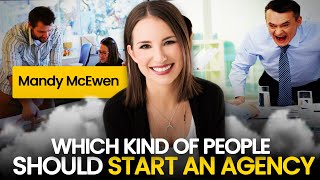
Mandy McKeown, founder of Mod Girl Marketing, talks with Avi Arya about starting a digital marketing agency. She covers client acquisition, hiring, balancing work and family, and why trust and relationships matter more than fancy proposals.
My name is Mandy McKeown. I am founder and CEO of A Thought leadership and digital marketing agency, Mod Girl Marketing, that I created back in 2010. Based out of California, but we work with clients all over the world. And my goal is to help good people and good businesses make a bigger impact in the world by growing their awareness and thought leadership online. So I had a full time job for a couple years before and I was doing this on the side actually probably three years. I started off in affiliate marketing. So my answer is yes, but you have to be careful too, right? So you can't just go and find the first SEO person on Fiverr or Upwork and trust that they're going to do the job. So obviously do your due diligence and look at the, the reviews that they provided. But what I do when I hire new people and what I've been doing for years is I out on my own stuff first. So I'll give them a trial project and it'll be on me. So something to do with my business and, you know, getting my page if we're talking about SEO, right. So getting this page from my website on page one in Google and then I test them out with my stuff before I put them onto a client.
My name is Avi Arya. Father of two girls, six dogs, husband to a superwoman, a streetcar racer turned hotelier, now social media marketer and founder of the family digital marketing school called Internet Moguls of the World. Over to you, Mandy.
My name is Mandy McKeown. I am founder and CEO of A Thought leadership and digital marketing agency, Mod Girl Marketing. I created back in 2010. Based out of California, but we work with clients all over the world. And my goal is to help good people and good businesses make a bigger impact in the world by growing their, their awareness and thought leadership online.
Awesome. Thank you very much. Great. So, Raya, you want to start?
Sure. So my first question is, you know, I'm 14, so going through high school and also writing a book can be tough sometimes. But through it all, I have my family rituals and beliefs that I have learned over the years. What are your personal rituals that help you on a daily basis to get to where you have today?
Yes, great, great question. So one is meditation, right? So just really clearing my head, meditating and figuring out, you know, what, you know, what I'm doing in this world, my purpose and making sure I'm aligned with that and my purpose and my vision and making sure that things don't get hazy and crazy. Because as you know, when you're in this as entrepreneurs, you're in it. You really have to take time to just cut everything out and make sure that your mind is right and focused. The other thing is spending time outside, so exercising. One of the reasons I love California is because the weather here is amazing most of the year. So I love to spend time outside every single day. And that's one way that keeps me sane, that meditation and spending time with my loved ones and my furry, furry dogs.
Oh, you have dogs as well?
I do, yes. Two dogs. They help me. They are my assistants. So I don't get lonely throughout the day.
Of course. Awesome. Liviana.
So my first question is.
How do.
You balance out business time and family time? Like, how do you balance the hard working time, but quality time with your family, that is.
It's tough, you know, so it's like, I'm not really a believer of work life balance. And that's using those words exactly. Because when you're an entrepreneur, you kind of have to blend it into your life. Right. And so it's a matter of, you know, I make sure that if it's, you know, weekend that I'm not working, then I take time, you know, for my family, my loved ones to spend time with them. Right. So even in the evening, sometimes I have to work, but I make sure that I'm still allowing some times. And even if I have to do a little bit of work on my laptop, at least I can be physically present with my loved ones, even if it's just for a short while and then putting it away. So I feel like it's never completely 100% shut off unless I'm going on vacation or weekends. But even evenings, I'm still doing work here and there. So it's always, you know, it's always a challenge. But I think having loved ones that understand entrepreneurial life and they support you and they, you know, they really believe in what you're doing and your vision. It makes it a lot easier. Right. And so it's, I think it's something that you have to just grow with and learn with your loved ones. And they understand that. But you still have to take time out because it is so important. Not to mention from a personal perspective, you can get burnt out really easily. Right. You're just constantly working all the time. So, you know, it's something that, you know, it's definitely not a 9 to 5. Right. But having the. Right.
So, Mandy, you mentioned you're running an agency. I started an agency 10 years ago and I know that it's. It's something that almost never settles. You know, you get a new client, the old kids, their parents and their grandparents, and they're sitting and thinking in this new world, which is evolving, you know, when you speak to them, what would be your advice? Why and which kind of people should start an agency? Can we start it from home? Can a single mother or a single father start an agency from home by having partners all over the world? Can you just tell us a little starter guide to an agency?
No. I think an agency is an awesome lifestyle business. So I also have another side of my business I didn't mention a whole lot, which is I'm a coach and a program creator. I have digital products and memberships, and I help other fellow agency owners and marketing entrepreneurs grow. Right. But with that said, that's a constant launch. Crazy world, right? You're constantly launching. You're having to go on webinars, you're having to do podcasts. It's nonstop. If you want that to grow, not to mention you have to pump a lot of dollars into ads, and, you know, it's crazy. Whereas the agency lifestyle, I love it. Because you tend to own an agency, for one. You have to know how to deal with people, how to hire people. And this is why I'm doing. If I didn't have good people by my side. And that's not easy to find, right? I mean, I've hired and fired lots and lots of people over the past decade that I've been doing this. But it's one of those things where, you know, it's. It's so powerful. And also the clients that you can impact. Right? So I do think it is a great business model for a lot of people. They just have to know what they're getting themselves into. And it's not as simple as I'm just going to do it myself and figure it out. I mean, you know, you can do consulting and be a solo consultant and that's fine, but that's really hard to scale. So my tip there is make sure that you're hiring good people from the get go. Even if you start off with just a virtual assistant, you need to be having someone that helps you do the little tiny things that aren't a good use of your time every single day so that you can spend time going out there, finding clients, selling and making an impact and helping these clients. So I think the people aspect of an agency is so huge, and I just saw the difference in the world.
Got it. Mandy, can you tell all the agency owners or wanting to be agency owners who are listening to you right now, maybe two or three points on how they can get their first three clients.
Hustle, contact, just non stop outreach. Right? So figure out who you want to work with. For one, you can keep it broad in the beginning, but kind of starting backwards with what you want to be offering them. Right? Because we're talking about digital agencies here and you mentioned like SEO earlier, right? There's so much you can do for an agency. The specialization is huge. And this is what I, what I tell my remote agency society members and people in my Facebook groups is you need to specialize whether that's in an industry or whether that's particular services. But you, you know, the jack of all trades is kind of going out the door now. Unless you've been doing this for a long time, right? I mean, obviously agencies have done this for years, that's fine, you can provide full service, whatever. But if you're just starting out, specialize in something. So whether that's content marketing or thought leadership or Facebook ads or SEO or blogging, whatever it is, pick that and then figure out who is going to benefit the most from those services that you want to provide. And then to get your first clients. I know it's kind of interesting now with the COVID world we're living in, but the way I got my first clients was literally networking in person, but also emailing people that were. So I started out as an SEO, right? I've been an SEO nerd since 2007. So what I would do is I would find local businesses back in Kansas City, which is where I started my business before, before I moved to California. And I would find them on like the third page of Google and for a chiropractor, for example, and I'd email them and I'd say, hey, I noticed you're on the third page of Google. I can get you on page one of Google for free. You don't have to pay me anything. And then once I get you on page one, you pay me $500 and that works. And that's how I got my first clients, in addition to local in person networking. But you just have to get creative and if it's tough, then offer to do it for free until they get results and then they pay you. And that's literally how I got my handful of my first clients.
So I love that. So to get a foot, get your foot into the door, you have to prove yourself before you start asking for money. I love that idea. For Example, if, if I'm a single father or I'm a single mother, I'm sitting at home and I'm listening to you and I'm like, okay, I think I can do this. Two questions come to my mind. If I want to start an agency and I'm not maybe an SEO expert, can I still offer this service and for free and outsource this but to somebody else? And, and while I'm doing it, keep my day job or whatever part time work I'm doing. Because this is going to take a time, take some time to build up. Right?
Yes. And that's what I did. Right. So I had a full time job for a couple of years before and I was doing this on the side. Right. Actually probably three years. I started off in affiliate marketing. So my answer is yes, but you have to be careful too, right? So you can't just go and find the first SEO person on Fiverr or Upwork and trust that they're gonna do the job. So obviously do your due diligence and look at the reviews that they provided. But what I do when I hire new people and what I've been doing for years is I test them out on my own stuff first. So I'll give them a trial project and it'll be on me. So something to do with my business and you know, getting my page, if we're talking about SEO, Right. So getting this page from my website on page one in Google and then I test them out with my stuff. So before I put them onto a client. Right. So the answer is yes, you can 100% do that, but you have to be smart about it and make sure that, you know, you're, you're hiring good people that know what they're doing.
That, that really helps. Mandy, for people who are wanting to start agencies and say, so we move from the teenagers to their parents to the grandparents and we, these are the demographic of the school. So say there's a, there's a senior citizen above the age of 60 and he's like, you know what, I can write very well. Or there's somebody who says, you know, I can, I can do very good graphics or whatever. Do people of all ages have work opportunities through a Fiverr or through an agency network to still get back into the system and make some dollars?
I think so. 100%. I was actually just going to say those freelance websites are great. So Free up is a really good one. Upwork, obviously there's Fiverr. So yes, I think, and that really is a good first step before people start to go out on their own and, and start their own consultancy or agency. When it comes to doing stuff like you're talking about, like writing, right. Or the simple graphic design work, I think those freelance websites are amazing to kind of get your foot in the door and get experience working with clients because then you can build up a portfolio and you don't have to go out there and get your own clients, they're there right for you. So yes, I don't really think age matters as long as you're committed and you're talented and you love what you're doing.
So as a established agency owner who's been through, you know, hundreds of profiles and hired and fired people and you understand what works and doesn't work for all the audience, I'm just trying to reinforce confidence, hope in the audience that will be eventually listening to this. So people like you who are running, you know, established agencies would consider profiles from teenagers all the way up to senior citizens. As long as the work is good, doesn't matter who they are, where they're coming from.
Yep. Yeah. As long as you know they are doing good work. I'm all about communication and transparency. So if they're great communicators, if they're doing great work and we vibe well, right. We get along well, then age is irrelevant to me.
So can I recommend everybody in my school who's really good when they're trying to get work from agency owners? They can maybe make a small micro video and introduce themselves and have their work shown in upwork links and all of that so that you can see a short 3 minute video rather than going through the 4 page CV. Would that be better? Yes.
I love that. Those are my favorite. When people make the videos like on upwork, I love that. And I'm all about videos. So yes, anytime that you can add that human element, that personal touch, you're going to stand out so much more. And me as a business owner, agency owner, I am much more likely to entertain the idea and of interviewing someone for a position if they do have a video because I can at least get a sense of who they are as a person. And you know that they, they were even committed enough in the first place to put forth the effort to make the video right. Like that to me says a lot. Like you're not. A lot of people are just lazy. Let's get real, right? A lot of people just slap a profile and they put a few words and they're like, oh, I want work. Right. But the people that take that extra step and go the extra mile to do the video, that shows to me that, you know, that they're committed and that they would be a better worker than, you know, people that aren't willing to put forth that extra effort.
Awesome. Just wanted to revalidate that. Yes, I love that.
Okay, so my next question is, do you. What were some struggles that you went through when first starting your business? What were the tiny victories and the tiny failures that, that you learned a lot from?
Essentially, yes, good question, especially coming from you two. Being a young female in a male driven world was very difficult. So I started my agency when I was, I think 23. And I look young anyway, you know, always, always have. So I. When I started out, I was an SEO, right? And I only learned from guys. At that time, there was hardly any females that were in SEO, so all my mentors were males, which is totally fine. But I would go out there and I would try to sell and they would just see me as this young female. So I sound young, I look young. I was really smart. I knew what I was doing at this time. I'd been doing it for three years as an affiliate marketer. So I knew my stuff better than most. Right? But it took a lot for people to trust me. And that is, that's another reason why I offer those free services to begin with. Because people would just see me as this young chick who didn't know what she was doing, right? Started a business, and, you know, I was in this male dominated world with older males at that. You know, there was very few that were in their early twenties like I was. So that was very difficult just getting people to believe me and trust me as a young female marketer, you know, agency owner, entrepreneur. And so having mentors that were also females that weren't obviously in my industry, but local mentors, that gave me the encouragement to keep going because it was very frustrating, right? And it's just like, based on my appearance and how I sound, people were like, man, I don't know about this girl, right? And so I had to work really, really hard to get people to trust me. And that's another reason why I was so big on content marketing and blogging and SEO. So the moment that I started my agency, I started blogging. And so I would dominate the first page of Google with all of these blogs because I felt like I had to prove myself more than my male counterparts because people automatically trusted them more than me, right? So that was a really big struggle in the beginning, especially because back in the day, we're talking like, you know, 2007 to 2011, 2010 is when I started my agency. But I was doing some things before then. There wasn't a whole lot of females. Now it's easier, right? I mean, I'm not still not gonna say it's easy, but there's a lot more females in this industry than there were. Answering your question on the failures and victories. Oh, boy. I could go on. I could go on and on on those. But I would say, you know, just trying, you know, just working with clients that maybe weren't the best fit. So taking on everything, so saying yes to clients where I probably should have said no to, because instantly I knew that there wasn't a personality click or there wasn't. I just didn't get that good feeling. So there was that gut feeling that told me, like, probably wouldn't be the best to work with this person. But I did it anyway because I wanted clients. So I would say I learned a lot that way. It's really important to say no when your gut is telling you this probably isn't the best fit. So I dealt with a lot of that in the beginning, and even going back to. I even had to work with males that weren't. That didn't respect me. Right. They hired me, but come to find out, they didn't really respect me, and they tried to undermine me and they questioned everything. And so there was a lot of that in the beginning. Thankfully, I've been doing this long enough that I haven't had to deal with any of that anytime soon. But I would say that in the beginning definitely was challenging too. Just determining should I take on everyone as a client, or do I need to be more particular?
Right. But also share with us one or two wins. As you were going through these struggles of saying, the world wants you to prove over, prove yourself, and you, like, you know, I need to do more than others, and why is it. And, you know, fair. You feel it's an unfair word most of the times while you're going through what kept you going, why did you. What made you not give up? I mean, were there small victories along the way?
Yes, the small victories. Good. Good one. I forgot that part. So when in the very beginning, when I started my agency, I was very fortunate. Of course, there's always some bad eggs in the mix, but I was very fortunate to work with a lot of really great business owners. And a small victory in the very beginning was I worked with an individual who owned a roofing company and again, I offered to get him on, you know, Page one and Google for free. I did that. Come to find out he needed a new website, so I did that. Come to find out he owned another company which was a recording studio. And so I redid his website there. Come to find out his best friend also owned a roofing company, so he referred me to that. So I instantly, from that one relationship, in the very beginning, when I started my agency, I got three clients right out of the gate. And it's because I worked my tail off, you know, wanting to get him results for his first company. And he saw how hard it was and how great I did at, you know, creating his website and doing the SEO that he was like, well, I might as well hire you for my other company. Oh, by the way, my friend, you know, also has a company. And so that one client gave me so much confidence in what I was doing. And I think that that one individual, which I haven't talked to in years, I should probably reach out to him again. He believed in me, right? He had faith in me, he appreciated me, he. And that gave me the confidence to say, you know what? I can do this. You know, and at that time, I think I had, I was still working a full time job, right. It was right before that that I ended up leaving that and then starting my company, but I was still kind of working that full time job. And so I wasn't even sure if this is going to work out right from a confidence perspective alone. And so just having that one person, you know, believe in you and then refer you to people and instantly have, you know, three new clients because of it, that was huge for me.
Lovely, lovely. Now I'm going to remember that and I'm going to tell, I'm going to make a video around this to tell clients. Encourage your agency partners, they need it, they're working for you. That's a beautiful point. Mandy, tell us people who are listening to this. Some people are like, you know, I'm a very good project coordinator. I can put people together, but I have no idea how to do SEO or website or whatever. And I get inspired by Mandy and I start my agency. Most people start agencies saying that I'll be the only employee in the beginning and I'll do a website and as work builds up, I'll hire other people so that I can, I can sort of utilize my time as the first employee who I don't have to pay and, and then have other people. But if I had no skill, no SEO, no Website, nothing. And I can only project manage other people. Is it still a good idea to start an agency? You know, because like I said, there are some people who can coordinate better. The other people are like, I need at least one skill to get started. What is your take on that?
Yeah, that's a really good question. So I am also a big believer in partnerships and collaboration. So I, my motto is, you know, on that regard is like, I don't have competition. I have partnerships and collaboration. So from the moment I started ModGrow, I started working with other agencies, right? So collaborating with other agencies. And I think the example that you just mentioned gave, there is a perfect scenario of how someone can go and partner with another agency, right? So reach out to other agencies and tell them, this is my specialty. This is what I would like to do. Is there any way we can work together? And then that's going to give you enough experience and know how to see if you want to start your own agency. But I would say that is the very best first step just to get your kind of foot in the door is reach out to other agencies and agencies that you would want to work with and, and offer up your skills as far as project management goes. And it's funny you say that because that's like my number one hire always. I am the creative, I am not the operations and the project manager. Like, that is my weakness. And so I always have to have project managers and operations people constantly by my side because that's not how my brain works. Right. I'm always the add, the creative one that just wants to create and go and, you know, do all the fun things, right. And obviously run my company. But when it comes to organization and all of that, I need those people. And so those are crucial when it comes to agencies. Like there's. That is probably. And this is what I tell my members, that I help fellow agency owners. That's the number one hire that you should always have as a project manager. To me, that is the most important hire, especially in the beginning. You don't have a whole lot of help. So there's so much need for those types of people out there, the project managers and the operations individuals. And so I feel like the first step in that scenario, which you mentioned would be just go and network with other agencies and see if you can work with them through first and then determine what your next steps would be.
Got it? That makes a lot of sense, Mandy. When it comes to agencies, you know, you have design services and all the, all the project management stuff. And creatives and all of that's one aspect of the agency business. But over the last few years, successful agency people like yourselves have also got online courses. It does supplement your income and then a membership site, which is a residual income. What are the three, four pillars that an agency business stands on today? What are the various income streams that people can think of?
Yeah, and it's a good question because it's one of those things too where you have to focus, right? You can't be doing too many things at once. And it's like that bridge you're building, right? You have a bridge, which one do you want to go down, right? And you can't start like so many at once. And I started the courses too early, right? I will admit that I should have waited a little longer. I don't regret anything. I learned lot, a ton. I've helped thousands of marketing entrepreneurs and agency owners around the world and had to have a huge impact on people's lives, and I love that. But the client income stream, recurring revenue, monthly retainers is to me, after doing this and having courses and all these other things and memberships, that to me is number one. So getting those clients, providing services on a monthly basis, keeping clients long term happy clients for years, plus ideally on monthly retainers, I feel like is the best scalable model. And that should be your number one priority, is getting those monthly retainers. Then you can figure out, okay, let's supplement with some other things here. You know, one off projects, consulting, maybe, of course, maybe a membership. But I feel like you should really focus first on those monthly retainers and then build that up to where you're happy and then you can start, you know, launching other revenue streams.
Oh, nice, nice. Interesting, because a lot of people see that shiny object and say, oh, course, course, course. I'm going to become a course, make my millions over there and actually ignore the delivery on the client servicing side.
And that was me. I had the fomo, right? I drank the Kool aid, I drank the course grader Kool Aid. I thought it was going to be, you know, all butterflies and rainbows. And it's a lot of work. And I don't think people have any idea how much work it is to create a course, market it, to constantly be promoting it and onboarding people. I mean, it's a lot of work. Whereas if you get this agency thing down and you have people helping you, it's a lot less work. I'm not going to say it's still a lot of work. Don't get me wrong, right? It's not easy, but the course creator world is a complete, completely different beast. And most people underestimate what it takes to be successful. I mean, these people that we're learning from that are making the millions of dollars a month at courses, that's like the 0.1% of people, the majority of people who have courses, they don't make even over a million dollars a year. It's really. It's really, really difficult to make over a million dollars a year for most people that have courses and products. And so it's, you know, and I tell people this even, and I get it. Like, I get the FOMO and the shiny object, and I train on a daily basis, and they say the same thing, like, I'm working on the course. Just a fair warning, you know, I've been doing this for over three years now. The courses, right? I launched my first course over three years ago. And so I've been, you know, in this world, and it's not as easy as it looks, right? So I'm not saying that you can't do it or shouldn't do it, but you need to be smart about it and make sure that, you know, if you have the agency that you build it up to where you're happy and it's scalable and it can still grow at the same time. So you have people that can help you grow it at the same time, and then you can, you know, go off and create your courses on the side. But, yeah, it's definitely one of those shiny object syndromes and FOMO that people have no idea what they're getting themselves into until they're in.
Right? So awesome. So that was very important to get clarified, Mandy. You know, all of us as we are building our businesses as well, we're equal partners, by the way, in this project. And then by the time that they're 18, they can decide, you know, if they want to continue and. Or what to do whatever they want to do. I hope they continue. But the idea is that, you know, every time that we sit down and we make our plans and we see what we want to do in my work and in their work, they all see we always find somewhere our family upbringing, our rituals from our parents, grandparents support us, even if our parents were not into digital marketing or the new tech stuff. But some rituals, something that they said, ring true in our minds when we're going through challenges. And that makes our agency what it is today. Right? Like, my parents are both in their 70s, and they're both entrepreneurs and they work very hard every day. And on our family dinner table, we're not allowed to crib about a business. They say, if there's a problem, let's talk about it, let's solve it. So that's the nature of the agency that we built and that's the nature of the school we're building. We figure it out, there's no point crying over it. So this is what, you know, like it comes from those old family table conversation, dinner table conversations. So what would be some of those values that you got from your family that now are part of Mod Girl?
Yeah, that's a great question. So I come from a very loving family and so different strokes for different folks. Right. My mom always said so everyone is different and you have to have love and compassion for what you do for one. So I come from a family that's passionate about what they do. Teachers. Right. And that's kind of what's in my blood. And so one is just that teaching aspect of wanting to help people and wanting to help people learn and share my knowledge. And the other is just loving, just having love for what you're doing in the world and the people you work with. So accepting people, having an open mind, you know, wanting to work with people that are doing good things in the world and having an impact because life's too short to work with businesses that are skeezy or taking advantage of people. Right. Like, that's not why I'm doing what I'm doing. So I think those, those values of just being kind and compassionate and loving, I think, you know, are instilled in everything I do in my business.
Nice.
Yeah.
So my last question is we use the term Internet moguls a lot and for us, an Internet moguls, someone who spends quality time with their family but also works hard to grow their business. So what would your definition of an Internet moguls be?
Yes, good question. I love that. I like what you said. I would add having an impact, having a positive impact on the world. That to me is everything. And so I love what you said. So people who Internet moguls and they still are making time for their family and their loved ones and doing great things in the world. But at the end of the day, they care about making an impact and helping people make an impact and it's that trickle down effect. So what I do for my clients and for my customers is going to trickle down and it's going to have a huge impact in the grand scheme of things because one little Thing that I help someone do, they can go and help 50 people do, and then those people can help another 50 people do. Right. And so to me, I love what you said. I would literally just add, you know, people that are also really passionate about making a positive impact in the world.
Yeah. That help you?
Yeah.
Okay, so my last question is, how did you. How did you kind of market your business when you were first starting? How did you get the word out there? I mean, you spoke about people trusting you and how hard you worked to get their trust, but how did you put your company out there for more.
People to recognize it? Yes, very good question. So twofold. One is in person, local networking events. So I started my business in Kansas City, and I would hustle nonstop, going to business networking events constantly. So introducing myself, meeting people, doing as many network events as I possibly could, and trying to get clients that way. That's one. The other way is what I briefly mentioned is showing my skills essentially online by blogging. So SEO friendly blogging, whatnot, and then reaching out. Outreach. So constant outreach, whether it was outreach to other agencies that I wanted to work with or outreach to local businesses. But it's one of those things where you can't just wait for it to happen. You have to go out there and be proactive and make things happen. So if I wasn't in person reaching out to people, I was doing it on the Internet. So I would have my website, I would have my blogs, and so people could see that, you know, that I was credible. And then I would go and I would constantly just reach out to people. So who do I want to work with? Right. Just like I mentioned, you know, the free SEO services, But not only that, but other agencies that I felt like could utilize my services as an SEO individual. And that worked. So I was able to, you know, land opportunities with other agencies that needed SEO help. And then I would also get on the first page of Google for like, white label SEO and white label online marketing keywords back in the day. And so I was very strategic about my SEO. And so I would make sure that I would show up at the top of Google for keywords that weren't super competitive because I didn't have money to be pouring into that. Back in the day, I was on a shoestring budget, started this on my own with no help. So that's how I did it too. I would strategically rank for keywords like white label online marketing because I knew that people that knew what that meant were looking to hire someone to do it. For their clients. And so those are kind of a few different ways I would do that, but I was constantly on the move, like, literally reaching out to people nonstop or in person. So it's just one of those things where you have to consistently grind and hustle, especially in the beginning. You can't just, like, wait for things to happen or they're never going to happen. So it's nonstop. And then you have to be confident and committed to that too, and have to have, you know, the know how and the faith that it's going to work out. That's a big part of it, too. Just having the faith that if I keep going, like, I know this is gonna work out. I just have to keep going, connect more people. You know, it's a numbers game, too, in the beginning. I tell people that all the time. It's a numbers game. Like, if you reach out to enough people, you're going to get responses, you're going to get people that are interested. You can't stop. And I feel like so many people stop too early. They get frustrated because they reach out to 20 people and they don't hear anything back and they're like, this isn't gonna work. I give up. And you can't give up. You know, you have to keep going. So that's my answer to that.
Awesome. That is very well said. Mandy, tell us, you know, when it comes to people who are building their agencies, can you tell us a little bit of an insight on there are 10 people who bidding for a project, and there is the Mod Girl agency that is building, bidding for the. What will be different in your proposal? Will it be, you know, we suggest to people, put in videos in their proposals, you know, show your personality, show your team and say, this is what we are. This is what our company is. And so you're just. By putting an extra video like we discussed, it sort of takes your proposal sort of a couple of notches above the others. So what would be Mod Girl agency proposal versus all the others that don't win a contract?
You know what's funny is proposals to me aren't really that big of a deal because I build rapport. And I get people verbally saying, I want to work with you before they even see the proposal. That's how I do business. And so for me, when I talk to people on the phone, from the very first conversation, I'm going to treat them like a friend and it's going to be super casual. I'm going to ask all the questions. I'm going to let them talk the entire time. I'm going to really understand and listen to what they're going through and their needs and their pain points and what they think that they need in their goals. And then I'm going to put together a proposal and then when I review it with them on the phone. By the way, never send a proposal via email. I'd say never. 90% of the times it's better to review the proposal on a zoom call like we're on right now or over the phone. And then at that point, I keep my proposals super simple. So we do have like capabilities, decks where I could put videos in and more information. But I just gave a proposal review yesterday actually, and the guy was, he was like, this is really simple and to the point, but I'm very impressed. You know, it was nothing crazy and it's all in the presentation. For me, it is how you present the proposal and that rapport you build and that confidence that you instill in it. He even said, wow, you're really confident. I've been doing this for a while, you know. And so it's your approach and how you present that proposal that means everything, I think, because a lot of people are going to give these fancy proposals that are like super long and detailed, but they lack that human connection and it falls flat because the person on the other end doesn't feel that connection and they don't have that confidence level where for me, I am all about relationships and building relationships. And so I want the person to know that they can fully trust me before, you know, without having some crazy proposal. But to your point on the video, videos are great and that's. That again, builds that human element. So anything you can do that humanizes you, your agency, you're going to win over other people. Because there are so many agencies that are just blah. I mean, they have stock photos on their site. They lack that human, that personal touch, and it just falls flat. And so anything to build up that emotional connection and really get people to know you as an agency owner and your team, I think is going to help.
That makes a lot of sense. Thank you for, you know, upping the game. You said, forget proposals. Just bring your own personality in and then that's that. And then even a simple proposal works because you are aiding that proposal not only with the capabilities deck, but also with the confidence that you bring in. And then they don't need to go through. In fact, there was a software which analyzes proposals which said that most of the people skip through all the 14 to 20 pages and go to the end and see the price. Because in the absence of a human interaction, it's just a price and race to the bottom, you know, if you're fighting a price war. Okay, so, Mandy, I can. I can totally, after talking to you and seeing your confidence on, you know, on video, hope. We hope to meet you sometime. But we saw you on video. We can totally imagine you getting on a call with a client, on a zoom call or whatever and saying, totally nailing it. You bring in your A game, you bring in your confidence, you bring in your family values, you bring in your 10 years of experience. Now the client buys into you. How difficult is it to then give that big promise over to a team to say, this is what I promised, and you guys have to deliver to that level? How do you manage that?
Really good question. You have to have confidence in your team too, right? And that goes back to what I said in the beginning. Like, hiring good people is everything, but for me. So we. I run a boutique agency. I don't run a farm agency, where we're just, you know, everyone's a number, and we're just cranking customers out. Left, right. Thousands of clients. So I am involved in the very beginning, especially with every client we take on board. So it's never. I'm selling them, I'm hyping them up. They're so excited, and then I pass them off, and they never hear from me again. Right. That's not how I do things at my agency. With that said, though, I have to have faith in my team members to carry out what I am promising. And so it is all about having really good people that work for you. But I still like being involved, especially in the beginning. So for the first six months, I'm pretty involved in these clients. I say pretty involved. I mean, I know what's going on. I'm not the one doing behind the scenes, but I still might be talking to the client occasionally, might be hopping on phone calls, and I might. You know, and I'm still working with my team and making sure things are running smoothly. And then once we get going, you know, I slowly back off and I tell clients this. I just answered this question yesterday, actually, on a. On a prospect of call, he asked the exact same thing. Like, are. You know, so I'm super excited. I like you, but are you just gonna leave? Right? Like, I'm gonna sign this contract, and am I never gonna hear from you again? I'm like, no, that's not how I. It's not how I do things. That's why I started an agency is because I love, I love the relationship part of this. And I like, you know, working with people. I love people and that's why I do what I do. But you have to have faith in your team and that, that's everything. So you have to have confidence and you can't micromanage them too. And I'm kind of a control freak. I always have. And I think a lot of our entrepreneurs are, especially agency owners, and that's something that a lot of us struggle with. But you have to let go of some things and trust that they're going to get the job done, you know, and it might not be exactly how you would do it, but it's getting done and it's fine. You can always go back and tweak things later. But it's having that faith and having confidence in your team that they can handle it, I think is a big part of it. Because you can't spend your time micromanaging every aspect. You'll never scale. Not to mention that drop drives you crazy and the people that work for you, crazy.
Perfect. For more advanced agency owners who are listening to this conversation, does Mandy McKevin plan her agency 3 months, 6 months, 9 months, 12 months out? How do you plan your revenue? As I've got seven clients, this is the revenue I'm making. But it's time for a yearly appraisal. I need to give all my 10 people a bonus and I need to get four more. How do you do you plan? How far out do you plan in your head or.
That's a really good question. And it's so funny because I plan and then it changes all the time.
That makes me feel I'm sane.
So I play it monthly, I play quarterly, I play yearly, typically. Right. But I go back and they're changing constantly. So I keep my longer term plans more broad because I know they're going to change. Right. So the monthly is more, I know what's happening short term right now. And so it can be a little bit more, you know, detailed, if you will. Whereas I keep the, you know, the six month and 12 months a little more broad obviously when it comes to the types of clients and types of services. But I, yeah, I try to plan, but I know because of a new that it's going to change and so I allow for that change in there. And in the beginning when I did this, I used to, I kind of freaked out a little bit when it would change. So Much. And then I realized that this is just like entrepreneurial life. This is agency life. Things are changing and they have to change. Like you have to iterate. You have to go with the flow of things and go with what's happening. Right. So I'll start something. Especially what Covid happened. I mean that completely. You know, I started one thing and a lot of time at work. Let's do this. And so you have to be agile as an agency owner. So planning is huge. It's very important to. But I don't want people to get so caught up in it and then get upset when things don't go as planned. Because that's just life, especially as an agency owner. So yes, planning is important. Monthly, quarterly, yearly is how I usually do it. But keep in mind and leave room for changes.
Got it. Perfect. I think we've got all our questions answered. Thank you so much, Mandy, for A accepting and B being so forthcoming with your answers and not holding back on anything. Because like I said, what we're building here is going to start with a book, a podcast, YouTube, all of that. Eventually, by the end of this year or first quarter of next year, we launched the Internet Moguls of the World school. How we are planning to launch this today is based on a membership which is going to be a yearly membership for families. Like four people from a family can get in together and they will get all these videos plus some other trainings. So just to let you know, we divided this all school into three parts. We're taking 52 interviews. So 52 interviews, one interview every week. And then there are. We have another 52 people who we've who are contributing short 30 minute to 45 minute courses which are exclusive to our school. So we have those courses and now that we have 52 plus 52, 104 people in our, in our, you know, in our support sort of network, we are requesting one person to do a live with us every week. So people come in and do a live. So that's what the students will eventually get from the school, expertise from people from around the world. We have our own courses and all of that. But everybody is sort of building in their network together. And at the end the idea is to, like I said, remove fear anxiety from everybody and say, you know what, come in here. There are enough and more family stories of kids, their parents and teenagers learning how to run an agency from Mandy or how to run a YouTube channel from home from Tim Schmoyer or how to start a podcast from John Lee Dumas or how to do micro videos from Aviary, how to build a business with their family from the girls so that there's little bit for everybody. Follow a roadmap, follow print, and by the time your first year membership expires, you're already in business. And the most important achievement, that by the end of the year you say, I'm now at a crossroad and I can choose whether or not to travel for work or do it from home and spend the rest of my time with my family. So with that objective, yeah, with that objective in mind, we're going to be powering through this. We'll reach out to you and we let you know when the launch is happening, you know, when we're launching. We'll also send you an email every couple of every month on an update. This is where we breach. This is what we're doing. And also we send you in that same email a link to join our Facebook group. Right now the Facebook group has all the people who have contributed so far. So I'm sure you know many of these very, very brilliant names from around the world who have contributed. It's a great networking platform for our interviewees and our speakers, all of that as well. But eventually, once we launch the course, you know, we have a very big email list of about 145,000 people. So we assume we'll have, we launch with about, we'll start with about 2,000 plus students in our first, you know, first launch. So those students come into the group. I'm telling you all of this and what we've been able to do, we have a small academy where, which I have been running with my agency, where we again have about 150,000 people, where I teach them how to use micro videos. Then I have an agency. Why I'm telling you all of this, Mandy, is that, you know, be like Raya, Abhiana and me. We really appreciate your time. If there is anything that we can do today, tomorrow, next month, next quarter. If you're launching a product, you want to reach out to our audiences, every speaker who has helped us, always helping us building this school, like I said, this school and the entire database that we made for the school belongs to all of you people. At any point you say, you know what, I've got something. And I wanted to go out to 150,000 people. This is my school. Call it up like a trustee would call the school that they're part of and say, I want this done. And the answer will be yes, when you want it done. We'd be happy to serve you back and have that continuous relationship built with Mod girl with Mandy McCavin and Internet moguls of the world and hopefully when the girls grow up or at some social media conference they can meet you.
And.
So yeah, that's the idea. Raya wants to go and become a performing artist. She wants to become an actress. She wants to go to Hollywood when she's 18 and Abhiana wants to buy a horse and just spend her life around horses. And I've got around five years with Raya and around eight years with Abhiana so I'm gonna make the most of it. And that's our idea.
Yes. I love it so much. You guys are great. Thank you so much for doing this. I love it. So the 30 second video, can I just make that when we get off here and send it to you guys?
Yes, that would be awesome. Thank you so much for your time. Deeply appreciate it.
Sam.
More from Avi

The strongest mindset doesn't begin with meditation. It begins at home. Before you conquer the wor

The strongest mindset doesn't begin with meditation. It begins at home. Before you conquer the wor

Your mindset isn't something you fix once. It's something you train every single day. Just like yo

Don't build a company just because your friends are. Build one because you're ready. A startup is

Everyone dreams of becoming the boss. Very few understand what that really means. The moment you b

Most entrepreneurs say, "I don't have time for coaching." The truth? You don't make time for what

Over hiring doesn't always solve problems. Sometimes, it creates them. Having a small buffer in you

"The highest-paid" isn't the goal. The highest-value is. People often ask why premium mentorship co

The founder will always be a bottleneck... at some stage. The goal isn't to pretend you're never th

People ask me how I stay consistent with my morning routine while traveling across countries and tim

People ask me how I stay consistent with my morning routine while traveling across countries and tim