Episode 5_Overcome!
Fernando lost her sight to Stevens-Johnson syndrome as a child, pursued music, and failed at an event franchise and CBD investment. She learned to start small, treat creative work like a business, and turn failures into lessons for her next move.
Chapters
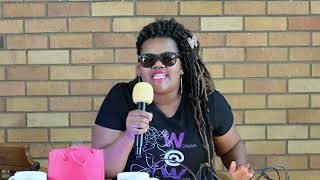
Hi, everybody. Welcome to our podcast, Black Woman Business. Today we're doing episode five, and our episode is on overcoming. If you remember well, our last episode was on fears, doubts, and epic failures. I've heard a lot of people come through and ask, how do you overcome? How do you stand strong, Tuli? And also, how do you find ways to just go over all the obstacles that are presented to you today? I am going to address those, and I'm also going to make it a little extra interesting. I've got somebody joining me here again. So I've got a fellow podcaster, fellow mother, fellow businesswoman, fellow community person, Fernando. And Fernando will introduce herself, and I'm so glad to have her here today as we tackle how to overcome. Fernando, here's your space. Please give us a nice intro.
A nice intro. All right. I never think about these things, and I should. I don't know why. I just rock up to life.
I prepared always.
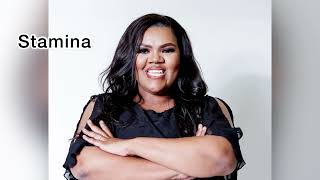
But, yeah, I am Fernando, and I am, like Tuli said, a fellow podcaster. I initially started as a. Okay. As a singer. Okay. I am a singer. Yeah, yeah, I know.
Yeah. I heard from your podcast.
Yes. So I started as an officer musician, and. But now I. And then I moved to radio. I was presenting radio at Impulse Radio for. For about two years. I did a show with my co host, Ms. Franco, about relationships, and now I focus more. I'm more independent, hence the podcasting.
Oh, okay.
Yeah. So that's what I do. And I'm a mommy. I'm a wifey, I'm a neighbor.
Yeah.
Yeah.
So, Fernando, it's so interesting how you and I actually met, because I've seen you for. For some time now.
Yeah.
But at a distance. Okay. Yeah. Just so you know, we actually lived in the same complex, Fernando.
Yes.
But I'm just like. It took me quite some time to get through.
Yeah.
Every time I see it was always at a distance because I know all the other parents of our kids pretty well.
Yes, yes, yes.
So. And you can see I'm very.
Yeah, yeah.
Like, hey, hello. So.
So when. But when we met, and I was just like, okay, so that's D's mom, and D is the most energetic child.
Oh, guys. I don't know from where, but yes.
I was expecting parents that are also going to be like, hey, we are the parents.
I'm just like, okay. They very quiet, very much to themselves. Okay, fine. And then it took quite a while, actually, for me to knock down the door. But I'm so glad we finally met.
I'm also Glad you did. Because I think one thing, I'll put it out here. Because I'm visually impaired, so there's a certain distance up to where I can see.
Okay.
And a lot of people don't know that. Maybe because of just how I just go. I just walk, I just do my thing. So I know people can see pretty far. I don't see that far. So many times maybe I'd walk past someone and genuinely not see them. And maybe the person might think that I was rude. And this girl doesn't greet and stuff like that. So that is something that, till now, it's still a bit of an insecurity. So when people like you come and just like, hey, I'm here. I'm like, hey, what's up? You know, like, that helps me. Oh, actually now start to approach and get to know people. But I know a lot of people maybe might feel always. Because I don't greet, but sometimes I see something that might be a person and he's a pole. So I'm saying hello to a pole. I'm like, okay, that person is rude.
But the whole time.
So, like, you not. I'm not gonna try this anymore.
You just leave it there.
No, I will. Unfortunately, I leave it up to the sighted person to come through. Come through. Yes.
No, I'm. I. I really like what you're saying, Fernando, because for me, I got a lot of assistance from Tato, one of the other moms. I didn't know that you're visually impaired. I really didn't. Because like I say, I always see you from a distance. And I was just like, that's a very shy lady. Or she just doesn't want to, like, interact.
Yeah.
And there are people like that. Yeah. I always respect that.
Yeah.
That's why I want people to respect me when I want to force myself into it.
So please let me in.
Let me in.
I know.
Yeah.
So, yeah. So it's a. It's a two way thing.
So also for me, there was a day that I had an encounter with you and it was so close and I got to see that you actually visually impaired. I was shattered.
Yeah.
When I walked home and to realize that this lady that I thought maybe wanted nothing to do with the neighbors. You don't want to do the whole high, high thing.
Yeah.
And I was just like. It took me a while actually to digest.
Yeah.
And then I don't know, one time I was also chatting with Tando and I. I mentioned that's the time when they were fixing the. The Very balconies.
Yes.
And she mentioned something and I said, oh, I don't know how to approach. We get so nervous, I think as.
Able people or whatever.
I just, it's so, no, I don't know how to interact with her. And I was like, you know what? Just relax. She's like, you, actually, both of you are chatter boxes.
Yes.
You'll get along, just chill. And it was just like, really?
Because I don't know, I. I want, I want to come in, but I don't know. And I don't want to be, you.
Know, And I'm also thinking like, how is she coping? How's she doing? Because from when, when I first saw you, I thought your visual impairment was something that happened recently. I thought it was just like, maybe because I put on contacts quite often, so I sometimes get conjunctivitis and I treat you. So I know how it is and I know how it is when it's new.
Yeah.
So for me, when I saw you, I thought, okay, this is a new thing. And she's probably going through contact quite a lot.
Yeah. Now. Right now, yeah.
And I only got to know on your podcast that, I mean, it's not.
Something that happened like 23, 23 years ago. And it's fun. You say conjunct. Conjunct.
Oh.
Conjunctivitis.
Yes.
Because that's actually how my condition start. I was 10 at the time, living in Mozambique, and so I got the infection and it was just such a weird thing because even now, actually, my dad was. Every time I speak to my parents, more details come to the full story. But I guess it just to make it shorter is I had to move from my parents house to my aunt's house because my father was traveling a lot and my mother had myself and my younger brother. So she couldn't take me to school and then take him to school and then take herself to work. And then, you know, and my one cousin went to the same school that I had recently moved to. And so I was at my aunt's house for that. I'd say like, you know, for January, February, I was, I was going to school with my cousin and so. And then I got the infection, conjunctivitis, which I got pretty commonly. I don't know if I was always played in sand because you know what, I lie when I say I don't know where my son is from. That one is my son. Like that.
You played like that.
I played like that. I was that child. I didn't want shoes. I Didn't want a shirt. I had dust in my hair all the time. That was me. So my son, low key.
Okay.
You.
Yeah, so. So my mother was a nurse, Right. She's now retired, so she had to retire early. But at the time, she was actively working. So my aunt and uncle, they are, I think, 12, apostle. I can't remember what the church was. Yes. And they had this thing where the men and women didn't go to church at the same time. Okay. Or they had the men's service or something. I can't remember. But they were not together. My aunt was at church. My uncle was home. Home. My mom called me, house, everything. And I told her, I'm good. I've got tests, but also I've got this conjunctivitis. And she's like, okay, cool, let me. Who's home? And I said, uncle is home. And she says, let me talk to uncle. So the conversation she had with my uncle, I didn't no where. She had asked him, do you have medication? And he said, I do have, but it's expired because my uncle is a carpenter, so he also gets a lot of crap in his eye.
Okay.
So he has some random ointment. So she said, no, don't use that. Tomorrow I'll send new medicine. That conversation didn't get to me. My uncle goes out to church. My aunt comes back and they don't meet. And my aunt comes and she's in a panic. Oh, my God, somebody else's child is sick. What am I gonna. And then she saw like, oh, crap, I do have eye ointment, but it was expired. So then that's what she used to try and treat. And I know many people like in. Aren't you angry at her? Whatever. I'm like, that woman was. If you saw the panic that I saw, she genuinely was trying to help. So through that, it was tetracycline. So I developed an allergy, Steven Johnson syndrome, which is basically an allergic reaction that you can have to such medication like tetracycline. I don't know if it being expired kind of made it worse, but it affected now my whole body, Right. So it wasn't just my eyes. It was my skin. It was. It was horrible. It was a whole. It was the whole thing. My nails fell. Fell off. Like. Like, I don't grow nails. My skin. This is. I like joking with my mom. We call this new skin because everything was just gone, you know? But yeah. And that's how I came to South Africa, basically for treatment. This is in 1999. And after I healed, my eyesight did not, you know, so. And from there, my cors got messed up on my left eye. I can. I have zero sight. I tried a few cor transplants, but they didn't stick because my tear glands dried up. So I also don't have tears as well. So I need to manually lubricate my. My eyes. I use an ointment for that. And. Yeah, so that's. That's how basically I lost my sight. And then I moved to a school for the blind in Pretoria.
Yes.
That's why I met all that bunch of madness that you. What crazy people come from that bag? We come from, like, 2000, 1999. Like, we. We grew up together.
Such solid friendship.
Very solid, Very solid. Like, we really. We have something that I know a lot of people don't have in friendships, you know, and we value that a lot of each other, but. Beautiful. Yeah, beautiful.
What I want to find out, Fernando, is the moment that you actually realized, okay, so because of this whole thing, there's now changes. You have to move to South Africa. You have to go to sports school for the blind. And, you know, I think. I don't know, with my little mind, I'm thinking there's a moment where you think, okay, now there's situations that occurred. I need to overcome and be happy with myself, happy with the present moment. This is me now. And let's. Let's.
Let's move.
How did you come to that point?
I always found that somehow, and looking back now, especially now that you're saying overcome, there's something in me. I don't know whether it's because of the journey or if. If it's something that I've always had, but there's something in me that has always known what to do, but you just don't do it type of thing. So I think everyone might have that where, you know that if I actually do this.
Yeah, yeah.
And a very concrete example. Example of that is when still very little. I would say maybe. So this happened, what, I was 11. So let's say probably six months after I realized my eyesight was gone, I shut down. I closed my eyes because it was almost like, if I'm not gonna see 100, I'm not gonna see at all.
Yes, Right.
So I actively blinded myself, if I might put it that way. So I closed my eyes, and I never opened my eyes. And that's how I played. That's how I did something for months, six to nine months. And my Parents were very concerned about that decision, you know, and they took me to a psychologist and all of that. And I remember being in the waiting room, and I said to myself, this lady is gonna make me pinch my eyes closed and open a few times. And I told my mom that. I said, she's most likely going to tell me to pinch my eyes, you know, close and open, close and open, close and open as an exercise to.
To.
To, you know, and my mom is like, why don't you just do it? I'm like, I don't want to type of thing, you know, and trust me, we went in, we spoke, whatever, and then she said, try this. And she said, paint your eyes closed.
All right. We spent money on this now.
But I knew I could have just done this at home. Exactly.
You know, and. And I found that many times that is. That is how it is with a lot of things, even as adults. Like, you know, oh, maybe my business is not working, or my. This is not working, but if I just start this, yeah, it's gonna work. So I. I think I learned to. In some aspects where I was confident and comfortable to actually act on that. Yeah. Knowledge that, you know, what if I do this, I'll get over that. Yeah. That's just how I had to. Till today, you know.
You know what? I just love how you bring that to the spotlight because it's. It is that voice.
Yeah. Just.
It's here.
Yeah.
But it's not something that it's too hard to do.
It's too hard to do.
Exactly.
You know, think of exercise, for example. Everybody knows you've gotta exercise, you know, that you have to schedule it. You know? You know, no matter how busy you are, you must either you work out earlier or you do it after work or something, but you know exactly what you need to do. But how many people sit and be like, I don't exercise. I don't have time. I'm too busy. But deep down, you know, wake up and do this, and you just somehow don't do it because it's. It makes sense, you know, like, it's not comfortable. Yeah.
It's not comfortable. So you'd rather stay in your comfortable space. I like what you say because I never actually thought of it that way, but now that you're putting it, especially also in a business sense, when you've failed so hard, and I have quite. Quite a few times, and the reason why you popped up to me in this episode is that you've had to deal with that in a personal aspect, which is what we've just gone through. And also in the business aspect, because I remember when listening to your podcast, you did try out a stint in being an agent and also your singing career.
Yes.
And also, how did you also get to that point? Because I just feel like, Fernando, you're so put together. I really.
What are we gonna do? You don't know.
Hey, I am holding on to that.
No, listen, I just feel like you've.
Got it all sorted, you know, you know what you want. You've overcome whatever it is that people say you can't. Yeah, people say you there or things that your mind have told you. Okay, I can't do. You've gotten to a point whereby, okay, I've tried singing.
I'm moving.
I've tried that. I wanna. Yeah, you know, I've overcome that. And now I'm doing my podcasting. Now I'm doing my, you know, oh, I'm not doing the dishes.
That's what I'm doing.
So I just feel like in that.
Way, like you've made up your mind. You don't need to. To or us to take a vote.
On what you got to do, what.
You'Re going to do next, you know? So, I mean, how do you actually get to that point of saying, okay, the singing thing, maybe even on a pause, you know, but you know that now this is what I'm going to focus on. Like, how do you get that inspiration and also be very deliberate about your next.
Yeah, it's really not easy because I've say for the singing, sure. I've invested because I graduated. I have an honors degree in. In. In performance, you know, so I've invested years of my life. My parents have invested finances, and it just. It didn't work out. It wasn't easy. I've had gigs where people really didn't pay me. I've had gigs where I volunt performed without getting payment for exposure. I don't know. Exposure.
Oh, people love that one. And it's like. It's ludicrous.
Really. No, you know, in the performance, all people say exposure doesn't pay bills. It does not pay bills. It doesn't pay for that microphone that I have to invest in to give you the best performance, you know, and.
The time and the travel.
I have to practice. I have to be good at what I do. For me to give you those 45 minutes, it takes time before and people I think, only think of you're just singing. But how long did it take me to actually practice? I have to take A good hour every day, you know, to get to, to give you that. His performance, you know, And I'm very big on that. I, I, this is one thing that I do have. If I'm not gonna do it well, I'm not gonna do it at all, okay? So if I'm not gonna give you the best that I know I can give you and I know that I can improve from, I'm not gonna do it, you know, So I could see that that's my music wasn't taking me there. I was begging. And I've got a little bit of pride as well, where I hate to beg. I hate to feel like I was into somebody's mercy. And because I'm a beginner, then I have to humble. Look, I'm humble in, yeah, my attitude and type of thing, but my worth, like I, the investment. How long did I go to school for this? And you're not even giving me minimum wage. I'm not even asking for professional fee. I'm giving you minimum salary. You don't want to pay me the minimum, so should I eat really crumbs? No, I'm not willing to do that. You know, and then I failed so much. I, I never thought about how much I failed. I've always heard about people, but you.
Never associated with yourself. That's not something I do.
I failed. I've tried with my friend. You met her, Ms. Uniqueness. Yes, I met her. We did. We tried. We tried buying a. An event franchise. We paid for that.
Oh.
Money gone.
You understand?
We didn't get what we're supposed to get. And this time, we are. We just out of university. We put together 20,000 rands. You know, I'm newly married, and we're like, you know, and let's get, let's do this thing. Nothing came out of that. My husband and I invested in cbd. I won't even tell you how much money because the market wasn't ready. And we also, I mean, you have to take that responsibility of we didn't do the due diligence of doing the market research and making sure that the people we were targeting were actually interested in our product and all that, you know, and there's that. Go big or go home.
Yeah.
Not always.
You were talking about myths the other day.
Yes, yes. That's a myth.
This is a myth. Start small, tread lightly, understand what you're doing, because when you go big, the loss is too damaging. Very damaging. You know, so it's lessons that I'm happy I learned and have Overcome quite well. I've had to. Because if we don't, then we stuck. We stuck. You do stay stuck, you know, And I mean, I'm. I stay at home with my son. Like, now we're homeschooling full time, but I must stay at home. And if I let these get to me, depression will eat me up. You know, it's very easy, and I don't want that. Like you're saying, I'm put together and, hey, I need to hold up or something. Yeah.
You know, please do that. And you are.
You are. Trust me, you are put together. And I think sometimes having gone through these obstacles or losses, if I can put it like that, makes you. I don't know, it makes you think, it makes you wiser. Because I know that whole story of. Of. Of losing. Of losing a big, big investment, but I'm telling you, Fernando, it's. It goes nothing close to investing your time and your talent and all of that. No, but what I can account is, from my own personal experience, is that whole story of after having given so much, so much, and you get that kick in the stomach.
Yeah.
The only thing that really helps me rise after that is thinking. Firstly, I don't like to waste my failures. Yes. Because if I failed on something, I.
Need to have gotten something out of.
I need to have gotten something out of it. Most times. Most times I will take the same element that has made me fail and I will say, okay, I know you're a tool. Let me see how I can get you into a fight. Yeah. Or I shot, but I shot a little bit to the left. Let me shoot again a little bit to the right. But it's so painful to. To set yourself up for the next shot again.
It is, it is. And. But it's. It's the thing you said that you. You. Your failures can't be a loss. That's very, very important. And I know that you might sometimes be prepared and okay with your failure, but be careful of your circle, because many times people are not okay with your failure. Right. Many times I said there, for example, the CBD thing, it was a huge, huge loss. But, I mean, I've made peace of the fact that, hey, it didn't go right, you know, but then my mother would sit and be like, if on what that thing, you know, And I start to feel. Then it starts to come to me, and I'm like, no. Oh, lady, no, I'm okay with it, you know, so really be okay with your losses and know what you got out of it, there's always something and it's not always monetary. We, we, we are so quick for money.
Yes, yes, yes, yes.
We are so quick for money and it's not always monetary. Even if it's the lesson of don't go big.
Yeah.
Start small. That's a very valuable lesson to me because the common mindset in business is.
Go big, go home, go, just go.
Go, go, go, just go.
Hey, that's, that's wrong. Because you are investing what, whatever you are buying. So you are now using your capital, you're using your savings. Right. If something happens to you today that go big, money is not going to stay insistent. It's not going to sustain your family, you know, it's not going to sustain the people that stay, stay behind. So you have to think that your, your decisions, your risks, they do have an impact on the people around you. Especially if you're a mother. Especially if you're a father. You know what I mean? If you're somebody that is taking care of their parents or siblings, your risks have an impact. It has to be calculated. Rather start small. So for example, instead of us going on the wholesaler stuff, we could have started as home sellers, like selling little by little and see how viable is this would have spent way less.
And analytics, you gauge your analytics and go according to that. Exactly.
Yeah. But now you go in and you're sitting with all this product. That product is liquidated, the capital, I mean, you know, it's, it's gone, you know, so. But now you have to be okay.
You must, you have to be okay.
And move, you know.
Oh, you know what, I just, I'm so touched as you're talking about this because really I've also had those type of knocks where you've invested so much. Oh, for me, mostly it's my energy. I invest a lot of money when I'm into something. Yeah, I, I invest a lot in it. Like my whole energy goes into it. And then you find out. And I realized that comes a time where I need to grieve for the loss you do of that moment. I think my overcoming that moment comes with me having to take time off, really try to unplug myself from what I thought it was going to be.
Yes.
You know, just take a step back and now try to heal. Even with relationships, sometimes friendships. Oh, I know. My friendships are so going. Let's not even go there.
That that's a topic for your part time.
And then also just I'm plugging from that and I think after I'VE recuperated enough, and then I get. I get back into being the tooli that I usually am. I plug in and I over and also try to.
How can I even be better? What is 22.1? You know, because you can't come out of a situation the same person.
Yes.
That situation has to happen. I'll tell you how I started podcasting. I studied music. Right. I didn't care for producing or computers or anything like that. For me, it's the microphone and I'll sing my heart out. And I'm happy with that. And I. So with my company now, Neon Bloom Productions initially was an agency to basically kill this thing of paying artists with exposure, pay the money, you know, even if it's paying for their transport and providing a meal, something you can have artists come and sing for you on an empty stomach or whatever, you know. So my whole point was to create an agency that would give artists a working gig. And trust me, people do not want to pay artists.
No, they don't.
People don't want to pay artists. But on the flip side, artists also don't take responsibility for their craft.
Yes. I think they're afraid more than anything.
They want to be valued.
Yes. But also, like I said to you earlier, I like being the best at what I do, the best that I think I can be and improve from that because there's someone better than me and how can I match? Right. But I need to start with being the absolute best that I can be. And a lot of musicians don't have that. They're just satisfied with the, hey, I'll show up and perform, drinking at the gigs and all of. They don't take their music as a profession, you know, And I have that mindset, which I think I'm a creative, but maybe not so much because I have this different way of seeing things, you know, I don't see. Yes, music is an art, but it's okay now.
I think our sons are trying to stop us from this. People are floating around here. I don't know.
Mommy, Mommy, Mommy.
Here, Fernando.
Same with me.
I know the podcasting. I let it be. It's part of life.
If you are. Yeah, I never let it. I never let it. But yeah, I feel like. What?
No, but I understand what you're saying. Like, when it comes to the simple maths of how much did it cost me to get here? Yes. How much did it cost me to be looking this way? Because I need to. It's a business.
It's a business.
I must present Yourself, present yourself as such. Therefore you will get those returns. Artists don't have that. Artists or musicians, I'll say music is an art, whatever. But you know, I don't. That's just what I see. And it didn't work out. Then I tried the artist management thing and it's like, I don't want to babysit people.
You already have a baby.
I was like, no, I'm not doing this. You know, I'm not babysitting you on your career.
No.
You know, so.
Yeah, because I heard artists can be quite irresponsible, right?
Oh yeah, they can, they can. Because there's this. It's not like the corporate setting. I know I wouldn't survive corporate. Right. But artistry does. It doesn't require that strict protocol of you need to present yourself a certain. Because it's a self expression. I'm expressing myself to you. I'm. Or I'm presenting myself to you as me, as Fernando, the artist as a creative. Exactly. So it's this or, you know, if you're looking for someone more polished, go find that person. When corporate, you adapt to fit in exactly where the artist is. It's this or, or nothing, you know, so having to make this person understand that. Yes, but you're a brand, you're a business. It's, it's, it's a whole, it's person management.
Yes.
You know?
Yes. It's a whole new industry basically.
Completely.
You know, I'd like us to wrap up. Fernando, I think this has been so wonderful for me. I'm. I'm learning so much from you and I'm really appreciating our friendship and your people. I'm really enjoying your people. So I mean, for me, that is fun. I just like to leave it at a very encouraging note and say, keep on being so put together because it makes it easier for me as well. The same challenge that you have when it comes to facing able people, I'm also facing the same challenge in terms of trying to break through. But I want to be, you know, I want to connect. But it's like we have the same barrier. So if I'm able to be forthcoming and you are as welcoming as you've been to me, it makes me feel, feel so good and it makes me feel so validated in strange ways that.
You are like, girl, you okay? Why do you need validation from me?
That put together thing, that's my validation. That's the one I'm going to bed with tonight.
Like, oh, so you think if there's anything that we've left out before our sons come back.
Before the sons come back. I thought I did hear my son breathe. Did I?
Yes.
That sounds like someone that way. I think capital know what you are doing, or rather know what you can get out of what you're doing. Nothing is a waste. I think, you know, we, we tend to look and compare what other people are doing. Where am I at this age versus the social media influencer and all of that, you know, but whatever it is that you're doing, it, it, you don't have to get monetary returns out of it. You know, I got from getting into radio, I got, got to understand what a mixer does. I got to understand how else I could use a microphone besides singing and two years of working for free. I'm now doing my own podcasting and I converted my business that then was supposed to be an artist management thing into like let's make podcasts, let's find other podcasts, let's support each other, let's, you know, But I'm also kind of new at this, you know, but I'm learning, I'm learning. So nothing is ever a waste and if you feel like it going to be a waste, don't invest your time in it.
Love that.
Love that.
So I think you wrapped that up quite nicely for us.
I keep on using this line every time, but anyway, it's a wrap.
Thank you everybody for joining us. I also hope you've enjoyed this insert. That's it from us.
Bye Bye.