I EXPLODED Sales +109% in 22 Days Using the Feeder Strategy (Full Strategy)
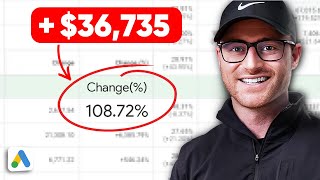
Austin LeClear shows how adding an aggressive Shopping campaign above a Performance Max campaign doubled sales in 22 days. The "feeder strategy" bids higher on Shopping to capture cold traffic, warming up users who then convert better in PMax. The client went from $50k monthly revenue to a 109% increase with 35% higher ROAS.
Chapters
All right, check this out. So this is an E commerce company now. Campaign names and things will probably be blurred. I can't, you know, share that with the public. With that said, this account, if we look at, so let me go through, I'll go through March and this is not a seasonal business by, there's no seasons, there's no holidays. It's like in the industrial space. So there's, there's none of that. Right. But if we go to monthly they've been averaging about you know, 50k a month. Okay. And they've been, they've been stuck, they've been plateaued and they're like hey, every time we try increasing because they're basically just running performance max campaigns. They're like every time we try increasing our spend on performance max roas just drops. Right. We don't see an increase in revenue and you know, we, we've tried kind of stair stepping cost up and we're still having issues scaling. There is the feeder strategy by a guy named John Moran. If you're a Google Ads nerd, you probably have heard of John Moran. If you are not a Google Ads nerd, pat yourself on the back for being normal. Congratulations. Congratulations to you. But there's a guy out there, he's a wizard with some of this stuff. I think he, I don't know, I think he might run his own agency now or, or whatnot. But anyways he had something, he came out with this feeder strategy. We have been testing that with some clients over the last year, hit or miss in regards to performance but in some cases it performs really, really well with this client in regards to consulting with them in their scenario. I told them like let's, let's just layer on a feeder strategy here and let's see what, what happens because I don't think additional spend is going to do much for you in your performance max campaigns other than Google increases your ad impressions on other ad inventories like display, video, etc. So to give you an idea they have and again the names are going to be blurred because I have to, because the names have some confidential information here. Here though this first campaign which will absolutely be blurred, this is a performance max campaign that is for a specific brand, one of their top selling brands and they run it somewhat uniquely, although not really because the bids are very similar to this PMAX campaign which is actually I can show you the name on this, it just says pmax. Others this is just their other brands. Again they predominantly live off of basically at least on Google Ad Sales off of their one particular brand, which is I have to have blurred out. So the others are supplementary in regards to revenue for them. They still do some decent revenue from it, but not massive. Then this shopping campaign is labeled feeder. It's called feeder now. It was not called that before. They, they, they were trying to run a shopping campaign for some of their other little smaller brands. Didn't quite do much for them in regards to like a return. So you can see like conversion value through January through March. 162, 000 at a 6x. This thing did only like a 3x at 2k in revenue. So not a whole lot of, lot of spend happened here. Okay. So. And again I'm showing you like conversion value by time and then let's do roas by time here. You know, they were averaging like 6 to 5x at 50k a month in revenue for this year. Well, in April we put on the feeder strategy. All right, and what is the feeder strategy? What we did is we took the shopping campaign, we put in all of their products. We literally layered. It's just an all products. So if I hop into our feeder, it's called catch all and I'm going to have all this blurred out. But it's basically all their products and it's split by brands. And again they have basically. Let's see what the split is here. Yeah, they essentially have like 10 brands. Okay. That their business operates from. Again, one of them does most of the revenue. This is just all their brands split for, you know, the organizational purposes of seeing the metric split between those brands. But it's. This is a catch. All right. This is all their products lumped into one standard shopping campaign. Then what did we do? We. Here's their main PMAX campaign. This thing set to a 500% troas. Their shopping campaign is set to a 400. Okay, so we want a little more aggressive on the shopping campaign. What's the idea of the feeder strategy? The idea of the feeder strategy is performance maximum. Especially let's say you've been running it for a while and you've plateaued it. Performance max just does like a really good job of wanting to rabbit hole on warm traffic. Warm traffic could be traffic that's been on your site. They've showed engagement, right? They visited two, two pages. They've hit the shopping cart, they've spent three minutes on it, whatever. They know the signals that hey, this visitor has the intent to purchase from us based off of all the other conversion data that we have on the conversion data of the account. Right. So pmax is like a really good job of trying to like wait for warm audience traffic to, to come back. When you use third party attribution tools, sometimes you can actually literally see this customer journey, especially using a tool like Wicked Reports, which maybe I'll do further trainings on or a video on in regards to Wicked Reports. But Performance Max does a good job of trying to wait for warmed up traffic and sometimes will not go after a lot of cold. Then when you've plateaued and you're like trying to grow it further, a lot of times it just wants to then spend the money on display or video. And it's anyone who's run Google Ads for a long period of time, especially Performance Max campaigns, they all know that's an issue. What the feeder strategy does with shopping is it sends just shopping traffic, more shopping traffic because you're being more aggressive to the website. And in most cases the Performance Max campaigns grow. Why? Because it's basically going and remarketing to that traffic that you fed it from that shopping campaign. Hopefully that makes sense. Let me show you the results of this. We started this on the 22nd and just to just prove that real quick, I will show you the uptick in clicks, right? So you can see like this thing didn't do a whole lot of clicks before and bam, look at the growth there. Right. So we, we really fed into it and we did that because we have a more aggressive bid strategy on our feeder shopping campaign than Performance Max. By definition today if you have the same product that lives in a Performance Max campaign and a standard shopping campaign, by definition Google will yield to the product with the highest ad rank. That's the campaign that will get that ad impression. Well, ad rank on a product ad literally is nothing more than bid, right? It's not a search campaign with keywords and ad copy and everything else. It literally it's the same product that lives in a PMAX campaign and shopping. So it's like whoever has the like more aggressive bid is, is going to get the impression by, by their definition now. Right? That didn't used to be the case until an update they made about like a year ago I think. So you can get away with this strategy now. So by us going more aggressive on our bids in the feeder campaign, we're now telling kind of signaling to Google to send a lot of that shopping traffic into the standard shopping now. Right? Okay, so I did that and again this is an all products thing. I didn't even do a product split yet that will come further in this client's journey. But I did that and on the 22nd I'm going to go 22nd, right. We started on the 21st. I'm going to go yesterday was May 13th. Okay. And then I'm just going to do a comparison. We had a 100% increase in revenue. 108%. All right. So a $37,000 increase in sales and costs did go up. We did spend more. So I spent $3,000 more. But that would be considered a 54% increase in cost. But this is low, low spending account. So to, to spend 3k more to generate $37,000 more, you know, I'll take that all day. Right. Conversions. So this wasn't just a bunch of high AOV stuff. Selling conversions increased by 106% as well. And best part, check this out. ROAS increased by 35%. So not only did we just increase sales by 100%, but we did that more profitably. We went from a 5.8 which is about their average. I just showed you that earlier in the video and we actually are now floating more towards an 8. And so this feeder strategy in this, in this specific situation absolutely has blown up results. Now will you get 100% increase that this is an outlier. Okay. However, I've been cautious about making a video in regards to feeder strategy stuff because you got to have a higher risk tolerance for it. A lot of times I want to have back end access to the back end sales of the client. I usually am operating some form of third party attribution if needed like using a wicked reports. But at the very least I'm looking at back in data. So I've been cautious about doing video trainings on the feeder strategy because it's not as simple as just throw a shopping campaign, give it more aggressive bid strategy, let it rip and you're going to increase results by a hundred percent. So I just felt like if I came out too soon talking about it and people lose money from it, you know, I don't want to be the guy that, that made that happen for him. So I am saying be cautious with this. Test this though, if you are in a case where your E Commerce, your performance max campaigns have plateaued and you've tried stair stepping budget up and adjusting bid strategies, doing everything to continue to scale and you just can't quite do it. Every time you do it, your row as dips and you're not seeing additional conversions or sales increases from anything you've tried, then try this feeder strategy. Try literally an all product shopping campaign. Give it a little more aggressive bid strategy. So if you have a 500% ROAS on your PMAX campaign, notch it down to 400%. You don't even have to go stupid aggressive, right? Just give it a shot, give it a few weeks, see what happens. It's we have been testing this again, some results haven't been as great, but we've been testing this with great performance for many of our accounts. Now it can go it goes further than this. This I the reason I did the video on this is this is a very simple one. Because this is a very simple account. It can get more complex and layered and different campaign structures with these feeder strategies on different product types, brands, yada yada. But this is the the simplest form of a case study that I have on it and that's why I wanted to do a video on it. So, so if you're stuck, try the feeder strategy. Let me know if it works for you. I'll see you on the next video.
More from Austin


Google Ads Negative Keywords: The RIGHT Way to Find and Add Negatives in 2026








