Local Businesses: TRIPLE Your Google Ads Leads Overnight With These Landing Page Conversion Hacks
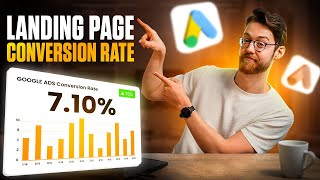
In this video, Luke from Grow My Ads explains how local B2C service businesses can dramatically increase their Google Ads profitability by boosting landing‑page conversion rates. He starts by quantifying the financial impact of low (2%) versus higher (5‑10%) conversion rates on a $10,000 service with a $20 CPC, showing how a modest lift can turn a $5,000 loss into a profit. He then outlines a proven landing‑page formula that has delivered 8‑15% conversion rates consistently over five‑plus years. The formula includes: using a dedicated, navigation‑free landing page; placing a large phone number at the top; writing benefit‑driven headlines and sub‑headlines; featuring a prominent above‑the‑fold CTA in a contrasting box that offers a downloadable brochure/price quote; adding before‑and‑after images or video; showcasing testimonials with photos and star ratings; and displaying trust icons or awards. Luke walks through three real‑world examples, highlighting how each element contributes to higher conversion rates, lower cost‑per‑lead, and more data for Google’s bidding algorithm, ultimately enabling businesses to scale profitably. The overall message is that adhering to this repeatable design framework can triple lead volume overnight without changing ad spend.
Chapters
Hey, this is Luke from Grow My Ads. And in today's video, I'm going to be talking about how you can triple the conversion rate on your landing page literally overnight by making a series of changes to your page that dramatically improve the number of people that actually enter the details, sign up, and become a lead. Now today I'm going to be focusing on B2C service businesses, and even more specifically, I'm going to be focusing on local service businesses because often we find out there that local service businesses, they have a restricted area that they're operating in. They, they have very, very high competition, usually very high cost per click, and they usually are sending traffic to a low converting landing page. And the end result is that they're usually just not very profitable and they struggle to really get traction with Google Ads. So what I'm going to be sharing with you in this video is some examples of local service business landing pages for Google Ads that have proven to convert at 10 to 20% consistently. And I'm talking not just over a year or two, I'm talking literally five years plus that have been able to really drive much more profitable results for companies using Google Ads and how you can start to take some of these lessons and apply them to your own landing page to get much better results going forward. So just to illustrate exactly how impactful the conversion rate of your landing page can be on your bottom line, here are just a couple of numbers by way of example. So in this case here, we have a service that we're selling for $10,000 and we have a 50% margin on this service, which means we're making 5,000 after we paid all of our costs, labor, you know, et cetera. So in this case here, we've, we're spending $20 a click. It's, it's normally going to be very competitive and expensive for local service businesses. And we have a 2% conversion rate, which is actually about average based on a lot of the accounts that we've seen, you know, many hundreds of accounts and including data that we found out there. So 2% conversion rate means we're only converting 1 in 50 clicks into a lead, meaning our cost per lead is $1,000. So that's really not that great. And what that results in is for every time that we're spending $10,000, we're actually losing $5,000 because of our costs and because our cost per lead is just too high. So what are the numbers that I would actually be attacking here to try to improve this? Well, cost per click yeah, it would be nice to get a lower cost per click, but you know, realistically, normally it is so competitive in local service business markets that if you start dropping your, your bidding or you start reducing the bidding algorithm and constricting things, your traffic will just fall off a cliff. So I'm actually going to leave the cost per click where it is right now. I think lead conversion rate, I think we definitely could be converting a higher proportion of our leads into customers. So let's actually just bump that to 15%. Still pretty conservative. I would actually be recommending, aiming for around 1 in 5, 20%. But in this case here, increasing our conversion rate on leads to 15% has almost gotten us profitable, but we're still, we are still actually losing money on this. So what happens when we start to improve the conversion rate on our page? Well, if we bump our conversion rate from 2% to just 3%, all of a sudden we're profitable. And really we should be aiming as a local service business for at least at a minimum 5% conversion rate on our landing page, and more likely 8 to 10%. 8 to 10%. Once we hit that level, we really have a huge advantage when it comes to competing in that local market. We have a big advantage because all of a sudden we're able to be much more profitable. In fact, if I bumped up inversion rate here up to even just 7%, all of a sudden we're significantly more profitable than we are at three. And if I even go higher to 10%, well, now we're really getting up there and most people won't be converting at that rate and will be struggling to actually spend as aggressively as you and still remain profitable. The second benefit we get with a higher conversion rate on a landing page is that we feed more data to our account and to our bidding algorithm. So the bidding algorithms in the account, they are operating on the data that it's receiving, whether it's phone call conversions, whether it's form submission conversions, or whether it's chat conversions. All of those are data points that the bidding algorithm is using in order to drive more conversions going forward. Think of it like a snowball. Data from this month is rolling into the next month, and it rolls into the next month and so on in order to try to increase the volume that you're getting. If you don't have enough data points each month, or you're really struggling to get at least 10 to 20 to 30 conversions per month, that means that the bidding algorithm doesn't have enough data to work with, and it's really going to struggle to maintain consistency and profitability. So the more data you can feed it, the more consistently it will operate normally, the more profitable you'll be. And on top of that, you're actually obviously driving a better net profit at the end of it because your cost per lead is so much lower with a better performing page. So let's get into the specific examples of changes you can make to your page right now that will dramatically improve the conversion rate that you're getting. We've seen pages go from converting it, you know, 2 to 3% all the way up to 8 to 10%. And I don't mean just converting for six months or a year until competitors catch up. We've had Pages running for 5, 6 years that have consistently converted at 10% plus in local service markets. So let's get into some examples and show you exactly what I mean so you can start applying these lessons to your own landing pages and start getting better results straight away. So I'm going to be sharing three examples and you're going to notice that these pages all look very similar. Well, that's because this formula has been refined, has been tested hundreds of times, and there's just no real reason to deviate too far from it because every time we do, we end up getting usually poorer results. So what are some of the elements that are making this particular page work? In fact, this is. This is quite an old page. This page has been performing for a long time. So what is actually causing this page to do so well and convert at least 8 to 10%? A couple of things. First of all, we don't recommend having a page that's part of your website. So sometimes people will transform their homepage into the main landing page that they're sending ad traffic to. Well, the problem with that is, is that you've got all of your different tabs around that page. So people can get lost in different pages on the site. And you normally don't have as much flexibility control when it comes to adjusting your homepage because of whatever the site's built in. So what we normally recommend is actually having a separate landing page, building it on potentially even a separate platform. So they have full control over the page and they're able to send ad traffic to a page that's specifically set up to convert that ad traffic into leads and into customers. So as you can see here, this page is not really part of the main website. We don't have navigation on this page, we don't have links to, you know, contact Pages or anything like that. It's purely focused around the key elements, which is really centered around the call to action, which I'll get to in a moment. So next thing we have is we have a big phone number at the top. If you're a local service business and you take phone calls, one of the key things that you should, you should have front and center on your page is going to be a phone phone number so that people can actually call you. A lot of the time people are hiding their number at the bottom of the page in the footer. Nobody's going to find it there. And we want it front and center to make it as easy as possible for people to ring us after they've clicked on our ads. Second thing is a headline. Now the headline is kind of the main thing that people read when they first hit the page. And often people just say what service they offer. Right? So in this case here, it would be, you know, gutter mesh. Well, there are a thousand other people out there selling guttermesh. What is better about buying from you versus all of the alternatives that are advertising right next to you in Google? In this case here, we've used the headline to outline not just obviously what the service is, but also the fact that ours is better, it's tougher, it's more affordable, it's guaranteed to last you. These are benefits that we want to put front and center because they are going to differentiate us and get this person to stick around on the page long enough to actually convert into a lead. Second thing we have is we have kind of a sub section, sort of, I guess a subheader here that just hammers home more of the benefits of choosing this particular company. So we're talking about things like easy way to keep pest leaves out of your gutters and downpipes. We're using mesh that lasts for decades and is up to 50% stronger, fast installation guarantee to protect your gutters 25 years. Right. So we're kind of really, really dense with the benefits in this section here again, because most of the time if people aren't convinced by the headline and then the sub headline to stay on the page, they're not going to check out the rest of your page. They're not going to go looking on other pages on your website. They're simply going to click back to the Google results and go to the next listing. So we need to grab their attention and immediately put push them towards actually taking action on the page. Which is why pretty much the next most emphasized element of this page is actually this white box here, which is our call to action. So sometimes we see people, they have their call to action hidden at the bottom of the page, hidden on a contact page, and it's not front and center. And so how are people going to find it? Well, if they're really determined, they might find it, but a lot of people aren't going to have the patience for that and they're just going to leave. In this case here we have our call to action right front and center, actually emphasized with the white box on a dark background because our eyes are going to be drawn to that and really drawn to this bright orange button which incidentally is the same color as the Amazon button. It's kind of very eye catching color. And this we found, converts absolutely the best of any sort of element on the page. It converts better than hiding the form at the bottom of the page, having it on a contact page, telling people to email you, focusing on, on a button front and center, really emphasizing and making sure that people can't, can't leave the page without seeing this call to action tends to convert the best. The next thing that's interesting about this call to action, which I'll point out, is that we're not just saying get a quote, we're not just saying contact us, we're not just saying get in touch, we're saying download our Mesh brochure and request pricing today. Now, the end result of this is, is still to get their name, phone, email, zip code, you know, even address. We're still getting the same contact information, we're still getting our lead. But from the customer's point of view or from the prospective customer's point of view, there's a much more compelling reason to fill out this form and to click on this button than if it just said contact us. Contact us is only of interest to people that are already completely convinced that they want to work with your company. For all the people that are kind of looking around, they're trying to evaluate different options, which is a significant proportion of the traffic that's going to be out there. Those people, they want to be able to take a bit of information and then go away and think about it, right? And so those are the people that are still looking to buy. They're just not convinced that we're the best option yet. Well, that's where we come in. We actually need to talk to them often to convince them that we are the best option and to basically sell them on our service. And we don't have an option to do that. We don't really have a chance to speak to them if we're not getting some kind of contact information. So the reason we're using a brochure and a pricing request, which is really kind of a quote request, is that we're giving them something tangible to take away in exchange for their contact details. And that is ultimately what really allows us to get a much better conversion rate on this call to action. Over and above having it front and center is we're giving them a really good reason to actually fill out this form and to give us their details. And that is just absolutely compounding the number of leads that we get from this page. Additional things that are really recommended to have and that we really emphasize on every landing page that we work on is if we can demonstrate how the product works. In this case, we actually have a before and after image and actually a video that shows all of the ways that the product can be used and how effective the product is at solving the problem, then this is also going to be a really good way to improve conversion rates. And purely from the explanatory point of view. So if we can demonstrate how our product is better, if we can show how our product works, and especially if we can do so in an eye catching video, there's almost no situation where that's going to reduce your conversion rate. And that's also going to give you an edge over competitors who don't show before and afters or who don't have a video that sort of demonstrates and shows how the product works. Even if their product does basically the same thing, we will be at an advantage. Next thing we have on this page here, that's really, really crucial to have, and there's a reason I put it at the top of the page, above the fold is a testimonial. So a lot of the time people have testimonials on their Google reviews or they have them on a specific page on their website. But again, people are unlikely to actually see those testimonials unless they're presented with them immediately as they land on the page. So in this case here, we've actually chosen to put a testimonial here with stars. Again, it's more eye catching and even with a photo and a name because the photo itself makes the testimonial more credible, it actually makes it more likely that people will trust and believe it. And we've added testimonials just below the fold as well. So in other words, if some other company came along with the Same product and the same offer, with no testimonials versus us, with some testimonials, we are at an advantage. And that's exactly what we're after when it comes to improving the conversion rate of this page page. So all of these things together, even without looking at the rest of the page immediately, this page is going to be converting way better than some competitor who just has a generic headline, has a picture and has a button that says contact us. And that's what most of your competitors are out there doing. So I'm going to go into kind of the rest of the page now, but just having these elements above the fold, the fold being the section at the bottom of the first screen that they arrive on, all of these things here are the most crucial parts of the landing page. If you get this stuff right, you will have a higher converting page than you have now and you'll be getting a dramatically better cost per lead and better results from your Google Ads. And just to show you that this is pretty consistent across a lot of the pages that we deal with, that we put together for clients, here's another example. Again, above the fold is the part that I'm emphasizing here because it is the most crucial element. It's the thing that people see and that maybe the only thing they see if they choose to leave straight away. Again, we have a clear call to action. We have a, we have a headline that's kind of speaking to the question or the solution that they're after. We have an eye catching photo and we have testimonials. And if you have them, we have credibility elements like awards or trust icons, you know, five star rated on Yelp, et cetera. So this is another example. Again, the design has changed, the layout has changed a little bit, but the elements are consistent because these are the elements that work. Again, I'll show you a third example. This is really following literally the same design as the first one. And again it's converting at 10 to 15% in this case. And this particular page took this particular company from getting a cost per conversion of more than $500 all the way down to less than $100. And that was without changing almost anything else in their account. Obviously there are other optimizations that have made since then, but the landing page was the real lift that we needed at the very beginning that helped us to make the Google Ads profitable and that ultimately allowed us to start to scale up the campaign and drive more conversions and more customers from Google.
More from Austin


Google Ads Negative Keywords: The RIGHT Way to Find and Add Negatives in 2026








