The Ultimate Google Ads Audit Checklist for eCommerce
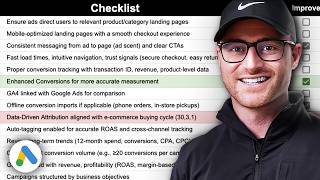
Austin LeClear audits an eCommerce Google Ads account and finds critical problems: search campaigns on Max-Clicks with broad match keywords waste money while Performance Max delivers most revenue. He walks through conversion tracking setup, campaign structure, budget allocation, and product feed organization, then grades the account an F and outlines fixes like switching to target-ROAS bidding and native purchase tags.
Chapters
In this video I'm going to give you the ultimate Google Ads audit checklist for E commerce. So you can have results like this, like this or like one of our students in our school group PPC Copilot who had results like this. My name is Austin LeClaire, I'm co founder of Grow My Ads, a Google Ads agency where we manage over $50 million in ad spend per year. We do up to a thousand audits per year. And this checklist is the same checklist that my team and myself will during an audit that we are doing for prospects or clients. And I'm going to go through it step by step in this video. Let's dive in. Okay, so here is the audit checklist. This is not something I will have for free, so don't ask for it. It is in our group called PPC Copilot. You can find out more about the group in the description below. There'll be a link to the group. Do we have this available to the members and students of the group and, and it's in the resource section there. But I'm going to go through this step by step. So just build it yourself. It shouldn't take any time at all. Now normally we start with landing page and on site experience but today we are not going to do that. We're going to start with tracking first and then we'll go to landing page at the end. So let's start with tracking. Okay, so number one, proper conversion tracking with transaction ID revenue and product level data. So I'm in a real account and I'm going to go over to goals conversion summary and then here I'm going to go find their purchase conversions. They are only it looks like using a GA4 import. This is something that we do not recommend and actually this will be down here to see if they've at least linked GA4 for comparison. But we do not recommend GA4 as your primary conversion action. We for E Commerce we recommend a native Google Ads purchase tag setup or if you're on Shopify utilizing the Shopify app integration, the Google YouTube app integration. Because the way GA4 tracks attribution and the way a native Google Ads tag tracks attribution, you will get more attribution to the Google Ads tag. Now we Recommend linking your ga4 account but set it to secondary and run it in secondary and run the Google Ads native tag or Shopify Google YouTube app integration as your primary tag, you will generally see up to 10, 15% more in attribution to that tag and that's what you want to optimize your Google Ads tag around. Now you could also go a step further and use server side tracking. Usually we don't quite see the benefit of server side tracking until you're spending a decent amount of money. So probably over 20k per month. Anything lower than that we have found the, the attribution increase that you get, very minimal. So this account right now in this audit I immediately would be beating them up on. Yes, they do have ga4 linked with Google Ads for comparison. So I'm going to say that is set up, but they do not have the Google Ads tag set up properly. So here I'm going to say this is actually could be better because they're missing that. And then here yes they have it set up, but again this is set up incorrectly. So I'm going to just say this could be better. And in the, in my audit to them what I would be presenting is hey, you have GA4 tracking set up, but this is not the main tag that you want to use. You want to use the Google Ads native tag. And this is why. Okay, so the other thing you want to check out, you go to Tools and then you go to Data Manager and here we're going to look at their Google tag right here. If you hit view stats this will be able to see is the E Commerce product ID showing and this is vital. So the product and this shows up right here. The product ID parameter allows your dynamic ads to show people the exact product they viewed on their website. So if I look at the last 30 days of this account there is zero hits for any product ID from their Google Ads tag. And obviously they're using the GA4 to even track. So any of their remarketing dynamic remarketing products ads is actually just showing random products. It's not even showing the product that they looked at. So you must have this parameter set up correctly in order for your dynamic product ads to actually run correctly. Now again they will still run. Google will just randomize the products that you're seeing. But for Google to know the exact product that you looked at and then for them to remarket that exact product to the person who looked at it, you need to have this E Comm Pro ID or Product ID however you want to say it, this parameter needs to be set up within the tag. So you checked it out at Data Manager and then again review it in your tag settings. And like here if I look at their GA4 it's not going to have that because this is like stream set so here we can see this. Yes, their GA4 is set up but there will be no dynamic product tag set up in regards to product ID hits here. So this is an issue. I would hit them up on this. So I'm going to say again it's could be better but I'm also going to have actually in this case let's just do missing because they're missing that completely. So in my opinion this client's tracking needs to be fixed and here's what I would recommend to them. Again it's they need to move to a Google Ads tag, one with correct transaction ID revenue and product level data parameters set up, let that live. So what they would do is they would set that up and then they would let it live in secondary for 30 days. Then after 30 days they're going to cross reference what GA4 shows versus that new tag and then they're going to move to the Google Ads tag, the new tag. After 30 days. If the data looks good and you truly are getting more more revenue or conversion attribution to that tag, you do not want to set a brand new tag up and then immediately transition over to it. You would whack out all of your campaigns that are using smart bidding. So always avoid that. All right, now we're going to check offline conversion imports if they run phone orders or in store pickups. I'm not entirely sure if this client does and I say client, they're actually not a client. So this is why a lot of this is going to be blurred out. But this. Yeah, let's take a look at here. So they do have calls from ads. So this is going to be from mobile click to call. So if you're on your mobile phone and that phone asset, the call asset extension shows this is what that would be tracking. I don't see it looks like they used to have phone call website import. So this more than likely was using third party call attribution like call rail or call tracking metrics. But there hasn't been a conversion recently, at least in the last 30 days. Let me pull back now. I'm just gonna go even further. So let's go for this year. Yeah, nothing there. So that's not being reported. And here again they're tracking mobile click to call. So somehow that is important to them. So this is something I would be consulting with them on. Like our calls important. If so, why aren't we tracking then what sort of orders are taking place for from those calls and pushing that back into Google Ads and in A lot of cases if you're small volume, again let's say you're spending like under 10, 15k a month and you're, and you're like I don't really do a ton of call sales and if we do it's like you know, 5% or 10% of our sales then fine, you can just run regular call tracking like they have set up. And it's not that big of a deal but I would still bring this up to them. This website they sell parts for lots of different brands of equipment. They're probably going to have one off B2C orders, someone who's a DIYer in their garage fixing a, you know, a mower or something. And then they probably also going to have B2B buyers here. A B2B buyer could end up purchasing large orders and a lot of times that will be over the phone. So this would be something I would be consulting with on the audit. Like are how what percent of sales are you guys getting on phone? Why aren't we tracking that if it is important to them and why aren't we pushing that back? All right, now we're going to look Data driven attribution. So is it aligned with their E commerce buying cycle? And a lot of times again you would set this up usually with your, your, your conversion tag. So here they do have click through conversion window set to 90 days and then engaged views automatically here at three days. They do have data driven set up. They're not, I mean you can only use data driven today or last click. Data driven makes the most sense for them. I normally do not recommend last click to anyone so always yield to data driven within the Google Ads in app conversion tracking. But I don't see an issue with any of this right now. I'm okay with even the click through window being quite long for them. They're not running a ton of video or anything like that. And yeah, this, this, this to me is fine. So they're, they're pulling a longer time frame. They could have a longer sales cycle. That, that's fine with me. So here I'm going to say excellent and then do they have auto tagging enabled for accurate roas and cross channel tracking? So here we're going to go to admin, we're going to go to account settings and then we are going to go to auto tagging. Yep, auto tagging set up. So they're all good there. Okay, now we're going to look at an account wide overview. So this is like high level performance and Trends. So, so first thing we're going to do is look at review long term trends. So this is like 12 months, right? So here I'm going to go back into the account. We just went through all their conversion tracking. I'm going to go up to this campaign status, make sure everything's clicked to all because people will pause things out and you want to make sure you're looking at everything accurately. So now I'm going to go back through an entire year and so let's just go to like I'm in September of 2025 right now towards the end of it. So I'm going to go pull back to September of 2024. I'm going to look at conversion value and conversion value by cost. And here what we see is they were doing about. Well actually I'm going to even go a little further. I'm going to go, let's go to January of 2024. I'm just going to pull real far. This appears to be a tracking issue. So look at this. March 2024 says they did 1.6 million and this averages about 80,000. So this right here, huge red flag. Obviously we would not want to include that in the data. So I'm going to actually go into April and I guarantee they had a tracking issue. I would be diving into that further within the audit. But all right, they've been pretty much doing a hundred thousand to 75,000 at about a 6 to 5x. Then January, January 2025, this year 80 at 5. They dipped in February down to a 3.73. Then they've kind of gone back up back to the five and now they're, they're slowly starting to decrease and wow, this month again, September's not completely over but September's looking pretty bad. August looked really bad. 60,000 out of 4 and, and they did 89,000 out of 5.3. All right, so I'm going to go to last month and then I'm going to review previous year. Okay. And then now the one thing we're going to want to make sure, remember they had a 90 day conversion window time period. Right. So we don't want to use regular conversion value or even conversion columns. We need to use by time metrics. And so if we look by buy time and I have a video on conversion value or conversion by time. So if you don't understand or this is new to you, I have a video on that. They'll be in the description below, go check that out. But they did actually only 9% less in revenue last month when we look at the buy time metric and Roas was about the same and cost was about the same. So 10%. So, so we can say basically you spent 10% less, you got 10% less in revenue, so why did you spend 10% less when you probably could have eked out around the same results? Really? This looks like a plateaued account to me. So if I look at that, that just means this thing is like totally plateaued. So I'm actually going to go, I normally don't go further than a year and again they had this giant spike but I want to see what they were doing in like 2023. Was there any major differences there? So they did about 80,000 out of 6x in August of 23, February. But yeah, aside from this giant spike, this is, this is an account that's just totally plateaued for the last several years. So this is, this is something I would beat them up on. Like what is the point of. Why are you just running plateaued? Like there's no, I'm not seeing growth here. So is it because you're stuck and you, you've totally maximized Google Ads? I highly doubt that for their market and their spend. So I would be, you know, they spent 16k last month or in the last 30 days, more than likely. The market they're serving, which is lots of different brands of parts, is not 15, 16k of spend big. Right. It's way, way, way larger than that. So is it a goal mismatch? Is there something going on within the account itself? Why are they not growing? Why have they been plateaued for years? Usually that's a bad sign because if you have a advertising account that's just printing money, why wouldn't you continue to pour gasoline all over it? And so this is something that I would be hitting them on as well in the audit. It's just like this plateau I'm seeing. But anyways, I'm, I've, I've, I've had enough of looking at this review. We know basically they're plateaued. So review long term trends. I'm going to say this absolutely could be better. I'm not saying wow, they're excellent. I'm saying, hey, this is an issue. You're plateaued. Now we want to check recent conversion volume per campaign for the months as well. Are they running any campaigns that don't make sense? Going to go, I've got the last 30 days, let me go all enabled now. Unfortunately, a lot of the naming. Well, actually some of these will be okay. Yeah, some of this will be blurred out. Sorry. But we've got a performance max campaign here that did 7k and spin in the last 30 days. And again I've got to use by time metric because I'm looking at recent data. Did 30k in revenue for him at a 4.5. They have a brand campaign, so this would just be their own brand. They spent about 800 on it for 18,000. So they got a 2,000% ROAS there. They have another performance max campaign, 1,000 and spend. This did a 6x 6.8 at 7,000. They have a search campaign with display on as well. I never recommend that here they've got 6, 500 in cost, 5,000 in revenue. This is really bad. At a 0.79 they have a competitor campaign, 45 bucks for 200. This is basically non existent with one conversion. By the way, that search campaign had only 8 conversions at a 0.05 conversion rate. This is, this is like horrendous right here. So this will beat up here in a bit later. Then we have another search campaign. Again this will be blurred. It's brand specific to a product line. I just, I can't show you the information. I have to be very confidential with this. But again this is done. This is really, really bad.05 conversions in the last 30 days and they've done about 100 out of 0.25 rows. So pretty, pretty bad. And then a shopping campaign that is dead. There's zero spend here. So lots of issues going on here, lots of red flags. But all this is doing is checking real quick campaign by campaign. Does any of this make sense? Are there issues? And immediately just a quick over overview of the last 30 days. I have found multiple issues from a high level from multiple campaigns. So on this it's not technically missing. They could do better. So I'm going to beat them up. I'm just going to hit could, could be better. I'm not going to say missing though because they obviously have campaigns. There are some conversions but those, those campaigns look really bad. All right, now we're moving to strategic alignment and business goals. So here our goals aligned with revenue profitability, whether it's roas in cac, market margin based, whatever. Okay, so in this case clearly not right because I just showed you campaigns that are getting like a less than 1% return on ad spend and if we look at the bidding of many of their campaigns. So I'm just going to hop into this PMAX campaign, they're looking for a 600% ROAS, 589% there. If I go to their other performance max campaign they've got a 565. If I go to their search campaign which again has display in it. So we don't want that. They literally have this set to a maximize clicks. So this doesn't make sense to me. Then I'm going to go to one of their other search campaigns again, maximize clicks. This, this makes absolutely no sense. So their problem was, hey, we're not scaling, you know, sales basically we're getting the same results. And again if I look at. Let's just again go back to January 2024, I know this was already something we did but if we look at this we know they're doing like basically 5 to 600% ROAS on average around 70 to 100,000 in revenue. And you know, there's ups and downs. The last few months have been kind of low for them. Again this is just the conversion value metric there. If I go, if I use the by time so here I'm just going to do conversion value by time so this will be a little better for us. I'm going to move this up, hit apply and then we'll go here. So conversion value by time again that they did about 72000 in August but they're, they're definitely like plateaued. Right. So why if they are, if they're stuck and they're asking PMAX for a 600 ROAS but search, they're asking for max clicks, none of that makes any sense. Right. And if we look at search it has since 2024 generated under a 100% return on on ad spend for them. And in this case I would be asking are you tracking in CAC or anything like that on the back end? I know for a fact this company is not, they are using in app metrics right now. So it's not like they're running a sophisticated strategy with this max clicks campaign. So I don't have to worry about that. Where it's like hey, actually where you have third party tracking, we're running a feeder strategy and we're tracking new customers on the back end in CAC and this strategy has worked. That's not the case here. So here I'm looking at lots of strategic issues. High roas only on pmax even though that's generating almost all their sales Max clicks on on search with just a cap. Even though they've had 300,000 conversions in the last year. Sorry, not conversions. 300,000 clicks in the last year and they've yet to move to any sort of smart bidding here and trying to navigate this campaign towards performance goals. So they're just blasting traffic and we'll individually dive in there. And so here strategically, this thing is an absolute mess. And so I'm not going to say any of this is aligned to any of their goals. So I'm just going to put missing. I don't want to give them any points right now because I think this is really bad now. Campaign structured by business objectives, brand versus non brand categories and bestsellers. Well, they do have a PMAX campaign. They have technically a top products PMAX campaign. We'll dive into that a little bit further. I'm not entirely sure exactly why they're running two right now. Usually if you have a top seller. So look at this. This pmax campaign did 175 conversions the last 30 days. This did 16. If this truly were a top seller campaign, this would have more than 16 conversions. So that doesn't make sense to me. And then their search campaigns. Let's just dive in here real quick. Oh, look at this one. Ad group. And it's just. And I have to blur out a lot of this. They're running 136 broad match keywords in here. So this is not any good. And if we go into. Let me go up. That was the one I'm going to go into. Yeah, okay, hold on. They've got. This is their other campaign and this is 936 broad match keywords in here. So again, there's no strategy here. This is a pretty extreme case of a bad account, which is crazy, right, because they're spending 15, 16,000 bucks and generating, you know, 70k in revenue from it. So it shows you how strong their product performance is doing right now. Product ads and pmax. But this is absolutely bleeding money. So no, I don't think like, yes, they technically have a brand campaign. And let me dive in here again. This is, this is going to be broken out to or blurred out. So they do have brand, but the running brand is broad. So let me just go to search terms and. Sorry, you're going to have their brand campaign blurred out? Yeah. Okay. For the most part they are only getting brand clicks in here. So this is doing a pretty good job even though it's running broad. So I will say this could. I'm not going to say it's missing because they've tried some structure here. But I am going to say could be better now appropriate bid Strategies troas reflecting profitability goals for E commerce. No. So again, last 30 days we have PMAX campaigns with high troas goals and we have search campaigns that are spending a tremendous amount of money. This search campaign spent almost as much as this PMAX campaign. 7k for the PMAX campaign. Almost 7k for this search campaign. And this search campaign is on Max clicks. So absolutely not. I am going to say this is missing. I do not think there's any actual strategic sound bid strategy set up here. This looks very random and it doesn't look like they have a true sound strategy going on. Then sufficient budget to support target acquisition volumes at scale. I would say that like they're spending 16k a month right now. And so absolutely, I do believe if, if they cleaned up. Again, these search campaigns are horrendous. They're just running broad match right now on Max clicks. That's like an absolute sure way to just burn your credit card and give Google a bunch of money and you result in basically a couple conversions for under a 100% return on ad spend. So do they have the budget? Yes, they do. I'm going to say they have the budget, but they are not operating these from a performance based, strategically sound setup like I teach here on this YouTube channel or any of my course trainings. So I'm going to say excellent. Like hey, you guys have the budget. It's just you don't have the strategy behind the budget to maximize that budget. Okay, now we're going to look at account structure and organization. So do they have a logical segmentation by product category or business segment? So search shopping, performance Max separated out. Yes, they do have performance Max separated. They have search separated and so in, but I don't think it's logical. It does look like again, they have what they claim to be a top seller PMAX campaign, yet this gets like 16 conversions in the last 30 days and their main PMAX campaign has 175. That doesn't seem right to me. They've got two search campaigns that are all broad match keywords. So there's, there's a bunch of overlap between those two that doesn't make sense to me. So they have some segmentation in regards to like yes, they're using search, yes, they're using Performance Max and those things. But I don't think it's logical. So I'm going to say that this could be better. Then do they have consistent naming for campaigns and ad groups? So we do have, hey, this is performance Max we have and I can't give you all the names because it'll give too much away. But basically it just says sales search. Then they have PMAX top. Then they have a brand, so their brand campaign is named with a proper naming convention. Then they have another one that just says a brand, like a product brand that they sell. So when I go in here, they're all broad match, right? Even though it's the specific brand that they're trying to target that they resell. But if I go into this campaign, they also have that brand in there and mixed with other brands. So it doesn't make any sense. So this doesn't make sense. So I'm going to say this could be done better. Are they using negative keywords, placement exclusions? If they were running any sort of video or anything like that? I don't see video. So I don't really care too much about that right now. I'm going to look at negative keywords. Absolutely no negative keywords in that campaign. Let's look at PMAX here. No negative keywords added there. And I'm going to go into this other really bad search campaign, no negative keywords here. So I would beat them up on that. They obviously are going to have negatives given the fact that they're running max clicks on broad match keywords. So this is just missing completely. Then avoid mixing irrelevant networks display in search campaigns. Well, guess what? They are mixing display with search campaigns. So you never want to do this. So any of my videos on building search campaigns out, which I'll have any of those videos in the description below if you want to learn more, if you're new to the channel. We do not want to mix display with search. They behave completely differently. They should be absolutely segmented. This was a money grab by Google including the display network in a search campaign. And so here we want to basically tell them, hey, this is bad. So you have base, you have mixed them. I'm going to give you a zero score on that. And watch. Check this out. If we go to segment and then we go by network, if we look at this campaign and I'm actually going to go through the year. So here they have done, thankfully display networks not spending a whole bunch on that campaign. In fact, they're, they're pretty lucky. They're this, look at this, this search campaign here, the display network has a thousand clicks and zero conversions now. Thankfully it's only spent about $74. So they're, they're lucky in regards that Google's actually not spending a terrible amount on the display network even though they have it. But this is a waste right here. And it's also very clear that search partners is not doing well. It's not too bad here. So here we've got Google search with a 200 CPA. This is a $270 CPA but way, way less of a conversion rate. And then this search campaign, it's about equal. So I won't beat them up too much on the search partners. But you also usually want to check the networks. If they're mixing networks, how are those networks misbehaving? Okay, are they appropriately using custom labels and product segmentation and shopping? Well, let's take a look. Their shopping is pretty much done inside of pmax. So here they have one PMAX campaign. I'm gonna go in and they're running a full asset group here I'm gonna go into view listing groups. This is gonna show me their actual product split. Wow. Okay, they're just running all products and they're running 5,000 products all mixed in here. And so again this is a company that sells different products from different brands. They're all parts. And so they're all like agriculture equipment parts but different brands, different, different part types, all of that. Right. So it, it would be like, hey, we sell mower parts. We also sell tractor parts, snowblower parts, snowmobile parts, et cetera. They've got a wide range of all these different parts, but different brands, different, different product types within those parts. It's not like they just sell 5,000 of the same brand of mower parts or anything like that. This is an issue. This is not the way you would structure this. Again, if you want to know how I would structure that, go through my trainings of E commerce build outs for E commerce accounts. I'll have some of those videos in the description below. So this is set up incorrectly also. Now I'm going to go to their top sellers. They call this top performers. All of this will be blurred out because it gives too much information. But I'm going to go to view listing group. So here they are throwing in individual top skus. But look at this. This is crazy. None of these SKUs even exist anymore. This product group does not have any products. So here this is just an absolute complete mess. What's crazy is this, if I go last 30 days then and we go by so I'm going to go buy products, this PMAX campaign then isn't even spending on, it's not even spending on anything with products. There's no products Running in this. This asset group. So that means that this entire Performance max campaign, the $1,000 in spend, was on everything but shopping. And yet they're calling it a top sellers and they have a high troas goal on there. So this is totally broken. The only place shopping ads are showing then is this top Performance Max campaign up here. But again, they're just running all products, so that doesn't make any sense. So no, I do not think they have correct segmentation here. I'm going to give them a zero on that now. Set up Performance Max campaigns with proper asset groups and goals. They do have an asset group in here, but because they're only going with one asset group with all products, which is not something I would recommend then. And here's Google crashing. Okay, Google crash like it normally does. You would think their platform would perform better as you're using. Happens to me every day, so it drives me insane. But they have one asset group with all products. It's not what I would recommend and especially at 15k a month and spend. So I'm gonna hit them with a zero there too. And then segment and leveraged audience lists. No, I'm gonna say they're not running this either. They have no audience signals inside of Performance Max. I generally don't really care if you have audience signals in Performance Max. I don't think they do a whole lot. I've talked about that in my Performance Max course trainings. But they don't really use audiences for anything else. So here I'm just gonna say missing, because I, I don't see any sort of remarketing going on or anything like that. Even though technically PMAX would do remarketing. But remember, they're missing the. The product ID to the. The tag parameter. So they're not even showing the correct products to the right people that looked at those products while they're being remarketed. So that's all broken. So I'm gonna give them a zero on that. I'm gonna be really cruel on this audit. All right, now, budget and bidding. So are they alloc. Are they allocating budgets based on margin, stock levels and priorities? Listen, I'm going to say no because they spent $7,000 in the last 30 days on a search campaign that generated them a whopping 5. And they spent $7,000 on a performance max campaign that generated them a whopping $32,000. Right. So why are we spending the same amount of money on a search campaign that produces a 0.79% ROAS versus this PMAX campaign that is generating a 4.5. Why, why are you allowing the search campaign to have so much budget to it when it's like absolutely burning money? And we again, if we go through the entire year, it's been doing that all year. So for the year the pmax campaign did 67,000 and spend 300,000 in revenue at a 5x they spent on that search campaign 54,000 for 54,000 in revenue. So basically a 1 and then their other search campaigns same thing, 4k for basically no revenue here their brand campaign we would take out. So here's what I'm going to do. I'm going to do campaign type. I'm going to do search. I'm going to do campaign name and I'm going to do does not contain brand. They labeled it branded. So it does not contain branded. This is the results of search forum this year 60k and spend for 57, 000 in revenue. Then if I look at performance max right now because that's where their product ads are running, they're doing 76,000. Well, 77,000 has been at 400,000 and revenue. So why are we not maximizing more on shopping ads which seem to be doing most of the revenue for them? And why are you spending so much money on search then? You almost spent the same amount on as on search as you did Performance Max. Yet Performance max has an insane pretty much all of your performance and revenue. So this does not align. This doesn't make sense. And I'm going to just give them a zero here too. Are they utilizing automated bidding? So are they utilizing target roas? They are. And this would also be to align with profit goals. They are on their performance max campaign kind of. Again I. There's, there's some issues there, but they're running max clicks and search so this doesn't make sense. I'm. I should be cruel and give them a zero here too. I'm going to give them a one, right? This could just be better is all I'm going to say. There's okay. And then are they reducing spend on under performers and shifting to top performers? No, they're running a pmax campaign with all products. They're running search with broad and max clicks. So none of that's taking place. This is something that I would be talking to them about. Like hey, let's go in and see which products are actually performing for you. Why are we not maximizing more on those products which search terms are doing well for you even though you're blasting the max clicks here and which aren't and how do we go maximize that? The game of Google Ads is to maximize what's working for you and generating profitable sales and decrease what's not working for you. That's the ultimate game you're playing. They're not really playing that game right now here. This seems to be like they're just blasting 15,000 randomly. Okay, product performance. So here are they categorizing products into performance tiers like champions or poor performers, anything like that? Well, we know they're not doing that. Right. So if I go in here and look at the asset group, they're just running all products. And then if I go in here and look at. Let's just go by product type. Right. So I'm going to go conversions and I've got the year pulled up so all of 2025 here. So here we have. And again this is how you're going to have to look at this. So if I go to the campaign of this performance max campaign, which again is where most of the revenue is being generated, they've done a 5x on ROAS for the year. So that's my baseline on how I'm going to judge products now. Now I'm going to go into product types because again they sell a bunch attachments, hardware, engine parts, etc. So I'm going to say conversion value by cost greater than a 5. Now we've got 75 here that are above 5. But a lot of these are onesie twosies. Right. So I don't really care about that. But attachments has 500 conversions for the year at almost a 6x. Attachment hitch has almost 500 conversions at a 6x. More attachments 450 at a 6x. Hardware 6x engine parts 7x and good volume here. Right. So I would be talking to them about right now because you have all products lumped into one performance max campaign and you're just blasting all of them. You are actually underserving these top performers over time. You should be maximizing and being more aggressive on these top performers because these. Google is banking on hitting high roas goals on these for basically to continue to serve underperformers. So look at this. Now I'm going to go conversion value under 500%. All right, well we have accessories which has done under 500 this year. Some electrical thing 3.9 tires and wheels 3.5. And these are thousands and thousands of dollars. So here we've got. And a lot of these have zero conversion. So we can ignore those. But there's 140 product types that are actually underperforming on the 5x ROAS kind of target that they have set for this campaign. So when we review this data, what we want to look at is what categories or brands are doing well and how do we maximize those and what categories or brands or product types aren't doing well and how do we get those to work or how do we minimize then our ad spend or exposure on those? Right. Well that comes down to then campaign structure and over time these losers, you're going to want to start a segment them away from your top sellers because when you mix them together again you're actually then diluting the maximization that you can get from your top sellers. Because Google only cares about hitting your ROAS goal as an aggregate in a 30 day period. So if it can sell attachment product types and get really high conversion rates or based off their averages and high return on ad spend, then it will also still spend some money on the lower performers. Knowing I can hit a 5 or 6 x ROAS goal that this campaign has been set to by getting conversions from these high converting product types but allowing then Google to also still test on the low performers that will always take place. So what we like to do over time is hey, we need to remove some of these low performers out of the mix. That way the machine learning, the smart bidding doesn't even have to think about it and it can maximize then and we can be more aggressive on these top product types. Now I would not tell this company they've got way too many product types here in the mix. I would not tell them to remove all the bad stuff at once. I would stairstep approach it small segments of bad products. I would start moving out of here into a separate campaign. More than likely I would put it in a standard shopping campaign. It's proven not to really work very well. Let's isolate it, let's control it in a standard shopping campaign. See can we get these low performers to work from us. But they're doing none of that. So I am going to beat them up here and say zero. Then are they allocating more budget to champions and are they testing underinvested with control budgets? No. And I just talked about that. Are they isolating or pausing poor performers after sufficient data? No, I just talked about that. Are they using custom labels to manage these tiers and set data minimum data thresholds for evaluation? No. Are they reevaluating tiers regularly and considered seasonality in tier assignments? No. And are they redistributing budgets for poor performers to champions efficiently? No. So they're getting zeros across the board on that because they've just thrown in everything as all products into one PMAX campaign. And I just showed you vast product differences by product type. So none of that's being reviewed. And this is why we're looking at essentially a plateaued Google Ads account for the last several years because this is how they're operating this. Okay now campaign channel specific consideration. So does performance max campaigns ensure proper asset group setup, relevant goals and audience signals? They do have an asset group set up. I'm going to give them one point here because they do have asset groups set up but again they're throwing all products in there and that doesn't make any sense then shopping campaigns. Do they maintain a well structured product feed? So let's go into the product. I don't have merchant center access but let's go into their product feed. They actually are using some custom labels here which is good. So that, that tells me something. Then let's take a look titles which again sorry this is going to be blurred out. Their title's pretty good. It actually includes a part number in it. It includes the brand, it includes the product. So they actually have a really good feed. They've got manufacturer part number. They're not using the G10 here so that would be something I, I would bring up. But they are using custom labels and so it's. They have to had some feed work done at some point so I'm not going to beat them up too bad on the feed. I actually think it's pretty good. I would more than likely though talk to them about hey you have the missing G10s. But their feed is sound like they and this is probably why their product performance isn't terrible compared to what they're doing on search right now. But I would give them kudos to this. I think it looks like they have had a feed optimization done. If you want to learn more about optimizing a product feed, I have an entire like masterclass video on that so that will be in the description below. If you want to learn more about optimizing shopping feeds then search campaigns. Do they have relevant keywords, tightly themed ad groups, negative keywords and appropriate match types? This is going to be a zero I've already banged up on this forum but let's hop into one search campaign here. So again they're running essentially max clicks with like a bazillion broad keywords for just about everything they sell. None of this makes any sense. So I'm going to go into the search terms real quick and I'm just going to go by cost and again all this will be blurred. Sorry. But I'm going to try to just find some stuff here real quick that they probably don't sell. Okay, so here's some stuff like the remainder of this will be blurred but used. They don't sell used parts of anything. So you know there's some irrelevant stuff. There's a lot of. This actually isn't terrible though. I'm not. Here's. This will be blurred out. But this is a brand comp. Sorry. This is a competitor name that they've spent some money on. Probably not the best for this specific campaign. Right now here's used again, which they don't sell used. So none of that makes sense. Used again. So this is showing up quite a bit for them. Yeah, another competitor name in here. Yeah. So listen, there's a lot of like irrelevant stuff bleeding into here but let's look at, you know, let's look at like what are they spending money on? Because like some of this is actually converting. So this right here, again the search term will be blurred but this is a brand specific term with the word parts. So this is someone looking up like let's say you were selling car parts. It'd be like Mercedes parts. Right. So this they actually are getting based off of like this campaign average. Right now they're actually generating some sales from a higher than average roas or close to their average. This to me shows like, oh, you could probably optimize around this and, and start getting some efficiency from it from a properly structured campaign. Now I'm not going to go into the details of how would they properly structure a search campaign. I have an entire training video on that. So that video will be in the description below. But they do not have a proper structured search campaign. They're running broad match max clicks. It's scattered everywhere. So this is completely set up incorrectly. They don't even have themed ad groups. Again, they're just blasting everything in one ad group with broad. So we're going to say no, this is all wasted. A lot of. A lot of this will be wasted. Sorry, I already put no there. So I'm going to hit them with no that on. On that. All right. Wasted spend and low relevance. So are they excluding irrelevant display placements and mobile apps? Listen, I'm going to actually leave this blank because they're not running any display specific campaigns and within performance Max. I honestly don't care too much about it. And so where you could find that though? If you go to this performance max campaign, go to content, you can see if there's any sort of exclusions here. And a lot of times you can actually add account level exclusion. So we could go to, to get to like an shared exclusion list. You go to tools, you go to shared library, you go to exclusion list here you can see they actually have had negative keywords in here at one point. But then we have. And somehow they're not applied to any of their active campaigns. Then we have this placement exclusion list. It looks like they actually did have kids YouTube channels excluded at some point. They must have ran a display campaign at some point. Camp like display specific campaign or maybe even video at some point. I'm not really sure. I would have to go back further in the data, but it's not being utilized. I'm gonna say zero here because it's like again, I don't care too much. They have bigger issues right now. This is not that relevant. So I'm just going to leave this blank. But if you're running or doing an audit on an account that runs display campaigns or YouTube, you want to make sure they're not showing up on mobile apps and you want to make sure the display placements aren't terrible. But usually mobile apps is the big one. And then like kid YouTube channel stuff you usually want to get out if you can by excluding that. Okay. And then void overly broad targeting layer, audience demographics and placements. We don't need to worry about any of this. They are doing too broad of targeting on the keyword side of things within those search campaigns that I show. So I'm gonna, I'm gonna give them a zero there then. Are they regularly reviewing placement reports? Remove low quality sources? You know, I'll be, I'm gonna come back and get. I'm just gonna leave this blank for them. None of this really matters too much to them. So I'm gonna give them a little grace on this. But if you're doing an audit with an account that has a lot of display or video, you'd want to be checking this stuff. But this is not something I'm going to beat them up to too hard today on. Okay. Ad and asset quality. Do they have high quality product images, updated pricing, accurate product data for shopping? I actually showed you that earlier. I think their, their feeds quite well. So I'm going to give them a good score there. Excellent there. Are they testing multiple ad Variations, responsive search, ad performance, assets, etc. No, so again, they've got like one campaign with one ad group and then if I go into the ads, they're running one ad. Now if I go in here, it looks like they've done an okay job at creating some headlines and descriptions and things like that, but I honestly don't see a ton of ad testing whatsoever. And if you look at this asset source, you'll see this automatically created. That means they have automatically created assets on. So if I go into campaign settings and I scroll down to this automatically created asset piece here, this is turned on. I would just recommend them they be cautious there. Again, I. I've got to blur out most of the ad creative. I apologize, but some of these assets just really are very generic and so I don't think they need this. But they do need ad testing. They're not doing any ad testing. There's no ad variations going on. There's nothing. It just looks like they set up one ad, they let it rip. Same with their performance max campaign. They set up one asset group. I don't see any ad creative changes taking place there. So I'm not going to say missing, but I am going to say this could be done better. And then are they using relevant extensions, promotion prices, etc. To enhance visibility and highlight offers? So here we're back in that search campaign. I'm going to go to assets and then usually I just go one by one. Are they using images? Yes, they're using images. Or are they using site links? Yes, they're using site links. They do have automatically created site links on though too. So this is something I usually recommend turning off. How you would do that? You go to these three dots while you're under the assets and then you go hit this more. You hit account level automated assets, then it's going to take you here. Now this is not it. You've got to go to this more button one more time. You're going to go to advanced settings. You see how all of these are turned on. I would pretty much go turn all of those off. But seller ratings and I sometimes leave the longer ad headlines on and pretty much everything else though I turn off logo, business name. I'll keep on. Usually that's fine. But a lot of this stuff I turn off. I probably have a video on this. If I do, it'll be in the description below. If you want to like review ad assets further. But make sure you check these auto create assets and turn them off if they are being auto created so I would hit them up on that. Otherwise they are using ads here. They have a broken one so it's not eligible. And then let's go through structured snippet. They're using call out. They're using. We know they're using calls because they're tracking these calls. Lead forms which I would not recommend form. Yep, that's fine. They have nothing there message. I don't care about either price. Are we using anything pricing? They did but it's broken so I'd beat them up on that. And then are they doing any promos they have in the past but really nothing since 2022. So I would say well why haven't you ran any promos and have you ran promos since 2022? Probably. If they haven't then I would say well listen, you guys are doing a really bad job of adding that. So here it's not totally broken, it's not missing. So I'm going to give them one point there. It doesn't matter. Still upgraded of an F at this point. Okay, now we've got performance reviewing and ongoing optimization. Are they regularly reviewing performance at product category and audience segment levels? We know they're not doing that based off just the results of the account. Are they properly pausing or adjusting poor performing skews keywords, replacements? We know they're not doing that based off of everything that I'm seeing. Again they've got in their search campaigns just a ton of broad match keywords thrown here over a hundred. This is not best practice setup. Some of these are performing better than others so none of this makes any sense. Same with the product levels. There's no within the product ads, there's no clear strategy around maximizing top sellers versus like figuring out what the underperformers are and isolating those and having different strategies and structures around those. So they're missing all of that. They're not ab testing anything that I can see. So no, there's. They're not using Performance Max insights to refine feed and assets because we did not see any asset creation other than one asset group inside that Performance Max campaign. Okay, are they doing anything on product groupings, feed settings and campaign structures based on performance data? I don't think they are. Again, I still think they have a good product feed from what I saw, but otherwise nothing being done there. Again on the checklist, the first part is landing page and on site experience, but I left that for last here. I'm not going to go through this for this company because again I Have to keep it confidential. But here what you're going to be doing is ensuring that your ads are directing users to the right pages, right? So if you're talking about a specific product, are you sending it to that product page? Go through click on search ads, click the product ads. Make sure everything is actually sound in where they're directing clicks or users on their ads. You'll be amazed in many accounts where it's like wait a second, you're, you're advertising a specific product and then you send them to the homepage. How does that make any sense? So you want to go check that out Then do they have mobile optimized landing pages with smooth checkout process? Go through the checkout process, show them or your own self. If this is your own account, do you have a sound checkout experience? Is there friction points there that need to be fixed? Is there consistent messaging from add to page so clear call to actions like add to carts, buy nows and do you have fast load times and intuitive navigation, trust signals, secure checkout, easy returns, etc. So again I'm not going to go through that on this, but this is something that we would do in a normal audit. In fact we have an entire E Commerce page CRO audit that we then do too with a chat GPT prompt that we go through right here with them to make sure that their pages, their especially their product pages are built to convert. And so that's an entirely separate audit again that will be in this checklist if you're a part of our PPC copilot group. But I'm not going to go through that with this company because I have to keep it confidential. I will say they do send. This could all be better. Basically their ba. Their website's not the worst and this is like a decent sized company too. They just have a really like lazy bad Google Ads account account. But I'm just going to put could be better on all of that. Okay, now so what score did they get? They get a. A giant fat F because they're doing a lot of horrendous things. Now this is an extreme example of a very bad account. Most accounts aren't really this bad, right? So a lot of times you kind of got to get into the weeds of good products versus bad products, good keywords versus bad keywords and are they doing anything with the strategy of that? The bid strategies make sense and are they budget allocating correctly? This one's very simple because it's like they're doing a lot wrong. Right. So If I were consulting with this company and in sort of presenting this audit to them, a, I would start with the conversion tracking issues that they have. Right, that's where you begin. Because if the foundation is broke with conversion tracking, nothing else matters. Then I would just start beating them up. You're spending a ton of money on search, on a search campaign that a toddler could probably go in and set up and it's a bunch of broad keywords on max clicks. That does not make sense. What are you even trying to do there? Are you just trying to get a bunch of cheap irrelevant traffic or are you trying to get sales to grow? Because they're not growing based off of the data that we looked at over the past few years. So your search strategy is broken. However, there's some good stuff here. Your product ads are doing quite well in the performance max campaign, but you're not doing anything with that. You have all products lumped into one asset group into one performance max campaign and that is it. You haven't done anything else there. There's massive, massive opportunity to expand on the top selling product types and or brands. In this audit I showed types, but we could start restructuring around maximizing those top product types and decreasing or getting the low performing product types to work. But that takes work, that takes restructuring. That takes a strategic game plan in the account versus what they have. Currently you have another performance Max campaign with a bunch of SKUs that no longer exist. So you're essentially running a display search thing going on. I don't know. And that's why it's not doing a whole lot for you. Right. So that doesn't make any sense. And there's absolutely no search strategy going on and they are wasting and bleeding an insane amount of money on search right now. That's it. I don't really have to go too much further with them. I would even have to go through all of these points. Yes, they have automated asset creation set up and automated asset extension set up and a lot of those are really bad. Yes, they're not doing any ad testing. Yes, they have broken ad extensions or ad assets. Do they have a really good feed? I would actually give them kudos on that. Yes, they have a good feed, but this account will never go anywhere beyond where it's at right now. There's a lot of wasted spend and there's a ton of opportunity to improve it based off of everything I just went through. Honestly, this company is in such a bad spot with this ad account. They could go watch a few of my YouTube videos on structuring search campaigns correctly and structuring shopping and Performance Max campaigns correctly and probably take this thing to the next level that they haven't seen in years. But they're not doing any of that. And that is why they're plateaued. That is why they basically live off of what Performance Max is providing at the product level for them, for those top product types, and then everything else is bleeding money. So this account is ripe for opportunity to fix and grow, and right now they're at an F. But I believe with correct strategic changes for their business goals, that this account absolutely could grow. And it honestly could probably grow at the same ad spend that they're currently at, based off of the amount of wasted ad spend that I'm seeing on the search campaign level. All right, this is a very long video. I'm glad you made it all the way to the end here. I'm assuming most of you have skipped through to the parts that made the most sense to you. You now have a free resource, though. Next time you're auditing an account that you can come back to and review, like, okay, what things am I missing during this audit process? So hopefully you got great value from this. Again, if you want this absolute checklist that we have, then that will be in our group called PPC Copilot. The link to that group is in the description below. If you run ads and you spend a lot of money and you're like, I don't want to do this, could you audit it for me? Well, yes, if you qualify. We do free audits and we go through this process that I just did on this video. The link to go get that free audit will be in the description below. My team will do this same process for you. We're going to give you what's working, what's not, practical advice to fix your account. Again, that's if you qualify. It takes like a minute to see if you qualify or go through the process of getting the free audit. So again, just go to the link in the description below to start that process for a free audit. And if you don't want any of that, that's cool too. I'll see you in the next video.
More from Austin


Google Ads Negative Keywords: The RIGHT Way to Find and Add Negatives in 2026








