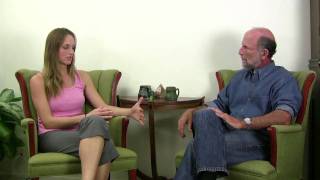
Two speakers map entitlement on a spectrum from under to over, showing how under-entitlement breeds passive behavior and sudden anger. They argue for honest mirrors in your life to help you find balanced assertiveness.
So I seem to notice a trend in society, not only with myself, not only with my friends, not only in my practice, but just kind of across the board, that the people who struggle with being passive or aggressive tend to really lack the ability to assert themselves. And that seems, at least in my experience with watching them and watching my own process, it seems to come from a place of feeling under entitled to a point that when the moment the critical mass hits, they flip a switch into feeling over entitled. So I wonder what you have to say about that or what you think.
I think that there's both types. That there are people that are dominantly over entitled, that are hardcore narcissistic tendencies, that live in a sense of entitlement, and then there are people that are more wounded, that feel under entitled. And then there are people who are wounded, who are under entitled, who also have a very strong defense against that, which I think is the type you're talking about, where they don't really feel like it's okay to ask for things, but then it really pisses them off, makes them really angry, so then they suddenly spurt out of nowhere at something. And so I think the key thing is really what you're doing, which is being interested enough to ask yourself, am I over entitled? Am I under entitled in this very situation I'm facing right now, no matter what the situation is? So that's one really important inquiring question. The second one is in general, is my personality over entitled or under entitled? And if you have the honesty or you have the advantage of having people around you, or even a person around you who can give you honest feedback about that, then life becomes inspiring. Because to want to be in the middle of healthy entitlement, which means I want as much for you as for me. I want mutuality, I want consideration for both of us. Then life starts to become really sweet and strong and connected. But this balance of entitlement being out of whack leads to either somebody wanting to dominate or someone who's prone to be dominated. And so this question of where am I on the spectrum of entitlement? Is just an inspiring inquiry. And even more so if you have good mirrors around you that can give you feedback. If you have really good friends, it's great to ask them, where do you think I am on that spectrum? Do you think that I demand too much or do you think I asked for too little? Or with your lover you ask, do you think I asked for too much or too little? So it's just a wonderful question to stay aware of. So again, how does that affect you? Where do you see that touching?
Well, everywhere. It's kind of nice to have. It almost feels like a liberty to be able to use the people that you care about and who care about you to hold up an honest reflection and to not take it personally to a negative place, but take it personally to a healing place.
Well, you're in one of the lucky situations where you have some real mirrors that you could ask a question like that. But in general, in society, if you go and you say, hey, brother, hey, sister, am I over entitled or under entitled, they'll probably want to institutionalize you. It would seem like just such an odd question, but if you really explain what that means, does it feel like we're balanced in asking for what we each need? And where do you see me? And where do I see you? And can we go that deep together? Then it becomes such an opportunity for intimate intimacy and closeness. The difficulty is it's such a rare event that we're asking that individual question and that we can share it with people around us.