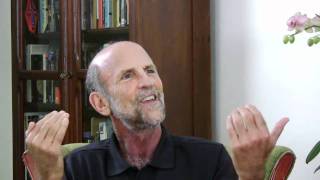
Nearly a decade after a kidney transplant, a speaker reflects on five years of physical and emotional struggle, then learning to measure well-being not by feeling good but by presence and self-compassion. Medication adjustments and compassionate support from teachers and friends made the difference.
It's been almost exactly 10 years ago that you had a kidney transplant. It was a transformative experience, I know, for you and for those that love you. And in those 10 years, the challenges, the physical challenges, the medication challenges, the psychological and spiritual challenges, and for so many of us that have physical challenges, can you share what you've learned, some of what you learned?
I think the most important thing that first comes to me is that when I have been, and still at times, I still am encountering physical and emotional states that can't be changed. And I can't access certain qualities that I most love, like inspiration or peace or compassion, because I'm struggling with feeling irritable or I haven't slept well. That finding the inner voice that's recognizing that I'm truly doing the best I can, and that when I'm in a state of even irritability and emptiness or exhaustion, and at a given moment, I'm actually responding inwardly, recognizing I'm doing the best I can. And outwardly, let's say, I. I'm still being kind to other people. I'm still being present with other people. I have a voice inside me that's affirming. Nice going. You're actually doing harder work than when you were feeling well. And I'm still not feeling very good, But I have a cognitive voice that's a supporter and a rooter that's there, even though I'm not feeling good. And the thing that is so hard to grasp is that really the best we can do is be present and be as responsive to ourselves and our environment as possible. And that feeling good isn't the criteria anymore. And that's a revolution that feeling good isn't the criteria. Many times what is is being present and being as responsive to ourselves as possible. And cognitively with our brain recognizing that we're doing the best we can, we're being the best we can, and that the criteria is no longer the same.
When did it shift and how has it been shifting in that regard?
Well, for the first five years, I was basically in an empty, somewhat agitated, tired void with a lot of depressive features in there. And so I was saying these things to myself on an ongoing basis, and it wasn't reaching a place of feeling good, and it was just that significant, where I would say 90 some odd percent of the time, even though I was saying the right things to myself, the good things, the supportive things, the feeling state wasn't changing. And really what changed was a series of compassionate interventions that were so powerful with some teachers and some friends where I started to be able to feel a compassion for how difficult it was for me to be where I was. That started to make it easier. So the states would still be there, but I actually felt more genuine kindness towards myself and that started to come in and make it easier. It and also I found some better medications to counteract the medications, which also made it easier.
Is the joining of other people as significant as anything in that regard? The joining of other people and supporting you, being compassionate towards you, teachers, friends, or is it chemical?
Without question, the chemical and the joining of key people was really significant, each in their own right. And there might have been a chance that if the chemical never happened, I could have only felt halfway or a third as good. And the key thing is that the criteria isn't again, feeling good. The criteria is I want to support myself. I want to recognize I'm doing the best I can. I want to be as present as possible. I want to be responsive to my environment. And I might feel lousy, and that that's heroic. And I want people to mirror back to me, nice going. You feel lousy and you're still responding well. And I know you can't feel me right now, but I recognize that that's really an act of real faith. Real faith is when you can't feel faith, but you still act in good will and goodness itself.