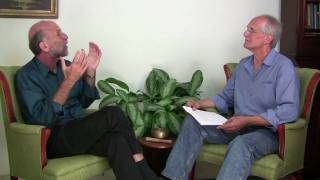
Counselors often underestimate dying people's mental clarity. Physical decline doesn't mean someone has lost insight, and many dying people become unusually alert and wise. Treat them as present and capable of teaching those around them.
When I'm coming to the person and I open the door and I see a person that's probably. They may be in a hospital bed at a certain point, and I may be going to visit them, or perhaps they are coming to me and they're beginning to be physically incapacitated. I think there is a temptation to assume that that's impacting their mind in the same way. Can you talk a little bit about that difference?
There's a strong tendency on the part, not only of the counselor to feel that way, but there's a tendency on the part of the patient to feel that way as well. So one of the important things for a counselor to understand is that just because the person is physically incapacitated doesn't mean that they're mentally incapacitated. And that they might very well be at a higher state of alertness than they've ever been while their body is decaying. As a matter of fact, it's pretty likely. And so you want to go in not just going, oh, you know, oh, looks like you're really kind of out of it now. It's more. You want to go in with the presumption that they might be in a state of awareness where you're going to be humbled. And you want to recognize the soul, the spirit, the individual. Their consciousness is still very much there unless they're in a coma. And even for that matter, if they're in a coma, you still want to assume that they are more there than you think. But if they're there in ordinary consciousness, you want to go in with the presumption that they're capable of great depth and they're capable of enormous presence. And the physical incapacitation is probably more often paradoxical than just the same.
Why is that?
They have the glimpse of living in the moment. They have the reality that they are not looking into some, oh, let's see, what am I going to do three months from now? They're living in that day, and they're recognizing actually much more often than not, the kind of the myths of our lives, that everyone around them is living in virtual denial that they're in the same boat as they are. And more often than not, which is actually probably a very important thing for us to explore, the dying person frequently feels like they have to take care of people around them because, well, I don't want to give you the bad news, but you're going to be there, too. And you're in the land of the living, but you're going to be in the land of the dying, too. And so we as counselors, if we can find a way into inviting that and again, being a bit humbled and recognizing that they're in a more advanced stage of being aware of the impermanence of this life. It's like we may possibly, if we are with somebody that's able to talk about it, we may even be able to directly ask them. You probably see some things that I wouldn't ordinarily see. Anything you want to tell me? And there are a lot of people, when they're in their final stages, where they actually want to be able to give back. They don't want to just be a permanent patient. So being able to look for some of those opportunities where somebody would have a perspective that would be quite enlightened to inform us of something or what's it really like today for you to be where you are and please don't take care of me. You may have something that you want to tell me that you see about me in my life. Maybe I've been your counselor for 10 years. Maybe you want to tell me something about the way I've counseled. Maybe you think I'm a joke in some way. I don't mind. Go ahead and tell me. This is the time to let go of our identities and tell the truth so we can be maybe a little bit more outrageous with certain types of people.