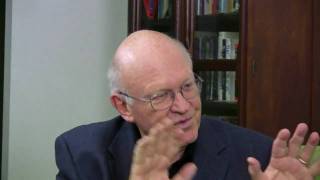
Robert Strock and Dr. Ken Blanchard discuss how the ego, or "the controller," sabotages good intentions through the need for control, emotional reactivity, and withdrawal. They argue that spiritual perspective and experiences of inspiration and compassion are essential to move beyond ego dominance, and that witnessing the ego, cultivating humility, and practicing unconditional love offer real remedies.
Robert, you know, in my work, when I look at why do people not behave on their good intentions? You know, because you talk to people and they have the intentions of living their lives with some peace and some joy and. And why do they get themselves goofed up and all that? And I think I've come down to. It's the human ego. And we don't talk about psychological for that. We kind of talk about edging God out and kind of putting yourself in the center. And when you do that, you cut yourself off from your spiritual side. And I know you talk about the controller. Tell me a little bit about. Because I think it's very probably similar to what we talk about with the human ego.
Yeah, I think it's almost identical by the controller. I mean, the part of ourselves that is always looking for control, and it doesn't matter whether it's wanting what we want, when we want it, which is a form of control, or reacting emotionally because we're upset that we didn't get what we wanted, or whether we're in a state of withdrawal and we're just going to say, well, I'm not going to participate if you're not going to give me what I want. All of those are signs of the ego getting hurt.
Or we're fearful that we won't get what we want.
Or we're fearful that we won't get what we want. All of those are forms of the ego believing, in a sense, that it is actually God. And the way I work with it is not so much edging God out, although it would be another way of saying would be that the ego is acting as if it is God. And one of the subtle things that's important, I think, for us to mention is that if you don't have a spiritual life, there isn't an alternative to ego. So it really requires to have some kind of experience or some kind of series of life experiences where your heart has been moved by something like inspiration or compassion or love to where you get a feel that just getting what you want when it doesn't involve your heart or some kind of redeeming quality of compassion or trust or some kind of peace is empty. And if you don't have that kind of contrasting experience, it won't make sense. What we're talking about with ego, have you noticed the dangers of people really not understanding at times really what ego itself is?
Yes. No. In fact, in our work, we started an Egos Anonymous because we feel it's probably the daddy of all addictions. And there's two forms of that. One is false pride when you think more of yourself than you should. And now you're pushing and shoving for, you know, promoting yourself and getting all your agendas. And the other is the whole self doubt, fear side where now you're not trying to promote yourself, you're trying to protect yourself. And both of those are really having you as the center of God. The one where my God thing isn't working out so well. And the other one is, let me show you that I really am God. And. And you don't have anything bigger than yourself in your life that can kind of sort of go to the 10,000 foot and say, robert, take a look at what you're doing. This is really not right. Which is that perspective setter that you get when you can step away from your ego. And we say that the anecdotes are humility. People with humility don't think less of themselves, they just think about themselves less. And to realize, wow, this is an incredible world. I'm just glad to be here. You know, I'm not any big deal. We're all fabulous, we all love. And then the other one is the whole unconditional love that's available there to people. I say to people all the time, how many of you are parents? You know, how many of you love your kids? Everybody. How many of you love your kids? Only if they're successful, you know, they're good students, they're athletes, or they're successful and people don't put their hands up. You mean you love your kids unconditionally? Well, what would happen if you unconditionally loved yourself and realized you can't perform well enough, you can't be loved enough to get any more love? You got all it is. And that's really kind of a peaceful space where you can start to say, what am I doing here with this ego and all. But when you're all by yourself without any spiritual connection, I think it's a tough job.
It's a very tough job. And it's the normal job. I mean, I think it's important for us to recognize that we're the odd man out to some extent in even having this conversation and that it requires a lot of courage to come forward and actually witness your ego. Which is one of the central tools, let's say, that I would use in my work is witnessing itself and being able to observe how your ego functions. Noticing it has endless desires that are unfulfillable. Notice it has endless emotional reactions that actually don't really make you more fulfilled when you keep stewing around and around in them.
That's right. Yeah.
And so witnessing becomes a very key part of it, of being able to see the ego itself and also in addition, the capacity to contrast the ego with the moments in your life where you really have been most fulfilled and inspired. That those very qualitative differences become demarcations that allow you to not be so interested in only getting what you want. And I think that's a very organic and gradual process that most people hopefully will awaken to during their life.
And it seems to be hard to get there if you're just looking at your human side without also searching as important for you with your spiritual side. It's also if you're just looking at your spiritual side and you've got a paranoia or you got some other kind of thing that maybe we've learned enough to help you, you're shutting that out. So that's why this love we're talking about both and not either or exactly.