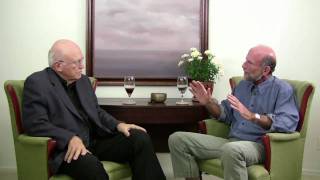
Robert Strock and Ken Blanchard discuss how doubt and fear fit into spiritual life. Strock says acknowledging doubt while feeling supported by Jesus keeps it from paralyzing him. Blanchard frames it as 85% trust in benevolent intelligence and 15% humility, doubt included.
So one of the things I've been most interested to ask you is whether you, at various stages of your life, have any level of doubt whatsoever. And if so, how do you treat it? How do you deal with it?
Well, you know, I think the whole concept of doubt and fear and all is a reality in life, you know, because life is interesting and you never know what the turn might be. But as I've gone along my spiritual journey, I haven't denied the fear or the doubt, but I somehow now know I have a partner. And that's what really helps me. Jesus said in the Bible over 300 times, fear not. And fear not why? Because I am with you. But I forget sometimes that I have to do that. But my doubt is not. It's immobilizing to me now because I think I got a partner.
Well, it's reassuring for me to hear that there's both a partner and also that there's still doubt because it means the human element is still within view. And I know for me, I kind of view myself as being an 8515 guy where I'm 85% in some kind of just enormous trust in the intelligence and compassion of the universe in some way that I can't understand. And then the 15% of me that says, well, I don't know anything. I'm just a guy here in a body that doesn't know anything. So there's an enormous interplay between those two places. And the one thing that is clear to me is whatever part of me doubts doesn't want to interfere anymore in wanting to live a life of service or of, let's say, being a person dedicated to living the life of goodness in the world. But it doesn't mean that I know anything. And I think somehow being aware of that is a very useful thing for all of us to have that kind of humility, to not have an absolute sense of knowing.