The Election, Empathy, and the “Elephant in the Room” - Article by Robert Strock
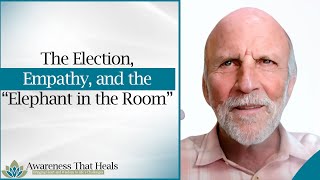
A spoken-word presentation by psychotherapist Robert Strock arguing that concentrated wealth and power are the primary "elephant in the room" driving political alienation and division in the U.S. He warns of catastrophic risks if Trump is reelected, urges empathy toward both Trump and Harris supporters, and proposes a framework called "psychopolitics" built on three principles (Awareness, Introspection, Ongoing Questioning) to begin healing social fractures and redirect resources toward the common good. The piece blends psychological diagnosis, economic critique, and practical calls to action.
Hi, I'm Robert Strock and I've been a practicing psychotherapist for 50 years and also leading a foundation for 25. In my latest article, the Election Empathy and the Elephant in the Room, I explore a crucial truth left unspoken how insecurity and addiction to wealth and power shape our society and causes severe division. Through empathy and open mindedness toward both ends of the spectrum, I share ways we can begin to glimpse the conversations and actions that are needed to heal our country. I'm going to go ahead and share it with you now. The Election, Empathy and the Elephant in the Room While it's true that both sides in the US Election currently lack some key elements in psychology, economics, and general world concerns, it's also important to note that the election could have catastrophic outcomes if Trump is reelected to office. Amid this clarity, it's also true that the Democrats remain unaware that they have contributed to the country's current divisive nature. The Biggest Elephant in the room How we look at Wealth One vastly overlooked critical issue is how wealthy and powerful individuals have repeatedly chosen to prioritize themselves and their families to such a vast degree, neglecting the poor, middle class and the planet. This in turn has led to intense anger, as it has throughout history, that breeds discontent, disillusionment, and finally, repeated wars. It's natural to prioritize one's family, of course, but the question is to what degree to the end of endangering our country and the world. The poor and the working class are constantly left to fend for themselves without being offered job opportunities and the ability to earn their own food, shelter and medical care to change their circumstances. Our government's policies are dwarfed in the face of one truth. If the wealthy had given their fair share, and then some to create universal and community benefits, there would be trillions of dollars to improve the quality of life for everyone, including those who give and see this benefit for themselves. We're avoiding talking about this for all of history, and even now it's the biggest elephant in the room, even bigger than the split between Democrats and Republicans. It clearly will take years, if not decades, for the powers that be to understand the necessity for this approach while also determining how to implement a plan agreeable to everyone. However, it's not too late to empathize with our fellow citizens and start creating a path toward a deeper understanding of a primary root cause contributing to political and social alienation and ultimately, warfare. While areas such as our departure from Afghanistan, the handling of Israel in Gaza, and the slow response to immigration have caused some of the Democrats to become disenchanted. There is no question about the benefits of voting for Kamala Harris and Tim Walls in this election. From Trump's statements, it's clear that our democracy will not be maintained nor will the Constitution be followed. Harrison Walz have the potential to be the best leaders during this critical time, even though the concentration of wealth and power remains unaddressed. Why should we bother understanding Trump's supporters, even if it goes against what we want or believe in? It's crucial to approach Trump's supporters with compassion and understanding. While not all some of his voters back him not because of political alignment, but because they feel a profound sense of alienation and frustration in a country and system that has overlooked their opportunity to survive, let alone thrive. Trump has effectively tapped into their anger, portraying various groups and institutions as enemies, including immigrants, government agencies and the media. This genuine feeling of being part of an outside group that doesn't have fair opportunities resonates with those who have felt left behind, reinforcing an us versus Them mentality. This dynamic is understandable. When people feel wronged, they often look for external sources to blame. The economic imbalance of the wealthy is a central issue that has caused this anger throughout history and in the present. Again, the understanding that the misuse of wealth and power for self centered interests rather than opportunities for the bottom to be brought up with work leading to food, shelter and medical care is the real dominant source of alienation. Trump has taken advantage of this genuine but mislabeled betrayal and named false enemies that support feelings of alienation. He has presented himself as the best protector, much better than the CIA, FBI, fda, DOJ and independent military. But critically, we must note that Trump's rhetoric often includes rejecting the Constitution itself, positioning his vision as superior to the foundational principles of American democracy. He suggests that traditional systems are inadequate to address the issues faced by ordinary Americans, claiming that that only he can provide the solutions needed to improve their lives. He's promoting the idea that if the established order has failed them, radical change embodied by Trump is the only path forward. We haven't gone into the details, but it's clear that Trump aspires to be a dictator from his statements and actions. This is dangerous, brutal, way beyond words. Trump supporters, especially those on the fence or undecided, need to look at both sides of the news sources to see exactly what his statements denote for the future of our country, while the Democrats need to extend empathy to them, as some of the softer Trump voters are innocently misguided in their beliefs Trump supporters must also extend genuine compassion and understand to see that Harris supporters truly believe and are confident that if Trump is elected, it would mean the end of our democracy as we know it. From imprisoning political enemies to threatening to close vast portions of the free press, his statements need to be examined by by these softer Trump supporters. They have either not heard, understood, or believed that these consequences would be a real outcome of another Trump presidency. Their experiences are almost always unconsciously shaped by a history of feeling left out and mistreated. They've watched others take advantage of opportunities that are not available to them, which led them to look for a voice that resonates with their pain. This is precisely where psychology and politics unite to create our current world. The Role of Psychology and Economics in Politics how the wealthy use their money in is a critical aspect of how politics and the economy shape our lives, communities and future. We are repeatedly creating wars outside of ourselves by not facing and resolving the war within ourselves. Throughout human history and today, those in political power and leadership have have been what could be gently acknowledged as unwittingly addicted to power and wealth. They largely lack the attuned psychological and practical understanding needed to address the alienation created by wealth and power being concentrated in small groups of families and elites. Understanding psychopolitics in is a key to initiating the groundwork for meaningful change. Gaining a basic understanding of how this psychology and way of dealing with money and power plays out in politics and economics, which I call psychopolitics, is a key to starting the groundwork for meaningful change. However, it is essential to have patience and realize that reforming long held patterns is gradual. This shift cannot depend on moral obligation. The affluent need to come to see and understand this reality for themselves, whether due to an urgent need for planetary survival or from a genuine motivation to support the well being of humanity and the earth as a whole. On an individual level, we prioritize taking care of ourselves and our loved ones, which in turn leaves us supporting leaders who maintain this massive division between the haves and the have nots. This is because even if any leaders wanted to find a way to make this happen in today's world, they would never be elected or allowed to hold power. This is also evident in the behaviors of leaders and policymakers on international and national levels. They don't even have to rationalize their entitlement to wealth and power. It is seen in most cases as 100% deserved and fair, as it has been throughout history. If we could view life before we were born and realize we could have been born anywhere, it would be clear that we all would want a world where everyone is given an opportunity to thrive. There isn't even the beginning of a serious discussion on a scale that would make a difference. This conversation needs to begin and progress if our country and and world are to have the best chance to survive and thrive not out of guilt, but out of realizing what will make us all feel joyous to be human. It becomes clearer and clearer that we're all in the same boat and failure to realize and respond to this will inevitably result in us being doomed to to sink the Three Principles of Psychopolitics Number one Awareness the first principle of psychopolitics focuses on becoming aware of our overwhelming tendency to make distrust, fear and anger and other challenging feelings the responsibility of others. When we favor ourselves and those we love much more than our country and planet, we unwittingly contribute one by one to leadership that reflects this same self centeredness. Number two Introspection the second principle encourages us to examine our core identity in depth. Example Examining how our lives are primarily focused on protecting self and family with minimal care for the disempowered, including the growing homeless population and the poverty stricken. We project this most notably in our common attitudes about using and feeling entitled to money, success and power. This questioning applies not only to the top 1% of wealth, but to each of us. Regardless of our level of material well being. We all have the capacity to find that place inside us that wants to contribute to the well being of others. Number three Ongoing Questioning and individual clear guidance and action. This questioning leads to internal realizations of wanting to be inclusive, prompting us to ask how we can contribute from our unique positions. This third principle also acknowledges the need to remain in an ongoing state of inquiry or questioning. We get to embrace healthy self doubt, driven by curiosity to discover how we can each play our role in humanity's survival and thriving. The core question for all of us is what is the balance for me between taking care of those I love and also the country and planet on which I live now? None of us can afford to become complacent or overly confident thinking we've reached a point where we no longer need to explore new ground. Reaping the rewards of this work allows us to expand our honesty, humility and perspective. It will eventually give us a deep sense of gratitude that we are all working on this common issue together. As we learn to care for the more challenging aspects of life, we experience a fulfilling quality of life and witness a shift in core dynamics of our internal and external worlds. This is the sweet spot between purpose and wealth. The key is that caring for others outside of our immediate circle isn't driven by guilt. It happens naturally when we truly see it for ourselves. Others can support you in seeing this, but it only becomes deeply fulfilling when you see it and act on it due to your realization and understanding. We need to identify how we can create benefit in the world. Whether it volunteering, donating money, or supporting and connecting foundations and people that work together towards the greater good. This is what doing what you can looks like in practice. This is a space of connectedness for those I've worked with, including myself and close friends. When you see it, it becomes a most incredible gift to be connected to yourself, people you love, and also the planet we share. This connection doesn't arise from a sense of duty, but from a deep understanding of our shared human experience. It allows us to move forward with peace and responsibility, taking care of those we love while building a world that is beneficial for everyone. I thank you so much for listening to this and ask that you share it with all that are close to you as it's a message that I believe the world is ready for now. Thanks so much.









