How Warp Went From YC to a $60M Series B
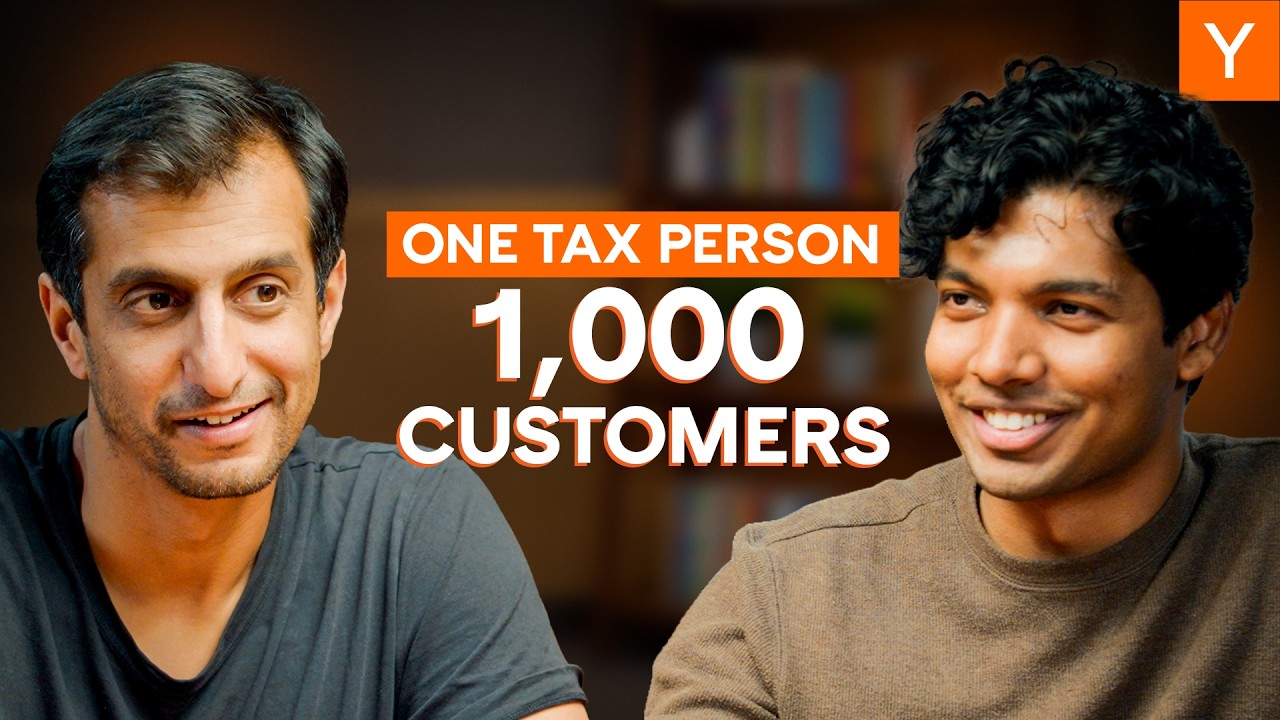
Ayush Sharma built Warp, an AI-native HR platform that automates payroll and compliance with a tiny team versus competitors with hundreds of people. From YC Winter 2023 to a $60M Series B, Warp now processes $600M in payroll for over 1,000 customers and is launching a customer-facing AI agent that lets users script HR workflows in plain language.
Chapters
I'm excited to be joined here today by Ayush, founder and CEO of Warp. Warp is an AI-native employee management platform built for high-growth companies. They work with over 1,000 customers and have processed over $600 million in payroll in the past year and are on track to pass $2 billion in the next 12 months. Warp did YC in winter 2023, and they just announced their $60 million Series B led by Battery Ventures. with participation from Sapphire, PeakXV, and Shopify CEO Tobi Lütke and former Stripe CEO Claire Hughes Johnson. Today, we're going to talk about their origin story and what it actually means to be an AI-native product and company. Ayush, thanks so much for being here.
Pleasure to be here.
So Ayush, I actually want to start by hearing a little bit about your background and how you grew up, because I think you have a very unusual entry into technology and startups and actually a really inspiring story.
Yeah, I grew up in a really small town in India and in a place where I didn't know a single person who had gone to the US. So there's a fun sort of journey and story there, which the short version basically is that growing up, I was really into physics. So as early as I can remember, I was trying to borrow textbooks from upperclassmen. And I remember finding Richard Feynman's lectures on physics, the classic 3 volumes.
The easy piece, right? No, no, the actual one. The full actual one.
Yeah, the actual lectures, the one he gave on Berkeley, which was turned into textbooks later on. And as I was growing up, I really thought I would go on to become a theoretical physicist and a professor one day. And then life comes at you, the Indian middle-class family expectations. And I was told that the only way to escape the middle-class fate in life in India, where I was growing up was you have to become an engineer and go to an IIT, which were these top schools in India. And I was doing really well and I was on a straight track to go to one of the top 3 schools in India. And halfway through that prep, I just completely pivoted and changed my mind and behind the backs of my parents and family. There's a reason for that I'll get to in a second, but I ended up applying to MIT, which is where I knew Richard Feynman had went. So that's the connection. And fortunately, the way it worked out, I got into MIT, I got into Columbia to study computer science, math, physics. So I spent about 5 years back at MIT specializing in machine learning. But overall, I think the fun statistics that I can share is I think I'm the first person out of a state in India that has about 250 million people to get into MIT for undergrad.
Wow.
So it was quite fun. That was about 10 years ago and now we're here.
I remember before Warp, you were trying out different startup ideas and maybe I think I remember some of them in the consumer space. So tell us a little bit about that. How did you go about trying to come up with the initial startup ideas and then why the pivot from consumer to payroll and B2B? Yeah.
So at first, I must have been 24, I think, when I was really looking into what to do first. like most 24-year-olds do, you try to start a social app.
Yeah.
Especially a couple years ago. This is pre-AI, right?
Yeah, there's a roommate finder, there's bill splitting, events.
All the tar pit ideas that YC has made 5 years ago. Right?
Yeah.
But I think I just wanted to build a thing that I found interesting or I would've used. And so I got started on building this app. It was really fun for a couple months and we had an interesting community and people joining it. It allowed me to get started and just make the leap of we're just going to build something and see what happens. But at the same time, I think very quickly it became clear that it wouldn't become a really big company. And that's when we sort of had this fork. It was like, okay, me and then the early team members that we had at the time, Adam, who's our CTO, we just sat down and we were like, okay, what are all the problems that we have faced in the past? in doing this that we could come up with? So kind of really went down and kind of did this very low-pressure exercise of what are all the problems we've actually run into that we think we'd want to solve for ourselves? And one of the things that we kept coming back to was in starting the previous thing, I'd actually had to set up a company, a C corporation, and try to pay some people. And I just remember one of the days that I spent, the guy had all these fires going on in the company and then On top of that, I had to figure out how to make a New York withholding and Department of Labor account. And it was one of the most frustrating things I ever spent my time on. And I was like, there's no way nobody has tried to completely automate this. And I think the early background I had coming from machine learning, and this is right 2022, '23 when LLMs and agents were just about to take off. And I think It was sort of interesting to consider what if we apply AI and LLMs towards this and could we automate this in a way that nobody has before? And that's the start of the work.
How did you think about that as a problem? How excited were you to work on that problem? I guess I think a big part of the reason why I think especially young technical founders start on consumer ideas is because they're things they want to use and they're excited and attention-grabbing. What motivated you to want to solve this particular problem when on surface it might not be as obviously interesting?
I think in some ways I was motivated to start it because it is unsexy. Paul Graham, of course, has this really foundational essay on schlep blindness.
Yeah.
I remember thinking about that, that so many of these problems hide in plain sight and nobody really tries to attack them because they seem really messy, complex, and unsexy at the start. I think the classic example being the coalescence with Stripe. Nobody was really finding it sexy to figure out all the edge cases with million banking APIs that were very janky at the time, but it needed to be solved. One motivation was simply that this seems like the kind of problem that is very messy, hairy, and not sexy on the surface. But counterpart of that, I think the more we learned about it, the more we went a little bit looking into it, we found other people who had run into the same problem. So it's like, okay, we're not the only person that is thinking that this is really bad, the current state of the world here. And 2, we saw a path to using that towards building a really big platform for all things employee management. And that was sort of the controversial idea at the time is that we could actually use this multi-state complexity, taxes, deep compliance workflows towards building the entire platform.
You were entering a pretty competitive space. There's legacy payrolls, there's recent-ish startups that have done well. That's what the— making it easy to run payroll in multiple states was the initial wedge. How did you know that that was going to be a sufficiently deep wedge?
So I have a funny story here. When we were thinking of applying to YC, I think I DM'd you actually, and you encouraged us to apply.
I didn't even know. I didn't remember that at all.
Yeah, it's been a while, right? But, and you said, yeah, definitely apply. So we wrote an application, then we were invited for an interview. And it was the first batch that Garry Tan had come into YC. And so I hop on this interview and there's 5 people on that Zoom call on the other side, including you, Garry, and a couple of other partners. And I remember the next 10, 12 minutes were just like brutal, really. Like I was, I felt like I was being grinded on the spot.
Terrified.
And that's maybe the typical experience, but I really felt that. One of the big questions exactly was this, how big can you really use this wedge to grow from here? And is it really a true problem and wedge that you can find enough of a foothold on? And at the time, I think it was a bit of a hypothesis on our part that this is a reasonable wedge into this broader segment. And looking back, I think in some ways we got a little bit lucky, I think, but the calculated part of that hypothesis was that all the companies were multistate very earlier on, as opposed to just a few years ago before COVID for example, where that was much rarer. So the trend line was just going up, the complexity was exploding. And number 2, we realized something, kind of a non-obvious thing, that YC has funded some sales tech startups, and I think there's a parallel version of this problem in sales tech, but it's actually much worse when you look at payroll taxes, because unlike sales tax, where there's usually these generous thresholds for when you are beholden to those requirements, like you have to reach a certain amount of sales that's quite high, or you have to like enough sales or enough customers in a jurisdiction. But in payroll, you just need one person. You just need to hire one person in one jurisdiction and you have to comply with the entire tax jurisdiction apparatus. So that kind of thing, it just means like the moment you are scaling company, you just have one person and combined with thousands of tax jurisdictions, that complexity really explodes very quickly. So those 2 things, I think it ended up working in our favor that it became enough of a wedge. It was the right time to use that and also apply LLMs and agents to something that traditional software couldn't touch.
So as the company's evolved and the vision's evolved, you describe yourself now as AI-native employee management You do more than just payroll. But what does that mean exactly? Let's talk about that for just the product. What does it actually mean to be an AI-native product?
I think one big realization we've had is that one, we have to build the whole platform. And it became very clear to us that as our customers were, in many cases, early on we had signed up a lot of startups because they tend to be early adopters. They were going through the exact compliance, multi-state problems, and they didn't have full HR or legal or accounting teams internally that would try and maybe DIY that stuff. So those early customers, they sort of pushed us as they were growing themselves to just gave us the direction of, okay, I want, as we're going from 5 to 10 to 50 to 100, 200, they kind of gave us the roadmap of what exactly they would need at those different stages of those companies. And they wanted Warp to do all of it. So it became clear to us that we needed to do more than just initial payroll, especially if we wanted to serve these scaling high-growth companies throughout their entire lifecycle. And 2, I think the bigger maybe realization was we have to build the product and the platform and the architecture in a very AI-native, agent-native way such that all the work here that we're doing starting with this very deep tax compliance workflows, can all be performed by an agent. And that's the kind of efficiency gain that we're really focused on is if you're a high-growth company, and today we serve tons of really fast-growing AI-native startups and customers like Serval, Bland AI, Reptile, Reducto, and many of which are really cool YC companies, of course, but also traditional high-growth companies, mid-market, and now some enterprise customers as well. And I think the pattern that we continue to see is these customers, They are not interested in linearly scaling their people ops, HR ops, finance teams as their company is scaling. And that's where I think we want to be the entire platform for these customers that allows them to do that.
So as you're very involved in product and as you're building the product, just again, help people understand when you're thinking about building these new units or product units, what does it mean to do that in an AI-native way? Maybe give us what's on the one hand, Here's the AI-native way to approach building tax compliance, and here's the regular way to do it and help us understand the diff.
Great question. So a traditional way of building an HR tech company that has compliance requirements baked in that you have to solve for all your customers was purely by headcount. And so one of the things you notice is if you look at our legacy HR incumbents, if you look at their headcount and where their headcount is, often It's very surprising that like 30 to 40% of their headcount goes in functions like support, tax compliance, operations, accounting, legal. And this is relatively similar between all the last generation HR tech companies. In contrast, Warp, we serve now over 1,000 customers. We process over $600 million in payroll already, growing quickly. We touch every single tax jurisdiction that exists in America, and there's over 1,000 without going into the super locality municipalities. All 50 states. And we have, up until recently, we had only 1, 1.5 tax person, 1 full-time, 1 part-time. And now we've hired the second full-time tax person more because we're anticipating the future growth. But I think that sort of tells you and kind of points the picture of how I think we're able to build a different kind of company, not just a different product, because I think it's a very different— structure of the company itself if you can use AI to automate these previously really messy things that software couldn't touch. And that's why we get really excited about it.
For someone starting an AI-native company, the advantage you have against incumbents is it's sort of like greenfield. You can sort of build a new set of primitives and however you want for the world that we live in today. On the other hand, incumbents in any space, They build up institutional knowledge. They've been working with the customers for a long time. A bunch of those people there do have experience and expertise. How do you think about your advantages and disadvantages maybe as a new entrant in a space using AI native as the angle?
I think that net-net, I believe that with AI, it's in favor of technical founders. And what I mean by that is if you looked at the last era, pre-AI, the late-stage SaaS where it felt like the terminal state of software was this SaaS and mega SaaS software, it had gotten quite boring in some ways. I don't think I would've started a company in that era necessarily in this direction. And in that time, I think the advantages were really towards mega distribution sales-oriented founders. And you see that in the backgrounds of those companies that got started. And I think today, and really with AI, it really shifted the power, the balance where younger, more technical founders with deep technical knowledge of the frontier, they can see where this is headed and they don't have these ideas and how things are supposed to be. They can shed those older norms and build something net new. And I do think that is net-net where this is headed right now. But at the same time, I think to your point, the incumbents with distribution and lots of these channels and partners that exist, and I think it is one of those situations where it's a classic, will the incumbent adopt this new technology in this platform shift before the new entrants figure out how to become the next generation entrenched and big software companies? And I think that as a startup founder, my belief in this space is that it is very hard to retrofit AI on top and just layer these thin chatbots on top of existing architecture and existing customer bases and install bases. And in some ways, I think the market's recognizing that. I think if you look at something like Workday, which is the last generation mega enterprise company in our space, it's down 60%, 70% from their recent highs. And I think that to me is underappreciated right now.
Something else that in general, talking about AI and its impact on startups that gets mentioned a lot is this concept of systems of record. So this idea that you mentioned Workday as an example, late-stage SaaS company. It feels like the belief right now is that at least consensus, conventional wisdom is a lot of SaaS is not defensible against AI disruption, that there just won't be any need for it. that systems of record will be defensible, that those have real moats against agents doing all the work in this AI future. I think Warp would be classified as a system of record. Maybe just explain to us, what does that actually mean when people talk about a system of record? What is that? And why is that theoretically defensible against a future where AI agents are removing the need for software?
So a system of record is basically a database where there's some amount of semantic mapping towards a process that business uses. And so in very simple terms, storing values, knowing for sure that the values are true, being able to see those histories and logs and all these things that everybody in a company can agree on, that's a system of record.
Yeah, true.
Shared truth. That's a great way to put it. The classic example, of course, is Salesforce where it is the shared truth for a business for all things that touch sales processes. So your CRM is in many ways, I think we actually, quick anecdote, we started and tried out some AI-native platforms for our CRM in the early days. But as soon as we started growing the sales team and went aggressive on that after Series A, The head of sales was like, we got to get on Salesforce.
Yes, classic.
Because we are missing out all these 20 integrations to all these tools. Very classic. I think many companies have gone through that. I do think that there are different systems of records have different degrees of how quickly, how defensible they are. And so far I've found that actually Salesforce CRM is actually quite defensible. But in general, I think what's interesting is There's a bit of a race where the AI-native upstarts, can they become the next generation system of records faster than the current incumbent system of records can layer on AI on top of their current systems?
That makes sense. But do you have any sense of what's a next generation system of record? Why is that going to be different? Why won't it be essentially just a database with some semantic mapping on top of it?
The reason I think a company like Workday is really down and suffering is because the worry is that they are at risk of becoming a database-only company. And not in a good sense where, yes, ClickHouse, for example, is a lovely database company growing really quickly and so on, but more so that it's a dumb data store that agents from external parties just access to do the work. And then if that's the case, all the value moves to the layer that's orchestrating the work with agents. So I think the next layer that we are excited about building is effectively what is the systems of intelligence, not just systems of record, where agents can natively act on the underlying database with that sheer truth in mind, with proper guardrails, workflows, permissioning controls. But it all has to map out in a way that I think the underlying system of record combined with the agents is where I think the interesting stuff's going to happen and what will be defensible. Because there's an interesting chart, I think Mintlify, for example, was talking about this cool company that most of the API docs are now being read by agents.
Yeah.
And I fully believe that most of the internal systems and system of records will be swarmed by these agents.
Cloudflare, I think it was a couple of weeks ago, announced that total agent traffic, total web traffic from agents surpassed human web traffic for the first time.
And I think we've yet to see true enterprises and true enterprise software become— that flipping is yet to happen, I think, but it will happen. And I think what Warp wants to do is build that version, that super powerful, capable system of record platform That is by day one, from day one, built with intelligence in mind.
Make something agents want.
Yeah.
Basically the mantra around here. Okay, so let's talk a little bit about the Series B. You just raised a big round, $60 million. It happened really quickly actually, right? So tell us, what did Battery see that made them move with such high conviction and make such a big bet on you?
Well, ultimately you'd have to ask Battery, but I think from where I see it, We ended up getting preempted. This was just less than 10 months after our Series A. I think an interesting shift happened in the last couple of months where we went from not thinking about what does the AI-native future here look like to appreciating this, that if you look at the true enterprise software categories, like for example CRM, there's a number of AI-native challengers. Some are growing really quickly. If you look at Something like ITSM, Servol, who's now a customer, is doing really well and growing quickly, and a couple of other companies. Then ERP, there's Relate Campfire, which is a YC company as well. But I think ultimately one of the last categories remaining there where there isn't a clear sense of what comes after or a true AI-native challenger is AI-native HCM. And I think that's where Warp comes in. And I do think that the reason the round happened really quickly— yes, we've been shipping a lot, we've built out a really cool platform, and our customer growth has been amazing, signing some awesome customers. But I think when it comes to investors, I do think these tend sort of— there's a little bit of that narrative flip that happens in certain times where it goes from very, very far-fetched to it's like you can see that maybe this is the future. And I think that people started feeling that a little bit more. That's my guess of why it happened very quickly.
You've got a bunch of money now. So what do you plan to do with it? What can you do now that you couldn't do before? And then what are some of the things you're personally most excited about on the product roadmap for Warp?
So now that we have $60 million and more actually from most of the funds we had from our Series A as well, we've decided to raise a little bit of a bigger round because I think this next phase of where we're about to head, there's 2 really big and important things we have to accomplish. Number one is we have to build an incredibly engineered, really powerful, and still very usable, delightful platform for all things employee management, which means there's multiple product lines. There's IT, there's benefits brokerage. We became fully licensed countrywide to broker healthcare medical, dental, vision, 401s, life insurance, et cetera. We have built out our own device management software. One of the only— well, we're besides Rippling, one of the only companies that has done that in-house ourselves. We have built out global contractor products, offer letters, traditional HRIS things, and so on, right? So there's quite a bit of breadth in the platform, and we have to keep building those with all the integrations to other softwares and ERPs and things like that. But in parallel, we also have to build the agents and the infrastructure for AI to natively act on all of it, on all employee data that's in Warp. And so that means the most capable agent harness that can reliably and with user trust act on their very sensitive tax, payroll, employee data. And so those 2 things, we don't see them as being able to pick one or the other. I think we just have to do both. And that's where I think this bigger round helps us to catapult into building the engineering team, the platform, the product for that next phase.
Any specific things within all of that that you are personally really excited about?
We're about to launch in the next couple of weeks full GA release of the Warp customer agent. And what that means is historically we tended to use AI as background agents a lot to automate workflows on taxes and compliance and filings and registrations a lot in the background. But we've built enough infrastructure now to give all of that to the customer's hand as well. And so what I mean by that is anything that you can do in Warp by clicking buttons, period, you can now do with the agent. So the advantage of that is going to be to be able to very easily and very efficiently create these more complex workflows, such as when an employee joins in New York, Add them to this healthcare plan, add them to this sick leave policy that is New York compliant, and provision their devices and apps, and make sure that they complete the New York security training, and so on and so forth. So all of that, you can just script that via natural language, not some really complicated code-like builder, which historically is how this was done. And then be able to do that very efficiently without having to know how to code. And I think that is what I'm personally very excited about. I think we're seeing some interesting use cases emerge from our top customers already. So very excited to do that for all our customers soon.
Great. Okay, well, Ayush, I think that's all we have time for today. Congratulations again on raising the round, and I'm really excited to see where Warp goes from here.
It's been great to have you as our partner and YC on this journey. So thank you so much for having me.
More from Ayush
The Subtraction Economy: Why the Next Great Companies Remove Work with Warp + Sound Ventures
"Speed and Quality Are Not Opposites" | Warp CEO Ayush Sharma at Startup Grind

Building an AI Startup After MIT: Fireside Chat with Warp CEO Ayush Sharma | MIT Startup Week

NachoTips: AI in Product Development - Warp CEO Ayush Sharma Gives His Perspective
