"Speed and Quality Are Not Opposites" | Warp CEO Ayush Sharma at Startup Grind
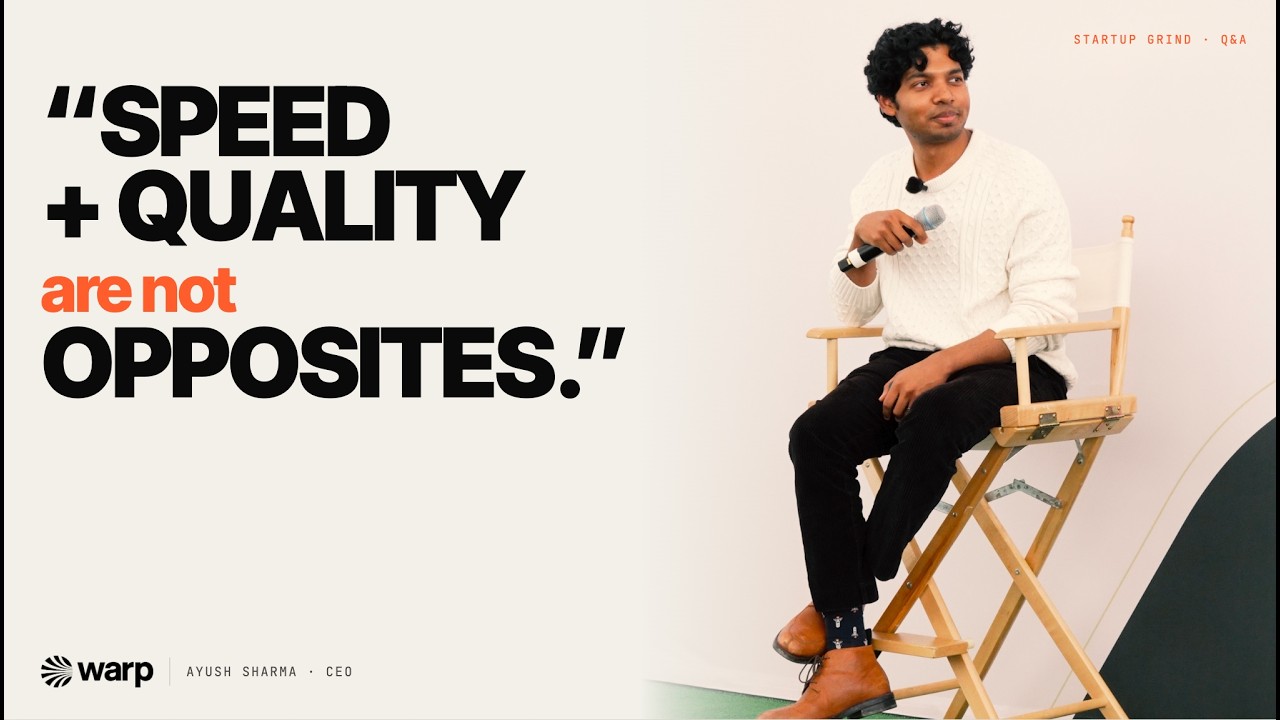
Ayush Sharma, CEO of Warp, explains how AI agents can replace manual HR, payroll, and compliance work. He argues that speed and quality aren't opposites when paired with rigorous guardrails, and that companies should hire "high-slope" talent fluent in AI tools rather than traditional coding skills.
Chapters
Seems like many people do. Great. Is this working? No? On. Okay, let's try this. Is this working? Okay, it is. Hey. Okay, well, it's great to be here. My name is Ayush. I'm the founder and CEO of a company called Warp. We are building an AI-native employee management platform for ambitious companies. So we do all the hard parts of employee management, like your HRIS, payroll, compliance, deep sort of onboarding stuff with IT. There's a lot in there that we could go into, but the broader theme is like we're building for these high-growth ambitious companies that want to use AI to cut down on all the manual work that they typically have to do for scaling their companies. So I was just with Ashton talking, and the title of the talk, we chose this line called the subtraction economy, which is this sort of play on the idea that if you think about the last 2 decades, of software, it was all so much about adding more and more software, more tooling, more workflows, more dashboards. I think that's just how the last generation of companies got built. And we have a fundamentally different belief at Work that I think the next generation of great companies will simplify all this complexity and use AI and agents aggressively to cut down on all this manual work that teams have to do. I think you're seeing that play out in areas like IT and ERPs and CRMs, and Warp is taking the first real AI-native stab at what's typically called HCM. We just call it employee management. For AI-native startups, what does the team composition look like as you're building in this sort of new paradigm? We think about this a lot. I think it is really fundamentally different from how the last generation of companies scaled. And I think it was like, you know, this idea around blitzscaling, it's this idea around really growing the headcount massively and very, very quickly was the only way companies could scale pre-AI. And I think what we're seeing internally and ourselves, like Warp uses Warp, we run the entire company on it. A lot of our fast-growing AI startups at Trustwood all of their employee management on Warp. The common pattern we see across these really high-growth companies is they're hiring for higher slope people. So people who are growing and are able to like learn very, very quickly. And I think then they're being selective on bringing in more experienced domain expertise type people, pairing these people together, and they're not as interested in scaling like linearly their ops support HR finance teams. And I think they're sort of really thinking about, can we do with 1 or 2 people, but like really great armed with AI, that previously would've required 10 times as many people? So a pattern that we see consistently across our companies is like instead of having like entire HR teams, they'll have maybe 1, 1.5 person handling this like all the HR onboarding IT stuff because they're using something like Work. to be able to continue scaling the company with 1/10 of the headcount in those functions. And I think that's really important. So what it means for interviewing and really selecting for great people is you really do want to be open to very high-slope people, like people who are maybe earlier in their careers, but they're very AI-native. They're very used to using agents to write code, do design, and are able to move way faster that way. So really great, 2 questions in there. I think one is sort of this new era of tooling, something like Warp. I think we serve companies as early as like 2 employees just getting started all the way to hundreds and going into thousands of employees and scaling very quickly. And I think what's really exciting and like what the thing that I'm most proud of is we're able to serve both sides of those spectrum of companies really well. Like we get a lot of love from our early-stage startups that are just getting started. They love how simple the product is, how easy it is to use, how intuitive it is, and that they can scale the company with far fewer headcount as they're growing. And then we also really like and get a lot of customer love from these larger companies where they have entire functions built out around these, but they get a lot more productive by using Warp. And I think to your second point, like how selecting employees and like the right kind of people, I really just think that the interviewing process has to almost like fundamentally change. I think even in the last few years, I think the best companies have started it actually. So taking a step back, first 6 months to a year when coding agents were coming around, I'm giving this as an example, but applies across all functions. companies were banning Cursor and Claude Code in their programming and technical interviews. And I think like that was to me like the wrong approach, right? Because why would you wanna ban this amazing tool in the interview loop? And so that like you can't actually figure out, are they good at using this tool that they'll be using day to day, like all day in and out, right? In their actual role. So we became, we like shifted our entire, like rewrote our entire technical process interviewing loop. Like, use as much AI as you want, but you're gonna have to build something really, like, meaty and complex in 1 hour. And let's see how far you can get. So we just give real technical, like, entire features on our platform that we have already built ourselves. So we know all the nuances and complexities involved. And then we give that to these people in under 1 hour, use all the AI tokens you want, all the coding agents, but let's see how far you can get. And that helps us actually see how this person thinks and is able to use AI in their actual role. So we find that actually it's like worked way better for selecting, for example, in engineering than trying to like limit the usage there and trying to like give them like LeetCode or brain teaser style puzzles. I think it's like really, really terrible if you're still doing that. So go-to-market is obviously— what's interesting about go-to-market today is just how different even that is from just a few years ago. And so as an example, one of the sharpest people on our go-to-market team is 21 years old, and he's been doing this work ever since he was 13. But a few years ago, when AI and agents came around and just became much more powerful and so much high leveraged. And I think what we are seeing internally is if you can leverage a lot of the, like the new tools, like the Clay and the Unifies of the world, you can go a lot farther with a smaller team. And so our teams, we have very high standard on go-to-market team, like almost double the performance targets, et cetera. But we are selecting first on people that are very excellent already. And are very fluent in using AI day to day to just like speed themselves up and do a lot more faster. So that's internally like the broader thing we're seeing with go-to-market. For us specifically, it's really exciting because we get some of our largest customers have come purely inbound through word of mouth, through other founders or execs or HR people telling their friends and telling other people. About work. So it's— I take a lot of pride in that. And of course, we pair that with very strategic and targeted, like, outbound and combining different signals, etc. So for us, that's been working really well. I do think, though, that GTM has evolved so quickly in the last 2 years that if you are trying to look at all the old school playbooks and are like, that's your only point of reference with no experimentation built in, it's going to be tough because what's also happening is with AI tools, I'm sure you guys get like 50 AI-written emails and outbound random emails a day. What do you do? Are you replying to those? No, archive, delete, right? So I think you just have to be able to kind of be very thoughtful about it and not do what everybody else is doing. How do you think about moving fast when the stakes are high? It's a really, really good question. Just to maybe put it in how I see it, the question is basically, how do you think about moving fast when the stakes are high in what you're building? And for us, funny enough, one of our internal company values is really directly that speed and quality are not necessarily as opposed to each other as people think. And this, this for us has been one of the founding defining values at Warp. You know, it's in our name, Warp, Warp Speed. I grew up kind of reading physics and learning physics. And so it comes from this idea of speed. But I think what we have found is the fastest moving people are also generally producing the best work. And it's somewhat counterintuitive. Like, I think it's a little bit controversial to even stake this position that some of the fast-moving people also have a very high quality bar. But really, that's what we've seen. I think a lot of mediocre people and mediocre companies use complexity and high stakes as an excuse for moving slow. So I think we've all seen those companies where, like, if you look at some terrible product that you're stuck with, What was the last time they shipped anything meaningful for you? And I think they're often like, look, you know, a lot of this stuff is moving too fast and we just don't want to ruffle any feathers. We don't want to break things for you. I think that's in many ways an excuse. I think we have to be very thoughtful about building teams and building a culture where people can experiment quickly. Then you pair that with good set of guardrails around like, hey, money movement, tax compliance, these are things we have to write a lot of testing and validation and internal code for. So all the guardrails in place, and we have to have double, triple check like reviews with our sub— like some of the best engineers on the team. And then, but also give freedom to our rest of our engineering team when you're shipping new products. Like, hey, if you talk to a customer, they tell you something, It is actually magical to ship something that solves their problem the same day, go back to them and be like, does this solve your problem? They're like, this is exactly what I needed. Like the kind of customer love you can generate from doing that repeatedly is actually really valuable. So it is a— there's no real clear magic solution to how do you do this well, except that you have to think about it constantly, that you can do both of the, like, speed and quality hand in hand, and you have to inculcate that value with your team every single day. Yeah, so one advice, if you're building agents and you're working with agents, I think that overcomplicating the prompts, skills, how much instruction you're giving and how much specialization you're doing. I think overdoing that can actually be somewhat hurtful. This has been a lesson in the last 2 years is that people thought that you would have to do so much custom work to make agents work. This is also related to how a lot of these SaaS LLM wrapper companies that are looking a little bit shaky right now, I think their bet was we would make all this very specialized harness and specialized, like, sort of prompts and domain knowledge. And that's what's going to make the differentiator. I think what we're seeing is the models just keep getting better and they're getting better exponentially every release. So as a result, you need less and less specialized instruction and prompting and domain knowledge as the models get better, right? Like a year ago, everyone thought prompt engineering was going to be a whole job. What happened to that? That's not a thing anymore. But it's sort of evolved into like, how do you give agents the right data, the right context, the right permissioning and guardrails to do the work that they should be able to do really quickly? So I think by condensing that advice is simply do not overengineer the, like, the domain knowledge or the extra bits into it, but make something that's like more general purpose and can just like continue benefiting from how the— as the models just themselves get better. Really, really great question, which is how do you actually focus on the right things in a world where seemingly you can just build anything that you set your mind to, right? With AI and with agents. I think you have to have a very clear vision for ultimately what you're trying to accomplish. So for us, even though we have all these sort of horizontal products that all tie into one platform, it's been very clear to us from day one that we want to be the complete platform for all things employee management. So what that means is anything to do with hiring, paying people, anything that touches the employee journey from the first moment to their last inside a company, we want to take that entire set of workflows and be able to solve them into one platform. So I think what that means is there are things that we know we will eventually build, but there are also things that we know we actually don't want to build. So for example, you know, you mentioned banking. I think we actually don't do banking at all. We don't do like treasuries or traditional cards or spend management, and we have no plans to, honestly. I think like we use Brex internally. We also use Ramp for some spend management. Both are great companies. I think they're very AI native now as well. We think that focus is actually very important in this time when you can seemingly be very distracted by shiny object syndrome, so to speak. So for us, I think even when we started, we knew that, hey, we want to be a complete platform. We want to solve the hard tax compliance stuff, registrations, accounts, unemployment insurance, whatnot from day one. But ultimately, we want to continue building from that to all things employee management, right? And be able to do that for larger, more complex companies. And so as a result, it's as important to define the things that you are not going to do as it is to figure out what is actually on your roadmap. Yeah. So, okay, really good question actually. To paraphrase the question, like if you're— how do you think about sequencing where to automate and where, like, as you think about a broader platform, what are the, like, how should you think about sequencing? I think it's a really good question because the way we thought about it at Warp is we wanted to run towards the hardest problems first. So, which is a little bit counterintuitive. Like you might think, hey, if you're trying to do a startup, you should maybe like go for the things that are easy and high value. I agree with the high value part, but I think we sort of disagreed with the easy part. So we chose an area that is tax compliance with all the US thousands of jurisdictions with all these changing laws and so on. There are entire companies that are doing this for sales tax and they're standalone companies with a bunch of AI-native startups doing that. For us, that was the starting point. We went after one of the most complicated, high-stakes things. So we indexed on hard and valuable as opposed to easy and valuable. And I think like that's my philosophy. It's like if you were trying to do a startup, you might as well go for the really hard but also valuable. But try to optimize and run towards like the hair on fire, really complicated, messy stuff. Because I think there's just less, less willingness from others to try and quickly run towards that. And I think that's an advantage in startups, right? In many ways, we have seen less upstarts and less fast follower companies trying to do what Warp is doing because we go after the really, really hard, messy stuff. And as a result, I think we've now built out a 2.5, 3-year head start. Yeah. Where we have been building up like this really proprietary compliance dataset and workflows and these systems where if someone were to come in and be like, oh, Warp's doing great and like maybe I should, you know, do something like that in that direction, they'll have a 3-year-long journey. And by that time, I mean, like, we're gonna be a very big company by then. So we could do a lot more of this since then. Totally. That's such a big focus for us. I think, you know, we did a lot of foundational work on security, compliance, trust. We just can't— you just can't serve these like high-growth AI companies and these larger upmarket companies with their entire HR, payroll, taxes on one platform unless you take that seriously. So we were very clear initially from day one that like we would take that seriously. And I think, you know, clearly there's been some like news around like startups trying to skirt around compliance and security and how that's backfired, right? I think breaches are up, security incidents are up, which is not surprising if you see like how many, how many of these apps are being vibe coded. And I think for us, thankfully, actually our CTO co-founder Adam, He's very, very peculiar. Like, stays up. This is the thing that keeps him up at night, and that's the kind of person you want if you're going after high security, high trust spaces. So first is just knowing that it's important and caring about it and taking it seriously. But on the more tactical side, I think building very controlled permission systems from day one, it's really important. And to the credit of the last generation of software, like data governance, security, and like permissioning, roles-based access control. The good news is a lot of this stuff was figured out for humans in the last generation. I think like there's ways to kind of model that for agents. So like, hey, if we're, for example, a— like let's say we have 2, like one HR person admin in our— in Warp and an IT admin, but the IT admin's AI agent is not supposed to know about people's salaries. And that's very important, right? So like this, this kind of like differentiation, partitioning of data, what agents can access something within, you do have to think very carefully about that. And I think for us, like because we've set the foundation right for that permission model, it's become really advantageous. Like what I— as people ask us like, hey, I want this team to be able to access only this thing and not these other. We're able to segment that out very cleanly now. It's a great question. Thank you so much. So fundraising is its own thing. I don't know if we'll be able to cover how much, but I think I can give the quick TL;DR, right? I think people— the biggest thing with fundraising is you should start with the company and not the fundraise. You should start with what What risks do you need to eliminate in the company? What customer milestones, product milestones do you want to achieve and what timeframe? And you should work from there. I think a lot of people start with like, oh, we want to fundraise 12 months out, so we want to do XYZ. I think you should almost invert that and think like, 12 months from now, this is where we want to be in terms of what kinds of customers we're able to get, what kinds of companies or users were able to like really delight and what is that going to require on the product and the platform side? And I think if you kind of dial in those places, those pieces, then fundraising and investing, I think that will happen a lot more naturally. That's certainly been my lesson in the last 2 and a half, 3 years. One last thing. I sort of touched on this in my talk earlier with Ashton, but I think There's a plague of short-termism that I think is very prevalent now. And I think maybe AI has accelerated that. And maybe my one quick advice for founders building is that just think more long-term. This is going to take 5 years, 10 years, 20 years, and you're all in. So take this seriously. Things take time. And you have to be able to commit and think long-term. And I think that the short-term advantages are very rare. So if you're— if you can orient yourself long-term, you'll find this to be a much more rewarding, fun thing, even when during the hard periods. And I think it will serve you well. So that's my one big life takeaway. All right. Round of applause. Thank you very much. Appreciate it. Thank you. Thank you, everybody.
More from Ayush
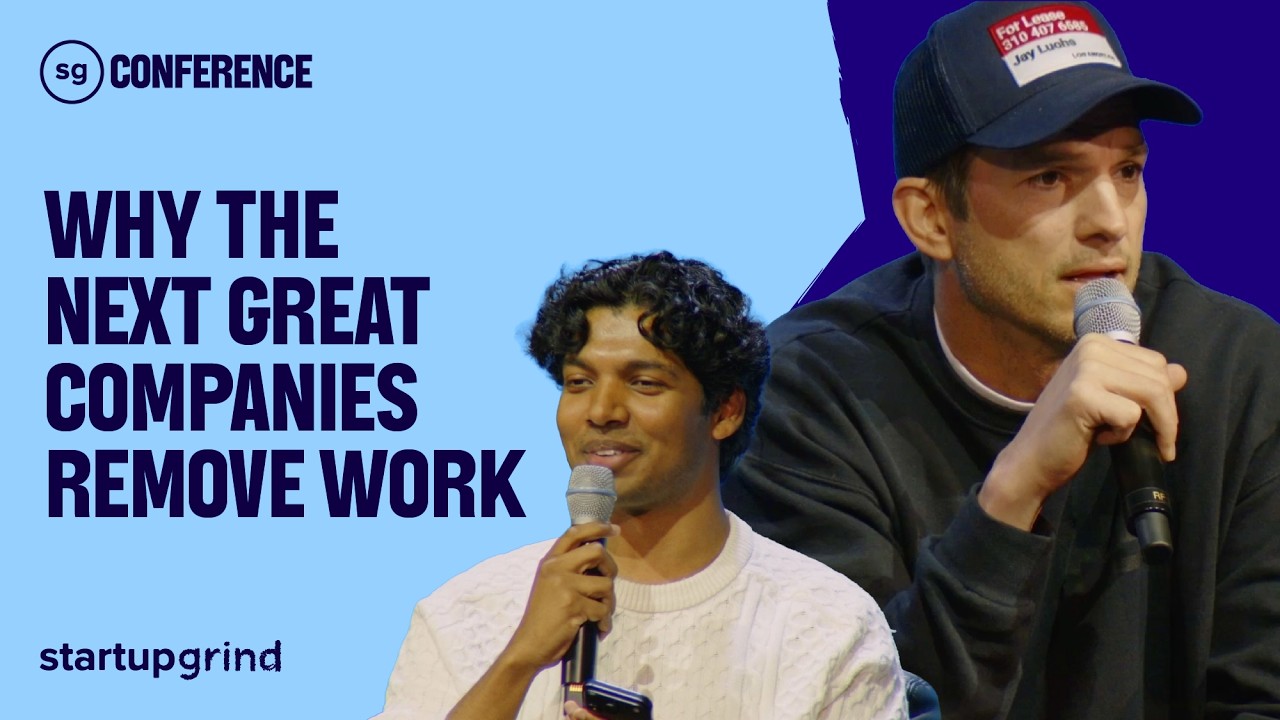
The Subtraction Economy: Why the Next Great Companies Remove Work with Warp + Sound Ventures

Building an AI Startup After MIT: Fireside Chat with Warp CEO Ayush Sharma | MIT Startup Week

NachoTips: AI in Product Development - Warp CEO Ayush Sharma Gives His Perspective
