A Cardiologist Reveals What Medicine Alone Can’t Do
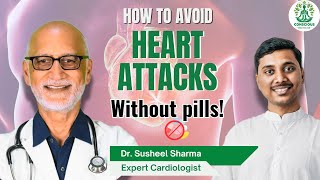
In this YouTube interview, host Badrinath Gella speaks with Dr. Sushil Ji, a veteran interventional cardiologist who has practiced in the United States for four decades and now runs the Integrated Heart Center in India. Dr. Sushil recounts his transition from a purely interventional practice (stents, bypasses) to an integrative model that combines guideline‑directed medical therapy with lifestyle medicine. He introduces the L‑E‑G framework (Lifestyle, Environment, Genetics) to explain the relative contributions to coronary disease, emphasizing that lifestyle accounts for 70‑80% of risk. The conversation delves into the physiological “breath‑brain‑heart” triangle, describing how breathing influences the autonomic nervous system, heart‑rate variability (HRV), and endothelial function—key biomarkers of longevity. Dr. Sushil cites clinical evidence (Ornish, Esselstyn, recent pranayama studies) showing that yoga, meditation, and controlled breathing can improve HRV, prevent arrhythmias, and restore endothelial health. He highlights the economic burden of repeated interventional procedures in India versus the low‑cost, preventive power of lifestyle change, and stresses the role of stress and emotional regulation in cardiovascular risk (INTERHEART data, psychosocial stress accounting for ~30% of heart attacks). The interview concludes with a call for collaborative care: cardiologists, breath‑work coaches, and yoga practitioners should work together, offering patients a “two‑bird‑wing” approach that merges modern medicine with ancient wisdom to prevent and reverse heart disease.
Chapters
Namaste everyone, we have a special guest today, one of the renowned doctor, and he has served in U.S. for 40 years and now he is serving in Indian community. And he is the founder of Integrated Heart Center and also he has created cardiac rehabilitation protocol and he has helped thousands of people to reverse their heart health issues naturally by using lifestyle modifications. Today we are honored to interview him. Thank you, thank you so much, Dr. Sushil Ji, for coming here and, uh, sharing our wisdom with our audience. So, Dr. Sushil Ji, so the first question for you is, I want to know, why did you choose this? So I know that you have served already, uh, 40 years in US, and, uh, could, could you please explain us your journey in cardiology and what really made you to choose lifestyle modifications and yoga-related practices in your Integrated Heart Center?
Yeah, to sum up in a line, I think that my cardiovascular journey of life is actually the journey from integration— from intervention to integration. So I was trained as an interventional cardiologist all my life. I did heart catheterizations, angioplasties, and looked at the development of angioplasty as it came along the scene and grew with it. Actually, in 1989, I finished my fellowship at Henry Ford Heart and Vascular Institute in America, and I've been doing angioplasty since then. Anything and everything that needs to be seen inside a blood vessel, I've seen multiple procedures including angioplasty, stents, bypass surgery, everything I did And I came to this profound realization that a person that gets one stent ends up getting a second and a third. A person that gets bypass surgery ends up then getting surgery for the occluded graft or the blocked graft angioplasty. So it's a recurring disease that keeps happening in these people. And I said, is that the real answer? I mean, this, this whole process of band-aiding and repairing a blockage, but not addressing the core issue. So I started looking more and more into this. That provoked my interest into lifestyle. Then I did several courses with Mind Body Medicine at Harvard with Herbert Benson Institute. Then I became a member of Lifestyle Society and Prevention of Lifestyle Illnesses and European Society of Preventive Cardiology and Physician Committee Responsible Medicine and Nutrition Project, blah, blah, blah. And I found out there's a whole beautiful science of lifestyle. So really all these blockages can be very effectively treated with lifestyle choices. Now, before I go to lifestyle, let me first tell you that it's really a combination of 3 things that causes blockages. It's a genetic factor. Obviously, there's a very strong genetic factor, about 10%. There is environmental factor getting stronger these days with more of the environmental pollution coming in. But by far the largest contribution still is of the lifestyle, 70 to 80%. So I call it three legs, L-E-G, very easy to remember. Leg, L for lifestyle, E for environment, G for genetic. So these three are there. So when these three are there, lifestyle alone is not going to reverse heart disease. You need lifestyle plus, I call it. And what is the lifestyle plus? Lifestyle plus in heart disease is combining lifestyle with guideline-directed medical therapy that can mitigate the effects of environment, genetics on your life, and also modifying risk factors like blood pressure, diabetes, cholesterol, health habits, all that together with lifestyle. And then you can reverse, rehabilitate, or prevent these disorders and control these disorders. So this led me to look at all these sciences from different areas. I came to India, then I spent time in Patanjali and Asviasa and Uttarakhand, learned about yoga, meditation, pranayama, the science of it. And then I came up with this program, Integrated Heart Center. It's basically a program that is there to save lives by preventing heart attack and healing hearts by combining the best of modern medicine with the best of ancient wisdom. And that's what I'm here for on this mission.
Oh, that's amazing, doctor. Like, very few doctors think like this, but the contribution you're making is phenomenal. Like, I think people like you very much required in this world right now, the kind of situation we are facing. So, Doctor, um, like, what are the most common heart health problems, heart issues you are seeing today, and, uh, how much do you think the lifestyle factors affecting on them?
Yeah, so the commonest factor these days is whatever happened to the heart 40 years from now is happening 10 years younger. You would see 50 or 60 age group people getting heart attacks, not 20, 30, and 40 getting heart attacks. So it's kind of getting more and more compressed. And what is compressing it is our fast-paced life leading to stress issues, industrialization and mechanization leading to environmental pollution, and then our lifestyle, which is predominantly sedentary, and a poor diet and processed food and too much oil, sugar, salt. As I say, all these factors combined are actually have led to an almost epidemic of heart disease in India. Now, it'll be interesting to note that as we speak about the epidemic of heart disease in India on the rise, commensurate with that is actually a decline of the incidence of coronary artery disease in America that's happening. Why? Because the adoption of the modern science and also the adoption of the lifestyle changes that are coming in America. So my heart bleeds when I see a young man dying of heart attack in India. It should not happen. I keep saying in my program again and again and again, 90% of blockages can be detected before they cause a heart attack. And 90% of the heart attacks, once you detect the blockages, can be prevented before they cause a heart attack. So 90% is a very high figure and it's doable. It's doable with very simple tests that we do and simple lifestyle choices that we do. And I think I want this message, and that's why, you know, I connected with you to, so we could reach more and more people to get this fact across. One life lost is too many. So really, we need to get it to as many people as possible that heart attack today is preventable, controllable, and reversible. And we have to do something together to make sure that doesn't happen. Sorry, it's an untimely phone call. Yeah, okay.
So absolutely, absolutely agree with you, doctor. And, uh, so this is the time I think, uh, very important, like we need these kind of interventions in the society, especially in India, because I have seen many people are going into poverty because of their health issues, right? So though they have insurances, but sometimes the cost goes so high, especially when it comes to cardiology and heart health. You might be aware that it's a very, very expensive treatment. Some people cannot able to afford also. So once they reach that stage.
Yeah, I think one important thing I would add, cost there. There's no doubt that there's a very high upfront one-time cost of angioplasty, bypass, and these procedures. But don't forget, you're not off the hook after that. There is a lifelong cost of then periodic doctor visits, lab tests, cardiac tests, medication. So there's a recurring— I calculate this every day because I work in this charitable hospital where I see poor patients, sometimes it can be as high as ₹10,000 to ₹20,000 per month. Now, to some of your viewers, it may not be that much money, but to my patients in Haridwar, it is more than their monthly salary. And this is a recurring cost after you survive a heart attack, may go on for 5 years, 10 years, 15 years. I keep saying that 80% rule that I think I once discussed that with you. 80% of us will get one or the other lifestyle disorder in this lifetime. And what is that? Blood pressure, diabetes, cholesterol, heart attack, stroke, truncal obesity, or lifestyle cancers. 80% of these will actually be either a direct or an indirect, approximate or an indirect cause for death. When we die, there's an 80% chance that these factors will contribute to our ultimate demise. There's also 80% of entire health budget that you set aside for your lifestyle lifetime will be spent on either treating, managing, or controlling these disorders. And lastly, I say the next 80% rule is 80% of these lifestyle disorders are preventable, controllable, and reversible. And that's why you and I are here and talking about it.
Absolutely. Absolutely. So like, we need more people who vocalize that, and people also need to trust and spend some time on working on themselves. For sure, we'll be able to make this happen, right? So awesome, doctor. My next question to you is, you know that I'm a breathwork coach, and I have seen many of my students who are able to reduce their hypertension, high BP, and also like various other factors by implementing breathing exercises. I want to know from you, in the science perspective, how breathing is connected to heart function from physiological standpoint.
All right. So I will— I wish I had a blackboard, but I'll try to simplify. Okay. So this is really— you have to fully understand this triangle. And what is the triangle? The triangle is your breath, which is your lungs, your brain, and your heart. So these three things are intricately connected, talking, communicating, exchanging notes throughout the day with every breath. The breath communicates with the mind and the breath communicates with the heart. With every heartbeat, the heart communicates with the mind and mind communicates with the lung. With every thought, The mind communicates with the breath and the mind communicates with the heart. So just imagine they do 3 different functions, the brain, the thought, the lungs, the breathing, and the heart, the beating. But the thoughts, breathing, beating, which are going on constantly, are talking to each other all the time. So this is, I call it the brain-heart-lung connection. Okay. Now, in the brain, there is a system. So we have two brains, so to speak. There's a conscious brain and a subconscious brain. And in our language, we call it voluntary brain and involuntary brain. The involuntary brain is highly impacted by a nervous system which is called autonomic nervous system. By its name, you can sense that this works on its own. And the autonomic nervous system of the brain, we call it sympathetic and parasympathetic. To help you understand, sympathetic is fight and flight, you know, rapid heart beating, muscles tensing, eyes opening up, perspiring, heart rate going up, breathing going up. This happens when we are ready to get into a fight or flight. And this was inbuilt on us evolutionary-wise. So that's a sympathetic nervous system. It's good for But when it goes in overdrive, causes problems. And you see that problem all the time. Typically, it's the anxiety, right? Everything going up, heart rate up, blood pressure up, respiratory rate up. The other is the parasympathetic, the cooling mind, the cooling nervous system. Friend, intent, right? Calm, quiet. And this is the one that gives you all the happiness and all the calmness in the mind. And these two are constantly working at all times. Now, the parasympathetic nervous system connects to the lungs and connects to the heart through a nerve called vagus nerve. So there are back and forth connections. So your lungs are directly therefore connected to your brain and through your brain to your heart. They are literally connected, of course, through blood vessels, but they're also neurologically connected. So what affects your breath? Affects your mind. What affects your mind affects your heart. And this connection, I told you, is constant connection. Now, you may be sleeping, but still your breath and your brain, your heart are connecting. So breath, that what you do, the breath focus and breath optimization and breath slowing down, there is profound effect on this parasympathetic nervous system. Now, when this parasympathetic nervous system is activated and you're calm and you are tired, then heart— there are two major things that happen in the heart. Number one is, scientifically speaking, is called HRV, heart rate variability. And number two is endothelial function. Now, these are two of my favorite topics. Okay, so let's say HRV. I really want to explain to your listeners HRV very, very clearly. Now, when you go to a doctor and does an electrocardiogram and you look at, he says your heart rhythm is regular.
Good.
Actually, that's good. It's regular. But if you really look at it with a microscope, the heartbeats are slight variation. You may be beating at 70 beats a minute, but some beat may be 0.98 seconds, some may be 1.2 seconds, some may be 1.1 seconds, some may be 0.96 seconds. There is some variability in that that is not available to the naked eye, but we can test it out. That variability between beat to beat is called heart rate variability. It is a profound marker. It's an extremely important biomarker, cardiovascular biomarker of longevity. Higher the heart rate variability, longer you live. Lower the heart rate variability, shorter you live. Okay. So that's one. Endothelial function. Endothelium is endo means inside. Okay. Your blood vessels have an inner lining. So you can call it the skin inside. This to me is one of the most important organs of your body. You are as healthy as your endothelium. So what this does is this is like a barrier. You see, your skin is a barrier. It doesn't let things go inside. Same way, endothelium is a barrier of your blood vessels. So blood is constantly flowing. There are things in blood which are good, bad, and ugly, right? You want good things to go inside the blood vessel. You want the bad and the ugly things not to go inside. That barrier is established by this endothelium. Now, endothelium relaxes your blood vessels, open up more blood flow when you need it, when you're exercising, and less blood flow when you don't need it, right? So it controls that. Now, it also repairs itself. If the blood vessel is damaged anywhere, it repairs itself. If there's inflammation inside the blood vessels, it repairs itself. So it regulates the vascular tone, it regulates the vascular health, and thereby prevents any blockages forming inside your arteries, which ultimately go on to lead to a heart attack because of endothelial dysfunction, cholesterol deposition, and third thing is inflammation. Now, proper breathing by regulating the parasympathetic nervous system optimizes your HRV, heart rate variability, the first biomarker of longevity that I said. Higher the HRV, longer you live. And proper breathing, again, through parasympathetic stimulation and reducing inflammation, improving endothelial function, reducing adrenaline, noradrenaline, and cortisol levels, and inflammatory markers, improves the endothelial function. Better the endothelial function, longer you live. Okay, so there, this is really how your breath, through this intricate mechanism, is related to longevity. Did I make myself clear on that, or was it a little complicated?
Absolutely, absolutely. Okay, thank you. Absolutely, Doctor. It's mind-blowing, actually, like, uh, to know that how all of them are working in unison, right? So we ourselves, like, uh, patient— like many people come to me and ask me like, can you give me that breathing exercise? Can you give me this breathing exercise? And can you tell me any one breathing exercise to cure this problem? So in your perspective, how would you like to address when people are coming and asking us, can you tell me any food, like one recipe I can make so that I can improve my heart health? And also now that because of social media, internet, people saw that do this exercise, this will happen. So what is your opinion on that? Like, how actually people has to approach if they really want to, uh, like reverse these issues or lead a happy and healthy life?
Okay, so everybody, each one is right in his own place. Okay, now there are multiple ways of affecting your lifestyle, and I keep saying in my talks, lifestyle transformation needs mind transformation. Now, you can transform your mind by just one thought, right? Or you can do it by multiple ways, right? To me, the most profound technique of lifestyle transformation through mind transformation is yoga, meditation, and pranayama, the breathing. Now, all three you should try. So, when I, for example, when I do my stress management program, I talk about 9 stress management practices. And I teach all 9 of them to everybody. Now, it's not that everybody has to do all 9. For some, one may work, someone two may work, someone three may work. Each one has his own protocol. For example, I have my own personal pranayama protocol that works for me. So, what I've done is over the years, kind of practice with them for the last 15 years. I have my own yoga protocol that works for me and I have my own meditation protocol that works for me. So finally, you will individualize it and personalize it. And that is what is needed. But all of them work. All of them work. All pranayamas work. All meditations work, whether it's breath-focused meditation, open awareness meditation. And in pranayamas also, all kinds of pranayamas work. All— it's the entire— the whole Ashtanga yoga is really for that. You just have to start practicing. See, I keep saying this where people really get confused is this. You have to understand there was an ancient way in India of learning which is lost now. And that method of learning was shruti, yukti, anubhuti. There are 3 components to learning. Shruti is hearing or reading. Listening, or these days watching. Let's say you're watching Google, right? And you read on Google some good stuff. This pranayama, how you do, you heard it. That's just one, one-third component of learning. Now, the second is yukti. You then have to apply it, apply and practice, practice and make an effort. You do that over a period of time, then you develop an experience, anubhuti. Now, once you had the experience, now you have learned it. Best teacher in the world is your experience. Right? So if you have heard something, learned something, applied it in your life and experienced the benefit, you're not going to forget it. So same way with these, you— there's so many. I attended your program. That was beautiful. So many breath things you said. Each one of them is complete in itself to do complete mind transformation, right? But I know you give them all, you give them all, it's great. And eventually, once they get experienced like you, right now, you don't need to do all of them, you could just do one and be where you want to be. Same way, they will be there in 10 years to where they want to be. Each, each is great in its own place. Each is great in its own place.
Got it.
Awesome.
Awesome, Dr. Doctor, is there any scientific evidence or clinical research that supports breathing, like, helps in cardiac patients or like people who are suffering with heart problems?
Yes, in fact, there is tremendous information, at least on pranayama. They publish articles now in journals on heart rate variability improvement and prevention of atrial fibrillation. In fact, now pranayama is a recommended technique to prevent arrhythmias. There's obviously the people that have a high heart rate variability after a heart attack have less chance of a sudden death. So there's data coming out in that. So there's a lot of information coming out, especially in cardiac arrhythmias and sudden death and atrial fibrillation and even syncope for heart rate variability. Now, endothelial function, we have known for a long time before the cholesterol enters inside and damages the vessel and causes inflammation. It has to find an endothelium that is leaky for it to enter inside. So if that barrier is broken, if the endothelium is not intact, then the goes inside and causes inflammation. So I keep saying you're as healthy as your endothelium and you're as healthy as your heart rate variability. So yes, this is profound science. And in fact, lifestyle and breath focus, as you said, and meditation, pranayama, are the most profound techniques for optimizing heart rate variability and optimizing endothelial function.
Also, it's very less expensive.
Yes.
So that might be the reason, uh, people don't prioritize, right? It's coming for cheaper price, right? So yeah, thank you. Whoever is watching this, I want you to take this seriously. That is the reason I have brought doctor, like the famous doctor in cardiology. And so I want you to understand the scientific perspective of this. And first, you give preference to this before you do anything else and wasting your time. That is what I recommend. So, doctor, before we go to the next question, have you seen patients improve or reverse heart issues using holistic practices which you are teaching, or breath-based approaches, or yoga, All the time.
All the time. My interest in actually this began— I'll tell you a little story.
Okay.
That's profound. Dr. Caldwell Stein, a famous doctor from Cleveland Clinic, which is one of the most prestigious medical institutions in America. He was the director of that. And he's a prolific person, individual. And it's a delight to meet and talk to him. Okay. And he was a Yale graduate. And also an avid athlete. He actually had a medal in decathlon, gold medal in America. And then he becomes a surgeon and the director of the Cleveland Clinic. And then he finds interest in some kind of a diet he comes across. And he says, with that diet, you can actually prevent and control heart disease. And just as he's talking about it, one of his colleagues who's also a breast surgeon at the same hospital starts getting severe chest pain. They take him to the cath lab, they do the angiogram, they find a blockage. They said the blockage of the left anterior descending blood vessels way downstream in the distal aspect of the left anterior descending. And the surgeon said, I cannot bypass it. And the cardiologist said, I cannot stent it. But this guy says, help me, I'm getting chest pain every 20 yards when I walk and I'm a surgeon, I have to operate. So Caldwell Esselstyn talks to him and says, okay, why don't you come to me and do this diet? And this guy says, what is this? He says, yes, diet. He says, anything else? He says, no, only diet. So I show it in my program. I wish I had the picture today to show you. So in 1995, I think '94 or '95, this happened. In 18 months, he reduced 80% blockage to no blockage at all. Looks like stent. And he was chest pain free. That is how profound was this. And then he published this on several patients. That's what sparked my interest. And then came along Dean Ornish, who has the Ornish program, where along with diet, he also introduced stress management through yoga, meditation, pranayama, optimal social skills and connections for optimal social health, introduced spirituality, love, affection, kindness, loving kindness, those things, and created a holistic kind of lifestyle program And he also demonstrated the same thing. So they both demonstrated reversal of the blockages in the coronary arteries, one with a diet and the other with a lifestyle program, to the extent that Dean Ornish program now is a Medicare-approved program in America. A lot of what I do in my program, I've taken a lot of his practices, I've taken a lot of Esselstyn's practices and other practices. So I put them all together in my program. That was the inspiration. And I've seen, I just like, actually, I was supposed to interview him today, but his son is not there, so he cannot turn the internet on. This gentleman came to me about a month ago, and he had all 3 arteries blocked. Walking from his bedroom to the bathroom, he was getting chest pain. And after 7 to 10 days, he's now walking 4 kilometers a day, pain-free. This is how profound the effect of lifestyle is. Because it relaxes your blood vessels, improves your endothelium, improves circulation to the heart, improves collaterals, improves microvascular circulation, lowers your blood pressure, reduces your heart rate. All these cardiovascular effects really optimize your cardiac health and make you feel better. If it wasn't for this, I wouldn't be doing this. And what really gives me confidence and pleasure is I know all the science behind it. I've been reading this all my life, last 30 years. That's what I read and did. And it amazes me every day. That same patient that partially improves with stent, I've seen improves with this profoundly in 7 days or 10 days. It's magical. It's beautiful. It's natural. Wow.
That's crazy, actually. I don't know why people are still not doing it. And taking this seriously, right? So great, doctor. And, uh, doctor, how important the emotions, emotional regulation, in improving our heart health?
This is a great question. So I sometimes joke, I sometimes joke, see, when you go to see a doctor, okay, there's study done in America that found out that 80% of the primary healthcare doctor visits are related to psychosomatic issues. There's a profound effect of thought on the health, mind on the health of the body, right? And stress is the most important component of that. Stress is ubiquitous and increasing these days with the modern lifestyle. And then there's another study that came out that only 3% of the doctors ask patients about stress. 80% visit is due to the stress, but only 3% doctors in America ask about stress. I don't know how many percent doctors in India ask about it. Okay. And then they explored is why, right? And that is where I laugh because Doctors sometimes are scared if they ask you, are you stressed? And if the patient says, yes, doctor, I am. Now the doctor is stuck. The doctor has no training in stress management. He has never ever done any practice for stress management. He doesn't know how breath is connected to brain and to stress. So all this is beyond our medical field and education. So he doesn't want to touch there. So the moment patients will say, I'm stressed, actually the doctor will be more stressed because he doesn't know what to do with it. So most of the time, what do they do in India? They write a tranquilizer or a sleeping pill or a mood elevator or antidepressant, anti-anxiety drug, right? That is what they do. And that is not the answer, right? So stress is very important. Now, fast forward, there's a beautiful study came out, INTERHEART study that I quote in my videos also all the time. This is a study that was done in 52 countries, huge study, and over 50,000 patients participated and about 8,000 to 10,000 patients were from India. So it's richly represented by Indians in this study. And they found out that in the Indian context, they found out some new risk factors. And one of them was stress. Psychosocial stress is a very important factor. In fact, to the extent that the American College of Cardiology, American Heart Association, in its latest writings on preventive cardiology, writes a whole thing on SDOH, social determinants of health, psychosocial issues, a profound effect on cardiovascular health. And this study found out that stress was responsible for about 30% of cases of heart attack, along with some other things that they found out that I say in my program, you know, the fruits, the green leafy vegetables, alcohol. This is the same study that found out any amount of alcohol is bad for Indians. Some amount of alcohol is okay for Europeans, but any amount of alcohol is bad for Indians for heart. This is the first study that found that out. So, yes, stress is a very important component. Stress, actually, I mean, you know this, you see this when you're stressed out, your blood vessels shrink and your blood vessels open. What is that? Endothelium, endothelial function. Stress directly impacts the endothelial function, makes the blood vessels cringe and constrict. When you're stressed out, you shrink, right? You go inside a shell. Your mind goes in a shell. Your arteries go in a shell. Your blood vessels shrink. Circulation drops. And when you're not stressed, when you're happy, you expand and you're loving and kind and happy and expanding. Your blood vessels also expand and circulation improves. Stress is a very important component of heart health, highly underrated. And to me, there is nothing more important to control stress than these— ashtanga yoga, and in particular, the 3 practices of the pranayama, the breath practice, meditation, and yoga.
True. Absolutely, I agree. And yeah, even I feel like most of the problem is in their mind, not in the body. So as you also know, SVS also believes that adhi chavyadi, as you also mentioned. So that is what I also feel like. If they, if they recognize that in the beginning and they work on it, they can have a better life, I feel. Doctor, so what is your message to those who are living with early signs of heart disease but unaware of the power of lifestyle medications, modifications?
I think that I, I feel sorry for them It's not their fault. It's our fault. We have not conveyed the message to them. So it is our job, our responsibility to convey to them that if you do certain simple tests, there's a 90% chance you'll find out whether you are going to have a heart attack or not. And if you do certain lifestyle measures, there's a 90% chance that you can prevent a heart attack. So it's on— it's a responsibility of people like you and I to reach to them, make them understand, inspire them. So it's not just a matter of, as I say in my program again and again, why is it that I designed the program with 3 important components in mind? Knowledge is only one thing. Okay, back off. Let me tell you something very important. I always thought that if you have knowledge, you will transform. So when I initially started doing these programs way back about 8 or 10 years ago, I studied a lot on that. I study a lot on different things. So one thing that really shocked me was again and again, the transformational healthcare transformational studies that came out of America, proper studies said knowledge does not transform life. I said, come on, This was a shock to me. I thought knowledge transforms everything. No, what really transforms is knowledge combined with inspiration and empowerment. So, you really have to inspire them. They have to feel that, yes, by connecting with you, you can do things together. That's number one. And number two is empowerment. You have to give them small, small prompts and tips and methods to do this. I call it micro goals in my program. Micro goals, incremental over a period of time as confidence builds up and doing it slowly and reaching that stage. So it's our responsibility not only to transmit the knowledge to those people, but also inspire them and empower them to, to do it together. We have to hold their hand and walk along for a certain length of time, and then they can do it on our own. You know, just like when we were small, our parents always held our hands so that we may not fall. And then when we get bigger, father lets your hand go, you know, okay, you're on your own now. That's exactly how we have to do this. Awesome.
I agree with you on this, doctor. And doctor, uh, like many of the like people who are coming, like students who are coming to me, they are having wrong breathing patterns. So people are not realizing that they're having shallow breathing, wrong breathing habits, even mouth breathing habits also, some of them. So how incorrect breathing habits impact on heart?
See, the thing is, it goes back to the same connection that I said earlier— breath, brain, heart connection. It's the same thing. So you have to optimize the breath in such a way that it becomes efficient. So efficient breath is you, you least amounts of breath that you need to keep the highest oxygenation, right? Least amount of heartbeat. For example, let's say a dog. You say a dog is panting 120 times a minute, breathing about 60 times a minute, and lives what, 12 years? right? 13 years max.
Yeah.
And here's a turtle, heart rate, maybe 10 beats a minute, respiration 3, maybe 2 or 3 times a minute, lives 200 years. So we know this, lower the respiratory rate, lower the heart rate, better you are, longer you live. So there's direct longevity connectivity. Shallow is your breath, rapid is your breath, lower is your, higher are chances of getting disorders. And lower is your lifespan. So it's very important for them to understand, as you emphasize nasal passages, you emphasize correct way of breathing, avoiding mouth breathing, then you emphasize these muscles, the muscles of respiration, the accessory muscles of respiration, and all those exercises that you do methodically, because all of them may have different, different problems. Yeah, but all this, the whole thing that you do together for breath optimization, that, that's very beautiful. Yeah, that's what helps.
Exactly, exactly. I agree with you. Um, so finally, like, what message you would like to share the audience who is watching this?
I think the message that I want to share is that no young life should be lost to heart attack.
Hmm.
We now have wherewithal to detect 90% blockages, and we have the wherewithal to prevent 90% heart attack. Clearly, through this integrated approach that we have where we combine 3 things, which is the lifestyle with appropriate guideline-directed medical therapy, and modification of risk factors, we can save lives by preventing heart attack and healing hearts. And that is a message that I want conveyed to the young generation and to as many people as possible so that we can stem the tide of heart disease in India and make sure that everybody lives long and fulfills the purpose and meaning of his life.
Awesome, Doctor. And Doctor, I have one more question finally. How about working us— working you doctors and like healers like us, breathwork coaches like us working together? How can we help the patient? What do you think, like how it is going to help them?
See, I told you, I have already made a transition in my life from intervention to integration, right? Now when we integrate, most of us in the allopathic side are very well trained in medicinal side of things, diagnostic side of things, lab side of things, pathophysiology, and then devices, angioplasty, stents, bypass surgery that really saves lives when people are having heart attack or have severe blockages. But then we have, as cardiologists, I trained myself in the last 15 years into this science of lifestyle. But most of us were not trained in this during our training. Whereas you people who are in lifestyle medicine, yoga, meditation, pranayama, lifestyle change, you have a profound knowledge of this and experience of this. So I think the real integration that should happen is that the allopathic modern science should really integrate with the lifestyle scientists like you guys. And together we should provide a holistic package to the patient, change the lifestyle through a great Eastern wisdom, and do the optimized medical therapy and appropriate use of the stent and the bypass surgery from the Western medicine side. And see, to me, these are the two birds of a wing. You know, you can't fly without— lifestyle alone cannot, cannot take care of heart disease for life. At some point there are going to be punctuations where you need a stent or a bypass or a medication. And likewise, stent, bypass, medication alone is not going to keep you safe for life. You need to do the prevention, improve endothelial function, heart rate variability through these lifestyle things. So there's two birds of a wing. We need both birds. And if you have two big wings optimized, harmonized, then we have beautiful health. And I think we should all join hands together in doing this together.
Absolutely. That's what our mission is also, doctor. And whoever watching, viewers, this, we are happy to tell that like we have collaborated with Integrated Heart Center and we'll be launching a lot of the programs. And you can find the link in our description of the video description, so you can be part of our workshop and you can join our community. We'll be announcing some of the like exclusive sessions with a doctor and exclusive programs, how you can reverse your heart diseases, how you can manage your heart problems and reduce your medical expenses and have a quality life. It's not about living more, it's about living a quality life is more important, right? So like, I'm happy to announce that whoever is watching this and whoever is willing to do that, so please make sure that you are part of this. And thank you, thank you so much, doctor, for taking your time and coming here and enlightening us about this. And whoever is watching, I'm sure that they going to find it super valuable. Thank you so much.
Thank you for the opportunity. Thank
More from Badarinath





How Conscious Breathing Transformed My Health, Family & Career | Inspiring Success Story

International Yoga Day Celebrations 17th to 21st June | Morning 6 AM | Evening 7 PM

30-Minute Breathing Exercises | Reduce Stress & Improve Lung Health | Yoga Day | @badarinathgella


