Importance of Spinal Health
In this live webinar hosted by Badri Nath Gella, guest instructor Anshuman (a spine‑health, breathwork and yoga specialist) explains why the spine is the foundational structure of the body and how its health underpins overall wellbeing. He begins by noting that the spine is the first anatomical structure detectable in the embryo, then moves to cultural metaphors that label the spine as the "backbone" of families and societies. The session defines stress, distinguishes thought from emotion, and describes the autonomic nervous system’s two modes – the sympathetic "fight‑or‑flight" response and the parasympathetic "rest‑and‑digest" response. Anshuman links chronic sympathetic activation to the modern rise in back pain, citing research by Dr. H.G. Fassbender and Dr. K. Wenger that shows oxygen‑deprivation in spinal muscles caused by disrupted blood flow. He argues that today’s constant digital and work‑related triggers keep the body in a perpetual stress state, compounding spinal tension. The antidote presented is breath: controlled, deep breathing can shift the nervous system toward parasympathetic dominance. Anshuman teaches the Meru Danda Mudra – a hand‑fist posture with thumbs upright on the knees – combined with five rounds of long, deep breaths focused along the spine. Practical lifestyle tips follow: maintain a neutral spine while sitting, prefer a firm sleeping surface, avoid prolonged slouching, and recognize that posture errors compound over time. The conversation expands to broader yoga fundamentals – habits, body purification, breath, sleep, nutrition – and introduces the five "Chitta Bhumis" (mind‑states) from yogic philosophy, explaining how scattered, dull, partially focused, one‑pointed, and fully mastered minds affect stress and health. Finally, Anshuman and Badri discuss the futility of quick‑fix solutions, emphasizing mindset, self‑knowledge, redefining worries, and taking consistent action. They announce upcoming master‑class sessions for deeper spinal‑health training. The webinar blends scientific explanation, yogic theory, and a guided practice to empower participants to improve spinal health through stress management and breathwork.
Chapters
So after the conception takes place, can you tell me what is the first structure which is observed, recognized? Okay, sarvanti, karuna, varsha, vasanti, shroti. Yes, each of you, whatever you shared is correct. So that is The spine. Yes, spine is the first identified structure, and then around that spine the whole development of the body takes place. Okay, so identified structure, I'm asking. So some of you are writing heart. So yes, heart starts beating, but identified structure, when you do the, you know, the ultrasound and all that thing, the first identified structure which is observe is the spine. Heart starts beating from the 14th day, that is also, uh, and then the other case, but then it is not recognized at that point. It gets recognized little later. Okay, so I hope you got it. Now this word spine is so synonym, you know, we are using this word so commonly in our vocabulary, you know, uh, as we say he is the backbone of the family. We use such, you know, he is the backbone of this industry, he is backbone of our company. Yes, so it is so important. And we also use it on the other way, you know, such a spineless person. Yes, do we use this, this in our vocab? So this is the most fundamental part of our existence, and if our spine health is compromised, it collapses the whole health of us. And if health, spine health is good, it is really going to, you know, take our overall health to the next level. So I would like to share one of the quotes by Socrates, if you have heard about this person. So if you would seek health, first look to the spine. So this is what he shared.
Yeah.
So when you are on this journey to heal with the power of breath, as Badri is guiding you, you also need to ensure that your spinal health is optimal. And I'll be sharing, you know, one technique with you by the end of the session, which you can practice and which can really help you to improve your— So how many of you would love to take back home one technique from me, which can really help you to improve your spine health? Type me if you are really looking forward to take back one technique. Yes, come. Thank you, thank you so much. So now I would like to share with you all what is the correlation of stress and emotion on our spinal health, and how today I'm going to decode for you that how stress can also be a reason for the back pain. And today people are suffering from back issues like never before. You know, ever since 1990s, there's a sudden spike of back pain issues, and it has today become, you know, one of the leading reasons why people have to visit physician. The second most common reason why people visit physician today is because of the spinal issue. So today we will be understanding more about this. Yeah, so I just want to understand, since you people have learned, uh, with Badri, you must be familiar, and also with your experience. So what do you understand by this word stress, which is synonym to God in today's time? What is stress? Can anybody write in the chat box what do you think in one line, or whatever is your quick understanding about what is stress? I hope you know. Okay, being restless, emotional, mental disturbance, maybe decrease self-confidence due to tension, negative emotions, root of illness, worry, putting pressure. Okay, great. So you all have some understanding about the word stress? Yes, which today has become a synonym to God. Yeah, so basically what happens when we get stressed, it is uncontrolled speed of thoughts which leads to, uh, this state of stress. So when we are not really able to take charge of our thoughts, we tend to get stressed. This is the very, very basic understanding about this. Yeah, if you can all, uh, if you have all experienced this, type I in the chat box so that I know that this is something you have experienced. Now I just want to, uh, you know, make you understand the difference between, uh, you know, stress— between a thought and an emotion. Now we have understood word stress. Now I want you to understand difference between thought and emotion before I decode things further. So thought is like, I want to have a pizza. It's a thought. Yes, we all have so many thoughts at this moment. Also, there are, you know, 119 people and There are so many thoughts happening in our minds. I want to have a pizza. It becomes an emotion. Are you understanding the difference between thought and emotion? So when intensity comes and when you express it, it becomes an emotion. I want to have a pizza. It is just a thought. But when you fight at somebody or when you yell at somebody and you tell that I want to have a pizza, it becomes an emotion. It takes up certain sense of, you know, feelings from you. Yeah, so this is a little bit clarity I just wanted each one of you to have before we go forward. Now, are you all familiar with the concept which is called, you know, fight and flight response and Rest and digest, fight or flight, rest and digest, sympathetic, parasympathetic. Are you all familiar with this? No, not really. I have heard about it. Okay. So I would be explaining you this very, very amazing thing. And I am pretty sure this is going to open a lot about what is happening in your day-to-day life. So, you know, for thousands of years, we were in jungle. This is the recent time in last 20-25 years that we have sat in front of laptop. But our ancestors, our forefathers were in the jungle. Yes, we were in the jungles. So what used to happen? So suppose you are walking in a jungle and suddenly you spot a wild animal. It can be a lion or a bear. Now at that moment when you spot a wild animal, what will happen? Can you quickly share what would, what would have happened at that situation? Fear. Yes, fear will kick in. Yes, so fear will kick in. And for body has something which is called autonomic nervous system. If you all are familiar about this, yeah, it's a very thing we must have read in basic biology. Now this autonomic nervous system is responsible for these two things which I'm going to explain you, what is called stress response or sympathetic response and the parasympathetic response or the rest and digest response. Now, when you spot an animal, what happens? Suddenly there comes a very strong shift in your body. Fear kicks in. It triggers what we call as fight or flight response. Now, in that state, when you spot a wild animal, you will have two options. Either you would like to fight and defeat that wild animal, or you would try to run away and escape your life. These are the two only possibilities. Yes, do you all— are you all with me on this? So these are the two options. Which happens? You will either fight, try to fight, or you will try to run away. Yes. So this is what we call fight or flight response, and this is very, very essential for us for survival. You know, if this response would have not been triggered, what would have happened? Our life would have ended at that moment. Yes, got it, getting it. So this is a survival response called the fight or flight. And now let's decode and go a bit inside what happens when this response gets triggered. If you are with me till this point, type W so that I know. Like, this can be very, very amazing concept, but at the same time this can become little confusing. So I just want you to be with me till this point. Yes. Now let's decode what happens when this fight or flight response gets activated. When this fight and flight response gets activated, there will be sudden rush of blood flow in your hands and in your arms because you want to fight. And if you want to fight, you require energy in your hands. If you want to run away, you require energy in your limbs, in your feet. That is the how you are going to— your body is going to be prepared for that situation. Okay, so there comes a different set of physiological changes, of whole physiology changes in your body. Function, heartbeat rises, eyes open up widely, you feel energy in your, uh, in your limbs, and The other functions such as repair in the body, healing in the body, digestion in the body stops. Why? Because at this moment you need to survive. You need to run or you need to fight. So this is what we call sympathetic nervous system response or the stress response. Yes, we start sweating also. Yes, is it clear? So this fundamental concept, uh, one of the very, very important trait of our body, is clear? If it is clear, type C. Yes, great, great, great, great. Thank you. Now let's understand other side of the story, that is the other response called rest and digest response. Now When you are away from that wild animal and you are in the jungle, what happens? You are relaxed. So when you are relaxed, what happens? All the vital functions such as repair in the body, you know, are going to take place. Metabolism is going to take place. So all the essential functions are going to take— that is called eat, rest, and digest. So you rest repair happens and digestion also takes place. So these are the two responses our body possesses. And at any given time, you will be in either of these two responses. You will be either in the sympathetic response or in the parasympathetic. So probably at this point of time, most of you are in your parasympathetic response. So are these two Concepts clear? If these two concepts are clear, type 2C. So both the things are clear to you, just reach 2Cs. Yes. Okay, great, great, great. So now I would be decoding how all this is creating an episode of back pain. Now if you have got the clarity on these two concepts, now let's decode the spinal health, the back pain episode with these two fundamental concepts. Would you like to, uh, understand how this causes, uh, is responsible for back health? If you want to know, type W, want. That means yes. Okay, great, great, great. So I'll be just quickly sharing my screen to explain you the quick concept Now I hope you can all see my screen. So impact on spinal health. So what stress and emotion can do. Yes, let's decode. So sympathetic versus parasympathetic response, I have already explained you. Sympathetic is fight or flight, parasympathetic is rest and digest. Now this is a research which I'm going to share with you about the episode of back pain. Now what happens when a person face an episode of back pain. Let's decode it. So now, first of all, what happens? Sympathetic nervous system response gets triggered due to stress response. This is the first thing, the initiation of the whole episode. So you get in that sympathetic nervous system response. Now I'll be decoding a little bit more about this, uh, after I finish it. I just want you to understand the flow of things, what happens. The second thing is it results in disruption of blood supply. So as I have already shared with you, what happens when the sympathetic response gets triggered, uh, there is more blood flow in your limbs and, you know, for the survival, and all the essential, uh, functions take a back seat, which eventually results in disruption of blood supply in some areas in our body. Third thing what happens is it further— further tension leads to oxygen and nutrition deprivation. Okay, so now what happens is when the blood supply disrupted, definitely we know blood is responsible to carry oxygen and nutrition to different parts of the body. So it starts creating tension because it is not really carried to the required area. And the fourth thing which happens is this phenomena leads to back pain due to reduction in blood supply. Yeah, and now this research was being done by Dr. H.G. Fassbender and Dr. K. Wenger. They observed biopsies of muscles of patients with back pain and found causes oxygen deprivation checking the cell structure during electron microscope. So for how many of you this was something new which you learned? If this was new, type new. Yeah. So are you just understanding how this is leading to an episode of back pain? This stress and anxiety can also be a cause of acne. Yeah, I can share my screen once. You can take the screenshot once if you want, and I'll bold it a bit. So I hope this is now more clear to you. Yeah, so now let us understand. Now this was about, you know, the jungle time. Let's come back to the modern time. Now what is happening today? You know, we are not bothered by wild animals anymore, but you know what is bothering us more than those wild animals? So when we used to be in the jungle, we could have spotted wild animal once in a day or once or twice in 2-3 days. That was the frequency, and then that was the time our sympathetic response used to get triggered. But in today's time, we have this with us. It brings us information from every part of the world. Your boss will call you, your family will call you, your friends will call you, and they will give you information which can trigger the stress response. You will scroll on Instagram, on Facebook, on WhatsApp, you get information, it triggers the sympathetic response. And now, which used to happen once in a day, happens every hour, rather every minute, which leads to the sympathetic activity every moment. What happens over a period of time? This clubs together and this whole episode of back pain starts building up. Compounding happens because we are accumulating this. So It is becoming more than ever before, you know, it's becoming challenging for people to stay in the relaxed state. You know, in today's time, stress and anxiety has become one of the biggest challenge world is witnessing, which is leading to back pain, other health issues, you know, all the psychosomatic issues. So 80-85% of the issues in today's time they are related to this psychosomatic disorder. I hope that, that must be, you know, clear. Okay, so this was a quick, uh, you know, explanation. So I hope, uh, this has given you a clarity about it. And if you have any questions and everything, I'll be taking your questions little later. So let me first complete what I just wanted to share with you and then I'll be giving you chance and opportunity to ask every question, and I'll be answering all your questions. Yeah, so this is how the whole episode— now, what is the solution to this? I— we have talked about the challenging part. Let's now talk about the solution part. Now, the solution is very, very powerful tool which we have. That is what Badri is teaching you. The breath. Your breath is the tool which can really help you to activate your parasympathetic activity. We have all observed there's a very, very deep correlation of our breath with every emotion. When we are very angry, how is the breath? When we are so sad, how's the breath? So shallow. When we are enjoying a beautiful sunset, how's the breath? So light. You cannot really control this sympathetic parasympathetic activity just by thinking at the level of mind, but you have this very, very powerful tool which can help you again and again, again and again to handle what we call our emotions, our thoughts, this power of breath. So tap into it and unlock your optimal level of health. Yeah, getting the point? Yes. So would you like to experience this now? Uh, you know, the solution which I have given to you, would you like to experience? I want you to, you know, really have some hands-on experience before I wrap up the session. Would you like to have an experience? Yes. So I am going to teach you very, very, very powerful technique that is a powerful mudra for the spine health. It really keeps your spine at the optimal level. That is called the Meru Danda Mudra. As, as Badri also mentioned, you know, spine is called Meru. So we have a very, very powerful, profound mudra in our yoga practices that's called the Meru Danda Mudra. So the good part is you have all been practicing it somewhere in your life. Can you all tell me when did you practice this Merudand mudra? Are you familiar with this Merudand mudra, by the way? If you know this, type 'I know.' If anybody knows here what is the Merudand mudra, type 'I am.' Okay, no, no, don't. Okay, I'll be teaching you. First of all, I'll be decoding you When did you do it? You know, when we all were small babies, how many of you sucked your thumb? How many of you sucked the thumb? You sucked the thumb? No? You used to suck your thumb. You know what you were doing actually? You were strengthening your spine. You're building your spine. So this is what we call the Meru Danda. When our hands are kept in this position, This is what is the Meru Danda Mudra. So what you need to do, you have to make fist with your hands and thumb is upright, put it on your knees, you know, and keep your spine erect. So this is the position. And now what you are going to do, you are going to consciously breathe focusing on your spine. So from the bottom of the spine to the top of the spine, you have to focus you while you are breathing. Breathe as long as you can, as deep as you can, okay? And ensure the next breath which you are taking is longer than the previous one. We will be doing 5 rounds of long and deep breathing while sitting in the Merudand Mudra with the spine erect, okay? So keeping a smile on your face, if you wish you can close your eyes, that will be even more better. Let's practice the Merudhanda Mudra. Take a long deep breath in and breathe out. So you may do— I'll be just guiding you. Breathe in as long as you can, as deep as you can, as silent as you can. Fill in the breath, focusing on your spine. Hold. Breathe out. Hold. Breathe in. Hold. Breathe out. Hold. Breathe in. Hold joyfully. Do the practice. Breathe out. Hold. 2. Breathe in. Hold. Out. Hold. 2, and relax. Opening your palms, putting them on your knees, facing towards the ceiling, just observe the flow of energy in your body. And slowly and gradually, whenever you feel complete, taking your own time, you may open your eyes. So welcome back. Yes, so this is what is called Meru Danta Mudra, and you can practice it anytime during the day, uh, you know, just like I did, 8 to 10 long deep breaths, and it will keep your spine health to the optimal level. Yeah, so how do we place? So just like this, and you can place on your knees. This— these hands are there, and you just have to put it on your knees. That's it. Yeah. Okay, so awesome.
So thank you, thank you so much. Awesome, like, it's a great, great one. Like, I, I do— I, I also practiced myself. And thank you so much, everyone. How was the session with Anshuman? Let me also come to the pin. Very informative, right? Awesome, awesome, great, perfect. Anyone has any questions so that like we would like to take up one or two questions? Pinning the spotlight of other Yes, perfect.
So if you have any questions, you can ask me.
Any questions, keep it— put it in the chat box. Like, first of all, like, I think it's— this was an awesome session. I think we may not be able to speak, uh, so because of the time constraint, uh, like, um, so like you can put it in the chat box.
Yes, tightness in the chest can be due to posture. Definitely it can be because, you know, the circulation is not happening because the posture. So what happens today, you know, we slouch a lot because we are— and so first of all, we need to understand one thing: we are not meant— our bodies are not designed to sit. For thousands of years, we were never ever sitting for such a long period of time. And you know what, there's a research which says sitting is new smoking. So when we are sitting we are slouching and, you know, not opening our body that much and can result in a posture. And then we have all sort of weird postures, you know, which we are doing. And we are not doing it once. It is not about, you know, what if people ask me what is the right posture? There is no right or wrong posture. You just need to ensure one thing, your spine should be in the neutral position whenever you are sitting. That's the only key point which I would be sharing with you. And you should be aware about the posture, you know. Compounding of wrong posture leads to issue. Doing any posture once wrong is not going to harm anybody. So that needs to be taken care of. Should we sleep on the mattress or no floor when back pain? So you can, you know, sleep on a hard surface. That is what I recommend, you know. Mattress can— you can choose a little hard mattress or on the floor. That's also good if you're facing an episode of back pain. Or, you know, for many, many years I was only sitting on the floor. That after only my marriage I moved on the bed. So I love sleeping on floor because it really gives you a very, very, you know, strong base, and you are able to rest nicely when the surface is good, strong enough. Yeah, and what else questions you— we have— how about sciatica? Yes, sciatica can also be, you know, resolved, uh, using the power of breath, definitely. And then there are certain more techniques. I cannot really explain all those.
So this is like basic, uh, session, dear friend. Don't go into the diseases. We'll have a separate session. How many of you want a separate class on, uh, back health, back therapy, our sessions. And Diamond members who are here, I think Savant, a few other people, we have something special coming up. We will be having a separate master class. Gold and Diamond members will be having a separate master class with Anshuman, and which will be a longer session and where we'll be discussing in detail. So just keep your questions with you so that when he comes there for, uh, where there is an expert sessions We are going to like, uh, release one initiation called Expert Sessions. Uh, so in that Expert Sessions, where there will be all my— like, see, because I'm part of a coaching community, all the top coaches are, uh, like most of the top coaches are our friends, right? So our colleagues and friends. So they will be coming and they'll be giving their knowledge and they'll be helping you all to grow in all your— all the other dimensions of your life as well. And so in that, like, we have planned one session with Anshuman. Like, it will be a 2-hour masterclass where he will be decoding everything about spine, spinal health disorders, and how to keep your spine healthy and all of those. And apart from that, like, um, uh, like, whatever diseases related, like, we'll be covering in a separate session. So because this, uh, this right now we are not focusing on the disease, it's just like how I want all of you to understand how Stress will be a root cause for your back problems, right? So somebody started asking, like, uh, Anshuman, I know that we come under the same philosophy, but, uh, like, is there any mudra to cure any problem? There is no mudra to cure any problem. There is no breathing to cure any problem. There is no exercise to cure any problem. There is nothing. If that is the case, I and Anshuman will not be alive. Medical industry would have killed us by now, okay? So if that is what somebody is saying, they are making you fool. Okay, there are every— there are different factors impact on anything, dear friends. There is no quick fix. If that is what you are expecting, you are at wrong place. Because we want to be truthful to the society, we want to be truthful, so we don't want to like take you all in the right— wrong direction where you do this mudra, that is what available in the internet already. If that is the case, uh, like there is nothing, right? So See, this all will give you some relief, but at the end, like, what is your lifestyle? You are sitting on the chair for longer time without doing any exercises, without moving your body. You don't like to climb the stairs. Whenever you get an opportunity to walk, you don't want to walk. You want somebody to switch on your fan, someone to bring the plate to in front of you. Do not want to move your body. Like all the wives here, I hope you resonate with whatever I'm saying, right? So like many of them don't want like even to wake up, like to stand, like they want everything to come to their dining table, right? So if that is the case, it's— there is no possibility. Like everything is about lifestyle. Like it's— yoga is not about what you are doing in this class. After this class, how you are living is what yoga is. So, and so on. To you. Yeah, go ahead.
Yeah, yeah. So, uh, again, a lot of questions are coming. We may not be taking, uh, take all the questions. So I think Badri has already shared, uh, to an extent. And definitely there is no quick fix solution. It's a journey. You have to understand the fundamentals. You have to work on your mindset. And then see, uh, you know, I, friends, I would like to share one thing. People come and ask me, as I can also see in the chat box, tell me one tool or one mudra or one breathing practice which can help me, you know, to heal my sciatica or cervical or all those things. You know, I can tell you, you go on the YouTube, there will be thousands of exercise for every aspect. But is it really helping you? Not really. Why? Because it is not about the technique. But it is about the fundamentals which you need to install while you are practicing the technique. People don't understand the fundamentals are the key of getting a result. Haven't you seen two people with the same issue goes to the same doctor, one is able to overcome the issue completely and other person dies of that issue? The same doctor, the same issue, everything was same. What was the difference? The fundamentals in the perception of the issue, how you interact and how you perceive things around in the world. Are you understanding? So it's a journey, as already Badri says. It's not a quick fix solution, and you really need to install the right set of things in your body, in your mind, and then all these techniques are going to work. They are miraculous and These are not the techniques which I or Badri, we have created. They are given to us by, you know, like it comes from age-old tradition. Like we have just given our flavor and, you know, our experience to it, but they are not our thing. They come from a space which is a very, very sacred space. And, you know, we are just fortunate that we are getting the opportunity to spreading this knowledge to the people, making difference to their life. Yeah, so first of all, you need to work on the fundamentals. As he already shared, you know, it is not about this class, it is about outside this class, how you are really perceiving this world. You know, this is a glass, this is a glass. So if this glass, if we say It's half full of water, or it is half empty. So what you call it, if you are saying this glass is half empty, and if you are saying this glass is half full, both of the narrations are correct. But then it speaks very deep about your personality, how you are perceiving this world. And that is what determines your your journey on this path, how you are healing. Some of the people get in that comparison, all right? He started, he's getting result in 20 days, I am practicing since 2 months. So there are many, many elements, you know, which are connected to it, and definitely we'll be requiring more time to decode all these things. And I'm 100% sure Badri is doing great job, you know, sharing this valuable information with you. Yeah, so I think, uh, you can unmute.
Thank you, thank you so much, Anshuman, uh, so for coming here, taking your time. And so, dear friends, we have so much to cover, and we'll be having another session on like all back-related health issues. Uh, we'll do that in a separate session. Anshuman, how many of you want him to cover that? Type me in the chat box if you want, so like, uh, so that he will come back Yes, so we'll do that, like, maybe, probably in the next month or somehow. So we'll plan that one, and one along with one separate masterclass with our Diamond students. Okay, so thank you so much for taking your time, Anshuman. And so, yeah, gratitude.
Yeah, thank you, thank you, Badri, and thank you, this beautiful community, for, you know, allowing me to share this valuable knowledge and making some difference to your life and looking forward to help you and serve you in upcoming sessions. Yeah, thank you. Thanks a lot.
Thank you. So was that amazing? Great, right? Yes. So like, so this is the today, like the reason because I wanted you all to understand, like I wanted Anshuman to come and explain you that how important the breathing is and how it is connected with everything. And how like your emotions impact on your spinal health, how everything is interconnected. So for example, doctors are divided into different, different branches, but your human body is not divided. I know the people who travel to the 10 different doctors for different, 10 different problems, but everything is interconnected. Everything falls into these fundamentals which I have discussed, dear friends. Again, I'm sharing my, uh, like my mind map which I have shared yesterday. So these are the fundamentals everything fall into. Let me show you. If you work on these pillars Habits. What are your eating habits, sleeping habits, walking habits, drinking habits? Any habit, anything comes under falling, falls under habit category. Second, purifying your body. Third, breath, breathing properly. Fourth one, focusing on your sleep, good sleep, sleep environment. We have covered so many things in the sleep mission, right? And all those things And food and nutrition, like what input you are putting inside your body, also plays an important role in mental health. When you work on these 6 pillars along with whatever you are doing today, like all the techniques and all, there is no way that you will not get the results, right? So because it's very, very important like to refine the way you are living, right? So how many of you agree with this? Type agree in the chat box.
Perfect.
Am I audible? Yes, yes, perfect. Thank you so much. So now I want all of you to understand, so like most of them like in our community like going through stress and anxiety. And of course, you know that like it's not only limited to your anxiety. Your anxiety also impacts on your physical health, whether it is all psychosomatic illnesses which Anshuman has mentioned. 85% of the diseases right now people are facing is psychosomatic illnesses. You got these problems because of your mental problems. So first, let's, uh, let's see like what are chitta bhoomis, what is the different states of your mind. Let's understand which chitta bhoomi do you fall under. Then only we can evaluate, like, then, then only we can give the solution that, like, uh, what exactly, like, you can do, right? So what kind of mind you are having, like. So, dear friends, uh, like, uh, see, like, there are different states of mind which I'll be showing this, and accordingly you evaluate yourself which category do you fall under. Then we'll go to the what are the other techniques which you can practice to manage your anxiety. First of all, if you do not know about yourself, if you do not know about yourself, you cannot like solve your problems, right? By knowing the self, you will know everything. So what happened, there is one guy, one person, he went to the like one muni in Himalayas. He was doing japa and he went to that person and he said that 'I read Bhagavad Gita, I read the Puranas, I read Ramayana, I read Vedanta, I read that, this, this, this, this, this, but still I am not happy,' he says. 'I read all the knowledge I have read, but still I am not happy.' The muni asked, 'Did you read yourself?' Without knowing yourself, you cannot know anything, right? So by knowing yourself, you will know everything, dear friends. So you read everything externally, everything externally. You thought Bhagavad Gita is some document. You did not think that Bhagavad Gita is like a life, like a principle, Quran, or like anything whatever you are following, like Bible. Right? You have like read as a text. You did not understand the essence of that. It's just like you know that, you're not doing it, and it's not transferring into wisdom in your life. People stuck in the knowledge level only, they are not getting the wisdom out of the knowledge. When will you get the wisdom out of the knowledge? When you know Anulom Vilom Pranayama, you have a knowledge of Anulom Vilom Pranayama. But when you understand what is happening within you when you are doing anulom vilom pranayama, that is called wisdom. Many people only have knowledge. Unless if that doesn't transfer into the wisdom, there is no way that you will come out of this suffering in human life. You will be thinking that this human life itself is suffering. There is a choice. Everybody has a choice whether to suffer or not suffer. It's you are choosing to suffer. You cannot blame anyone. For example, Ramana Maharshi got a cancer. Great saint Ramana Maharshi, like pure wisdom. And doctors are asking him, 'Ramana Maharshi, you are having cancer, don't you feel pain?' Ramana Maharshi said, 'I'm feeling immense pain.' 'But I don't see in your face,' doctors asked. 'I'm not letting my body pain to my mind. My mind is in my control.' That is what Ramana Maharshi said. 'I'm not letting that physical pain towards my mind.' I want to control my mind rather than my mind controls me. That is what he said. So let's, uh, let's see like what are these chitta bhoomis, like which chitta bhoomi do you fall under, right? So it's not about, uh, like you would like to rule by your mind or not ruled by your mind. So you should not get ruled by your mind, right? So we, we learned chitta vritti nirodha, right? So yoga is chitta vritti nirodha. Let's see chitta bhoomis so that you will understand what kind of, uh, like mindset you have. So chitta bhoomis are stages of consciousness. So these represent different levels of our stages of development of mind or consciousness in yoga philosophy. Stages of developments of mind. There are 5 stages. We'll be evaluating those. They reflect on mind's progression. You cannot see the mind, of course. So like, if I ask you everyone, like, where does your anxiety happen? Where does it start? Exactly in the mind. Can you see that? You can't see mind, you can only see brain. That's why when you go to the brain doctor also, he cannot do anything unless giving this like tablets or the hormones which will release happy hormones, hormonal supplements. Like for example, when you want to sleep, they'll give you melatonin hormone. Like what is the hormone that, that should actually naturally produce in your body which is not getting produced in your body? and they are giving additional support for you to release that harm. Same here, like, to reduce your anxious thoughts, you change your brain. Like, like, we are like making this as a machine. We are taking external support to release that happy hormones to reduce our anxieties instead of looking for natural solutions. So let's see, like, like that, it's a mind's progression. Chitta Bhupi shows the transformation and growth of the mind. Moving from scattered to the restless state of focused and controlled state. Each stage has distinct characteristics, and gunas also influence— trigunas, sattvic, rajasic, and tamasic gunas also influence on your chitta bhoomis. And it's a progression towards the self-realization. If you are in, for example, like scattered mind, restless mind, so how you can move it to the controlled mind, right? So advancing the chitta bhoomis, the path of spiritual journey towards the self-realization or enlightenment. So let's see, like, what are the characteristics of Chitta Bhumi? There are 5 Chitta Bhumis. People fall under these 5 areas. All of us fall under these 5 areas only: Shipta, Mudha, Vikshipta, Ekagra, Niruddha. What is Shipta? Shipta means scattered mind. People who have scattered mind, Shipta mind, they feel restless, easily distracted, lack of focus, frequent fluctuations of thoughts. What is the guna? Rajas. Restlessness, activity, and movement. What are the root causes of this? This Kripta mind. Because of uncontrolled desires. Lot of desires. I want this, I want that, I want this, I want to learn this, I want to learn this, I want to learn this, I want to buy that car, I want to buy this car. Attachment. Attachment towards the external things. You're so much attached to your mobile phone. You are so much attached to your bike, motorbike. You're so much attached to your desires. You're so much attached to your family. Of course, you cannot get detached through your family, from your family, but too much attachment also, like you are so much attached to your pet, your pet, right? So external stimulus, like this is the Shiptamaya. Then people, like some people have mudamay, which is dullness and/or confusion, ignorance. They know that smoking cigarette is injurious to my health. They only know that, but they still smoke that cigarette by knowing that. So I mean like ignorance, that is called ignorance. You know that like you have to take care of your health, but you don't take care of your health because that's not your priority. You know that if you are healthy, you can do better in your life. If you are healthy, you can do better in your life, but you don't like to take action because your mind is ignored. Like, there is a lot of ignorance you have. You have to work on that ignorance. You think it's a waste of money, spending waste of time on health, and fall into various health disorders. And this is tamas, like inability to perceive, lack of clarity, delusion, inability to perceive accurately. The guna is tamas guna— inertia, ignorance, darkness. And the root cause of this is lack of self-awareness. You always— you are not aware, like, what is happening when you're smoking cigarette within you. You're not Aware what is happening within you when you are not exercising, when you are eating unhealthy food. Ignorance, you know that this is not good for your health, but still you eat. Lace packet is not good for your health, ignore that and eat. Lack of clarity. And vikshipta mind, which is partially concentrated. Moments of focus and clarity, intermittent distractions, occasional stability happens here. Which is rajas and sattva, activity and purity, mix of external and internal influences. Both external and internal influences impact on this, and fluctuating awareness. Because of awareness, like the fluctuating awareness, this is happening. Like people who are in vikshipta, these are the causes. Ekagra. So slowly, chitta to shipta, mudha, vikshipta move towards yoga. Ekagra. Then from ekagra, we have to move towards niruddha. So what is ekagra? Is the one-pointed or focused. It's very difficult, right? Stable concentration, reduced distractions, heightened awareness. The, the guna of this is sattva— purity, harmony, and balance. Increased self-awareness, discipline, focused practice happens here. Then niruddha— fully controlled or mastered mind. Niruddha mind and complete restraint of fluctuations, deep absorption, unity, and transcendence happens. Like, these are the characteristics deep absorption, like you got united with that Paramatma, this Atma with that Paramatma, or whomever you believe, with the individual consciousness, with the universal consciousness, where you don't have any thoughts in your mind, there are no fluctuations happening in your mind, you can able to clearly see who you are, what you are, why you are here. Everything happens here, right? And then gunas. What are the gunas? Sattva guna, which is purity, harmony, and balance. And the causes of this— profound self-realization. You have worked towards the self-realization, right? So that's why you are able to get this mastery over the mind and senses. The person who was in niruddha, he mastered his mind and senses. Senses always pull us outside, dear friends. You might be meditating. I'll make you meditate now, but you get a good smell from your kitchen, very good aroma. Chicken biryani is happening over there. Will you still be meditating or moving towards— your senses are moving towards— okay, like towards the kitchen. Right? So, so that's what, like, so our senses always pulls us outwards. It's very difficult to bring our senses into our hands, like, right? So we have to master our senses. That's a, that's a very deeper practices, like, uh, then asana, pranayama, then comes pratyahara, to draw all of our senses will happen here. That's a long-term process. It cannot happen like this, okay? Nobody can activate, nobody can make you do that, like, uh, in within one month. So like, like, you have to lifelong, you have to work on yourself, all of this. So then let's get into like, what are the, like, how many, like, which, which one do you fall under? Don't say, okay, which one do you fall under? Those who want, those who are okay, like, you can, the first one, vikshupta. Third category, vikshipta. There is nothing wrong or right. There is nothing wrong or right. It's about knowing yourself. What is Yoga Sutra actually? A manual, user manual of life. It is a user manual of your life, right? So when you buy a TV If like you will read the instructions of TV, how to operate the TV, then you can operate the TV properly. But when you got this, you did not know how to operate this. Nobody has taught, neither your parents, your boss, your school, or nobody has taught this, right? So that's why we have— it's very, very important for us to know this. So mode from 1 to 2, then 3. Yes, perfect. So now you got this. So some people are like discomfort, uncomfortable to announce So, but there is nothing right or wrong. There is no judgment here. So it's just like everyone, like sometimes you fall under Shipta also, sometimes you fall under Vikshipta also. That also might happen, right? So like what is more dominant, that is what you have to work on. So then let's, we have covered Chitta-Bhumis, right? So this is what your mind, uh, like plays. Then let's understand what are the 5, like some of the techniques external techniques. Like, first of all, of course, you have to learn about yourself more, deeper and deeper and deeper. Then only you can control this. Then what are the few things which you can practice which will really help you to, uh, like, manage your anxiety, stress, or anything, emotions, psychosomatic illnesses, along with whatever you are doing? And also, what are the 5 qualities also I'll teach which you have to develop? Qualities. The first one, I want to ask you, like, I want you to ask yourself, why worry? So tell me, like, anyone here who is worrying about something, like, what is that one thing? Type it in the chat box so that let's take that example. What is making you worry— worried? What is creating you worried? Health. What health? Health means what? Like, what is the— what is that problem, health problem, which is making you worry? So money, relationship. So the people did not say like what is the health problem, for example. Uh, let's take you had a diabetes, diabetic, you are diabetic, that is making you worry. Like, I am diabetic already, like, I don't know what to do, making you worry. Can you change that? For example, if it is type 1 diabetic, you cannot change. If it is type 2 diabetic, it's reversible. It's possible. So for example, imagine the person who has type 1 diabetes. So he knows that he, he cannot change that. He need to live with for, for lifetime, right? So then why worry? Then why worry? If you worry, will you, will you able to solve your problem? For example, imagine the person has a type 1 diabetic. If he worry about that type 1 diabetic every day, will he able to solve that problem? No, that will worsen more. That will worsen more, like his mental health will go away, or like it will create another problem. And there are so many medical and support which you can happily manage that. And live like no problem. You can manage that at least. See, we cannot change that. Can you change that? You cannot change that. You have to accept that and start living your life. Then you have type 2 diabetic. Is it, uh, like, is it possible to change?
Yes.
Then if yes, why are you not doing? Why are you worrying? You try to find the solution. If tablets are not— there is no solution in the medical, like, medical sciences. In the medical perspective, it's not reversible. But like, uh, maximum, it's— there is a lot of possibility in other healing modalities. Like, for example, if you take yoga or like these things, like, there are like nutrition and all, like, there is a lot of possibility. And many people have reversed. I know many people who has reversed. And one of my coaches, one of my friend colleague himself, like, he is a diabetic reversal coach. You know, so for type 2, of course. So like, he has dealt so many patients, and so like, we have reversed many, many people with the type 2 diabetes. So you have a solution, but where your ignorance comes, people don't trust and people want quick results. They wait for that quick results for 10 years, but they don't want to spend 2 months. Did you get my point? People seek quick results and wait until 15-20 years also, but they don't want to take at least 2 months of time. So unfortunate. This is psychology of our mind. We will wait until 30 years also, but we don't want to take 2 months of time. I want quick results. I'll wait for 30 years also. So sad, right? So this is what happens. So then why worry? So then why are you getting worried? Why are you like getting worried, right? So for example, money. There are so many ways you can make money in this world. For example, if you worry, can you make money? If you get worried, like money is making you worry, money problems. For example, if you get like, if you get worried for now, like I want you to worry for 1 week. Next 1 week, worry so much, worry like worry a lot. Will your problem get solved?
No.
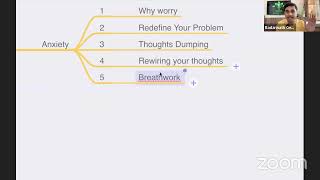
Then what you have to do? You have to take action, not about worrying. What are the different ways You can learn skills. You can even— you can teach yoga and earn money if you want. There are so many ways, right? But again, some people will say, no, how can I do yoga teaching? Like, that's very disrespectful for me. Those kind of people also there, right? I want a job which gives a great profession and all pride. Then like again, you are making yourself complicated. Or else there are so many other skills. There are skill centers in India where you can go and learn some skills. Government is teaching the free skills. There are so many coaches who can help you to learn different skills. Then why worry? People say, I don't have money to spend in education. Then how, how did you spend education? Like you, you have qualified your at least bachelor's degree. Or like your schooling, right? You got money for your school, you got money for, uh, like, uh, for your children's school. When it comes to you, why there is no money? That is, they are going to give you some money without you knowing the skills. How will you get the job? So you have to find a solution. Why worry? If you are worrying, you will not get solution. That will make you more complicated. That's all. So always ask, why worry? This is the question you have to ask. If you get worried, will that problem solve? If not, what is the thing you can do to solve that problem? Second, redefining your problem. Very, very, very important, dear friends. One of my guru, like I learned, like I think Swarnima also knows, he said one example, right? He said, so he Got a— like, uh, like, he is— he also teaches yoga, spiritual leader and all. Suddenly he got some heart pain, and they did the surgery, and they found two blocks in his heart. And he was not ready to go for surgery, but he went for surgery. He went to the doctor's— took him to the hospital, and he went to the surgery, and he was on his bed, surgery bed. What that person has to think that time? Tell me. He has two choices. Either he can get worried about why I got this situation, I was doing exercises, I was doing all these things and all of this. But what did he choose? You know, he chosen, I'm so grateful that I got good doctors who can heal my problems. I'm so grateful that I got some nurses who can help me. I'm grateful that I can afford this operation. I can afford this operation. That is what going in his mind. That is what is in mind. Doctors were surprised that Guruji, it takes months for people to heal. Within one week, like, we cannot even imagine like this progress what you had. That is what doctor said. You have two choices. Either you can get more worried about like what the problem you got— oh my God, I got this problem, I got this problem— so, or else you can say take that positively, that now you have a solution, that you have found a teacher, or you found some solution, you found like a family who can support you, like to help you in this solution. Look into the other side. Like there are two lenses, like he told you, right? Anshuman showed you the water. Somebody sees the empty cup, someone sees the water in that cup. So what do you see defines your life. What you see defines your life. So like, you have to, you have to redefine your problem, whatever problem you have. So like, how you redefine your problem and thought things, thought technique which you can practice Effective ways of anxiety management. All these things you have to do for long term, at least 15 days, 21 days, or 30 days. See, your mind is thinking in one direction. If you want to change the direction like to different, it takes some effort. Like for example, if you are a left, left, right hand writer, if you have to write with the left hand, you need some practice. Right, so you have to train your mind in that way. So that's why it will take some time. And thoughts dumping, one of the techniques which you can do, like, because people who has anxiety or stress, they are overthinkers. They think so much. They think what I have to think also.
You got it?
They'll not allow me to think. They think what I have to think also.
Okay.
So don't think what others have to think. Think only yourself. Okay, so like, that is what also— that is also making you anxious. So don't overthink. So big smiley, right, in the chat box. Uh, so like, uh, so this person is thinking like that about me, like he might be thought like that and all. So yeah, exactly. So think only what you can think, not other people's, uh, thinkings. So like, what you can do for this is like you write down all the thoughts which is happening in your mind. So many thoughts, all the overthinkings and thoughts and everything, dump them in a paper. Do this exercise for at least like, I think, uh, 11 days or 21 days. I am telling you, like, you will, like, you will see, like, like, uh, you will yourself realize that why am I getting all these thoughts? It's waste of thinking about all these things. I know that I cannot change all of these things. You will get more awareness, you'll develop more awareness about yourself. That is what I am giving. Again, sir, how to change the thoughts? Here and now you are asking. Am I giving solutions or not? Yes or no, type it in the chat box. Yes. So you are seeing with different eyes. You wear the glasses now. Okay, the first technique I have told you is why worry? Like, ask yourself, if I get worried this, this problem— like, for example, if I worry today, like, for next 1 week, will I get 1 lakh? If that is the answer, worry for 1 week. All other also will join with you. Okay, so if that is not the case, don't worry. Then find a solution. Okay, so there is no use of, uh, no point of getting worried if that is not the case. Then redefine your problem. So like, instead of thinking that why I got this problem, think about the other positive aspects of that. Like, because the moment you think that why I got this problem, my health got deteriorated, my health— see, like, when you got first symptoms, you would have taken care of yourself You are 100% responsibility for the what you have created in your body. You have to take that 100% responsibility, then only you can solve. Then thoughts dumping— dump all your thoughts in a paper. Then fourth, rewire your thoughts. Rewire your thoughts with positive thoughts or different, different thoughts. And fifth one, of course, breathwork. Why breathwork I added here? You know, breathwork can help you to calm your mind and think properly. Think properly. Okay, 1 minute. So think about, uh, like, uh, like give you clarity of mind. So for the— for 1 hour, 2 hours, you will have that clarity of mind. When you practice breathing exercises, when you have breathwork, but after 2 hours again your mind will take over, right? So when that mind takes over, before that mind takes over, write it down. What you can do, like for example, I told you like what you can write. I told you rewiring your thoughts. How will you rewire your thoughts? Gratitude. Like I'll show you like how will you rewire your thoughts. So this, this comes under the qualities you have to develop. First one is Gratitude, where you can write 10 happy moments of the day or 10 things you are grateful for. Some people come and tell me like, there's no moment I made— made me happy. That means you are making your happiness complicated, right? And second quality you have to develop is acceptance. The reason people fall into anxiety or stress, because they want to change their partner, they want to change their in-laws, they want to change some neighbors. You can't change anyone. People have tried for years and they have never succeeded. Okay, just accept them as they are. Was this powerful? Yes, we want to change our kids. Right, so I mean, see, some aspects, some elements you can work, but you cannot expect them like to be the way you want. They have their unique way to live their life, uh, right? So you cannot change like— and also like there should be a structured method. Like for example, you are coming here, your mindset is getting changed a bit, right? So there is a progression towards all of this, right? So but I am not asking you to become like me. I want all of you to become like you only. But by discovering you, so I am making you all realize about yourself. That's all. I'm not asking you to become like me or like others or somebody, because everyone want, uh, like everyone to be like them. Everyone want everyone to be like them. They want the whole world to be function like the way they want. You want your prime minister to be like you, you want your mayor to be like you, you want chief minister to be like you. Why will they be like you? You get stressed, so they'll not be like you, right? So like, they are not in your control. That is what I want to say. So what is in your control, you can change. What is not in your control, you cannot change. So accept people as they are. Third thing, forgiveness. You have to forgive others to help yourself, not for others. If you don't forgive them, they will occupy a lot of your space, mind space. Our mind also has like how your hard drive, hard disk has 500 GB, 1 TB, your mobile phone has 100 GB. 10 GB get occupied because of that person, because you did not forgive that person, and you are wasting that 10 GB space in your mind by thinking about that situation, that person, and all. So try to forgive the people who caused you the stress, fear, anxiety, and all. Like, if somebody is doing, like, causing you this, okay, so try to, like,
More from Badarinath





How Conscious Breathing Transformed My Health, Family & Career | Inspiring Success Story

International Yoga Day Celebrations 17th to 21st June | Morning 6 AM | Evening 7 PM

30-Minute Breathing Exercises | Reduce Stress & Improve Lung Health | Yoga Day | @badarinathgella


