Science of Meditation: Benefits, Techniques, and Myths
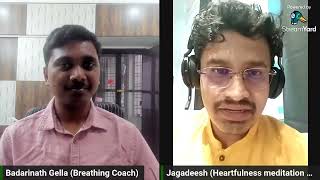
In this episode of the "Breathe Well and Live Well" podcast, host Badri Gella interviews Jagadish, a certified Heartfulness meditation trainer and yoga teacher with 15 years of practice. Jagadish shares his personal journey into meditation, inspired by his family’s long‑standing practice and a scientific curiosity. He defines meditation as focused attention that expands consciousness, distinguishing everyday concentration from yogic meditation that seeks to raise the mind from subconscious to super‑conscious levels. The conversation delves into Heartfulness’s core techniques—Cleaning (removing mental impressions) and Yogic Transmission (pranahuti, the “soul food” transmitted by a trainer). Jagadish explains how these practices can address the root causes of physical and mental ailments, citing epigenetic effects, improved breath regulation, and reduced stress. He tackles common misconceptions, such as equating meditation with short‑term relaxation apps, the fear of intrusive thoughts, and the belief that meditation is unnecessary for already “happy” people. Practical guidance is offered for beginners: start around age 14, seek a qualified guide through prayer, use free resources like worldwide Heartfulness centers, the Balkana Shanti Vanam ashram, and the Heartfulness mobile app. The link between breath (pranayama) and meditation is highlighted, noting that balanced breathing normalizes the pranamaya kosha. Finally, Jagadish emphasizes meditation as a tool for self‑discovery, destiny design, and deeper connection with the divine within, encouraging listeners to begin with just five minutes a day and utilize the free support network.
Chapters
Oh, hi, namaste. Welcome to Breathe Well and Live Well podcast. Today we have Mr. Jagadeesh. He is going to share about meditation, how you should do the meditation, and what are the benefits of meditation, the myths of meditation. So Mr. Jagadeesh has been practicing meditation for the past 15 years, and he's also a certified teacher from Heartfulness yoga teacher as well as Heartfulness meditation trainer. He gives meditation sittings for many people across the world, also across India. So I heartily welcome Mr. Jagdish for accepting our request and coming here and sharing your knowledge to our audience about meditation. Thank you so much, Jagdish.
Thank you, Badri. Thank you for inviting me for this wonderful conversation. I hope it will be delight to have this with you because I know you as a friend, as a yoga trainer as well. So I hope this conversation helps a lot of people and then many take up meditation as practice.
True, true, true, true, true. That is the— that is my goal as well. So that is the reason I wanted to bring experts like you to really share some valuable inputs as a, as a person, as a practitioner, as a teacher. So Jagdish, like, as you know, like, uh So we all are in same batch and same age, same similar age. So what really motivated you to start meditation and when did you start meditation and how did you start meditation?
Right, I think this is a wonderful question. I really like to enjoy answering this. My mother started meditation well before I started, and as a science graduate I was wondering what they are doing. They're just sitting, keeping their eyes closed, and then meditating without doing anything. I mean, not only my mother, my father also started, and then my grandfather, grandmother. They were all meditating at one place. And I, being a science graduate, I was, I think, back then 15 years. It was like wondering what are they doing silently. Are they into something else? Are they something into some cult? Where they are going astray or something. Slowly they gave me some books to read, and there I found that, you know, the meditation practice had a scientific background. And not only scientific background, it had a big history in the Indian science of mythology, right? Right from the age where, you know, the rishis were meditating. And, uh, there was this, you know, chance where, you know, most of the rishis were innovators. They were scientific thinkers. They were builders. They were architects. But yet they were meditating. So I came to know that some of the inspirations what they get, that is all because they meditate and they have some scientific bent of mind. In the meditation. So that's what, you know, kind of kindled me inside that I have to take up meditation as a practice. And slowly it has changed me. I mean, it has been changing. It is, it is, it is never-ending process. The more I meditate, I'm— the more inspirations I get in the life. It also guides me to what lifestyle I have to lead. Yeah, so that's how, with my— with the inspiration of my mother, I started And all I got a good guide, I got into the right system, I would say. So that's how I was lucky enough to get into the path of meditation, especially Heartfulness Meditation.
Yeah, great, great. It was very inspiring. So to audience, like, I just want to let you know all that, like, like, like Jagadish is the one first person who introduced me to the structured meditation. Right? So he's the one who really, uh, like, uh, like taught me like how to exactly meditate. And since then I was very curious to explore what is really meditation. I was doing, yes, yoga, and yoga meditation is one of the important elements, but I was only focusing on Asana and the pranayamas, but I was unable to focus So, but Jagadish has answered many of my questions, and also he introduced me to Heartfulness Meditation, one of the powerful meditations, one of the leading organizations in terms of meditation in India. And also the beauty part of this is like we do it for free of charge. So that's the greatest part of this Heartfulness Meditation. Thank you so much, Jagadish, for sharing this experience. So Jagadish, like So many people want to meditate, as I also know that when I read about successful people's patterns, everyone are doing some or the other form of meditation.
Right, right.
So everyone like, but struggle to meditate. So I wanted you to explain us what is meditation and what are the different types of meditation practices.
Yeah, so if you look at the Oxford Dictionary meaning of what is meditation, It is a single-minded focus on a single subject or a single thing. Uh, unknowingly we've been meditating all our life. For school children, he is meditating on his subject, whatever he has to study, right? If you look at a— if you get a graduate who is going for his exams the day before, he would be studying on a single subject and his whole mind is focused on that particular subject. So he's basically meditating on that particular subject, and that's— and not whatever his knowledge is. For a person who's working professionally, and if he's too deep in, in, in his work style, he's also meditating because he wants to get the best results. And for a doctor who is operating the patient, he is focused. So that's also a meditation. But, uh, for me, meditation in a different sense, from the yogic science perspective, is expansion of consciousness. Now you would say, what is consciousness? Consciousness is something which is the base of everything. Uh, you know the famous, uh, equation E mc². That energy can transform to mass, or the mass can be transformed to energy, right? So this consciousness is like the, the energy spectrum, or the, the mind spectrum, I would say, or the different levels of spectrum. You have subconscious levels which are deeper, and then you have something called superconscious level, which is something higher. Now, what Indian tradition says is that if you go into your own self, into the subconscious level, you see what you are inside. And then based on what you are, you, you can define, you can track yourself. The moment you change your consciousness, your lifestyle changes around you. Yeah, the reason we meditate is only because of that, that when you meditate, you're changing your consciousness. There is a different level of conscious changes which is happening day by day as you meditate. The finer the consciousness, the more better it is, because now you are able to design your destiny. You are able to design your fate. Now there are many horoscopes, almanacs which says, you know, your fate is fixed, but I would say it is not so. Your fate can be changed, and that is by meditation. And that is the biggest advantage of having meditation in your life. Now you can change your destiny, and that is what my master says. In his famous book where he has written about Designing Destiny. That's his famous book, and he says some of the practical examples and as well as methods which he describes, and he gives a live example as well how meditation can change life.
Wow, it's very, very interesting to know like about raising that consciousness and expanding that consciousness is very, very much, very much required provided at this moment. And also the listeners who is listening, like as Jagdish mentioned, I experienced that you are the creator of your destiny. You can change the destiny once you understand about you. Meditation, the tool which will really help you to understand about you so that you can change your destiny. So again, the quality which I wanted to mention about Jagdish is like, uh, when I was starting my early stages, I was very anxious Uh, like, um, I should say so many things. So he used to listen very cool. So I used to surprise, like, how this guy is very cool, like he don't react, you know. Like, Jagdish, if you observe, like, you never used to react to whatever I say. Like, I wanted to do so many things, and I, like, by— because my desires are more. Like, when I am going deeper and deeper into my practices, I could able to control my desires. And, uh, I understood like how to establish that state. And also one of the things he mentioned is, uh, like we are unknowingly meditating. Like we are meditating in our whole life. Meditation is a lifestyle. It's not something that which you do for 5 minutes or 30 minutes. Am I correct? Yes, it's a lifestyle which you have to integrate. Whatever you are doing, whether you are walking or whether you are reading, whether you are traveling, when you are doing that with complete focus, complete attention That is called meditation. So that is what he means, like the goal of meditation is to establish that state. It's not only for that half an hour or 30 minutes. You have to be mindful whatever you are doing throughout the day or throughout the years. Great.
Yes, yes.
Yeah, so I have—
yeah, go ahead. No, I, I would like to add here something, you know, the What we do here is very specific on our heart. As is our methodology is based on what we meditate on the heart. And as you know, there are different scientific advancements and there is also scientific research. There was a famous book, you know, by a person who has written, it's called The Heart's Code. Okay, in that book There was a doctor who was a cardiologist, and he has transplanted the heart to another person. Okay. And the person says that heart is— the heart is even more bigger, even more consciously bigger than the mind spectrum. Mind is just very, very minimal. Now, the method to control the mind is by the heart. And that is why we meditate on the heart. And heart has all the points connected from all over the body because it's a pumping station. And when you meditate on the heart and when you purify this heart, the purification enters to each and every particle of the body. And that's when you unknowingly are changing the whole body itself. And this has been proved in one of the scientific papers where there is this epigenetics. Because, you know, we are defined by our genetics. I can say that, you know, my genes are from my father and there is no change. I cannot change my genetics. But then, yes, for those people who meditate, especially with heartfulness meditation, there is this chance of changing the genetics itself with epigenetics. And I can change my bodily structure, I can change my reactions towards the situations, and also define this intuition. Now, intuition is something, you know, many people are looking— if a child is intuitive, he can study well. If a professional is intuitive, he doesn't have to waste time in making decisions. His gut feeling or the intuition is active. And that is what is the advantage with meditation, with heartfulness meditation.
Yeah, yeah, got it. Wow, it's very, very interesting. Like, we don't really— so when you're answering this, when you're saying this, like, everything lies within us, right? So it's just like we have to get closer to us so that everything will happen. Right, so I think like viewers who is listening to this, especially through form of meditation, like Heartfulness meditation especially, like when you, when you understand yourself, like you can also like, like change your genes or whatever like you want. So that is what Mr. Jagadish also mentioning. Wow, it's very, very inspiring and interesting and going very deeper, and which is very, very required at this moment. So my next question to you, Jagdish, is, um, can meditation help? Uh, like, are there any physical and mental health conditions that can benefit from regular meditation practice?
Yes, uh, with the regular meditation, uh, with the introduction of, uh, relaxation and cleaning, right? So we have these three sets of techniques which Heartfulness Meditation incorporates. Okay, now let me take up the subtle body. So there are 3 bodies, as you know: the causal body, which is the atman, the subtle body, which is the mind spectrum, and the karmic body, the physical body. Now, whatever the karmic body— the ailments, right, the diseases— is because of the fluctuations in the pranamaya kosha. The mind and the Vijnanamaya Kosha, right? The subtle body frequencies. Now when we say that, you know, the mind is not doing well, or when we have taken up a lot of emotional loading within us, which is kind of impurities in our mind, that emotional loading becomes the cause of physical ailments, the physical diseases. It manifests as physical diseases. Yeah, many doctors, they treat on the physical body, but then they won't treat on the ailments which is causing that. The root cause is always in the deep-rooted in the mind. So with Heartfulness Cleaning, that is what we have, is that when we do this Heartfulness Cleaning, we remove this deeper impressions which is causing the ailments. Now in some way, there are a lot of examples where Patients suffering from deep, uh, skin diseases or anxiety problems, stress problems, they are solved because they are able to incorporate these techniques of Heartfulness Meditation and Cleaning, right? So when they do that, they are really, you know, they can feel that, you know, all this are getting reduced day in, day out with repeated practice, and they are able to control, have a control in their Lifestyle as well. So what Axolotl offers is a root solution. So that is what is, uh, we, we offer free for the public.
Yeah, great, great. So like, yeah, the key takeaway would be like solving the root of the problem. Otherwise you are not just addressing, you are just addressing the symptoms of the problem, and again the problem will arise.
Yes.
So here, when we like understand what is the root of the problem, because many of the problems like originated from your mind, like whatever we are facing, like all the problems. So once we understand the root of the problem, once you address that problem through the form of meditation or cleaning, so surely like you will be having long-lasting results rather than symptomatic results. Yes, that's a very, very wonderful, uh, explanation, Jagdish, because even I am planning, like, my goal is also to, like, address that root cause of the problem. Otherwise there is no purpose of just doing all this, like, again and again. It's become cyclical. You have to come back, you have to come back. So, like, once we address, like, you will find a relief from that problem. So again, like, uh, Jagdish, like, how long does it take to see the benefits of meditation, and can these benefits be maintained long term?
Yeah, so this is a nice question also. The, the instant, uh, you feel the changes, right, you would appreciate it. And that is what Heartfulness Meditation offers. Now, what, what is the difference between the other types of meditation and Heartfulness Meditation is something called Yogic transmission. In Sanskrit, it is called pranahuti. Now, when you break down the word pranahuti, it means the soul food. Prana, and when the trainer is able to transmit this pranahuti, which is the soul's food, right, the soul's energy, it's like, you know, uh, you're watering, uh, a plant which is dried. The moment you would water it, you know, blossoms. The same way, when you receive the first pranahuti, the soul blossoms for that particular person, and he immediately, you know, kind of enlivens. So that is what the initial introduction— you will be able to, you know, distinguish between other forms of meditation. With Heartfulness Meditation, we offer it for free, and and you can connect to trainers around 180 countries. We have around 15,000 trainers across the world, all volunteering for the same cause. Now, the second part of the question is like, you know, how long will it retain? Uh, it all depends upon how intensely we want it, right? Uh, if you want to retain the condition, you have to keep it as a meditative state. You have to constantly remember that condition and make a part of yourself. Now, what we say here is that the moment the meditation is completed, we go deep, we imbibe those conditions inside to each and every particle of our body so that it remains forever. And then not only stay there, but then expand it. Now, the moment you change, your consciousness is changed, the way you look the world will change. Yeah. And that is when you, you expand your consciousness. True. So the, the— so, uh, you are in a way, you are putting your condition outside. So when you converse to a people, you kind of, you know, speak with that condition, with that purity, with that, you know, dignity inside. That divine vibrations ooze out from you when you complete that meditation. And that keeps spreading. So wherever you go, in a way, you're spreading that condition and you're expanding it even more better. And when you are expanding and when you are always constantly giving, it will never go empty with you.
Yeah, yeah, true, true. That's a very, very interesting explanation. Like, it's about changing the way we see the things. Like, because Because, uh, as you all know, like, if there is something, uh, like a mobile phone or a flute, so I'll be thinking about what kind of flute is this. Is it a Carnatic flute or Hindustani flute, or is it bamboo flute or anything? But some person might be thinking about different things, like, so how to play this flute and all. So it's a— it's, it's like the practice of this will really change the way you see the things, is what, like, um It's a, it's very, very interesting point which you have mentioned, one of the interesting point. So yeah, Jagdish, like, uh, so there are so many misconceptions about meditation, you know, like, so when I, whenever I speak to the people, like, they say like, I can't meditate, and, uh, like, there are so many misconceptions in the, like, it comes. So what are the some, some common misconceptions about meditation? And how can they be addressed?
Yeah, I think there has been a lot of, you know, phone app applications also, which is, you know, they say that, you know, you can meditate for 10 minutes. They'll put a nice music and then they'll say this is what is meditation. But, uh, that is not so. I mean, it is just, you know, relaxation, I would say, a calmness, a calm environment. Yes, right. So there are also things that, you know, people will be afraid of going into meditation because they are haunted by thoughts, they're haunted by their previous events, or likings or dislikings of certain things will come up immediately into their mind, and there'll be a total rush of these things, so they don't want to meditate. So the other part of people, they'll say, okay, I'm I'm not into meditation because, you know, I want to enjoy life. What is the need for meditation? I'm already happy. Yeah, I'm already stress-free. I have all things in my life, and what to do with meditation?
So, but yes, but my question is like, people who are having a lot of thoughts, right? That is one of the biggest problem. Like, whenever they close their eyes, they, they're finding more, uh, like stressful than like keeping watching the YouTube or Facebook or social media. How can be addressed?
Yeah, so there is a simple technique which we follow, uh, is, you know, whatever your mind is taking an attention, it draws that attention towards those thoughts, and then the thoughts will, you know, be there in front of you. So you treat thoughts as barking Often you ignore them. The simple subtle ignorance of unwanted thoughts during meditation is, you know, is to be mastered upon. It should not be done forcefully also. Now, what aids this deeper states of meditation in our system is pranahuti. The moment you experience pranahuti and without pranahuti, right, without yogic transmission, and with— without yogic transmission, you will see the differences. With yogic transmission, you can reach deeper states of levels without much of influence of your thoughts. But with the other forms of meditation, you will be, you know, fighting with thoughts. You will be, you know, kind of, you know, juggling with, you know, either this or that. You'll be going with your processing of thoughts as well. You'll be going with, you know, should I do this in my life or do that in my life? Your mind will be occupied. But then the simple things, the simple practices of Heartfulness is that, you know, you go deeper states. You're going above mind itself. You're not in the region of mind. You're going above into that conscious realm. So when you go into the conscious realm, there is no activities of the mind. You're not, you know, least bothered of the activities of the mind. You can simply ignore them.
Hmm, yeah, yeah, got it, got it. So that's a very, very interesting point. I think when you implement these ideas, I think you can succeed that. So, uh, like, like, uh, Jagdish, I have one more question, like, which is like, can meditation be used as a tool for personal growth and self-discovery?
Absolutely. Meditations have been used by rishis I mean, we are the forefathers, I would say, for the yogic sciences, right? Most of the yogic sciences are defined by meditation, a pure meditation, which rishis were, you know, going at the mountains. Not only rishis who were ascetics, but also family men. So if you look at, you know, examples of Vashishta, right, he was a family man, he was meditating He was— he's written a lot of books, and he was a guru of Lord Rama, right? The yogic sciences. And he has written a famous book called, you know, Yoga Vashista for self-realization. It's a famous book. I think I recommend everyone to read, because in the times of Lord Rama, it was all about discussions about how to meditate and how to discover this conscious realm, right? So which is— we have, you know, largely forgotten By, you know, kind of, uh, sadly we've forgotten that. But yes, this is a time, this is the time to re, you know, rediscover this absolute rediscovery of our own selves and absolute rediscovery of our yogic science.
Yes, that's true, true. That's absolutely true. It's like somebody has written this, like how does this knowledge has come to this planet is like because they, they initiated and they discovered and they have documented documented on the books so that it will be helpful for others to experience what they are experiencing. It's very, very interesting.
I, I simply say this, you know, you see many gods. You see Lord Shiva meditating, and you see Lord Rama meditating sometimes. You see Lord Vishnu, you know, he's always into meditation. But why people don't meditate? They are the examples, right? We are happy with just doing puja, but then that is not to stop. In the earlier time, those idols were made with meditative force so that people will start practicing meditations. So that is the essence which we have missed. That's a sad part.
Yeah, true, true. That's very, very important point which you mentioned, like they transmitted that energy to that idols. So for example, if you see Like, that's what I say, like, to the people. Like, instead of, uh, it's not about going to the temple. Like, through meditation, you connect more closer to the God.
Absolutely.
So it's not only about following your rituals or going to the temple. And you, you are, uh, like, many people are thinking that God is only in the temple, God is in Tirupati, or God is in Kashi, or somewhere. But God is in you. But you are forgetting to discover that God, right? So that God can be anyone. It cannot— it can be Krishna, it can be Rama, it can be Allah, it can be Jesus, it can be anyone, any form. We call him as a universe, the creator who is the one who is— who created this. So if you really want to get closer to him, this is one of the important tool which everyone has to practice. I feel like, I believe, right?
So yeah, um, and, and, and, and, you know, to add to it, whatever you're saying, you know, in the famous book of Bhagavad Gita, Lord Krishna himself says that how to, how do, how to find, find Lord, you know, Arjuna says that, you know, now this is the battlefield, now you've given the Vishwarupa Darshan, right? After this yuga, how to find you? For a layman, right? And then my master also says that, you know, in the Lord Krishna says that, see me in the heart. So in each of our heart, we have the divinity residing. And then that is what is the object of meditation. Yes, to be kind of go inside to find himself. Ourselves. That's, that's the point, uh, what, uh, the reason for meditating this.
Yes, yes, truly. You feel like— I felt like when I, when I started doing this, I felt like I'm getting closer to him, closer to the universe, closer to the creator, uh, so whom— whomever you believe. Again, like, there is nothing— like, everyone are same, like we call, like, everyone is a same consciousness. So it's a very, very interesting point like that you have brought up, Jagdish, and I really appreciate you for that. And thank you so much. Like, I am putting my heart out in this discussion because, uh, I can see a lot of similarities. Like, why did I really realize this, uh, like the importance of this? So like, Jagdish, one of the very, very important question, like, uh, many people ask me about this. So how can beginners get started with, with a meditation practice, and what tips would you offer to them to help to stay consistent and motivated?
Okay, so, uh, you know, there is, there is this, uh, fact that, you know, meditation is to be started Well before conception, for the couples, there is a scientific thing which has been explained by the yogic science that meditation should be started by the couples before they conceive. Because when the child comes, they come in that vibratory level. So if at all a meditation has to be started, it has to be started with the conception. By the couples who are meditating, right? That's one thing. Now, if that has been missed, then a person can start meditation when he's 14 years of age. That's when, you know, his brain is able to conceive things. He's in the right track. He's left all the childish behaviors. He's able to learn about new things. He would like to design his own career, or he's his lifestyle. That's when meditation can be incorporated. And when, when it is incorporated, it has to be done with a proper guide.
Yeah.
Now, how to find this proper guide is with prayer. Now, you need to deeply understand that, you know, this is something very deep. It is to, to be reborn into myself. Like, you know, I'm born to this world, but But to reborn into this higher levels of world, higher levels of vibration, I need to have a proper guide as well. So we need to find out that perfect guide who can, you know, help in the course. Now coming to the age and, you know, how we can start our Heartfulness Meditation, as in number of countries, 180 countries And in India at least, we have around 300 ashrams, 300 meditation centers, Heartfulness meditation centers, and we are offering it for free as well. And if at all, if they are not able to offer, they can, they can connect directly one-to-one with many of the Heartfulness trainers, uh, home itself. So they can go directly and then they can get, get themselves initiated with 3 introductory sittings. Now this is one way of starting the meditation. Now the other way of starting meditation is, you know, when we have group meets in our center. We have a biggest and world's largest meditation center in Hyderabad. It's Balkana Shanti Vanam. And any walks of life, any, any caste, any, any, any kind of persons are free without any, any distinction can come there, stay there, you learn meditation, learn the art of meditation, and, uh, you know, they get it, uh, try to get it, get these tools incorporated in their daily lifestyle. Now the other way which we have recently introduced is Hacksinus app, uh, wherein, uh, you can log in with your mobile phone, and, uh, with that you'll be able to— you'll be guided with something called master classes. 3 days. It is completely free. And then from there, if you can enroll, it will be a kind of an e-course. So once you enroll, you'll be given a digital iCard, and with that you can log in for further classes. So that is a completely virtual setup which we have. Great, great.
Thank you, thank you so much, Jagdish. And as you know, I am a breathing coach. Like, uh, I surely want to take them to the meditation state. With the help of the focusing on their breath. So, uh, what is the relationship between breathing and meditation, and, uh, does breathing helps in their meditation?
Yes, I think the— I thought, you know, this was the first question you will ask to me, but then it came up last. No problem. Yeah, so it definitely helps out, you know. If you look at, uh, people suffering from emotional imbalance And people suffering from, you know, diseases where they are getting sudden pains in their left leg or right leg, and there's a heart attack. It's all because, you know, the variation in the breathing pattern. And as you know, you know, there is this pranamya which, which will solve this problems for, you know, energy imbalances. Yes, but that is an instant solution. Now, that is, that is the solution of having meditation is when, you know, when you meditate, when you are going into the deeper state of state, uh, in the meditation, your breathing pattern normalizes. Okay, there is a Surya Nadi and the Chandra Nadi. And you will be able to see that, you know, that becomes, uh, which is in the center.
Yes.
And, uh, when it is centered, when your mind is centered with the meditation, your pranamaya kosha becomes balanced. And similarly, same way, the breathing patterns will also get normalized. That is one of the advantages of meditation, where your pranamaya kosha gets balanced and your breathing pattern harmonizes, so to say.
Yes, yes, that's very, very important and interesting, right? So especially when you are meditating, as Jagdish mentioned, your breathing also slows down, which is very, very important, uh, element of our health. So as per yogic sciences, we say our life is between number of breaths, not number of years. So the more slow you breathe, the better it is. So that the meditations help you in reducing the speed of your breathing. Also, the breathing helps you in taking— going to the state of meditation. Slowly it relaxes your body and bringing focus and attention to your breathing, and slowly you can go deeper and deeper and also fix the ailments of your pranamaya kosha and the balances of energies, which is mentioned by Jagdish. So Jagdish, it was a very powerful, power-packed, informative session, and we have We got a lot of golden nuggets out of this session, especially the viewers who is going to watch or who is watching this video. So please note down all the points which Javedish mentioned and organize them and start implementing. At least 5 minutes, start with 5 minutes. You don't need to do for hours, at least start for 5 minutes, commit for that and start for 5 minutes. Give time to yourself, connect with yourself through the form of meditation. And if you need any help, there is free help also available through Heartfulness organization, Heartfulness WhatsApp, and many other sources. Even if you just Google, type that, so you can find all these resources. You can reach out to any one of them, like even to Jagadeesh. Like, he will— he would be very happy to help you all. Uh, so I seen him and I seen many of the trainers from this organization. They, they wanted to help the people. That's why they are volunteering. And they will, they will guide you with the step-by-step process how to initiate and everything. So utilize these resources. And thank you, Jagadish, again for coming here, taking your time, and enlightening our audience with the benefits of meditation and how they should start their meditation. Thank you.
Thank you, Badri. Thank you. It was a wonderful session, and I was happy to meet you on this platform. I hope it reaches many more audiences in the coming days. Thank you.
Yeah, it's the goal. It's the goal. Like, yeah, thank you.
More from Badarinath





How Conscious Breathing Transformed My Health, Family & Career | Inspiring Success Story

International Yoga Day Celebrations 17th to 21st June | Morning 6 AM | Evening 7 PM

30-Minute Breathing Exercises | Reduce Stress & Improve Lung Health | Yoga Day | @badarinathgella


