Dietetic Internship and Private Practice - All You Need to Know!
Registered dietitian Felicia Peraza and Beryl Krinsky, founder of the Komplete Business Dietetic Internship, walk through the path to RD certification and starting a private practice. They cover the 2024 graduate-degree requirement, different internship formats, how to find preceptors, and the business side: LLC structures, liability insurance, NPI numbers, and early marketing.
Chapters
Hi, everyone, and thanks for tuning in today. I am Felicia, owner and registered dietitian at Peraz Nutrition, LLC, and My Dietitian Journey. And today also here is Beryl. So, Beryl, did you want to give us an introduction to who you are, what you do?
Sure.
Thanks, Felicia. My name is Beryl Krynsky, and I'm the founder and director of the Complete Business Dietetic Internship and also the founder of Be Complete. And really looking forward to our conversation today.
Awesome. So today's main topic is the dietetic internship, but we're also gonna be talking about private practice tips as well. So before we jump into internships, I thought it would be helpful to maybe just start with how do we become a dietitian? So Beryl, we'll kind of maybe go off of what both of our experiences have been, but in general right now, before we get to the master's requirements, we will talk about, We do need to complete a bachelor's degree, and then you receive a verification statement from an ASCEND accredited program. And then once you complete the ASCEND accredited supervised practice dietetic internship program, which we will talk about, or individual supervised practice pathway is also another option, then you will sit for the Commission on Dietetics registration, dietetic registration exam. So anything I missed in there?
Yeah, that was good. And there's also the option to do a coordinated program where you would do your undergrad and your internship and then also coming up with a master's all at the same university.
Yes. So we have a couple of different types for internship programs. So I know that I have done a distance program. But what was your internship program? Was that distance or was that an on-site?
When I was— a million years ago, when I was a dietetic intern, I did an in-person program in North Carolina.
Nice. So just like Ibarra mentioned, you know, we have these traditional dietetic internship programs which are sometimes called on-site supervised practice. And essentially what those are is that your rotations are going to be arranged by the dietetic internship director of that program. With the distance programs, which is one of the ones that I went through, You're responsible really for setting up your own practice experience. Obviously, you have to meet the same competencies, but kind of the how you go about doing that is a little bit more flexible, but can be kind of stressful in trying to figure out your different rotations and where you're going to go. Um, Barrow, can you talk about the ISP or the individual supervised practice? Do you have any insight on that?
Well, I'll share what I know. For the ISPs, those are run through universities, and if applicants go through the matching but aren't matched with the traditional match, then they can go back to their university if their university has an ISP, and then they can apply to that program. And so that's kind of like, it would be comparable to an on-site or distance dietetic internship.
Okay, so they have that supervised practice experience, but it sounds like it's a little more tailored. And then they're then qualified to sit for that national exam as well.
Yes, it's, it would be at the university that they did their undergrad.
Awesome. And then we have the dual master's degree dietetic internship programs, which I know is, um, it's something referred to as that coordinated program. So you're, you're getting that master's along with it, which I think will be in even more demand, uh, with the upcoming changes that we're going to highlight with the graduate degree requirement. So the student would typically have a master's degree and then be eligible to sit for the national exam. And that was not necessarily the norm, but it will be in 2024. So maybe we should talk a little bit about that and the changes that are coming with that master's degree requirement.
Sure. Yes. So everyone that wants to become a registered dietitian in 2024 will have to have a master's. The good part about that is there's flexibility in the type of master's you get. So a lot of people think of master's in nutrition, which is great, and you can do all different types of master's. Our program has a really cool master's option. We're going to also have an MBA option. So that's, that's great because there is a lot of flexibility with that. And the way that it will, it will operate is you'll do generally, you'll do some master's classes, you'll do some of your supervised practice hours. You'll probably do some type of asynchronous master's classwork also when you're doing your supervised practice, and then you would probably end with a little bit of master's classes, and then you would take your exam. So depending on the program, it could be anywhere from 1 to 2 years. If you're doing it part-time, it could be longer.
Okay. And now with the master's requirement, that's effective January 1st, 2024. So just for everybody who's not aware of what that requirement is, the minimum degree required to be approved for eligibility for the registration exam for dietitians will change from the bachelor's degree to a graduate degree. But like you mentioned, Beryl, there's a lot of flexibility and, you know, what types of degrees, um, kind of fall under that. And, you know, for me, I have a master's in dietetics administration, which is not, you know, the norm of, you know, master's in nutrition or, or one of those. So it's nice to know that, you know, future students can really kind of be flexible in what kind of degree they might get as a master's.
Absolutely. I have a master's in food science, and I really— I thought that was a great master's because it was very different from my undergrad, and then it opened up a tremendous amount of opportunity within the food industry, which I know we'll touch on also. And then later I got my MBA, and that also was hugely beneficial for being an entrepreneur. And that's something I would encourage applicants to think about. Also, if people are coming in, if they already have a master's degree, they don't have to do another one unless they want to. But then they could just do the straight internship pathway. So they would do the supervised practice hours, and they wouldn't have to take any of the master's classes.
Okay, that's a good point to me. And that's, you know, I like that you mentioned that, you know, you had a lot of benefit from those different degree programs that you had. And, you know, for me, my master's in dietetics administration, and I was lucky in that my undergrad or my internship came along with some graduate credits. So I actually didn't have as many to complete when I did finish my internship. And I had, you know, delayed it by a year anyway. But I had some entrepreneurial classes and then it was very much like you actually had to be working as a dietitian to be in the master's program because you actually had to implement like a project in the workplace. So you need to be working as a dietitian to be able to do that. But that's a really good point of, you know, there's a lot of times I'll hear people say, you know, is it required? You're like, do dietitians really need to have a master's degree? Is it going to serve them well? Do they need to have this? And I think it really depends on what kind of degree you choose, right? You know, because you'll be able to get— if you're looking at a degree from what can I learn from this and what kind of degree can I pick that'll align with my goals and my values, then of course it could be worthwhile. So have you heard any pushback yourself as to the master's degree requirement and how do you mean they'll handle that?
The biggest pushback I've heard is the financial consideration because it is, you know, it is going to be an additional expense. It's kind of like another year or two of graduate school. And then I've also heard some interns, they're not sure what they want to get their master's in, and so I always encourage people, just like you said, to think about what are your career objectives, what do you value, and think a little bit outside of the box because you might want to do something— unless you know you want to do something, you want to do clinical, then get, you know, a clinical master's or a nutrition master's, but if you think you might want to do something else, then consider perhaps a master's in communication or psychology or marketing or, you know, different areas, because that helps diversify your background, which ultimately makes you more marketable when you're going for different types of jobs.
That's a good point. And that's— I've heard that a lot too, of, you know, I don't really know, I'm like picking my long-term plan of what I want to do. And I don't really know what I want to do. And it's sometimes hard to figure out until you're really in the field too, outside of the internship, because you're learning so much throughout that. And It's like, well, I don't really know until I really get into it. And even I've changed, you know, different career paths. I was in retail dietetics and now in private practice and now teaching. And so, but I think that's a really good point is that, you know, choosing something that maybe is a little bit different than, you know, just the straight dietetics. But also I think what's really nice about dietetics in our field is that continuing education and certifications. So if you find that you end up going with a master's that you're like, it's not really maybe what I wanted to go with, you know, or maybe it doesn't align with where I am now. There's always the option of doing continuing ed in a certain space or getting a certification or something like that to really build that knowledge base and find the gaps that you are missing there. So something else to consider. Yeah. And I know I was reading too with the— I think it was Clinical Nutrition Journal. They had noted that raising that entry-level education requirement can actually help with career satisfaction, professional involvement, compensation, but also putting us more on par with other healthcare professionals, I think was one of the main things of being highlighted. But of course does not go without the, the cost aspect. So I feel everybody there. And we'll link in the descriptions to some information on that grad degree requirement. Some information for students. And then there's also a couple of graphics that I came across on the Academy website with different routes. So before 2024 and then after 2024, which I thought was just a really nice graphic. So we'll, we'll share that as well. So maybe we could talk a little bit more about the distance dietetic internship. You know, I have experience in that area as being an intern myself, but also now being a preceptor. I know Beryl obviously being you know, having that dietetic internship program yourself and then obviously your experience as an intern too. So what do you think, you know, what stands out about that distance dietetic internship program? Or do you really encourage that route for students? You know, what thoughts do you have there?
Sure. I had been a preceptor for about 7 years before starting the complete business dietetic internship, and I worked with about 50 interns. Some of them were from distance programs, some of them were from on-site programs. And I really took to heart what was working well and what maybe needed a little bit of updating. And with distance programs, the traditional model is that there's great flexibility because the intern can stay in your geographic region. You don't have to move to where the internship is located in order to do your rotations, which is great. And you have to locate your own preceptors, and that can be really challenging. So our program is different because we help our interns find their preceptors. We have an— it's a constantly evolving preceptor, potential preceptor list of people throughout the country, dietitians that our interns can reach out to, to determine if they're hosting interns. And a lot of times with those connections, It might not be with that one person, but then that dietitian will say, I'm not taking, but you can reach out to this dietitian who's taking. And our interns have gotten sites that way also, which has been really great. And our board also provides tremendous support with networking and helping our interns get different rotation sites. Let's see, did that answer the question or is there something else I should—
Yeah, and that's, that's really great that you help with setting up the rotation sites And it's funny when you mentioned about, you know, even if that one preceptor can't take on the intern, they often refer. I do that all the time with interns in my practice. Sometimes, you know, with being remote and I, you know, my practice, I work out of my home and sometimes it's not really feasible to have more than really one or two interns depending on what I'm doing and what kinds of things are happening. And so being able to, you know, sometimes say I can't take you on now, but I can send you a couple dietitians who I know you know, take interns or maybe haven't just updated their preceptor profile or maybe just aren't on the preceptor database for the academy. And so students maybe might not know that they're even, you know, accepting interns. Plus, that kind of warm connection can sometimes get you in the door too. So tip for anybody who is trying to find preceptors, even if your first impression, you know, for that first preceptor, maybe they can't take you on, that impression matters because they can you know, send you to somebody else if you give them a good first impression, just in an email too. So just keeping that in mind.
Um, well, I'm sorry, I just wanted to interject. That's a really, really important tip. And for any applicant, and this is another tip when you're applying and you're looking for preceptors, make sure your emails are really professional. Always put a subject line, always do some type of greeting and salutation. You always want to say dear or good afternoon or good morning, whatever the case is. You want— a lot of times you can do a little more formal, whether it's Mr. or Dr. or Ms. or whatever it is. And I advise also to have either someone else check, or if you can't have someone check, write the email but don't send it. Write it, and then the next day spell check, grammar check, make sure everything's correct before you send it, because those emails can make or break if that preceptor is going to write back. To you.
Yeah, absolutely. It's such a good point. And it's not just with, you know, interns that I stress that with, but, you know, with, with students is put— I had to put a whole thing together, you know, put a subject in the subject line, you know, be clear about what you're asking for too. 'Cause sometimes I'll read through an email and I'm like, I'm not sure what people are even asking, Carrie.
Do you—
or I'll have someone who reaches out to me. I'm in community private practice, not in clinical. And someone emails me back at the clinical site. And I'm like, well, clearly you haven't looked at my bio, you haven't looked at my website, you haven't done really any research, you just found my name and you plugged in an email. So that doesn't show a lot to me that you took the time, the couple of minutes to check me out. And so right off the bat, sometimes I'm a little taken aback and then I'm like, hmm, I'm not sure if this is the kind of person. And they could be a great, great intern, but that first impression, it really matters, especially if somebody's busy and they can only take one intern. You know, if you're looking at this email of someone who's talking about a clinical site and you got this other email of someone who looked at my website and highlights things on there, I'm going to go with the one that looked at my website. So just things to consider. And, you know, you might not know that because the person that you email might just say, I'm not taking on interns and not give you that feedback to really know. So such a great point. Any other, you know, dietetic distance program things that you wanted to highlight before we maybe talk a little about some of the changes with the pandemic?
Sure. Yeah, there's another thing that our program does, and I know other distance programs do this too. You can access a sample class— or I'm sorry, not class schedule, a rotation schedule. And this is going to help tremendously when you're thinking about what are the— how many weeks do I do different rotations? Is there a certain cadence that I should do the rotations? When can I start the rotations? When, when are they supposed to end? And you should be able to access that on the program's website, or if you can't, then email the director or the assistant director to get a copy of that. That's really important because then you can use that framework to create, to start to create your own schedule.
That's such a good point. And that, you know, one of the things that I was thinking about with, you know, kind of success tips, and we'll talk about this too, is, you know, that organization. But if you're more organized, that'll really help you in not just getting in the door with a preceptor, especially for a distance program too, but as you're in your rotation too, to make sure you're hitting all those competencies. Because again, with that distance program, there's again structure, but you are a lot more flexible with how you might do things. So you really need to be even more organized. And also with your, your preceptor too, you know, they have other things going on. And so being able to make sure that you're being organized so they can stay on task with helping you, you know, get to the last week and say, oh no, I have to complete all of these things, you know, will keep you— keep the stress levels down too, because that's pretty high during the internship. So maybe we could talk a little bit, speaking of stress, maybe a little bit on the pandemic, maybe that— how that has affected, you know, your program. I know it's kind of affected definitely how I work with interns as a preceptor myself, but maybe anything you want to highlight about, you know, in particular with how the dietetic internship kind of had to adapt in times of the pandemic?
Yes. So our interns started in January of this year, 2021, and we were still in the throes of COVID and what could be done virtually was done virtually.
For example, a lot of the— we have a business, we have 8 weeks of business. That's something that's different about our program. And a lot of that can be done virtually always. And so everyone had to do that virtually. There really wasn't another option. Some of the community, a little bit of the food service could also be done virtually. For example, when you are researching something, if you are looking up things, If you're doing, let's see, you're writing a paper, that can be done virtually, and then other things have to be done in person. So we kind of did a little bit of half and half, and we were flexible, as all programs had to be, because some sites just weren't allowing interns to come in, or if they were, they would say you can come in but not every day. So we had to be, everyone had to be flexible because of that. For our class that's starting in August, there'll still be a little bit of virtual because not everything's 100% back yet, but starting in 2022, the traditional rotations— clinical, food service, and community— will all be done in person in your geographic region. And then business will still be flexible because Felicia and I know business is done virtually, so you don't have to be in person. You can— the cool thing about business now is that you don't even need an office. To have a business. So that's really, really cool. So the business will still be done virtually, but it can be done in person too. And we also have an enrichment, and that's at the end of the internship, and the interns get to pick if they want to do more business or if they want to do more clinical or whatever they pick. So that could also be done in person or virtually.
That's awesome. And that's, you know, a lot of things that I'm so happy to hear, especially with like your, your program, that, that You know, there's that one. I love the enrichment part because it really, you know, sometimes you, at least for me, when I went through my internship, there was, you know, areas I spent a lot of time on that I was like, yeah, I spent time on it, but I'm not as interested in that area. In other areas, I'm like, wow, I wish this was longer than 2 weeks that I was allotted, or I wish there was a week at the end. And especially when it's built in, you know, because it's like you have to commit to it versus like being a little bit more open, like, oh, of course you can get more experience if you need to, but if it's part of your rotation, you're more likely to you know, set that time aside and block it off and then obviously, you know, help it to meet certain competencies. But that would have been so helpful to really be able to stay in certain locations a little bit longer or go back or see something that maybe just wasn't a part of, you know, that core curriculum that we needed to hit. So that's a really good point. And I'm also really happy that you mentioned that the virtual piece will stay because like you mentioned, you know, with things like private practice, you know, I don't have an office and, you know, it saves me a ton of overhead. Because I'm not paying rent somewhere and you don't need to. And I think that's, you know, that the way that private practice is run could be so different. Some people do have brick and mortars, you know, some people, you know, work out of their home and have an office. Some people go on site for businesses or some people do a combination of all of those things. And to be able to kind of reflect that in the rotation to say, it's not just, you're gonna get a private practice where someone is sitting in an office. You might have all these other different types of locations too. So being able to model that in the rotations is really awesome. I don't know if you mentioned it or not, but the internship program, could you give everybody the name of that and just a little bit more details about like your program as a whole? Not sure if we touched on that, if we were just talking about it separately. So just to go over that a little bit so people know what that is.
Sure, yeah, happy to. Our internship is called the Komplete, with a K, Business Dietetic Internship, and our focus is entrepreneurial or starting your own business. And it's really whatever your heart desires. It could be private practice, it could be as a consultant, it could be as a writer, it could be going into industry. It's really, it's very open to whatever type of business you're interested in. And I mentioned we do the 8 weeks of business rotation, which is really, really great because then if you know you want to do private practice, you will potentially do 4 weeks with one private practice and 4 weeks with another private practice. But there are so many other options. You can rotate in corporate wellness, you can rotate with industry, you can rotate with a consultant, a writer, all these different areas that dietitians work in business. And our interns have loved it. They've actually, they want to do even more business rotations. And so sometimes they'll split the 8 weeks 3 ways. They'll do that 3, 3, and 2, and then they'll even do business for enrichment. So that's an additional 3 weeks. And that's really exciting. And then in order to teach our interns how to think about starting a business and understand what goes into starting a business, Our interns also do business plans, and so they'll do a business plan for each major rotation, one for clinical, one for food service, one for community, and they'll pick one for the business, whichever business they want to do. And then their very final project is their own business plan. And so that's really awesome because then leaving the internship, not only do they have all those supervised practice hours under their belt. We also do RD exam prep and class days, and I haven't even touched on that yet, but they have their go-to-market business plan. And so that's something that if they know they want to start a private practice or they know they want to become a consultant, they know exactly what they're going to do. We, we do class days and they're between once and twice a month, and we will teach what you need to know for clinical, for food service and community.
And we do a lot on business.
So we will teach marketing, sales, negotiating, pricing, legal considerations, accounting considerations, all the things that they don't teach you. We teach.
That is awesome. And that's, that's so key too, because I mean, I didn't write my, my first business plan until I was in my master's and that was after I'd already started my practice. And then I wrote the business plan and it was just, you know, I was creating the business plan for the business that I already kind of created. And so it wasn't really even all the steps that you're mentioning here, we are kind of talking about different areas where they're writing a business plan. So they could really kind of just look at all different spaces they could be. It doesn't have to be the traditional people think of for private practice, you know, just one-on-one sessions, but it could be, again, this entrepreneurship as a whole, you know, consulting, like you mentioned too, which is really awesome. And then marketing, oh gosh, I haven't— that's like one of the big things I'm always getting questions about is how to market yourself, how to get how to get clients and those things that you're right, wasn't taught in the undergrad and the internship, you know, outside of the one that you have, you know, is that's maybe sometimes a very, very small piece, and it's all crammed into one, you know, one session on business. And that's about it. Not all of these different components of that, the marketing, the financial aspect, all that accounting, you know, what you need to succeed, you know, what does that actually look like, really fleshing out those ideas. I mean, that's That's really awesome. Anything else that maybe stands out about your program that you wanted to highlight? And then we can maybe talk a little bit more about what students should really know before they apply.
Sure. I think one of the other things about our program that's unique is that we are very tight-knit. We have a real— we have a family feel for our internship. And myself and the assistant director and our office of assistant are really close with all of our interns. And what I think is even more special, the interns are really close with each other. They talk to each other every single day. They're located throughout the country.
They're in California, they're in Georgia, they're in New York, New Jersey.
Our next class coming in is even more geographically diverse, but they're so close with each other. And that was something too I wanted to feel in our program, because I heard these stories from some other distance programs where the interns felt like they were on an island. And that is not how our program is. So I'm really happy about that.
That's awesome. Do you find that, you know, with your program that it just fosters community? Or do you find that it's, you know, something that you're making kind of more intentional to really foster? Because sometimes I feel like, you know, it kind of naturally happens. And then sometimes it's building up those experiences so you're, you are building the community. I mean, I just noticed it with my students. Sometimes all of a sudden I have a batch of students who are, you know, really involved and engaged, and I almost don't have to do anything necessarily to really foster that. And then I have other times where I'm like, okay, what can I do to help kind of facilitate this, which could be maybe with, you know, some students who might be a little bit more shy, or again, the area. So Have you found things that have been really successful in really building that community?
That's a good, that's a good question. We did encourage everyone, even before orientation started, to connect with each other on all social media channels. And we also have a list that gives everyone's name and their address and their phone number and their email so that the interns can start even before orientation to, at the minimum, connect on social. And then generally interns like to text with each other. So they will also start a group text and that's really helped to build that community.
That's a good point. It's nice having that ahead of time, like the list. And so then that way they're, you know, right off the bat, they have that information and that way it's not, they have to ask for it. Cause that, that asking can be another barrier to be like, well, I don't want to ask, or I don't know if I should ask, or I don't know who to ask. And so. Just being able to say, okay, here's the information, you know, reach out and connect with everybody. And especially with text, you know, you can easily shoot over a quick text.
Texting doesn't have to be something that's really formal either with, um, with intern communication. Although actually, while we're on text, so that's something too to make sure— don't just assume you can text everyone. Always ask if they're okay with you texting. That goes for preceptors, your director, the assistant director, any of the support personnel for the internship, always ask before because some people don't want to be text— they don't want to get a text, they'd rather have an email.
That's such a good point, especially with the preceptors too. You know, I usually tell my interns, if it's something short, text me, or if it's something urgent, text me. But if it's something lengthy or you need something that's like involves some work, send me an email so I can open it on my computer and I can have it out. Because then otherwise I'm like, I have to remember to respond to this. You know, detailed things. And then, you know, if I'm doing other things, I can forget. And, you know, so such a good point. Um, so maybe let's talk a little bit about the experience aspect and skills, so things that maybe students should have before they even think of applying for the dietetic internship. I know for me, I was in my— I think it was my junior year, and I was like, oh, there's a dietetic internship of my undergrad. Um, and so I think a lot of times you don't really realize that maybe there's all these things to be doing before you even get to the start of the application. So, um, you know, I know for me the experience was something that was really huge. You know, some programs, you know, offer more of a community experience, so they want interns that have community work. Um, others, you know, are more clinical focused and they're looking for that clinical experience. And some want you to have a variety in all of those areas, um, but also showing leadership skills. So, um, What have you found in terms of like skills and experience that, you know, either your internship looks for or in your experience, you know, they were looking for with you as an intern yourself? They—
what we look for are our applicants to have both work and volunteer experience. And what I think is very helpful, specifically for distance programs, to have some type of clinical experience, shadowing is completely fine. That's completely fine. I think having that a little bit of clinical volunteer experience is going to help when you go back to look for a preceptor because as long as you did a great job when you were shadowing, you were very professional, that dietitian, like we talked about, might not be able to host you, but she or he could then refer someone. So that's a great way to network. So think about volunteering as networking. And let's see, I honestly can't remember because my internship was so long ago. But I, I remember that I had— I did have some work experience at the school I went to. So I was a wellness peer coach, and I worked for a professor helping with some research. And I worked in a kitchen at a hospital. And Oh yeah, so I had like both the volunteer and the work experience, and some of our interns have already had some really good work experience, and then they've also had some good volunteer experience. For example, being involved with their state dietetics chapters is really great volunteer experience. Some have volunteered at long-term care or nursing homes or hospitals. That's great volunteer experience. And those are— that's really important. I think it's also really important to work on your professionalism. That can be making sure that your writing is grammatically correct and you're, you're looking for spelling. It is making sure that you're speaking professionally to preceptors or potential preceptors, that you understand what to wear, whether you're going to a hospital or a private practice or wherever you're going, that you're dressed appropriately. So that's really, really important. Something that I think takes a lot of time with the application is the personal statement, and that's— the personal statement can really, it can really make or break your application. You want to make sure that your personal statement is from your heart, really sincere, really showing who you are, what you believe in, and it needs to be It has to be spelled correctly and it has to be grammatically correct. Have at least one, if not a couple people, check it and read it several times before you submit it. Give yourself a month to do that personal statement.
And then something that our internship also requires for the application is a video.
Hmm.
And so think of the personal statement in video format. And the video is such a great way for us and our, our board that reviews the application to get to know our applicants. And the people that have those videos that are from their heart already have a leg up against people that, you know, didn't spend as much time on the video.
Well, that's really awesome. I mean, that's something new in terms of— I haven't heard that from other programs that they're doing like a video submission. I think that's It can tell you a lot about someone too. I think you made a good point, the personal statement. And, you know, being really true, you know, and honest and open, I think will definitely serve somebody well, but it will take time. I remember when I was writing my personal statement, I like wrote it and had to walk away, and then I had nothing make sense, and I was trying to tie together metaphors. At a certain point, you're just like, what am I writing? And so being able to give yourself that time so you're not, you know, stressing as you're trying to do it last minute, and then you end up with something that's not going to set you apart. So that's a really good, you know, point there. And to touch on the experience aspect, you know, I think that's great that you mentioned about like the volunteer as like networking, because it's so true is that you can use those, you know, those opportunities as a way to really build those connections. Along with learning more about the field. And even, you know, sometimes people will ask, you know, does it have to be in nutrition where you're getting this volunteer and work experience? And it doesn't, you know, it obviously that could be a great, a great thing. But if you think about other ways to volunteer, like I volunteered for Habitat for Humanity and I did a— I had a local chapter at my, at my college and It was such a great experience. But then also I was able to do— I was the president my last year and being able to show all of those different, you know, like those leadership skills and to talk about that volunteering in other ways gives you a lot to talk about that in your personal statement to, you know, strengths, weaknesses. So that was an awesome experience. And then like the Student Dietetic Association, you don't have to be on the board of something but involved, you know, be able to speak to those experiences. And then the other piece too is, you know, the work experience obviously can be, can be great. But, you know, if it's in like a clinical setting, it could be an area where you go back and find out if you can, you know, preset there if you're setting up your rotation. So there's a lot of different areas. But again, you know, even if it's not in the dietetics field, you could still be leveraging that experience. Anything else you think we missed with kind of like these insider tips with the before applying? And a little bit on the application, I think we touched on too.
I, I think those are, those are the biggest things that we've seen that people have questions about. And then I would say too, when you're applying, just if you're doing a distance program, just make sure you understand if there is any requirement for you to travel. Because some, some distance programs do require the interns to come in person for orientation, sometimes to graduation. So just make sure you understand that ours is, um, ours is flexible. So we say you're more than welcome to come, but you don't have to if it's a financial or family constraint or something like that. So that gives more flexibility. So I would say, uh, seek to understand that also when you're applying.
Yeah, that's a really good point. I had to go to Utah, uh, Salt Lake City, Utah for my orientation, but all my other rotations were in Pennsylvania. Um, but I had to go out to Utah for a couple of days, which was a great experience because then you actually get to meet the interns face to face and then also the program director and everything and be able to spend some time with those people. And that built a lot of connections as well. But that's like you mentioned, something else to budget for and also the time as well. So other things to consider. So let's talk a little bit about, you know, okay, someone's gone through this application process, they're getting ready to start their internship. You know, how do they best prepare? Um, so maybe we could both share some experiences on that because, uh, it could be pretty overwhelming. I remember when I first started my blog, I started one of my blogs before my internship and blogged about my experience. And that— I was rereading one of the old ones about right before I started my food service rotation, which is my first rotation. And, you know, what do I do to get ready for tomorrow? You know, what things do I need to have? And You know, organization. I'm a very organized person, and I think a lot of students and dietitians are probably in the same boat of being pretty organized and probably using highlighters and Post-it notes, things of that nature. But being organized, I had a binder when I started my internship for each rotation. So I got a food service binder and I pulled any like relevant food service notes from my undergrad to just have and reference. Any obviously that, you know, the assignments and the competencies I needed to meet, like a schedule that was ready to go. And then also a section for notes so I can take notes obviously throughout. But being organized, I think, is one of the big things. You know, get yourself organized before you start. Definitely will reduce some of those stress levels. So any kind of top tips that you're thinking of, Vero?
Yes, I would, I would suggest before Even before orientation, your internship should have a list of textbooks that you'll need. And so you can always ask to have that list before orientation to make sure that you have— you probably have a lot from your undergrad. But let's say maybe it's an intern that has done undergrad many years ago, and then coming back, you probably will need to get updated versions of the textbooks because that's what you're going to refer to when, for example, Krauss or your community nutrition, when you're in the rotations, you're going to refer to those textbooks for a lot of stuff, um, supplemental reading that, that you're not going to necessarily get when you're in the hours, or we'll touch on in class, but for further reading, you'll need those textbooks. So I would definitely recommend doing that. Let's see, and then prior to each rotation, Our program has a really detailed curriculum, so we have learning activities for the interns to do before each rotation, so that does help them get prepared for each rotation. I would, I would kind of say if you know that you're weaker in an area, for example, maybe you're weaker in food service calculations, or maybe you're weaker in clinical terminology, go back to, to your textbooks, or when you get the textbooks, and then refresh it before you start the rotation. You can even, you know, make flashcards for yourself. Something that our internship, we do a lot with technology, so a lot of it is, can be accessed online, and we try to encourage all of our interns to organize things online so that when they're in the rotation, they will have their laptop, but they'll also have their phone. So then, then you can access things online. But if you are more of like a paper person, then what Felicia said makes so much sense. Make sure you have a binder so that you can take notes and everything's in the same place per each rotation.
Yeah, that's a good point. You know, in terms of like learning styles and keeping organized, you know, now, when I first started my internship you know, many years ago, you know, I— everything was binder. I didn't really use much, you know, online. Everything was paper and all of that. And now I use like Google Drive, like so much. I mean, we were even talking about this episode on Google Drive, you know, being able to collaborate, but being able to access it on an iPad, a phone, you know, if I'm not at my computer, has been like a lifesaver. And so being able to access quick notes, you know, without having to flip through, you can easily search for stuff. So even if you are more of a paper person, I would still encourage you to keep stuff digitally, and then you could always print and highlight later, or you can have those digital, those paper versions at home, but to be able to access on the go, it can be really helpful to have that digital version.
Definitely. I mean, think about like being in your clinical rotation, and there are a lot of terms in clinical, and so just being able to pull up your phone quickly and just access those terms terms is going to make you look like a rock star because then you're not going to have to say, wait, I don't know what that means.
And, you know, so, yeah. And I think something, too, because I often— and even, you know, as you're a dietitian, too, you've probably felt this. You know, I do— what do I need? I need to know everything. I feel like I don't know enough. And all of these, you know, the imposter syndrome sets in and even more so as like an intern. But, you know, you're not expected, obviously, to know everything. And there's so much to know about dietetics. Something that can make you stand out is being able to access that information quickly and be able to do it yourself without being able to, you know, having the preceptor say, okay, well, you need to do this, this, and this to find it, but you being able to be self-directed and do that yourself, that says a lot about you.
That is huge. That's absolutely huge. Everyone wants interns to ask questions, and when you can do the due diligence yourself to work to figure it out and then ask the question, the preceptor will really appreciate that and your internship will appreciate that too.
Yeah, absolutely, and that's something too, you know, with asking questions, I always tell my interns, ask me questions or get a list together, you know, even if I'm like, maybe I'm in the middle of something, you don't want to ask right now, jot it down and ask me, you know, So you, one, can ask the question, but it also shows me that you're interested and engaged. 'Cause I've had interns where they're with me for a short period of time and they don't ask a lot of questions. And I'm like, do you have questions? Or I'll post something and they're like, no, I don't have any. Then it makes me wonder like, are they really engaged? Do they really wanna know about private practice? And then, you know, and it could be the opposite, you know, about it. But even again, you know, get, get some questions together. Maybe on the spot you're not someone who's ready and comfortable to ask a question in the moment, but as you're reading through content, as you're doing your assignments, as you're getting things together, dive a little deeper and get some questions together, um, for your preceptor. Because that's, you know, they're there to also share their experience with you too. So, you know, use them as that resource.
Definitely.
Um, I think any other prep, like prep Preparing for the internship, you know, we mentioned being organized, we mentioned communication a lot. I think definitely with your preceptors too, you know, before the rotation starts, a couple weeks before, check in. We mentioned being professional, but even asking about, you know, the dress that's required. A lot of times I've had interns like in home with me or where we're traveling, and, you know, sometimes I'll say, here's the dress code for today, or here's the dress code, you know, if it's a little bit more you know, casual. Um, but casual does not mean like a bikini top or anything like that. So being able to, you know, to know where that, you know, professional line still, um, still is. But, uh, you know, really communicating with your preceptors because, again, you know, if they're managing other interns, they've got a business, they're running a hospital, you know, you need to be able to, to take this step and reach out to them and, you know, ask if, you know, asking the questions, but also, you know, detailing, you know, what you're actually going to say. So it's not this whole long email of lots of jumbling before rotation starts. So get yourself together, communicate with your preceptor, touch base with them, and be clear, you know, about what questions you might have for them. Any other tips that we didn't mention about kind of getting ready to prepare for the internship?
I'll tell everyone a funny story. This was an intern I had a few years— I think it was 2017. And just like Felicia said, I would say like, today we're going to be doing office work, so you can wear jeans. The next day we're going to be doing a sales call, so you need to wear business attire, you know, things like that. And so we had a really important in-person business meeting to go to, and she arrived at the office wearing yoga pants. Luckily, she had a change of clothes in her trunk, so she didn't have to go all the way home. She just had to change her clothes before we went to the business meeting, so that's something you want to make sure you, you know, don't, don't do that, but give yourself an option, especially if you are traveling. Put things in— if you have a car, just put stuff in your trunk. Put a lab coat in your trunk. Put a pair of professional clothes. Put a pair of appropriate work shoes, things like that. Because then what if, or what if something happens and there's, oh, what, wow, we have this opportunity to do this business meeting last minute, but you're wearing yoga pants, but you have that business outfit in your trunk. So then you're kind of ready for whatever happens.
That's such a, such a good point. And being able to adapt, I think that's another like key thing is being adaptable too. And You know, things change, but like a different shirt, like I don't know how many times I've spilled stuff on my clothing and with being home, I can easily just switch my shirt. But if I'm out and about, you know, I'm like, oh, I have this huge stain on my shirt. It doesn't look nice and stuff. So being able to just have, you know, it doesn't take up much space to throw an extra shirt in a bag or, you know, if you have obviously a car to be able to lay it out nicely. But those kinds of things can be really crucial, especially if you need to adapt. You know, and things are changing. So such a, such a good point. Any other insider things? I think the only thing that I was thinking was being on time, you know, is something. So be organized and be ready to be on time, if not early. So on time for me does not mean 9:00 on the dot, but a couple of minutes before 9:00 if you're expected to be there at 9:00. So that is, you know, the timeliness. And I've often had where I've had an intern late. They don't tell me. So communicate with the preceptor because maybe I have a client and now, you know, I, I don't know where you are. You haven't texted me, you haven't called. I try to reach out, I don't hear anything. So I start my session and now you miss out on that session when I could have waited, you know, 2 minutes and been able to have you come on in. So that and I think the feedback As something else, you know, I always tell my interns, be open to feedback and learning, but also don't take feedback personally. You know, the point is that you're here to learn and no one expects you to be working at the level of a dietitian as an intern. So, you know, if I'm giving any feedback, you know, hopefully with all preceptors, people are giving constructive feedback so, you know, interns can improve. But Don't take it personally, you know, it's, it's, we care, which is why we're giving you the feedback, um, but also it's to help you to succeed. So, um, any other things that we missed, do you think, before you maybe talk a little bit about the private practice route and careers?
No, I don't, I don't think so. I think that covered most of it.
Okay, so we talked about, you know, kind of something that's missing in the dietetic internship and undergrad being, you know, this kind of private practice entrepreneurship, you know, and all the things that go along with it, like marketing and how to actually start a business. And, you know, the networking piece, I think you mentioned that a few times, and just business etiquette. Um, but even in the private practice space, you know, things like accepting insurance, like what does that even look like? How do you become an insurance provider? And what does that even entail? So maybe we could talk— we've kind of talked a lot about what's missing. Um, So maybe we could talk a little bit about that private practice space. And you did touch on a lot of the areas where, you know, your internship program is really kind of honing in on those missing pieces for, for interns. So maybe we could talk a little about like the skills involved in private practice, maybe some of the things that you've noticed with maybe even interns as to maybe some of the common questions they might be asking. So maybe we could start there.
Yeah. Yeah. I think with private practice, there are, you know, there are a lot of ways you can go about it, which is great because it can be, you can develop it just to your liking, which is excellent. You can, you can do everything virtually. You could have an office space. You can be a solopreneur. You can have, you can hire dietitians to work under your practice. So there are all these different options. You can figure out how you want to structure your business, which we touched on that in our internship. So you can do a sole proprietor, you can do an LLC, you could do an S corp. There are all these different things. You would have an accountant or an attorney help you with that when you're starting out. So that's kind of like you think about how you want to lay the foundation, and then you need to determine if you want to accept insurance or only do private pay or do a combination. We encourage our interns to accept insurance off the bat because that's a really good way to get your practice started. It's kind of like, think of it like free marketing, because then you're going to be listed on the insurance sites as a registered dietitian. So people will know to call you because they know that they can use their insurance to do sessions with you. So that's good. The insurance is now the one thing that's, you know, there, it's kind of like, it's like a love-hate relationship.
Yes.
It takes a really long time to get set up with the insurances. You have to follow up and you have to make sure that you have all of your documentation. There's something called the CAQH website, and that's the government website that the health insurances pull information from. All the medical providers, registered dietitians, physicians, nurses, etc., put their information on CAQH. So you have to keep that up to date. You have to put in your resume, you have to have references, your liability insurance, all things like where you're practicing. So that, you know, takes, that takes some time. Let's see, you need to determine your marketing strategy. So we talk, we do a lot in our internship, we do a lot of that. And so We strongly encourage all the interns to start developing their social media marketing in the internship because you're gonna, you have to have that for your practice. That's just a key part of whatever you're going to do. If you're going to do a private practice, become a consultant, pretty much anything. So you need to start developing that, start thinking of the strategy, your brand voice, thinking about your logo, things like that. Um, for private practice, you could also determine if you're going to have a niche. So a lot of people now are interested in intuitive eating, GI health, health at every size, you know, there— so those are some of the hot topics right now.
Um, I—
some of our interns are really interested in sports dietetics, and they're gonna probably tie sports dietetics into some other population, so that'll be really interesting. Some of our interns are interested in different ethnic groups to cater their practice to different ethnic groups. So you really can, you can develop your practice, you know, whatever makes sense for you, which is super exciting. When you're starting out, it can be a little bit overwhelming. And the good thing is you can pick something, you can do it for a few years, and then you can always change.
Yes, you're not like set in stone. And I think that's something, you know, even with, you know, finding your niche is like, When I first started, I was kind of more of like a general dietitian, you know, I, and it's kind of our education too, as we have all these different areas that we go to clinical community and we see diabetes and heart disease and see all these different areas. And then we leave and then we're like, okay, what area should I really focus on? And so when you think through your internship, think about maybe an area that does stand out for you, you know, something that maybe is exciting or you're passionate about, or maybe an area that you did learn a lot about that you want to know more. And you can always test the waters. Like, I took all different kinds of clients, and then I started to kind of niche down a little bit more and a little bit more. And you can always change that, you know, I started to niche down in one area, and I was like, maybe not for me, or, you know, I'm not feeling as excited about it as I thought. And, you know, in starting the business too, you know, you don't have to start off with that niche, you can, you can maybe if you do know exactly what you want to do, you can. But there really are kind of more of those priority steps that you need to kind of nail out before you even think about, you know, developing a logo and all of that. So you mentioned, you know, getting that, figuring out if you're going to be a sole proprietor, an LLC, and obviously definitely speaking to a lawyer and an accountant for sure. So you need that EIN, which is the federal tax identification number. And in doing that, you need to know what your business name is going to be and, you know, if you're going to be a sole proprietor or an LLC. The NPI is something else that you'll need to do, especially, again, with the accepting insurance. And I'm really glad you mentioned that you encourage your interns to accept insurance because it is, it's like 90% of my business, you know, insurance clients, but it opens the doors to more clients. It's free marketing. You're on those insurance provider websites. But then also, if you're going out and marketing yourself, it is such a good tool. Like I've often had times where I go to doctor's offices and businesses and I'm like, I'm a provider. And so, and a lot of people don't realize they have benefits. So another key thing. And then professional liability insurance is another one of those priority steps that needs to happen. And I know the Academy has, you know, Mercer Pro Liability that they encourage, and then the CAQH profile, and then applying for the internship, the internships, the insurance companies. And then taking it step by step though, I think is a really good kind of just thinking broadly about everything is that it can be overwhelming thinking about private practice. You know, I think it's really awesome that your program focuses in on those steps so they know what to expect before they get out into the field and they're like, okay, now I need to start a business and I don't even know where to start. They have those pieces already. Um, for my business, my dietitian journey, I have a lot of podcast episodes and videos on starting a private practice because found that it's not an area where it's really being touched on a lot in the undergrad and the internship programs as much as it should be across the bat, like all of the other kinds of focuses like clinical and food service. So, and I think something maybe else to just think about is, you know, even when you're starting a practice, you know, starting it slow, it doesn't have to be that you're just gonna go out and open your doors tomorrow. Maybe you do. Um, but you don't have to start full-time. Like I started and I was working a retail dietitian position and in the community and I built my practice up and I was able to kind of take each of these pieces and not feel so overwhelmed with all the steps and then the insurance and the timeframe it takes to learn insurance and apply and become in-network. And so it's okay to not just jump right into private practice. You absolutely can. But you could take it piece by piece by piece and really kind of do it in a more of a manageable way. Again, depending on your timeframe and your personality. So I think we covered a lot in terms of the internship and the, you know, private practice and entrepreneurship. And we highlighted a couple areas in terms of, you know, where people can go in terms of careers, you know, not just with the typical routes of food service and, you know, clinical, which are obviously very feasible and great aspects, but also this entrepreneurship piece is there and it's growing. And it's so great to hear that there's internship programs like yours that is really kind of building students up to, you know, know that that's a feasible option. Any other areas that we missed or things about private practice that you think before we really kind of close out here?
Let's see, well, one piece of advice I'll give as we're, as we're closing for today with business, it's very scary because it's, it's all unknown and it's all on you. And so one of the best pieces of advice that I ever got for business was do it before you're fully ready.
So that means finish your internship, pass your RD exam, Finish your master's classes, and then you might not feel fully ready, but do it anyway. Because like we talked about, you can always change. You already have your credential. You already have your education. You can go back and get a job if it doesn't work out. But if it does work out, it's the most amazing thing.
Yeah, that is such a good point that, you know, sometimes we spend so much time planning and I talked to interns and other dietitians about this all the time as we spend so much time in this planning. What business book can I read? What else can I learn? And there's, you know, the crucial steps that need to happen before you really start the business. But then there's, you know, they're not as much as what people think. And then you learn along the way, you figure things out. But if you just start, you will get the ball rolling. And I think that ties into everything that has to do with health and wellness too. We spend so much time planning what is the healthy diet going to look like and what's my exercise? Do I have the right clothes? Do I have a gym membership? And, you know, all along could have just been starting. So sometimes you just need to start. So, um, so we— I could talk to you all day, Beryl, about these internship and private practice and, um, that. So, uh, thank you for also chatting with me today. Thanks to everybody for listening if you've tuned in. Um, so just let's go over, um, how you can connect with us. Um, so for me, My Dietitian Journey is my handle for Facebook, Instagram, And that's focused on dietitians and interns and students. So kind of what we were merely talking about today. And then I have Peraza Nutrition. So that is my business where I focus on plant-based eating. I'm also a personal trainer. So I do focus in on some sports and kind of beginner strength training tips there too. But my dietitian journey is a lot of where students, interns, and dietitians looking to start a private practice. Will really find some useful information. Also YouTube and blog, and we'll be linking all of our stuff in the description too. Beryl, what's the best way to connect with you?
So for the internship, the website is kbdinternship.com, and that's our handle also on Instagram, Facebook, Twitter.
I don't think we have any followers on Twitter, so follow us on Twitter.
Definitely.
And let's LinkedIn also, we do have an active LinkedIn for the internship, so you can always look up Komplete with a K, Komplete Business Dietetic Internship, but it's usually KBD internship. Let's see, my email is my first name, Beryl, it's B-E-R-Y-L, and then it's B-K-O-M-P-L-E-T-E.com.
So with intern—
so after you've looked at the website and you've watched some of the videos, if you know you want to apply, apply, or you have some questions that you just can't figure out, email me and then we can schedule time to do a video chat. And our parent company is called Be Complete, also with a K. And that's something— actually didn't touch on this. I have a couple student volunteers this summer and one's an undergrad, one just finished her undergrad, and they're, they're volunteering with Be Complete this summer for a couple months to get that volunteer shadowing experience. And I can tell you, if they're going to apply to our internship, they're going to have an advantage because they've been helping with our parent company all summer. So that's really cool. So then for BKOMPLETE, it's at BKOMPLETE.com.
Awesome. And that's, you know, very like we were talking about earlier, you know, doing your due diligence of check out the website, check out the program, do all those things before you make that initial connection, because a lot of times that information it could be on the website, and it shows that you are taking the time to do that due diligence and make sure that you are taking a look at, you know, why this internship matters to you and why this company would be a good fit for you to intern at and all of those things. But it shows a lot that you took, you know, 5 minutes, 10 minutes to just peek at the website before reaching out, because you can often find so much information on there that would save your potential preceptor or your internship director a lot of time having to either redirect you or explain that in an email. So all kind of coming full circle here with, you know, it really starts even before you even start that application process of, you know, building out your network and, you know, showing that professionalism. So anything before we close? I think we had such a great conversation here today about— and hopefully for anybody listening, this gave you some really great insider tips to the internship and, you know, some experience, but also a little bit into that private practice space and obviously how, you know, the internship program can be really helpful in terms of the Complete— but did I say that correctly?
Yes, please.
Complete Business Dietetic Internship Program. And then also, again, my dietitian journey here for other additional resources as well. So thanks so much for joining us today. Um, if you have questions, feel free to send either of us an email. Um, all of our contact information will be linked down below.
More from Beryl
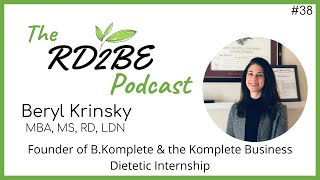
Beryl Krinsky, MBA, MS, RD, LDN - Komplete Business Dietetic Internship: The RD2BE Podcast
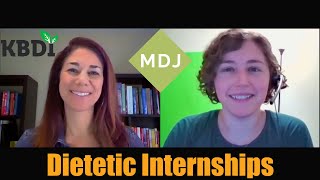
Dietetic Internships - What You Should Know ft. Beryl Krinsky | My Dietitian Journey