The why behind B.Komplete and the Komplete Business Dietetic Internship
Registered dietitian Beryl Krinsky created the Komplete Business Dietetic Internship after noticing dietetic training lacked business education. The program adds an eight-week business block, industry partnerships, and a final business-plan project to traditional rotations, preparing interns to launch private practices or consulting right after graduation.
Chapters
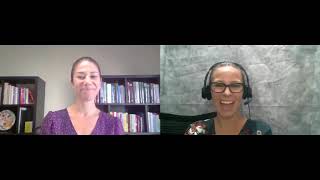
All right. So today, RD2Bs, I have an awesome interview for you. We are talking with Beryl— I just said it— Krinsky from Be Complete, and she is going to be sharing her amazing journey as a dietitian and share her new adventure as a dietetic internship director, which is so awesome. So thanks so much for taking the time to talk with us and share all of your experience.
Well, thank you, Morgan, and thank you so much for doing this for the Dietitians To Be and the RD community. This is awesome, so thank you for this.
I'm so happy to be able to do it. So why don't we just jump in and you just walk us through your journey as a dietitian?
Sounds good. Well, it started out when I was about 2 years old because I became a food critic really early on. And my parents—
That's probably the youngest I've ever heard.
Literally tell me and our relatives and our friends, well, Beryl was grating cheesecake and she was grating quiche. I guess I liked indulgent food when I was really little. That's great. Yeah. And I would literally say there's always room for dessert and all that, you know. So I was obsessed with food ever since I was a baby. And then when I became a young teenager, this is another funny food story. It was maybe, I don't know, I was in high school. And my mom, you know, we were talking about college and things like that, and I was feeling really rambunctious. And I said to my mom, "Mom, you know what I'm going to do when I go to college?" And she literally held her breath because she had no idea what I was going to say. And I said, "I'm going to eat all the Kentucky Fried Chicken that I want." I love it. I don't even eat meat or any chicken since 2010. Literally, I'm plant-based, not 100% plant-based, but for the most part. So, yeah. So that's where that went. But then when I went to undergrad, I took an undergrad nutrition class, literally fell in love. It was fascinating. I loved blending the science with the nutrition and the food. I loved how it would impact the community and you could do so much with it. And so I graduated from undergrad. It was nutrition, food and exercise undergrad. And then I went right in to become a registered dietitian through a dietetic internship in the South. Now it's a full-time program. And I loved it. I loved having all the experiences. I specifically remember some of the, the outpatient experiences that I liked the best because that was when people were not in the hospital, but they were, whether it was a cardiac rehabilitation or a community center, and we got to do coaching and counseling for them to teach them about sustainable health so they could empower themselves for the future and hopefully not get sick again. So that's what I really connected with. And then in my— it was one of our graduate classes in our internship. A woman visited our class and she said she wanted to hire someone and she had a soy edamame food company. And she'd just gotten a really big grant from the USDA to bring edamame cultivation into North Carolina and to help the farmers transition away from tobacco into edamame cultivation. Wow. It was super cool. I went to her, her office. She had a cool— it was an office and a kitchen and kind of like a little warehouse all in one. And I told her and her husband about myself and how I was so passionate about helping consumers with nutrition and wellness. I think they hired me on the spot.
It was awesome. That's so cool.
So my first job out of my internship was technically at a food company. And it was such a good experience because I think I might have been the— I think I was the first person with a nutrition background that they hired. And they just— I was the expert. And it was before I'd even taken my RD exam. And what they had me do was all of the outreach in the community. I reached back out to my preceptors in my internship because some of them were hospital-based, and, and Lila, my employer, and I would go into the hospitals and we'd do presentations on edamame, cooking with soy, heart-healthy recipes. And I got to do recipe development. I got to help with marketing. We did cooking classes.
Wow.
So much fun. I got to work with farmers. It was awesome. And I quickly learned that one of my passions was food science. So then I went back, and NC State has a really good food science program. So I went back and I did my master's, and that was full-time. I did research and the classes, and then I had my master's in food science. I was a registered dietitian, and I knew that I wanted to work, continue working in the food industry. So I worked in some big food companies, some small food companies. I did a lot of different jobs to Some were more nutrition research-based, some were quality assurance, some were product development, and it was great experience. And I would always use my nutrition foundation with the food science, and I would always tell anyone I worked with, I can't ethically develop something that's not healthy. I remember when I was looking for a job, Little Debbie called me, and I said, I can't even interview, I'm sorry.
Oh wow, that would be hard.
And then within, let's see, I worked for Campbell Soup for about 5 years. And I started my MBA, so I did an executive MBA, and I would work full-time, and then I would also do my MBA at the same time, so that was a part-time degree. And I finished my MBA in 2012. I went in, I got into marketing at Campbell's, and that was a great opportunity. Within all these different jobs and different companies and all this awesome experience, I knew that I wanted to start a business. I knew it was gonna be something nutrition, health, wellness, food. I had no idea what it was gonna be. I had a great business mentor. One of the pieces of advice that he gave me that I will then share with everyone in the future is, Soak up all that education and experience and start your business before you think you're ready. Because you're never gonna know everything, you're never gonna be fully ready, and you just kinda have to rip the Band-Aid off and just do it. And so that's what I did. And it was so scary, especially at the beginning. It was so terrifying. But I just did it anyway. And then networking is one of the keys to success. And what I've been telling past interns that I was a preceptor for, and then future interns in the KBDI, networking successfully is one of the, one of the strategies that can catapult your career, catapult your life. And when you're networking, it's not just what can you do for me, but this is what I can do for you, and this is how I can help you. And that's always how to approach networking. So I networked, I networked like crazy when I was starting my business, and networking helped me figure out what my business would become, and then subsequently helped my business get into different markets. And so that was really, it was really beneficial and such a good learning experience too. And when I learned about corporate wellness, I literally I remember where I was and I remember it was like a light bulb went off above my head because taking all of my background and experience, everything that I'm passionate about, and then my mission, transporting it into a business mission, corporate wellness enables myself and my team to help thousands of consumers and we can impact people throughout the world and truly make such a sustainable difference. It is So rewarding. There's nothing else. There's literally nothing else I could see myself doing. So that's Be Complete. That's the original business. And before COVID you know, we were on such a growth trajectory. We were doing events live in 11 states. And our team, we have registered dietitians, yoga teachers, acupuncturists. We have registered dietitian technicians, a nurse. I'm probably forgetting exercise providers, you know, all different types of wellness providers. And it's really holistic and it's, it's really, really rewarding. It's great whenever companies and individuals at the companies will tell us that we've made such a huge difference in their life and their family's lives. So that's the reason why. So going back, it's probably about 6, 7 years ago, actually longer than that, I had reached out to some of the dietetic internships that were in the area where I was at the time. And I said, I'm starting this business. I would love to have some interns come. They could rotate with me. They could help, you know, it'll be like mutually beneficial. So I became a preceptor for several different internships and I kept getting the same questions. Interns kept asking me, well, how did you start your business? And then they would ask me, how'd you get those industry jobs? And then they would ask me, how do you do social media and write blogs and make a website? And how do you get an MPI?
And all the things that you don't learn in school.
And I thought, you know, oh, and then here's— and then I started seeing when I was looking it up, all these classes for dietitians that are after your internship or after your master's. That cost thousands of dollars. And I'm like, wait a second, this should be taught when you're in school or your internship because that's what you're paying money for, that education. You shouldn't— you can, of course, you know, we have to do continuing education, but thousands of dollars for something? I'm like, that should be done in school or your internship. So that is exactly what we're— that's what we're doing. The Complete Business Dietetic Internship is going to empower the future dietitians to marry nutrition with business. And we're gonna, from the ground up, teach our interns how to start a private practice, how to become a consultant, how to partner with someone, whatever they're interested in. We're— it's gonna be really tactical. And then something super cool with our program, well, of course we'll have the traditional rotations, the clinical, the food service management community. We have 8 weeks in business. Wow. Yeah, it's awesome. We're gonna have our interns rotate, whether it's with dietitians that have successful private practices, consultant dietitians. We're gonna have, we have awesome business partnerships with some of the food companies, some startup food companies. So our interns will get to go into these industry opportunities, which is, I just think that's awesome. And they're gonna work with people that have written books. They're gonna work with influencers. They're gonna get to have rotations with media dietitians. So it's going to be very educational and really tactical for the interns. And then they're also going to write business plans. And then their final project will be writing a business plan, and they can choose if they want to write their own business plan. So when they finish our internship, they will not just have the knowledge to pass their RD exam, they'll also have the knowledge to start a business.
Straight out of their internship, and that's amazing. This is so exciting. I think this is an amazing opportunity. Um, because I think, I know for me, I mean, I knew very early on that, you know, my long-term goal was always to have a private practice, but I was always just fed the line. Well, you got to get that experience. And it's like such a lie and it's such a myth and, you know, it's still being fed to a lot of students. So I think actually breaking out of that, you know, traditional kind of internship experience and actually giving interns the tools and the knowledge that they know or that they need to jump right into what they really want to do instead of wasting several years building experience in, in something that's not really going to benefit them long term, really. I mean, Sure, you can work clinical and, you know, that will build your clinical foundation, but how much of that is really going to translate into your private practice and doing what you really want to do? So this is just so exciting. I'm so glad to hear that this is happening and this is an option, and I just can't wait to hear more about it. I wish it was an option when I was looking for internships.
That's what we keep hearing from whether it's registered dietitians or, you know, people that have been out for a few years. Oh, I wish I could have done this, you know.
Yeah, it's such a great opportunity. So that is so amazing. Um, so do you have any kind of advice maybe for students who definitely are thinking that, yeah, a private practice is what I want to do what can— what kind of things can they be doing now to really, you know, get them started in that right path before they even start applying for internships?
Yeah, that's a great question.
What—
so I can tell you what we're looking for, and I think that would translate for whether it's an internship or whatever path the person decides to go. The bet— what you can do now is get both, whether it's paid or volunteer experience, experience, and you want to get diverse experience. So I'm thinking about one of our, one of our candidates now, and she has really diverse— she has both some paid and some unpaid, and it's in all different areas. So it's a little bit of food service, a little bit of community, a little bit of private practice, a little bit of marketing, you know. So she— so that's, that's what we're looking— I mean, our internship, and I would imagine that other, other internships would look for that too.
Yeah.
And I also think it's really important to network. You can start right now. So as an undergrad, you can start to network with your professors, and you can also reach out to people in your community and, and offer something that you can help them with. So it could be as simple as creating a flyer, something that, you know, as an undergrad you absolutely can do. Or maybe it could be helping out with a recipe. Something that you can absolutely do and create that value for them, and then they will, they will most likely say, I would love for you to come shadow, or whether it's virtual or in person. In the future, they might be able to help you if you're looking for preceptors. They could either be a preceptor for you or connect you with potential preceptors. So that's something absolutely for undergrads to start doing right now.
Yeah, I think a lot of students feel really intimidated by networking, and You know, being an introvert myself, I can relate to that. But, you know, there is just so much value in it. So, you know, the worst that someone can tell you is, you know, no, sorry, I can't, you know, I'm not looking for any help right now, or I can't help you right now. And, but you just never know until you actually reach out and ask somebody. And if they can't help you, maybe they can direct you to someone else who can. So Really, there's, there's not too much of a downside for just putting, you know, putting yourself out there.
Yeah, there's— they're going to be probably 9 people out of 10 that are going to say no, and there's going to be 1 person that'll say yes. And then some days it's going to be 19 people will say no and then 1 person will say yes. So it's really— success is about perseverance.
It's about patience, you know, a little bit of having not matched to an internship 3 times. I can confirm that.
Perseverance. And you know, you can't, and this is also for anyone, don't take stuff personally. Don't take it personally. Everyone is so busy and everyone this year, especially everyone is so stressed out. So if someone doesn't respond to you or if they just say no, even if you're offering to do all these things and they still say no, don't take it personally. Don't let it affect your heart. Just pick yourself back up. Keep doing it because you're next.
Yes.
Yes. Keeping on, absolutely. And that's something too, for dietitians-to-be, when you're thinking about your, your application in DICAS and your personal statement, having these stories of perseverance, I would be super impressed with stories of perseverance and showing that even if things didn't go exactly your way, but you stuck with the path That is such a powerful thing to include in your, in your application.
Yeah, absolutely. I think, um, that definitely helped me out for my last application, was saying that I didn't give up. Um, I did come to the point where I was like, okay, this is my last application, so I'm putting it all in there. Um, but you know, with every time that I didn't get matched, I just kind of was like, okay, what can I do this time to make my chances better and just, you know, tried to find something new that could maybe, you know, help me out for the next time. So, yeah, that's all wonderful advice and I think great things that our dietitians-to-be can definitely, you know, take with them as they are going through this process of looking at internships. So, you said that you just started started— you're doing a fall match this year, is your first round?
Yeah, yep. So we're doing the fall 2020 match, and our classes start in January of 2021. And then we'll do the spring match in 2021, and we'll get a bigger class in for the summer of 2021. For the fall match, we can accept up to 10, and for our summer class, we can get up to 20.
Awesome, that is so cool. Well, thank you so much for sharing your journey and your advice and, um, you know, this amazing opportunity that students now have with your new internship. Like I said, I'm jealous. I wish I would have gotten the chance to do an internship there. It sounds like exactly what I needed, um, you know, because I, I was just kind of, you know, given that, that line that, oh yeah, you can do a private practice maybe 5, 10 years down the road, and that's It's just not true, and it's really disheartening to see people, you know, waste so much time and energy in going down a path that, you know, they ultimately don't really, you know, aren't really passionate about. So thank you so much. It has been such a pleasure. And, you know, how is the best way to reach out to you if students want to connect with you?
So they— so please visit our website. Kbdinternship.com, and then you can send me an email directly, and my email is my name, Beryl, it's beryl@bkomplete.com.
Awesome, well, thank you so much, and I hope to connect again with you soon. This was a lot of fun.
Thank you so much too. Bye. Bye.
More from Beryl
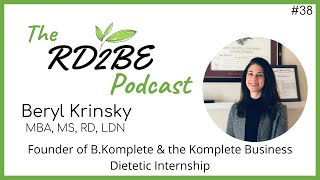
Beryl Krinsky, MBA, MS, RD, LDN - Komplete Business Dietetic Internship: The RD2BE Podcast
Dietetic Internships - What You Should Know ft. Beryl Krinsky | My Dietitian Journey