Nutrition Communication Interview
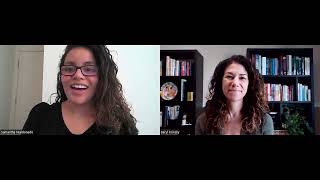
Beryl Krinsky, director of a dietetic internship program, explains how to communicate nutrition effectively by matching visual, auditory, and kinesthetic learning styles. She uses cooking demos, tasting tables, and wellness stations to teach, always including stress management. When clients want weight-loss over intuitive eating, she stays non-judgmental and respects their goals.
Chapters
Hi, Beryl. Thank you so much for doing this interview with me today. So first, I want to introduce myself. My name is Samantha Maldonado. I am an intern at KBDI, and I will be finishing up in just a few days. So that's very exciting. And today I have Beryl with me. She is the director of my program, and she also has her business Be Complete. So let's get started. So this, the main focus of this interview is how do you communicate about food and nutrition and health? So my first question is, how do you communicate the most with your clients?
Well, thank you, Sam. And what a great question. There are so many ways to effectively communicate. And the number one thing to always be aware of is pay attention to your listener. That's the most important thing because each one of us can listen and learn and absorb information in a different way. For example, some people are really visual, some people are more audio, some of us need all the above. And what we do is we try to communicate in number one, the way that's gonna work for the listener, and then number two, in multiple functionalities to make sure that it's really accessible and easy to understand for everyone.
Yes, that makes a lot of sense. I feel like I'm one of those all of the above people. I want all of it. How do you feel your audience best receives the, uh, the information about food and nutrition?
Well, and that's also, you know, really dependent on the listener and the, um, the group. And so, for example, if it is a group that has the ability to do something like a workshop and they have, call it an hour where they can do a program, we can do something called a cooking demonstration. And in the cooking demonstration, we can teach about ingredients and recipes, and it's very interactive. And then everyone gets to actually try the foods that we're making live. So it's— that's super fun. That's really a fun and very interactive way to learn about food and nutrition. But not every group has an hour to do that. So we have other options, something called a tasting table. That is continuous 90 minutes, and then employees come up to the table. They'll be able to taste the recipes that we are preparing that day, also learn information about label reading and ingredients and how to make either sweet snacks or savory snacks or whatever the focus is. And that is more convenient for groups that don't have a full hour to devote to a class. And we have a bunch of other things too. We have Ask a Dietitian and we have wellness awareness stations. I could go on and on, but the moral of the story is you want to make sure that your listener and the groups are ready for the information that you can share and that you are providing it in a way that is easy to digest for them.
Yes, that makes a lot of sense. That sounds like a lot of fun too. I would love to do one of those one day. What do you think that your clients value the most when you are doing a presentation? Or doing something in person?
I think the groups respond the most to, honestly, ways to reduce stress. I think that is not the— you know, of course my background is in food and nutrition and etc., but we really, in all of our events, we teach groups and individuals how to manage stress because, you know, you can learn so much about food and nutrition, but if you are not managing your stress, all that great education is going to be in vain because we know stress wreaks havoc inside, outside, for the people that we love, the people that we work with. And so that is such a key component in all communications, regardless of the topic. And then to get back to your question, groups respond the best when we provide stress management within, for example, nutrition education, and we also teach about reducing stress through the foods that you choose, how you plan for grocery shopping, how to do meal prep, how to save money at the grocery store. So those are all ways to reduce stress and also lead a healthy lifestyle.
Yes, I agree. Stress plays a big role in our lives. It's not even just at work, so it's good that you're teaching it like a holistic approach because you also need to, you know, do meditation or yoga outside of work because things get stressful at home too. So using those tools that you're learning outside of work is helpful. And have you ever had a time where your client's values or beliefs didn't align with yours and how did you go about that?
Yes, and we at Be Complete, we have different philosophies and beliefs and we also recognize and we celebrate that everyone has a different belief and philosophy, and that is completely OK. And we celebrate it. Now, the majority of the registered dietitians at Be Complete believe in intuitive eating and health at every size. But not every group is ready for that or agree with it. And so if a group says, we really want to do a weight loss challenge, We're not going to say no, we're going to say yes, and we're going to provide holistic nutrition education. And so we would, you know, help them if they want to lose weight, and we're also going to teach them about balancing a plate and a little bit on mindful eating and start the conversation, not to make anyone feel wrong and not to judge them, to give them information so that they can make the decision that's right for them.
Yeah, that is such a great approach. When people feel judged, I feel like they'll be more closed off and less likely to really intake the information and enjoy it when you're being more judgy. So I love that approach. And how would you say that food and nutrition has changed your life? And how do you communicate that in a professional way with your audience?
Well, ever since I was a little kid, I loved food. And I didn't even know what nutrition was when I was really little, but I was a foodie. From birth pretty much. And, you know, Sam, I don't think it's changed my life per se. I think it's just always part of my life. It is, it is just, you know, it's in my DNA, I guess you could say. And making a career out of everything that I love and that I have so much passion for is as rewarding as anything I could imagine. And, you You know, like, as anyone, I have stress and some days I'm kind of like, oh my gosh, how am I going to get all this done? And I don't want to work 12 hours. But, but with all that being said, I love teaching and inspiring groups about ways to lead a healthy lifestyle because it makes them happier and it makes them more successful and they feel closer to the people they care about. And then with the internship, there is literally nothing better than when we get to see our interns graduate and start the business that they've been dreaming about.
It—
there is nothing better. So I would do it all over again. I would do it many, many times over again. And even the harder days, I still absolutely love it. And it's my life's work.
Thank you for sharing. And I can always tell in your enthusiasm too that it is in your DNA. So I completely believe you. Are there any forms of communication that you haven't tried yet and you might think about like dipping your toes in in the future, such as a podcast?
Yeah, absolutely. We at Be Complete, we are pretty good with social media, but we haven't dipped our toes into TikTok yet. And I think for younger consumers, that's a really good communication vehicle. I even heard people getting recipes on TikTok. I'm not sure those are registered dietitian recipes. So we need to get on there for sure. And as far as podcasts, I love podcasts. I love to be interviewed on podcasts and speak to people on podcasts. And then of course, listen myself. I don't foresee that being something that we're going to do in the next year or so. But you never know in the future, that could be an opportunity. And we communicate with our clients in a wide array of avenues, social media, of course. And we also have a newsletter that's used for both corporate clients and also Be Complete team members. And that's a really good way to communicate because you might email someone, might get lost, but then if you're sending out the newsletters, you know, they're getting that, they're getting the information a few times. So that's usually a good way to remind someone or start a conversation.
Yes, I agree. And I agree on TikTok, there is not many dietitians. So there are so many people giving dietary advice, recipes, some things that I see in there. I'm like, oh my gosh, there's thousands of people in these comments believing this person. And we definitely need to get on TikTok and just get all over it because some of the information on there is really harmful. But yes, thank you so much for your time today, Beryl. I really enjoyed listening to all of your answers to all of your questions. Like I said, I see your enthusiasm every day, and that's a huge reason why I chose to apply for your dietetic internship, because I saw it in your YouTube video, and then I see it in you every day. So thank you so much for doing this with me today.
Oh, my pleasure, Sam. It's such a pleasure to have you as an intern, and you're going to be a fantastic registered dietitian. Thank you.
More from Beryl
Beryl Krinsky, MBA, MS, RD, LDN - Komplete Business Dietetic Internship: The RD2BE Podcast
Dietetic Internships - What You Should Know ft. Beryl Krinsky | My Dietitian Journey