Betsy Tong on Making Responsible AI Work for Everyone
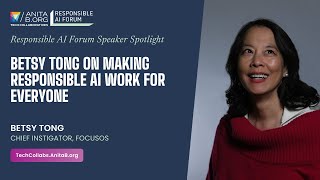
This is a YouTube interview where Brenda Darden Wilkerson speaks with Betsy Tong about the Responsible AI Forum and Betsy’s work promoting ‘AI for everyone.’ Betsy emphasizes practical, inclusive adoption of AI (not just certifications or tool lists), shares assistive-use stories (e.g., ChatGPT coaching for a neurodivergent user; a $29/month ‘clone’ enabling a disabled advocate to communicate globally), and describes her programs teaching executives and women how to apply AI (she wrote six books last year and is on her eighth). The forum will feature breakout sessions and applied conversations aimed at broadening participation and leadership in AI.
Chapters
Hi, I'm Brenda Darden Wilkerson, and I want to welcome Betsy Tong to talk to us today. It's such a pleasure to see you, Betsy.
It's a pleasure to see you, too. I'm so, so excited and very grateful to be part of Anita B. You guys have been part of my career journey from, from get and yeah, I'm so happy to be able to give back a little bit of what I've gotten.
That is amazing. And thank you so much for sharing that. And it's such a pleasure to have you as part of continuing part of the journey as our moderator at the Responsible AI Forum and in needabee.org Tech Collaborative, where AI innovation policy and real world impact come together.
Right on.
And you're playing a key role in shaping the conversations at this year's event. And I know our audience is eager to hear from you. So before we dive in, how are you feeling about the forum?
I'm really excited to start having different types of conversation. And so one of the things that is happening in the world of AI is that we're moving from that technology infrastructure space into the applied space, and there's still so much, shall we call it, snake oil, mystery, fomo, happening. And people are thinking, I have to take this $17,000 certification, which, by the way, somebody just told me. I was like, why didn't you just pay me? Because I would have been a lot cheaper and I would have gotten you a lot. Like, what is a certification? It's like saying, I need a certification to talk to my daughter. What does that even mean? Because AI fundamentally, it is not an erp. It's not a sas. It's not. It is a technology, but it's an intelligence. And, and a certification isn't really kind of the way that people should be learning to adapt and adopt. The other thing is people think that they should be given the answer in terms what are the 10 tools.
You must. Right? And I think it doesn't matter what my opinion is of are the tools. It matters what you want to do. And then how can I help get you there? Because we need more people to cross over into the. I don't have enough time to learn it to, oh, I'm just going to try this because, my gosh, I saw this really cool thing in just the, in just the last three days alone, women have been talking to me about breakthroughs that they've had. So yesterday I was talking to a woman who has ADHD and is autistic, and she uses AI ChatGPT as her coach in order to help her talk to what I guess the term is normally neurodivergent speakers. Because she was not. She was not. She was not able to understand the patterns in a way that AI could coach her to.
Awesome.
Like, what does. What. What isn't amazing about that? The other story that I like to tell quite a lot is people know I have a clone. Well, that's just. That's cool, right? That's fine. It is really cool. But. And she's cute and. But one of the people in my world, his name is Rick Nelson. He is an executive director of an advocacy group in Alaska. He has cerebral palsy, so. So he is severely limited in terms of his mobility and his ability to verbally communicate. He has a clone. You can text his clone and get his insights and knowledge. And he now has global reach in a way that wasn't possible six months ago. And that clone that we both have, we Both use is $29 a month. So when you think about that possibility, what I think of as responsible AI is not necessarily the way other people think about it, but responsible AI is intelligent people like you and me showing people the doors that can open and the unlocks that can happen if you start to use AI because it is part of all of our futures.
It absolutely is. And that is an amazing story. And want people to look up your talk because I saw you talk about that gentleman and your clone and I'm excited for us, as you said to all of us, to get together and have this conversation because AI is part of our life. We're still at the beginning, so to speak, very much. And so having these conversations is really important now to be part of what is going to be our future.
That's right. That's right. And particularly for women to be part of that conversation. And so.
I was reading something the other day where women still have a longer lifespan. And from an evolutionary perspective, the scientist was saying we have a longer lifespan because evolution decided that they needed women to be able to carry on the teaching because we are better teachers. And I think about this all the time in terms of many of my peers are parents or getting to be grandparents. If they feel uncomfortable with AI, if they are not using AI in their daily life and understanding it more than just an extension of Google, they won't be able to teach that to their children. Because we know if we want children who are readers, we have to read physical books in front of them. If we want children to be responsible users of AI, we must Use AI in front of them in ways that expand their potential and possibilities and give them greater access than they might have before.
That's right. And there's so much opportunity in all of what you said, and that's part of what we're going to be talking about at the forum. So for those of you who may not know you yet, tell us a little bit about your background and the work that you do in AI.
And all of that.
I think of myself as the proponent of AI for everyone. When I first started dabbling, back when ChatGPT become public.
There were a lot of people who were like, well, you must learn prompt engineering and you have to have been in ML and data science for 10 years. In fact, I was on a call just Tuesday with a gentleman who used a lot of jargon and then tried to like, in a way that I think you thought was impressive, but it really was YouTube level data science. And, and I think that all of that starts to become barriers in our minds that keep us from doing and using. And so I think of myself as, how do I be AI for everyone? How do I show you the simple things, the tips and the tricks, and coach you along the way so that you become users, so that you become the evangelist? So that. I mean, it's the same reason, like I vote. And so I do my little part. I want to talk to people, whoever will talk to me about AI. And so from a business perspective, I do two things. One is I run programs for companies and, and individual cohorts where I go through and we coach and we talk about applicable AI for whatever they're doing, whether it's writing a book, building a business, or other things. Then I also work with and have cohorts of women that funnily are my age. They look like me and they come from very powerful executive positions. They have this knowledge and expertise that they've built up. They come out of the corporate world and they think, I have this. I have this expertise, I have this knowledge I want to share. But then without the corporate logo, without the big title.
Without the scaffolding, it's sort of hard. You have to rebuild your authority. And AI makes that process of recreating the structure that you need to become an asset versus just an experience possible. And so that's a, that's a methodology that I follow. And frankly, I lived it myself. Last year I wrote six books. I'm now on my eighth because I defined and developed a process of doing it with AI, not for the writing, but for the construction of the book. I come from supply chain manufacturing, so I'm very much process and operations. And so it's this repeatable process that I've refined over time. And I now give it work with others on it. Because we all have those thoughts and books in our head. And I want to get things out of your head and into action.
Well, we might have to talk about that after this.
Okay.
But anyway, that sounds amazing. I can't wait to hear more about that. But you're moderating some of the most important discussion at this year's Responsible AI forum. So without giving too much away, what can attendees expect from the conversations that.
You'Ll be leading because of Anita B's approach and dedication to inclusivity? This will be a different discussion than what you could get off of LinkedIn or YouTube because we are real people who will have real discussions and have applied and lived experience and in implementing and using AI. And one of the most important things that must be talked about more is in one of the books I wrote, the research shows that that most executives who are making decisions about AI don't understand enough about the potential and the possibilities of AI, which means that for the Anita B population, a lot of people who are making decisions about you don't have the right knowledge and don't. And we need to put the pressure on them to get the right knowledge to bring in and open the doors to AI and to make sure that is not just about Copilot, which has its place, but frankly, is doesn't do everything that we need. How do we. How do we do BYO AI in the same way that we did by O D because bring your own device. How do we make. How do we open our minds to the possibility and get the education that we need so that all of us who will be leaders in companies in the future are making the best, most necessarily nuanced decisions between Alby the AI in the future or Harriet the Human and where it makes sense and diving deeper into the conversation about, you know, human skills will always be necessary. I personally hate that argument because when I see what I can do with AI and the fact that it's a PhD and I'm not. I'm not sure what the skills are that are purely human. And that's a great conversation to have. And that is what Anita B and this forum is uniquely positioned to do. And I'm looking forward to learning from everybody who has thoughts about that and is working to make a better future possible because AI is there.
That's right. I Mean, we all have different perspectives. And, you know, at this point in the development and the early adoption of AI, we noticed that people have been kind of siloed in their conversations around development and adoption. And what we're trying to do is to bring all of those voices, as many of those voices together so that we can expose perspectives that maybe haven't been exposed before. And so people can take that away and take it back to their environment and use that additional information to make sure that the adoption or the development or the use fits the populations that you're serving. And, you know, for us. Needab.org that's everybody for us. Right. So that's why we're convening this conversation.
Yes. I'm so excited. Like, you have no idea how honored I am to be part of it and how I look forward to meeting some really smart people and pushing my own thinking. And I love what you're doing.
Thank you. And we're so excited to have you be part of the conversation and to have so many different voices in the room. This is the type of thing that we believe makes sense for all technology, to make sure that populations that are going to use technology, which is everybody, everybody, and are thought about as it's being developed and purchased and all of that. So, really excited, just as you are for the conversation. Now, you've been part of many conferences, but the Responsible AI Forum is different, as we've already talked about. So what other things make this event stand out?
So I think that you've done a really thoughtful job with the agenda and the construct of having the. What are the. What's the right word? The. The table topics or the. The breakout. No, sorry, it's called breakouts. Brain fog. Having the breakouts. Because, you know, I know from being in the audience of many big, big stages, there's probably a thousand questions that I'd like to ask and deeper dives and the fact that that is built into the opportunity. And again, I'm looking forward to being a participant, not just on a stage. It's. It's fantastic, fantastic learning, and it's a fantastic opportunity to meet people who are actually really making AI happen in a way that. That I want to know about.
Right.
And I want to see. And that makes it accessible for more people.
Yeah, absolutely. And that's. That, to me, is one of the biggest reasons for having this event. All right, well, let's bring it home. If someone might still be on the fence, and I don't know how you could be, but if you're still on the fence about attending the Responsible AI forum. What would you say to them? Betsy?
You know, I work with a lot of business people and startups all the time where we have this. You have to make decisions that have a return. You have to think of your time as having a return. If you don't understand that we are at the dawn of electricity and you need to understand the possibilities of what electricity will do in your life, okay, don't come. But we are at the dawn of electricity. And do you want to be the farmer that still uses the wooden plow when combustion people are already moving to combustion engines. Like it doesn't make any sense to not grab every and all opportunities to not just learn passively, but really start to apply and think about how this rewires the way you work and the way you think. And that's the journey I've been on and, and that is a lifelong journey. And Anita B is one of the few organizations that really understands that we need to be with people through the whole of their life and bring them new insights and learning at every stage. At every stage, because that is how that it's not human skills, but that is how we be stay relevant. And.
That'S how we stay relevant when knowledge is commoditized. People who don't really understand AI are making decisions about employment and the economy. And our job is to figure out how we can participate. And this forum is how you can start that journey if you haven't already.
So well put, Betsy. And that's exactly it. So for all of you, if you want to be in the room where the future of AI is being shaped, with the brightest minds in tech, policy and innovation, this is where you need to be. So don't wait. Head to techcollabs.anitab.org and secure your spot today.
So, Betsy, this has been such an insightful conversation. I'm more juiced than I was coming into it if it was possible. So where can people follow you to stay connected and keep up with your work?
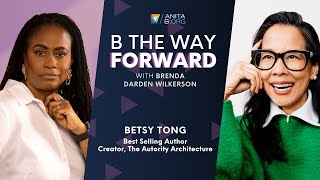
The easiest place to find me is, frankly, LinkedIn. Betsy Tong. There are. There weren't Betsy Tongs when I first started, but I. I'm the only Betsy Tong that looks like me. How about that? I'm wearing big glasses and a green sweater. So, Betsy Tong at LinkedIn.
That's awesome. That's awesome. So thank you so much again. We can't wait to see you at the Responsible AI forum. And for all of you out there, if you haven't already, register, please go now. Register at techcollabs. Anitab. Org.
More from Betsy
Fear is Just an Emotion - Betsy Tong on Resilience, Reinvention and Finding Your Voice