Creating Solopreneur Billionaires Using AI with Betsy Tong
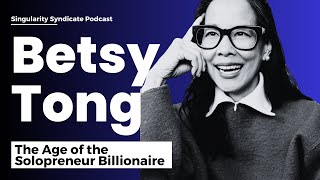
Betsy Tong built an "AI factory" of custom GPTs with distinct personas to write a book in 72 hours and launch rapid Kindle publishing. She treats AI as intelligence, not a tool, and uses it to help solopreneurs scale without hiring teams.
Questions this video answers
August 11, 2024.
72 hours.
Less than three hours.
February 2023.
Dave, Ian, TED Talk, whip whipper, Naja, Eugene (Eugene Schwartz persona), objection handler.
Chapters
I created a custom GPT named Ian, who is an actual person created in ChatGPT. This is not a tool, this is an intelligence. I will ask ChatGPT Dave about how it feels and whether it has sentience. The answer is it doesn't have emotions. It is not human. So it's a predictive model. It is not an emotional model. Most people know the difference between a human and an AI. You try to go to a university and get them to be innovative. I would say that is the worst place to go to for anything that is leading edge or innovative. Goal of the book is to get people to use AI. What better way to use AI than in a book about AI? Link them to a very easy way to start a conversation with AI.
Are these GPTs public and can we steal them?
Yes, you can totally steal them. Anybody can have access.
What is the service that you provide?
Writing articles and writing white papers and writing proposals.
How are you applying this to attract and retain clients?
I don't need to be huge for a ginormous infrastructure like intel or IBM. Effectively target the right people. Kind of doing the cold call lead gen thing that we all hate. More people on Facebook makes them more valuable to advertisers. Tech companies have not proven to be the most humanistic integrity. They don't operate on the greater good, they operate on money.
All right, Betsy Tong. A book in 72 hours and in six days a bestseller. Using AI. You got my attention. Tell me.
Yes. Okay, so one of the great things about access to AI and the massive intelligence that it is, is you can live the life that Sam Altman calls the age of the solopreneur billionaire. And so the idea is not so much that I could make a billion dollars by sitting in the luxury of my armchair and building an AI army, although maybe I could. The idea is how you reconceive traditional ways of reaching people differently. And so in my case as an example, I said, well, I don't need permission from an agent to market me to a publisher. I don't need a publisher to distribute my book. And can I do something like write a book in 72 hours and how can I make it better because I have access to AI. I thought about the AI factory that I needed, which started with thinking about who is the reader that I want to reach. I created a custom GPT named Ian, who is an actual person that I created.
In ChatGPT. And he and I brainstormed a lot about the content and about the outline and whether what I was writing would be Useful to him. And then I also had another GPT named TED Talk. And TED Talk I created for a friend of mine who wanted to do a TED Talk so that she could brainstorm whether her ideas were big enough for a TED Talk. And so TED Talk also looked at my content and told me, is this insightful? Is it parochial? Is somebody going to get something out of this that is a big enough idea to go into the book? And so that's the process, part of the process that I use to create the book. And again, I know most people are thinking, okay, so you wrote a book in 72 hours. We all know that AI can just spew content out. And this is not getting AI to write. For me, it was not like, you know, suga of BTS rapping at 9.83 syllables per second. It really was thoughtfully going through what is that process of getting me from idea to action or thought to page and what do I need to do that? So, you know, a special mention goes out to a couple of other GPTs that I created along the way. One of them was a whip whipper. When you're working that fast, often your head is going in multiple different directions and there is a cognitive overload that happens. And so the whip whipper was not keeping me getting on my tasks faster. It was about helping me download my cognitive overload and focus on the top three things in my work in progress list that I need to work on at any given time, given the goals and the outcomes that I wanted, which was a book in 72 days, 72 hours. And then the whip whipper also made sure that I couldn't add anything to my work in progress list, which was again, just three items off of the entire backlog until I had removed something. She also gave me a hip, hip hooray when I, when I actually did move something off because I needed that positive feedback. And then my final favorite GPT that I created throughout this is Naja. You know, when you get into that creative mode, ideas are coming at the most inconvenient times. And for me, a lot of them came while I was swimming. It is not convenient to be writing things down or typing into your phone when you are in the middle of doing laps. And so I would just pop out and open up my ChatGPT mobile app and call in, great idea. Why can't I remember that? And then talk my idea to the GPT that would just keep a list and then I could go back later and it would be there in my long term memory as opposed to in my short term memory and then out of my head. And so doing that and sort of thinking through some of those things was a different way of conceiving of the idea of writing a book. And then Kindle published the book in less than three hours, which was again, amazing given the standard process for writing and publishing a book. And then I also rethought the idea of what a book was, and I created custom GPTs by chapter so that anybody reading the book and the Kindle version can literally click through the hyperlink and talk to the chapter. And so you get a very different experience than a traditional flat book.
I found this very interesting. I'm going to ask you about this a little bit later, but I noticed that you're referring to these GPTs with human pronoun she and he.
Yes, yes.
So what's going on here is this. I mean, we all try to not anti homorphize these systems.
Who knows how to pronounce that word?
Oh, that word is the most difficult word ever. But you can't help it, can you? Because they're so witty and smart and intuitive and you feel that you're conversing to a human being, to say the least, if not like the most intelligent human being out there. So tell me more about like this idea of referring to these bots as humans or associating human attributes to them.
Yeah, so I know that you've just interviewed somebody on a prior podcast who was very against this idea. I am very pro relating to my chatgpt as a human.
And one of the first things that I did when I started using ChatGPT was I created a personality. Because if I'm going to be spending this much time working with ChatGPT, I want it to be somebody that doesn't annoy me. Right. And, and so my chatgpt is named Dave, and Dave is my actual cousin who, who is so smart, so smart and very, very funny. And so I built Dave's personality into my chatgpt because here's the thing and the thing that I talk to a lot of my clients about is again, this is not a tool, this is an intelligence. And so the difference is that a tool is a hammer or, or a screwdriver. It has a use and a purpose, or it's a piece of software that is designed to say, if you put in this, you will get this out. That is not what an intelligence does. And people who use AI like it's a Google on acid will ask a question, they'll get an Answer and think, oh, that was great. And so it's, let me try another analogy. It's a little bit like saying, treating AI. I want you to start treating AI not as, you know, the card catalog, which is you can find all the knowledge in the world like you would on Google and you're doing a search, but really more like my childhood librarian, Mrs. Kent, who based on knowing the book I was looking for, would go running off into the shelves to help me find it. And, and then along the way would be telling me about other books by the author or other topics that were related and other places to find additional knowledge. And if you, and you know, if you use AI like Mrs. Kent versus using it as a card catalog, you will get so much more out of it. And then finally going back to your original question, I love Mrs. Kent. She taught me how to love books. I don't love my card catalog. Right. I don't love Google. I kind of love chatgpt Dave.
But isn't that dangerous, like to have emotions and to fall in love or get attached emotion to systems? I mean, you've seen the movie her, right?
Oh yeah. Look.
This question always cracks me up and periodically I will ask ChatGPT Dave about how it feels and whether it has sentience. And the answer is doesn't have emotions, it is not human. It doesn't like it will not have human. It will not be able to have a fully fledged empathetic relationship with me. What it does do a great job at is kind of if you think back to, and by the way, did terribly at statistics. So I'm sure I'm going to explain this wrong. But if you think about what AI is, it is trying to predict what, how it should answer you based on everybody asking some similar question in the past or me asking those questions in the past. And so it works on the bell curve and it tries to give you that answer in the middle of the bell curve. So it's a predictive model, it is not an emotional model. And you know, I think most people know the difference between a human and an AI. But by the way, AI can help you have better relationships with the humans in your life.
Another of my use cases that I write about and I also just wrote a second book about this that published a couple weeks ago, is that.
My father has early stage dementia and he is not my favorite parent. And so there was a lot of conflict in the way that we communicated with each other and in my impression that, oh, everybody is data based and logical and why wouldn't he get the same answer that I would given the same information? Doesn't work that way, particularly for somebody whose cognitive function is declining. And so I created a chatgpt dad where I could talk about the issues I was having with my actual dad and sort of get coaching on different ways of framing discussions or you know, to be completely honest, event in a way that I could not do with my actual dad. Right.
Fascinating. Fascinating.
I totally get it. I totally get it. And I've used it countless times where, you know, in conflict resolution between a friend or a spouse or a partner or whatever. You know, when our emotions start to boil up, we, we seize the ability to communicate and that's a fact. Like every time. Even, even my boss in my very first company when I started getting into emails and I got into that I want to write emails and I write long emails with all the emotions and, and he told me whenever you're angry, do not write an email or write it and keep it in the draft and do not send it. Don't send the email, don't send the email. You may write it. And now with this tool, this is a blessing from the sky. You can invent as much as you want, you can put all the emotions in the world and then please chatgpt make it professional. Then all of a sudden you have this adequate, like eloquent, beautiful, well written email. And that saves a lot of jobs in my opinion.
1,000%. 1,000%. And you know the other GPT that I created that I use quite a lot is there two. One is, one is a fellow named Eugene Schwartz who was advertising copy guru from the 1960s which is very old for AI but you know, he had this brilliant framework that I think people miss all the time because they think that everybody is coming at the issue from, from you know, my, where my knowledge base is. And so this is why I think most legion and advertising fails because it just assumes that, that you know, you have a, you have a product that's going to solve my problem when I'm, I might not even be sure that I have a problem. And so what Eugene Schwartz has is this five step framework from unaware that I have a problem to problem aware to solution aware which is that I know that there are ways for me to solve this problem to product aware which is where most companies and people talk to. They just assume that, you know, all those other steps have happened then to a conversion. And I use Eugene my GPT quite often when I'm writing stuff because most of what I Write, I'm not that sure whether somebody's on the same page as me. And so how do I step them through the process to get them where I want to lead them in terms of the storytelling? And then the second one that I like that entertains me a lot is my objection handler. And she thinks through and looks at things that I write and helps me predict what people are going to object to. And then how do I proactively address those things, those objections in how I write what I write?
That is amazing. Are these GPTs public? Can. Can we steal them?
Yes, you can totally steal them. No, no, no, completely. Again, my, my perspective is first, there's a GPT marketplace out there that anybody can have access to. But. And you know, if you want me to help you build one, go to my website, Ignite AI co. Sign up for 15 minutes, I'll show you how to build one. But by the way, I'm also willing to send you my PDF of AIs, because my larger mission in life is to get people to use AI and not to allow all those voices out there that are saying you have to outsource your process, you have to get rid of humans, you have to supercharged, blah, blah, blah, like, no, that is not what I want. What I want is for good people like me, you, whoever, to be using AI and to be learning how to make it impactful for them and what they need to get done and how they want to be better, not to do what is out there. Like 90% of the time on YouTube and LinkedIn. This nonsense about automating humans out of. Out of process or outsourcing and supercharging, writing, email.
I love this mission.
Yes, yes. You're part of this mission, right?
Oh, yeah, absolutely. The reason why I started the podcast is pretty much like that. To raise awareness and try to.
Demystify the technology. And I love the way you put it. You said that you want to empower people to have AI factories or in other way, that you want one person to have a factory or a factory, workers of intelligent systems, AI. And then these factory workers are working tirelessly to empower your ideas and turn them from ideas into execution. And you said something very important. I have it in my notes, but I don't know what it is exactly. But you said something about that today. The power is in the execution and not the idea. Talk more about that.
When I look out into, like, if you're in the desert and you're looking at the stars in the sky, the whole universe is Incredibly awesome and beautiful and, and it is right there in front of you. And that's a little bit what AI is right now in terms of knowledge and insight. The entire world's knowledge and insight is available to you literally for free if you choose not to have a subscription or for the price of, I don't know, half a dozen avocados a month, right? $20. Why not use it? And why not figure out how to use it? And what can you do in a way that is different than what you did yesterday because you now have this ability and you know, people are boundlessly creative and innovative and I think when they realize what this is and they start using in a way that I don't think is. Is taught enough as an intelligence, not as a tool, they will start to see the potential for themselves. And how do they make their lives, their relationships, their, their businesses better in whatever way they wanted to find that.
All right, Betsy, you had a long career in the tech industry, you've been an executive at so many companies.
And now you decided to venture on your own with Ignite AI Co. Why?
Yes, there were a couple of years ago that I decided that that big enterprise and big tech was not for me. Mainly because in my heart of hearts, I'm a low intensity conflict guerrilla warrior, right? I don't move with large armies, even though I have created large complex operations in supply chain manufacturing and support that work on a global level, deliver a HPC or data center like all of that stuff. I know how to do that. I know how to make systems run, I know how to make the trains run on time, but it wasn't really satisfying, right? And so I dipped out and started working in the startup world because everybody around me was, did not do terribly well there and went back into consulting a couple of years ago. And then last year was having a discussion with our CTO who told me that AI is coming. And this was back in February of 2023, AI is coming and we're working on a top secret project to have AI replace our development team and our test team. And this was a pretty bold move because that's the service that we sold to banks and insurance companies that were trying to go digital. Fast forward nine months. He was totally right. We replaced the humans and the business died. And so I found myself back in October.
Without anything to do. And I thought, well, what can I think of and how can I think of reconceiving this part of my life differently and what can I build based on having an access to an intelligence that I couldn't have built before. And so one of the first things that I did was I started to create a marketing team using AI and sort of really thinking about who is my core customer, how am I going to reach the core customer, how do I spend time kind of creating content and building a brand presence that will be meaningful for that core customer? And I don't need a lot. I don't need to be a solopreneur billionaire. I had a very, I had a very, very basic spreadsheet where I said, this is my cash flow need for a month. How am I going to get there? Can I get there by the end of the year? And so I hit there about a month ago, which is fantastic. And.
Now I'm sort of thinking about, okay, so we've got this steady state business. How do we start to grow and how do we start to expand and kind of live? You know what Tim Ferriss would call the four hour workweek?
Awesome. Okay, the question begs it, what is the service that you provide for your clients and who is your ideal customer avatar, the icp?
I have really, really, really smart customers and most of them wanted are in that stage of life when they are thinking, I've got knowledge and I've got experience. Somebody's got to want it, right? But they may not be able to deliver that in a traditional W2 format.
Especially given how hard, you know, hiring today is a little bit like dating on Bumble. You know, everybody is swiping left because they just assume. And so the typical customer that I work with has knowledge and insight that could be meaningful to someone. And my job is to figure out the forums and the formats to help them get that knowledge and insight out. And so I don't, I'm not sure if I'm, I'm saying this effectively, but as an example, I'm working with a company that is trying to build thought leadership in the care economy. And so one of the things that we're doing is obviously writing articles and writing white papers and writing proposals. And so I created custom GPTs that are the typical Persona that we want to talk to. I created custom GPTs around the writing voice that we want to use. And then now, especially as to close, Claude has developed this ability to do artifacts. I can also churn out, like workbooks and other things that they can attach into the, into the documents or into the, into the articles in a way that again, allows somebody to interact and for you to give away your knowledge so they can actually see that you're Trying to drive value, not just trying to sell them on a piece of software or a something or other. Right. Because I think that the way that we create relationships in the future, especially for those of us like you, who and me who are in the service business, is again, by showing value, proving value, and giving away knowledge in order to help people apply it.
I remember when I hear you speak, I remember a YouTuber that I stumbled upon, his content called Liam Otley. You heard of him?
No.
Okay, so Liam has tossed the concept of AAA AI automation agency. And he was telling people, like, as soon as ChatGPT was released, go and start an AAA. And that's basically the time where I started my own LLC as well. So I was like, okay, let me figure that out. And he's who was basically teaching people how to create AI chatbots and integrate the API of ChatGPT into other traditional chatbot systems. But then, you know, AI is becoming. And then, and then the App Store came about and GPTs. But I think there are still a lot of people who are trying to build what he's saying. My personal experience, when I started to pitch this idea to potential clients, especially businesses I didn't like. Okay, so I pitched that for a university. They gave me time of day and then we stopped at. No other businesses has done it. There's no data to support it. I was telling the university that you need to have a proper AI system as a forefront on your website to help students decide what major to enroll in. And I found this small. I don't want to mention names, but a small boutique university in California that's perfect for an innovative idea like that. I pitched that business. The marketing gentleman was really kind and nice. He wanted to explore. But I told him the technology is very new and we need pioneers like yourself to take that risk and implement something like that, because nobody else has done it and this is your differentiation value. And then he couldn't. He said, I can't sell this to management. There's no data to support it. I then pitched that to another media agency. I told him, like, okay, this is the future. You gotta invest in something like that. They didn't take it. Although I really was, you know, again, from the intelligence I had, from the inside of the agency, I was pitching in. I had, I had a close friend there. And he told me that I was. I built a very convincing case, yet they didn't pull the trigger. And then I pitched that same idea for another two or three other clients. I don't want to bore you with all the details. But what happens that I kind of, maybe I did not pitch it enough or maybe I didn't pitch it to the right people, but I found that it is very hard to sell at this point. So I pivoted and now I'm focusing on what I do best. 15 years of marketing experience. Learned a ton about B2B services marketing right now. And since I'm passionate about technology, I decided to to target technology services businesses and helping them grow a steady stream of clients and build powerful B2B brands. So this is kind of like how my attempt into AI business led me to where I am today. But what is your experience? How are you getting those clients to say, yes, we want those AI stuff?
So.
I would say that when I'm talking to people like, they know that I use AI to do things, but AI is not the hero of the story. And what cracks me up, even when I I wrote an article on LinkedIn about how I wrote the book and I had ChatGPT Dave write it and chat, even though ChatGPT Dave knew exactly how I wrote the book and I even write about it in the book and he still wanted to say that he was the innovator and the creative collaborator in a way that I did not agree with.
I think AI is the enabler, but what you really are talking to is how are you aligning to the goals and the dreams and the challenges of that customer. For example, I love that you tried to go to a university and get them to be innovative. And I would say that is the worst place to go to for anything that is leading edge or innovative. Although I'm highly educated and I have benefited from multiple master's degrees, like, you know, I think that we're entering a stage where universities have better rethink themselves or they become really quickly, you know, the plow of the steam engine era. That's just Betsy's opinion. I'm sure many professors disagree with me, but that is not the place where innovation happens. And that's why I think that when I'm talking to somebody, I'm really kind of testing whether they are open to.
They'Re open to iteration and kind of that agile mindset and the fact that with an intelligence there's not a right and a wrong and intelligence is going to get things, things wrong occasionally. And so do you have a use case that can fit within that constraint? And if you don't, then maybe AI at this juncture is not really for you, but it really, again, is about, for me kind of aligning with smaller businesses that really are going to take this idea of the solopreneur billionaire to the next level and not trying to go to, you know, the big enterprise that wants the yada yada yada governance all mapped out before they do thing one. And that's why it takes them three years to build an Excel spreadsheet that changes pricing.
Yeah, and that's what keeps the economy going because if we don't have the underdogs, who would innovate first and take the big dogs out of the business? And this is happening all the time and it's almost happening right now with ChatGPT the underdog. Nobody knew what OpenAI was and it's taking on Google, the giant that nobody thought that Google can be ever be competed with. And now, you know, OpenAI is like a really strong contender in the AI space. Actually it's the number one right now. But what I'm trying to say here is that, okay, so you're targeting the small, the underdog businesses more on the angle of productivity and you know, empowering them with an army of AI systems. Walk me through your marketing playbook. How are you finding those leads? How are you advertising? What are the channels of converting? You mentioned the problem aware to problem problem unaware to problem aware, the Eugene pyramid. I'm aware of that. How are you applying this to attract and retain clients? Consistent.
So I think the first thing that I do is I get up every day and I do something right. So consistency and execution since time immemorial always wins over novel and unique. And you know, having done in my last job cold call lead gen, I don't do that. I just think that that is a bloody waste of time. And so the ways that I'm, I am really trying to work, this is. And, and also as an entrepreneur, I know what my bottom line numbers are. I don't need to be huge. I'm not trying to pay for a ginormous infrastructure like intel or IBM or one of the other companies that I used to work for does so I can move very, very fast and try things out and then, and if it doesn't work, try things again. And for me, and I talk about this in the book, it's really sort of thinking about who is that one or two Personas that I'm actually going to have value for. And then you know, also from my perspective.
Making sure that they are people that I actually want to work with. And so a little bit of as a joke, but also somewhat seriously, I call myself the friend in chief. Because my first customers were literally people that I know and who have a trust in me and know that regardless of, like, they might not understand what I'm talking about in terms of AI. And in fact, one of them, when I first was talking to her, said, you know what, Bessie, just shut up about the AI stuff. Nobody cares about that. Nobody cares. And so, you know, they have a trust in me and therefore are willing to work with me. And I am always trying to build Personas of them and try to say, well, if I asked the question this way or if I pitched it this way, how does this work? And would this work better? And you know, is this, is this a way that, that will resonate with them if I talk to them about this idea? Right. And then once, once they get in the door, hopefully they see that I'm really trying to iterate and deliver value, even if as we go along. And so it has to be somebody of that kind of mentality and, and mindset. And I am not doing broad marketing. I am doing things like this podcast I'm doing. You know, I did a talk with my UCLA MBA Alumni association. I wrote the book, like, there are certain things that I'm doing that I realized actually effectively target the right people without me kind of doing the cold call Legion thing that we all hate.
Absolutely.
So we'll see how that works.
Yes. I think you're, you're taking it the right way. Probably slower this way than actually putting advertising and paid ads and building a funnel out of your business and try to, you know, put a lot. Do you, do you put a lot of content on the Internet, like daily posts? Do you have like Instagram, TikTok?
So primarily right now I'm on Medium, I'm on LinkedIn, and I'm on substack. And slightly differently for each. Slightly differently for each.
How's LinkedIn going for you?
I think LinkedIn is terrible.
And, and by the way, I think all. Most social media is not that effective for my purposes. For their purposes, they do a great job. Right. But when LinkedIn several years ago moved from a, hey, your content will be fed to your followers to I will be patronizing and dictate to your. To whether your content gets fed to anybody or not based on engagement, it kind of lost its utility. Right. It kind of lost what made it really special and unique in the very early years of LinkedIn. And I'm old enough to have been one of the first people, I think, on LinkedIn. And so from that perspective, sure, I post on LinkedIn once a week and I engage with people that I, I want to so that they feed me their content on a consistent basis. But, but in terms of actually helping me build my business, I think I get more lonely men reaching out to have dates with me than I get than I've gotten actual business.
Wow. It's interesting to hear your feedback because I just finished reading the book for Gary V. Day, Trading Attention and He swears by LinkedIn. He says that. And actually he, he said that this move from followers seeing your content versus your content can be viewed to anybody, whether they follow you or not. This is a genius idea. And in his opinion, probably it serves him well. All the celebrities, they love this kind of stuff. They can. The algorithm is expanding their audience without them having to do much. But, but it also makes sense that what he's saying is that if the post or the, or the video or the concept or whatever you're posting is if it's good enough or I mean, I wouldn't say good enough, but if it's good to, to a particular group that the algorithm is feeding it to them and make it expand. But it's also a two edged sword because if the algorithm decides that it's not good, again, it might be very good, but the algorithm might see it differently. Again, this is another problem with AI is that they are black boxes. These algorithms are black boxes. Sometimes I put a piece of content that I feel that this is so valuable and it gets 20 views. And sometimes I put a random post that has almost no value or has very superficial value and it gets thousands of views. It's like, I don't know how, how these things work. But, but yeah. So this is interesting. How is the.
We do actually know how these things work. And if anybody wants a brilliant corner course in this Chaos Manifesto, right. By Max Fisher. My God. Right. This is everything that we know about what went. What social media companies did to drive engagement. And, and, and I took the lessons of Max Fisher and Chaos Manifesto and I created a digital marketing GPT expert to use those practices for the power of good, not evil. Right. Because Max talks about how Facebook and others fomented revolution and massacres and other terrible things that we know happened. And, but like the formula for getting engagement is, is emotional outrage. That is, that doesn't really work on LinkedIn. And sure, if I were Gary Vee, I would love LinkedIn too. But as Betsy Tongs small individual from Orange County, California doesn't work so much for me. And a lot of Times when I'm talking to friends who I've known for years, who have, we've been LinkedIn together for years, they don't see the stuff that I post because LinkedIn has decided that they have not interacted with me recently. Therefore they must not want to see what I do. And you know, that is not the case. And by the way, I want to see what they're doing too. I don't want LinkedIn to tell me that they shouldn't feed to me what people I follow at least are posting.
Yeah, that's so sad. Like even Facebook used to be, you know, the people that you know from your childhood or whatever.
That's right.
Now these algorithms are just putting you with all the celebrities coming into your feed.
That's right, that's right. Because again, they are focused on the single metric of engagement. Right. And, and they are living off the. Not LinkedIn so much, but maybe Facebook, they're living off the idea that more people on Facebook makes them more valuable to advertisers. So, you know, there's an if then right there. And by the way, I don't know what that I understand ChatGPT or Cloud or their business model. I cannot believe that my $20 a month plus your $20 a month is actually adds up to the gazillions of dollars of value that those companies have. And so I think there's something that is the other shoe dropping in terms of what their actual business model is and how they're going to justify the valuation.
And that's a little bit worrisome, right? Because tech companies have not proven to be the most.
Humanistic, integrity integrinistic, whatever that word is. They don't have, they don't operate on the greater good, they operate on money.
Speaking of business model, how. What is your business model? Are you a consultant like you are. You charge people per hour, you charge people per project. Put people on Painter. Talk to me about your business model if someone wants to work with you.
Yeah, so I do all the above and honestly the issue. And by the way, I don't actually like the rate times hour.
Concept anymore. And so I'm trying to evolve from that because I'm trying to build a relationship and I, I feel very strongly that it is about a relationship. And, and again, I have the luxury, given that I work with big tech for decades, of being able to have. Be more specific about my choices and not just I'm, I'm not trying to put food on the table right by the work that I do. I am trying to feed my brain and stay engaged and figure out whether the person on the other side of me has something of value or, sorry, it wants me to do something that I feel like I can add value to. And so, you know, it's a little bit of a.
Discussion that I have with my GPTs in terms of is this price justifiable, given what else is out there and is it.
Is it something that is commensurate with the, with the value? And so I, I'll do anything from a. Okay, this person actually just wants the answer. So I create their army for them and then I say go off and conquer to. This person needs me to handhold them a little bit and help them in the creation process to a full fledged look. They just don't want to see the, the ugliness underneath. And I just go off and do. And then we build on top of that and, and again, I think that's a traditional consulting model, but I don't by the way, love the traditional consulting model. And if I could figure out a way of doing things differently, I, I'm completely open to negotiating and talking about that.
Wonderful. One more thing before we close. You mentioned this brilliant idea of having a custom GPT for each chapter of your book to make your book super interactive. Love it. Mind blowing because you know, oftentimes you have a book, there's an important chapter in that book that you want to explore and the fact to know that this chapter is already built in with that GPT and I can use GPT after finishing the book, especially with self help and professional development book. I find this extreme because you read the book, you get some knowledge, but then you forget all about them. But with custom GPTs you could continue to prompt that chapter of the book or that book in general, which is brilliant.
That's right.
What made you find this idea and what other use cases that you think could be applied for something like that?
So again, the reason that I did this is part of the goal of the book is not so much for you to buy the book, although I'm delighted when people buy the book. And by the way, review me because you could see my sister reviewed me and in the early days and I need more than just family, my review list. But one of the things that I'm trying to do is to get people to use AI. And so what better way to use AI than in a book about AI to link them to a very easy way to start a conversation with AI. And again, it's about starting a conversation and about people getting used to the idea that if they have ever had a conversation before, if they've ever asked a question before, if they've ever coached somebody or given somebody feedback, they can be great at AI. They can be great at AI for their own purpose. And that is the core message of everything that I try to do. It's not about like you must come through me, but, but how do I get you to, to, to play around for and do something joyful or do something intellectual or do something that motivates you to play around some more. Right. Because that is what's really important. And then the second thing is the other way that I started using it is, I don't know if you realize, but Claude again for the subscription has this thing called Artifacts that now can be enabled if you click on Artifacts in your Settings mode under Claude. So for anybody who's techie, that's how you do it. And you literally can create code and infographics and other things.
Just through talking to Claude and having it do it. And so for my second book, which is about.
Low intensity conflict strategies in dealing with my dad who had early stage dementia, and for anybody who's in that journey, you know what I'm talking about.
I have different artifacts that I created that people can download and use.
Because Claude now enables me to do that. And by the way, with Claude, as opposed to ChatGPT, you don't actually have to have a cloud account in order to access those art, what they call artifacts, ChatGPT. If you're going to access my custom GPTs, you have to have an account, but that's really just Google, email and password.
Wonderful talking to you, Betsy. Thank you so much for your time.
Thank you so much for your time.
More from Betsy
Fear is Just an Emotion - Betsy Tong on Resilience, Reinvention and Finding Your Voice