From Washing Cars to Multi-Million Dollar Business
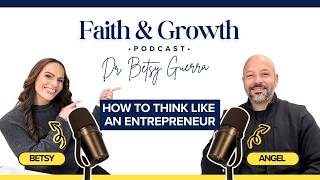
In this YouTube interview, host Betsy Guerra talks with Angel Fernandez, also known as Max Lewis, about his journey from a Miami kid who washed cars, sold mangoes and candy, to the founder of a multi‑million‑dollar propane‑distribution company. Angel shares how curiosity, resourcefulness, and asking the right experts helped him turn small hustles into a scalable business. He describes the breakthrough moment that led to a propane‑delivery service, how he expanded into space heaters, forklift gas, and gas‑station cages, and the importance of creating an "irresistible offer" and adding "extra" value for customers. The conversation also covers his personal development: a 14‑month sabbatical, a baptism in the Jordan River, mentorship from Tony Robbins, and the spiritual principle he calls "effective blaming," which reframes setbacks as blessings. Angel emphasizes a people‑first culture, treating employees like owners, and how that mindset propelled his company’s growth. He promotes his books, "Who Is Max Lewis?" and the children’s story "Maxi y el Mango Mágico," and offers free copies to listeners.
Chapters
Just every time I had an opportunity, kind of like seize the opportunity, even without maybe necessarily knowing what I was doing. I would just like explore it.
I think a lot of people know about what you've done, but not a lot of people know about you.
I'm just a guy, a guy from Miami, Cuban Dominican descent, barely graduated high school, did not go to college. I used to wash cars.
What was the, the greatest lesson that you experienced in your personal and spiritual development.
You have to look inwards and decide, okay, am I going to let another 5 years go by without doing what I want to do or living an exciting life or taking some kind of chance? Or do I want to just play it safe? That's boring. That sucks. I don't think we're here to play it safe. I think we're here to grow and learn and experience life. And that's something that you have to decide for yourself.
What if you could write your future and manifest it into your reality? That's exactly what today's guest did. Angel Fernandez, known by many as Max Lewis, dared to dream boldly and created his dream life, only to then write it all in a book and leave you with the lessons and the details that will support you in creating your own version of success. Angel is a philanthropist, he's an author, and he's a serial entrepreneur that has mentored me many times, and I cannot wait for him to bless you with his wisdom. Let's do this. So happy to have you, Angel.
Thank you for having me.
Welcome, welcome, welcome.
I'm honored to be here. Thank you.
Thank you for saying yes. I am excited about this conversation because I think a lot of people know about what you've done, but not a lot of people know about you. And I know that there's always a story behind the glory, and you are in a place of glory in terms of your success. So I want people to like just see you. I want them to meet you, who you are, so that they understand what it takes to get to the place where you're at today. And that way they can emulate that and hopefully experience the same success and blessings that you are living currently. So let me start by asking, I want to know about you. Like, who is, who is Max Lewis?
That's a great question.
So Angel is the author of "Who Is Max Lewis?" right here, and he's also the author of "Maxi y el Mango Mágico" or "Maxi and the Magic Mango." So he has like 2 children's books. A lot more are coming up. So if you're listening to this podcast like many days or many months after it was aired, go look him up on Amazon because there may be many more available. And in "Who is Max Lewis?" you share a story of success how like you— this book is like a Bible. Like, how do we create, manifest the life God dreams for us? And financially speaking, business-wise, like, how do you learn how to think? How do you expand your mind and your mindset so that you can create that life? Because sometimes we think it's just by luck. Right. So you give us the blueprint to create that. And I remember when I read it, I knew you and I had access to your mentorship and I had been amazed by your wisdom, especially in business. But when I read that, I was like, I was like, I had to like stop sometimes and like, what would this mean for me? Or what would this look like in my line of business? And I like, I remember just like, I'm like, oh, how can I get his brain? How can I think like him? And you gave it to us. So thank you for doing that. But first I wanna start with you. Like, who are you?
Well, I'm just a guy, a guy from Miami, Cuban Dominican descent, which is why I do a lot of philanthropy for those countries, particularly mainly Dominican Republic. Grew up in West Miami, barely graduated high school. Did not go to college. I used to wash cars. Obviously I used to sell mangoes and candies and all kinds of things. And just every time I had an opportunity, kind of like seize the opportunity, even without maybe necessarily knowing what I was doing or how I could do the next thing or whatever that challenge or opportunity was in front of me. I would just like explore it, you know, and try to find the resources to educate myself on how could I get better at this or who could teach me about this.
So you were curious.
Correct. Curious, and I guess you could also say resourceful. You know, who could be the best resource to ask this question? Like I always, I have this saying, I write it in the book, you know, you don't ask a janitor for expert business advice and you don't ask an expert businessman on advice on how to mop a floor, right? They both are experts in their own field. But if I ask a businessman, hey, what's the best way to mop a floor? He might not give me the best advice on how to mop a floor, right? But he could give me amazing advice on banking and things like that, right? But if I ask someone who has been mopping a floor for 20 years, Hey, how do I mop a floor? He's going to give me amazing advice on how to mop a floor, but he's not going to know much about the stock market. And the answers that you get from people, and I think that's one of the biggest mistakes that people make when you ask questions to people, right? Especially in a moment that could empower you or disempower you, right? Sometimes you get the wrong answer or the wrong advice and it could really hurt you. So for example, let's say my mother was a seamstress for 50 years, and I asked her about investing in the stock market, and she had a bad experience one time because she invested $200 in the stock market and lost it all. And I asked her, hey, Mom, you know, what do you think about this? She might— oh, don't do that, that's the worst idea you could ever do, you know, never do that, it's horrible, they're going to steal your money, right? Why would she give me that advice? It's not— she's not trying to hurt me, but she's giving me advice based on her experience. She failed at that, or she is scared of that. So when I ask her, she's going to give me the advice that she knows how to give me, not because she's trying to hurt me, but because she's trying to protect me. Because she's saying, I got hurt in this way trying to attempt what you're doing, so you should not do it. Right? And that doesn't happen in every case, but it happens in many cases. Right? So asking the right person for that advice or that guidance when you're on a journey is very important., right? If I wanted to, again, if I wanted to get into some particular type of business, like I had a kid the other day tell me he wanted to be an attorney and I asked him, well, where are you working now? He was like, I'm working at a fast food restaurant. I said, why are you working there? If you want to be an attorney, you need to be around attorneys. Even if you're the guy who takes out the garbage, you should be in an attorney's office because you're going to be around attorneys. You're going to hear legal talk, right? And if you express, hey guys, my goal is to be an attorney, just so you know, I'm taking out this trash, I'll wash the dishes, I'll do anything I need to do, but I want everyone here to know my dream is to be an attorney. I guarantee you they will shepherd you, they will guide you, they will help you, they'll give you books to read, they'll give you resources. Maybe they'll even give you a scholarship. I've heard of law firms paying for people to go to school for their paralegals and things like that., but you're in the right environment. You're asking the right people, you're getting the right advice from the right people. What are you gonna learn about legal if you work at McDonald's doing the fries? Nothing. You're in a complete different environment. You're, if you ask the guy who does burgers, hey, what do you think about being an attorney? What do you think he's gonna tell you? Oh man, that's crazy. I haven't, you know, that's, that's nuts. Like you'd have to be a genius. Or, you know, is that gonna be empowering for me to achieve my goal or disempowering? And is that person trying to hurt you? No., but he's giving you advice based on his knowledge, on his history, on his background. So that's one of the things that I think I've been very good at is when I'm setting out to achieve a goal, and that could be YouTube, I could be researching on YouTube who's the best resource for whatever it is I'm trying to learn, which I still do to this day. If I don't know something now, lately it's been ChatGPT, right? Like everything I don't understand, I'm like, what exactly is this? How does this work? Whatever. And I'll read it and I'll study it, and maybe I'll read it 4 times because I need— I want to learn that. And educating myself, right, that's all of our responsibilities.
No one's going to do it for you. So you were like that from when you were little? Like, you were curious and resourceful?
I would say it's like a muscle that developed over time. How? Who? Well, I think, you know, like, for example, the beginning was mangoes, right?
My father taught me a lesson.
Tell us about that. Okay, so I wanted a bicycle, and instead of giving me the bicycle, he encouraged me to sell mangoes to earn money so I could buy my own bicycle. And he took that opportunity to explain money, what money was to me, how I could save it. He gave me this cookie tin and showed me, like, we're going to save it here. We would tally up the money at the end of the day. I would walk from door to door knocking on people's doors and trying to sell them mangoes, which taught me social skills, right? And it put me in maybe an uncomfortable environment. But after you do it a few times, you get comfortable.
It's like anything else.
How old were you? Oh, I was like between like 5 and 8 years old around there. Yeah, I was young. I was super young. But that was like step 1. That was my introduction to like, learning about business, learning about interacting with people, learning about money and how to add and subtract and calculate like a profit margin and things of that nature. But that's just practice. The next level was when I sold candy. I sold candy. My dad took me to Costco. What candies are the kids going to buy? Which ones do you think they like? Oh, Cry Babies or Warheads. At that time, we would test lollipops, Reese's peanut butter cups, which would melt in my bag, so they weren't good. I had to stop selling those. But I do the math, like how much could we sell these for so I could turn a profit? Which, and during that experience, which is the key word, the experience of it, I learned, okay, this sells a lot. That doesn't sell too much. These melt in my bag. They have to throw them away. I lost all the money. If I eat them, I don't make any money, right? If I give them to my friends and I'll pay you tomorrow, guess what happens? Tomorrow comes and the guy doesn't have the money. So that taught me a lot of things. And again, I was not an expert. I was just a kid, but I was a kid that was put in this situation learning these skills, right? And then graduate to the next level, which is the next thing I did after that was sell propane gas. But by that time, I realized how to recognize an opportunity and how to do the math because I had experience already in doing the math in buying and selling. In talking to people and not being scared and going out and asking questions, right? Which many of us, maybe we don't want to do that. Hey, go ask that guy. Oh, I don't know. I don't want to ask him, right? But if you kind of break out of that shell, if you ask, if you're a shy person, you force yourself to do something that maybe you don't want to do 5 or 10 times. On the 11th or 12th time, it's easy already. I've already done this a bunch of times. Here, let me, let me show you. Let's go talk to this guy. Right. So I think it's just over time, like I said, a muscle that you go building up. You don't go from novice to expert overnight. You have to slowly start building that up. And there shouldn't be any pressure. You shouldn't put pressure on yourself, but you should get uncomfortable a little bit because that's where the magic happens.
Right. So for someone who does not feel like like they have that level of curiosity or don't, a person who experiences self-doubt or lack of confidence and doesn't think he or she has that curiosity to drive them and that resourcefulness to tap into the people or information that can give them that knowledge. Like, what can you say to them?
Well, I would say that we all have it. It's all, it's just whether you decide to act on it or not. We all have curiosity. We all have great questions. We all have a desire to do more, to grow, to be more. Some people act on it and some people shy away from it. And I think if you find, if you, if you give yourself the opportunity, if you kind of like push the envelope a little bit and say, you know what, I'm going to get a little bit uncomfortable, I'm going to do something I wouldn't normally do. Well, what happens when you do something you wouldn't normally do? You get a result that you wouldn't normally get. So if you just stay comfortable, well, then you're just going to stay exactly where you are. And I've seen people, I know people have lived the same life for 20 years. They have the same exact life. Nothing has changed. But when you see the person that says, you know what, every once in a while I'm going to break out of the shell, I'm going to do something a little different and try something a little different. You get different results, right? And chances are, I would bet money, you are going to probably start to like some of those results and then It just, it's on you to say, okay, what else can I do? What else can I achieve? What else do I really want to do? And how could I achieve these things? Right? I'm big on questions, as you know. I love thought-provoking questions. And I think when you ask yourself these questions, you will begin to empower yourself and you're your own motor. Like I said a little while ago, no one can do it for you. You have to look inwards and decide, okay, am I going to let another 5 years go by without doing what I want to do or living an exciting life or taking some kind of chance? Or do I want to just play it safe for the next however many years I have left, which we don't know how many we have, and that's it? That's boring. That sucks. I don't think we're here to play it safe. I think we're here to grow and learn and experience life. And that's something that you have to decide for yourself.
So tell me how you grew and developed and evolved. So it was started with mangoes and candies and propane gas. Like, what, how, like, what were some experiences that propelled you? And tell us a little bit about your story, right? Like, I know your story, but I would love for you listening to also get a little insight into his, the story behind the glory.
Okay. Um, okay, so as I mentioned, uh, well, I didn't mention before, I was, I was really into cooking. I wanted to be a chef. That was my goal. That was my life goal. So I went to like, I think it was called FHA in, in school. I don't remember the program, but it was like home economics. Like almost all girls in that class, it was like 4 guys and they would teach you how to cook and things like that.
That is a terrible place to be.
Wasn't a horrible place to be, no. And we would learn how to cook, right? And I got a partial scholarship to be a chef. And at Johnson Wales. And that was my dream. I was either gonna work on a cruise ship or at a hotel somewhere. You know, I didn't have like huge, huge dreams. In that space, it's kind of, it is a big dream 'cause those jobs, you don't really get 'em that easily. But that was my dream. During the time that I was waiting for college to start, I worked at a car wash. I worked at a car wash and it was brutal, brutal work. And my father had a propane filling station. You know, propane gas, like for the barbecue tanks. People use it for roofing and heating water and things like that. And he offered me the same money to work there on Saturdays as I was making in the car wash. He said like, look, you won't kill yourself, you know, which that work is hard. So I took the job. So my previous experience of selling mangoes and candy had already taught me like how to kind of be like a little businessman, right? So while I was working there there was a gentleman that came in from the Sagamore Hotel, and he came in on a Saturday with 10 of these tanks, which was unusual. Okay, 10. Nobody really— like, if you think about it, you fill 1 or 2 of those tanks, you don't take 10. So the guy wanted those tanks delivered to the Sagamore. He didn't want to come and pick them and refill them. And he asked me if we would deliver, and I said, look, nobody does that. At that time, it was not something that was done. And Long story short, he came back a couple more times and we made a deal that I delivered to him and I was going to make $50 for the delivery. So I do the deal, I drop off the stuff, I come back, I give my father the money for the gas. I bought it at full retail and I was like, oh, give me $50. And in that moment he's like, no, keep the money for yourself. And I said, I can't do that. It's your customer, first of all, and the gas costs you something. And he says, well, look, I will charge you a commercial rate, which is what I charge other people. I won't make as much, but I'll still make, and then you'll be paying for your fuel, right? And you'll make more money, you know, and you could have your own little, you know, thing going. I said, okay, well, that's fair. So I paid him, and when I finished the transaction, I was like, man, I just made more than I make in a day in less than 2 hours, right? My little mango and candy math started going. I said, geez, this is great. I wonder if there's more people like this guy who need this service. So for a little while, I just thought about it. I went home and I got my little pen and paper, and then I started writing. Like, man, there's possibilities here. I could— if I had 10 people and I sold them 10 tanks, that's $100 a day, which is $500 a week. And at that time it was more than what my mom made. She was a travel agent. She was making like $300, $400. I was like, that's a lot of money. It felt like a lot of money. I was like, okay, so I just need to find these people. So I just kind of like talked about it and thought about it. I didn't really do anything. But I was excited about it. I could see the opportunity. I could see the possibility that there was something there, but I just wasn't, Sure. And, and, and like many people, maybe I didn't really do anything about it. I just thought about it. I was thinking about it and thinking about it, but I never took that step. And I remember my girlfriend at the time tells me one day, she's like, listen, you've been talking about this, like, why don't you just do it? Like, what are you doing? Make a business card. And when she said make a business card, I was like A business card. Why didn't I think of that?
Like, I should make a business card. That's what I think when I talk to you.
I'm like, why didn't I think of that? It's like common sense. Or I'm like, I should make a business. So I designed the little business card. I went, I ordered 5,000 business cards. I went from no business card to 5,000. 5,000 business cards. And I started passing them out everywhere, giving them to people, trying to convince people, hey, I'll deliver it to your house. I'll deliver it to your business. I'll deliver it to anybody. Very slow, very slow. I had a couple customers. I was like, why isn't anyone— why aren't people jumping in? Why isn't the phone ringing off the hook? Jose, the guy's name was Jose. Jose loves this. He's buying it every week, but he's like my only strong customer. But after a few months, and I kept the faith, I was a little discouraged, but I kept the faith. And I think you know how this works. It's like an obedience thing. It's like the— it's like the world testing you. Are you gonna stick in there? Are you going to go through the mud? Are you going to continue to push and push and push until you get the result that you want? Or are you just going to get a little bit of resistance and say, you know what, this is too hard, this is too much work, I'm going to go, I'm going to go do something else.
Are you going to believe in what you cannot yet see?
Exactly. Faith, right? So months go by and I get my big break. I'm in South Beach, 10th and Ocean. The restaurant's called Ocean's 10, and I'm walking with my friends and I feel this heat come. Literally. Yeah. I was like, what is this thing? It was a space heater, which Miami usually doesn't get that cold, but they had this huge space heater. So I pick it up. I'm like, what does it work off of? And I see the tank, you know, shining, the heaven coming down. So I was like, I gotta talk to these people. You know, my friend encourages me to talk to the manager. And my goal— so just to backtrack a second— my goal to be a successful— to be a success, if I sold 10 tanks a day, that was my goal. If I can sell 10 a day, I'm a success. I'm making more money than my mom. I'm balling out of control, right? Long story short, this guy is using 70 a day. $70. I, I did. I panicked. Oh yeah, I lowered the price. So, you know, the next day was Christmas Eve. He asked me to bring him 25 on Christmas Eve. I didn't have 25 snacks. I had to go find them, clean them, wash them by hand. I wrote my phone number on a little sticker and I put them— super ghetto, but I got it done, right? I got it done. I did that delivery. I I spent the rest of the next, of that day, Christmas Eve, knocking on doors, talking to people. And that was that first big step for my business, for my confidence, right? For having faith in my idea could be good. Because let me tell you, before that happened, I asked my cousin, my brother, and a good friend of mine to be my partner. And when they looked at my numbers and they saw what I was doing, what did everybody say? Not interested. I don't got time. This guy's wasting his time. But I believed it was a good idea. If I would have gone with their recommendation or what they thought, I won't live my dream, right? And I think that's another important thing to note. It's not necessarily about what everyone says or what everyone's opinion is of what you should do. What do you think you should do? And listening to myself and following my own intuition has served me very well. And when I don't, I feel the pain. I feel the pain. Like, whether it's I lost money or I didn't get to do something I wanted to do or whatever the case may be is, I will feel the pain when I don't follow my gut instinct. And at that moment when I broke through and I started making $3,000 a day every day, Guess who wanted to be my partner? Everybody wanted to be my partner. Oh, you still want me to be your partner? Nope, not now. Not now after I busted my ass and did everything all by myself. This is my opportunity now, right?
And I want to pause real quick because you said something that I want everybody to think about. When you say, when you said, I thought I was going to get the break by handing out business cards, and going to everybody that I met and it was like crickets and the phone wasn't ringing. It was by taking action that you were led to the opportunity, right? Like you were already in this business, you had a business card for God's sake, right? So then now, like now you're open to the possibility, you're looking for the opportunity. So when you see that heater, you are inspired, your subconscious mind and the indwelling God, the Holy Spirit, right, that intuition, the voice of the intuition that you were talking about, is telling you like, hey, opportunity, opportunity, opportunity. And then you have a good friend that encourages to go and talk to the manager. So I just want to say like the perfect business plan does not come from sitting down and thinking about it, though you always encourage people to think about it, have thinking time, I think is what you call it, ask questions. Yes, do all the work, but don't stay in it. Correct. Don't stay in it. So I, I just wanted to reiterate that it is important to take action so that your ultimate business plan that's going to lead to success forms in the, you know, like in, in the, in, in, in the process. Like there's many iterations of, of a business until you get to it, and it's like a trial and error experience. So that's another reason why we shouldn't get stuck on just thinking.
Yeah. It doesn't have to be perfect. I mean, if you think about it, my entire business at that moment was a business card. That's all I had. I didn't have anything. I didn't have invoices. Okay. I didn't have a, a, a, like a company truck. I didn't have employees. I didn't have anything. I had me, my business card, and this idea that I was like, oh, this is what I wanna do. Right? So there was really nothing.
Why did you believe in it? Why, like what about this possibility?
I just saw it. I just, it didn't make sense to me that people would not use the service. Like it didn't make sense. Like when you think about, okay, I'm barbecuing here at my house, I'm going to stop the grill, unplug it, take out this greasy tank, walk it to my car, drive to Home Depot, take it out from there, walk over there, call aisle 6, we need a guy with the propane. Like this whole process is such a pain in the neck. I said, there's no way that people would choose that entire experience over, I'll be there in 30 minutes and drop it off at your house. And it's cheaper. That was my other angle, it's $5 cheaper than where you could get it. So I just, the way that I had designed it and thought about it, I said, there's no way that people won't like this.
It was irresistible.
An irresistible offer. I think that all the best businesses are like that, right? They solve a problem. Think about like Uber, Uber Eats, things like that. We pay a lot of money for Uber Eats. I still order it. I don't want to get in my car and drive to the store and wait in line and all these things. I'd rather pay an extra $15, $20, whatever it is, and just get it done, right?
And next time you Uber Eats, make sure you order from Dice because that's his company and it's healthy and it's good for you.
So, anuncio no pagado, let's go.
There you go. Quick interruption just to let you know that Angel is generously offering 100 books for you and your children so that you may expand your mind and acquire the tools and the skills that are going to set you up for success. So if you are interested, go to the QR code in the show notes and get your book immediately. These are the two books: "Who is Max Louis?" and "Maxi and the Magic Mango." You can choose in Spanish or English. You're welcome. Back to the episode. So tell me, tell me more, tell me more. So now you're in the gas industry, you're seeing what is possible.
How do you evolve in that company? Okay, so it went like this, and it all boils down to, again, taking advantage of opportunities, seeing them, recognizing them, doing the math, right? And when I say doing the math, it's kind of just like, you know, sacando cuenta, like, okay, what would this look like? This could be a 5-minute math. So the next thing I did was I sold the space heaters. The same restaurant asked me, do you sell space heaters? And I said, yes. I did not. I said, yes. I saw what they had. I memorized it. I went to my truck. I wrote down the name. I found the company. I said, I'm a distributor. They didn't know this was my first distribution of their product. You know, I need distribution price. I called them. The price was like $349, and I was buying it for like $250, and I made money. I sold 8 of them. I made $800, and I didn't do anything, but it was the opportunity. They needed it. They wanted it. I could— I knew I could get it. I started selling those. I became the largest distributor of those in Florida while I was selling them. The biggest issue— I went from making my first sale to selling more of those heaters in Florida than anyone at the time.
It was really cool.
Yeah, in Miami.
Well, in South Florida.
Hottest place on Earth. And Miami. Yeah, exactly. It's crazy. So then the next thing was, you know, and I think every business owner kind of thinks about this, you think about, okay, um, I have customer concentration. I only do this one thing, which I think could be very powerful. But I think as a business owner, sometimes you think to yourself, well, if I only have one source of income and something happens to this source of income, I'm done. Like, I have nothing, right? So I started thinking, how could I put another leg under this table, so to speak, so I could be more stable? Because I'm only selling heater gas and heaters. The gas stations— you go to the gas station, you swap the tank, it's the same service. So I evolved into that. I said, okay, I need to learn how to do that. So I did that, and I became the largest distributor of that entire state of Florida as well. It didn't happen the first day. It took many, many years, but that was the evolution. The next thing was forklift gas. Have you ever seen like a forklift with the tanks on the back? I was like, it's the same product. Why not sell that? You know, just always seeing the opportunity to grow into a space and taking action on it, doing the math, making a better proposition than, than anyone else has if you can., which I think you always can. I always find ways to make it more attractive. But again, it's finding the opportunity and then taking action on how does this look like. When I put my first cage in front of a gas station, I was literally a kid that knew very little. I still don't know a lot about propane, just so you know. I tell people this all the time. I'm like, I don't know anything about gas. Very little. I'm a businessman. Okay, I know math, I know what customers want, I know how to, to create a nice value proposition. I don't know anything about math. I own Dyced. The people that work for me and with me at Dyced know way more about dice than I do, way more. I just know math, I just know business, I just know what people would like because I, I try to put myself in people's shoes. I'm not an expert in those fields., but I do take action. I do go out on a limb, right? So anyway, like I was saying, when I put that first cage, I didn't— I had no clue that I was going to be the biggest in the state. No clue.
But I said, let me try this. So why, why were you the biggest in the state? How were you different from the ones that didn't get that title?
So that's a good question, and I'll explain to you, and I, and I say this all the time in my coaching, all the time. It's never one thing, right? It's never one thing that causes you to be great. It's usually several, maybe it's 100 things, right? It's a lot of little things that add up to one big result. Okay, so it's having a spirit of excellence, right? Like if we came into this office that you have and that wallpaper wasn't there, it wouldn't be as nice as it is, right? Would it change everything? No, but it wouldn't be as nice. If we removed that mirror, it also wouldn't be as nice. If we removed this desk, it wouldn't be that nice. If we removed these mics, people wouldn't hear us. If we removed this, you get what I'm saying? If you, the fact that you've added all of these things together, which all play a part, and we start doing the math, there's a lot of things. There's maybe 50 to 100 things in here that make this a beautiful space, right? It's all those things combined that give you the feel that you have in here and gives the energy and gives it this look. And that is the result that you have because every single thing that you said, this painting, that lamp, this, this, this color, that, everything, right? It's 100 decisions that you've made to create this result. And then you walk in here and you say, Wow, this place is beautiful.
So what are some of those decisions that somebody that is eager to be in your shoes can start with?
Well, I would say the most important one, and it's the one that I always live by, is how would I feel if I'm the customer?
What would I want?
Right? Putting yourself in the shoes. Always. And when I say that, it's, it's, it's not so simple. It's something that you really should try to channel and hone and embody. Like if I walk into a restaurant that I own, I'm like, okay, I've never been here. I really try. I might have walked in through there 1,000 times, but I want to walk in there like I've never been in here. Okay? What am I going to see? What sticks out to me? Right? I want to get the experience. Like if I've never been in here, walk in, did they greet me? Is the floor dirty? What is going on? Right? And once you take note of all those things, then you can improve them. Right? Then you can improve them. Hey, you know what? The mirror was dirty. Let's clean it. Hey, the food was cold. Let's make sure it's hot. Nobody said hi to me when I walked in. Right? The portion size was small. Whatever it is, let's enhance all those things so that when I walk in as a customer, and it could be in any business, I'm really happy and actually not just getting what I want. Your expectations should be exceeded. That's when you've really done it. And that is to answer your question of how did I do that? That's how I did it. Everything that I should do, I did. And then I did 10 other things, 10 other things that you're like, I was not expecting this. Wow. I wouldn't think a gas company would give me a free sweater or worked 24/7, even on Christmas and New Year's, and a million things, a million things. Trucks had to be clean, everything free. We'd give free gas and do all kinds of promos, and we didn't have to do any of that. None of our competition was doing it, but we did it.
I call that extra. My friend, my best friend tells me like, you're so extra, Betsy. I'm like, yes, that's good. It's great. I love abundance. I love abundance of details. I love I love the extra because since it's extra, you didn't have to do it. It's more noticeable. It makes people feel differently. Absolutely. So excellence is one of the things that you invite people listening to, to start with. What about like, you had a journey of personal development and faith. Like, tell us about that. Like, what happened? I know you had your Tony Robbins years. Like, what led you there? What were your main takeaways? And where does God Like, what role does God take in all of this?
Okay, well, without giving away too much of the entire book, which I think we've done a lot already, um, it's still amazing. You cannot, you cannot mess it up. All right, thanks. Um, well, I had a lot of issues with my brother, personal issues with my brother. We fought a lot. We— it got really ugly. And, um, I left my own business for a period of, I believe it was 14 months. We'll call it a sabbatical. And during that time, I took the opportunity to kind of see the glass as half full. And I decided, okay, I'm going to see the world. I'm going to experience things that I've never done because up until that point, all I did was work, right? That, that business, all this success that we're talking about that I created. Yeah, that was amazing. It came with a cost. Didn't just happen because I walked in and said, hey, let's give the best of everything and clap it up for everyone.
No, I mean, it was intense. And yet now you get to. Right. Now you get to delegate it all. Like, that's a beautiful, that's important for people to listen to because it wasn't easy. Right. But now you're at a place where you could just—
Yes. Make everything appear or disappear. Yes. And you know what you're saying is basically is there's a season. There's a season, there's a time to work, and there's a time to harvest. And but you don't get the harvest without the work. And a lot of people want to avoid the work, and the work is actually the fun part. You know, they enjoy the journey, enjoy the process. It's true, that should be fun. And, and keeping that fun is really important to, to your success, because you can make $100 million, but if you're not happy, you don't care. Trust me. I've been in that position where I've made tons of money and I don't care because I wasn't right with myself. I wasn't feeling good or cheerful, you know? So I think that's an important takeaway as well, is being happy and having fun with the journey and the process. Every day should be, you know, fun. You get to do it, you don't have to do it, that kind of attitude. So sabbatical. Sabbatical. So sabbatical, during my sabbatical, I started traveling the world. And I got invited to go to Israel, and I saw all the holy sites with Pastor Benny Hinn. I don't know if you've ever heard of him. Okay, he's a pastor. He's like a famous pastor. And, um, I got baptized in the Jordan River where Jesus was baptized. Like, unbelievable experience. Like, crazy. Like, literally, like, top experience of my life, probably. And, um, came back looked at— so hold on, I don't want to veer off from your question.
What is, what is your exact question about? Keep at it, keep at it.
Okay, because that has to do with your spiritual development. Okay, yeah. So I came back and, um, I really came back with like a different attitude. I would say that I was, I was changed in a way. And how? Well, the time away, I think it's, it's like anything. If you're around for something too long, you kind of take take it for granted. You've heard that before. Well, it also works in the sense as if you're around for something too long, just like the example I gave of walking into a restaurant like I've never been here before, you see everything the same because you walk in. I have this tattoo of my mom's name on my wrist. I don't see it. I never see it because it's there every day. I see it every day. So what happens? It's background. It's not foreground.. But if you tattooed a big A here on the back of my hand, and when I wake up tomorrow, I'd be like, whoa, where did that come from? Because I've never seen it. But after maybe 5 years, I wouldn't see it anymore, right? So when I came back, I started looking at my life and my business in a different light, you know, because I was now on the outside looking in, which is really the best way to do it, to run any business. Or even a family or relationship. It's like, how does this look and how could I improve it, right? So I started doing that, and then I also started to really like weigh in on the meaning and the importance of different life events. Like, how serious is this personal problem that I'm having with, let's say, my brother or anyone else? Is it the end of the world, or is it just what I'm focusing on right now. And because I'm focusing on it, it's like all you think about. But if you got this and moved it out of your mind and you got in a different environment, it's not a problem anymore, right? If you have a problem with someone at work and you two resent each other and you quit and you will work somewhere else, you probably never think about that person again. But if you stay there for another 10 years, you think about that person every day, and it becomes like this, um, like not an obsession, but it's just always top of mind. It's always top of mind. So when I had that time away, I really was like, you know, what's truly important? And are there different ways that I can handle these type of environments? And I was guided through a pastor, Mario, Mario Garcia, to, to go to see Tony Robbins. And Tony Robbins organization and Tony himself, they really changed me. They taught me how to be a leader. They taught me how to manage a lot of my emotions and work through, you know, challenges that I had within myself. And a lot of that comes from questions, which again, big on questions, which are thought-provoking but also lead you somewhere. It's not just like a yes or no answer. You're asking yourself questions so you can get some type of result, so you can get to a decision that you're going to make that is going to change your life. Not just, oh yeah, question, answer, cool. No, like, if you ask yourself a profound enough question— spiritual, faith, relationship, business, whatever it is— and you work through that, it should change you. You should have something different. There should be a new you going forward once you have a breakthrough, right?
They say questions— the root of the word questions is quest. So when you ask questions, you go on a quest.
Yeah, it's like that. Uncover. It's cool. And that's like the premise of thinking time. Thinking time is asking yourself these questions, doing self-discovery, discovering awareness, right? Awareness. And then, okay, what's changing going forward, right? So when I did that, I think just all my relationships changed. Everything's changed. I got back into my business and my employees— I remember my employees were telling me when I came back, they're like, you're like a different person. Like, the guy that left is not the guy that came back. And like, when I went to— yeah, I was like, like completely different. But it was cool because at that time I already had a pretty large business, but I wasn't the kind of guy that I wanted to be or the guy I would want to work for, right? I was successful, but I was successful to an extent. I could only get to a certain level being a micromanager and, you know, harsh with people, let's say. I don't think I was that harsh, but let's just say I was. When I came back with that awareness, I changed everything. I changed how I paid people. I changed how I treated people. I, you know, we celebrated people's birthdays and anniversaries and pizza parties, and I put a bunch of fun things in the office so that people could have fun. I invited my employees and their families to the office to hang out, and just everything was like generous and energy and just abundance, kind of how we said earlier. Extra, extra. And it made it a really fun place to be, which took my business from here to here.
Because now, of course, your employees take ownership. Yeah. Of your company. It's their company too because you take care of them, so they take care of their responsibilities and their roles.
Which is the number one rule of business. It's not the customer is always right, do whatever the customer wants. It's treat your employees right because your employees are going to be talking to your customers and interacting with your customers. A lot of people get it wrong. I've seen people, you know, reprimand an employee for doing something incorrectly in a, in a poor way And it's like, listen, you don't have to do it that way, first of all. And secondly, when you are out at your— on your boat or at your house, this person is here holding it down for you. So maybe you need to treat them better because without them, you'd be here, right? And how would you like to be treated and paid and spoken to if you were them, right? It's a really important skill and it's a really important consideration that a lot of people do not have or don't really think about. And a lot of times when I see that happen, I'll stop. Hey, okay, hold on a second. How would you like it if I asked you that or told you that? What would you say? And it's wild because in the moment that you get someone, you, hey, if I did that to you, I said to you, that's when they say, oh, well, yeah, but you're going to sit and complain and reprimand people and speak to them poorly. 50 times, but when it happens to you once, that's when you're like, oh, the light bulb went off. Oh man, you know what? I really wouldn't like that. What if that was your mom? What if that was your brother? Would you like someone to speak to them like that? Is that the way to get someone to do what you want? There's a better way, right? So I changed my entire focus during that journey to 100% all about my employees. It was all about my employees. Everything. What do you want? What do you need? How do you want to dress? What do you want to eat? What is a good bonus? Whatever. Everything was to make them happy. And once I did that, everything changed. And I felt like I basically didn't have to work anymore. They took ownership, all of them. Every single employee took ownership of the business and it started to skyrocket. And that's how I just, you know, would step in and give my guidance and things like that. But for the most part, I probably could have never gone there again., and it would have grown and continue to grow just because I trained them correctly and I treated them correctly.
Amen to that. Angel, what, like, what was the, the greatest lesson that you experienced in, in your personal and spiritual development?
I would say, um, The greatest lesson I experienced is effective blaming. Ever heard of that? Tell me more. Effective blaming is in a way about the journey of life. That would be another way that I would put it. So effective blaming is when you blame someone for the bad and the wrong that they've done to you, right? So let's say I walk outside and you hit me with your car, okay? And then I'm mad at you because I broke my leg, right? I broke my leg. Can you believe Betsy? She wasn't paying attention. She broke my leg. I've been in the hospital for 6 weeks, right? But while I'm in rehab, I meet my wife and we get married and we have 3 kids, right? So, and live happily ever after. 5 years from now, you run into me and you're like, man, you look so happy. Like, what's going on? Oh, I'm married. The love of my life. These are my kids. They're my world. I love them. Where'd you meet her? Oh, I met her in the hospital. How'd you get in the hospital? Betsy hit me with her car. So yeah, I gotta blame you for hitting me with your car, but I also gotta blame you for giving me my greatest gifts in life, which is my wife and children, because without you it doesn't happen. And in the same way, the moments in my life where I had extreme loss and pain and anger When you fast forward, you know, it's like a movie. Fast forward. Hey, guess what happened from that moment? He grew. He learned. He got— he became a better person, a better leader, a better friend, right? He grew in faith. He grew financially. You developed more as a person. But that doesn't happen without the push. And sometimes the push is not something that you think you want or you need at that moment. It rarely ever is, right? So you have some people that will stay mad and bitter for their whole lives because of something that happened. The broken leg. The broken leg. And it's like, dude, but look at you now. You have all these things because of the broken leg. So instead of looking back on that experience and harboring that resentment and that anger, you should bless that. You should be thankful for that because that got you here. Without that, you don't get here.
Right?
So that is something that I've learned and I've also really tried and still challenging for me. It's hard for me to, that when I'm having a current moment of being blessed in a way that you don't wanna be, maybe that you gotta, I kind of remind myself, I'm in the fog right now and I can't see 5 years ahead, But maybe 5 years from now I'll say, man, this was the best thing that ever happened to me.
Amen. All right, so that was it. Amen. Thank you. This has been really inspiring, and I'm tempted to go on for another hour, so I'm gonna have to bring you back, okay? Because I still have a ton of questions. No problem. And I, I want to understand more about your faith because you're like— I think you're like the king of manifesting, right? Like, you're, you're explaining the strategy today But what held, like the glue that held all the pieces of that strategy to become successful, to create the dreams that you long for, is faith. And I've seen it in you. Like you said it at the beginning, right? Like, I believed in this business. The ones that I invited to be my business partners didn't, but I believed. And I think it's important to remember that many times all these thoughts that you allow for in that thinking time that I call stillness, those thoughts are coming from divine wisdom, from infinite wisdom. And when God puts something in your heart, He's also gonna provide for it abundantly, extra. So I don't know, I wanna hear all of the things that we're gonna bring you back and make sure that you, give us a little more about your wisdom, like from your wisdom. But for now, we're gonna wrap it up because it's been a minute. And I don't know, I would like for you to— oh wait, wait, oh my goodness. So he is giving away, Angel has generously offered to give away his book, "Who is Max Louis?" So if you're an entrepreneur or aspiring entrepreneur, if you want to be inspired, expanded, you wanna learn how to think in bigger, great, bigger ways, so that you can reach your greatness that you were created for, this is your book. And if you have a child or if you are childlike and you want to teach the lessons behind money, doing the math, understanding how you can get a, like, you know, like earn and be profitable, these are your books. So we have both in English and Spanish. So Maxi and the Magic Mango is the kids one, and Who is Max Louis is the adult one. Or if kids have the ability to read it, why not? You gotta teach them young. So if you would like a book, just scan the QR code and we'll make sure that we mail it to you. He's offered 100 books, so make sure you're one of the first ones to fill out the form. We're excited to bless you with that. Thank you, Angel, for doing that. My pleasure. Now, there's a caveat, you guys. There's a caveat. Please leave a review. Reviews help Angel reach more people and make a greater impact. So please, please, please, as soon as you get the book, read a little bit. I promise you it's really good. So just, just put a 5-star review. But Just so you do not forget, as soon as you read a couple of pages and you are like, oh, this is really cool, go and leave a review and then you can finish it. And, you know, leave another review or update it if you want to. So go to the QR code, take advantage of this. Thank you, Angel. You are super, super, super generous with your wisdom and your means. And I think that is why also God has multiplied it for you. And I just hope that he continues to bless you. Thank you. And, and multiply in love, in relationships, in abundance, like everything that your heart desires. Thank you. Everything that you do for other people. I appreciate it. Okay, so this was a beautiful reminder for all of us listening that when we dare to dream big and we believe in our vision, we can create limitless possibilities. You were created for greatness. So if this episode moved you and there's someone you have in your mind that you know would be blessed by this, share the episode, reach out to Max Lewis or Angel. How do they reach you?
Instagram is the easy way.
Which is what? Who is Max Lewis? Who is Max Lewis on Instagram. So go there, Send him a message, tell him how much you love this conversation and how much you want him to come back. And thank him for that book that you are about to get.
I love you. Thank you.
More from Betsy






How to FIX your RELATIONSHIPS: Understand the attachment styles! #lifelessons #relationship



