How Kindness Heals Loss
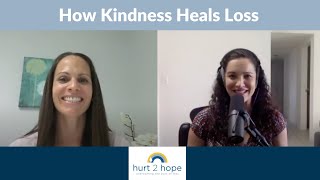
Betsy Guerra and Marlee Q talk about how kindness helps people move through grief and loss. They share personal stories about being kind to yourself and others as a way to heal and grow.
Chapters
Welcome back to Hurt to Hope, our podcast that helps spread hope to the people around us. I am delighted to have as a guest speaker today Marliq. Marley Q believes that we all have a superpower, and that is kindness. And she has been a spark of kindness herself. She has a podcast that it is Time to be Kind. That is what it is called Shelter. She also is a teacher and she's a coach and an inspirational speaker. And she teaches people how to tap into and leverage the power of kindness to live their best life and to bring their gifts and their uniqueness to the people around us. She has a TED Talk on this topic, and she truly is a testament of the power of kindness. She lives it. She exudes it. That the joy that she brings to the world and the people around her is amazing and very touching, compelling, contagious. So thank you, Marlee, for being here. Thank you for saying yes, and thank you for your openness to spread a little hope and that joy that you exude to the people around us.
Oh, my goodness. I am so honored to be here. And what a kind and beautiful and warm introduction. Thank you so much. Of course, I'm going to make time to be Kind to be on your. On your podcast, and I get to be one of the first ones. What?
Yes. This is episode number two, People with Marley Q. I love it.
It rhymes. I'm all about that.
So, Marlee, in our conversations here, we talk about pain only to share how pain leads to hope and to joy and to our best life and the best version of ourselves. So the topic really isn't about pain and loss, but rather about how it builds us up. Right. So I was hoping you would share with us some of your stories or. I know that you have experienced loss yourself, and I also know that you have overcome it and you've found hope and joy after your experience of loss. And you have done great things to share your gifts and your joy with the world. And I think, I truly believe that if we use our pain for the service of others, if we use our pain to bring light and to be a spark of kindness, we win. And then we didn't waste that pain. And I feel that's where the difference between pain and suffering comes in. Pain becomes hope. It becomes growth and strength and resilience and joy, whereas suffering is just wasted pain like pain that you feel in vain. So why don't you share a little bit of. Of what you've gone through and what your experience has been and how you have turned that around to do the work that you do.
Yeah. So I am just so first, just grateful for the invitation and the opportunity and for you personally for creating the space, the container, if you will, for people to be able to express their stories of loss and pain with an emphasis on how that becomes a bridge to hope and experiencing life and being able to celebrate life and being grateful for it in the midst of loss. I think that's amazing. And I don't know anybody else that is doing that. So first, I'm just. I just want to acknowledge you and your community and this opportunity because honestly, I have lived my entire life. I will authentically and vulnerably share in complete avoidance of pain and sadness. I am a very joyful person. I have always tried to be very positive. And that's not to say that I haven't experienced difficulties in my life. I just really have always approached sadness and pain as a negative emotion and something that I just need to get over as fast as possible so that I can get back to happy. And I don't think I'm alone in that feeling. I'm not sure if I was raised that way. You know, you have to be tough and like, you know, like, just move forward and don't even stay in that place of sadness and loss and suffering for a long time. And it really wasn't only until fairly recently in I guess to share the story. In 2016 was my second year wedding anniversary. My husband and I were having this beautiful dinner at the top of, you know, a restaurant downtown. Beautiful Area 31, beautiful scenery, you know, the rooftop with a glass of champagne. And we're celebrating. And mid toast, what I believe is going to be a toast to our marriage. He says, hey, babe. So, you know, I really want to start a family. So, you know, all of your philanthropy and all of your events that you do for charity and all these things that I know that you love and that I love about you, but that just take up a lot of time. I don't. I don't want to do that anymore. I want us to focus on starting a family. And in that moment, I had a choice. Thankfully, I had been practicing yoga. I'm a yoga teacher. And I know that there's a space between response and reaction. But I realized that I had two choices. First, I can listen to the voice, you know, on one side that's really angry, really angry at him right now for, like, what you're telling me to, like, stop working on my dreams and my goals and my passion in life, because you want, you know, Kids and you want me to just be like a stay at home mom and pop out children, like that's what you want. So I could like throw my champagne at him and be like, angry. That's one side. She was there, she was very present. And on the other side, I could breathe and experience the present moment, smile and feel thankful to have a partner or a spouse that loves me and sees me enough to acknowledge that my charity work, my philanthropic heart, my events that I plan, what I fill my time with up until that point is very important to me. And we're celebrating our anniversary and he wants to start a family and we want to have kids, and I can just be thankful for that in that moment. So thankfully I chose the latter because I've done a lot of work on my own self awareness and emotional intelligence. But I wanted to be honest and say the angry one was there. And in that moment was very important because I made a decision. I'm like, you know what this is. I want a family too. I had just had always prioritized my work and, you know, when you're passionate about what you do, I was just blindly following that path. So in 2017, very, you know, at the start of 2017, we, you know, intentionally started to try and have a family and have a baby. And I was so happy the day that I was boarding, you know, a Royal Caribbean cruise ship to go on a seven day cruise in the Caribbean. I feel weird. I'm like, let me take a home pregnancy test to make sure that, I mean, everything's okay. Because if I'm pregnant, I don't want to spend seven days drinking, you know, margaritas or whatever. I want to make sure that I know. So sure enough, I went, I did the test, I did two of them. I'm pregnant. Yay. I am so happy about it and nervous and all the feelings that you feel I saw.
Drinking margaritas, absolutely none.
I didn't even do jet skis. I didn't do anything. And my husband was really happy. We celebrated it. I mean, we enjoyed this vacation to the max because now we were celebrating not just going on a summer vacation, but we were pregnant. We're starting a family. We did it right. So I waited till we came back and I was actually about 12 weeks pregnant before I went to the doctor for the first time. We go to the doctor, my family, I'm Cuban. I had my whole Cuban family in the lobby waiting for the party and the fiesta outside. My husband and I go in, the doctor comes and does the sonogram. And I'm laying back. I don't really see the screen or anything, but I don't hear him say anything. And he just, you know, finishes, asks me to sit up and says, your uterus is empty. There's nothing there. You're not pregnant. You must have had a missed abortion. And he got his clipboard and he left the room, and the two nurses that were there left the room. That was it. And my husband's there. And I didn't even have the courage to lift my eyes up to look at him. I didn't think about how I felt, even though I had a huge knot in my throat similar to the one that I have right now, by the way. And all I thought about was my family outside. Oh, my God, everybody is so happy about this pregnancy, and I'm not pregnant. How did I miss an abortion? What do you mean? I had never even heard that phrase. I think it's a horrible, horrible phrase. And there was zero kindness. Zero kindness. Not that he was unkind. He was just kind of very cold and professional and matter of fact about what he was seeing. And in that moment, I felt an immense amount of hurt and pain, but it was mostly directed at, I don't want to disappoint others. I don't want to disappoint my family. I don't want to disappoint my husband. I didn't even look at him. I said, I'm sorry, I can't go outside. I need you to tell the family I'm gonna, like, escape through the back and just get in the car, and I want to go home. I don't want to see anybody. And that was, I guess, the beginning, interestingly enough, because it was only a couple years ago, the beginning of me, for the first time in my life, actually allowing myself the kindness, allowing myself the time to be kind to me and how I was feeling and be sad. Sit with the hurt, sit with the pain, sit with the loss. I'm an event planner also for the last 20 years. So immediately when I peed on the stick, so to speak, I was already planning a baby shower. I was planning, oh, if it's a girl this, oh, if it's a boy that. Oh, you know, planning, planning, planning already in the future. So for me, that was really the first time I ever experienced. I ever allowed myself to experience loss and hurt and pain. At first, it was directed at just disappointing other people and not wanting to disappoint them. But I've done enough work where I just allowed myself the Time and the space to be sad. And my husband, thankfully, I have a partner who is immensely kind and compassionate and sat there with me in the sadness. And those comments, which I'm sure will, you know, people listening may resonate with, you know, from family, mostly family, actually, because I didn't even tell any friends that I was going through this in their effort to try and get me out of sadness. Would say things like, well, at least you know, that you can get pregnant. At least you weren't further along in the pregnancy, because that would have been worse. At least, you know, just trying to say things that in their mind was helpful or like, hey, you know, I went through this and I don't even remember it anymore. It doesn't matter. Like, time will erase that from. From your memory. And those things, even though they were trying to be helpful and kind in that moment, were actually very hurtful because in that moment, I was experiencing sadness and pain. And it's almost like they didn't allow me the time and the space to just be sad for a moment. But my husband did. We came back home. I'm like, I just don't want to talk to anybody. I don't want to see anybody. I just need a little time to be kind to myself and feel this. And it didn't take very long. I was sad for maybe a couple days. But my husband and I made just a decision to have that be the spark of us, really. We celebrated the fact that, hey, we really want. We solidified the decision that we want to start a family. And that because there is this loss on our first try doesn't mean that there's, you know, we're destined for, like, loss. I actually had a family member tell me, oh, my God, I had a dream that you weren't ever going to have kids again. That you weren't ever going to have kids. Goodness. Wow. What a hurtful thing to say. She didn't mean it that way. Forgive her. But, I mean, this was my experience and why I really worked to just kind of shelter myself from what anybody else had to say to me and really just tapped into my own self. Love and kindness and compassion and empathy for what I was feeling and able to turn that by feeling it and not distracting or dismissing or denying it, allow that pain to be a little bridge. Holding my husband's hand together and saying, let's try again. And within just a few months, that happened in June of 2017. By October of 2017, I was pregnant again. I just celebrated my son's second birthday. And I'm eight months pregnant with my second child. And the amount of just joy that has come from, honestly, not just their births and their life, but I think really from, again, allowing myself the time, the space, and the kindness to just feel sad, because it just solidified the fact that I really wanted to start a family and to try again and try again.
How beautiful. What a beautiful way of viewing your loss. You know, Marlee, you've mentioned a couple of things that made me reflect on what I teach about overcoming that pain of loss. And the first one is that I believe in a super tool. Like, I think this is, like, an amazing, amazing clinical tool in helping us heal. And it's reframing. And reframing means that we change the perspective with which we're looking at something into one that's more positive to help us view it in a different light. So we change the lens so that we view it in a different light in order to feel differently about it. Because when we. When we speak to our subconscious through our thoughts or our words, we were telling it what to feel like. The subconscious mind believes whatever you tell it, it doesn't question it. And the subconscious mind also is in charge of creating the emotions associated with those thoughts. So when we reframe, we tell the subconscious mind that what seemed to be a tragedy really is a blessing, so that the subconscious mind can then create emotions aligned with that new perspective.
Right.
So it is a powerful tool in helping us heal. But I have had clients that are the kings and queens of reframing. And they learned from early on to change the perspective of something so that they can avoid and escape pain. And it was so interesting that recently I had a client that was going through a lot of grief. He had broken up with his girlfriend, and he was in a lot of pain. And we realized that what was preventing him from moving forward was that he was such a good reframer, which is a gift. So reframing is usually a gift if you use it at the right time. But if you're using reframing to escape the pain or to not sit with it, then it may be dangerous. And what happens is that many times our family members and our loved ones don't want to see us suffer. They cannot stand the thought or the view of seeing us in pain, so they want to immediately reframe for us, change the perspective so. So that we can feel better. And many times it's because they mean well. For the most part, it's because they mean well. Other times, it's because they don't know what to do with pain. And it's too uncomfortable not to see you in pain, but to. Not to feel like there's nothing they can do or they don't know how to act in front of that pain of yours. So many times people wanting to make you feel better, wanting to make it more, wanting to remove that pain from you, they reframe in an untimely manner. And that's why so many people that experience loss hear all sorts of things, right? Like, oh, you lost a child. Oh, but you have other ones. Or you lost a child, but, you know, at least you. You didn't have. You didn't lose her at 18, and you would have had more time with her. And then for me, it's like, but.
But. Right.
But then I didn't get all those memories and experiences with her. And the truth is that at the end of the or, or I've heard people say, like, oh, but it was a miscarriage, like, no big deal, you know, like, you didn't even know you're fine. You didn't even meet the kid. So. But that's a life. And it's your. It was. You co created that with God. And it's. It was the beginning of your. Your family. And, and, and it was. It was a dream. So people don't realize that it's not just losing a life, it's losing your life as you knew it, and it's losing your dreams and your. And so many things, right? Like, grief can be so complex. So I loved how you shared how the people were reframing for you, and. And it wasn't until you were ready to reframe after feeling that pain that then it became a healthy tool for you to use.
Yeah, absolutely. That's a great way to reflect and to put it. That's wonderful. That's exactly what it was.
And then the other thing that you said that caught my attention is you kept on mentioning your husband. And, and I really admire your relationship. I'm a big fan of healthy, beautiful relationships, and I have devoted much of my career to helping people accomplish that. So I really treasure and appreciate that in other people. So congrats for building that with your husband. But another thing that came to mind is something that I wholeheartedly believe is important in our process of overcoming grief, and that is that you. We all need a team. You know, man is not an island. And we were created for community and to live and experience in community. And during a process of loss, the people that you surround Yourself with are important in helping you heal or go backwards. And I feel it's so beautiful that you chose person that was willing to sit in pain with you and be uncomfortable about the fact that he couldn't take that away from you, because obviously, when you love someone, you really want to take the pain away. But he loved you so much that he was willing to put himself in that uncomfortable situation and position to hold space for you and to allow you to feel. And. And I feel it's because of that that it didn't last months longer. Right. Because you had a companion that allowed you to feel and then was ready for you when you were ready to recommit to trying again and making a difference. And that's not the case with everybody that goes through loss. Many times we struggle because we're not at the same page as our partner or our family members or kids or depending on the people involved. And that's okay, too. My husband and I grieve very differently. The loss of our daughter, but we would always come together, so anything would work for me. Any sign, anything would help me. And he was more skeptical. So for him, like, everything that he would tell me that worked for him would work for me. Everything that I would tell him that worked for me wouldn't work for him. So it was different. But we would always. Every night. Every night we would come together and we would sit down at the bed and we would talk about how our day was and how we were feeling our grief, and we would share and we would respect each other's ways.
And.
And I think that unity, that. That disposition to sit with the other person and hold space without trying to change the way the other person is feeling or thinking, I think that is very powerful. And I. And you're very.
That's why I say kindness is a superpower. Because, I mean, my goodness. Thank you for. For sharing that and acknowledging that. Because in. I mean, my husband is a lot of things, and maybe on the surface, he doesn't seem like, you know, this super kind guy. He has, you know, he has no filter and has very opinionated and, you know, not everybody gets to see that particular side of him. And I mean, when you talk about kindness and holding space and, you know, for the most part, men want to just fix the problem and. And get you out of a situation and be, you know, like your hero. And he really didn't approach it that way. And to me, it made the only person that just, like you said, had the compassion and the empathy to just sit there with you right. Empathy is feeling with people. And even though my experience may have been different, you know, my experience of pain and loss was different from his experience of pain and loss. We both lost for a moment, like the idea and the hope and the plans that we had. I'm sorry, not the hope, the plans. But we never lost the hope and the faith that we're going to have a family. So let's just feel through this. We ended up being happy that we tried and that we were successful on the first try, if you will, even if it didn't come to complete fruition. So we were able to completely reframe it, but exactly like you said, was only after we allowed that little bit of time to just feel the sadness and the pain and the loss and kind of tune or turn off, you know, the volume and the noise from everybody else, whether it was well intended. I don't think anybody was, you know, intentionally trying to hurt me more. But I'm telling you, every other comment really did was doing the opposite of what I actually needed in that moment of pain and loss, which is just some kindness and empathy, which is feeling with people, not trying to problem solve or deflect or reframe in an unproductive way at that moment.
Can you tell me more about kindness and your mission with it? Can you share with us your perspective on kindness and what that looks like for you and your life and how it has accompanied you through your journey? Yeah.
Thank you. So, kindness, for me, when we think about kindness, it's usually, you know, this kind of woo, woo, feel good. Like, yeah, you know, acts of kindness are great. You know, smile at strangers, open the doors, and we think of these little actions. Right. Which is true. That is kindness. The way that I see kindness is really more as a practice, really more as a lifestyle, and really more as a, you know, as a way of being towards yourself, a way of being towards others, a way of being towards the world and mankind as a whole. And that really started for me when I was. I was 10 years old when I first discovered that kindness was superpower. And that's what I did my TED Talk on two years ago or so. I was actually pregnant with my first baby when I did my TED Talk. So if you'd like to check that out, it's called Kindness Is yous Superpower. You can find that on YouTube. And I was pregnant. I remember I would be holding my belly as I was sharing the story for the first time in a global platform. Because to me, you know, it's such A simple story. And it was such a simple moment and a simple act of kindness, and yet it was very meaningful in that moment. And not to share the whole story, because I'd love for you to see my TED Talk, but in that moment, when I was in fourth grade, I was experiencing immense pain and loss. My entire fourth grade class was going on a field trip to clean up the park. It was a park project to go clean up. And my favorite superhero was Captain Planet. And I was just so excited about going to the park and helping Mother Earth and being like, Captain Planet. And I couldn't go on this field trip. I was not allowed to go. I was the only kid in class that didn't go on the field trip. And I was absolutely devastated. I'm talking about. I had my head slumped down on the table. I was crying. I was just so. I just wanted to be invisible. I was very, very sad. But my teacher, my fourth grade teacher noticed how I was feeling, and she came over and she whispered in my ear. She asked me to step outside. I stepped outside, and she asked me, like, what's wrong? She knew what was wrong because she knew how badly I wanted to go, and she knew that I didn't turn to my filter form, but she gave me the opportunity to just express why I was sad. And she got down on one knee, and she looked at me right in the eye, and she's like, sweetheart, you don't need to go on this field trip in order to be a superhero. You're a superhero every day. You have this superpower that you. That I see you use, and you don't even know it. I'm like, what are you talking about? I have a superpower just trying to make me feel better. She's like, no. Every single day, no matter what's going on in your life, the first thing you do when you see me is you smile and you say, good morning. And that smile of yours, Marlee, brightens up my whole day. Marley. I see you when you open the door, you know, for the person behind you. I see you if there's trash on the floor, you pick it up, even if it's not yours. I see you when you sat down next to so and so and you lend them your pencils. And she just went on with a couple of, like, different little examples. And in that moment, I experienced the power of kindness. She's like, kindness is your superpower. And that's all. That's enough. That's all that you need in order to change the world. I was like, wow, really? I believed her. And from that moment forward, I just began purposefully performing acts of kindness for other people in hopes that it would be a little spark in their day, would, you know, make them smile or make them feel better today. Because in that moment, I was super sad. And I gave her a hug and went on about my day feeling like a superhero. I'm like, all right, I don't have to go on this field trip. I can pick up trash around here and I can high five someone and sit next to so and so during lunch and it'll be fine. So I experienced the power of kindness for myself. And how much time did that take her? Really took her maybe just a minute or two of her time to step outside and give me that kindness. And I've never forgotten it. It's such a simple thing. I've never forgotten it. And I really just began practicing it. It became kind of like my. My obsession, if you will. My drug of choice to make myself feel better is, hey, just be of service to other people. And you get this jolt of joy and happiness by just focusing on being of service and how you can be kind to other people. And it wasn't until, you know, much later in life, actually in my adulthood, because I was really good at being kind to everybody else up until, you know, I had this kind of crash and burn moment kind of in my mid college years, where I started experiencing really bad migraines on a daily basis. I was like 30 pounds overweight. I was in a toxic relationship. I was just not happy at all on the outside. I was living life and just doing what I had to do. But I'd go home and feel really, really unhappy. And I just realized that I was being kind to everybody else but myself, right? And that's where I think the huge shift and transformation in my journey began, which was really only about, I'd say, I don't know, about 10 years ago or so, maybe 12, where I really started making decisions focused on how can I be kind to myself? And I'm talking about some drastic decisions. Like within the span of a month, I broke up with that boyfriend. I quit my job, I started my own business, I started my own nonprofit. I found, you know, Mr. Casanova, the love of my life, came in six months later. I had dropped 30 pounds. I mean, all these things happen within, I'd say, a year or less than a year just because of that one decision where I decided I'm being. Or I noticed the awareness first that I was being incredibly unkind. To myself and that I don't deserve that. How can I practice some kindness towards myself and just making some really bold decisions? Because you know what? It takes courage to be kind. It takes courage to be kind to yourself. It takes courage to be kind to others when, even if they don't deserve it, it takes courage to be kind to this world when it just seems that there's so much darkness and violence and things that can, you know, make you feel despair and pain and just disbelief in humanity. Takes a lot of courage to be kind and still believe and still have faith and still have hope in yourself and others and in the world. So, I mean, it really started off by just this little seed that was planted in my heart when I was 10 years old of me experiencing the kindness from somebody else. Then it was directed at everybody else but me. And then I found the spark of light that said, hey, how about directing some of that kindness towards yourself? And I've been on that journey again for probably about 12 years or so. I became a yoga teacher about six or seven years ago. And it's just been this really beautiful journey of blossoming into someone that can really talk or walk the talk, so to speak. Right. Because I could create a nonprofit about kindness. I can talk about kindness all day long. But it's not only until you start practicing self love and kindness that you really start to see the fruits of that labor that you really start to see, you know, that, or experience rather the fulfillment and the joy that comes with directing some of that love and kindness into yourself, into your own heart.
I think what you're saying is so beautiful because it's, it reminds us that it's not just about doing acts of kindness towards the people around us. And when you're. I was raised in a, in a very Catholic home and they taught me about generosity and about service and doing for others and. And sometimes the message that you hear is don't do anything for you. And I heard someone say the other day that humility is not about putting yourself. Humility is not about thinking less of yourself, but rather about thinking of yourself less. And I think when we think about service and we're service oriented, we ought to remember that being kind to others also includes and demands that we be kind to ourselves. Because if we're not in a good place, we cannot give our best selves to the world. So we can't share our gifts the way we want to. And.
Sorry, that was just agreeing like, right.
And when it comes to loss, we ought to be very kind. And compassionate with ourselves. The other day, someone. I was in private practice on a one on one, and someone was, Was being very hard on herself. And she, the way she spoke about herself was very unkind. And I remember at some point telling her, like, hey, can you stop treating my client like that? Can you, can you, can you be a little kinder to my client? Because she was being very unkind to herself. She was telling me about a very difficult day that she had. She had lost her dad. And it's very raw and recent. And I asked her, like, let me ask you something. If in the midst of that very, very difficult night in which you've experienced panic attacks and all these thoughts and flashbacks, if your cousin, who she's very close to, would have called you and told you that somebody that she adores died, what would you have done? And she said, oh, no, no, I would have figured it out. And I would have gotten dressed and got into to her house so that I could help, like, be there for her. And I told her, well, why don't you do that for you? Like, in those moments in which you feel that you can't anymore, like, why don't you call yourself or ask yourself for that support and love and you show up for yourself like you would for your cousin? And it was so cute because she, she was describing a scene in which she was in her bed and she needed someone to cuddle with because she was feeling so, so, so heartbroken. And she said, wait, but what does that mean? Do I just go to the other side of the bed and I, like, I cuddle with myself? I'm like, yes, whatever it takes. Just if you need to do something concrete, then do it, but show up for yourself the way you would for somebody that you love. So thank you for that. And piggybacking on this example, one of the ways in which people who are experiencing grief, one of the ways in which they show their hurt is through anxiety, right? Like, they have so much built up that they become anxious and scared and nervous and they have panic attacks and sometimes it seems. Seems like it came from nowhere, but really it's because they have so much accumulated. And I know, Marlee, that through the work that you've done by being a yoga teacher and spreading kindness and even coming from a home where you learned to be anxious, right? Like, to be stressed out all the time, can you share a little bit about what you have created to help people stress less and have a practice that allows them to connect spiritually and be at peace?
Yeah, absolutely. Thank you so much. Because I think that it really has been a journey and it continues to be a journey. I think it's a lifelong journey of self, love and kindness. And the more that we can be there for ourselves, like you, beautifully shared in your example, the more we strengthen our muscle and our capacity to be there truly authentically for others. So there's this contradiction that I was absolutely raised with the most beautiful, giving, generous, and selfless mother of all time who modeled how to not be there, how to be there for everybody else but yourself. So as my greatest role model, I modeled that. And I was really good at it. I'm talking about girl. I got like over 12 scholarships for all of my community service work and hall of fame for 5000 something hours of service projects and all these, like, you know, outward praise for being there for other people. Really good at that muscle. Really weak in the muscle of expressing any kind of kindness towards my, myself. And I really feel like I'm the first one in my family to kind of break that generational pattern of not expressing kindness towards self. I was also raised in a Catholic home. I was totally raised to believe service above self, and I believe these things. I'm an incredibly generous person, and everything I do is about service to others. And now there's so much more power and success in the work that I'm doing because I have learned how to direct some of that kindness towards myself first without sacrificing any of my other responsibilities, without dismissing my family or my kids or anything. If anything, I'm even more present and more available for them because I've been able to fill my cup. So with this whole pandemic and everything that's been going on as an event planner, my events business, as a speaker, teacher, an event creator for the last 20 years has been based on creating live events for others. And that business crumbled within the span of a week. And I had the opportunity. If we're talking about loss and pain, I mean, that's not of a life, but that's of my business, my livelihood. I allowed myself the kindness to kind of freak out a little bit and be like, what is happening here? Like, every single event for the rest of the year canceled, and I have a baby on the way, And I allowed myself the kindness to. All right, what are we gonna do here? We have a decision to make. Allow myself the kindness to not flood my body with cortisol and stress hormones and, you know, and affect my baby. And that way be like, hang on, this is. I can't this is outside of my control. Why stress myself out to a point like I used to over things that I just simply cannot control? I need to experience them. I need to allow myself the opportunity to experience what's happening, not make it better than it is, not make it worse than it is. Just see it as it is and then make a decision from that point. That was the birth of my podcast Time to Be Kind with Marley Q, which I was so grateful that you were on as one of my guests. That was the birth of me starting to think of, okay, great, how can I still speak and teach my message about kindness and create kind of a virtual event experience where I'm teaching some of the things that I've learned? So I created my very first online course called the Best Way to Stress Less. And I am a lover of acronyms. I am an acronymist. Someone called me an acronymist one time and I'm like, what? I have never identified with a title more than acronymist Lover of Acronyms. So BEST is an acronym for my four step method for how to allow yourself to practice self care and putting yourself first. Even if you think that you're too busy and you have no extra time, money or energy to put into dedicating time for yourself. So I created a course that's basically for beginners and seasoned, you know, professionals alike. And what I mean by professionals is people that have been practicing self care or into yoga or workout or have some kind of self care practice, this course can still teach you a very simple and effective way to actually practice four things that you can do individually or at the same time. That's the beautiful thing about it, is that you can practice it absolutely anytime, anywhere and still be infusing in your system love and kindness and self care and putting yourself first. Even if we're living in a time where you can't go to the gym and you can't go, you know, and interact with other people the way that you used to, how can you still fill your cup? And I'm launching my very first course coming up now, August 3rd through the 28th. It's a four week live virtual experience with me. You get access to my course, which is awesome because you can complete it in under an hour. So even if you say you don't have any time, you got time for a little 10 minute video here and there. Just the same way that you have time to check out YouTube or Little Cat videos or whatever it is that you watch. These are four, I'm sorry, six very short Videos. And then I accompany them once a week on this virtual journey where I get to coach you through the four steps, we get to practice them together, and in hopes that when we're done with the four weeks of experiencing the best way to stress less together, that you're able to actually implement this into your daily life, not as something extra that you need to do, but as something that you can interweave into your daily experience as a mom, as a busy professional, what have you.
And I have to tell you that that's what I loved the most about your course. I devoured Marley Q's course because I really didn't consume it. I devoured it. I was so hooked. You have such beautiful energy, and you exude this love and kindness, and I couldn't have enough of you, so. And what I love the most about your course is how simple it is. Because I think one of the problems that prevents people from consuming these kinds of personal development tools or even spiritual tools, because I think what you teach has a lot to do with being present, with being still, with finding your inner wisdom, with connecting with your. With your peace. Right. Instead of, like, always be reacting to life and be stressed out and be anxious. I feel that the tools that you gave us are so simple that anybody can practice them. But simple means, in this case, powerful, because they're doable, because they're simple, but they're powerful. And I find I'm an acronym lover, too. And I absolutely loved and was amazed by your brilliancy in creating these acronyms. I have to say. And there are times that I'm like, just yesterday, I had an important webinar and I was. I was, like, a little stressed and overwhelmed. Like, wait, best B, E, S T. I'm not going to tell them so that it's a surprise. But I went over them and I practiced it in five minutes. I am into the practice of silent prayer, which is the Christian meditation. And for years I wanted to start practicing that, but I'm like, oh, I don't have 15 minutes in the morning and 15 minutes in the afternoon, and I don't have the time. And. And what's beautiful about your practice and what you share and teach is that there's no excuse because it takes five minutes and you can do them. You can do those exercises while you're driving in the shower, whereas you can't meditate while you're driving. You could crash. What you teach us is simple, powerful, and so doable. So thank you for that because you reminded me when I listened to that and I've recommended your program to many of my clients. When I consumed it, it reminded me that the answers many times are not in the complex things. Right. Like, are not like, oh my gosh, to be able to overcome loss, I have to go through all these stages and I have to process this way and I have to do this and that and I have to feel the pain and it's unbearable. And I can't feel the pain because I'm not capable and I'm not so strong enough. And she's stronger than me. And we have all these ideas as to how we need to do something to overcome the adversity that we're in, including anxiety. And we don't realize that the answer many times lies in the simple gestures and acts.
Yeah. Which ties into kindness.
Right.
Why am I passionate about this? Because, my friends, it was the simplest act. And I have had the immense grace I call it to be able to have reconnected with my fourth grade teacher. I found her. She doesn't even have a cell phone or an email or Facebook or anything. This was old school. Like the yellow, the white pages where you find people. That's how I had to find her. I found her. I invited her to my TED Talk. She was in the audience because I just wanted to honor her and thank her because of that simple little act of kindness, really in that moment where I was experiencing pain and loss and I felt like unseen and that I didn't matter because I'm like, oh, everybody else is going to get to do something really awesome and help the earth and I can't. Right. And I was 10. And you know, when you're, you're little, like everything is dramatic and a big deal. That was a really big deal for me. And the small little act of kindness made a big difference. And that lesson has just stayed with me my whole life. It is the power. It's in the simple things. The simple things that you do for others, but also in the simple things that you do for yourself. And I'm a big self help and personal development person as well. I can love quite a courses. But the truth is a very small amount of people that actually purchase a self development or self help course actually complete it. I was on a mission to create a course that I can guarantee you will finish. And hopefully with my help throughout the four weeks of coaching with you and practicing it with you, will stay with you. Because we're never going to eliminate stress. We're never going to eliminate pain and loss from Life, it is part of the human experience. What we need to do is learn a simple way and an effective way and a way that actually, you know, connects, which I think through acronyms, makes it easy for you to remember. I just need to do my best. And even in the phrase, the best way to stress less is to always do your best, just do your best and allow yourself the kindness to be like, even if I didn't make it to the gym today, even if I didn't eat super healthy today, even if I didn't get my eight hours of sleep today, even if my kids were rambunctious today and I had to scream at them because I lost my patience and I was so stressed out. Even if my clients at work are driving me crazy, even if there's a pandemic and even if my business crumbled and et cetera, et cetera, et cetera, even if you're experiencing an immense amount of stress, pain, loss, if you can just remember to do your best and allow yourself the kindness to go through these four very simple steps. I promise you, you will be giving yourself so much love and kindness, so much of a gift that will not just let you stress less, but really just fill you up with kindness, which is what I truly believe is a superpower, a gift that you can give yourself and then you can start again the next day and just do your best and do your best. And that's really all that we can ever ask of ourselves and of others. If you can just believe that everyone is just trying to do their best to get through a very challenging world and no one's life is easy. Just remember to do your best and believe that others, you know, have the capacity to do their best. Everybody's not always doing their best, but they have the capacity to do their best. I think is definitely a way to just live a life with less stress. And this is coming from someone, friends who. I'm not saying this from any kind of high horse or like, oh, super, you know, enlightened being. No, this is coming from someone who has experienced an immense amount of stress, worry and anxiety in her life. Because that's how I was raised, what was modeled for me and what I believed was almost virtuous. Right? If I don't worry and stress about everything and everyone, then it means I don't care. This is what I believed and I. And I lived from that place. So I have experienced a lot of pain and suffering and loss of self living from that place and my transformation. I'm just so Grateful because it really just started with some awareness. Just started with some awareness of how unkind I was being and how truly I don't deserve that. Right, you don't deserve that either.
Absolutely not. You deserve to be kind to yourself.
Everybody deserves to be kind to themselves. If you can't, you want kindness from other people, if you want kindness from the world, if you want kindness from your partner, you want kindness from your parents or from your kids. That means it's probably a mirror or a reflection that you are not practicing kindness towards yourself. It has to start with you. It absolutely has to. And I believe that I was given a gift of this best way to stress less through call it divine inspiration, if you will. I have received it as a gift. I've practiced it in my life. I practice it every day. And now I was given the gift through my business crumbling through loss. Let's circle this back to the point of this conversation. Through loss of life as I knew it was given the gift to create something new and to be of service to other people in the process. So I am incredibly proud of myself for first creating the course. Something that I never thought I would do because I am not a virtual person. I've become one all of a sudden. But really to be able to put my heart and my mission of spreading kindness into a course that can reach a much greater number of people than I can reach on a one to one or on a per event basis. So I'm just very grateful for the opportunity to have shared it with you, to share it with your audience and to share it with the greatest number of people that I can.
That's beautiful. Thank you for that heart, that, that generous heart and that kind heart you have and that you share with us. You really, really, really inspire me to practice that kindness and especially with myself because I am really good about always, always coming from a place of service to others. And I forget, I forget sometimes to do so with myself and. And then I can give my. My best during those times is not my 100% that I know. Right. It's a different percentage because I'm depleted. So being kind to yourself is definitely.
You can be kind to you and to others actually better. You could be way better at being kinder to others. When you're kinder to yourself first. It's amazing. It boggles the mind sometimes. Like, oh no. But if I'm kind to myself then I can't, you know, I have to put everything else. Try it. Try doing your best place of like.
A finite place like the mind wants to make everything that's infinite, finite and love, kindness, all of those virtues are infinite. So absolutely. That doesn't mean that if you're being kind to yourself, you're taking away from other people. It's quite the opposite. It just doesn't make sense in our very squared mindset and finite way of thinking. So Marlee, tell me, how can we find you? Like, how can we find this best way to stress less online course and how can we get a hold of you? I know you do individual coaching as well. So how can people that have connected with you and your heart and your kindness, how can they reach you?
Thank you so much. I would absolutely love to connect with anyone watching or listening to this podcast. The best way, I mean through social media. You can connect with me at Marleyki. I'm pretty active on Instagram and I just started a Facebook group fairly recently for my kind crew. Kind crew crew is with a Q, Q, R, E, W. And you can join my kind crew. You can find it on Facebook and just join. And the best way to stress less my course, it's marleque.com stress less. And I'm more than happy to offer a very exclusive discount code just for your audience and your community to again, just reach the greatest number of people so they can benefit you. If you can benefit from stressing a little less in your life, which we all can. And you have loved ones, family, friends, clients, colleagues who are experiencing stress during these times. This is really why I created the course. I want it in the greatest sense number of people's lives. And I'm launching, like I said, My first class August 3rd. So I would love for you to join me for that inaugural class and that four week virtual experience. I promise you it's going to be the best virtual experience you've probably had all year. I know we've had some rough, some rough times this year. So I'm hoping to create a really great live event experience.
And I second that because it is, it is an amazing and beautiful experience like to go through your course and it is so doable, really. Like in a 10 minute drive, you consume that week's content and then you get to practice it daily. And it just takes five minutes and you could do it, you could multitask. I don't recommend that you multitask, but even the four steps, you can put them together, right? Like what I love about that is that it's not four steps that you have to do one first and the other one you brilliantly combine all four steps into one so that people can connect with it and can practice it at the same time and it literally is just five minutes. And you can do that in the shower. You can definitely do that in the shower.
I love doing my best in the shower.
Like no excuse. You could do that in bed, while laying in bed, when you wake up, when you go to sleep. I love that you mentioned about the those two times because my experience with my clients has been that that those are the two times that they feel the most anxious. So no excuses. Best way to stress less is by going to her course and learning what she teaches. Those four steps that are going to allow you to free yourself from anxiety and having these recurring thoughts that are not serving you and that are not kind to yourself. So thank you, thank you. Thank you Marlee for sharing your wisdom. Thank you for sharing your story and for being with us and for teaching us to be kind to ourselves. For all of you watching or listening, thank you for taking the time to be with us. We appreciate you and your time and we're humbled by your presence here. If you have any feedback, please feel free to share with us. Betsyetterwithbetsy.com you can like us if you really enjoy this and subscribe. And if you would love to be a little kinder to yourself and be inspired by this beautiful woman, make sure that you go visit her on Instagram or Facebook. Arleighq have a wonderful day. I love you guys. See you soon. On our third episode.
More from Betsy





How to FIX your RELATIONSHIPS: Understand the attachment styles! #lifelessons #relationship




